Structural Removal
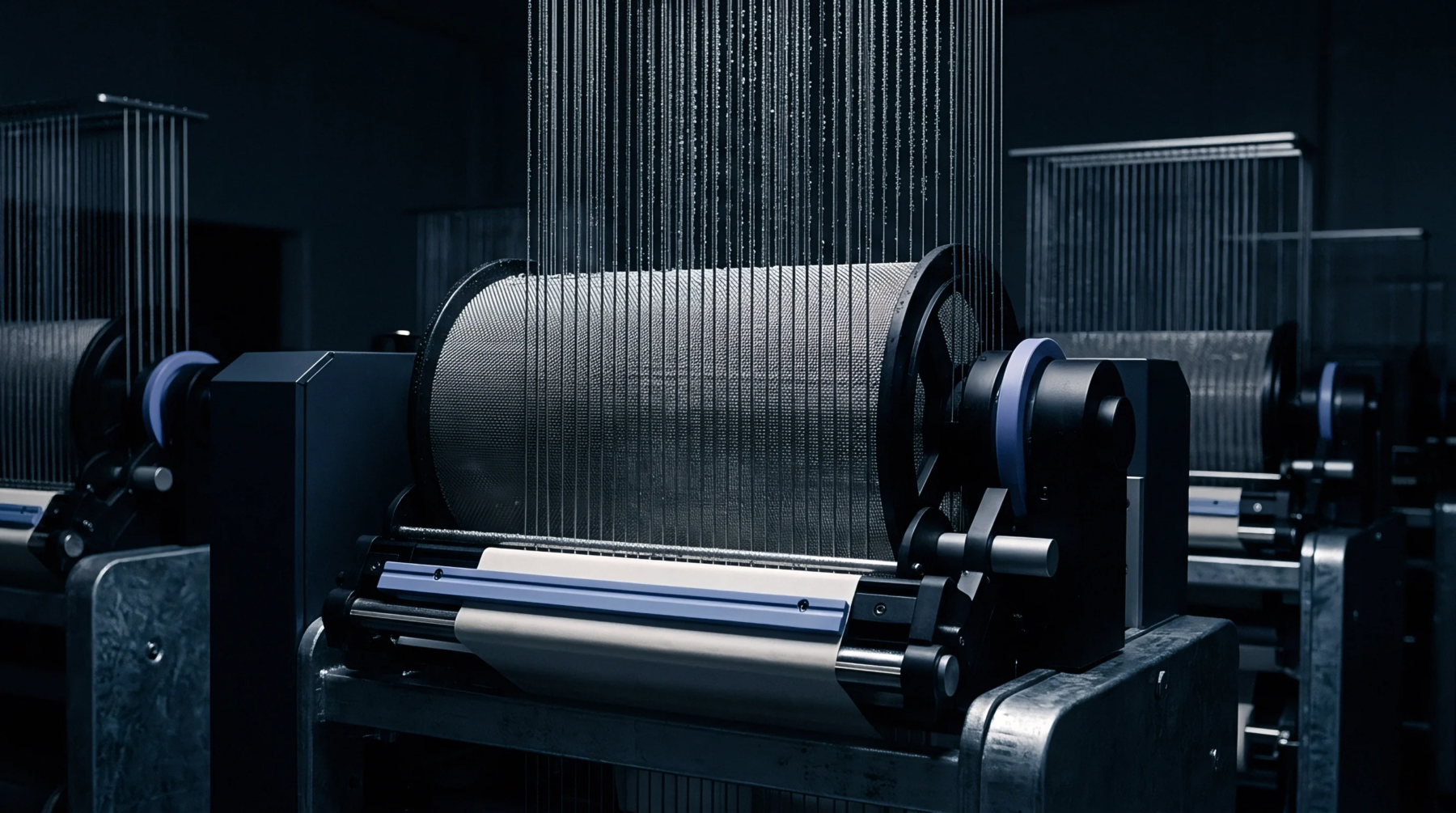
Chemical separation processes selectively remove one sacrificial polymer component from a bicomponent synthetic fiber matrix. Production of ultra-fine microfibers relies on matrix dissolution to eliminate the surrounding carrier polymer, leaving behind extremely fine sea-island filaments. The process isolates ultra-fine microdenier fibers that cannot be spun directly through conventional mechanical spinneret orifices.
Fiber Extraction
Selective chemical removal of the sacrificial polymer matrix requires compatible solvent selection that leaves the island polymer undamaged. Polyester islands encased in a soluble sea matrix of modified polyester or polyvinyl alcohol undergo extraction in hot aqueous or mild alkaline solutions. Temperature and residence time dictate the complete removal of the carrier polymer without causing tensile degradation in the remaining filaments.
Solvent Interaction
Concentration of dissolved polymer in the extraction bath affects the diffusion rate of fresh solvent into the core of the fiber bundle. High bath viscosity slows solvent movement into the filament bundle, causing incomplete matrix removal near the center of dense yarns. Agitation and continuous bath filtration maintain high concentration gradients, accelerating carrier polymer removal while preventing redeposition onto the exposed microfiber surfaces.
Residual solvent must be thoroughly rinsed from the fiber bundle to avoid stiffening the finished textile substrate during subsequent drying operations.
Quality Metric
Microscopic inspection verifies complete matrix dissolution by examining fiber cross-sections for residual carrier polymer. Uniform filament separation ensures consistent hand and absorbency in high-performance microfiber fabrics.