Positional Chemical Variation across Textile Roll Width
Uneven roller pressure and lateral thermal migration create severe chemical disparities across roll width, causing localized compliance failures.


Nip
Foulard extraction across a wide textile roll creates a non-uniform moisture profile when steel or rubber squeeze rollers deflect under mechanical loading. The hydraulic or pneumatic pressure applied at the roller journals bends the core shaft across working widths exceeding two meters. Center pressure drops relative to edge pressure unless the bowl possesses an engineered crowning profile or an internal deflection compensation system such as a swimming roll.
Uneven mechanical force produces a variable wet pickup curve across the roll width. Fabric passing near the selvedges experiences higher mechanical extraction than fabric traveling through the center span. The resulting wet pickup discrepancy translates into uneven deposition of dissolved or suspended finishing chemistry before any thermal reaction occurs.
Consider a typical finishing run of 220-centimeter width cotton twill running at 45 meters per minute through a conventional two-bowl horizontal padder. Squeeze pressure is calibrated to achieve a nominal 65 percent wet pickup based on the dry weight of the fabric. Padder bowl deflection produces an actual wet pickup of 73 percent within fifteen centimeters of the left selvedge, 59 percent at true center, and 71 percent near the right selvedge.
Pressure falls toward the roll center. Liquid volume dictates chemical deposit.
| Roll Position | Distance From Left Selvedge | Measured Wet Pickup | Fluoropolymer Deposition (owf) | Free Formaldehyde Deposition |
|---|---|---|---|---|
| Left Flank | 10 cm | 73.4% | 1.83% | 88 mg/kg |
| Left Quarter | 55 cm | 66.1% | 1.65% | 79 mg/kg |
| True Center | 110 cm | 58.8% | 1.47% | 70 mg/kg |
| Right Quarter | 165 cm | 65.8% | 1.64% | 78 mg/kg |
| Right Flank | 210 cm | 71.9% | 1.80% | 86 mg/kg |
The mathematical outcome of this mechanical profile appears in the mass balance of applied auxiliaries. If the pad liquor contains a dimethyloldihydroxyethyleneurea resin formulated to leave 75 milligrams per kilogram of free formaldehyde on dry weight at target wet pickup, the flanks receive 86 to 88 milligrams per kilogram while the center retains 70 milligrams per kilogram. The flank concentration exceeds the 75 milligram per kilogram threshold established by major apparel brands for direct skin contact, while the roll center remains compliant.
The margin disappears. When finishing compounds contain fluorinated water repellents, flame retardants, or antimicrobial quaternary ammonium salts, the mechanical gradient creates an unavoidable chemical divide across the roll width.
The dyehouse manager attributes the flank discoloration to normal padder deflection and assures the buyer that tumble drying balances the finish.
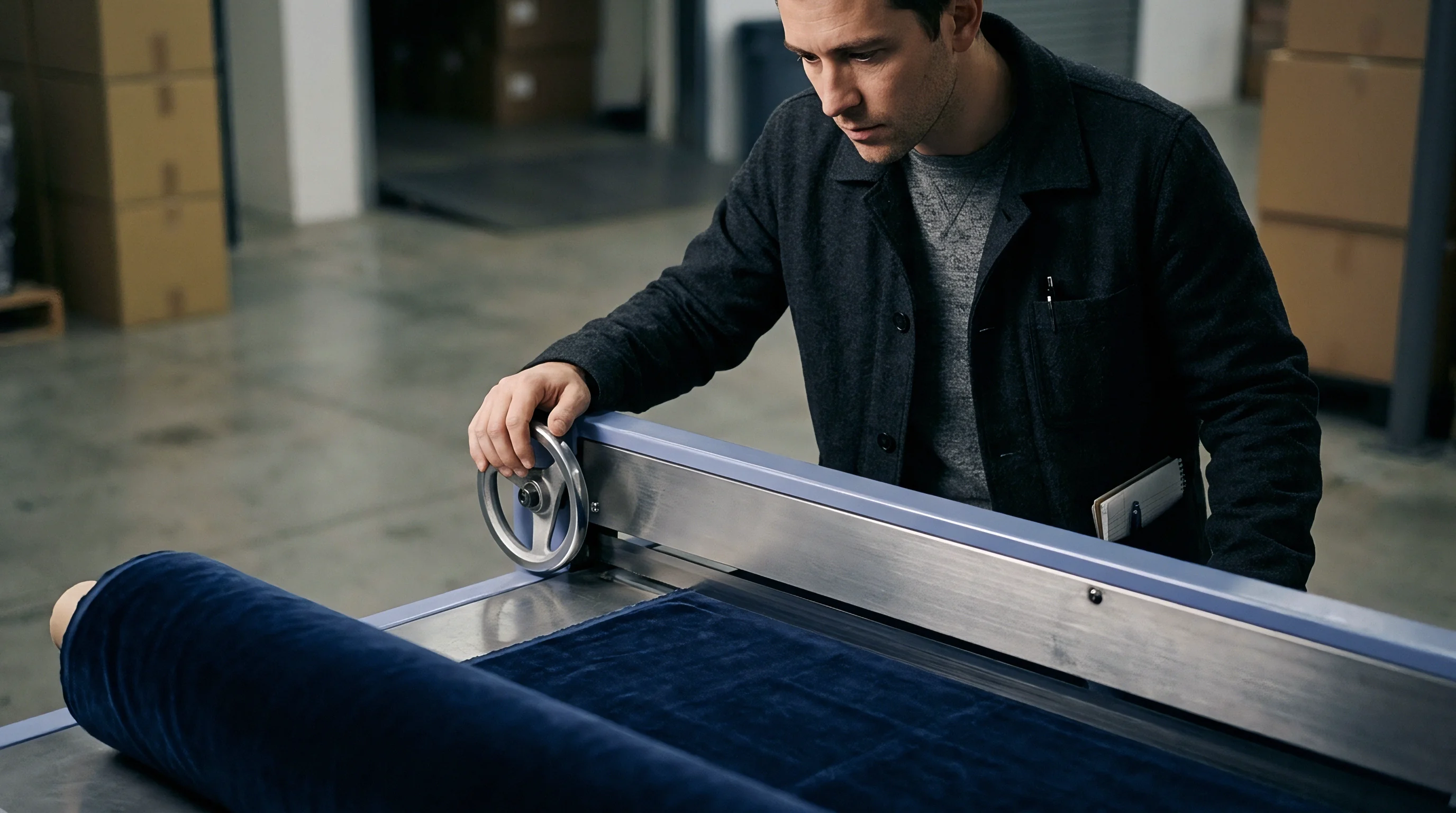

Drift
Moisture transport during initial drying stages controls chemical displacement before fabric reaches the condensation zone. When wet cloth enters a stenter frame, liquid water carries dissolved salts, resins, and unfixed dyestuffs toward zones of highest thermal flux. Hot air nozzles deliver turbulent air across the fabric plane, but boundary layer resistance varies significantly between the roll center and the pinned selvedges.
Stenter pin plates or clip chains function as thermal heat sinks, conducting heat into the roll borders and accelerating local evaporation rates. Water moves outward under rapid heating.

Does Hot Air Velocity Skew Chemistry?
Air discharge velocity across wide stenter chambers frequently fluctuates between roll center and exhaust borders. Nozzle geometry, duct pressure drops, and return air turbulence create uneven evaporation rates across the width. Higher convective heat transfer at the tenter rails pulls liquid water from the interior toward the roll flanks via capillary action through the yarn structure.
Solutes dissolved in the water phase travel along this convective gradient, concentrating at the lateral edges where water evaporates first. Solute concentration spikes at roll borders. Edge heaters accelerate moisture dissipation.
The dye migrates laterally.
Drying air speed dictates chemical migration before fiber saturation drops below the critical moisture point.
This capillary migration produces severe edge-to-center-to-edge variation in functional properties and chemical restrictions. In pigment dyeing and resin finishing, the physical transport of unbound molecules creates listing, shading, and localized chemical non-compliance. Antimicrobial agents such as silver salts or pyrithione compounds precipitate prematurely at the edges, leaving the roll center under-treated while the edges carry excess biocide.
- Capillary capillary suction draws dissolved resin precursors toward high-evaporation perimeter rails where evaporation rates exceed the re-wetting rate of the core yarns.
- Boundary layer compression near exhaust ports induces localized air speed differentials that pull mobile finishing chemistry across roll quarters.
- Pin plate conduction introduces conductive thermal energy directly into the selvedges, driving moisture evaporation before hot air nozzles engage the central web.
- Anti-migration agent breakdown occurs when bath temperatures exceed product stability limits, allowing dissolved solids to drift unrestrained toward hot zones.
The mechanical correction of these thermal gradients demands balanced nozzle box profiling and active air velocity modulation across the stenter deck. Finisher adjustments that raise line speed without balancing chamber temperature compress the available drying window, intensifying cross-width chemical migration. The question whether ultrasonic nozzle repositioning can prevent lateral thermal channeling without reducing line velocity remains disputed across machine builders.

Composite
Laboratory specimen preparation protocols frequently mask severe localized contamination through homogenised multi-point extraction. Standard quality procedures instruct technicians to cut swatches across the fabric width, combine them into a single test piece, and extract the blend in an analytical solvent. This physical averaging process conceals positional chemical concentrations that breach legal ceilings.
Spot concentrations breach regulatory limits. The laboratory invalidates the entire lot. When three swatches taken from the left flank, center, and right flank undergo combined extraction, a dangerously high concentration on one edge gets mathematically diluted by the cleaner center and opposing flank.
A specimen diluted fivefold through center-weighted blending masks an edge concentration of 140 milligrams per kilogram against a 100 milligram regulatory ceiling.
Consider compliance testing under EN 14362-1 for carcinogenic aromatic amines derived from azo colorants, or EN 16711-2 for extractable heavy metals. When an importer submits a single test package assembled from across the full roll width, the testing instrument reports the mean value of the extraction beaker. A garment cut exclusively from the high-concentration flank panels will fail border surveillance testing, even though the whole-roll test report shows comfortable compliance.
Composite specimens dilute localized contamination. The finisher cuts the selvedge.
| Sampling Location | Extractable Concentration | OEKO-TEX Class I Limit | OEKO-TEX Class II Limit | Conformity Status |
|---|---|---|---|---|
| Left Edge (5 cm inward) | 38 mg/kg | 16 mg/kg | 75 mg/kg | Fails Class I / Passes Class II |
| Left Quarter (55 cm) | 21 mg/kg | 16 mg/kg | 75 mg/kg | Fails Class I / Passes Class II |
| True Center (110 cm) | 11 mg/kg | 16 mg/kg | 75 mg/kg | Passes Class I / Passes Class II |
| Right Quarter (165 cm) | 19 mg/kg | 16 mg/kg | 75 mg/kg | Fails Class I / Passes Class II |
| Right Edge (215 cm) | 36 mg/kg | 16 mg/kg | 75 mg/kg | Fails Class I / Passes Class II |
| Physical Composite (Equal Parts) | 25 mg/kg | 16 mg/kg | 75 mg/kg | Fails Class I / Passes Class II |
When the target threshold drops to tighter infant standards, composite sampling completely distorts operational reality. Under OEKO-TEX Standard 100 Class I, free formaldehyde must remain below 16 milligrams per kilogram. The physical composite specimen in the table above records 25 milligrams per kilogram, correctly failing the baby wear threshold.
However, if the center section had recorded 5 milligrams per kilogram and the flanks 22 milligrams per kilogram, the composite would report approximately 13 milligrams per kilogram. The batch would clear certification. Garments assembled from flank cuts would expose infants to chemical concentrations exceeding international standards.
- Selvedge exclusion removal requires cutting away the initial ten centimeters of roll borders where pin damage and extreme drying turbulence generate abnormal chemical peaks.
- Discrete positional testing isolates left, center, and right samples into distinct chemical digestions rather than combined extraction jars.
- Marker substance tracking monitors easily measured parameters like electrical conductivity or extractable salts across roll width as proxies for auxiliary distribution.
- Width-mapped conformity mapping records localized chemical compliance directly on final inspection documentation before garment cutting layouts proceed.
A passing composite test report offers zero commercial protection when regulatory enforcement officers sample individual garment panels.


Threshold
Regulatory enforcement authorities reject blended batch certificates when customs screening uncovers chemical spikes in finished goods. Market surveillance inspectors follow sampling protocols designed to identify peak exposure risks on retail apparel. Port inspectors test individual edge strips.
They select isolated fabric components such as cuffs, collars, or pocket facings cut from a single zone of the original fabric roll. When a market surveillance laboratory extracts an individual panel and detects nonylphenol ethoxylates exceeding the 100 milligram per kilogram limit under REACH Annex XVII Entry 46, the presence of a whole-roll composite certificate cannot release the cargo.

Will Cross Width Gradients Cause Customs Seizures?
Customs authorities operate under strict liability regimes governing consumer safety. The European Union Safety Gate system issues notifications for restricted chemical failures regardless of whether the defect exists across the entire fabric lot or merely on the flanks. A batch containing 80 percent compliant yardage faces immediate impoundment if the remaining 20 percent contains restricted substances above legal limits.
The border agent halts clearance. The test report fails.
Article 67 of Regulation EC 1907/2006 triggers border detention whenever an isolated specimen breaches restricted substance annexes regardless of roll averages.
| Cost Component | Basis Of Calculation | Financial Exposure (EUR) |
|---|---|---|
| Port Demurrage and Detention | 21 days container storage during inquiry | 14,700 |
| Accredited Third-Party Retesting | Full panel positional retests (5 positions, 10 rolls) | 8,500 |
| Customer Chargeback Penalties | Contractual late delivery fee (5% invoice value) | 18,250 |
| Cut-Panel Quarantined Inventory | Fabric discarded due to flank contamination | 24,600 |
| Administrative Compliance Defense | Legal representation and technical dossier filing | 11,000 |
When an import consignment gets intercepted, the financial burden escalates rapidly. Port demurrage accrues daily while the importer negotiates testing protocols with customs officials. Third-party testing laboratories bill premium rush rates to run positional analyses across multiple rolls from the impounded lot.
If retesting demonstrates that flank cuts systematically breach chemical thresholds, customs services order the destruction or re-export of the entire lot. The converter carries the loss.
Undetected cross-width chemical variation converts passing production documentation into cargo forfeiture and irreversible distribution recalls.

Settlement
Commercial purchase orders protect brand margins only when technical contracts specify positional sampling routines across the entire roll span. Standard textile supply agreements rely on vague references to international standards without defining where on the roll specimens must originate. Finishing mills exploit this loophole by cutting test swatches strictly from the roll center, where chemical application remains lowest and most uniform.
When the brand discovers flank non-compliance down the line, arbitration panels examine the purchase order wording to allocate liability.
Commercial arbitration panels uphold chargebacks only when testing protocols match the precise sampling coordinates stipulated in the technical supply agreement.
Enforceable contracts govern positional risk by establishing strict testing coordinates, retesting protocols, and indemnity triggers. Buyers eliminate uncertainty by demanding independent verification at defined lateral intervals: ten centimeters from each selvedge and true center. Testing laboratories must run separate assays for each coordinate without pooling liquor or averaging data points.
If any single coordinate fails restricted substance limits, the contract defines the entire roll as non-conforming.
- Coordinate sampling mandates designate physical cutting coordinates at left selvedge, center, and right selvedge for all mandatory chemical verifications.
- Zero-averaging stipulations bar laboratories from blending extraction liquors across positions, treating every coordinate as an independent test.
- Finishing width tolerances specify usable roll width excluding unlevel lateral zones subject to pin conduction or squeeze roller edge effects.
- Automatic indemnity triggers assign all port detention fees, laboratory testing costs, and cancellation losses to the finisher upon localized chemical failure.
The addition of a tripartite cross-width sampling covenant transfers container demurrage and laboratory retesting expenses directly to the finishing mill upon single-point failure.