Aligning Spectral Reflectance and Fastness Metrics across Printing Technologies
Aligning print technologies requires specifying CIEDE2000 tolerances below 0.8, capping metamerism indices under secondary illuminants, and adjusting wet crock floors.


Mesh
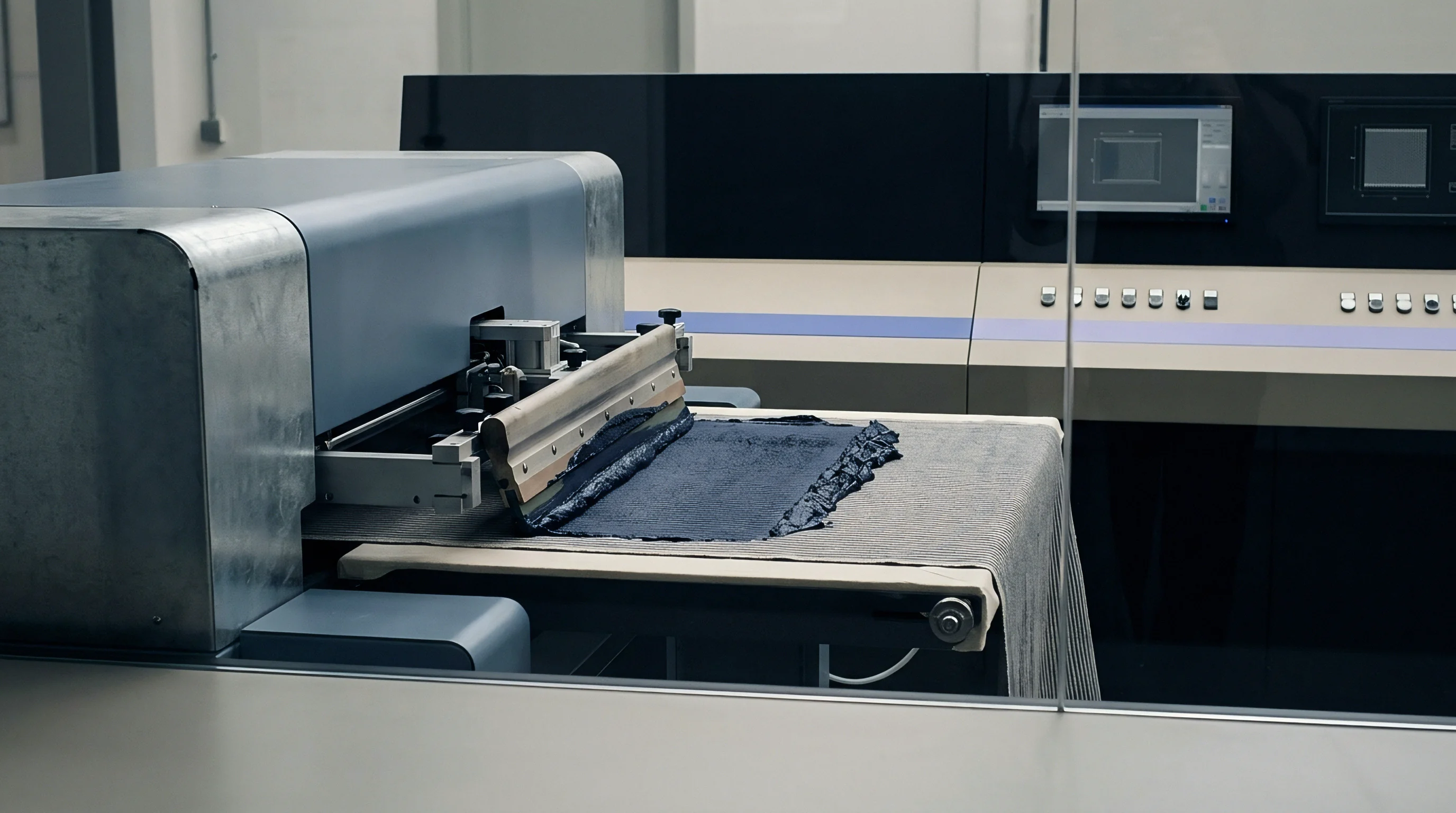
Direct digital inkjet heads deposit droplets between 3 and 24 picolitres directly onto pretreated yarn crowns. Screen printing drives shear-thinned paste through nickel perforations deep into the inter-yarn interstices under squeegee pressures between 1.8 and 3.2 bar. The resulting physical distribution of colourant establishes two fundamentally different optical surfaces on the exact same base cloth.
Colorimetric alignment between these production routes fails when buyers evaluate only flat trichromatic coordinates rather than total spectral distribution.
Pretreatment formulation dictates ink drop spread on digital substrates. A standard 120 g/m² combed cotton poplin (30 tex warp, 30 tex weft, 52 ends/cm, 28 picks/cm) accepts approximately 12 to 18 g/m² of dry chemical pickup during foulard padding before printing. Sodium alginate thickeners, urea humectants, and sodium carbonate alkali fix the ink drop within the uppermost 25 to 35 micrometres of the yarn structure.
Rotary screen paste, compounded with 6% to 9% emulsion thickener, coats the entire circumference of the yarn bundle to a depth exceeding 80 micrometres.
Ink droplet volume limits total colour buildup. Screen printing deposits wet paste layers between 40 and 70 micrometres thick. Digital drop-on-demand piezo systems build film thicknesses rarely exceeding 8 micrometres in single-pass or scanning modes.
High saturation targets achieved in screen paste with a 5% dyestuff concentration require digital print heads to fire maximum ink loads. Such heavy laydowns risk wet drop coalescence, ink bleed, and compromised contour definition.
Process sequencing controls colour development across different machinery platforms:
- Substrate pretreatment verification determines whether multivalent salts or polymer primers hold pigment particles at the surface or allow reactive dyes to diffuse into the amorphous zones of cellulosic fibres.
- Drop laydown calibration fixes the maximum fluid volume the textile structure absorbs before lateral wicking degrades edge acutance.
- Fixation thermal profile execution delivers continuous saturated steam at 102 degrees Celsius for reactive systems, or dry heat at 180 degrees Celsius for pigment binder crosslinking.
- Post-wash reduction clearing strips unfixed dye molecules from surface boundaries to stabilise spectrophotometric curves and prevent subsequent staining.
Dyestuff concentration gradients alter light absorption paths. When incident light enters a screen-printed fabric, it encounters a dense, uniform layer of dye bound throughout the fibre matrix. Incident light striking a digitally printed fabric penetrates through the shallow coloured layer into the uncoloured interior of the yarn.
Uncoloured cores scatter light back toward the spectrophotometer detector. This internal scatter flattens peak spectral absorption, creating a lighter, less saturated visual response despite identical chemical formulations.

Scatter
Light interaction within porous textile media follows the Kubelka-Munk theory of absorption and diffusion. The ratio of the spectral absorption coefficient K to the spectral scattering coefficient S relates non-linearly to monochromatic reflectance values captured across the 360 to 750 nanometre range. Surface colour intensity rises with the K/S value at each specific wavelength.
Digital pigment printing introduces white mineral binders and synthetic crosslinkers that inherently elevate the scattering coefficient S. Reactive and acid dye inks bond at the molecular level, leaving S determined solely by the raw fibre geometry and weave architecture.
Pigment binder systems alter surface micro-roughness. Acrylic and polyurethane binders form continuous polymeric films over the textile surface. These polymer films smooth out microscopic yarn ridges, increasing specular gloss while diluting apparent chroma.
Screen pastes rely on water-soluble polysaccharide carriers that wash away entirely during post-print wet processing. The finished screen-printed surface presents naked, dyed cellulose fibrils with high micro-roughness that trap ambient light through multiple internal reflections.
On a 130 g/m² combed cotton plain weave, direct reactive inkjet prints exhibit an optical penetration depth of 28 micrometres compared to 82 micrometres under flatbed screen application.
Chromatic yields diverge across distinct dye delivery mechanisms. Direct disperse printing on polyester micro-denier jersey requires thermal energy to sublimate dye molecules directly into the expanded polymer matrix. Transfer paper sublimation deposits colour onto the front face with zero wet penetration.
Rotary disperse print lines push dye deep into the reverse side of the knit loops. Spectrophotometers measuring the face side of transfer-printed polyester read higher reflectance peaks because the back face does not bleed light through the yarn core.
| Print Technology | Colourant Class | Penetration Depth (µm) | Peak K/S Value (600 nm) | Surface Specular Component | Visual Depth Yield |
|---|---|---|---|---|---|
| Rotary Screen | Reactive Paste | 85 ± 5 | 22.4 | Low (Scattering) | High |
| Flatbed Screen | Pigment Paste | 45 ± 4 | 16.8 | Medium (Polymer Film) | Medium |
| Direct Inkjet | Reactive Ink | 30 ± 3 | 18.1 | Low (Natural Fibre) | Medium-High |
| Direct Inkjet | Pigment Ink | 12 ± 2 | 13.5 | High (Polymer Layer) | Low-Medium |
| Direct-to-Film | Pigment + Hotmelt | 8 ± 1 | 15.2 | High (TPU Adhesive) | Medium |
Shade depth matching between rotary and inkjet platforms reveals distinct spectral limits. A reactive black formulated for screen paste combines high concentrations of CI Reactive Black 5 with CI Reactive Orange 13 and CI Reactive Red 120. Digital reactive black inks rely on modified bis-azo chromophores tailored to maintain low dynamic viscosities below 12 mPa·s at print temperatures.
The digital formulation yields a lower extinction coefficient across the 400 to 500 nanometre window. When balanced under standard day illuminants, the inkjet black displays an underlying reddish undertone under tungsten lighting.
Converters frequently claim that raising digital pass counts from 4-pass to 8-pass resolves all colour depth variances, yet the extra volume causes drop bleeding without increasing the chemical dye uptake limit of the available cellulose surface.

Rub
Mechanical abrasion strips unfixed colourant from surface boundaries under both dry and wet states. ISO 105-X12 testing applies a cylindrical finger with 9 Newtons of downward force across a 104 millimetre linear track against dry and deionised-water-wetted cotton crocking cloths. The resulting staining of the white test square provides a direct rating on the ISO 105-A03 grey scale.
Direct pigment inkjet systems consistently trail screen prints by half a grade to a full grade in wet crock fastness.
Binder crosslinking determines pigment retention. Screen pigment formulations utilise melamine-formaldehyde or polyisocyanate crosslinkers alongside acrylic emulsions, allowing high binder-to-pigment ratios between 3:1 and 5:1. Thermal curing at 150 degrees Celsius creates a tough, flexible protective web around each pigment crystal.
Inkjet printheads cannot eject high-viscosity binder emulsions without clogging micro-nozzles. Inkjet pigment sets therefore rely on self-crosslinking polyurethane nano-dispersions with binder-to-pigment ratios restricted below 1.5:1. The thinner binder layer abrades rapidly when water softens the polymer interface during wet crock testing.
Binder film thickness dictates dry crock performance while polymeric glass transition temperature governs wet wash retention.
Reactive and acid dye prints demonstrate opposite fastness behaviours. Covalent ether or ester bonds between reactive dye molecules and cellulosic hydroxyl groups resist abrasive shear. The fastness limit for reactive prints centers on the thoroughness of the washing-off range.
Inadequate open-width washing leaves hydrolysed dye on the fiber surface, degrading both ISO 105-C06 domestic laundering ratings and ISO 105-E04 perspiration test results.

Where Do Rotary and Digital Fastness Curves Diverge?
Divergence occurs primarily along the boundary between surface encapsulation and deep fibre diffusion. Screen printing delivers thick paste layers that encapsulate yarn bundles, whereas digital printing deposits micro-droplets on yarn tips. When the printed textile undergoes cyclic laundering, mechanical flexing breaks brittle surface films while leaving interior bonds intact.
Specific print modes exhibit distinct mechanical degradation pathways:
- Direct pigment inkjet films micro-fracture along yarn flexure points, causing dry crock fastness to drop from Grade 4 to Grade 3 under repeated Martindale cycles.
- Direct-to-film transfers peel at adhesive boundaries during hot water washing, degrading ISO 105-C06 wash fastness ratings when adhesive melt viscosity fails to wet the textile pores.
- Rotary reactive screen prints lose surface brilliance through regular fibrillar abrasion without significant dye-fibre bond cleavage, retaining ISO 105-X12 wet crock ratings above Grade 3-4.
- Digital disperse sublimation exhibits dye migration into adjacent synthetic elastane yarns during high-temperature washing, lowering adjacent fabric staining ratings.
| Test Standard | Test Condition | Rotary Reactive | Digital Reactive | Digital Pigment | DTF Pigment |
|---|---|---|---|---|---|
| ISO 105-C06:A2S | 40°C Wash, Shade Change | Grade 4-5 | Grade 4-5 | Grade 3-4 | Grade 4 |
| ISO 105-C06:A2S | 40°C Wash, Cotton Staining | Grade 4 | Grade 4 | Grade 4-5 | Grade 4-5 |
| ISO 105-X12 | Dry Rubbing Staining | Grade 4 | Grade 4 | Grade 3-4 | Grade 4 |
| ISO 105-X12 | Wet Rubbing Staining | Grade 3-4 | Grade 3 | Grade 2-3 | Grade 2-3 |
| ISO 105-B02 | Xenon Arc Lightfastness | Grade 5 | Grade 5 | Grade 6-7 | Grade 6 |
| ISO 105-E04 | Alkaline Perspiration | Grade 4-5 | Grade 4-5 | Grade 4 | Grade 4 |
Fastness testing reflects chemical bonding integrity. The data assumes a 100% cotton poplin base conditioned at 20 degrees Celsius and 65% relative humidity per ISO 139. If curing temperature drops below 140 degrees Celsius during pigment finishing, the resulting uncrosslinked resin washes out within two laundering cycles.
Sourcing teams that specify digital pigment prints for high-friction apparel lines without adjusting baseline fastness tolerances face systematic production rejections at destination ports.


Optics
Spectrophotometric colour measurement translates reflected electromagnetic radiation into mathematical coordinates. Standard spherical d/8° instruments capture diffuse reflectance with specular component included or excluded. Directional 45°/0° geometries illuminate specimens at 45 degrees and collect scattered rays normal to the surface, mimicking human visual assessment.
Textile surface textures induce systematic directional biases on 45°/0° instruments. Coarse twills and piqué knits scatter directional beams unevenly. Spherical geometry integrates all scattered angles, delivering reliable spectral data across differing fabric constructions.
Colorimetric difference equations calculate total shade error between production samples and master digital targets. The historical CIE 1976 L a b formula treats colour space as Euclidean, failing to mirror human eye sensitivities across saturated chroma regions. Modern quality contracts mandate the CMC(l:c) or CIEDE2000 (dE00) equations.
Setting lightness to chroma weightings (l:c) at 2:1 for CMC calculations balances acceptance bands across commercial apparel lots. CIEDE2000 modifies parametric weighting functions for lightness, chroma, and hue (kL, kC, kH), adding a rotation term RT to correct coordinate distortion in the blue-violet region.

Are Spectral Matches Stable across Illuminants?
Colorimetric matches valid under a single light source frequently break down when viewing conditions shift. Metamerism occurs when two print formulations yield identical CIE XYZ tristimulus values under reference light source D65, but split into visible mismatches under commercial fluorescent light TL84 or incandescent lamp Illuminant A. The Metamerism Index (MI) quantifies this shift:
MI = sqrt((dL1 – dL2)^2 + (da1 – da2)^2 + (db1 – db2)^2)
Indices calculated between D65 and Illuminant A isolate chemical dyestuff divergence between screen and digital ink sets. Screen paste recipes routinely rely on three to four primary colourants. Digital print engines deploy process sets spanning eight distinct channels: cyan, magenta, yellow, black, orange, red, blue, and light black.
Aligning an eight-channel digital print to a three-channel rotary standard demands precise mathematical ink profiling inside raster image processors.
Metameric index values exceeding 0.8 under Illuminant A indicate incompatible chromatic dye combinations between rotary paste and digital ink sets.
Tolerance bands must narrow as shade saturation rises. Pale pastels tolerate total colorimetric shifts (dE00) up to 0.8 without visual discordance. Deep navy, burgundy, and anthracite shades show obvious mismatches when dE00 crosses 0.5.
Screen print runs maintain shade consistency across thousands of metres when paste viscosity remains stable. Digital print heads suffer micro-deflections and missing nozzles over continuous runs, introducing micro-banding. Spectrophotometer aperture sizes must expand to 25.4 millimetres (Large Area View) to average out printhead pass variations across the read area.
Will spectrophotometric tolerances ever bridge the visual gap created by physical binder films without sacrificing dry crock performance?
Arbitration
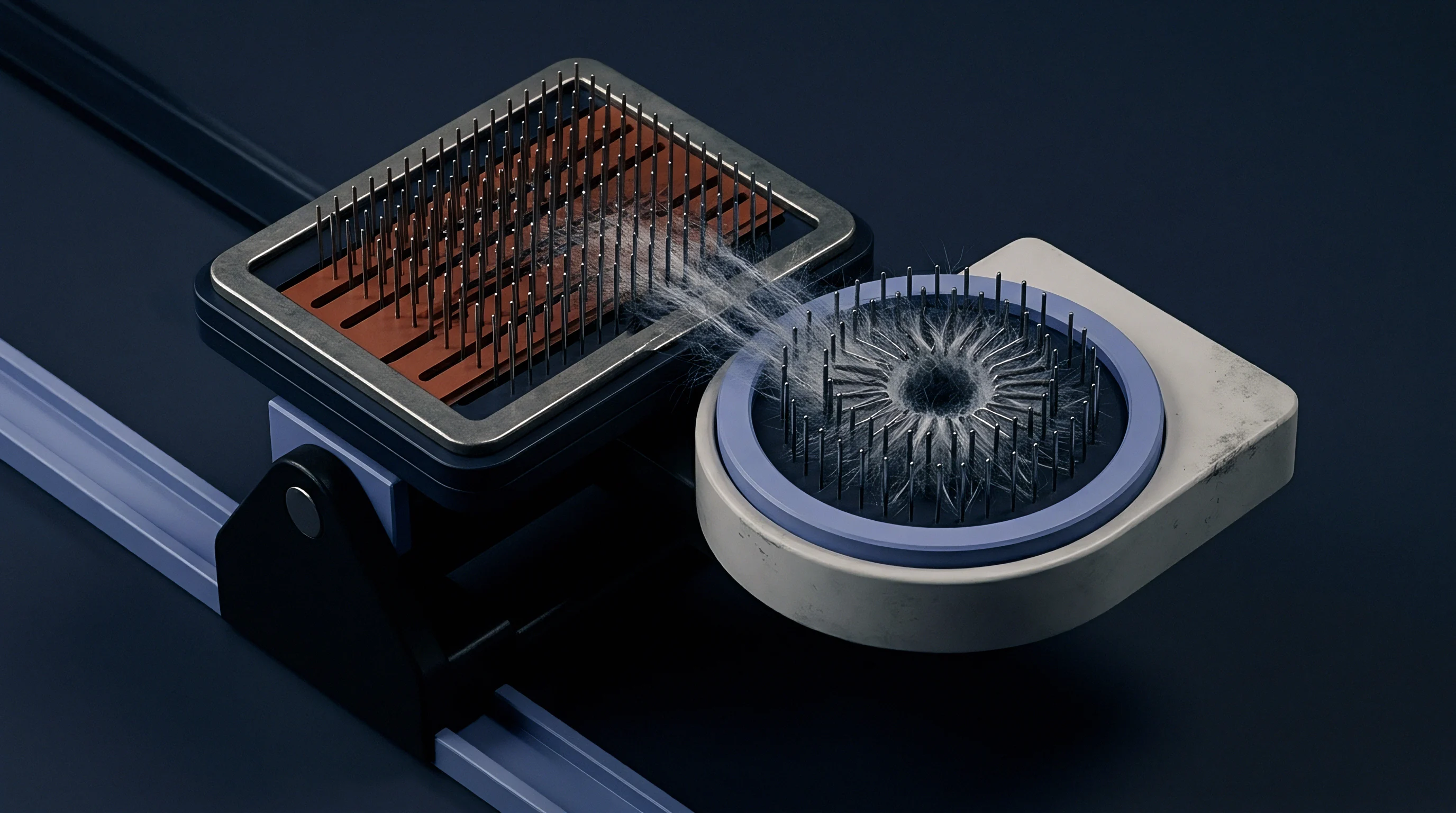
Commercial specifications align disparate print methods through enforceable technical agreements. Sourcing programs frequently run short digital sampling batches before committing to high-volume rotary screen production runs. Sourcing teams face costly shade drift when sample approvals rest entirely on visual swatches under uncalibrated daylight.
Production contracts require objective spectrophotometric datasets with explicit pass-fail criteria across defined primary and secondary illuminants.
Cross-technology alignment requires systematic verification stages:
- Digital master standard distribution supplies suppliers with raw spectrophotometric spectral reflectance files (.qtx or.cxf) instead of physical swatches that degrade over time.
- Secondary illuminant tolerance bounds cap metameric index values at 0.6 under TL84 and Illuminant A relative to the primary D65 reference.
- Fastness deviation allowances specify lower wet crock limits for pigment systems on structured weaves while holding wash fastness rigid.
- Conditioned sample evaluation enforces a minimum four-hour resting period at 20 degrees Celsius and 65% relative humidity before physical colorimetric measurement.
Commercial risk sits in the grey zone between visual perception and instrumental acceptance. Sourcing teams avoid disputes by locking measurement parameters inside the technical purchase order. The contract designates the specific spectrophotometer model, optical geometry, standard observer angle, aperture size, and illuminant hierarchy.
| Quality Parameter | Measurement Standard | Screen Production Base | Digital Conversion Limit | Reconciliation Action |
|---|---|---|---|---|
| Primary Shade (D65 10°) | ISO 105-J03 (CIEDE2000) | dE00 ≤ 0.6 | dE00 ≤ 0.8 | Adjust RIP channel curves |
| Metamerism (A / TL84) | DIN 6172 Index | MI ≤ 0.5 | MI ≤ 0.8 | Substitute digital ink gamut |
| Wet Crock Staining | ISO 105-X12 | Grade 3-4 | Grade 3 (Pigment) | Apply fluoropolymer topcoat |
| Dry Crock Staining | ISO 105-X12 | Grade 4 | Grade 4 | Increase cure dwell time |
| Wash Staining (60°C) | ISO 105-C06:C2S | Grade 4 | Grade 3-4 | Extend open-width wash cycles |
| Aperture Setting | Instrument Configuration | MAV (18 mm) | LAV (25.4 mm) | Mandate LAV for digital QC |
International sales contracts incorporating ISO 105-J03 colorimetric evaluation clauses specify that shipments meeting dE00 values below 0.8 under D65 and MI values below 0.7 under Illuminant A constitute commercially acceptable delivery, overriding subjective visual rejections at the port of entry.