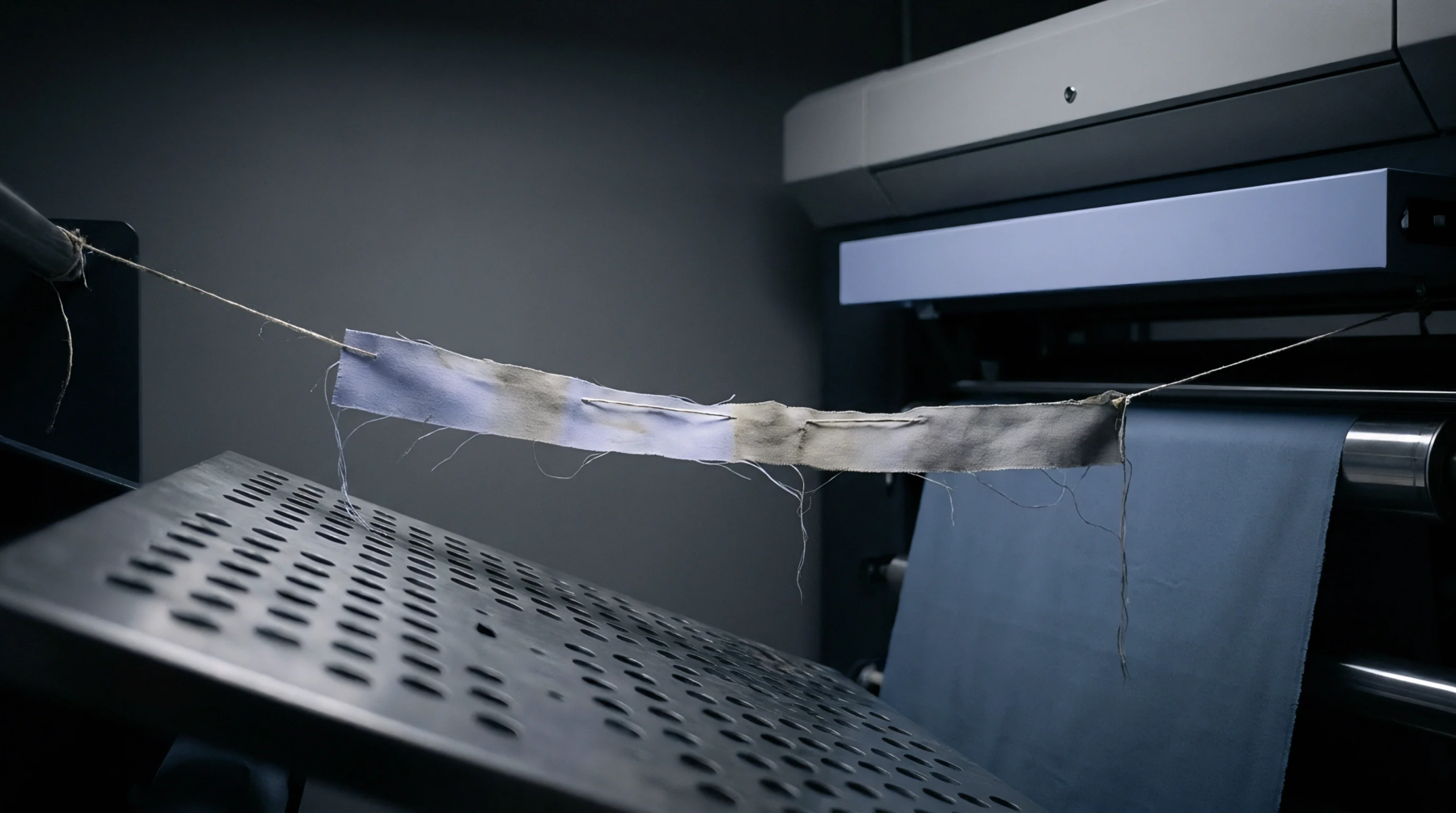
Digital Printing
Ink deposition technology utilizes electronically controlled nozzles to spray microscopic droplets of water-based dye onto textile substrates. Applying reactive inkjet printing represents a major method for patterning cellulosic fabrics like cotton, viscose and linen on demand. This method enables the production of detailed, high-resolution graphics without the high set-up costs and water consumption associated with traditional rotary screen printing.
Covalent Bonding
Reactive dyes form direct chemical bonds with the hydroxyl groups of the cellulose fiber under alkaline conditions. This chemical reaction occurs when the printed fabric is exposed to saturated steam, which locks the dye molecules permanently into the molecular structure of the fiber. The resulting bond ensures that the colors remain bright and resistant to fading even after multiple washes.
Fabric Preparation
Successful print application requires a specialized coating on the fabric prior to the digital printing stage. This pretreatment contains an alkali to trigger the dye reaction and thickeners to prevent the ink droplets from spreading or bleeding into adjacent areas. Without this controlled coating, the printed lines lose their sharp definition, resulting in fuzzy patterns and dull colors.
Post-Print Wash
Removing unreacted dye and chemical residues from the fabric requires a thorough washing process after the steam fixation is complete. Leaving these unfixed materials on the fabric causes color staining on light-colored areas of the garment during subsequent handling or washing. Factories monitor the wash water to ensure that all chemical residues are extracted before the fabric is dried and dispatched for garment assembly, thereby protecting the final product against staining and meeting global standards for color fastness.