Calculating Dehairing Yield Mass Balance across High Guard Hair Batches
Calculate dehairing yield by converting raw mass to clean dry keratin weight, subtracting guard hair and dirt losses, and normalizing to 17% commercial regain.


Separation
Mechanical dehairing isolates fine undercoat down from stiff guard hair by exploiting differences in aerodynamic drag, flexural rigidity, and linear density. In raw cashmere, coarse camel hair, and yak clips, guard hair accounts for 30 to 65 percent of the starting mass. Raw fleece arrives at the mill as a mixed mass of soft down, thick guard hair, residual suint, dirt, and sand.
Accounting for mass balance on a line running high-guard hair lots requires tracking every fraction discarded across opening, carding, and air-separation units. Simple yield calculations comparing intake weight directly to final down output ignore real losses in guard hair reject chutes, short-fibre waste, sand traps, and carding moisture evaporation. A full mass balance must link raw unwashed mass, scoured grease-free mass, clean oven-dry mass, and commercial conditioned mass for both the primary product and all co-product streams.
Aerodynamic separation relies on the square-cube law governing particle acceleration in air currents. Fine down fibres, with mean diameters typically between 13.5 microns and 18.5 microns, have a high specific surface area relative to their mass. Directed air blasts inside rotating pin cylinders exert high drag on these fine fibres, carrying them forward into collection condensers.
Guard hairs, ranging from 40 microns to 110 microns in mean diameter with continuous or interrupted medullary cavities, are far stiffer and heavier. Centrifugal force from high-speed worker and stripper rollers hurls these rigid hairs outward into reject hoppers, while the flexible down stays caught in the wire clothing. If guard hair loading rises above 45 percent of incoming raw mass, standard carding assemblies quickly choke, letting coarse hair carry over into the clean web.
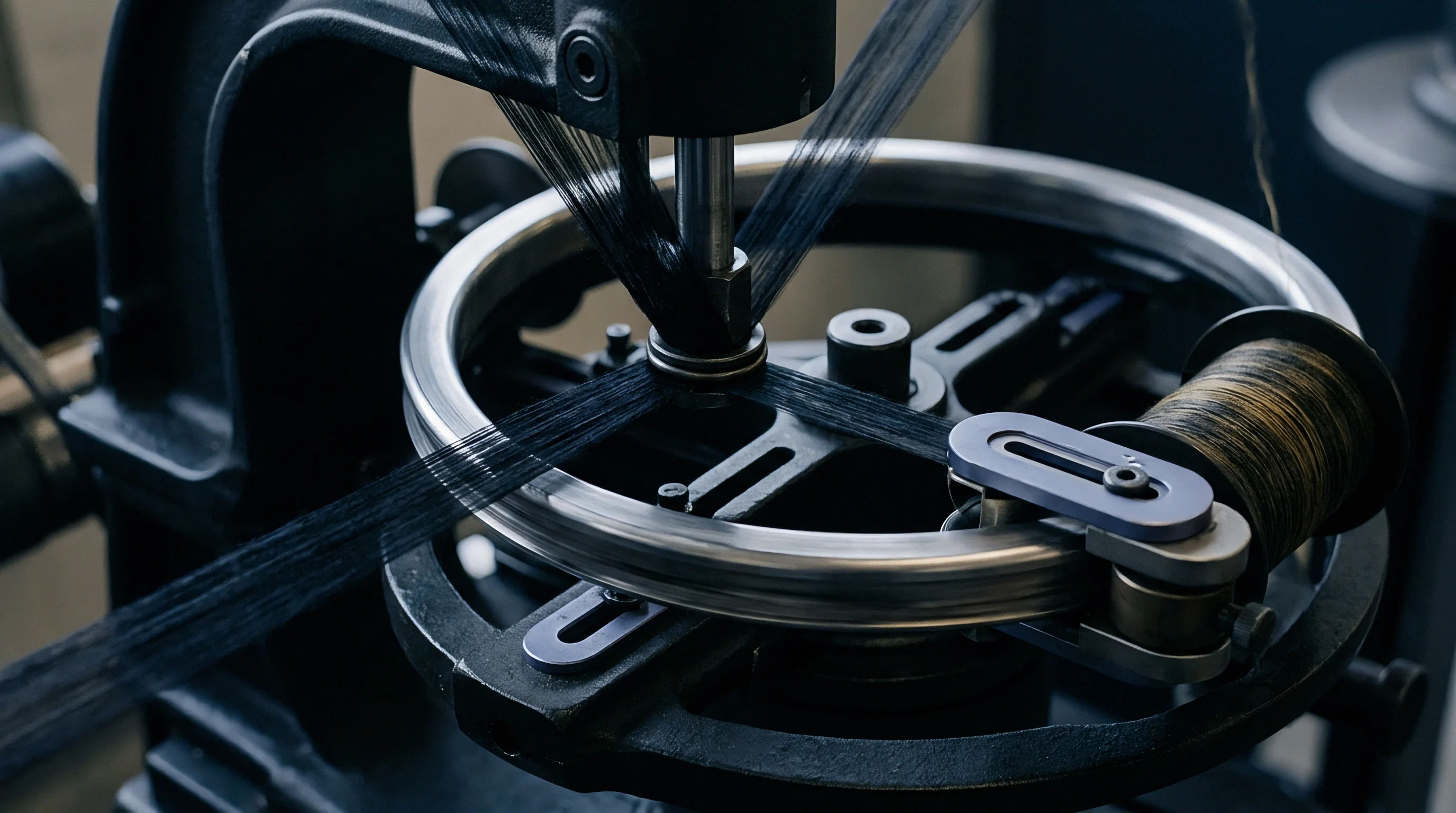
Aerodynamic Mechanics and Centrifugal Rejection Dynamics
Heavy guard hair loading changes how the fibre lap behaves on the main cylinder. The momentum of a 70-micron guard hair moving at 18 meters per second easily overcomes the air drag holding fine down in place. Engineers adjust cylinder speeds, worker-stripper clearances, and suction velocity to keep separation efficiency high.
Lots with heavy guard hair require slower throughput to ensure adequate residence time in opening chambers. Cutting residence time short lets coarse hair pass straight into the primary condenser, forcing extra passes that break fibres and shorten the down staple.
The structural contrast between coarse medullated hair and solid cortical down dictates how fibres react under mechanical beating. Medullated guard hairs have little elastic recovery when bent sharply over stripper knives, snapping into sharp fragments if cylinder clearances are set too tight. Once broken below 5 millimeters in length, these fragments become almost impossible to pull out with air currents: their reduced mass produces drag characteristics similar to down, even though they remain thick.
Mass balance calculations have to factor in this fragmentation rate, since unextracted bits show up directly as contamination in the finished sliver.

Mechanical Interruption and Processing Stress Points
High guard hair volumes cause rapid mechanical wear on opening pins and card clothing. A raw batch containing 55 percent guard hair strikes cylinder wires with three times the kinetic force of a lighter 30 percent batch. As pins dull, wire bends, and grid bars clog over a production run, extraction geometry shifts, pulling yields apart between the start and end of the same lot.
- Feed roller compaction grips dense fleece clumps and applies localized crushing forces that snap coarse hair shafts before carding even starts.
- Worker-stripper wire loading fills rapidly with coarse medullated fibers, narrowing pin clearances and reducing down retention across the main cylinder.
- Mote knife deflection occurs under repeated guard hair impacts, widening blade gaps and letting coarse fibers bypass the waste hoppers.
- Condenser screen blinding happens when short broken hairs block airflow passages, dropping the static pressure differentials required for clean separation.
Raw fleece varies by region, season, and harvesting method. Hand-combed cashmere from East Asian pastoral areas carries less mineral dirt, but guard hair content spikes if combing reaches down to the skin boundary. Shorn cashmere contains cut hair butts that align parallel in the feed lap, raising the risk of cylinder bite and fiber shear.
Shorn clips therefore need a double-pass pre-opening stage to align fibers before air separation can work reliably.
Unwashed raw stock carries grease and dirt that alter fiber friction. Residual wool grease and suint bind coarse guard hairs to fine down clusters. Trying to dehair unwashed or inadequately scoured fibre leads to heavy down loss in the reject stream, as sticky coarse hairs drag good down into waste chutes.
Baseline yield accuracy depends directly on scouring efficiency.
Separation efficiency drops sharply as guard hair content rises. High volumes of coarse hair clog grid bars and trigger frequent automatic blow-outs that dump mixed fibre into waste bins. Tracking mass balance through successive passes requires distinct sampling protocols at each machine exit point.
Until grease, dirt, moisture, and pure fibre fractions are isolated for every waste chute, yield figures remain unreliable.
Equipment designers and mill operators still debate the exact point where wire wear permanently alters extraction mechanics across a 100-ton campaign.

Sieve
Screening and physical fractionation form the main structural stages of mechanical dehairing. Sieves, perforated drums, and wire-mesh grids separate dirt, vegetable matter, and short coarse fibers from the longer fiber mass. Raw animal hair carries substantial sand and soil from grazing land.
Sand grains between 50 microns and 300 microns are far denser than any fiber, so they drop through lower chamber screens as worker cylinders break up encrusted dirt.
Sieve mesh aperture determines initial yield purity. A primary aperture of 3 millimeters lets heavy sand and short guard hair stubs drop into the waste screw conveyor below. If that opening is widened to 5 millimeters, fine down clusters fall through, inflating waste weights and cutting commercial yield.
If the openings are too small, suint-bonded dirt flakes quickly blind the screen, driving mineral matter into fine carding assemblies where it accelerates wire wear.
Fractionation Mechanics across Sequential Screen Assemblies
Multi-stage lines use different screen profiles through sequential processing zones. The pre-opener relies on heavy grid bars spaced to dump sand, rocks, and large burs. Middle carding zones fit fine perforated plates beneath worker cylinders to collect loose guard hair without catching airborne down.
Final finishing zones use air-assisted rotary screens that trap ultra-fine down while blowing micro-dust into collection baghouses.
Mass balance across physical sieves requires measuring three separate outputs: mineral droppings, fibrous guard hair reject, and air-entrained dust. Mineral droppings carry almost no moisture, while fibrous reject reflects ambient mill humidity. Converting these raw sieve outputs into a true mass balance requires drying every fraction to a clean dry mass before applying standard regain figures.
Equipment setup directly dictates sieve retention. Cylinder tip speed, screen gap, and fan static pressure decide whether borderline fibers land in the main product or the waste box. Increasing exhaust air velocity pulls fine down out of screen waste and boosts product yield, but it also pulls short guard hairs into the clean web, compromising purity.
Coarse hair removal efficiency improves when screen apertures match the physical length profile of the guard hair population rather than the diameter of the down.

Operational Variables and Yield Sensitivity
Yield sensitivity to screen parameters jumps when running raw batches with guard hair ratios over 50 percent. Thick mats of guard hair blinding screen openings disrupt intended airflow, creating eddies that drag down into lower waste hoppers. Periodic screen wiping or automated air-pulse cleaning is essential to keep mass balance throughput steady.
Vegetable matter requires specific sieve adjustments. Bur-extracting rollers crushed against grid plates flatten burs into shreds, which then pass through standard screens and entangle in the fine down web. Operators must balance aggressive bur extraction against fiber damage, since over-crushing plant material creates small contaminants that cannot be removed, reducing the value of the finished down.
| Input Guard Hair Fraction (%) | Main Cylinder Speed (RPM) | Primary Screen Aperture (mm) | Guard Hair Rejection Yield (%) | Unintended Down Loss in Reject (%) | Residual Guard Hair in Output (%) |
|---|---|---|---|---|---|
| 35.0 | 420 | 2.5 | 33.2 | 1.8 | 0.12 |
| 45.0 | 380 | 3.0 | 42.1 | 2.9 | 0.18 |
| 55.0 | 340 | 3.5 | 50.8 | 4.2 | 0.24 |
| 65.0 | 300 | 4.0 | 59.5 | 5.5 | 0.38 |
Test run data shows clear trade-offs between processing speed, screen geometry, and fiber purity. Higher guard hair fractions require lower main cylinder speeds to reduce pin impact and prevent fiber breakage. Widening primary screen apertures prevents blinding under heavy hair loads, but it increases the loss of valuable down into the guard hair reject.
Residual guard hair in the finished sliver rises consistently when raw fleece contains over 55 percent coarse hair, even at reduced throughput speeds.
Sieve maintenance dictates operational stability across multi-ton production runs. Wire grid wear alters slot dimensions by fractions of a millimeter over months of continuous operation. A gap that widens from 3.0 millimeters to 3.3 millimeters through mineral erosion can increase down loss into waste chutes by up to 1.5 percent of total batch mass, quietly eroding yield without causing obvious mechanical failures on the floor.
Tight sieve tolerances protect down fibers, but they demand slower throughput.


Equilibrium
Animal fibers are highly hygroscopic, absorbing and releasing atmospheric moisture until reaching thermodynamic equilibrium with surrounding air. Moisture regain is the mass of water in a fiber expressed as a percentage of its oven-dry mass. Cashmere, camel hair, and yak hair have standard regain allowances set by international standards like ISO 6741 and IWTO regulations.
Cashmere carries an official commercial regain allowance of 17.0 percent, coarse wool is set at 18.25 percent, and raw greasy fleece can range from 8 percent to over 22 percent moisture depending on storage conditions and relative humidity.
Calculating yield on as-received weight without correcting for moisture leads to substantial financial errors. A 10,000-kilogram lot of raw cashmere delivered at 20 percent moisture contains 8,333.33 kilograms of dry mass. If processed in a dry mill where the output down stabilizes at 12 percent moisture, the measured weight drops simply through water evaporation.
Without oven-dry corrections, this lost water shows up on the ledger as missing fiber, distorting processing efficiency.

Oven-Dry Mass Determination and Standard Regain Normalization
Standardizing mass balance means converting every measurement to clean dry mass before scaling up to commercial allowance weight. Clean dry mass is measured by drying representative fiber samples in a ventilated oven at 105 degrees Celsius (plus or minus 2 degrees Celsius) until they reach a constant weight. Moisture testing must take place simultaneously on incoming raw lots, intermediate web fractions, final down, guard hair waste, and mineral droppings.
Calculating commercial allowance mass requires precise application of standard regain values to the clean oven-dry mass obtained from testing. The governing mathematical relationship converts dry mass into commercial mass using the agreed standard regain percentage:
Commercial Mass = Clean Dry Mass (1 + (Standard Regain Percentage / 100))
When raw inputs contain non-fibrous impurities like suint, grease, and vegetable matter, determining true yield requires solvent extraction per ISO 3074 to measure extractable content. Because wool grease and suint retain moisture differently than pure keratin fibers, calculations require a two-stage adjustment: measuring solvent-extracted clean dry keratin mass first, then applying standard regain factors.

Standardized Testing Protocol for Batch Conditioning
- Draw representative core samples from incoming raw bales using an automated pneumatic coring tube, taking at least 20 cores per lot following ISO 3170 guidelines.
- Place drawn core samples immediately into vapor-tight, non-absorbent containers to prevent moisture shifts prior to laboratory weighing.
- Record the gross received mass of each sample container on an analytical balance calibrated to 0.001 grams.
- Extract non-fibrous grease and suint contaminants from specimens using dichloromethane solvent in a Soxhlet extraction apparatus for 20 cycles.
- Dry the extracted specimen in a ventilated conditioning oven at 105 degrees Celsius until three consecutive weighings taken 15 minutes apart vary by less than 0.05 percent mass.
- Cool the specimen in a desiccator with activated silica gel for 45 minutes before recording the final clean oven-dry mass.
- Calculate the dry clean wool or down content percentage against original received gross mass, deducting grease and vegetable matter.
- Apply the official commercial regain percentage to the clean dry keratin mass to derive the final commercial weight of the batch.
Following this protocol for every lot ensures moisture fluctuations during processing do not distort yield calculations. Shifts in relative humidity between mill zones can easily skew intermediate weighings if samples sit unconditioned on floor scales.
| Fibre Type and Class | Standard Standardizing Body | Official Regain Allowance (%) | Commercial Mass Multiplier | Typical As-Received Moisture Range (%) |
|---|---|---|---|---|
| Dehaired Cashmere Down | IWTO / ISO 6741 | 17.00 | 1.1700 | 11.0 – 15.5 |
| Raw Greasy Cashmere Fleece | IWTO Standard | 17.00 | 1.1700 | 8.5 – 21.0 |
| Coarse Guard Hair (Camel/Cashmere) | ISO 6741 | 18.25 | 1.1825 | 10.0 – 16.0 |
| Dehaired Camel Down | ISO 6741 | 17.00 | 1.1700 | 12.0 – 16.5 |
| Dehaired Yak Down | ISO Standard | 17.00 | 1.1700 | 11.5 – 15.0 |
The table underscores the gap between ambient as-received moisture levels and official commercial accounting allowances. Raw fleece stored in dry warehouses can fall to 8.5 percent moisture. Running this fleece without normalizing regain inflates apparent yields when the finished down is weighed in a humid finishing environment.
Standardizing all weights to clean dry mass plus official regain removes regional climate bias from commercial settlements.
An early oversight in sampling procedure cost $14,200 when a plant weighed incoming high-guard cashmere bales during an intense rainy season without taking core moisture samples, resulting in an unrecoverable 2.8 percent moisture penalty upon clean output delivery.
Underestimating moisture absorption leads straight to financial loss on high-value lots.
Assay
Determining fiber composition and guard hair contamination in a dehaired lot requires rigorous laboratory assays. Visual inspection cannot distinguish fine guard hair roots from coarse down fibers in the borderline range between 20 microns and 30 microns. Quantitative analysis relies on optical microscopy, automated optical image analysis, and projection microscope counting methods specified by ISO 17751 and IWTO-58 standards.
Trade contracts strictly limit guard hair contamination in commercial dehaired cashmere. Standard commercial grades set maximum guard hair limits between 0.2 percent and 1.0 percent by mass. Because guard hairs are far thicker and heavier than down, even a small number of coarse hairs noticeably alters mass balance calculations.
A single 80-micron guard hair 50 millimeters long weighs as much as roughly 25 fine down fibers measuring 15 microns in diameter and 30 millimeters in length.
Microscopy and Automated Optical Analysis Protocols
Testing methodologies split into numerical particle counting and optical volumetric mass calculation. Under ISO 17751-2, the Optical Fibre Diameter Analyser (OFDA100 or OFDA200) measures thousands of fiber cross-sections per second, capturing diameter distribution, medullation, and coarse fiber counts. The system classifies fibers exceeding a specified cut-off threshold ~ typically set between 30 microns and 30 microns depending on contract terms ~ as guard hair.
Converting particle counts into mass percentages requires applying fiber cross-sectional area and density equations. Medullated guard hairs contain central air cavities that drop their effective density below that of solid keratin. Solid keratin has a specific gravity of 1.31 grams per cubic centimeter.
A coarse guard hair with a 30 percent medullation volume ratio has an effective density of just 0.917 grams per cubic centimeter. Failing to correct for this void fraction overstates guard hair mass, skewing the yield equation.
IWTO-58 mandates calculating guard hair mass percentage by combining microscopic diameter measurement with medullation volume adjustments rather than relying on raw particle count ratios.
Which Residual Guard Hair Threshold Triggers Yield Penalty Rejection?
Commercial contracts enforce clear penalty schedules based on residual guard hair thresholds. In high-end cashmere spinning, guard hair content above 0.5 percent by mass causes yarn breaks on spinning frames and skin irritation in finished garments. When an assay reveals 0.75 percent guard hair on a lot contracted for a maximum of 0.30 percent, the buyer will apply price deductions or reject the shipment outright.
Sample preparation can damage fine down fibers and artificially inflate coarse counts through end-flattening if snippet cutting blades squash soft down fibers at the focal plane, leading optical analyzers to misclassify flattened 16-micron down as 32-micron coarse fragments.
Resolving these disputes requires cross-sectional light microscopy or scanning electron microscopy (SEM) under ISO 17751-3. SEM imaging clearly differentiates true medullated guard hair wall structures from squashed down fibers, eliminating misclassification errors. Re-testing requires fresh specimens drawn in the presence of both parties using multi-core sampling patterns.
Assay results directly drive mass reconciliation. If testing reveals more residual guard hair in the final product than machine collection weights predicted, coarse fibers are building up inside machine wire clothing ~ a clear sign of impending pin blinding and process degradation.
In testing disputes, high ambient humidity during measurement can swell down fibers into coarse diameter ranges.
Yield
Calculating dehairing yield across high guard hair batches requires tracking every input and output stream on a dry, contaminant-free mass basis. Total raw mass input must equal the combined output of product, waste streams, and unaccounted losses. Lots with high guard hair fractions suffer higher unaccounted losses because of heavy dust generation and short fiber fly escaping through extraction vents.
The total mass balance equation is formulated as follows:
M_raw C_raw = (M_down C_down) + (M_guard C_guard) + (M_dirt C_dirt) + (M_fly C_fly) + L_unaccounted
Where M represents the total conditioned mass of each stream, C represents the dry pure fiber concentration fraction of that stream, and L_unaccounted represents unaccounted mechanical mass loss. To calculate net pure down yield (Y_down), the mass of pure dehaired down recovered is expressed relative to the total clean dry fiber content present in the original raw input lot:
Y_down (%) = 100
Worked Batch Example: 5,000 Kilogram High Guard Hair Cashmere Processing Campaign
As a practical example, consider a commercial campaign processing a 5,000.0 kilogram batch of raw unwashed Mongolian cashmere with high guard hair content. The raw lot undergoes pre-scouring, mechanical opening, five sequential carding/dehairing passes, and final dust extraction. Initial laboratory assay establishes the following raw composition:
- As-received raw gross mass measures exactly 5,000.0 kilograms at an initial moisture content of 11.2 percent.
- Solvent extractable grease and suint content measures 4.8 percent of dry mass.
- Sand and mineral dirt content measures 12.5 percent of gross raw mass.
- Coarse guard hair content measures 52.0 percent of clean dry fiber mass.
- Fine undercoat down content measures 48.0 percent of clean dry fiber mass.
First, calculate the initial clean dry keratin mass (M_keratin_dry) present in the incoming 5,000.0 kilogram raw lot:
Water mass = 5,000.0 kg 0.112 = 560.0 kg
Total dry mass = 5,000.0 kg – 560.0 kg = 4,440.0 kg
Mineral dirt mass = 5,000.0 kg 0.125 = 625.0 kg
Dry non-dirt mass = 4,440.0 kg – 625.0 kg = 3,815.0 kg
Grease mass = 3,815.0 kg 0.048 = 183.12 kg
M_keratin_dry = 3,815.0 kg – 183.12 kg = 3,631.88 kg
From this clean dry keratin mass of 3,631.88 kilograms, apply the initial assay fractions to determine the pure dry down and guard hair inputs:
Pure dry down input = 3,631.88 kg 0.48 = 1,743.30 kg
Pure dry guard hair input = 3,631.88 kg 0.52 = 1,885.58 kg
After mechanical processing, the mill collects five distinct output streams, weighed and sampled for moisture and purity in the laboratory:
1. Dehaired Down Output Stream: Gross mass recovered is 1,820.0 kg at 14.5% moisture. Dry mass = 1,556.1 kg.
Assay shows 0.3% residual guard hair, 0.2% residual grease, and 99.5% pure dry down. Pure dry down mass recovered = 1,548.32 kg.
2. Coarse Guard Hair Reject Stream: Gross mass recovered is 2,210.0 kg at 12.0% moisture. Dry mass = 1,944.8 kg.
Assay shows 92.0% pure dry guard hair, 5.5% short down fiber lost in waste, and 2.5% fine mineral dust. Pure dry guard hair mass recovered = 1,789.22 kg. Down lost in guard hair waste = 106.96 kg.
3. Heavy Sand and Mineral Chute Output: Dry mineral mass collected = 618.0 kg. Contains 7.0 kg of short crushed fiber fragments.
4. Cyclonic Dust Baghouse Waste: Dry dust mass collected = 142.0 kg. Contains 62.0 kg of unrecoverable short fiber fly and 80.0 kg of micro-sand.
5. Scouring Solvent Grease Waste: Recovered grease mass = 180.0 kg.
Now perform the mass balance reconciliation for pure dry down fiber:
Pure dry down input = 1,743.30 kg
Pure dry down recovered in clean output = 1,548.32 kg
Pure dry down lost in guard hair reject = 106.96 kg
Pure dry down lost in baghouse fly and sand = 55.0 kg
Total down accounted for = 1,548.32 + 106.96 + 55.0 = 1,710.28 kg
Unaccounted dry down mass loss = 1,743.30 kg – 1,710.28 kg = 33.02 kg (1.89% of initial down input).
Calculate the final Net Processed Yield of Commercial Dehaired Down at standard 17.0 percent regain allowance:
Commercial Dehaired Down Yield = 1,548.32 kg (1 + 0.17) = 1,811.53 kg
Net Fiber Recovery Yield = (1,548.32 kg / 1,743.30 kg) 100 = 88.82 percent of potential clean down mass.
| Process Stream Name | Gross Mass (kg) | Moisture Content (%) | Dry Keratin Mass (kg) | Pure Down Mass (kg) | Guard Hair Mass (kg) | Non-Fiber Waste (kg) | |
|---|---|---|---|---|---|---|---|
| Raw Inputs Total | 5,000.00 | 11.20 | 3,631.88 | 1,743.30 | 1,885.58 | 808.12 | |
| Clean Dehaired Down | 1,820.00 | 14.50 | 1,553.00 | 1,548.32 | 4.68 | 0.00 | |
| Guard Hair Reject Chute | 2,210.00 | 12.00 | 1,896.18 | 106.96 | 1,789.22 | 48.62 | |
| Sand Trap & Mineral Waste | 625.00 | 1.12 | 7.00 | 2.00 | 5.00 | 618.00 | |
| Baghouse Dust Collection | 142.00 | 0.00 | 62.00 | 53.00 | 9.00 | 80.00 | |
| Scouring Grease & Suint Waste | 180.00 | 0.00 | 0.00 | 0.00 | 0.00 | 180.00 | |
| Summary Note: Unaccounted dry mass balance difference equals 33.02 kg of fiber fly, representing 0.91% of total dry keratin input mass. | |||||||
The ledger highlights where valuable undercoat down escapes during mechanical dehairing. The 106.96 kilograms of fine down lost in the guard hair reject chute is the single largest operational loss, worth over $12,000 in lost revenue. Adjusting screen apertures or running the guard hair reject through a secondary waste recovery opener reclaims up to 60 percent of this fiber, directly boosting profitability.
At 17.0 percent standard regain, a raw lot containing 52.0 percent guard hair delivers an effective commercial dehaired down yield of 36.23 percent relative to gross received raw weight.
Variance analysis shows that incoming guard hair percentage dictates total yield. A 2 percent increase in raw guard hair reduces commercial down yield by 2.15 percent, while adding to machine residence time and power consumption per kilogram of output.
Standard tolling contracts specify that if actual yields fall more than 1.5 percentage points below core assay estimates, the buyer receives a proportional deduction on processing fees.
Reconciliation
Final mass balance reconciliation ties lab reports, scale receipts, and customs filings into a legally binding commercial dossier. Cross-border processing of specialty animal fibres often sparks disputes over weight gaps between dispatch and delivery. Auditing mass balance integrity requires tracing fibre identity from the origin warehouse through intermediate toll-processing mills to the final spinning plant.
Toll-processing agreements govern contract dehairing. Under a standard contract, the mill processes client-owned raw fiber for a fixed fee per kilogram of raw input or delivered output. These agreements must explicitly outline yield loss allowances, guard hair thresholds, moisture regain standards, and ownership of co-product streams.
If the mill retains rights to sell coarse guard hair to upholstery or carpet manufacturers, that revenue should offset primary processing charges on the invoice.
Customs Classification and Tariff Duty Mechanics
Customs authorities classify animal fibers based on species, diameter, and degree of processing. Under the Harmonized System (HS) code framework, raw unwashed or scoured specialty fibers fall under heading 5102, while dehaired, carded, or combed fibers move to heading 5105. Duty rates differ sharply between raw fleece and processed sliver.
Importers misclassifying partially dehaired stock with residual guard hair over 2 percent risk steep tariff penalties, seizure, and back-duty assessments.
Clear mass balance documentation protects buyers during customs audits, where officials inspect weight conversion figures to verify that imported down volumes align with raw export declarations. If an importer declares 5,000 kilograms of raw cashmere exports and then imports 3,500 kilograms of dehaired down, auditors will flag that 70 percent yield recovery as implausible for high guard hair stock, triggering a forensic audit of the whole processing chain.

Audit Dossier Requirements for Mass Balance Verification
- Original raw bale weight certificates showing gross, tare, and net weights certified by an accredited independent weighmaster at loading.
- IWTO core test certificates establishing initial moisture content, solvent extractable grease, mineral ash, and guard hair diameter distributions before processing.
- Scouring line mass log sheets recording grease extraction weights, sludge discharge, and clean scoured mass entering the dehairing facility.
- Machine carding production sheets tracking pass counts, waste chute weights, and ambient temperature and relative humidity recorded every four hours.
- Final dehaired down test certificates issued by an ISO 17025 accredited laboratory verifying mean fiber diameter, moisture regain, and residual guard hair percentage.
- Co-product stream disposal logs documenting certified weights and buyer transfer invoices for coarse guard hair waste and mineral droppings.
Compiling these six core documents establishes an unbroken chain of custody and mass verification. Discrepancies between floor weight logs and lab test reports highlight potential issues like fiber theft, unrecorded waste purges, or uncalibrated scales.
Dispute resolution relies on clear legal definitions separating normal processing loss from operational negligence. A mill that overheats processing cylinders, causing mechanical scorching and fiber breakage, cannot claim the resulting fly as normal unaccounted loss. Comparing standardized fiber length metrics before and after dehairing shows whether yield loss stemmed from excessive mechanical force.
Commercial settlements adjust processing fee invoices directly based on mass balance variance. If a mill achieves higher down recovery than raw core assays predicted, a bonus clause awards them a percentage of the extra commercial value generated. If poor machine maintenance causes excessive down loss in guard hair waste hoppers, a deficit penalty deducts the full market value of that lost fiber from the processing invoice.
Landed cost per kilogram of finished down equals total raw material cost plus scouring and dehairing toll fees, freight, customs duties, and testing charges, divided by the final reconciled commercial mass of clean down delivered to the spinning mill.