Visual Irregularity
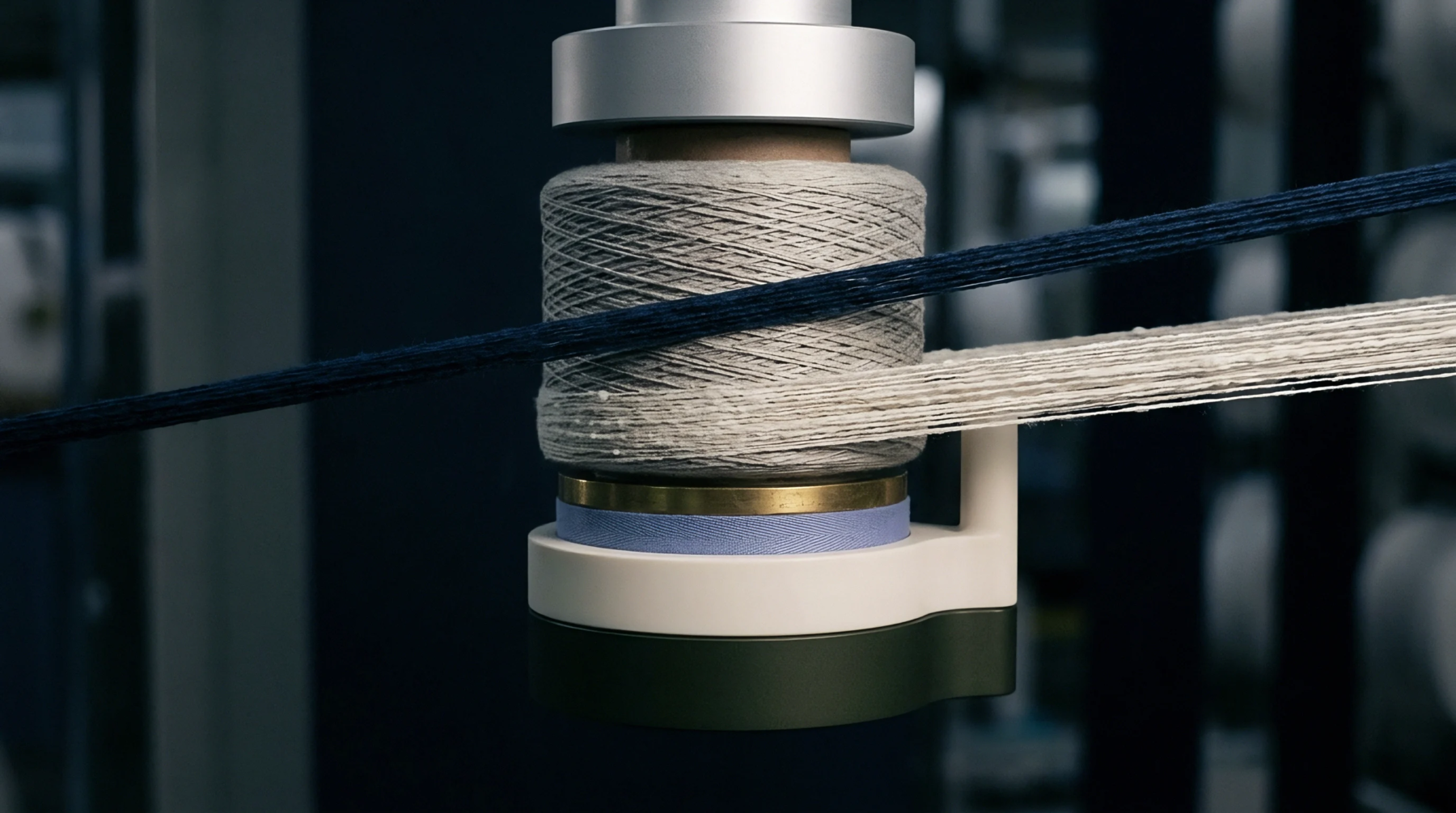
Unintentional repetitive stripes in the course or wale direction of a knitted fabric constitute a fault in uniformity. A barré defect appears as a pattern of bands that differs from the surrounding cloth in luster. These variations often stem from physical differences in the yarn.
Mechanical Origin
Machine settings influence the formation of these marks during the knitting process. Improper tensioning of the yarn at specific feeders creates a periodic change in stitch length. Variations in the diameter of the cylinder or uneven sinker movement also contribute to the phenomenon.
Adjustments to the dial or cylinder cams must be checked across every feeder to ensure consistency. Precise measurement of yarn consumption at each feed point identifies the source of the mechanical variation.
Material Characteristic
Differences in the dye affinity of the yarn can cause a barré defect that remains invisible until the fabric is finished. This occurs when lots of different dyeability are mixed or when heat setting is inconsistent during texturizing. Optical inspection under controlled lighting reveals the intensity of the stripes.
Quality Evaluation
Assessment of the fabric usually follows a scale of one to five during inspection at the mill. Severe instances render the material unsuitable for high end garments due to the visible repetitive nature of the stripes. Photometric techniques help quantify the contrast between the band and the base fabric.