Quantifying Hydrophobic Film Defect Frequency in Combed Knitted Fabrics
Quantifying hydrophobic film defect frequency in combed knits combines ISO 811 hydrostatic testing with inline 0.1-millimetre optical scanning per 100 square metres.


Pinhole
A circle of blue wax crayon surrounds a wet dot on the unbonded jersey face at inspection frame four. Across twenty linear metres of 140-gram combed cotton jersey laminated to a twelve-micron thermoplastic polyurethane membrane, three discrete moisture spots bleed through at ninety millibars of hydrostatic pressure. Each leak indicates a microscopic breach where water droplets traverse the barrier layer.
The base yarn is an Ne 40/1 combed compact ring-spun cotton knitting yarn, spun with a nineteen percent comber noil extraction setting to eliminate short fibres below twelve millimetres. Even with this combing level, rigid cellulosic fibre tips penetrate the molten film during thermal nip engagement.
Quantifying these barrier discontinuities demands separating yarn surface morphology from film extrusion flaws. An extruded monolithic hydrophilic copolyether-ester or polyurethane film leaves the blown-film die with an average thickness variation of plus or minus five percent. Film-origin voids occur as gel specks, unmolten polymer resin particles, or volatile blowouts from moisture trapped inside the extruder barrel.
When laminated to circular knitted goods, these imperfections interact violently with the stitch architecture.
Hydrostatic pressure values collapse below forty millibars when yarn hairiness exceeds 1.8 on the Zweigle s3 tester.
Circular single jersey knits stretch up to forty percent in the course direction under minimal garment tension. When the composite structure extends, every embedded fibre protrusion acts as a local stress concentrator on the barrier membrane. The gauge reads twelve microns.
Micro-slits propagate parallel to the course lines where the loop heads bend over the needle sinkers.
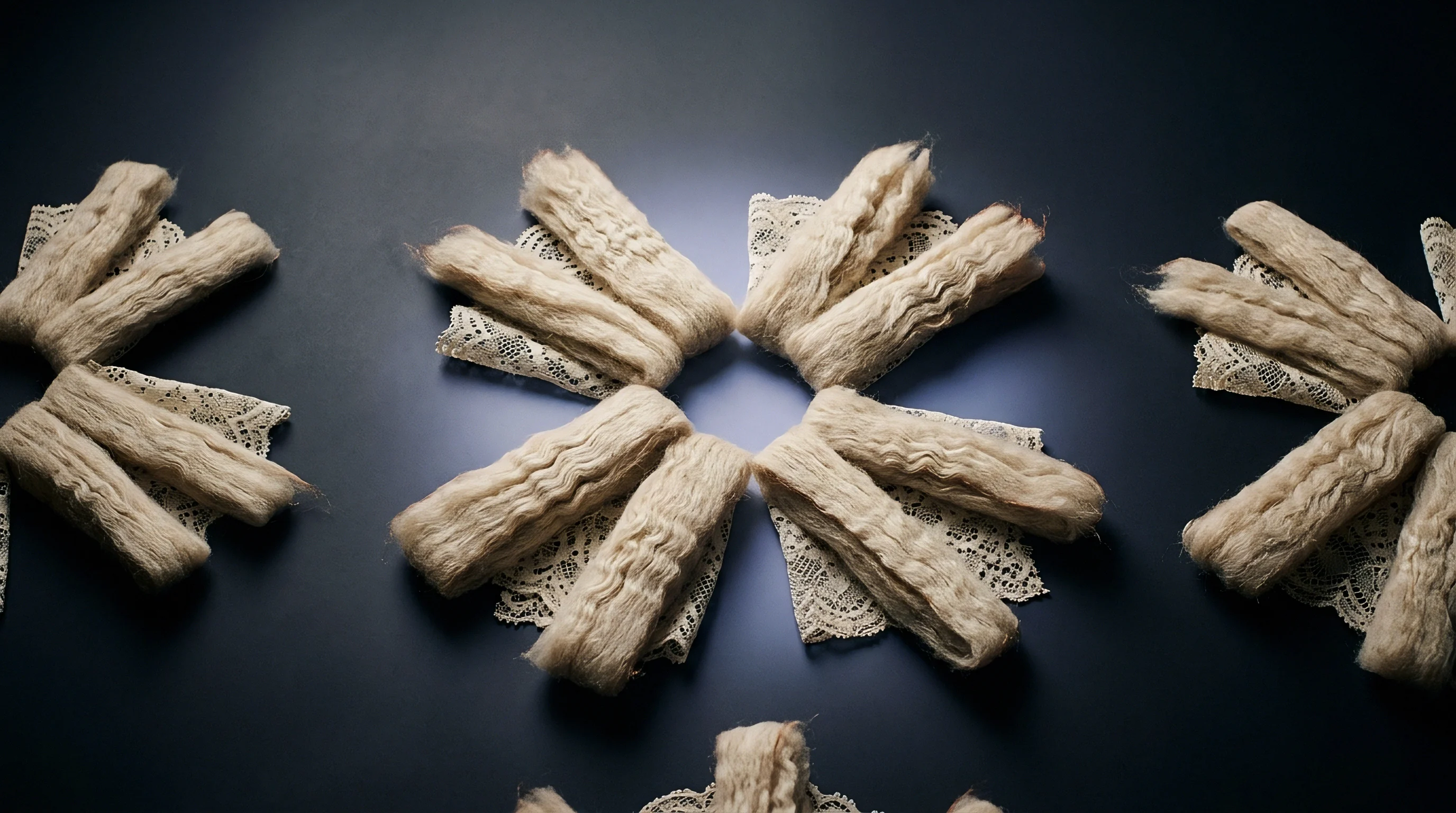
Membrane Rupture Mechanics under Hydrostatic Load
Hydrostatic testing conducted under standard ISO 811 establishes the mechanical ceiling of the barrier laminate. The technician marks seven penetration sites. Distilled water presses against the coated face at a rate of sixty centimetres of water column per minute until three separate leakage points appear.
In combed cotton knit combinations, failure clusters along the needle wales rather than across the inter-loop sinker spaces. Combed cotton yarns possess higher packing density than carded yarns, concentrating perpendicular mechanical stiffness directly at the knitted loop crown.
Water penetrates at 120 millibars. A five-micron pinhole in an elastomeric film under ninety millibars discharges approximately 0.08 millilitres of liquid per minute, enough to fail visual leak resistance specifications instantly. If the knitted goods contain residual paraffin wax lubricants from the cone winder, interfacial shear strength between the polyurethane membrane and the cotton loops drops below 1.5 Newtons per twenty-five millimetres.
The membrane lifts away from the textile base before tearing across the unsupported void.

Fibre Nep Penetration through Polyurethane Barriers
Compact ring spinning reduces the total count of protruding hairs longer than three millimetres, yet entangled clusters of dead or immature fibres survive the carding process. These microscopic entanglements reach diameters of 150 to 250 microns, dwarfing the twelve-micron thickness of the protective layer. The calender rolls press these hard cellulosic masses directly through the softened polymer sheet during adhesive activation.
Microscopic examination under polarized light exposes four primary classifications of barrier breaches in circular knits:
- Entangled nep punch-throughs occur where dense seed-coat fragments or clustered immature fibres rupture the membrane during calender nip passage, creating jagged perforations that leak immediately upon exposure to fifty millibars of water column pressure.
- Adhesive reticulation voids develop when reactive polyurethane hot-melt dot patterns fail to wet the cotton sinker loops, producing unbonded air tunnels that tear when the knitted web undergoes longitudinal frame tension.
- Extrusion gel fissures stem from high-molecular-weight polymer specks within the raw resin, fracturing into radial star cracks as the circular knit relaxes during post-lamination batching.
- Tensile necking splits emerge along high-stretch course loops during slitting and stenter drying, thinning the barrier layer from twelve microns down to less than two microns until micro-tears generate persistent weeping defects.
Ignoring the frequency of these structural punctures compromises the thermal and biological barrier performance of medical gowns and athletic shells, forcing cutting floors to scrap complete cut-part assemblies after sewing.

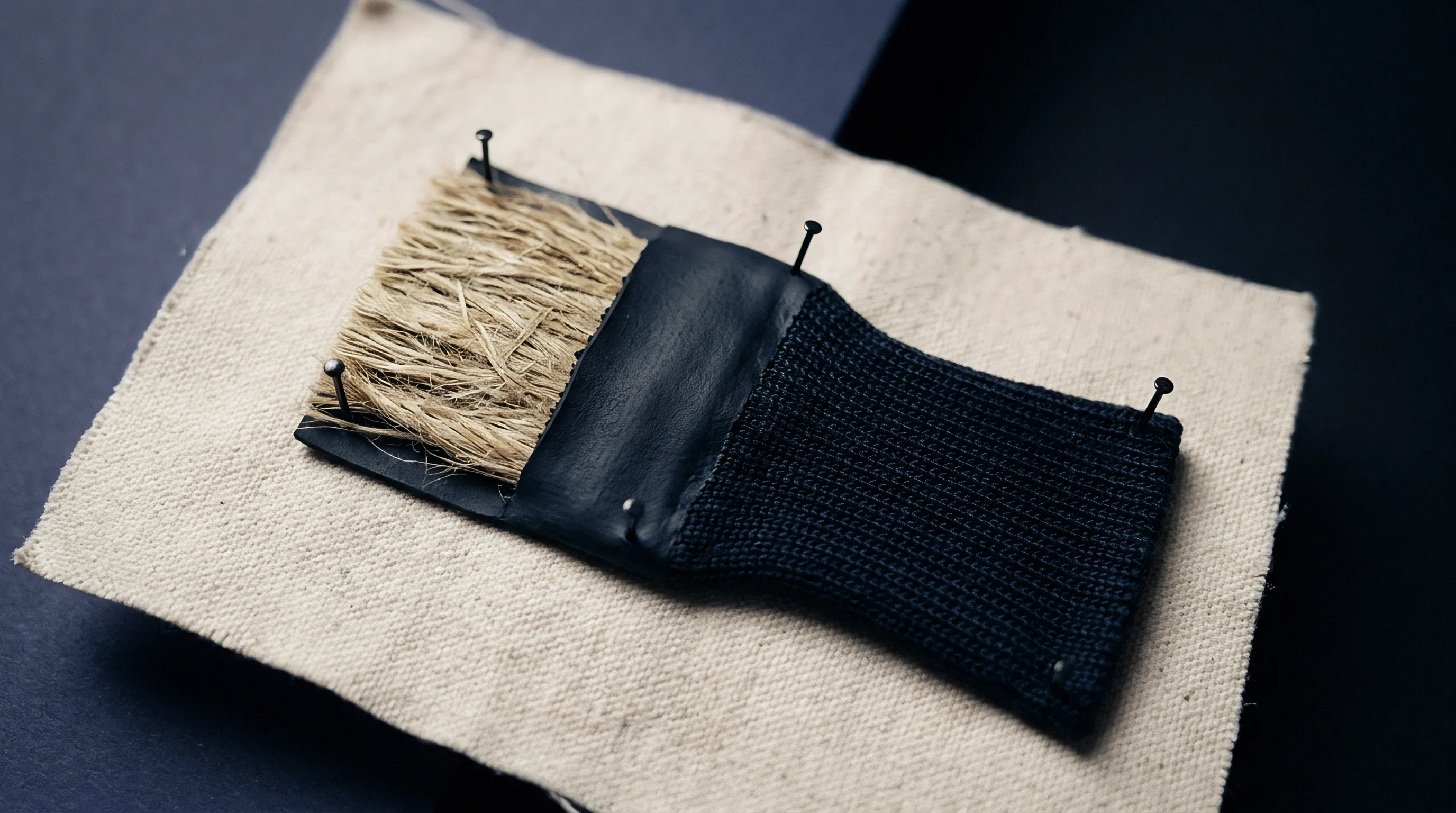
Adhesive
Gravure cylinders apply moisture-curing polyurethane hot-melt resins in discrete dot arrays to balance vapor breathability against mechanical peel strength. The standard coverage targets an application weight between eight and twelve grams per square metre using an engraved roll with thirty-five to forty-five mesh resolution. If the resin viscosity drifts beyond 6,000 centipoise at 110 degrees Celsius, the molten adhesive dot fails to achieve adequate drop spread on the combed yarn loops.
Knitted single jersey presents an uneven topography consisting of raised loop heads and deep valleys. Adhesive droplets resting on the highest points of the wales receive the bulk of the calender pressure. Dots deposited over the interstitial voids between sinker loops receive inadequate consolidation, generating dry spots where the protective layer bridges the textile substrate without anchoring.
A contract specification adhering to EN 14419 rejects fabric lots where solvent-based wash cycles reduce inter-ply bond strength below 2.5 Newtons per inch.
Excessive adhesive laydown creates a rigid, boardy handfeel while drastically increasing the probability of resin bleed-through. When reactive polyurethane penetrates through the combed structure to the technical face, the adhesive forms glassy surface spots that reject reactive dyes and mechanical napping. The knife angle is seventy degrees.
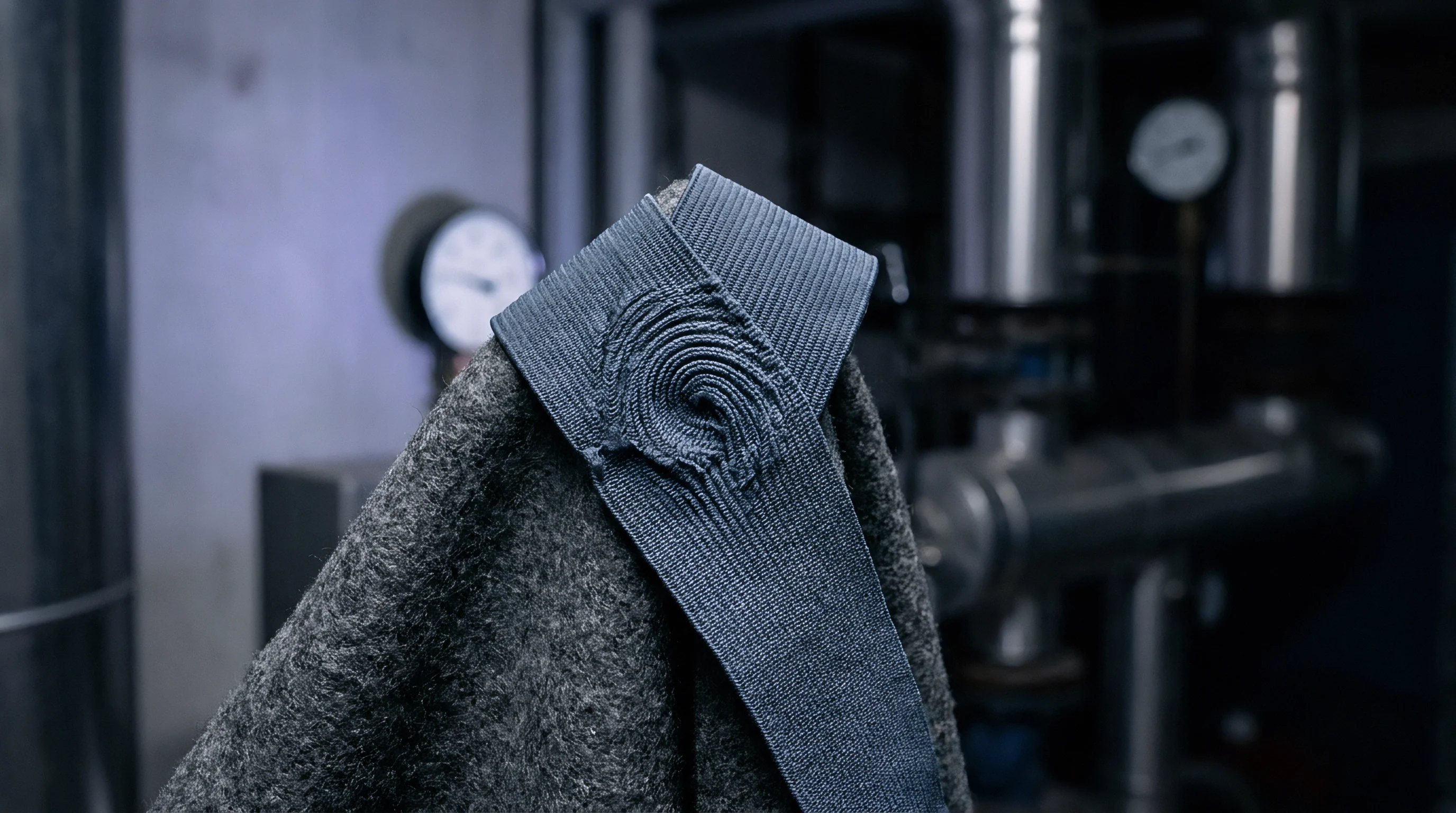
Hot-Melt Polyurethane Dispersion Patterns
Liquid resin transfer requires balancing surface tension between the molten polymer, the film backing, and the porous cellulose. Combed cotton yarns feature tight fibre alignment, restricting capillary wicking compared to open-end carded structures. This structural density prevents the adhesive from sinking too deeply into the core of the yarn, preserving the bulk softness of the knitted goods.
Thermoplastic polyurethane films soften at elevated temperatures, shifting thickness rapidly across narrow processing windows. Polyurethane melts at 190 degrees Celsius. When the temperature of the heated laminating drum fluctuates by more than three degrees Celsius, the viscosity of the adhesive drops uncontrollably, causing dots to coalesce into an impermeable, brittle continuous sheet that cracks during subsequent wash cycles.
| Dot Pattern Configuration | Adhesive Laydown Weight (g/m²) | Gravure Roller Temperature (°C) | Mean Pinhole Frequency (Per 100 m²) | Peel Strength After 20 Washes (N/25mm) |
|---|---|---|---|---|
| Diamond Array 40 Mesh | 8.5 | 105 | 14.2 | 1.8 |
| Diamond Array 40 Mesh | 11.0 | 115 | 3.1 | 3.4 |
| Hexagonal Array 35 Mesh | 10.0 | 112 | 4.6 | 2.9 |
| Hexagonal Array 35 Mesh | 13.5 | 122 | 8.8 | 4.1 |
| Random Micro-Dot 50 Mesh | 7.2 | 108 | 22.5 | 1.2 |

Calender Pressure and Dot Geometry
Steel counter-pressure rollers exert linear forces between three and six bar across the laminating nip. Excessive pneumatic pressure crushes the combed cotton loops, flattening the tubular knit and driving the adhesive dot entirely through the twelve-micron barrier layer. The resulting puncture mimics an extrusion pinhole under standard hydrostatic head testing.
Insufficient pressure prevents intimate molecular contact between the isocyanate groups of the reactive hot melt and the secondary hydroxyl groups of the cellulose fibre chain. The mill explains that ambient moisture on the knitting floor varied between forty and eighty percent relative humidity during batch execution, shifting the cross-linking cure rate of the reactive polyurethane adhesive.

Count
Evaluating defect distribution across commercial production yardage demands continuous optical scanning paired with off-line destructive verification. High-speed line-scan cameras positioned directly above the laminating line inspect the moving web at production speeds exceeding forty metres per minute. Operating at resolutions of 0.1 millimetres per pixel, these optical sensors register transmission light variations caused by pinholes, thin spots, and foreign particulate inclusion.
Knitted single jersey shifts dimensionally under tension, generating transient optical distortion that mimics true polymer fissures. A baseline test area of one hundred square metres represents the universal commercial measurement unit for defect frequency in coated performance textiles. The laboratory voids the certificate.

How Does Combing Intensity Govern Micro-Void Rates?
Yarn manufacturing parameters dictate the mechanical roughness of the knitted surface, directly governing defect generation during web processing. Comber noil removal settings determine the residual proportion of short fibres that can stand proud of the yarn body. When combing waste extraction falls from eighteen percent down to twelve percent, the frequency of protruding fibre ends surges fivefold.
Tension exceeds twelve centinewtons. These loose cellulosic hairs pierce the semi-viscous film web during the critical compression phase at the bonding roll. Eliminating fibre clusters through thorough mechanical combing provides the only reliable defense against puncture-driven barrier loss.
- Cut five specimens across the full roll width, avoiding the outer ten percent of the selvedges to prevent edge curl distortion.
- Condition all specimens in an atmosphere of twenty degrees Celsius and sixty-five percent relative humidity for a minimum of twenty-four hours in accordance with ISO 139.
- Clamp the circular test specimen with an orifice area of one hundred square centimetres into the hydrostatic pressure tester, applying the hydrophobic film face toward the water column.
- Increase water pressure at a calibrated linear rate of sixty millibars per minute while observing the technical face under oblique halogen illumination.
- Record the precise pressure level at the exact second the third independent droplet penetrates the specimen surface, terminating the test cycle immediately.
Solvent residue exceeds trace allowances. Off-line hydrostatic head testing acts as the ultimate validation for optical defect sorting algorithms, calibrating camera sensitivity against absolute liquid containment values.
| Comber Noil Extraction (%) | Yarn Hairiness (Zweigle s3 Index) | Visual Film Voids (Count/100 m²) | Hydrostatic Failures Under 100 mbar (%) | Mean Initial Pressure (mbar) |
|---|---|---|---|---|
| 12.0 | 3.8 | 34.5 | 28.0 | 82 |
| 15.0 | 2.4 | 16.2 | 11.5 | 115 |
| 18.5 | 1.5 | 4.1 | 2.0 | 165 |
| 22.0 | 0.9 | 1.8 | 0.5 | 210 |
| Test conditions: ISO 811 continuous water pressure gradient, temperature 20°C, deionized water, test specimen exposure area 100 cm². | ||||

Standardized Hydrostatic Testing Protocols
Sourcing contracts frequently specify water resistance via ISO 811 or AATCC 127. These methods measure liquid head resistance, yet they omit dynamic flexing and mechanical stretch variables encountered in athletic knits. The cutter rejects the roll.
Applying biaxial cyclic fatigue prior to pressure testing alters the defect count fundamentally. When an elastic circular knit experiences five hundred stretch cycles at twenty percent elongation, micro-voids around rigid yarn neps dilate. Five pinholes condemn the roll.
Whether testing laboratories should standardize on static water head or transition exclusively to pre-flexed hydrostatic testing remains a contentious question among performance apparel brands.
Nip
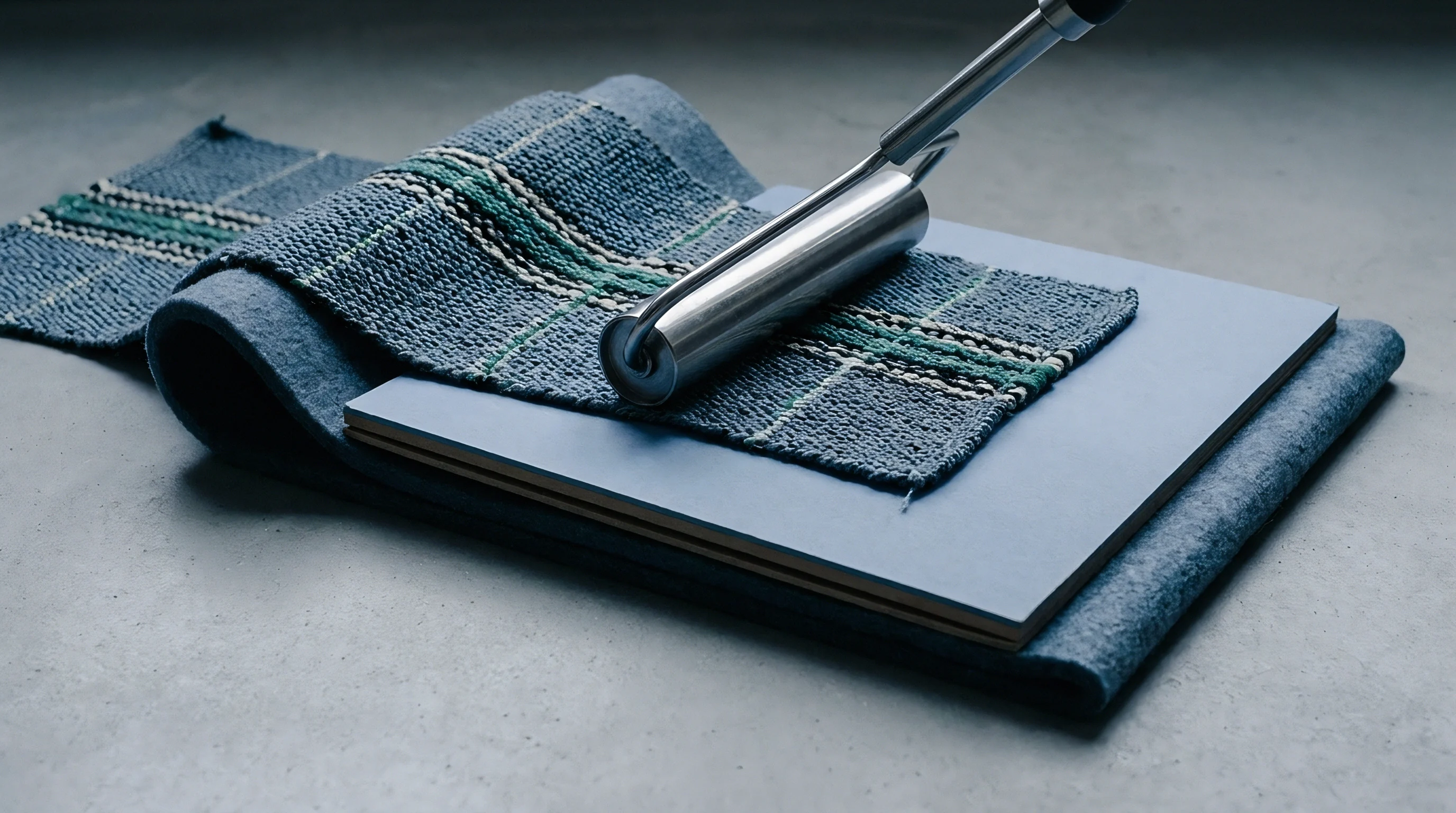
Mechanical convergence between the heated steel cylinder and the resilient rubber impression roller constitutes the highest-risk zone for film perforation. The hardness of the elastomer covering on the counter-pressure roll must match the knit structure. A rubber cover rated at seventy to seventy-five Shore A durometer provides enough resilience to absorb yarn loop crowns without driving hard fibre neps through the polymer layer.
If the roll hardness increases to eighty-five Shore A, the nip zone narrows from twenty millimetres down to eight millimetres, dramatically spiking peak compression pressure. The aperture records two voids. Localized shear stresses tear the molten film precisely at the needle crossing points within the knit.
A soft calender impression roll preserves the elastic elongation of the barrier membrane over coarse yarn loops.
Maintaining uniform roll crown dimensions across wide machine widths presents severe engineering difficulties. High-speed calenders running above thirty metres per minute suffer from roll deflection, resulting in high pressure at the machine edges and low pressure at the web centre. The air pressure hits two bar.

Can Inline Photometric Scanners Identify Unbonded Areas?
Reflective laser inspection sensors detect surface topology variations by capturing angular scattering differences between tightly adhered film and loose, blistered membrane. When the film detaches from the combed cotton base, the resulting air pocket alters the refractive index of the composite sheet. The detector records a sharp drop in backscattered light intensity, flagging an unbonded blister flaw.
Backpressure drops by fifteen kilopascals. Calibrating threshold levels requires adjusting for natural loop shadows cast by the knitted jersey face. The technician sets the photometric sensitivity to disregard variations smaller than 0.5 square millimetres to prevent false reject alarms triggered by normal loop irregularities.
Differential Web Speed and Film Straining
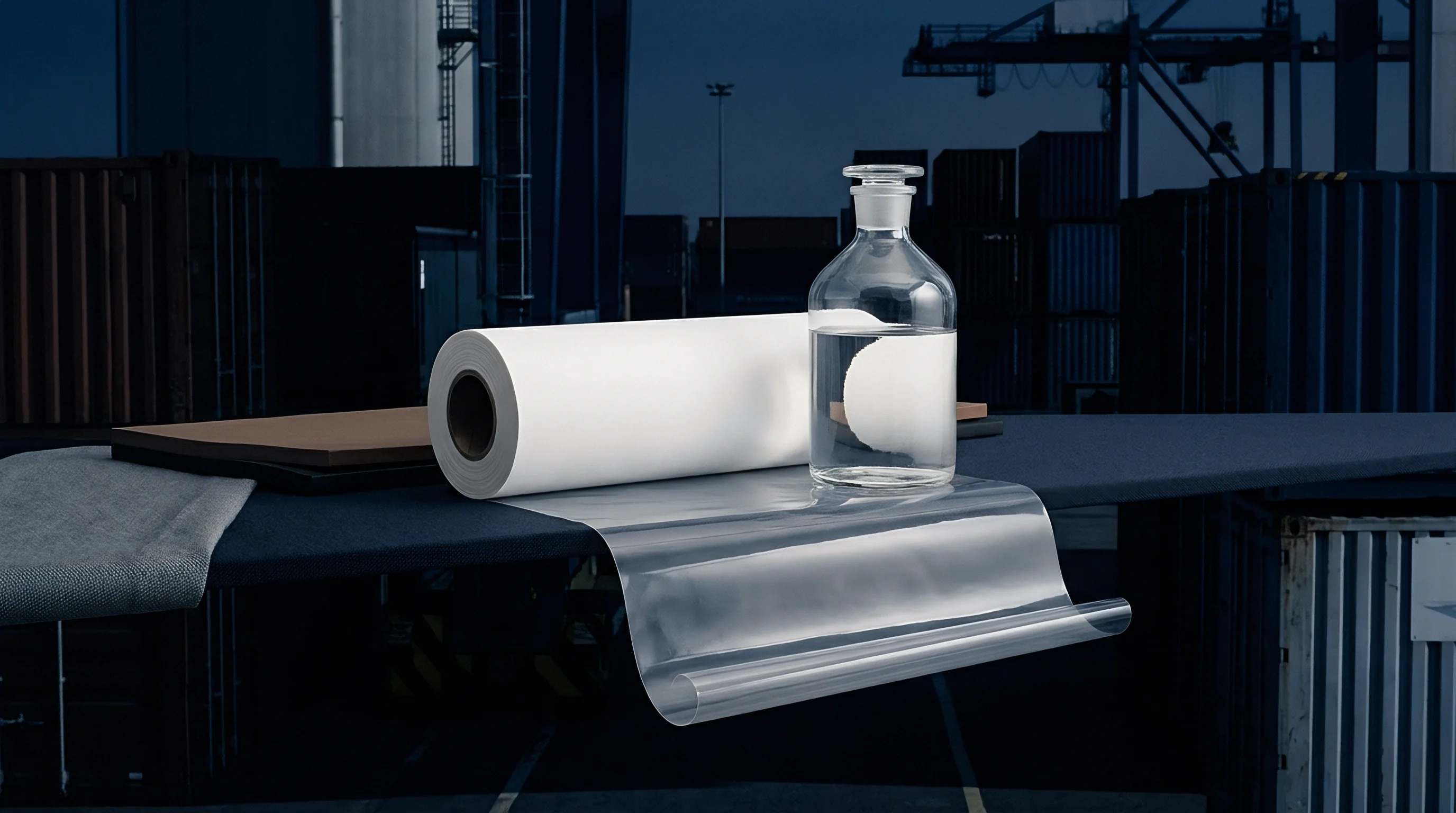
Tension differentials between the unwinding polymer film roll and the driven textile let-off generate massive longitudinal stresses at the lamination boundary. Circular knits demand driven scroll rolls and positive-feed conveyor belts to eliminate edge curl and cross-machine elongation prior to bonding.
Operating parameter limits define the mechanical boundary conditions for error-free web consolidation:
- Web tension differentials must stay under 0.8 percent between the film feed roll and the knitted substrate roll to avoid drawing the elastic membrane beyond its elastic recovery limit before thermal curing.
- Roller surface runout tolerances cannot exceed 0.005 millimetres across the full width of the chrome-plated calender cylinder, as mechanical eccentricity produces cyclic transverse bands of compressed film micro-tears.
- Chilled cooling roll temperatures require maintenance between sixteen and eighteen degrees Celsius to rapidly solidify the hot-melt polymer, preventing structural distortion during roll take-up.
Running high web tensions during calender consolidation guarantees structural delamination during wet garment laundering.
Settlement
Commercial resolution of lamination defect disputes hinges upon standardized point-grading frameworks applied to the finished rolls. The international standard ASTM D5430 governs visual defect quantification, assessing penalty points based on the physical size of the flaw along the linear roll length. A ten-centimetre film breach or blister incurs a two-point penalty, while continuous defects exceeding twenty-five centimetres receive four points per linear metre.
Liquid barrier failures cannot be identified by unaided human eyes on a traditional inspection frame. An inspector viewing the goods under standard fifty-hertz fluorescent lighting sees only an unbroken knitted surface, completely missing micro-perforations that leak under pressure. A lot carrying forty penalty points per one hundred square metres can hide hundreds of hydrostatic micro-voids.
Visual surface inspections fail to reveal micro-void perforations embedded within technical knits.
Performance apparel contracts must specify automated hydrostatic sampling alongside optical inspection. A composite grading protocol pulls swatches from the head, middle, and tail of every five-hundred-metre roll. The mill credits three percent.
Allowance Schedules under Four-Point Inspection Systems
Financial liability agreements between mills and conversion brands enforce graduated debit chargebacks tied directly to tested defect density. When testing uncovers more than five non-conforming sites per one hundred square metres, the buyer initiates a mandatory price reduction or outright rejection of the dye lot.
High defect rates directly escalate processing costs at the apparel factory level. Automated cutting tables detect water-mark stickers and pause the vacuum blade, creating bottlenecks that slash daily production efficiency. Every cut garment panel containing a through-film puncture represents wasted cutting, bonding, and seam-taping labor.
| Defect Frequency (Sites/100 m²) | Hydrostatic Loss Under 100 mbar (%) | Roll Classification | Commercial Penalty Action |
|---|---|---|---|
| 0.0 to 2.0 | Below 1.0 | Grade A Prime | Zero invoice deduction |
| 2.1 to 5.0 | 1.0 to 4.9 | Grade B Commercial | Three percent invoice credit |
| 5.1 to 8.0 | 5.0 to 9.9 | Grade C Sub-Standard | Eight percent credit plus testing fees |
| Above 8.0 | 10.0 or Higher | Total Reject | Full lot return at supplier expense |

Tariff Classification Shift across Coated Substrates
Customs declarations depend fundamentally on the weight proportion between the textile base and the polymer application. Under the Harmonized Tariff Schedule, chapter 5903 governs knitted materials impregnated, coated, covered, or laminated with plastics. If the polymer coating cannot be seen with the naked eye, the goods remain classified under chapter 60 as raw knitted yardage, altering import duties significantly across borders.
Where the polyurethane film is fully visible in cross-section, the classification shifts decisively into heading 5903.20.00. Sourcing executives balancing import duty budgets monitor this line carefully, because customs authorities routinely subject hydrophobic laminates to chemical solvent separation under ISO 1833. The contract terms establish that any shipment exhibiting hydrostatic head failure across more than two percent of inspected rolls empowers the purchaser to cancel balance delivery commitments without incurring cancellation liabilities.