Extended Wavelength Photodiode Array Defect Thresholds in High Speed Automated Textile Recycling Engines
Extended InGaAs array sorters resolve sub-percent elastane defects only when spatial belt resolution and thermoelectric sensor cooling hold noise below threshold limits.

Pixel
Semiconductor photodetectors operating in the short-wave infrared band form the core of automated textile identification. Standard indium gallium arsenide arrays capture reflectance spectra between 900 nanometres and 1700 nanometres, matching the primary overtone bands of carbon-hydrogen and oxygen-hydrogen molecular bonds. This bandwidth isolates clean cotton from virgin polyester.
Post-consumer textile waste presents complex chemical structures containing elastane, polyamide isomers, acrylics, and chemical finishes that overlap within shorter NIR bands. Resolving these overlapping spectra demands photodiode arrays tuned to extended wavelengths up to 2600 nanometres.
Indium phosphide substrates grown with graded indium arsenide phosphide buffer layers allow engineers to shift the detector bandgap down to 0.47 electronvolts. Lowering the bandgap extends spectral responsivity out to 2.5 micrometres, bringing secondary absorption peaks into clear view. The carbonyl stretch overtones of polyurethane, the carbon-nitrogen amide II bands of nylon 6 and nylon 6,6, and the specific hydroxyl vibrations of regenerated cellulosic fibres like viscose and lyocell register distinct absorption dips between 1900 nanometres and 2350 nanometres.
Array spatial architectures typically utilize linear arrangements of 256, 512, or 1024 individual sensor elements, where each element corresponds to a physical footprint on the high-speed sorting conveyor.

Optoelectronic Response in Extended InGaAs Detectors
Gallium content reduction within the alloy lattice expands photosensitivity across longer infrared bands. This lattice mismatch introduces structural dislocations that elevate intrinsic noise. Active noise control relies on Peltier coolers integrated directly beneath the ceramic substrate inside the detector package.
Cooling the photodiode die down to minus twenty degrees Celsius suppresses thermally generated electron-hole pairs, preserving dynamic range across low-reflectance dark textiles.
| Detector Material | Wavelength Range (nm) | Bandgap Energy (eV) | Primary Target Chemical Bonds | Diagnostic Textile Fibres |
|---|---|---|---|---|
| Standard InGaAs | 900 – 1700 | 0.73 | C-H 2nd overtone, O-H 1st overtone | Cotton, Polyester, Polypropylene |
| Extended InGaAs (2.2) | 1200 – 2200 | 0.56 | C-H 1st overtone, N-H combination | Nylon 6, Nylon 6,6, Wool, Silk |
| Extended InGaAs (2.6) | 1400 – 2600 | 0.47 | C=O stretch, N-H amide II, O-H stretch | Elastane, Viscose, Lyocell, Acrylic |

Spectral Absorption Profiles for Fibre Identification
Light penetration depth varies across individual yarn structures as a function of optical scattering coefficients and filament packing density. Ring-spun cotton yarns scatter incoming photons across a wider spatial volume than continuous filament polyester, altering the absolute reflectance amplitude. Extended wavelength arrays overcome amplitude variation by evaluating second-derivative spectral ratios rather than raw intensity values.
The absorption peak ratio between 2130 nanometres and 2270 nanometres differentiates cellulosic cotton from dissolved wood-pulp cellulosic viscose, a boundary where standard short-wave detectors fail.
Engineers encountering unclassifiable spectral noise often receive explanations from sensor vendors attributing missed detections to variable sample moisture content or ambient light bleed.


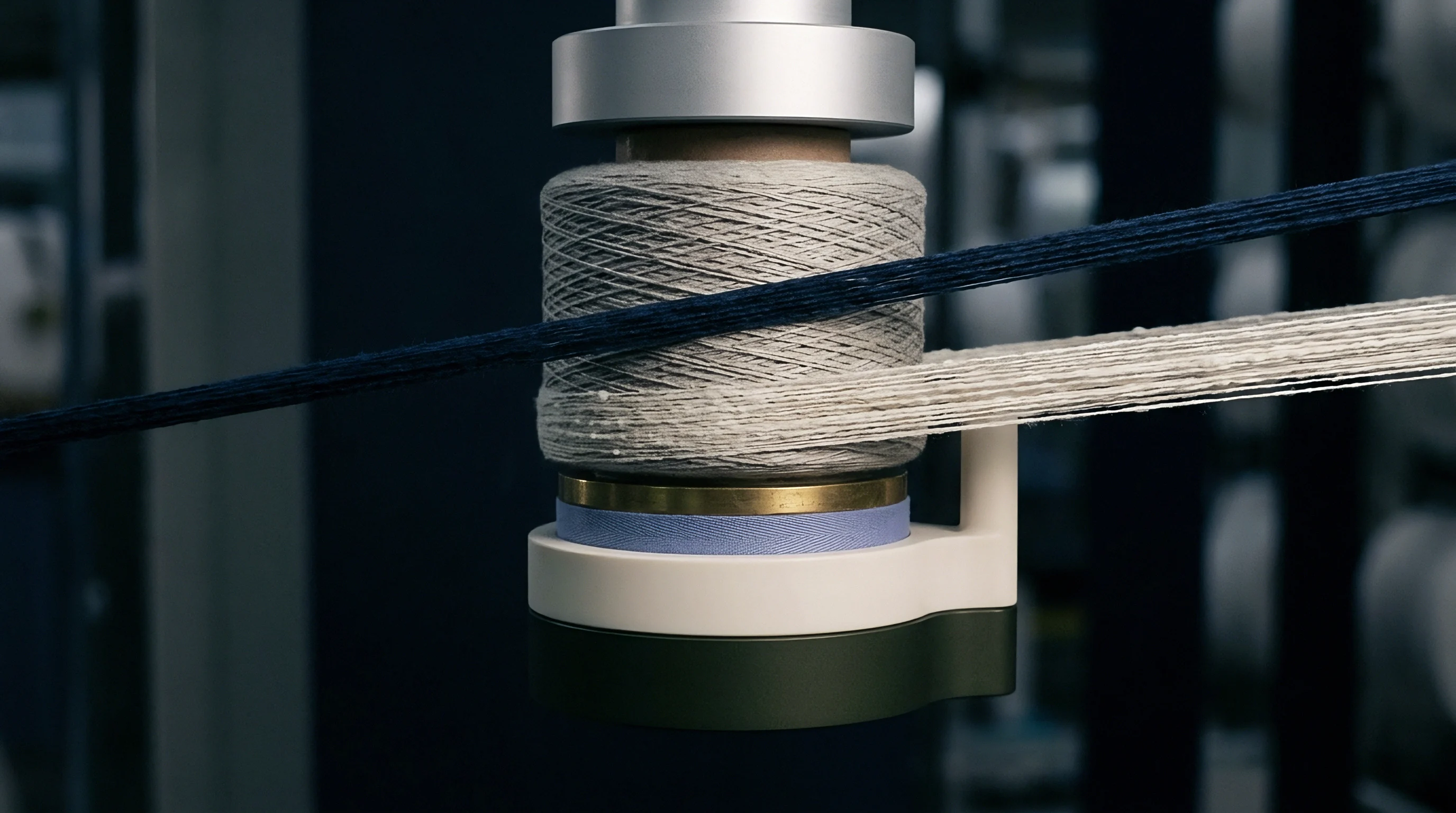
Velocity
Conveyor belts running through automated sorting facilities move raw textile items or shredded feedstock at linear speeds ranging between 2.0 metres per second and 4.5 metres per second. High belt velocity maximizes plant throughput but severely restricts the optical integration time available for each sensor element. An array operating over a belt running at 3.5 metres per second allows an integration window under 400 microseconds per scan line if a spatial resolution of 2 millimetres is maintained along the direction of travel.
Short integration periods reduce total photon counts reaching the photodiode surface. Reducing photon collection degrades the signal-to-noise ratio, forcing the classification software to process weaker spectral features. Illumination systems must supply extreme irradiance across the target zone using focused halogen arrays or high-output supercontinuum lasers.
Thermally managed halogen lighting banks produce severe heat, demanding high-capacity extraction ducting to prevent fabric scorching during conveyor stalls.

Integration Time and Line Scan Spatial Degradation
Spatial resolution along the cross-belt axis depends on optic focal length and sensor element pitch. Cross-belt resolution typically sits at 1.5 millimetres per pixel, whereas along-belt resolution stretches dynamically when belt speed accelerates beyond detector frame rates. If line acquisition drops to 1.2 kilohertz while the belt operates at 4.0 metres per second, each line scan averages optical information over a 3.33 millimetre spatial slice.
Shredded textile fragments smaller than 10 millimetres in length suffer from edge distortion, where background belt reflection blends into the fibre spectrum.
An extended InGaAs line scan sensor operating at an integration time of 350 microseconds achieves a signal-to-noise ratio of 650:1 under 150,000 lux halogen illumination.

Signal Noise Floor and Thermoelectric Cooling Demands
Dark signal current doubles roughly every eight degrees Celsius rise in photodiode junction temperature. High-speed operation combined with intense optical illumination elevates the ambient housing temperature inside sorting engines. Four-stage Peltier elements maintain junction stability, consuming electrical power and requiring liquid-assisted heat sinks.
Failure to hold detector temperature within a half-degree tolerance shifts spectral calibration curves, turning true polyester signals into erroneous acrylic classifications.
Optical resolution degrades when belt speed outpaces integration frequency.


Contamination
Defect detection thresholds determine the commercial grade of sorted textile fractions. Post-consumer garments carry non-target elements including elastane seams, polyurethane coatings, metal zippers, polyolefin linings, and acrylic sewing threads. Downstream recycling processes impose strict purity ceilings on incoming bales.
Chemical depolymerization of polyester accepts maximum polyurethane content of 0.5 percent by mass. Mechanical respinning of recycled cotton tolerates non-cellulosic synthetic contamination up to 1.0 percent before yarn tenacity falls below operational thresholds.
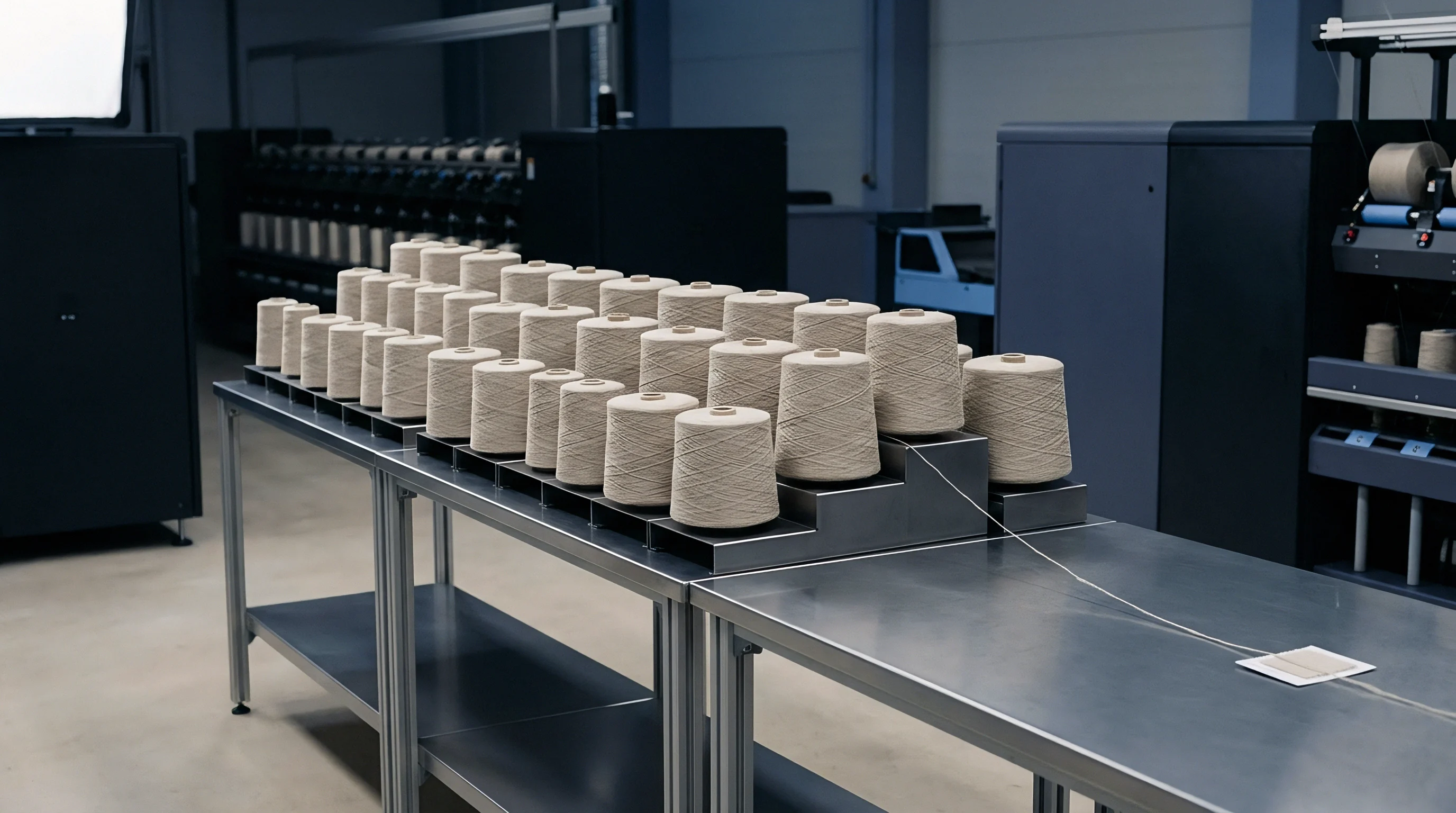
Can Extended InGaAs Arrays Resolve Unwashed Elastane Blends?
Elastane elastomeric filaments present severe challenges to optical sorters due to low mass fractions within stretch fabrics. A typical stretch denim fabric contains ninety-seven percent cotton and three percent elastane by weight. Core-spun yarn construction wraps cotton staple fibres around an inner elastane core, hiding the polyurethane spectrum from surface reflectance sensors.
Extended InGaAs arrays detecting between 2100 nanometres and 2300 nanometres capture subtle N-H stretch combination bands originating from the polyurethane core, provided light penetrates the outer cotton sheath.
Surface illumination depth rarely exceeds 150 micrometres in dense, high-twist ring-spun yarns. Heavy indigo dye treatments further absorb incident infrared energy, dampening surface reflectance. Mechanical opening or shredding prior to optical scanning exposes internal yarn cores, raising the elastane spectral signal above baseline noise thresholds.

Mass Fraction Thresholds for Synthetic Impurities
Minimum detection floors vary across synthetic polymers depending on molar extinction coefficients at diagnostic wavelengths. PVC coatings on rainwear display high absorption cross-sections, allowing detection down to 0.2 percent mass fraction. Conversely, polypropylene trim elements lack distinct polar functional groups, producing weak spectral features that demand a minimum 2.0 percent mass fraction for reliable trigger execution.
- Elastane Seam Blends require dual-band spectral derivative evaluation between 2180 nm and 2240 nm to detect core-spun polyurethane threads down to a 0.7 percent total mass threshold.
- Polyurethane Surface Coatings trigger automatic rejection when absorption dip depth at 1720 nm exceeds a three percent drop relative to baseline fabric reflectance.
- Polyolefin Pocket Linings produce faint C-H stretch signals at 1380 nm that mask underlying polyester spectra, generating false positive non-rewindable sort decisions.
- Dark-Dyed Cotton Trash absorbs over ninety percent of incident NIR energy, collapsing photodiode output into the baseline noise floor and preventing blend resolution.
Sub-percent elastane detection relies entirely on unmasking core filament spectra through mechanical fiber separation prior to optical inspection.
Inadequate defect filtering allows contaminated feedstock to pass into chemical digesters, causing gel formation that clogs melt-spinning spinnerets and invalidates batch purity certificates.


Calibration
Continuous operation of optical sorting engines induces baseline spectral drift caused by lamp aging, dust accumulation on optics, and photodiode temperature fluctuations. Operational protocols mandate automated white reference calibrations using sintered polytetrafluoroethylene tiles positioned at the edge of the conveyor belt. Every thirty minutes, the line scan array captures five hundred lines across the reference tile to update dark current offset and gain correction matrices.

Baseline Drift Correction in Continuous Sorting Rigs
Dust generated during textile conveying settles on protective sapphire window plates, attenuating light transmission by up to two percent per operating shift. Uniform attenuation alters measured reflectance amplitudes unevenly across the spectrum, with shorter wavelengths suffering higher scattering losses. Automated calibration software calculates dynamic baseline slope corrections, preventing progressive misclassification of cotton-viscose blends over long production cycles.
- Position the automated PTFE white reference tile beneath the illumination beam at the start of each production cycle.
- Record raw analog-to-digital converter counts across all active photodiode pixels with illumination sources powered down to establish the dark current baseline matrix.
- Energize halogen illumination banks and allow thermal stabilization for fifteen minutes until housing temperatures equalize within operational limits.
- Capture two thousand scan lines across the illuminated white tile to compute pixel-by-pixel gain scaling factors.
- Verify target spectral response against certified reference swatches containing known blend ratios of 50/50 cotton polyester and 80/20 wool polyamide.

Reference Standard Verification and Laboratory Audit Alignment
Engineers validate optical sorting thresholds against standardized quantitative chemical analysis methods. ISO 1833 defines chemical dissolution protocols for binary and ternary fibre blends. Laboratory validation requires drawing physical samples from sorted output chutes, dissolving components in appropriate solvents, and comparing mass fractions against optical engine log files.
| Fibre Combination | ISO Test Standard | Chemical Solvent Agent | Laboratory Tolerance | Engine Threshold Target |
|---|---|---|---|---|
| Cotton / Polyester | ISO 1833-11 | 75% w/w Sulfuric Acid | ± 1.0% mass | ± 1.5% mass |
| Polyamide / Polyester | ISO 1833-7 | 80% m/m Formic Acid | ± 1.0% mass | ± 2.0% mass |
| Elastane / Cellulosic | ISO 1833-20 | Dimethylformamide | ± 0.5% mass | ± 0.8% mass |
| Wool / Synthetic | ISO 1833-4 | Alkaline Sodium Hypochlorite | ± 1.0% mass | ± 1.8% mass |
ISO 1833-11 mandates drying dissolved residue to constant mass at 105 degrees Celsius to fix quantitative blend calculations within a one percent margin of error.
Standard purchasing contracts incorporate ISO 1833 chemical audit clauses, specifying that shipments failing analytical purity thresholds by more than 1.5 percent trigger mandatory supplier repurchases at full landed invoice cost.


Tariff
Cross-border movement of recycled textile materials depends heavily on precise composition declarations. Harmonized System classifications differentiate sorted textile waste under Heading 6309 from unsorted scrap under Heading 6310. Sorted single-fibre fractions attract lower customs duty rates in major recycling hubs compared to mixed waste streams.
Accurately proving a cotton content exceeding ninety-five percent allows importers to claim preferential tariff codes under multi-lateral trade agreements.

Customs Heading Classification for Sorted Recycled Fibre
Customs authorities assess global tariff lines based on material predominating by weight. An optical sorter operating with loose defect thresholds risks misclassifying a 92% cotton fabric containing 8% polyester as pure cotton scrap. The resulting customs declaration under HS Code 6310.90 exposes the importing facility to severe misdeclaration penalties, administrative holds, and retroactive duty assessments.

Financial Exposure under Composition Misdeclaration
Landed cost calculations incorporate base material value, freight, clearing charges, and applicable tariffs. Tariff spreads between pure mono-material shredded waste and mixed synthetic rags frequently reach six to twelve percent ad valorem. Financial models must account for potential shipment rejections at port of entry if customs audit testing returns blend percentages outside declared tolerance bands.
A twelve percent tariff differential converts a profitable recycling feedstock order into a net loss if composition drift exceeds customs tolerance thresholds.
What remaining margin survives when high sorting speed induces a three percent composition error across a five-hundred-tonne post-consumer shipment?


Disruption
Shredding mechanical hardware directly affects the optical readability of incoming textile feedstock. Heavy rotary shredders featuring dull fly-knives tear fabrics into irregular, feathered rags with loose boundary threads. Torn edge filaments create optical fringing, where light reflects off dangling single fibres that do not represent the core fabric structure.
Maintaining sharp bed-knives and controlled screen mesh sizes ensures clean fragment edges, maximizing sensor sorting precision.

Shredding Geometry and Particle Size Variations
Particle size distribution governs belt loading density and mechanical singulation efficiency. Sorting engines achieve optimal identification performance when shredded pieces present flat surface dimensions between 30 millimetres and 80 millimetres. Smaller fragments overlap on fast-moving belts, causing extended InGaAs sensors to read composite spectra from stacked layers of different fibre types.

Downstream Melt Processing Limits for Optical Misclassifications
Thermal extrusion of sorted recycled polyester flakes into carpet staple fiber or filament yarn tolerates minimal cellulosic contamination. Unremoved cotton fragments char at polyester extrusion temperatures around 280 degrees Celsius, creating black carbonaceous inclusions that clog melt pumps and break spinning filaments. Optical sorting engines must maintain defect rejection rates above 99.2 percent to protect downstream filtration screens from premature blinding.
| Recycling Processing Route | Critical Contaminant | Maximum Allowed Impurity | Engine Defect Limit | Downstream Failure Mode |
|---|---|---|---|---|
| PET Chemical Depolymerization | Polyurethane / PVC | 0.5% by weight | 0.3% by weight | Catalyst poisoning, toxic gas emission |
| PET Mechanical Melt Spinning | Cotton / Viscose | 0.1% by weight | 0.08% by weight | Filter screen pack clogging, fiber break |
| Cotton Mechanical Respinning | Elastane Core Yarns | 1.0% by weight | 0.7% by weight | Yarn strength drop, uneven dye streak |
| Nylon 6 Depolymerization | Polyolefin Trims | 0.8% by weight | 0.5% by weight | Distillation column fouling, low yield |
Execution of high-purity recycling orders demands comprehensive documentation linking optical engine parameters to physical shipment dossiers.
- Batch Sorting Log Dossier contains timestamped calibration records, line scan speed profiles, and raw photodiode array spectral logs.
- Laboratory Validation Certificate details ISO 1833 chemical dissolution test results drawn from representative output gaylord boxes.
- Customs Material Declaration matches sorted mass fractions to specific Harmonized System tariff codes and origin rules.
- Downstream Purity Guarantee specifies maximum allowable mass limits for trace elastane, polyurethane, and non-target synthetic contaminants.
Unresolved optical limits persist for dense carbon-black dyed garments that absorb infrared radiation across all operational bands, forcing plants to divert dark post-consumer garments into low-value mechanical insulation shredding lines.