Reconciling Desizing Weight Drop against Finished Fabric Linear Yield
Reconciling desizing drop against yield separates chemical weight loss from warp crimp contraction by measuring finished picks against conditioned mass balance.

Size
Desizing chemistry strips applied starches and synthetic polymers, removing non-fibrous mass before wet preparation proceeds. A greige cotton twill arrives at the preparation range carrying between six and fourteen percent dry chemical add-on relative to warp yarn weight. This foreign solid fraction washes down the drain during continuous enzymatic digestion or hydrogen peroxide oxidation.
Greige weight hides size concentration. A finishing floor calculating yield from incoming grey scale receipts without deducting sizing mass generates immediate discrepancy against final yardage output. Sizing protects warp ends from abrasive loom breakdown, yet converters regularly record its elimination as unallocated preparation loss.
Cold pad-batch desizing dissolves starches through alpha-amylase conversion into water-soluble maltose and dextrins. Synthetic warps sized with polyvinyl alcohol or polyacrylates dissolve under hot alkaline washing without biological digestion. The TEGEWA scale grades starch removal.
Spotting potassium iodide solution across desized grey goods produces blue-violet coloration when residual starch persists. Violet ratings below six indicate unremoved size solids, whereas ratings at eight confirm thorough removal. The mass departing the web during this wash step equals the slashing add-on minus non-recoverable yarn lubricants.
| Yarn Type | Dominant Sizing Formulation | Nominal Warp Add-On | Greige Mass Share | Extractable Dry Loss |
|---|---|---|---|---|
| Ring-spun carded cotton 20s Ne | Native corn starch, oxidized tallow wax | 12.5% | 7.2% | 6.8% to 7.4% |
| Ring-spun combed cotton 40s Ne | Modified tapioca starch, PVA blend | 10.0% | 5.8% | 5.4% to 6.1% |
| Cotton and polyester 65/35 blend | PVA, acrylic copolymer binder | 8.5% | 4.9% | 4.6% to 5.1% |
| Air-jet spun rayon 30s Ne | Carboxymethyl cellulose, acrylic binder | 6.5% | 3.8% | 3.5% to 4.0% |
Slashing records at the weaving shed document the exact solids applied per warp beam set. Dyehouse technicians rarely inspect these slash room logs, relying instead on nominal estimates from greige broker tickets. When a mill runs dry-split sizing with twelve percent add-on instead of the assumed eight percent, the desizing bath strips four percent more incoming weight than the wet-processing model anticipates.
This unaccounted weight drop propagates through subsequent bleaching and scouring cycles. Scouring removes cotton waxes, pectins, and seed coat fragments, carving another three to five percent from natural cotton fiber mass.
Desizing efficiency shifts with water hardness, chelating agent choice, liquor exchange rates, and squeeze roll expression. Inefficient wash boxes leave gelatinized amylose glued to the inner fibers, artificially elevating the washed textile weight while sabotaging dyestuff penetration.
- Refractometer Solids Verification quantifies dissolved polymer concentration in wash box overflow liquor to track extraction rates across production hours.
- Enzyme Activity Titration confirms bath amylase stability against thermal degradation when immersion temperatures exceed seventy degrees Celsius.
- Standard Desize Gravimetric Extraction measures oven-dry swatch weights before and after chemical stripping under ISO 105-F10 parameters to establish baseline size add-on percentages.
Mill technical managers routinely tell visiting auditors that unpredictable starch decomposition in hot storage sheds explains their sudden four percent mass deficit.


Crimp
Loom mechanics force warp and weft yarns into undulating wave geometries known as crimp. High tension along the warp line during air-jet or rapier insertion flattens warp ends while forcing weft yarns to bend around them. Once the loom releases the cloth, warp yarns contract.
Greige yardage shrinks lengthwise. Immersion in boiling desize liquor releases residual spinning and weaving strains, precipitating violent mechanical contraction along both textile axes.
Enzymatic bath extraction removes up to eleven percent of total dry warp mass when desizing pure potato starch at seventy degrees Celsius.
When warp crimp rises from six percent in the grey state to twelve percent following tensionless washing, every linear meter of loom-state goods contracts to roughly ninety-four centimeters of wet web. Loom tension stretches warp ends. The loss of linear meters does not indicate missing mass; rather, it indicates geometric packing of yarn loops.
Warp picks per centimeter rise proportionately as the textile relaxes lengthwise. Weight per square meter climbs even as desizing chemicals leave the fiber matrix.
When Does Width Contraction Mask Length Loss?
Widthwise shrinkage behaves inversely when lateral tension holds the selvedges. Continuous desizing ranges equipped with aggressive driven transport rollers pull the wet goods lengthwise, lowering warp crimp while driving weft yarns into exaggerated loops. The cloth loses width instead of length.
A twill designed for a finished cut width of one hundred and fifty centimeters shrinks to one hundred and thirty-eight centimeters if lateral relaxation occurs unchecked.
- Loom State Inspection identifies greige reed width, picks per centimeter, and off-loom warp crimp percentages across unwashed roll heads.
- Slack Boil Immersion exposes unconstrained production swatches to ninety-eight degree aqueous surfactant baths for thirty minutes to establish maximum natural shrinkage thresholds.
- Pin Frame Stenter Setting grips selvedges mechanically to lock final pick count while pulling the web to specified sales width.
Yarn crimp distribution establishes the physical boundary between linear yield and aerial density. Wet relaxation contracts the warp. The finishing manager who ignores crimp interchange attributes normal contraction to chemical washing waste.
Tighter reed widths force higher warp crimp during wet relaxation.
Picks compact under unconstrained relaxation.
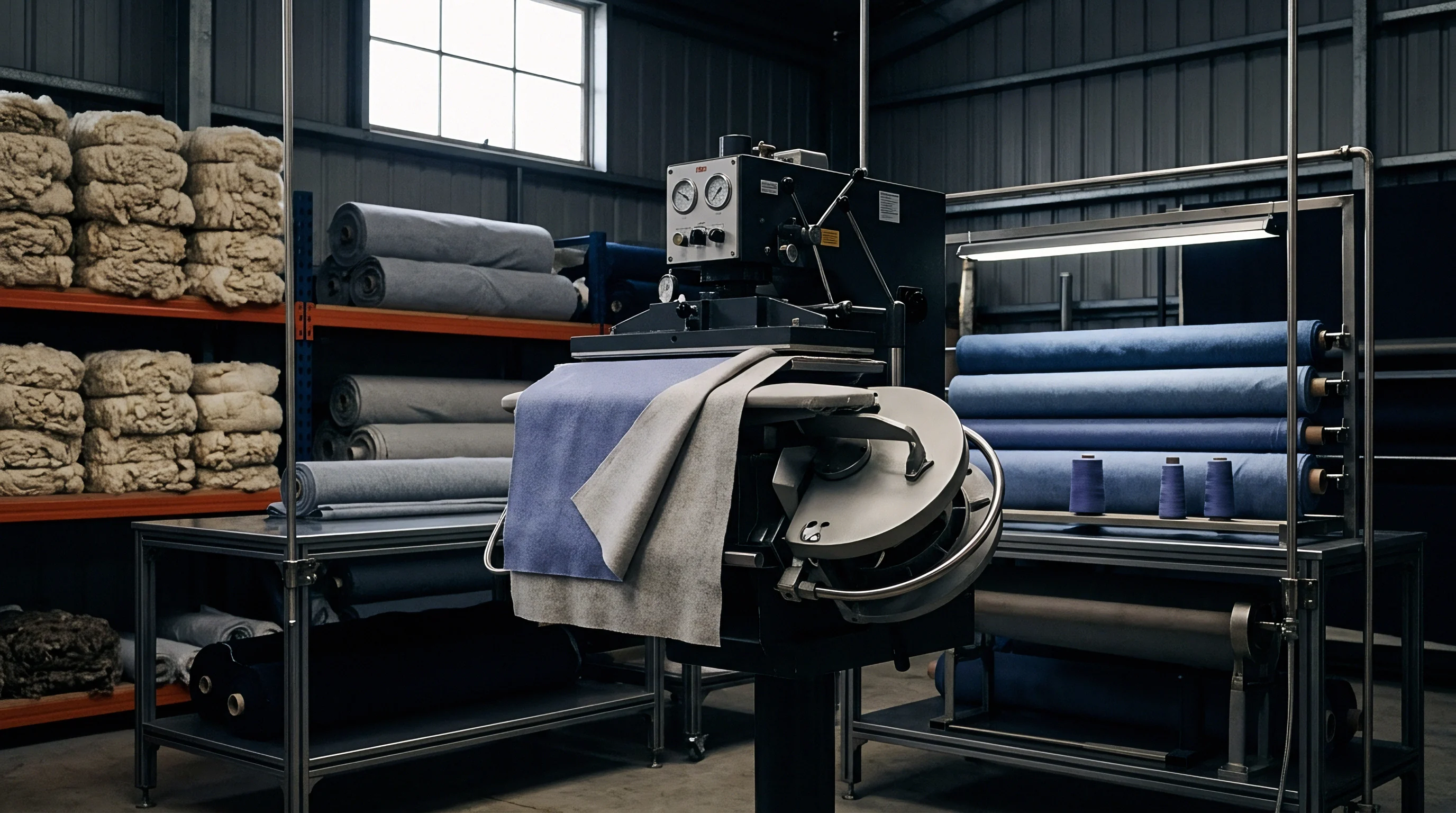

Stenter
Pin stenters govern final length, cut width, and aerial mass through mechanical overfeed and lateral chain extension. When wet goods emerge from continuous desizing and bleaching, moisture content exceeds seventy percent after mangling. The stenter entry zone mounts driven overfeed rolls that push additional linear meterage onto traveling pin plates.
Overfeed controls finished pick count. Positive overfeed from three to eight percent forces warp yarns into relaxed crests, lowering internal stress and delivering stable residual shrinkage under international laundry standards.
Can Starch Extraction Explain Total Mass Deficit?
Starch loss accounts strictly for weight, never for missing linear length. Desizing strips protective sizing compounds. If incoming grey goods measure ten thousand linear meters and exit the final inspection table at nine thousand four hundred meters, desizing chemistry does not bear the blame.
Starch dissolving into effluent reduces kilograms, not meters. Missing length stems exclusively from warp crimp contraction during wet relaxation, unrecovered by downstream stenter draft, or from short greige roll put-up at the weaving mill.
Finishing ranges often operate under negative overfeed, commonly termed tension drafting. Operators stretch the wet cloth lengthwise between padder nip rolls and stenter entry pins to increase linear yield. Every additional linear meter extracted through warp stretching pulls the weft yarns flat, robbing the cloth of cut width and depressing finished pick counts below specification.
Stenter clips pull width outward. When operators stretch the warp to recover missing meters, laundering produces severe post-consumer shrinkage.
- Excessive Warp Line Tension stretches wet yarns beyond yield points, creating high residual shrinkage when tested under ISO 6330 washing programs.
- Inadequate Pin Overfeed Delivery drops finished pick density below contractual specifications, producing thin hand and structural seam slippage.
- Uneven Lateral Chain Divergence generates bowing and skewing across the weft line, destroying garment panel alignment during cutting operations.
- Inaccurate Moisture Sensor Calibration leaves residual water in center fibers, causing latent length contraction inside packaged rolls within warehouse storage racks.
Uncalibrated stenter frames deliver cloth with unstable dimensions that fail apparel maker cutting room relaxation tests, prompting complete lot rejections and financial debit notes across the production run.
Balance
Reconciling mass loss against finished length demands a deterministic mass balance equation. The greige textile carries three distinct mass components: clean base fiber, natural non-cellulosic impurities, and applied slashing chemistry. Total mass balance governs billing.
Finished linear yield depends on the interaction between total percentage dry mass loss and aerial contraction factor.
Consider a continuous processing line running plain-woven cotton sheeting. The greige construction carries an off-loom weight of one hundred and forty grams per square meter at a width of one hundred and sixty centimeters, yielding two hundred and twenty-four grams per linear meter. Sizing add-on equals nine percent on warp, representing five point four percent of total greige mass.
Scouring and bleaching extract another four point zero percent in natural waxes and pectins. Total dry mass loss through chemical extraction equals nine point four percent. The remaining clean fiber core represents ninety point six percent of original greige weight.
Application of ISO 3801 Method 5 establishes finished conditioned linear mass for direct invoice debit calculations.
Dimensional changes alter the relationship between linear meters and square meter weight. If the stenter sets the finished width at one hundred and fifty centimeters with a warp shrinkage allowance of four percent, one linear meter of greige contracts to zero point nine six meters of finished goods. The clean fiber mass concentrates into a smaller surface area.
Finished picks per centimeter rise by four point two percent. Finished grams per square meter must be calculated directly from clean residual mass divided by final finished area.
| Parameter | Plain Sheeting | Bottomweight Twill | Poplin Shirting |
|---|---|---|---|
| Yarn Construction | 30s x 30s / 78 x 68 | 16s x 12s / 108 x 56 | 50s x 50s / 133 x 72 |
| Greige Width / Loom Weight | 165 cm / 142 gsm | 160 cm / 265 gsm | 162 cm / 118 gsm |
| Sizing Extraction Loss | 5.8% | 7.6% | 6.2% |
| Scour and Bleach Loss | 4.1% | 4.8% | 3.5% |
| Total Dry Chemical Mass Loss | 9.9% | 12.4% | 9.7% |
| Warp Contraction Factor | -4.5% | -6.0% | -3.0% |
| Finished Cut Width | 150 cm | 148 cm | 150 cm |
| Theoretical Finished Mass | 147 gsm | 278 gsm | 121 gsm |
| Net Linear Yield Factor | 95.5% | 94.0% | 97.0% |

Will Finishing Width Conceal Greige Length Loss?
Finishing plants routinely pull width out to contract minimums to allow lengthwise relaxation when buyers monitor finished pick counts. If an auditor measures finished square meter mass and finished width, the linear yield factor is mathematically fixed. Total mass entering the plant equals clean fiber exiting the plant plus extracted size, natural impurities, and physical selvedge trimmings.
A plant reporting lower linear yield than the crimp contraction warrants has either lost yardage to seam cut-outs or received short greige rolls from the weaving shed. Measuring conditioned roll weights under ISO 3801 Method 5 isolates chemical dissolution from mechanical loss. Physical testing verifies whether missing yardage stems from unaccounted warp contraction or missing yarns.
- Greige Slashing Certificate Verification establishes declared dry chemical add-on percentages per beam set prior to wet processing entry.
- Batch Input Tare Weighing records conditioned greige roll mass on calibrated platform scales before truck unloading.
- Continuous Wash Range Desize Titration confirms chemical concentration and bath bath exhaustion levels across shift handovers.
- Post-Preparation Aerial Weight Logging captures desized dry square meter mass before goods touch stenter entry pins.
Standard purchasing contracts incorporating the international commercial arbitration clause for piece goods mandate that linear delivery deficits exceeding two percent trigger mandatory third-party mass balance audits funded entirely by the non-prevailing party.
Shortage
Commercial reconciliation balances the money paid against the linear yardage delivered to the apparel factory cutting line. Sourcing offices write purchase contracts based on price per finished linear meter, whereas weaving mills bill converters based on greige meters woven. Short linear yardage raises costs.
When a converter loses six percent of linear input during preparation but only factored three percent shrinkage into the costing model, profitability collapses unless the lost length is proven to be greige supplier delivery shortage.
Uncalibrated stenter tension masks grey yardage shortages while starving finished pick density.
Customs declarations and tariff schedules evaluate bulk textile consignments on gross net mass, creating legal exposure when documented invoice weights diverge from physical shipping container scale dockets. A one-to-two sentence departure reveals this commercial reality: bulk import customs audits cross-examine weight drops against declared tariff classifications, treating unverified mass deficits as undeclared goods or illegal material substitutions. Converters operating across international borders cannot afford unverified yield variations.
Weaving mills hide warp length deficits by measuring greige yardage on the loom under continuous warp beam tension. A roll ticket recording one thousand greige meters on the loom take-up roll shrinks to nine hundred and seventy meters after sitting twenty-four hours in a relaxed warehouse racking environment. Mills bill on greige meters.
The dyehouse receives this unrelaxed roll, applies wet desizing, and delivers nine hundred and twenty finished meters, taking the blame for eighty meters of missing cloth.
Calculating the true yield requires verifying whether the missing yardage reflects unmonitored starch removal, undetected loom take-up tension relaxation, or intentional short put-up by the weaving shed.