Modeling Non-Linear Wet Pickup Dynamics in High-Density Elastomeric Twill Blends during High-Speed Padding
Dynamic wet pickup in elastomeric twills drops non-linearly at speed as structural air entrapment and visco-elastic recovery override static capillary absorption.

Trough
Continuous impregnation lines running dense bottom-weight twills at speeds exceeding 50 metres per minute expose severe deviations from steady-state capillary models. Liquid uptake in a saturated textile depends upon mechanical displacement of interstitial air, structural displacement under fluid drag, and immediate fluid retention before the squeeze line. Standard Lucas-Washburn equations assume rigid cylindrical capillaries with static boundary conditions.
A 3/1 right-hand twill woven with core-spun elastomeric yarns violates every parameter of that classic framework.
Warp yarns positioned under 450 Newtons of continuous web tension flatten against the guide rolls immediately ahead of the liquor box. This planar tension contracts the elastomeric polyurethane core within the sheath, narrowing inter-yarn apertures prior to chemical contact. Fluid contact time inside a standard 1.8-metre submerged double-dip box running at 65 metres per minute drops to 1.66 seconds.
Air trapped in the diagonal twill ribs forms a persistent hydrodynamic film, resisting bath immersion.
A wetting bath temperature drop from 60 to 45 degrees Celsius increases dynamic contact angle by 14 degrees on desized cotton twill.
Surface air boundaries traveling with the high-density face resist displacement when the incoming web velocity surpasses the natural wetting velocity of the liquor. The dynamic contact angle shifts toward 180 degrees as line speed accelerates. Entrained air pockets remain pinned between floating warp floats and the sunken elastomeric filling yarns.
Chemical penetration ceases to follow linear square-root-of-time diffusion rules, generating severe core dryness across heavy yarns.
Finishing mills compensate for unpenetrated cores by dumping surfactant into the immersion vessel. Chemical salesmen insist that dropping dynamic surface tension below 28 millinewtons per metre resolves every air entrainment defect regardless of delivery speed.

Hysteresis
Mechanical compression inside the nip zone introduces transient deformations that dictate final retention. Elastomeric core yarns react along non-linear stress-strain curves when compressed between high-hardness rubber-covered bowls and stainless-steel counter-rolls. As the 400-gram twill enters the nip boundary, compressive pressure climbs rapidly, driving structural compaction.
Volume reduction within the composite matrix peaks along the center line of the roll contact area. Water and dissolved chemistry get expelled counter to the movement of the fabric web, creating a backward hydrodynamic rolling wave. Polyurethane cores store strain energy during this instant of squeeze.
Exiting the roll crown, the elastomeric threads recoil elastoplastically at speeds distinct from the expanding cotton sheath.
This differential mechanical recovery produces localized suction. The rapid volumetric expansion of the twill structure pulls liquor back into the core, provided sufficient fluid film clings to the perimeter of the exit wedge. Thick elastomeric components slow the rate of structural rebound, introducing a quantifiable lag between nip clearance and porous equilibrium.
Dynamic recovery dictates absolute wet pickup. Static air permeability figures measured under ISO 9237 at 100 Pascals fail to predict liquid retention because they measure stationary, uncompressed voids. Fluid volume retained by the fabric splits into three physical fractions:
- Inter-fiber capillary fluid sits trapped inside the spun yarn bundles and responds directly to nip roll pressure gradients.
- Intra-fiber absorbed fluid swells the amorphous zones of cellulosic or synthetic sheaths during prolonged exposure.
- Structural interstitial fluid lodges in the geometric spaces between warp and weft intersections, vacating instantly when mechanical line speeds produce centrifugal shedding.
High web tension straightens the elastomeric weft threads, mechanically locking interstitial pockets before they expand fully. Slower speeds permit symmetrical rebound. High speeds clip the rebound cycle, dropping gross pickup non-linearly.
High roll hardness combined with low bath temperature starves the core.
Fabric structures with asymmetric float architectures exhibit distinct top-and-bottom suction rates upon nip exit. A 3/1 twill face features elongated warp floats that rebound quickly, whereas the reverse side displays exposed elastomeric weft knuckles under tension. Imbalanced suction produces face-to-back chemical skew, destabilizing functional finishes applied during the single-pass squeeze.
Does Thread Density Dictate Fluid Expulsion Limits?
High pick counts severely restrict the volumetric space available for backward hydrodynamic drainage. When the weft count exceeds 28 picks per centimetre in an elasticized twill, fluid expelled at the entry nip face cannot flow backward through the dense yarn matrix. Trapped liquor accumulates at the entrance, generating hydraulic wedge lift that pushes the heavy pad bowls apart.
| Fiber Composition | Yarn Count (Tex) | Sett (Ends x Picks per cm) | Elastane Proportion | Static Porosity | Dynamic Wet Pickup |
|---|---|---|---|---|---|
| 98% Cotton / 2% Elastane | 30 / 1 + 44 dtex x 30 / 1 + 44 dtex | 42.0 x 24.0 | 2.1% | 48.2% | 68.4% |
| 95% Cotton / 5% Elastane | 25 / 1 + 78 dtex x 25 / 1 + 78 dtex | 46.0 x 27.0 | 4.8% | 41.5% | 61.2% |
| 70% Cotton / 27% Poly / 3% Elastane | 20 / 1 + 55 dtex x 150D Poly + 44 dtex | 50.0 x 28.5 | 3.2% | 36.8% | 54.7% |
| 65% Poly / 32% Viscose / 3% Elastane | 22 / 2 + 44 dtex x 22 / 2 + 44 dtex | 38.0 x 26.0 | 3.1% | 44.1% | 72.5% |
| 92% Cotton / 8% Elastane | 35 / 1 + 110 dtex x 35 / 1 + 110 dtex | 52.0 x 30.0 | 7.9% | 31.4% | 47.8% |
Low elastane content preserves higher bulk retention. Higher elastomeric concentrations compress the yarn spacing, creating tighter barriers to deep fluid entry. Mechanical displacement replaces capillary attraction as the governing mechanism of chemical uptake.

Viscosity
Finishing formulations containing fluorochemicals, glyoxal resins, and shear-stable softeners exhibit intense rheological changes when subjected to extreme shear within the roll contact zone. Roll pressures ranging between 25 and 45 Dekanewtons per linear centimetre compress the liquid layer down to thicknesses under 15 micrometres. Shear rates inside this narrow interface regularly climb above 100,000 reciprocal seconds at industrial line speeds.
Formulations containing high-molecular-weight crosslinking polymers thin rapidly under shear. This shear-thinning response reduces apparent fluid resistance, allowing the bath liquor to escape through open channels between yarn crests instead of forcing its way into the compacted cotton fibers. The liquor flows outward along the path of least mechanical resistance.
Elastomer swelling modifies the boundary layer. Polyurethane threads in core-spun yarn constructions absorb volatile compounds, organic acids, or specialty carriers present in the finish bath. This interaction causes the polymer chains to expand physically, narrowing the yarn core channels during prolonged padding runs.
A pad-mangle nip pressure setting of 35 Dekanewtons per centimetre leaves twenty percent core dryness in compact yarns at eighty metres per minute.
Apparent viscosity determines the thickness of the hydrodynamic film carried into the mechanical nip. Higher base viscosities drag larger liquid films onto the fabric face before the squeeze rolls. High roller velocity converts that film into excessive hydraulic lift, counteracting the pneumatic loading applied to the bowl journals.
- Formulation compounding fixes base viscosity and non-ionic wetting efficiency prior to feed line injection.
- Bath heat stabilization preserves constant rheological parameters as hot fabric enters the dipping zone.
- Dynamic shear degradation alters chemical dispersion stability directly inside the roll contact point.
- Viscoelastic rebound suction pulls the sheared formulation into structural cavities as the compressed textile clears the roll boundary.
Whether non-Newtonian boundary layer slippage generates quantifiable chemical distribution differences across variable warp yarn geometries remains an unsettled topic among processing specialists.
Drift
Continuous operations induce thermal and mechanical drift across both the padding machinery and the elastomeric textile. Friction between rubber bowl covers and steel rolls generates internal heat within the elastomer backing during extended production sequences. Temperature rises soften the rubber cover, expanding its surface width and shifting the local Shore A hardness.
A hardness drop from 80 down to 72 Shore A widens the contact footprint. This mechanical flattening diminishes peak compressive force at identical pneumatic cylinder pressure settings. As peak contact pressure subsides, fluid expulsion declines, driving wet pickup upward by six to twelve percent over four hours of uninterrupted running.
Elastomeric yarn tension shifts dynamically as mother rolls deplete. Unwinding rolls with poor center-brake control transfer increasing longitudinal tension to the entering cloth. High warp tension contracts the fabric width, densifies the twill rib structure, and restricts volumetric fluid intake.
The resulting finished weight drifts outside target commercial boundaries.
| Operating Time (Hours) | Roll Surface Temp (Celsius) | Rubber Hardness (Shore A) | Nip Footprint Width (mm) | Line Speed (m/min) | Wet Pickup Retained |
|---|---|---|---|---|---|
| 0.0 | 22.5 | 82.0 | 14.2 | 60.0 | 61.5% |
| 2.0 | 31.0 | 79.5 | 15.8 | 60.0 | 64.2% |
| 4.0 | 38.5 | 76.0 | 17.1 | 60.0 | 67.0% |
| 6.0 | 44.0 | 73.5 | 18.4 | 60.0 | 69.8% |
| 8.0 | 48.2 | 71.5 | 19.5 | 60.0 | 72.4% |
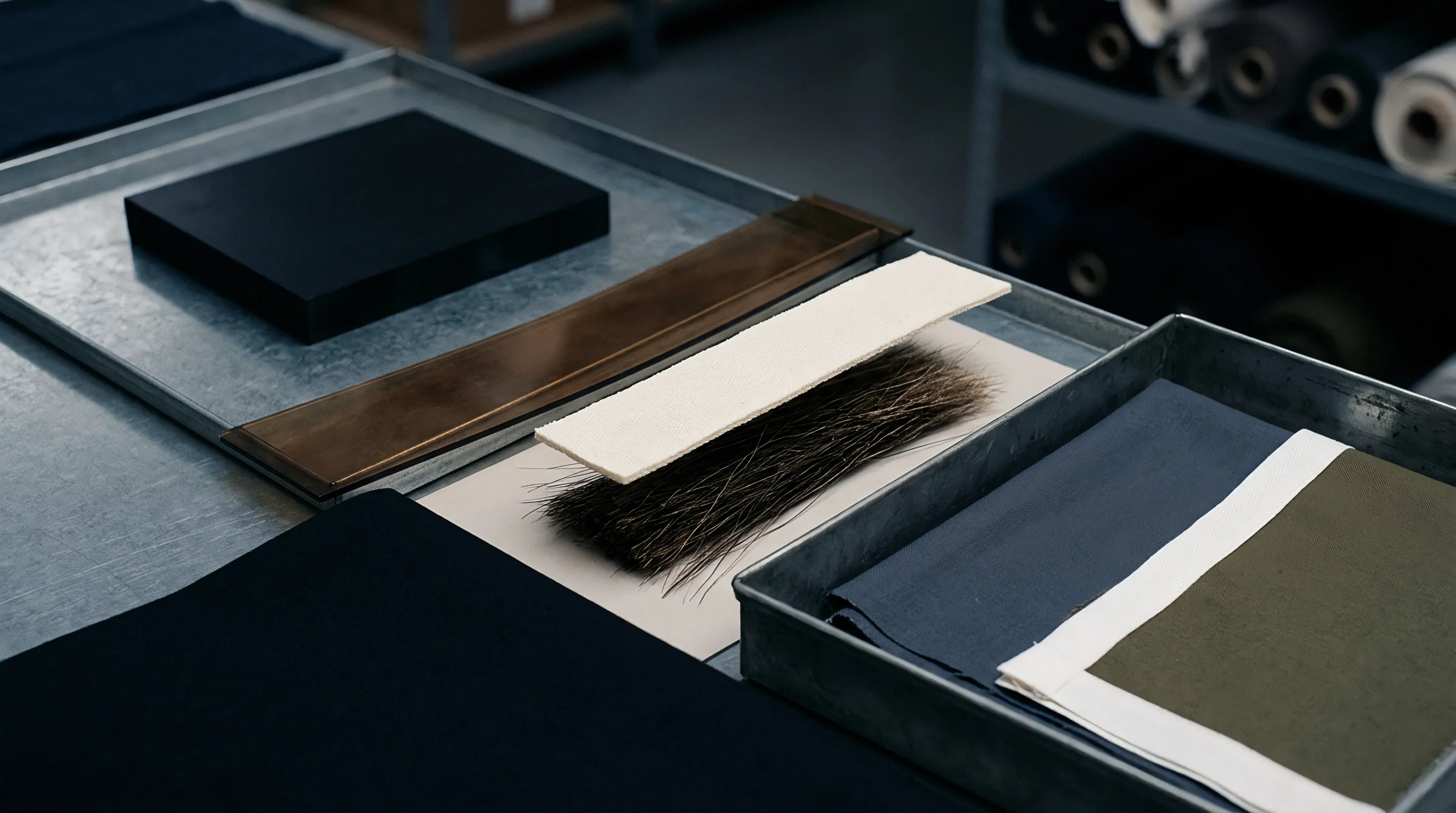
Side-to-center pickup variance develops when deflection crowns fail to match bowl expansion across long runs. The center of the roll accumulates greater heat due to reduced thermal dissipation compared to the exposed shaft ends. The center rubber softeners compress more deeply, creating low-pressure valleys that deposit heavier concentrations of resin in the middle third of the cloth width.
Differential resin deposition induces wide shrinkage variations after curing. A piece running at target seventy percent pickup that drifts to eighty-two percent in the center suffers excessive crosslinking, dropping tear strength along the spine while edge zones fail wash shrinkage tests under ISO 5077.
Uncontrolled pickup drift ruins mechanical performance, wastes expensive chemical concentrates, and leads to immediate garment batch rejections at the factory cutting table.

Dispute
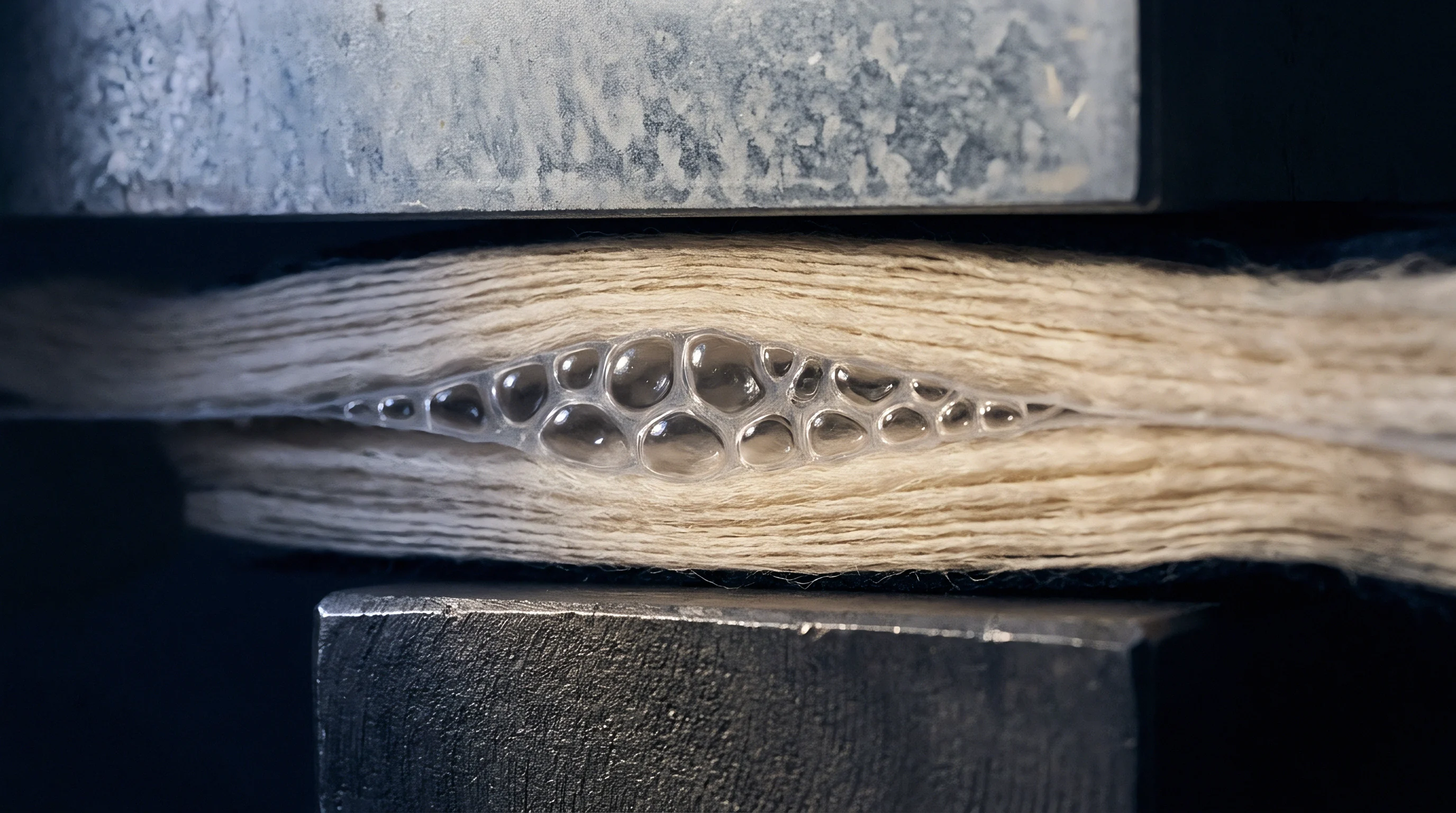
Commercial friction over failed physical properties traces back to the chasm between laboratory pad testing and high-speed factory floor processing. Benchtop pads with tiny 100-millimetre diameter rollers operate at two metres per minute under dead-weight levers. Fluid transit times, elastomeric recoil dynamics, and shear rates in bench testing bear no structural correlation to high-speed lines.
A recipe developed on a laboratory pad achieves eighty percent target pickup with deep fiber saturation because static capillary action has ample time to fill micro-voids. Transferred to an industrial line running at sixty metres per minute, identical chemistry yields only fifty-eight percent pickup. The factory pad operator increases padding pressure or alters bath levels without adjusting the bath concentration, shifting chemical add-on away from the approved technical file.
Can Production Calibrations Prevent Consignment Rejections?
Standardizing dynamic parameters demands strict pre-production alignment between converter and mill engineers. Adjustments require mathematical verification of dry chemical add-on rather than relying on gross liquid pickup measurements. Liquid pickup values hide core fiber dryness under heavy surface depositions.
Mills frequently refuse accountability for finished stretch performance by blaming raw yarn variances. Defective elastomeric properties stem directly from excessive curing temperatures applied to dry fabrics that carried inadequate, drifting chemical volumes through the finishing range. Imbalanced moisture content entering the drying stenter causes localized scorching of polyurethane cores.
Finished fabric specifications that permit greater than five percent pickup variation across a single dyelot guarantee cross-roll shade banding.
Inspection procedures must document wet pickup values across each stage of production. Verifying actual mass per unit area via ISO 3801 requires strict comparison against unpadded greige weights stripped of size material. Failure to isolate finish pick-up from residual chemical impurities compromises all subsequent testing data.
The standard supply agreement clause governing continuous wet finishing limits permissible dimensional and chemical deviation to two percent of specified finished metrics, compelling mills to replace entire fabric lots when center-to-side differential pickup causes catastrophic shading defects across garment panels.