Sett and Cover Factor Deciding Abrasion Life in Workwear
Sett and cover factor define structural thread packing; maintaining high pick density and tight fractional cover locks yarn crowns to maximize abrasion life.

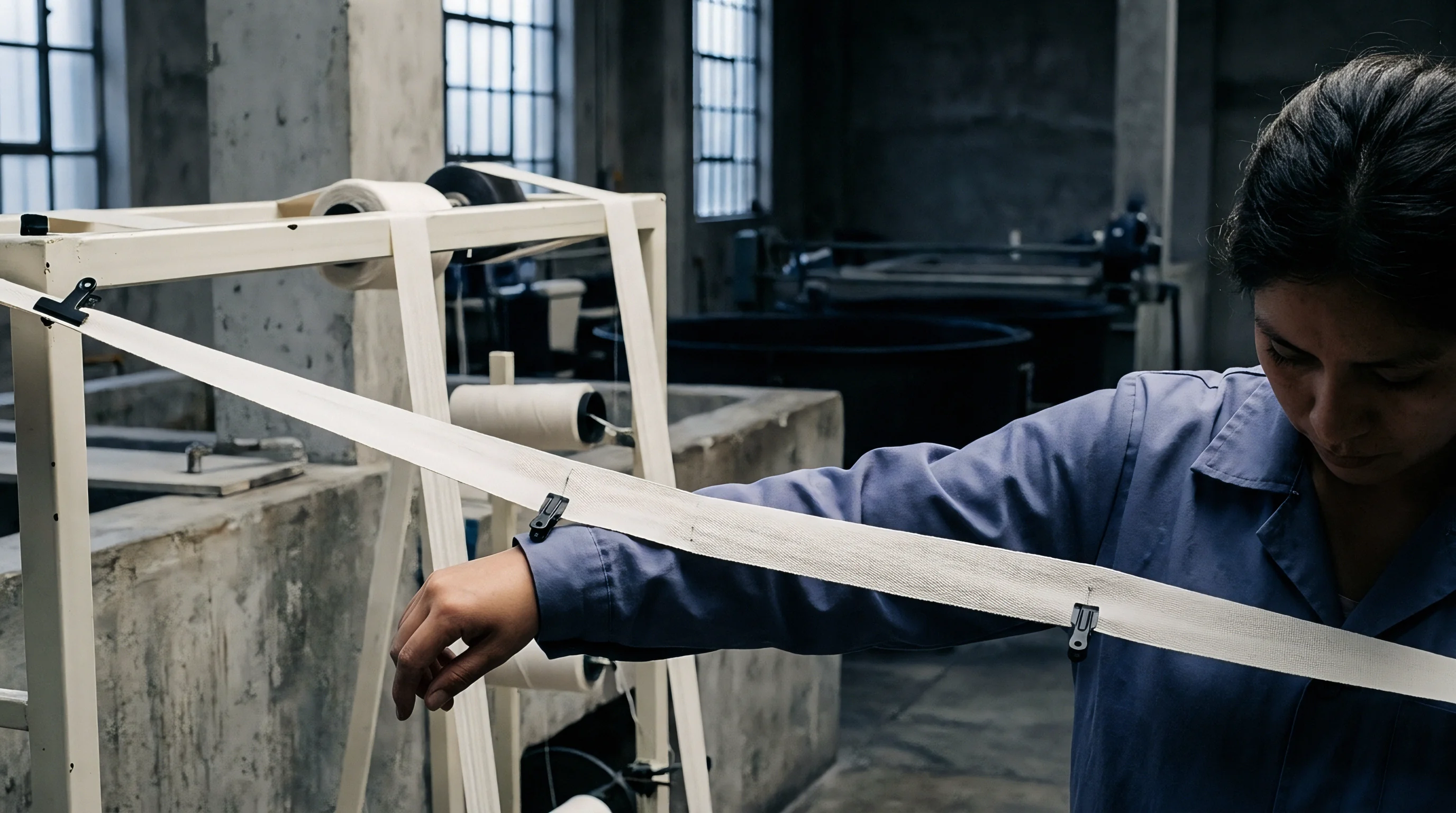
Loom
Thread packing on an air-jet reed establishes the physical ceiling of fabric performance long before chemical baths or calenders touch the goods. Structural density originates at the warp harness, where ends and picks per inch establish the interlocking grid. Heavy workwear engineered for industrial laundering and mechanical abrasion relies directly on this foundation.
Primary yarn counts and harness distribution dictate how tightly structural elements seat under tension. High pick counts demand greater beat-up force from the sley, driving weft picks firmly against adjacent warp ends. That density restricts yarn displacement under load, distributing abrasive contact across multiple yarn crowns rather than leaving isolated threads to absorb the entire rubbing action.
The sley drives each pick into the cloth fell, pressing warp threads into alternating crimp waves. When a mill raises warp density from 80 ends per inch to 108 ends per inch in a standard 3/1 twill workwear construction using 2/20s Ne ring-spun cotton-polyester yarn, the clearance between adjacent ends narrows sharply. That tighter spacing restricts lateral yarn movement under friction.
If threads shift freely under abrasion, external contact snags individual floats, pulling them from the core weave and accelerating micro-fiber shearing. Dense setts keep yarns seated flat in the weave plane, forcing abrasive surfaces across multiple fiber bundles at once rather than severing single threads in isolation.
Warp tension settings during weaving establish the crimp balance between length and width systems. Running high warp tension flattens the warp path and forces crimp amplitude almost entirely into the weft. This imbalance lifts weft yarn crowns above the fabric face, turning them into primary contact points under flat abrasion.
Monitoring warp tension across continuous air-jet frames prevents crimp distortions that expose one yarn system to early destruction. Balancing crimp through harness timing aligns warp and weft crowns into a uniform surface plane, extending wear life under standard test conditions. The table below outlines structural parameters recorded across four distinct workwear greige specifications woven on high-speed air-jet machinery.
| Fabric Code | Weave Structure | Warp Count (Ne) | Weft Count (Ne) | Greige Sett (Ends x Picks / Inch) | Warp Crimp (%) | Weft Crimp (%) |
|---|---|---|---|---|---|---|
| WW-280-T31 | 3/1 Z Twill | 2/20s Ne Carded | 2/20s Ne Carded | 108 x 56 | 7.2 | 11.4 |
| WW-240-P11 | 1/1 Plain Weave | 1/14s Ne Combed | 1/14s Ne Combed | 84 x 48 | 12.1 | 8.6 |
| WW-310-T22 | 2/2 Twill | 2/16s Ne Ring | 2/16s Ne Ring | 96 x 60 | 8.9 | 9.8 |
| WW-260-T31 | 3/1 Z Twill | 1/12s Ne Open End | 1/12s Ne Open End | 92 x 46 | 6.1 | 13.2 |
Yarn spinning systems govern how tightly threads pack on the reed without triggering excessive warp breaks. Ring-spun yarns feature high fiber migration and a compact core, allowing tight setts while maintaining clean shed openings. Open-end rotor yarns carry bulkier cross-sections and wrapper fibers that increase inter-yarn friction, causing adjacent warp ends to cling in the harness.
This cling forces weavers to reduce ends per inch or widen reed space to prevent loom stops from trailing ends. Open-end yarns woven at low cover density leave exposed surface fibers that shed rapidly during initial friction, compromising surface integrity.
Picks per inch set the mechanical limit for longitudinal density on the loom. Inserting additional picks increases beat-up resistance exponentially as the cloth fell approaches its packing limit. Reed design must accommodate yarn diameter variations while avoiding yarn chafing during high-frequency reed cycles.
Crowding excess warp ends into the reed forces yarns into vertical stacks rather than flat horizontal alignments. Stacked warp threads form high ridges that catch against rough machinery or abrasive work surfaces, concentrating wear on exposed crowns and triggering premature fabric failure.
Shed geometry during insertion governs the actual structural limits of the woven fabric.
Beat-up timing relative to shed closure changes how securely each pick locks into place. Closing the shed before the reed hits the fell locks the weft pick under maximum displacement tension, setting yarn crimp before beat-up forces dissipate. This early shed closure raises thread-to-thread friction in the raw weave, building abrasion resistance before wet processing and finishing.
Late shed closure leaves picks loosely seated at beat-up, allowing yarn shift under low shear forces. Loose picks slip under surface rubbing, exposing long warp floats to directional friction and localized thread breaks.
Warp twist multiplier determines thread cross-section retention under beat-up impact. High-twist warp yarns retain a firm, round profile under sley impact, resisting flattening and maintaining open channels for weft insertion. Lower-twist yarns flatten against the sley, widening their footprint and filling spaces between adjacent ends.
While yarn flattening improves initial visual opacity, it thins the yarn at crossover crowns, leaving soft core fibers vulnerable to abrasive shear. Workwear constructions that balance high warp twist multipliers with adequate pick density preserve crown thickness and hold up against continuous surface wear.
Tight warp packing reduces lateral thread movement, preventing abrasive surfaces from isolating single yarns during heavy rubbing contact.
Reed width calculations dictate widthwise contraction during weaving and subsequent wet-finishing relaxation. Forcing a high warp count into a narrow reed creates high on-loom end density but leaves minimal widthwise crimp reserve. When that cloth undergoes washing and tensionless drying, weft crimp increases, pulling warp ends closer together and raising finished thread counts per inch.
Matching greige reed width to the target finished sett ensures consistent warp density across the full usable width. Poor reed sizing produces dense selvages alongside loose, wear-prone center panels, leading to uneven abrasion resistance across garment panels.
Weave architecture governs how warp and weft crowns interlock under tension. Plain weaves maximize interlacing points, producing short floats that lock yarns at every crossover. This geometry distributes friction across numerous small crowns, but yarn jamming limits prevent high total yarn packing per unit area.
Twill weaves, such as 2/1 and 3/1 constructions, reduce interlacing frequency so warp and weft yarns can pack closer together at higher end and pick counts. High-density twill setts protect underlying weft picks by grouping long warp floats tightly over the core structure.
Heavy pick insertion on air-jet looms requires careful specification of weft tensile strength and elongation. Lower-grade carded weft yarns snap under sudden tension spikes in tight, high-density sheds. High-density weaving requires combed or high-tenacity polyester-cotton blended yarns that can take peak beat-up forces without shedding lint.
Excess lint accumulating in the harness produces slubs and warp floats in the greige cloth. These defects disrupt yarn geometry and create raised spots that abrade quickly under standard field wear.
Rough laundry drums frequently take the blame for early thread failure when air-jet looms have simply dropped six picks per inch to increase daily yardage.

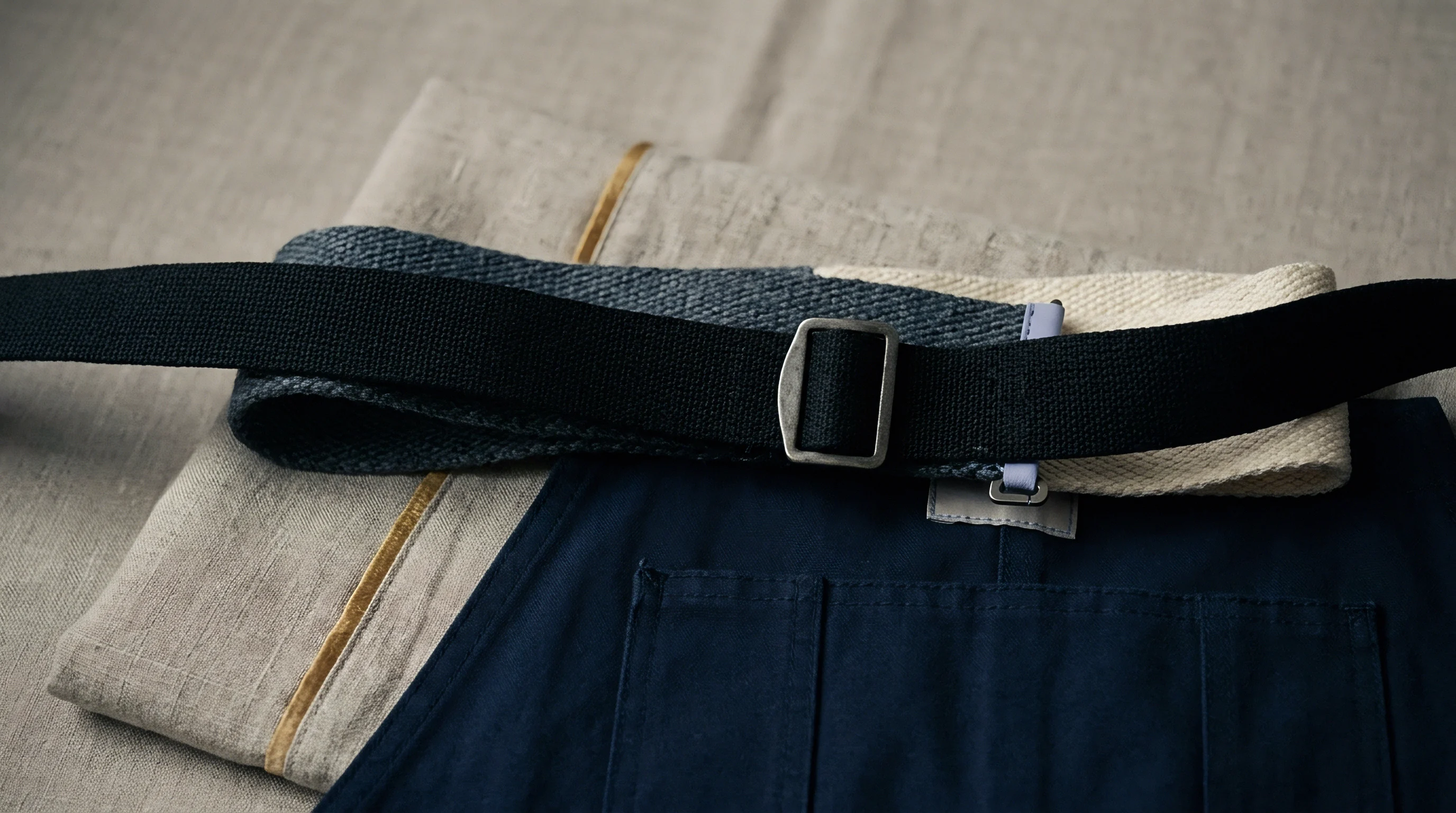
Geometry
Cover factor calculations translate yarn size and thread count into a numerical measure of surface packing. Peirce’s classical formula defines the fractional area of fabric obscured by warp and weft yarns viewed perpendicular to the cloth plane. In the cotton system, warp cover factor (K1) equals ends per inch divided by the square root of the warp yarn count (Ne1).
Weft cover factor (K2) equals picks per inch divided by the square root of the weft yarn count (Ne2). Total cover factor (Kc) combines both values into an index of overall structural density.
Metric fractional cover (Kc) under ISO parameters yields a dimensionless index from zero to one. Direct metric calculation uses yarn diameter (d) in millimeters and thread density (n) in threads per millimeter, using K = n · d. Yarn diameter is derived from linear density in tex and fiber bulk density (ρ), where diameter equals 0.037 · sqrttex / ρ.
Total fractional cover is Kc = K1 + K2 – K1 · K2. A fabric reaching a fractional cover of 0.88 or higher forms a tight matrix with minimal void space between yarn crossovers.
High fractional cover stops abrasive particles from penetrating deep into the weave. When fractional cover drops below 0.75, grit settles into inter-thread gaps, scouring yarn flanks directly and tearing filaments from the core bundle. Higher cover factors keep abrasive wear on the outer yarn crowns, distributing friction across a broader contact plane.
In heavy cotton-polyester twills, maintaining a warp cover factor above 22 (cotton system) and a weft cover factor above 12 ensures warp floats form a continuous barrier over internal crossover points.
| Fabric Construction | Finished Sett (Ends x Picks / Inch) | Yarn Count (Warp x Weft Ne) | Warp Cover (K1) | Weft Cover (K2) | Total Cover (Kc Peirce) | Metric Cover (Kc Fractional) |
|---|---|---|---|---|---|---|
| 3/1 Heavy Drill | 112 x 58 | 2/20s x 2/20s | 25.04 | 12.97 | 31.43 | 0.895 |
| 2/1 Medium Twill | 96 x 52 | 1/16s x 1/16s | 24.00 | 13.00 | 30.50 | 0.871 |
| 1/1 Utility Canvas | 88 x 50 | 1/12s x 1/12s | 25.40 | 14.43 | 32.65 | 0.914 |
| 3/1 Light Work Twill | 100 x 48 | 1/20s x 1/20s | 22.36 | 10.73 | 27.87 | 0.826 |
Jamming limits define the highest thread density achievable for a given weave before yarns distort out of plane. In plain weave, jamming happens when adjacent yarns touch continuously along their length, blocking further pick insertion. In twills, float overlap allows yarns to slide past one another during beat-up, shifting the jamming limit well above that of plain weaves.
Pushing density up to or beyond theoretical jamming limits introduces high crimp strain, forming raised surface crowns that wear down rapidly during abrasion testing.
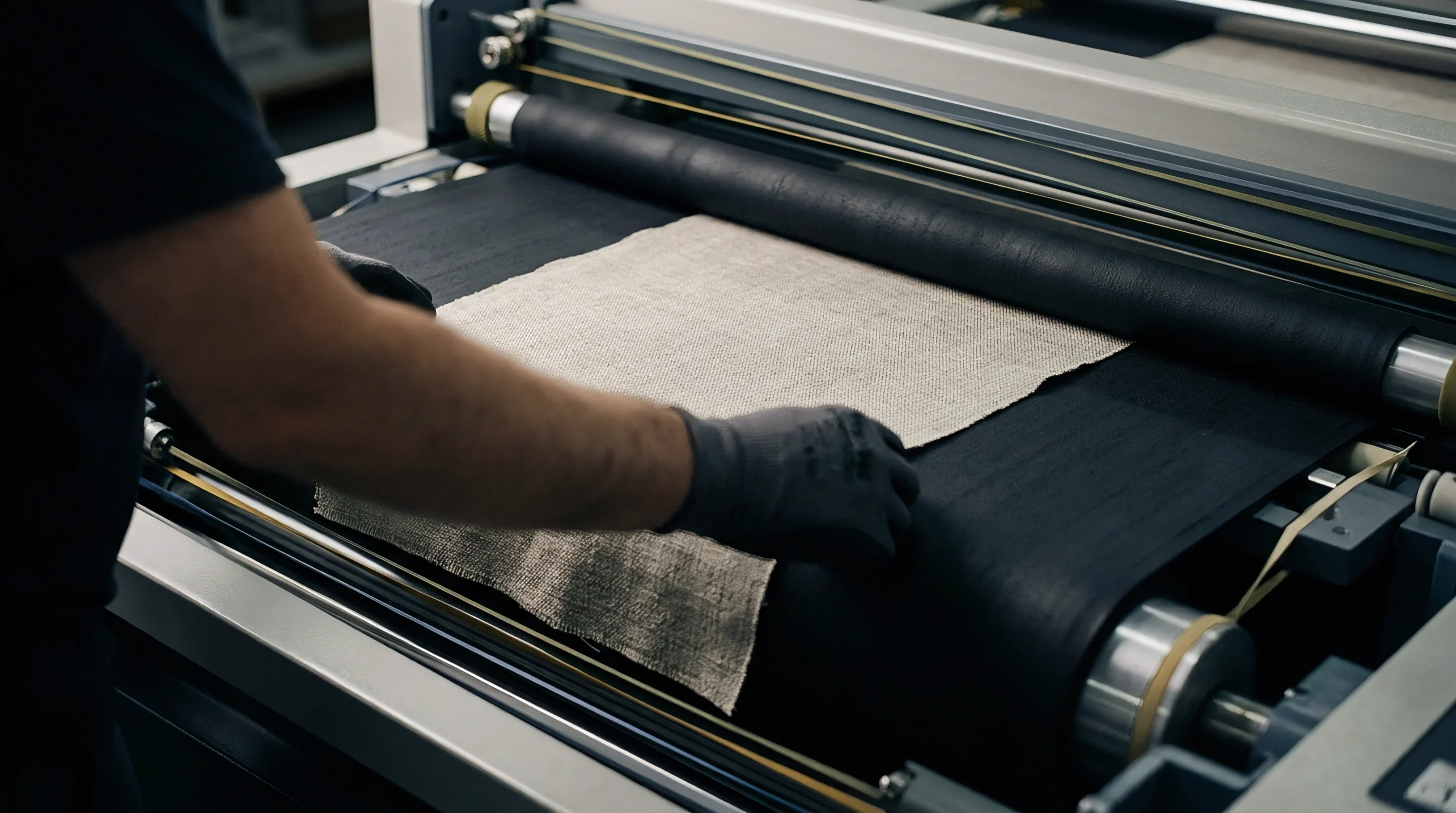
What Cover Factor Floor Prevents Early Crotch Blowouts?
Field data from heavy industrial garments shows crotch blowouts begin when total metric fractional cover drops below 0.84 in 3/1 twills. Below that floor, cyclic strain stretches the weave and widens gaps between warp ends. Walking motion exerts multidirectional shear across inner thigh and crotch seams.
Lower cover factors allow warp ends to shift sideways under stress, exposing loose weft yarns to friction against opposing panels. Holding a warp cover factor floor of 24.5 in the cotton system prevents lateral thread slip, locking warp yarns into a rigid array that handles crotch shear without opening gaps.
Even thread spacing ensures friction distributes uniformly rather than focusing on structural weak points. Irregular reed wire spacing or uneven warp tension produces bands of low end density across the fabric face. These low-density lanes have lower local cover factors, allowing abrasive contact to snag warp floats in the loose zones.
Checking thread spacing uniformity with digital image analysis on finished goods confirms consistent cover across the bolt width, preventing isolated abrasion failures in the field.
Yarn cross-sectional shape changes spatial cover without altering nominal yarn count or fabric weight. Ring-spun cotton yarns are roughly circular when relaxed, but flatten into elliptical profiles under beat-up and calender pressure. This deformation expands the horizontal yarn axis, raising effective fabric cover by filling lateral gaps between ends.
Determining fractional cover requires measuring finished yarn diameter under standard atmospheric conditioning. Excessive yarn flattening reduces vertical crown depth, which lowers impact absorption under harsh abrasion and exposes internal core fibers to wear.
Cover factor directly governs air permeability in dense workwear. As total fractional cover approaches 0.90, pore dimensions between yarns shrink, choking airflow through the fabric. This drop in permeability improves resistance against wind-blown grit in industrial environments.
Fine abrasive dust trapped in open weave pockets acts as an internal grinding medium, cutting fibers inside the yarn bundle during body movement. Tight structural packing at high cover factors keeps abrasive dust out, protecting internal fiber integrity over repeated wash cycles.
Crimp differential alters the surface topography of high-cover weaves. In warp-dense twills, weft yarns take a tortuous path around packed warp ends, producing deep weft crimp waves while warp ends stay relatively flat. This geometry pushes warp floats to the technical face, creating a warp-dominant contact plane.
Surface friction contacts warp yarns almost exclusively, shielding underlying weft picks. Wear failure in these fabrics occurs only after outer warp floats are worn through over a wide area, providing longer service life than balanced-crimp constructions.
ISO 3801 mass testing confirms that adding five picks per inch increases fabric weight by four percent while raising Martindale wear cycles by twenty percent.
Fabric packing limits define maximum yarn density before yarns crush during beat-up. Pushing past recommended limits causes warp ends to ride over one another, forming double-end crowns that stick up above the cloth plane. These raised points take concentrated friction energy, snapping long before the surrounding flat areas show wear.
Keeping warp and weft cover factors inside theoretical limits delivers a flat surface profile optimized for abrasion resistance.
Internal yarn packing density works in tandem with fabric spatial cover. Compact, high-twist yarns resist fiber pull-out during surface rubbing. Loose, low-twist yarns with high spatial cover might look full initially, but they shed outer fibers quickly under friction, causing rapid cover factor loss in laundering.
Reliable workwear demands dense yarn packing matched with high fabric cover factor to maintain the weave geometry throughout garment service life.
Dynamic tension continuously redistributes crimp between warp and weft systems.
Multi-axis tensile loads during active wear alter fabric cover factor dynamically. Warp-direction tension flattens warp crimp, pulling warp ends closer together while spreading weft picks apart. Dynamic analysis shows low-pick fabrics lose substantial weft-direction cover under warp stress, opening spaces that expose yarn flanks to abrasion.
High initial pick density limits warp crimp extension under load, preserving cover factor values and shielding yarn crossovers during heavy work.
A high cover factor consistently outlasts finishes designed solely for initial hand feel.

Friction
Laboratory abrasion testing reveals the physical mechanisms behind fiber pull-out and yarn failure. Testing under ISO 12947-2 (Martindale) subjects specimens to continuous translational friction at 12 kPa, running a standard wool abradant over the surface in a Lissajous pattern. This multi-directional rubbing exerts continuous rotational and shearing loads on exposed yarn crowns.
Fabrics with low structural density let yarns roll and flex under the abradant, generating internal shear stresses that break fibers deep inside the yarn core.
Tight structural packing creates yarn clamping forces that prevent thread movement under friction. In a dense 3/1 twill with high warp cover, adjacent warp ends hold one another firmly through lateral pressure. This clamping force keeps yarns from shifting when the abradant grabs surface fibers.
Rather than stretching and rolling, the dense weave forces the abradant to glide over the face, converting friction energy into surface heat rather than yarn distortion. Restricting yarn mobility directly increases cycle counts to thread rupture.
Microscopic inspection of worn fabrics shows a clear wear progression during flat abrasion. Initial cycles remove surface fuzz and loose fiber ends, smoothing the exposed crowns. Continued rubbing induces micro-fibrillation along outer fibers, causing filaments to detach from the bundle and form loops on the face.
In loose setts, these loops mat into pills that trap abrasive grit, speeding up yarn breakdown. High-cover fabrics resist loop formation because tight yarn packing anchors individual fibers along their full length.
| Fabric Sample ID | Fiber Blend | Finished Sett (Ends x Picks / Inch) | Metric Cover Factor (Kc) | Martindale Breakdown (Cycles) | Primary Failure Mode | Pilling Grade at 5,000 Cycles |
|---|---|---|---|---|---|---|
| AB-COT-300 | 100% Cotton | 108 x 56 | 0.892 | 35,000 | Warp Float Shear | Grade 4 |
| AB-PC-240 | 65/35 Poly-Cotton | 112 x 60 | 0.901 | 65,000 | Cotton Component Fibrillation | Grade 3-4 |
| AB-PC-200 | 65/35 Poly-Cotton | 92 x 46 | 0.815 | 22,000 | Yarn Displacement / Hole | Grade 2 |
| AB-COT-240 | 100% Cotton | 96 x 48 | 0.834 | 18,000 | Weft Thread Rupture | Grade 3 |
Accelerotor testing under AATCC 93 shows the direct consequence of low pick density in unconstrained tumbling. Fabric specimens rotated at high speeds in an abrasive chamber undergo continuous high-velocity impacts and edge friction. Loose-sett fabrics shed mass rapidly in the Accelerotor because loose edges fray easily, throwing off whole yarn segments when inter-thread friction cannot hold short fibers.
Dense weaves maintain structural integrity during impact, holding yarns within the weave matrix and minimizing weight loss.
Float length strongly influences wear kinetics in twill and satin weaves. In a 3/1 twill, warp floats pass over three weft picks before interlacing. These long floats create a smooth, continuous warp face that spreads friction across long fiber spans, but they invite snagging if yarn packing is loose.
When low pick density pairs with long floats, abrasive edges catch under the yarns, pulling them off the base cloth and snapping them. High warp density packs adjacent floats tight against each other, turning individual threads into a continuous protective surface.
Yarn hairiness accelerates early abrasion across all cover levels. Ring-spun yarns made with compact spinning draw fiber ends into the yarn core, leaving a clean, compact surface. Standard ring-spun yarns leave outer fiber tails sticking out from the axis.
Under flat rubbing, these tails catch the abradant, transferring shear directly to individual surface fibers and pulling them from the matrix. Compact yarns woven at high cover factors maximize wear life by cutting initial surface hair and maximizing inter-thread clamping.
A technical review of a failed workwear order highlights the vulnerability of altered constructions. The original contract for a 240 gsm 65/35 polyester-cotton 3/1 twill called for a finished sett of 110 ends per inch by 58 picks per inch using 1/16s Ne combed ring-spun yarn. This configuration yielded a warp cover of 27.5 and a weft cover of 14.5 in the cotton system, reaching a metric fractional cover of 0.91.
Lab trials confirmed dry Martindale abrasion life exceeding 55,000 cycles to a two-thread break at 12 kPa pressure.
To cut yarn costs in bulk production, the weaving mill modified the construction. They substituted a coarser 1/14s Ne open-end weft and lowered pick density from 58 picks per inch to 46 picks per inch, maintaining target fabric weight at 240 grams per square meter through the bulkier yarn. The revised sett measured 106 ends per inch by 46 picks per inch.
Recalculated cover factors showed warp cover at 26.5 and weft cover at 12.3, dropping total metric fractional cover to 0.835 while introducing open-end yarn hairiness and a looser core.
Subsequent testing under ISO 12947-2 showed a sharp drop in durability. Martindale abrasion life fell from 55,000 cycles to 19,000 cycles. Microscopic analysis revealed that the lower pick count widened gaps between warp ends, allowing the coarser open-end weft to buckle under the Martindale plate.
The abradant caught the raised weft crowns, stripping wrapper fibers from the open-end core and tearing the yarn apart. Maintaining target fabric weight while cutting pick density and yarn compactness destroyed abrasion performance.
Abrasive contact systematically wears down the most exposed float segments before engaging the base structure.
Directional rubbing highlights distinct performance differences between warp and weft systems. Standard laboratory tests use isotropic rubbing patterns, but real workwear wear is often unidirectional ~ such as continuous friction against equipment edges or vehicle seats. When abrasion runs parallel to warp floats, the contact surface slides along the fibers, minimizing snagging and extending wear life.
When rubbing runs perpendicular across floats, abrasive forces catch yarn flanks, rolling fibers out of place and shearing them. High pick density keeps warp floats from rolling sideways, maintaining fiber alignment under cross-directional friction.
Blending synthetic high-tenacity staple fibers with natural fibers alters wear kinetics significantly. In 65/35 poly-cotton fabrics, high-tenacity polyester filaments form a structural scaffold inside the yarn core. Under friction, softer cotton fibers wear away first, exposing the polyester filaments underneath.
If yarn packing density is high, this residual polyester shell forms a tough layer that resists further wear. If packing density is low, the exposed polyester filaments pull out of the loose yarn entirely, causing rapid failure despite the synthetic fiber content.
What structural modifications can prevent directional shear damage when pick density is locked by loom speed limits?

Finish
Dyehouse wet processing reshapes greige fabric structure through chemical treatments, thermal cycles, and applied tension. Greige goods undergo substantial dimensional changes during scouring, bleaching, mercerizing, dyeing, and stenter drying. Scouring removes protective sizing agents and natural waxes, increasing fiber friction in the bundle and shifting fabric hand.
Mercerizing with concentrated caustic soda swells cotton fibers, shifting their flat, bean-like cross-sections into rounder profiles. This swelling increases yarn diameter, pushing finished end and pick counts up as the cloth shrinks in width and length.
Stenter settings dictate final thread density and dimensional stability. Entry overfeed controls lengthwise relaxation during drying and heat setting. Increasing overfeed allows weft picks to crowd together, raising finished picks per inch above loom state.
Limiting overfeed holds the fabric under lengthwise tension, pulling weft picks apart and lowering finished pick density. Finishing lines track stenter overfeed percentages during drying to ensure greige shrinkage turns into permanent cover factor gains. Fabrics dried under heavy tension retain latent shrinkage and show lower finished abrasion resistance.
Chemical resin treatments for durable press or flame retardancy alter fiber mechanics and wear resistance. Glyoxal resins crosslink cellulose chains in the amorphous regions of cotton, delivering wrinkle recovery and shape retention. That crosslinking stiffens the internal fiber structure, reducing elongation and impact absorption.
Under abrasive friction, crosslinked cotton fibers snap cleanly under shear rather than flexing to absorb contact stress. Heavy resin finishes can cut Martindale abrasion life by 30 to 50 percent compared to unresinated control lots.
| Processing Stage / Chemical Application | Greige Sett (Ends x Picks) | Finished Sett (Ends x Picks) | Finished Cover (Kc) | Martindale Life (Cycles) | Tensile Loss Warp/Weft (%) |
|---|---|---|---|---|---|
| Greige Control (Desized) | 108 x 56 | 108 x 56 | 0.865 | 42,000 | 0.0 / 0.0 |
| Mercerized + Pad-Steam Dyed | 108 x 56 | 114 x 59 | 0.902 | 58,000 | +5.2 / +4.1 |
| Mercerized + Resin Finish (Durable Press) | 108 x 56 | 112 x 58 | 0.895 | 31,000 | -22.4 / -18.6 |
| Mercerized + Fluorocarbon + Softener | 108 x 56 | 114 x 60 | 0.908 | 64,000 | -2.1 / -1.5 |
Adding softeners to pad formulations modifies surface lubrication. Macro-emulsion silicones lay down a slick film over yarn crowns, lowering the friction coefficient against abrading surfaces. Reducing surface friction lets abrasive media slide across crowns with lower shear transfer, raising initial Martindale cycle counts.
Softener lubricity can mask cover deficiencies in short-term tests. However, synthetic softeners wash out during repeated industrial laundering, stripping away lubrication and exposing loose, low-sett weaves to accelerated wear.
The following sequence details structural failure modes linked directly to wet processing and finish choices:
- Excessive Stenter Width Tension forces warp ends closely together while pulling weft picks apart, reducing weft cover factor and creating wide inter-pick channels prone to abrasive tearing.
- Over-Acidified Washing Baths degrade cotton cellulose chains through acid hydrolysis, weakening fiber tenacity and accelerating filament snapping under surface friction contact.
- High-Temperature Calendering flattens yarn crowns into thin elliptical profiles, yielding temporary cover factor gains while destroying vertical yarn cushioning and accelerating core breakdown.
- Uncontrolled Resin Crosslinking embrittles surface fibers within cotton-polyester blends, causing outer cotton wrappings to snap away rapidly and exposing internal synthetic cores to pilling.
Calendering applies heat and heavy nip pressure to flatten fabric surfaces, altering luster and hand. Running heavy workwear through a heated steel-on-cotton nip compresses crossover points, reducing fabric thickness. While flattening yarn crowns widens their surface area ~ temporarily increasing optical cover factor ~ it crushes yarn bulk.
Flattened crowns cannot flex under abrasive loads, focusing friction on thin surface skins that wear off rapidly in industrial laundries.
Compressive shrinkage operations increase density mechanically. Sanforizing feeds wet fabric onto a heavy rubber belt held under tension, then releases belt tension to drive warp yarns together before drying against a steam drum. This step raises finished picks per inch above loom levels, boosting both fabric weight and weft cover.
Mechanically compacted weaves show better abrasion durability because tight pick spacing locks warp floats in place without chemical embrittlement.
Surface chemical finishes frequently mask underlying deficiencies in greige pick density.
Bio-polishing uses cellulase enzymes to hydrolyze protruding surface fibers, clearing fuzz from cotton fabrics. Stripping surface hair cuts pilling and smooths the face. However, aggressive bio-polishing attacks fiber cell walls within the yarn core, reducing tensile strength and bundle cohesion.
Cellulase treatment on low-cover fabrics weakens fiber anchor points in loose yarns, allowing remaining fibers to pull out quickly during abrasion and shortening garment life.
Industrial wash tests expose the difference between chemical finishes and true mechanical density. Workwear washed repeatedly at 75 degrees Celsius with alkaline detergents loses softeners and calender compaction within five to ten cycles. Once surface chemicals wash out, durability depends entirely on structural sett and fiber properties.
Fabrics relying on softeners to pass abrasion tests fail early in the wash cycle, whereas high greige pick counts maintain friction resistance through 50 or more industrial washes.
An uncalibrated stenter stretching weft picks four percent wide across 6,000 meters of workwear fabric dropped cover factor below specification, causing early abrasion test failure in the buyer’s laboratory and incurring a 14,000 dollar air-freight replacement charge.
Margin
Fabric procurement requires a continuous balance between structural quality and weave room output. On air-jet looms, pick density directly dictates production speed. Machine speed in picks per minute (PPM) is fixed for a given yarn type and reed width.
A loom running at 700 PPM inserting 56 picks per inch produces roughly 18.75 linear meters of greige fabric per hour at 100 percent efficiency. Increasing density to 64 picks per inch to improve weft cover drops output to 16.4 linear meters per hour ~ a 12.5 percent loss in daily weave room capacity.
Reduced loom productivity drives up weaving conversion costs per meter. Weave room overhead ~ power, labor, climate control, and depreciation ~ remains constant per machine hour. Adding picks to boost abrasion performance increases yarn consumption per meter and raises machine hour allocations.
Buyers must determine whether the performance gains from added pick density justify higher greige costs, or if adjusting warp count can hit cover factor targets without slowing loom output.
Adjusting yarn count offers a way to lift cover factor without sacrificing loom speed. Moving to a coarser warp yarn while maintaining ends per inch raises warp cover without requiring slower weft insertion. Coarser yarns increase fabric weight per square meter, raising raw yarn costs.
The table below compares commercial production metrics and landed costs across four configurations designed for heavy-duty workwear.
| Option Code | Warp x Weft Yarn Count | Greige Sett (Ends x Picks) | Loom Output at 700 PPM (m/h) | Yarn Cost per Meter ($) | Weaving Cost per Meter ($) | Finished Landed Cost ($/m) |
|---|---|---|---|---|---|---|
| OPT-A1 | 2/20s x 2/20s Ne | 108 x 56 | 18.75 | 1.42 | 0.58 | 2.45 |
| OPT-A2 | 2/20s x 2/20s Ne | 108 x 64 | 16.40 | 1.58 | 0.66 | 2.68 |
| OPT-B1 | 2/16s x 2/20s Ne | 96 x 56 | 18.75 | 1.51 | 0.58 | 2.52 |
| OPT-B2 | 1/12s x 1/12s Ne | 88 x 48 | 21.87 | 1.35 | 0.50 | 2.28 |
Subcontracting wet processing introduces cost variables and yield risks. A converter buying greige cloth must factor in length loss during mercerizing, dyeing, and sanforizing. A fabric shrinking 5 percent in length during finishing yields fewer finished meters than greige meters bought, raising the effective greige cost per finished meter.
Sourcing teams must calculate landed costs based on finished usable meters rather than greige invoices, ensuring structural gains from compaction align with production budgets.
A comprehensive fabric specification must establish mandatory minimum parameters to lock structural performance and prevent supplier substitutions:
- Finished Thread Density defined via ISO 7211-2 with explicit minimum thresholds for both warp ends per inch and weft picks per inch taken after conditioning.
- Yarn Linear Density and Type specified per ISO 2060, establishing count tolerances alongside spinning technology requirements such as combed ring-spun or compact-spun yarns.
- Minimum Cover Factor Limits calculated via metric fractional cover equations, establishing absolute structural packing floors across all bulk production lots.
- Abrasion Performance Floor verified under ISO 12947-2 at 12 kPa pressure, establishing minimum breakdown cycle targets on finished, unsoftened bulk goods.
High structural density alone cannot ensure durability if yarn quality and finishing parameters fail to support it.
Inspection procedures for incoming grey goods require systematic execution to catch structural deficiencies before wet processing begins. The following sequential protocol outlines incoming greige verification:
- Cut a full-width swath measuring 500 millimeters in length from the head end of three randomly selected rolls per weaving lot.
- Condition specimens for four hours in a standard atmosphere operating at 20 degrees Celsius and 65 percent relative humidity.
- Count warp ends across five distinct one-inch fields using a calibrated pick glass, averaging readings to establish warp density.
- Count weft picks across five distinct one-inch fields along the longitudinal axis, confirming pick insertion density matches purchase order requirements.
- Extract ten warp yarns and ten weft yarns, measuring linear density in tex using a calibrated analytical balance.
- Calculate warp, weft, and total metric fractional cover factors, rejecting lots falling below minimum calculated contract thresholds.
Standard purchase contracts require clear legal remedies for unauthorized construction changes. Setting exact structural minimums keeps mills from substituting cheap yarns or dropping picks to improve margins. Technical specifications function as enforceable terms when tied directly to purchase orders and letter of credit release documents.
The contract line dictates that any bulk lot delivering a finished thread count more than two percent below specified ends or picks, or displaying a metric cover factor below 0.88, shall be rejected at the mill gate with all return freight and re-weaving charges debited to the seller’s account.