Warp Tension
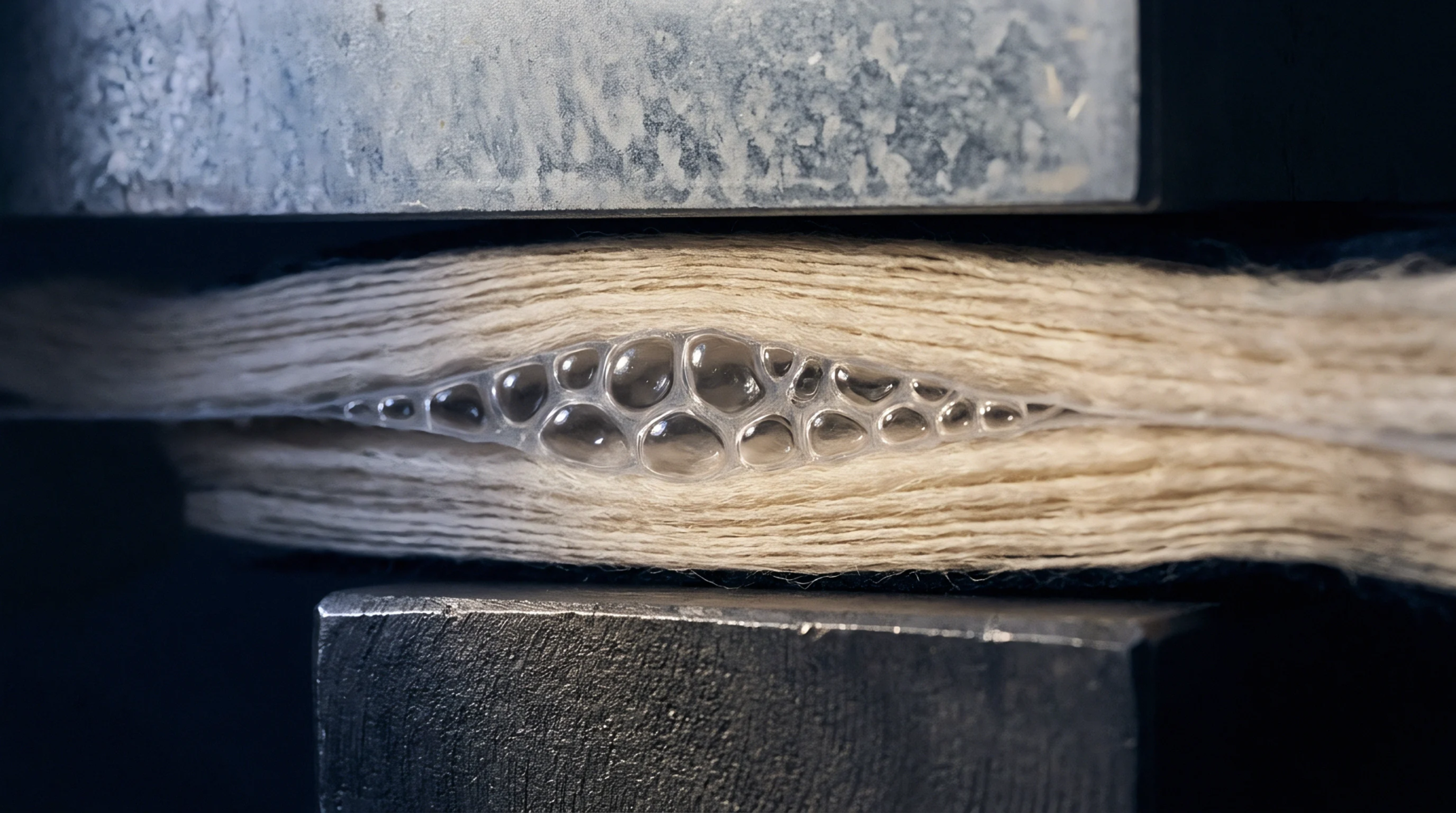
Differential yarn retraction between the warp and weft directions defines the geometric stability of a finished textile structure during the post-loom relaxation phase. A crimp balance measurement evaluates how the undulations of individual yarns deviate from a perfectly planar state when removed from a constrained weave construction. This crimp balance quantifies the percentage difference between the path length of a yarn within the fabric and its fully extended straight length.
Mills verify these values after the final wet processing stages because thermal shrinkage significantly alters the interlace geometry of the interlaced fibres. Technicians extract specific yarns from the fabric to measure their degree of curvature under a standardized load, determining the precise ratio of extension required to pull the yarn flat without inducing strain in the base material. Low variance in this metric indicates a stable hand feel and predictable performance for apparel designers who rely on dimensional consistency across production batches.
Relaxation Mechanics
Fabric geometry undergoes radical shifts when internal stresses accumulated during weaving release during the finishing process. Moisture and heat application act as triggers for the fibres to return to a lower energy state. The crimp balance governs how the material recovers its equilibrium shape following these environmental changes.
Yarns with higher initial entanglement exhibit a stronger tendency to pull the fabric inward, causing puckering or bowing if the tension distribution remains uneven across the loom width. Quality assurance departments observe this effect at the tenter frame where controlled overfeed settings mitigate the natural contraction of the yarn network. If the ratio of warp crimp to weft crimp remains consistent throughout the roll, the resulting fabric resists twisting after garment construction.
Stable geometry prevents the torque experienced in many lightweight knits or low twist woven structures.
Testing Protocols
Standardized test methods establish the boundary for sample preparation and elongation rates during laboratory assessment. Operators cut strips from the fabric at specified angles to capture the interaction between yarn sets correctly. A tension gauge applies a minimal force to remove the crimp without stretching the fibre itself.
Data gathered from multiple samples reveals the average deviation from the nominal count established during the initial design phase. Discrepancies between the expected crimp balance and the measured result highlight errors in loom settings or insufficient relaxation time in the finishing sequence. Accurate findings allow for the adjustment of feed speeds to ensure that the finished product adheres to strict width specifications before shipment to the sewing facility.
Commercial Implications
Factories use this data to predict how specific styles behave under standard laundry conditions. Excessive imbalance leads to high shrinkage rates or skewed grain lines in the final garment. Fabric manufacturers hold these metrics to defend the quality of their output against claims of poor dimensional performance.
High consistency provides evidence that the production line manages tension fluctuations effectively throughout the entire manufacturing cycle. Consistent crimp balance ensures that the fabric retains its engineered drape and structural integrity through repeated cleaning cycles.