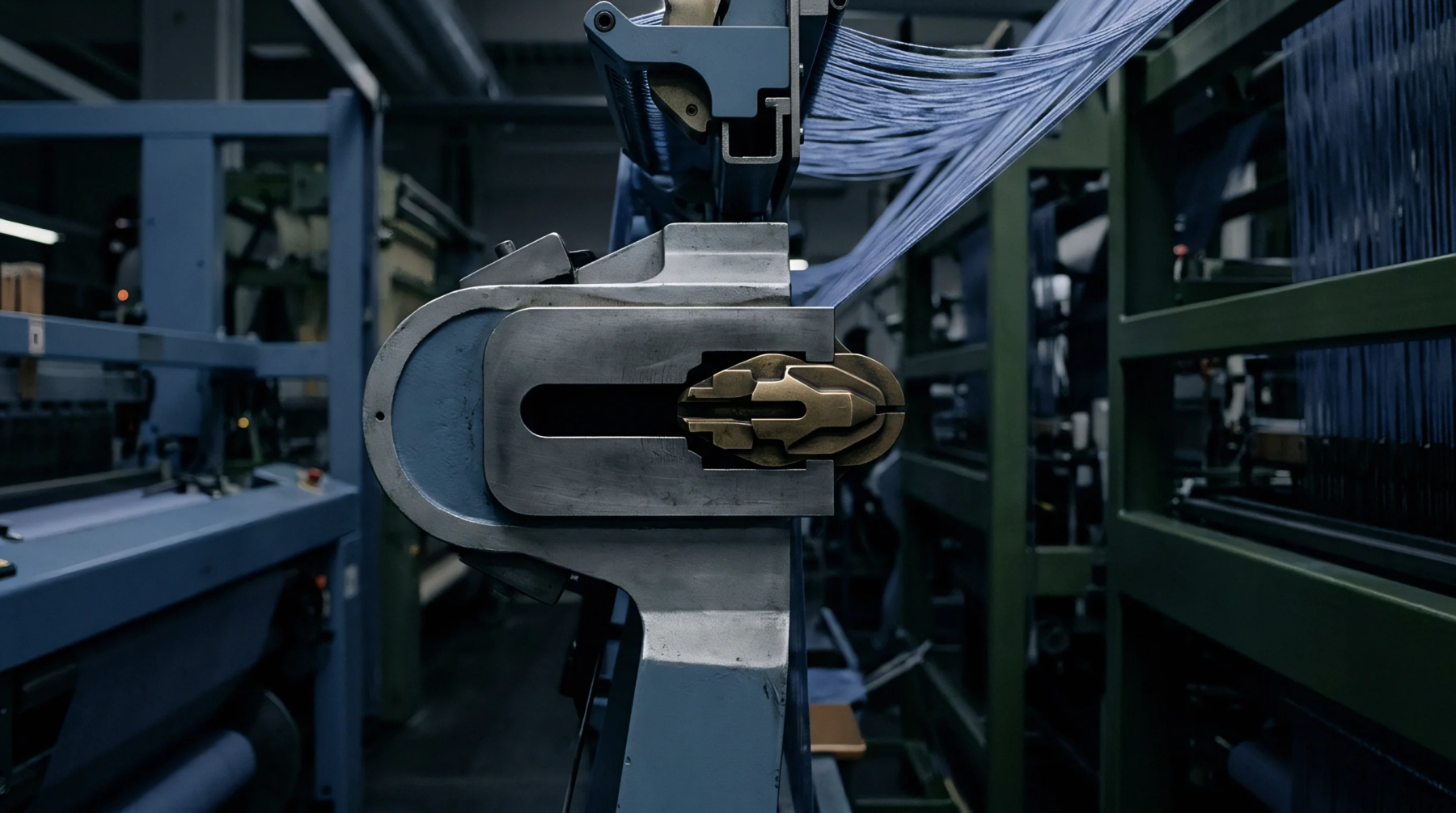
Channel Geometry
Shaped dents aligned across a weaving loom guide high-velocity air jets to transport fill yarn through an open warp shed without mechanical propulsion. Optimal profile reed airflow dynamics require precise control over jet velocity vectors and pressure decay along the width of the reed channel. Enclosed tunnel geometries prevent lateral dispersion of the air stream.
Pneumatic Pressure
Main nozzles accelerate yarn ends into the shed while auxiliary relay nozzles maintain air velocity at uniform intervals across the loom. Poorly tuned profile reed airflow dynamics cause pressure drops that collapse the air core before fill insertion completes.
Weft Insertion
Aerodynamic drag forces acting on the yarn surface pull the pick through the tunnel at speeds exceeding fifteen hundred meters per minute. When profile reed airflow dynamics remain stable across the shed, delicate filament yarns pass without pick abrasion or tip entanglement. Misaligned reed dents disrupt air currents and create turbulent eddies that deflect the yarn tip into warp ends.
Loom sensors detect late arrival times and trigger automatic stop motions to prevent weaving defects.
Energy Consumption
Auxiliary nozzle blowing duration represents the largest component of compressed air usage in modern weaving sheds. Precise calibration of profile reed airflow dynamics reduces air volume demand without sacrificing pick insertion reliability.