Surface Drag
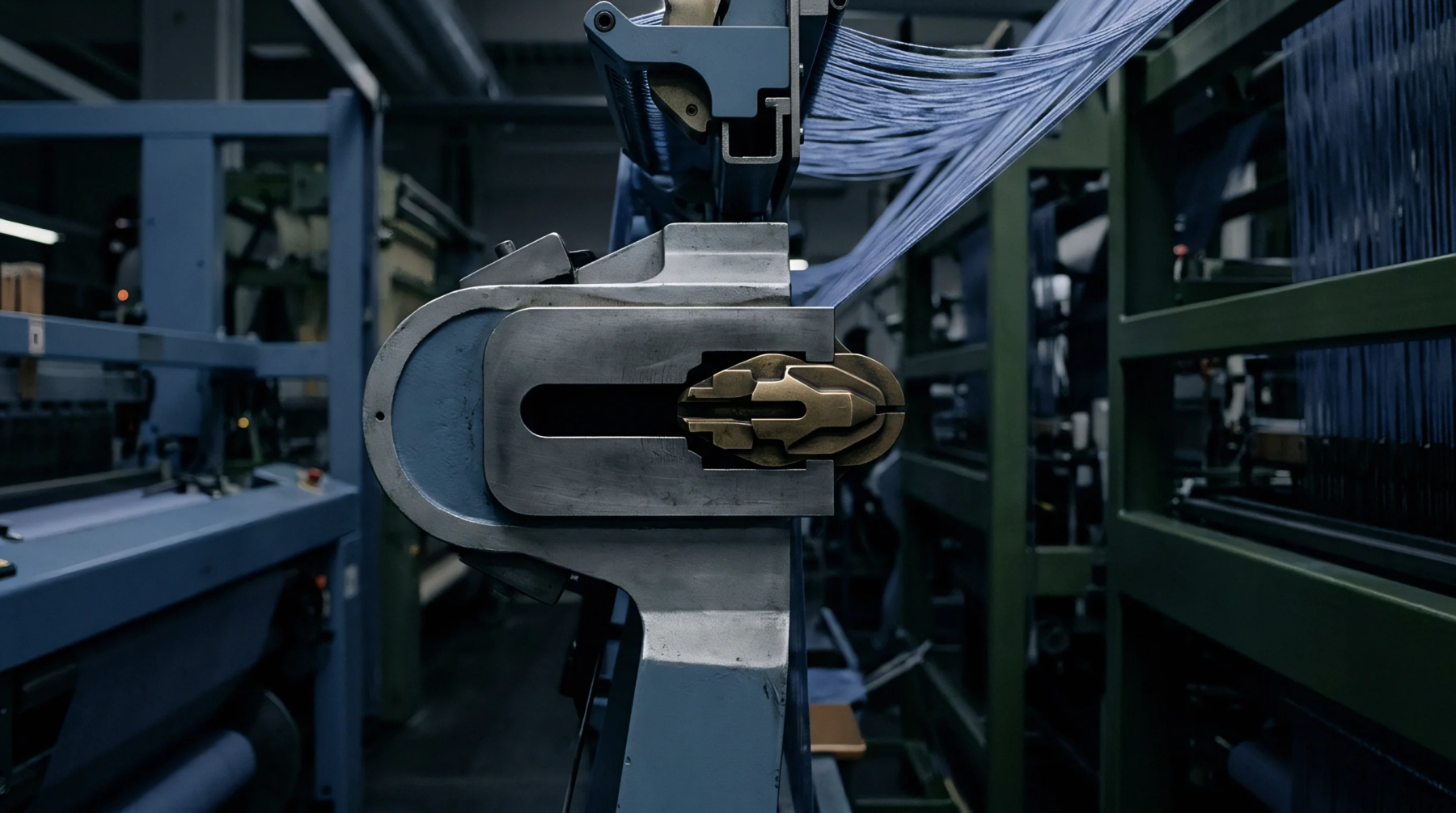
Frictional resistance generated between a moving warp end and the metal eye of a mechanical stop motion device defines the sliding behavior of yarn in high-speed weaving. The drop wire friction coefficient quantifies this interface force, dictating how much dynamic drag is introduced as yarn passes through individual drop wires on a loom. Excessive resistance raises downstream yarn tension and promotes filamentation in continuous filament yarns, whereas low values prevent false stop-motion triggers.
The scope of this property covers the contact boundary between steel drop wire surfaces and spun or filament yarns, stopping at the boundary where warp yarn enters the heddle eye.
Motion Impedance
Contact geometry and surface roughness of the stamped metal channel dictate the force required to pull yarn through the assembly. As warp yarn runs through thousands of individual detectors across the loom width, the drop wire friction coefficient accumulates into measurable drag that alters the tension profile before shedding occurs. Higher dynamic resistance requires weaving mills to adjust warp let-off rates to prevent yarn breakage.
Tension Dissipation
Lubricant additives applied during warp sizing alter the contact dynamics at the drop wire channel. A drop wire friction coefficient exceeding target thresholds increases abrasion, stripping protective size material off the yarn bundle and depositing debris inside the wire eye.
Mill Verification
Standardized testing utilizes inclined plane or capstan friction meters to evaluate yarn-to-metal resistance under controlled relative humidity and speed. The drop wire friction coefficient provides an objective metric for evaluating whether warp sizing formulations provide adequate surface lubrication prior to weaving.