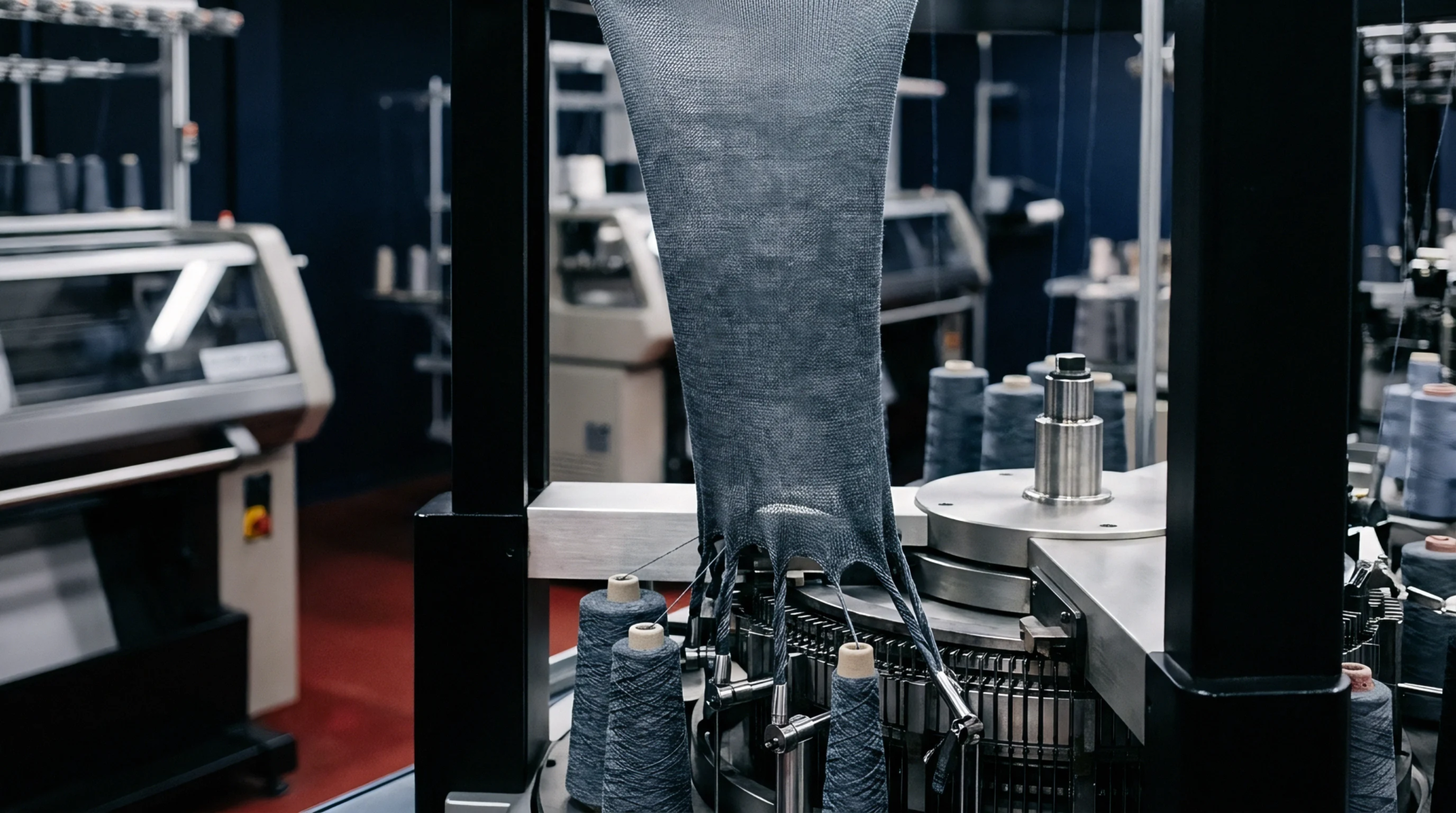
Dual Yarn Insertion
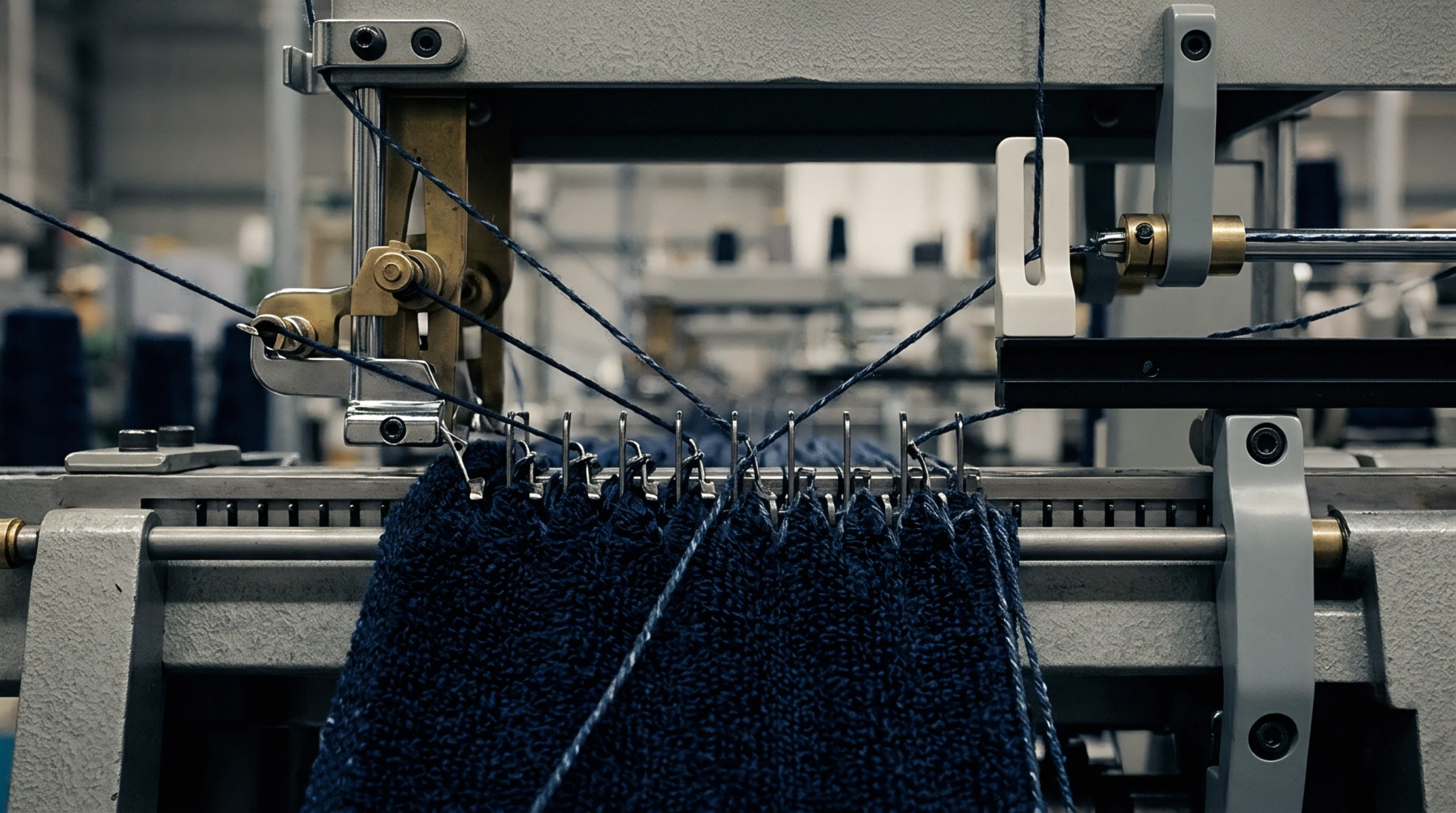
Simultaneous feeding of a bare elastomeric filament and a non-elastic hard yarn into the same knitting needle hook positions the flexible core safely behind the cover yarn on the face of the fabric. Elastane plating establishes stretch, structural recovery, and dimensional stability in single jersey, rib, and interlock weft-knit goods without leaving raw synthetic polymers visible on the technical face. The physical boundary of this manufacturing technique is defined by the needle hook capacity and the precise geometry of the dual-yarn carrier guide.
The process ceases to apply when yarns are pre-covered or air-jet intermingled before reaching the machine feeder.
Needle Delivery Dynamics
Plating yarn guides feature separate precision-drilled ceramic orifices or micro-machined guide paths that direct both components into the descending needle at controlled converging angles. Elastane plating requires introducing the elastomeric component under continuous machine draft at a lower, deeper position in the hook than the rigid companion yarn. Tension discrepancies between components disrupt this critical spatial orientation.
As the needle descends into the cast-off cam, the hard yarn slides outward over the latch, shielding the retracted bare elastic thread inside the structural loop core. Plating faults expose the bare core.
Structural Stress Boundaries
Excessive feed tension on the elastomeric component causes yarn breakage, needle hook deflection, or edge curling along the cut edges of single-knit structures. When elastane plating suffers from incomplete coverage, naked synthetic filaments migrate outward to form visible shine lines across the technical face of dark fabrics. Dye bath thermal shifts can degrade exposed polyurethane loops.
Finishing plants utilize thermal heat setting at temperatures between one hundred eighty and one hundred ninety-five degrees Celsius to stabilise internal elastane stresses before scouring. Heat setting prevents fabric shrinkage and curling during downstream garment cutting operations.
Finished Goods Validation
Quality inspection teams inspect stretch fabrics under balanced D65 lighting to detect misplated loops, skipped stitches, and elastomeric strike-through defects. Inconsistent elastane plating alters the technical stretch and recovery modulus across widthwise garment zones, causing inconsistent size fits. Laboratories test stretch recovery following ASTM D3107 or ISO 20932 protocols to verify that fabric panels return to within five percent of their baseline length after sustained extension.
Audit rejections occur when stretch recovery limits fall below technical specifications. Certified plating ensures long-term recovery performance.