Continuous Hydrolytic Scission Kinetics of Polyether Elastane Cores in Jet Dyeing Machinery
Polyether elastane undergoes rapid hydrolytic urethane scission at 130C, cutting tenacity by thirty percent when jet nozzle shear accelerates degradation.


Attack
Thermal immersion under aqueous tension initiates splitting across vulnerable segmental blocks within synthetic polyurethane-polyurea chains. When elastomeric monofilament enters an exhaust vessel alongside textured polyester or polyamide yarns, wet heat drives water molecules deep into the amorphous zones of the macromolecular structure. Hydrolytic breakdown targets the soft segments and the hard domains at unequal velocities.
Polyether soft phases derived from poly(tetramethylene ether) glycol resist ionic hydration more effectively than polyester counterparts, yet prolonged processing at elevated temperature breaks this chemical barrier. High kinetic energy inside pressurized baths forces water into covalent contact with ester-like urethane linkages.
The primary mechanism proceeds through nucleophilic addition of water to the carbonyl carbon within the urethane group. This intermediate step yields an unstable carbamic acid derivative alongside an open hydroxyl terminal group. Spontaneous decarboxylation rapidly eliminates carbon dioxide, leaving behind a terminal primary aliphatic amine.
Urea bonds break first. The loss of each polar linking site subtracts directly from the cohesive secondary bonding network that anchors physical crosslinks within hard domains.

Urethane Cleavage under Pressurized Liquor
The bath temperature profile establishes the thermal baseline for bond destabilization. Below 100 degrees Celsius, water ingress occurs with minimal immediate loss of chain integrity, allowing the filament to stretch and retract through standard transport cycles. Once vessel sensors record 125 to 130 degrees Celsius during disperse dye cycles, the hydrolytic reaction rate constant rises steeply.
The activation energy required for carbamate scission falls within reach of ordinary liquor energetics. Water molecules act as direct cleavage agents against the polymer backbone.
Concurrently, secondary degradation hits the polyether chain segments when processing conditions slip outside neutral boundaries. While poly(tetramethylene ether) chains exhibit stability in unbuffered boiling water, trace mineral contaminants, dissolved iron ions, and oxidative peroxide residues catalyze ether cleavage via oxonium ion formation. The aliphatic carbon-oxygen-carbon bridges split into shorter oligomeric fragments, terminating in alcohol and aldehyde functionalities.
This dual front of chemical attack degrades both the flexible polyether coils responsible for elastic extension and the rigid urethane-urea crystallites responsible for instantaneous elastic recovery.
Under continuous immersion at 130 degrees Celsius and pH 4.5, polyether elastane retains less than seventy percent of virgin tensile strength after sixty minutes.

Acid Catalysis in Disperse Dye Baths
Formulations adjusted for disperse dyeing typically incorporate acetic or formic acid buffers to stabilize dye dispersion and protect polyester components from alkaline hydrolysis. Bath acidity accelerates chain breakdown. Hydrogen ions protonate the carbonyl oxygen of the urethane linkage, rendering the carbonyl carbon significantly more susceptible to nucleophilic attack by ambient liquor molecules.
At pH 4.0, the rate of hydrolytic chain cleavage proceeds twice as fast as identical processing at pH 6.0.
Dye carriers and leveling chemicals compounded with aromatic esters or chlorinated solvents magnify this acidic cleavage pathway. These auxiliaries penetrate the elastomeric monofilament, swelling the amorphous matrix and lowering the effective glass transition temperature of the hard domains. Swollen polymer chains allow hydronium ions to travel into crystallite margins that would remain impenetrable during room temperature storage.
The structural disintegration remains invisible on the machine reel, concealing the damage until the dyed strand undergoes unwinding under downstream tension.

Nozzle
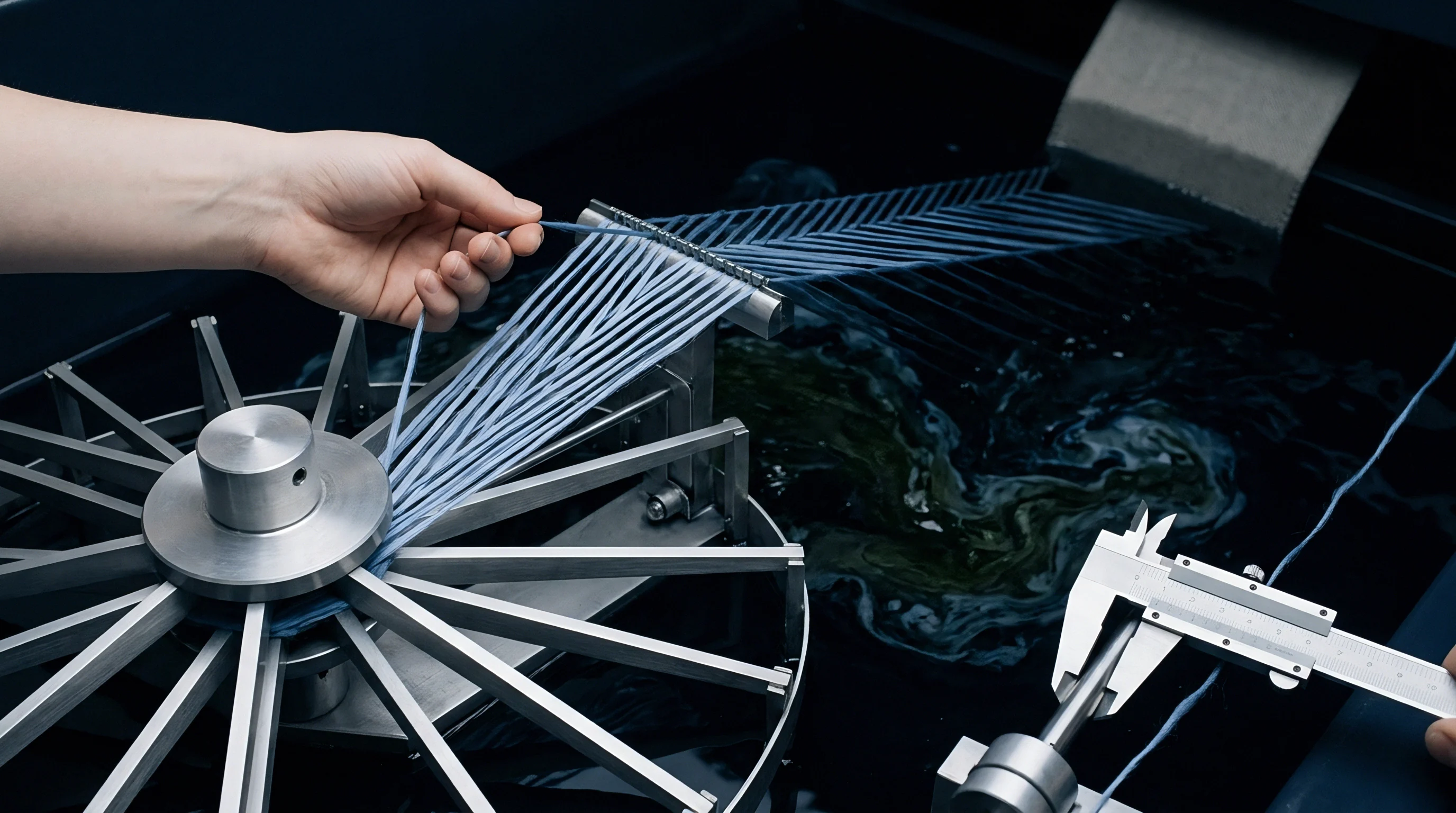
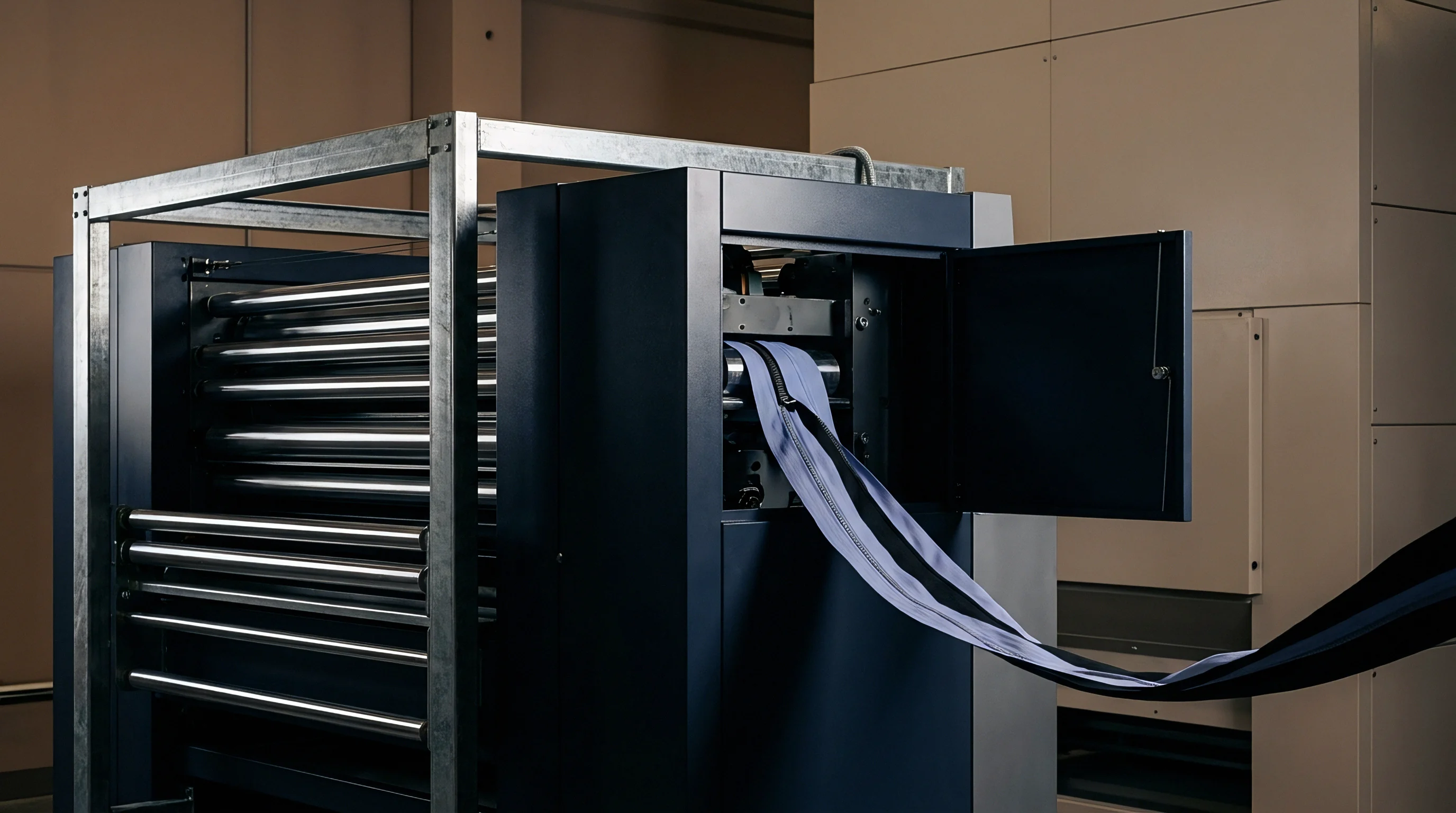
Hydrodynamic forces within the processing tube subject the moving rope to sustained mechanical fatigue while chemical degradation runs its course. Fabric transport relies on a high-velocity fluid stream channeled through a restrictive circular or elliptical throat. As pressurized liquor propels the textile loop forward, the inlaid elastane filaments experience violent pressure drops and localized turbulence.
This liquid shear acts simultaneously with longitudinal strain, prying open the macromolecular network right as chemical scission cleaves molecular links.
The venturi constriction generates rapid acceleration, shifting liquor speed from two meters per second in the transport conduit to upwards of twenty meters per second inside the throat. The elastomeric component stretches abruptly under the resulting drag force. When the textile loop clears the throat, hydrodynamic pressure collapses, allowing instantaneous contraction before the bundle crashes into the accumulation basket.
Repeating this extension and relaxation sequence four hundred times across a single dye cycle produces cyclic mechanical fatigue that multiplies the kinetic rate of hydrolytic scission.

Venturi Velocity and Hydrodynamic Shearing Stress
Fluid friction against the yarn boundary layer transfers significant shearing stress into the interior synthetic bundle. When the throat diameter is narrowed to generate higher drive pressure for dense circular knits, the fluid shear gradient across the rope exterior intensifies. The internal elastomeric filaments, already plasticized by hot liquor, stretch past their immediate yield point.
This stress state stretches the covalent bonds along the polymer backbone, lowering the activation energy barrier for hydrolytic cleavage. Mechanochemical degradation takes over where pure thermochemical scission leaves off. Bond angles along the polyether segments deform under mechanical load, presenting higher electron density at the ether oxygen atoms and welcoming protonation.
High shear conditions in the jet throat directly expand the population of cleaved chains per unit of operating time.

Mechanical Extension across the Lifter Reel
The lifter roll adds tension. Positioned above the liquid level, the driven reel lifts wet goods from the accumulation chamber toward the nozzle entrance. Slippage between the stainless steel reel surface and the wet textile rope introduces localized frictional drag, drawing out the elastomeric monofilament prior to fluid acceleration.
If reel speed and nozzle fluid velocity run out of synchronization, draft ratios between the lifter roll and the throat rise beyond acceptable limits.
Excessive drafting under high heat permanently disrupts the phase-separated morphology of the polyurethane elastomer. The hard segments, which organize into paracrystalline domains through hydrogen bonding between urea and urethane groupings, pull apart under prolonged axial tension. Once these physical anchor points dissociate, hot pressurized water penetrates the exposed segment cores, preventing re-association upon cool-down.
The resulting breakdown exhibits distinct operational characteristics across modern jet configurations:
- Venturi Throat Cavitation generates high-frequency hydraulic micro-jets that scour the surface of exposed elastane monofilaments, causing localized surface pitting.
- Lifter Reel Draughting forces longitudinal slip against wet yarn ropes, drawing the elastomeric filaments beyond fifty percent elongation during maximum thermal exposure.
- Chamber Impact Deceleration folds hot textile ropes violently against baffle plates, kinking partially hydrolyzed elastomer filaments and snapping brittle chains.
- Entanglement Choking halts continuous cloth circulation within the transport pipe, exposing localized rope segments to stagnant, overheated dye liquor.
Dyehouse managers routinely explain these snapped internal strands as greige spinning defects inherited from the yarn provider rather than failures of machine draughting control.
Rate
Quantifying macromolecular breakdown requires treating chain cleavage as a continuous chemical reaction governed by environmental parameters. The concentration of intact urethane and ether linkages decreases continuously over time as heat, water concentration, and hydronium ions interact with the polymer. Assuming water remains in vast excess inside an exhaust dye vessel, the reaction follows pseudo-first-order kinetics relative to cleavable bonds along the polyurethane-polyurea chain.
Tracking the loss of polymer molecular weight provides the mathematical foundation for this kinetic treatment. Gel permeation chromatography reveals that the number-average molecular weight drops in direct proportion to the cumulative scission events occurring within both hard and soft blocks. By establishing the initial concentration of scissionable linkages and measuring residual molecular weight at regular intervals, laboratory trials establish rate constants across defined thermal profiles.

How Rapidly Do Polyether Segments Hydrolyze?
The scission rate constant exhibits exponential sensitivity to liquor temperature, following classical Arrhenius behavior across standard dyehouse operational limits. Between 110 and 135 degrees Celsius, each five-degree increment produces an observable acceleration in bond rupture. Liquor circulation speed influences this kinetic profile by governing boundary-layer renewal at the filament surface; stagnant liquor creates localized thermal hot spots, while high-velocity flow ensures homogenous chemical exposure.
The mathematical representation of continuous chain scission expresses the fraction of broken bonds as a function of processing duration and kinetic rate constants. At 130 degrees Celsius, the hydrolytic rate constant for polyether-based urethane linkages in an uninhibited acidic liquor settles at approximately 0.014 per hour. Under these conditions, forty minutes of sustained exposure cleaves sufficient hard-segment bonds to register an irreversible decline in tensile modulus.
Modifying bath acidity shifts this constant significantly, as documented across controlled pilot trials.
| Liquor Temperature (C) | Bath Acidity (pH) | Scission Rate Constant (1/h) | Molecular Weight Retention (%) | Half-Life Value (h) |
|---|---|---|---|---|
| 100 | 5.5 | 0.0018 | 96.4 | 385.0 |
| 110 | 5.0 | 0.0039 | 92.1 | 177.7 |
| 120 | 4.5 | 0.0082 | 84.6 | 84.5 |
| 125 | 4.5 | 0.0115 | 78.2 | 60.3 |
| 130 | 4.5 | 0.0142 | 71.5 | 48.8 |
| 135 | 4.0 | 0.0268 | 58.3 | 25.8 |
Empirical Arrhenius Activation Energy Determinations
Deriving the activation energy for the overall degradation process confirms the dominant reaction pathway. Plotting the natural logarithm of the scission rate constant against the reciprocal of absolute temperature yields a linear slope proportional to activation energy. For polyether elastanes processed in jet dyeing machines, calculated activation energy values typically fall between 88 and 104 kilojoules per mole under acidic bath parameters.
This energy barrier mirrors known values for acid-catalyzed ester and urethane hydrolysis in bulk polymers.
A lower activation energy indicates heightened sensitivity to thermal runaway during processing. When dyeing polyester-elastane blends, technical operators occasionally push dyeing temperatures to 135 degrees Celsius to reduce batch cycle times and accelerate disperse dye exhaustion on microdenier polyester yarns. This operational compromise forces the elastomeric component across its kinetic degradation threshold.
Chain cleavage accelerates, turning what should be a manageable reduction in molecular weight into structural filament failure.
The sequence below details the operational stages where chemical degradation compounds across a standard jet processing cycle:
- Rapid liquor heating above 100 degrees Celsius swells the filament matrix, facilitating deep water absorption into polyether domains.
- Acidic buffer dosing establishes a high concentration of hydronium ions that actively protonate urethane carbonyl groups.
- Prolonged thermal dwell at 130 degrees Celsius drives peak hydrolytic scission across both hard segments and soft segments.
- Venturi shearing strains newly weakened molecular chains, preventing spontaneous re-association of hydrogen bonds.
- Accelerated cooling shocks the degraded elastomer, freezing fractured chain ends into disorganized amorphous configurations.
The industry currently lacks consensus on whether bath antioxidants or radical scavengers can meaningfully decouple thermal energy from hydrolytic scission when mechanical strain operates concurrently within the fluid nozzle?


Recovery
Physical properties degrade in parallel with the chemical destruction of polymer chains. Finished circular knit performance relies on the capacity of elastane to return instantly to its original dimensions following cyclic deformation. When hydrolytic scission breaks the hard-segment network, the molecular mechanism that drives elastic recovery collapses.
The severed chains can no longer store entropic energy during elongation, causing the material to undergo unrecoverable plastic deformation.
The symptom observed on the inspection frame is unyielding dimensional growth. Textile substrates containing degraded elastomeric filaments fail to contract to their specified finished width during drying and stenter stabilization. The finished cloth exhibits an open, loose stitch geometry, excessive air permeability, and a dead, papery hand.
Because the elastomeric yarns cannot pull the knitted loops back together, width control across the finished lot goes entirely out of control.
Which Process Variables Govern Filament Retention?
Dwell duration at peak temperature dictates the ultimate degree of elastic loss. A thirty-minute exposure cycle at 130 degrees Celsius permits sufficient recovery retention for low-demand applications. Lengthening this dwell to sixty or seventy-five minutes to correct an uneven lab dip match destroys the internal elastic structure.
Modulus decay accelerates rapidly past the forty-five-minute threshold.
The ratio of machine liquor volume to substrate weight also influences physical degradation rates. Low liquor ratios, such as five to one or six to one in modern aerodynamic jets, concentrate acidic buffers and chemical auxiliaries inside a smaller liquid volume. If bath chemical metering is calculated against total dry substrate weight rather than total liquor volume, effective bath concentrations spike, accelerating the chemical degradation of the elastomer.
| Dwell Time at 130C (min) | Breaking Tenacity (cN/dtex) | Elongation at Break (%) | Permanent Set at 300% (%) | Elastic Recovery Rate (%) |
|---|---|---|---|---|
| 0 (Greige Control) | 1.18 | 520 | 8.5 | 98.2 |
| 20 | 1.02 | 495 | 11.2 | 94.8 |
| 40 | 0.86 | 460 | 16.8 | 88.5 |
| 60 | 0.68 | 410 | 24.5 | 81.2 |
| 80 | 0.48 | 340 | 38.2 | 68.9 |

Elastic Modulus Decay across Successive Cycles
Modulus degradation manifests clearly during the uncoiling phase of stretch testing. Under standard cyclic loading between zero and three hundred percent elongation, an uninjured polyether elastomer produces a tight hysteresis loop with minimal energy loss. Hydrolyzed filaments yield a broadened hysteresis profile characterized by depressed loading tension and elevated permanent deformation.
Elongation fell by twenty percent. Tensile resistance drops sharply across repeated extensions.
This structural change alters how the finished garment performs under wear conditions. Knitted leggings and activewear items manufactured from over-processed rolls lose their holding power and sag at the knees and waistline after minimal use. The recovered length of the test strip grows continuously with every stretch cycle, indicating that the molecular network lacks the cohesive restoring force required to pull severed polymer chains back into alignment.
A fabric lot that displays severe width growth out of the stenter has already lost its internal elastic network in the jet vessel.
Chemical scission also manifests as an increase in thermal sensitivity during final stenter finishing. Virgin polyether elastane withstands stenter heat-setting temperatures of 190 to 195 degrees Celsius for forty seconds without undergoing physical collapse. In contrast, filaments damaged by hydrolytic cleavage in the jet melt or fuse at temperatures ten to fifteen degrees lower.
The severed chain ends act as internal plasticizers, depressing the crystalline melting transition of the hard domains and causing the elastomeric filaments to weld directly to neighboring polyester fibers.
Shortening the dwell time by even five minutes preserves more usable elasticity than adjusting chemical leveling agents.
Tolerance
Establishing clear technical limits requires standardizing the evaluation procedures used to qualify finished elastomeric performance. Mills frequently assert compliance based purely on visual inspection of the finished roll face or rudimentary stretch-and-recovery hand tests. Professional fabric procurement demands quantitative physical testing executed under controlled atmospheric parameters.
If test protocols deviate from established international methods, results obscure the true extent of chemical damage.
ISO 2062 governs determination of single-end breaking force and elongation of elastomeric yarn extracted from finished goods, requiring conditioning at twenty degrees Celsius and sixty-five percent relative humidity. Extracting inlaid elastane from a knitted structure requires careful manual de-knitting under optical magnification to avoid imparting parasitic mechanical strain. Once isolated, the filament is mounted on a constant-rate-of-extension tensile tester using specialized pneumatic grips lined with smooth rubber to prevent jaw breaks.

Tensile Load Verification under International Methods
The critical parameter for determining hydrolytic scission is tenacity retention relative to virgin yarn extracted from the original greige roll. A robust procurement specification mandates an absolute minimum of seventy-five percent tenacity retention on elastane monofilaments following disperse dyeing. Furthermore, the residual elongation at break must not drop below four hundred percent, ensuring adequate stretch reserve for garment conversion.
Evaluating recovery dynamics requires running cyclic fatigue testing under ASTM D2731. This method subjects the elastomeric specimen to five continuous cycles of loading and unloading between zero and three hundred percent elongation at a crosshead speed of five hundred millimeters per minute. The permanent set is recorded following the fifth relaxation cycle.
A finished specification that permits a permanent set exceeding eighteen percent guarantees field failures once garments enter consumer laundry cycles.

Sampling Thresholds for Thermal Creep Failure
Single-point testing fails to capture batch variance across large dye lots. Jet dyeing machines exhibit thermal and hydrodynamic variations between individual tubes within the same vessel frame. Outer nozzles frequently run two to three degrees cooler than central nozzles, producing disparate hydrolytic degradation rates across identical fabric ropes.
Quality acceptance sampling mandates testing elastane extracted from the head, middle, and tail of every dyed rope.
Thermal creep represents a specialized failure mode that emerges during high-temperature washing or drying of garments containing hydrolyzed elastane. To detect latent scission damage, testing protocols apply a constant static load of 0.05 centinewtons per dtex to the extracted filament while immersed in water at seventy degrees Celsius for four hours. Virgin polyether elastanes demonstrate less than five percent elongation creep under this protocol; hydrolyzed filaments stretch continuously, ultimately snapping under static load.
The following verification steps govern lot qualification on the factory floor:
- Greige Baseline Mapping measures the starting tenacity and breaking elongation of elastane yarns before loading the jet vessel.
- Extractable Oligomer Screening identifies low molecular weight cleavage fragments within the extracted yarn via solvent washing.
- Cyclic Hysteresis Profiling quantifies residual elastic power and permanent set over five loading sequences under ASTM D2731.
- Thermal Creep Immersion exposes loaded filaments to hot aqueous baths to detect latent structural bond scission.
Ignoring these laboratory verification steps results in catastrophic roll rejections at the garment factory cutting table when automated spreading equipment pulls degraded cloth permanently out of square.

Invoice
Thermal and hydrolytic degradation carries direct commercial consequences that impact the bottom line across the entire conversion chain. When elastane loses its restoring force in the dyehouse, the finished yield per kilogram of greige drops sharply. The cloth runs wide, fails to meet minimum weight targets per square meter, and forces the apparel cutter to alter marker patterns.
If the mill attempts to bring finished weight back into specification by overfeeding the stenter lengthwise, the cloth suffers severe dimensional shrinkage during consumer washing.
The cost of resolving degraded elastic performance escalates with each subsequent processing step. Catching a hydrolytic failure at the dye vessel allows the mill to divert the dyed substrate to low-stretch secondary applications, salvaging greige material costs. Once degraded rolls pass through slitting, drying, and stenter finishing, total conversion expenses double.
If defective rolls clear inspection and reach the apparel factory, the financial liability expands to encompass cut-and-sew labor, transit freight, and customer chargebacks.
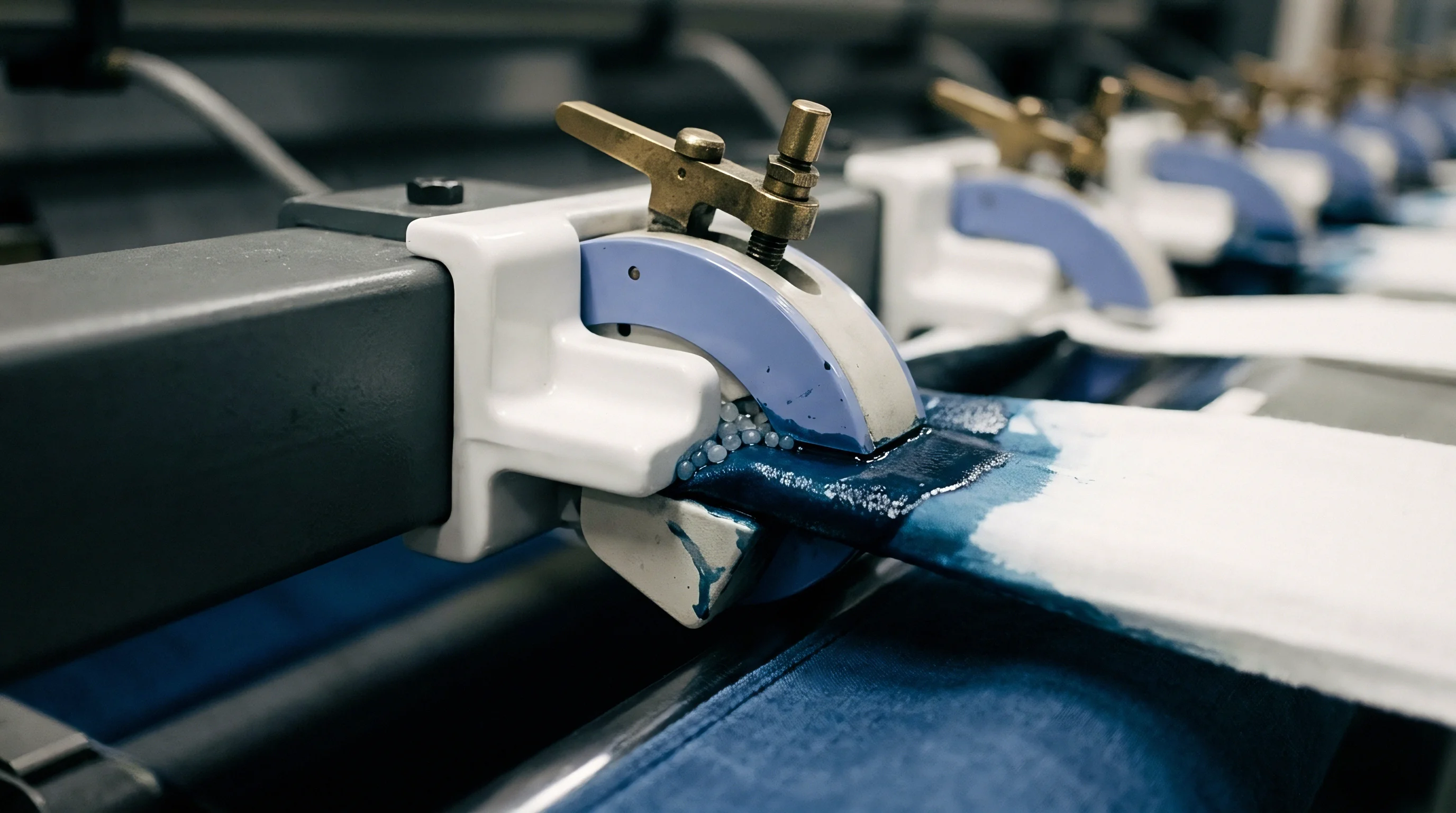
Commercial Exposure from Degraded Elastic Performance
Yield loss represents the earliest financial hit in the conversion ledger. Single jersey circular knits engineered to finish at 220 grams per square meter often finish at only 185 grams per square meter when internal elastane degrades, as the loops cannot close up tightly. To meet minimum purchase order weight specifications, the finishing floor must compact the material mechanically, sacrificing finished linear meterage.
On a ten-thousand-meter production run, an uncompensated width expansion of ten centimeters reduces finished yield by five to eight percent. This yield shrinkage destroys operating margins for apparel programs negotiated on thin conversion spreads. Furthermore, attempts to rectify off-shade lots through machine stripping and re-dyeing inflict catastrophic damage; exposing already compromised elastane to a second disperse dye cycle reduces residual tenacity below fifty percent of greige baseline.
| Lot Size (kg) | Failure Manifestation | Yield Deficit (%) | Rework / Scrapping Action | Financial Exposure ($) |
|---|---|---|---|---|
| 2,500 | Excess finished width | 6.2 | Stenter compaction run | 3,850 |
| 5,000 | Low fabric weight | 9.5 | Secondary resin coating | 11,200 |
| 1,500 | Re-dyeing cycle scission | 22.0 | Downgrade to seconds | 8,400 |
| 8,000 | Garment bagging defects | 100.0 | Customer return rejection | 94,500 |
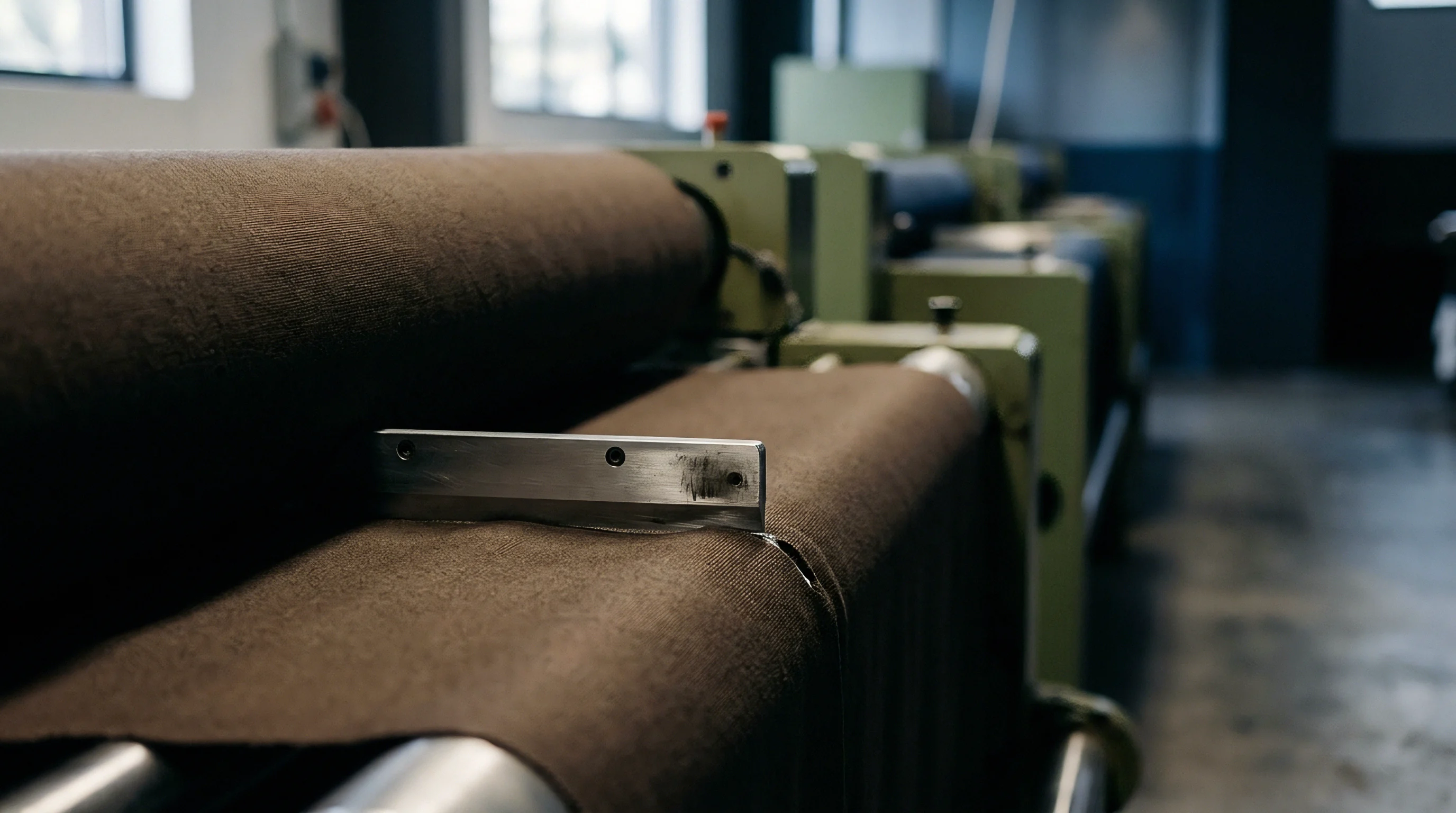
Contract Language Binding Finishing Mills
Standard purchase order terms rarely provide adequate legal protection against latent elastane degradation. Generic clauses requiring good workmanship leave room for dispute over whether lost stretch stems from raw yarn defects or wet-processing abuse. Sourcing contracts must incorporate precise technical limits tying financial liability directly to measurable chemical and physical thresholds.
A rigorous quality agreement defines the acceptable boundary for elastomeric retention and specifies mandatory hold points during processing. Contracts should explicitly prohibit re-dyeing or shade stripping of elastane-containing knits without prior written authorization from the technical buyer. When laboratory audits identify out-of-specification permanent set or degraded breaking tenacity, the contract must establish automatic debit calculations covering both material value and downstream manufacturing losses.
A contract clause mandating seventy-five percent minimum elastane tenacity retention shifts the financial liability for over-processed lots squarely onto the dyehouse.
Standard contract clause 14.2 establishes that bulk lots exhibiting greater than twenty percent permanent set under ASTM D2731 will be rejected without right of re-finishing, entitling the buyer to immediate replacement of greige goods at the wet processor’s expense.