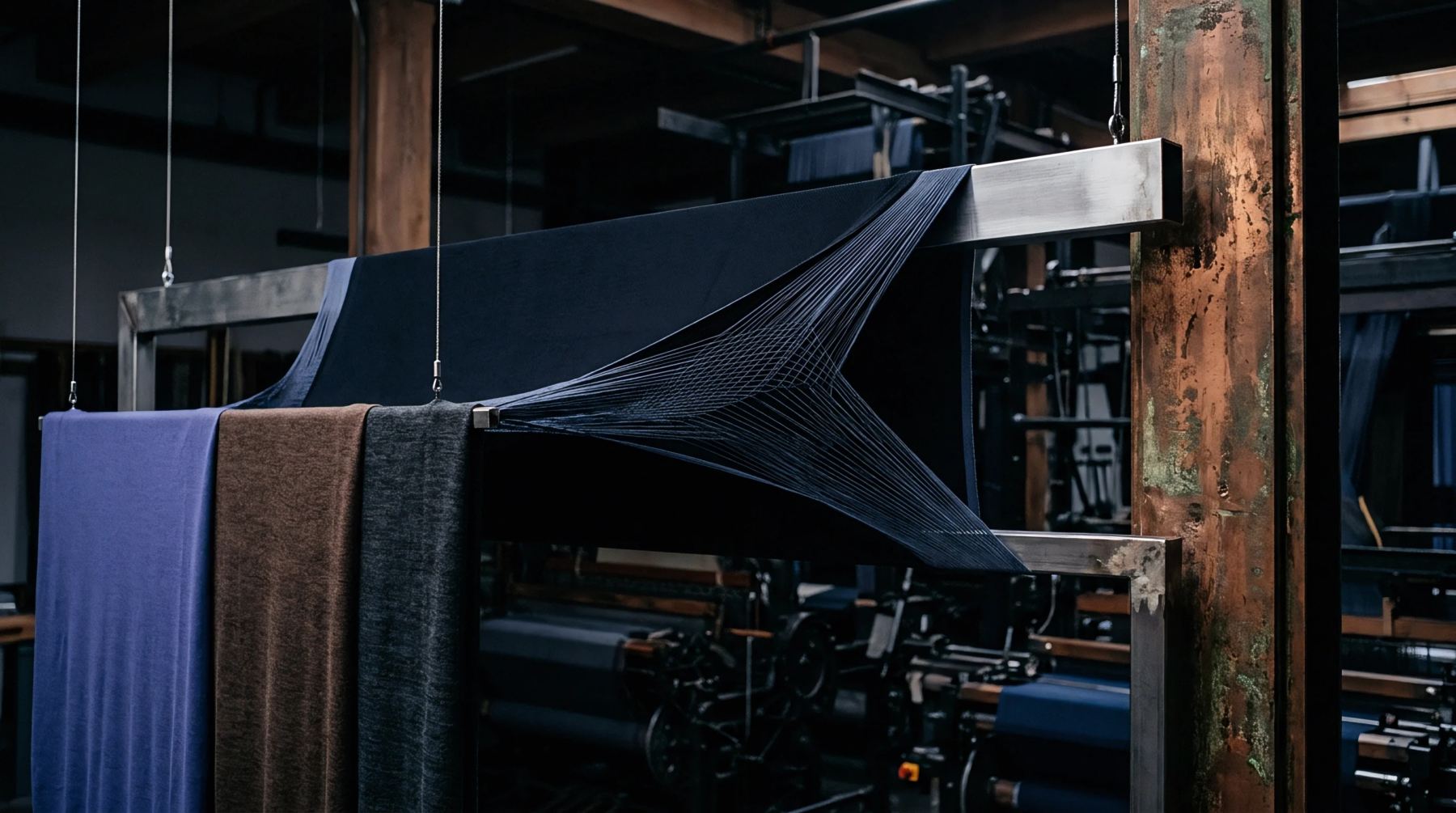
Mechanical Construction
Yarn preparation requires the elimination of short staple fibres before spinning occurs, which yields a smoother and stronger strand known in the industry as combed cotton twill. Raw natural fibres undergo mechanical cleaning and parallel alignment on specialized drawing frames to ensure high tensile strength during subsequent processing stages. Textile mills pass these cleaned strands through ring spinning frames to produce fine yarns featuring minimal hairiness and consistent linear density.
Warp yarns receive a sizing application of starch derivatives to withstand abrasive forces during loom operations. Looms interlace these prepared warp threads with weft picks according to a diagonal float sequence, which generates distinctive parallel wales across the fabric face. This specific interlacing geometry produces a denser and heavier textile than plain weave alternatives while maintaining high tear resistance along the bias direction.
Finishing Parameters
Chemical and thermal treatments applied after the loom stage alter the tactile properties and dimensional stability of combed cotton twill. Scouring removes residual sizing agents and natural plant waxes to prepare the substrate for subsequent dyeing operations. Continuous pad steam ranges apply reactive dyes that form covalent bonds with cellulose molecules under alkaline conditions.
Fabric shrinkage remains controlled during subsequent stentering frames where mechanical tension aligns warp and weft threads at exact right angles. Final compaction processes mechanically crowd the yarn intersections to prevent excessive relaxation shrinkage during subsequent garment laundering cycles.
Quality Verification
Laboratory technicians measure linear mass density using gravimetric testing methods to confirm compliance with mill purchase orders. Tensile strength evaluations utilize grab test procedures on universal testing machines to record breaking load values in both principal directions. Tear resistance assessments follow Elmendorf pendulum protocols to quantify propagation energy requirements for potential failure points.
Dimensional stability outcomes emerge from standard washing and drying cycles conducted in controlled laboratory environments. Inspectors compare finished rolls against agreed master swatches under standardized daylight illumination boxes to detect colour shade variations across the entire bolt length.
Commercial Application
Garment manufacturers purchase combed cotton twill for durable outerwear and structured work trousers where appearance retention matters. Retail buyers evaluate bulk shipments against agreed physical test reports before authorizing payment to the supplying textile converter. Specifications mandate specific yarn counts and finishing treatments to guarantee consistent performance across mass production runs.
Fabric performance under repeated mechanical stress justifies the higher production cost relative to carded alternatives.