Fibre Alignment
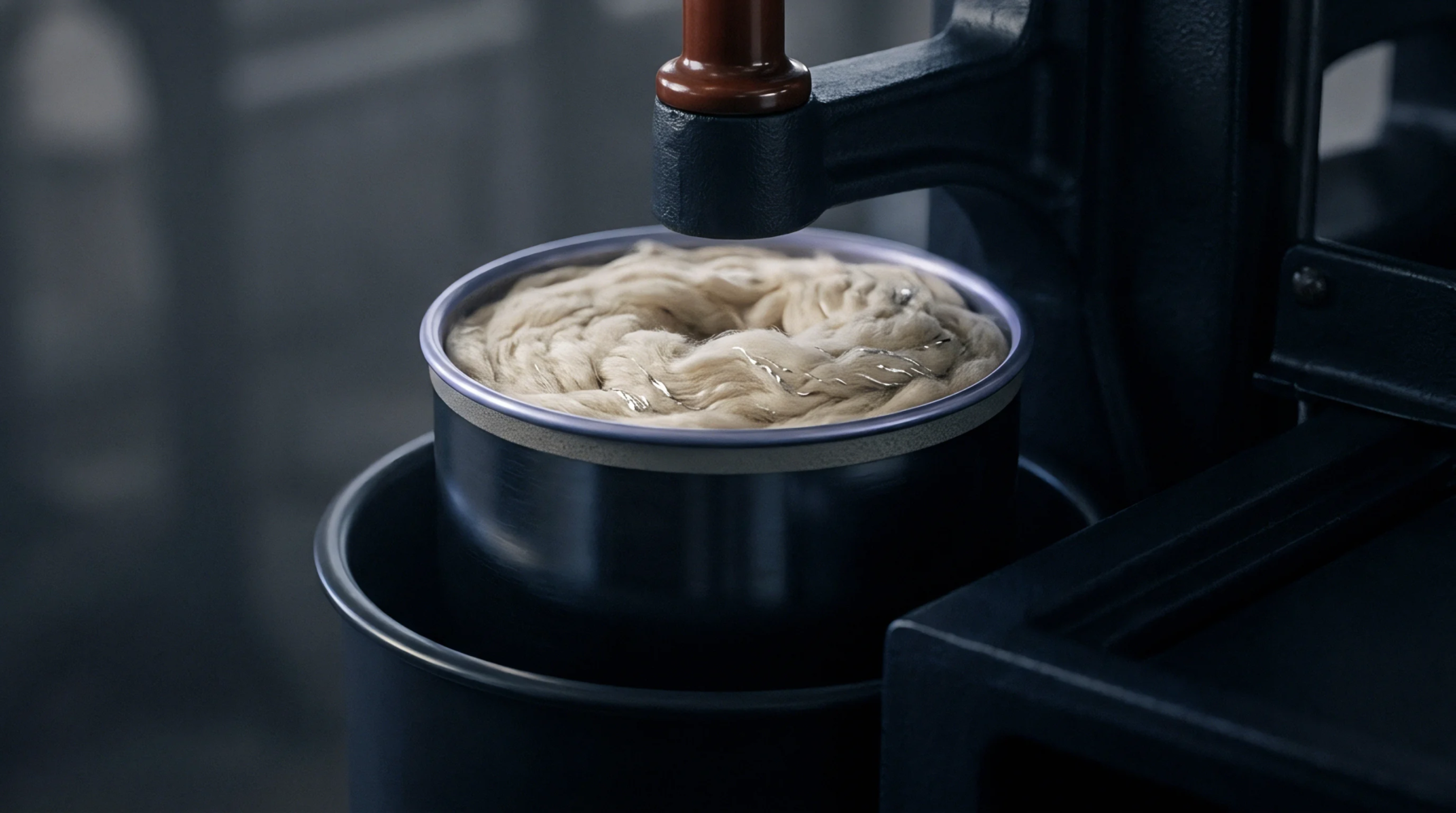
A card sliver constitutes the unspun strand of parallelized fibres produced at the carding machine during the primary stage of yarn manufacturing. This card sliver collects as a continuous, untwisted rope of fibres delivered into a cylindrical can for subsequent drafting and doubling processes. Its quality remains dependent upon the efficiency of the carding wire, which removes short fibres and impurities while orienting the remaining stock into a longitudinal formation.
The mass per unit length of this output serves as the standard variable monitored during production to ensure consistency in the finished yarn count.
Process Requirement
Mechanical carding transforms a chaotic mass of raw fibres into a uniform state suitable for drawing. Machines achieve this by passing the fibre through a sequence of rotating cylinders covered with fine metallic teeth. These actions disentangle locks and clumps that would otherwise generate structural irregularities in the final product.
Consistent weight and linear density characterize a high quality strand. Operators verify the integrity of the material by checking the uniformity of the output against the target count for the specific material lot.
Structural Characteristic
Fibre orientation within the strand dictates the eventual strength and evenness of the yarn spun from it. While the initial carding stage creates the primary alignment, many fibres still retain a degree of curvature or hook at the ends. Successive drafting passages in the drawing frame correct these remaining hooks to refine the internal arrangement.
Proper control of the feed rate ensures that the output avoids excessive tension or stretching, which would degrade the mechanical properties of the fibre bundle. High levels of contamination or neps indicate mechanical failure within the carding equipment.
Production Boundary
Processing limits for the strand depend upon the mechanical capability of the coiler and the storage capacity of the receiving cans. Once the fibre reaches the limit of the storage volume, the line stops to allow for the removal of the full can. Maintenance of the carding wires directly determines the operational lifespan of the components and the clarity of the resulting fibre array.
Regular grinding of the metallic clothing prevents the build up of wax or synthetic residues that compromise the output quality. Dense, uniform packing within the receiving unit prevents distortion of the strand during transport to the next manufacturing stage.