Standard Moisture Regain Determination Methods for Blended Industrial Yarn Lots
Certified commercial mass derived from oven-dry weight and standard regain percentages protects buyers from paying liquid prices for dry textile shipments.
Equilibrium
Atmospheric humidity dictates the physical mass of textile packages stored in warehouse bays. Water alters yarn mass. Natural and regenerated fibers absorb moisture directly from surrounding air, shifting package weight by several percent within forty-eight hours of ambient exposure.
Synthetic polymers resist moisture. Because international trade values yarn lots by weight, water absorbed from high-humidity shipping routes inflates invoices unless settlement calculations decouple dry fiber substance from ambient water mass.

Moisture Content against Moisture Regain
Textile laboratories compute water weight across two distinct mathematical bases. Moisture content expresses the mass of absorbed water as a percentage of the total original moist specimen mass. Moisture regain expresses the mass of absorbed water as a percentage of the bone-dry fiber mass after complete oven desiccation.
The distinction alters billing outcomes across high-volume container shipments.
A combed cotton yarn lot containing 8.5 kilograms of water within 108.5 kilograms of moist yarn exhibits an 8.50 percent moisture regain. The identical lot exhibits a moisture content of only 7.83 percent when evaluated against total moist weight. Commercial transactions, international standard specifications, and trade rules under ASTM D1909 and ISO 6741 operate exclusively on moisture regain percentages calculated over oven-dry mass.
Raw combed cotton yarn held at standard atmosphere of 20 degrees Celsius and 65 percent relative humidity stabilizes at an equilibrium moisture content near 7.5 percent.

Sorption Mechanics across Polymer Classes
Hydrophilic natural fibers draw ambient vapor directly into amorphous cellulose chains. Cellulose absorbs ambient vapor. In contrast, polyester contains tightly packed crystalline regions with minimal polar sorption sites.
Polyester repels atmospheric humidity. When these two polymers combine in an intimate spinning mixture, each component absorbs moisture according to its own thermodynamic affinity without altering the intrinsic sorption capacity of the adjacent partner fiber.
| Fiber Type | ASTM D1909 Regain (%) | ISO 6741 / BISFA Regain (%) | Commercial Allowance (%) | Moisture Content at Standard Atmosphere (%) |
|---|---|---|---|---|
| Cotton (Carded) | 7.00 | 8.50 | 8.50 | 7.00 to 8.00 |
| Cotton (Combed) | 7.00 | 8.50 | 8.50 | 6.80 to 7.80 |
| Polyester (PET Filament / Staple) | 0.40 | 1.50 | 1.50 | 0.40 to 0.50 |
| Polyamide 6.6 (Nylon) | 4.50 | 5.75 | 6.25 | 3.80 to 4.50 |
| Viscose Rayon | 11.00 | 13.00 | 13.00 | 11.50 to 12.50 |
| Para-Aramid | 3.50 | 4.50 | 4.50 | 3.20 to 4.00 |
| Wool (Scoured Industrial) | 13.60 | 17.00 | 18.25 | 14.00 to 16.00 |
| Commercial regain values represent conventional agreed percentages added to oven-dry mass, whereas standard atmosphere moisture contents reflect physical equilibrium under 20 degrees Celsius and 65 percent relative humidity. | ||||
Hysteresis causes fibers approaching standard atmosphere from a wet state to retain higher equilibrium moisture than identical lots approaching from bone-dry conditions. ASTM D1776 mandates preconditioning at low humidity between 10 percent and 25 percent relative humidity at 50 degrees Celsius prior to final atmospheric equalization at 20 degrees Celsius and 65 percent relative humidity. Skipping preconditioning shifts measured regain upward by 0.50 to 0.80 percent on carded cellulosic mixtures.
Yarn spun from thirstier polymer foundations reaches ambient saturation faster than dense hydrophobic filament cores.
Skein
Drawing representative test specimens from container shipments demands systematic package selection across external cartons. Pallet exteriors dry rapidly. A twenty-metric-ton shipment packed across forty pallets contains moisture gradients between outside carton boundaries and pallet interiors.
Plastic film protects interior packages. Technicians draw individual yarn cones across varying pallet positions to construct an unbiased laboratory composite sample.

Package Selection across Shipping Pallets
Random specimen collection begins by stripping protective plastic wrap from ten percent of delivered cartons. Sample cutters reel test loops. Field inspectors extract five packages per chosen carton, pulling from upper tiers, bottom layers, and central cartons.
Immediate containment prevents atmospheric exchange between warehouse staging docks and testing chambers. The field technician places drawn yarn packages into heavy polyethylene bags of minimum 100-micrometer wall thickness, sealing each bag with mechanical clips before transport to the conditioning facility.
Reeling Standards and Ambient Exposure
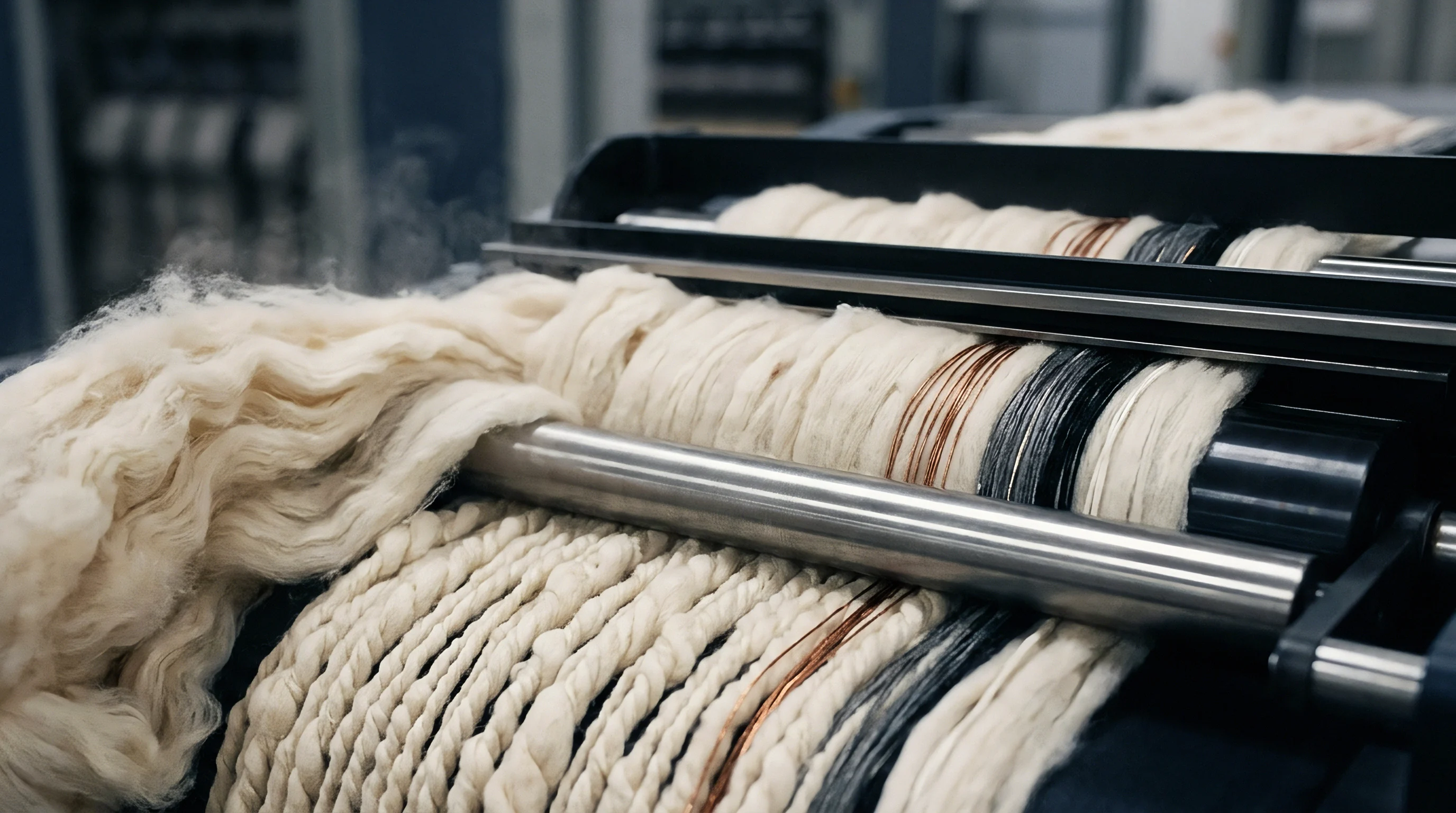
Laboratory winders strip outer protective yarn layers before measuring fifty-meter test loops on calibrated reels. Unwinding fifty to one hundred meters of outer package wraps removes yarn exposed to dock air currents. The reeling apparatus operates under controlled tension of 0.50 centinewtons per tex, winding continuous test skeins of twenty grams mass.
Technicians place wound yarn loops into tared moisture canisters within ninety seconds of reel completion.
- Peripheral cone desiccation occurs when unbagged packages sit in dry warehouse staging zones. The outer yarn layers lose moisture within four hours.
- Moisture migration across pallet layers creates substantial moisture gradients between exterior cartons and protected central packages during sea container transit.
- Delayed sample enclosure allows dry laboratory air to draw moisture out of specimen loops before technician recording.
- Chamber condensation dripping introduces liquid droplets onto test skeins during high-volume oven air exhaust cycles.
The package surface dried during transit on the open trailer before the container reached the dock.

Desiccation
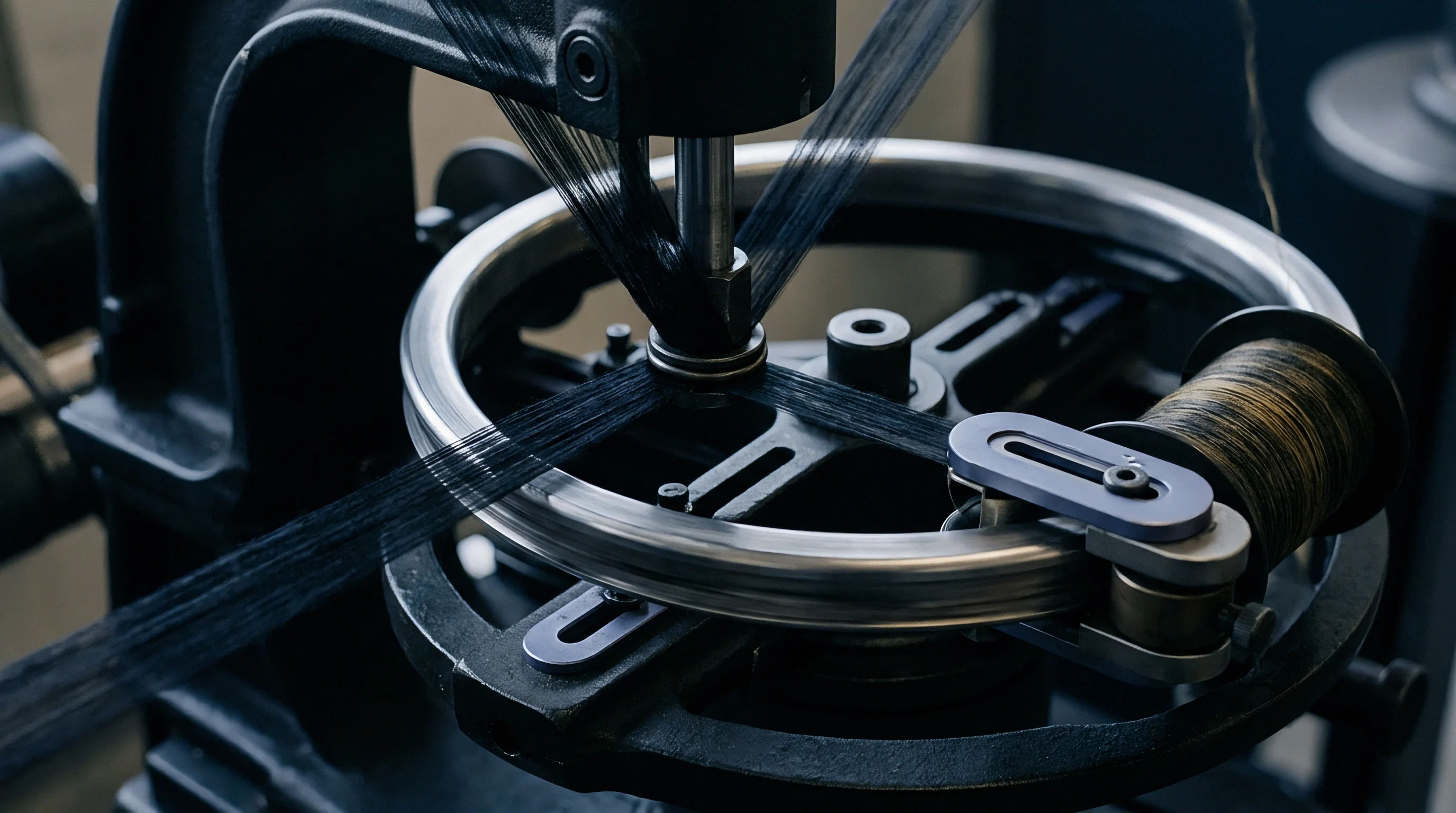
Oven extraction isolates bone-dry fiber mass by driving off unbound water molecules under controlled thermal airflow. Dry air enters the chamber. Convection fans circulate heated atmosphere.
The test standard ASTM D2495 governs moisture determination in cotton-containing lots, while ISO 6741-1 governs commercial mass determination for general textile exports. Both methods require forced convection drying ovens with internal analytical balances sensitive to 0.001 grams.
Thermal Airflow and Target Temperatures
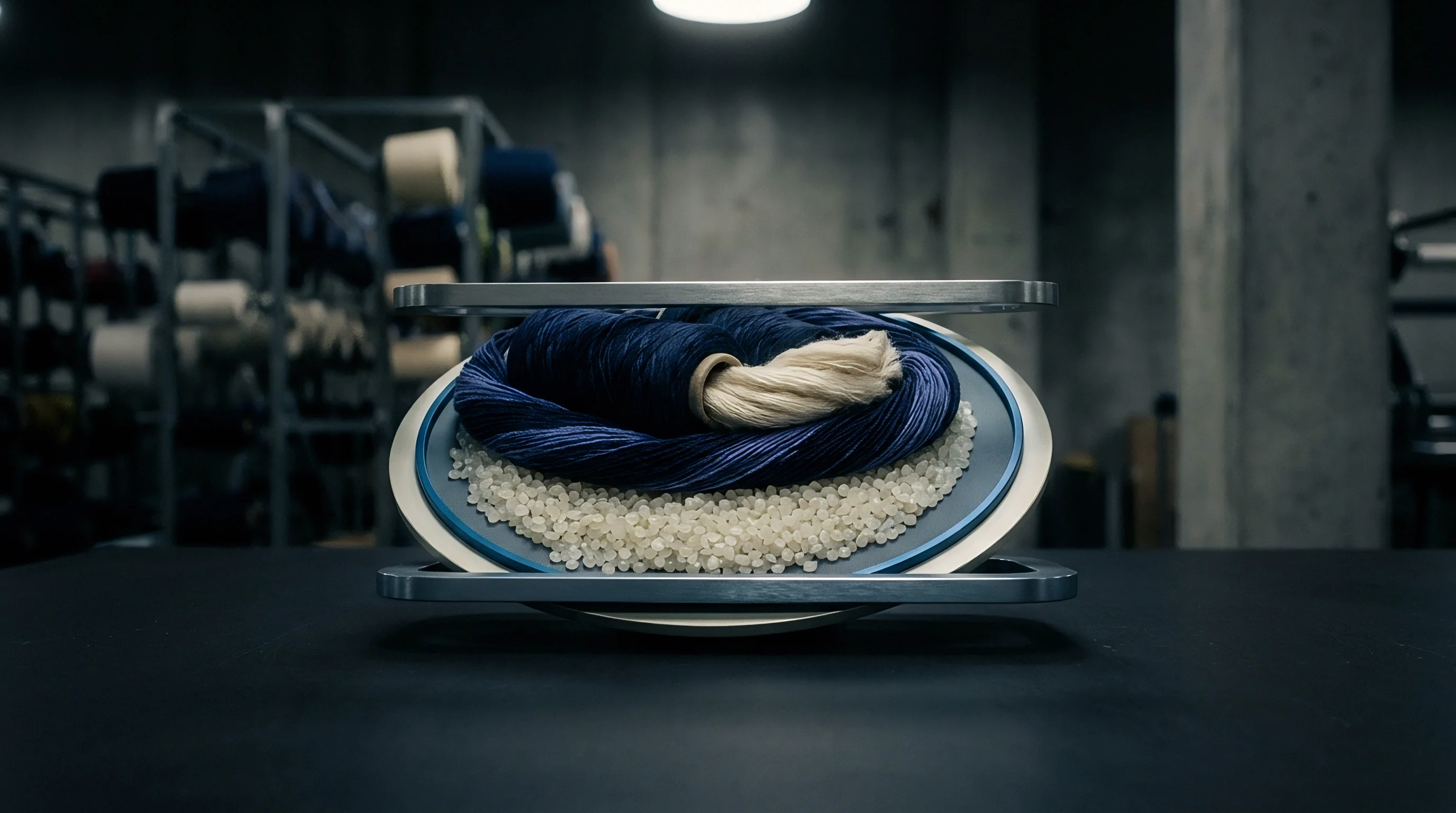
Forced convection drying cabinets circulate heated atmosphere at 105 degrees Celsius across wire specimen baskets. Hot air evaporates surface moisture. Maintaining chamber temperature within two degrees Celsius avoids uneven drying zones.
Synthetic components such as polyester tolerate 105 degrees Celsius without thermal softening, while cellulosic chains release capillary moisture without accelerated pyrolysis. Drying ovens with internal balances allow mass measurement directly inside the hot enclosure, eliminating moisture regain during transfer.
- Tare the perforated stainless steel weighing basket inside the drying chamber at operating temperature.
- Transfer twenty grams of prepared yarn loops into the heated basket without touching outer chamber walls.
- Expose the specimen to forced air circulating at 105 degrees Celsius for sixty minutes.
- Record consecutive mass measurements at fifteen-minute intervals until two successive weighings show less than 0.05 percent variation.
Ventilated drying ovens strip volatile finish waxes alongside absorbed water if thermal exposure exceeds 105 degrees Celsius.

Volatile Spin Finishes and Mass Loss
Coning lubricants and processing oils evaporate during prolonged oven exposure. Industrial sewing yarns, knitting packages, and weaving singles carry mineral oils, antistatic surfactants, and silicone waxes applied at levels between 1.0 percent and 4.5 percent on total mass. When an analyst heats yarn at 105 degrees Celsius, low-molecular-weight finish components volatilize alongside moisture, registering as false water loss on balance printouts.
ASTM D1574 and ISO 6741-3 outline Soxhlet solvent extraction procedures using petroleum ether or dichloromethane to separate non-aqueous finish mass from true moisture loss. The laboratory performs solvent extraction on duplicate specimens, washing away lubricants before thermal desiccation. Omitting finish extraction on heavily lubricated industrial yarns overstates actual moisture regain by 0.80 to 1.40 percent.
Whether low-boiling spin finishes decompose before the cellulosic component yields its final water molecules remains an unsettled debate among analytical textile chemists.
Allowance
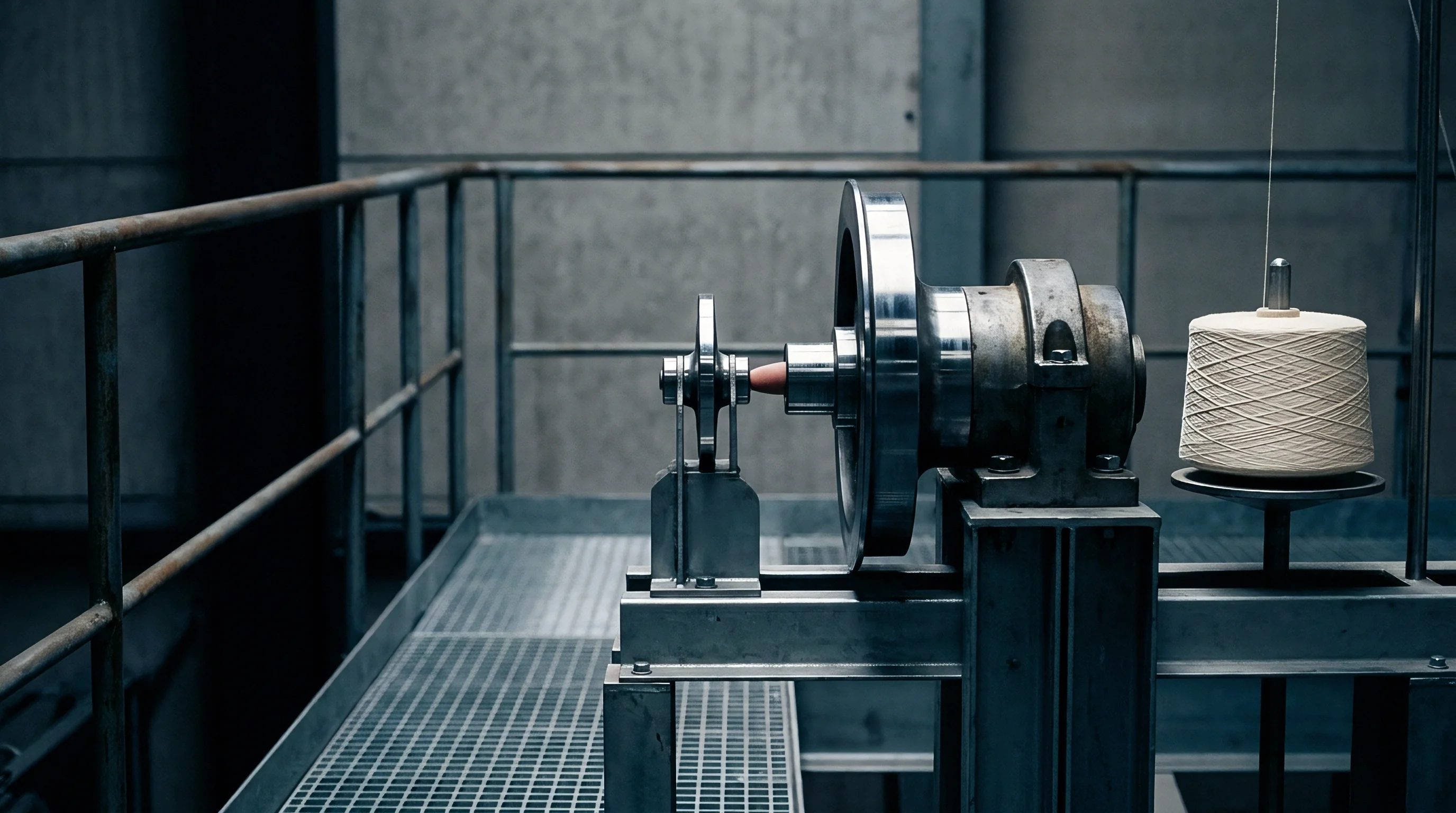
Commercial mass equations convert dry laboratory weights into legal billing units for international trade settlements. Commercial mass governs final billing. Buyers agree to pay for bone-dry fiber substance augmented by agreed conventional percentages known as commercial moisture regains.
Contract terms fix allowed percentages. Standard ISO 6741 establishes mathematical formulas that balance multiple fiber components in intimate spinning lots.

Should Commercial Regain Dictate Invoiced Yarn Weight?
Purchasers of industrial textile packages frequently discover that scale readings at unloading docks diverge from billed invoice quantities. Container lots absorb atmospheric humidity during maritime shipping, adding hundreds of kilograms of unsaleable water weight. Commercial regain rules protect buyers by recalibrating gross container weight to an agreed scientific dry baseline, guaranteeing that invoiced totals reflect physical fiber volume rather than oceanic weather exposure.

Weighted Moisture Calculations for Intimate Mixtures
Binary yarns containing polyester and combed cotton require proportion-weighted mathematical formulations. The commercial allowance reflects the blend ratio confirmed through quantitative chemical separation under ISO 1833. For an intimate mixture of 65 percent polyester and 35 percent combed cotton, the commercial regain calculation balances both polymer coefficients under ISO 6741 standards.
The calculation assigns 1.50 percent commercial regain to the polyester portion and 8.50 percent commercial regain to the combed cotton portion. The composite regain factor equals 0.65 multiplied by 1.50 percent plus 0.35 multiplied by 8.50 percent, producing a weighted lot allowance of 3.95 percent. Multiplying bone-dry lot mass by 1.0395 generates the certified commercial invoice mass.
Buyers settle accounts on dry mass.
| Calculation Stage | Physical Variable | Polyester Component | Cotton Component | Combined Yarn Lot |
|---|---|---|---|---|
| Gross Scale Measurement | Unconditioned Lot Weight | 13,000.00 kg | 7,000.00 kg | 20,000.00 kg |
| Tare Deduction | Packaging and Cones (4.2%) | 546.00 kg | 294.00 kg | 840.00 kg |
| Net As-Received Mass | Physical Yarn Delivered | 12,454.00 kg | 6,706.00 kg | 19,160.00 kg |
| Laboratory Oven Desiccation | Oven-Dry Mass (6.1% Net Loss) | 11,694.31 kg | 6,296.93 kg | 17,991.24 kg |
| Contractual Regain Factor | ISO 6741 Commercial Regain | 1.50% | 8.50% | 3.95% (Weighted) |
| Certified Commercial Mass | Billed Transaction Mass | 11,869.72 kg | 6,832.17 kg | 18,701.89 kg |
| Financial Variance | Net Settlement Difference | -584.28 kg | +126.17 kg | -458.11 kg |
Incorporation of ISO 6741 commercial moisture factors into the bill of lading binds both parties to certified dry mass adjustments.
The table reveals that the delivered shipment carried 458.11 kilograms of excess atmospheric water above contractual allowances. At an assumed yarn valuation of 3.80 dollars per kilogram, failure to conduct oven desiccation testing forces the importer to pay 1,740.82 dollars for ambient atmospheric vapor.
- Certified bone-dry extraction certificate verifies baseline oven mass obtained under accredited laboratory thermal desiccation protocols.
- Official fiber composition ratio confirms quantitative chemical separation percentages under ISO 1833 standards to establish accurate blend weighting factors.
- Agreed commercial regain schedule specifies whether ASTM D1909 or BISFA commercial allowances govern contractual billing calculations.
- Tare mass documentation validates whether cone tubes, paper wraps, and pallet strapping were deducted prior to lot calculations.
Incorporating BISFA booklet rules directly into purchase orders replaces subjective warehouse scale weights with lab-certified commercial mass calculations across all container settlements.


Settlement
Financial reconciliation between mills and converters hinges on certified commercial mass determinations. Disputes arise from shipping weight differences. Scale readings taken across humid container terminals register unconditioned mass, whereas certified test reports reflect true dry mass augmented by standard contract percentages.
Customs classifications follow certified yarn weights. Independent test houses conduct referee analyses.

Commercial Tolerance Bands and Claim Thresholds
International trading rules establish a one percent buffer zone before price adjustments apply to delivered shipments. Under BISFA yarn trade rules, if the certified commercial mass deviates from the invoiced weight by less than 1.00 percent, both parties honor the original invoice without financial alteration. Once deviation exceeds 1.00 percent, the billing adjustment covers the entire difference from the baseline invoiced figure.
Disputes over delivered lot tonnage evaporate when spinning mills condition cones in sealed packaging before pallet weigh-in.

Whose Extraction Metric Arbitrates Disputed Lot Mass?
Conflicting test results between vendor laboratories and independent inspection bureaus demand reference conditioning procedures. Spinning mills cite internal test certificates based on unextracted rapid drying ovens running at 120 degrees Celsius. In contrast, destination laboratories conduct solvent de-oiling followed by twelve-hour drying at 105 degrees Celsius under ISO 6741-2.
Elevated mill temperatures burn cellulose chains while stripping spin finishes, artificially inflating claimed bone-dry mass.
Customs authorities scrutinize moisture-corrected fiber ratios on binary industrial lots entering under Harmonized System Chapter 55. Border tariffs differentiate between yarn predominating by weight of polyester and yarn predominating by weight of combed cotton. A nominal 50/50 intimate mixture containing uneven moisture distribution can cross tariff categories if moisture corrections are miscalculated.
Uncorrected tare deductions and unverified moisture allowances shift thousands of dollars of phantom water weight into the buyer’s permanent fabric cost balance.