Standard Industrial Inspection Protocols for Greige Fabric Sett Verification
Verify greige fabric sett on tensionless, conditioned swatches under ISO 7211-2 to prevent finished weight deficits and enforce contract chargeback limits.
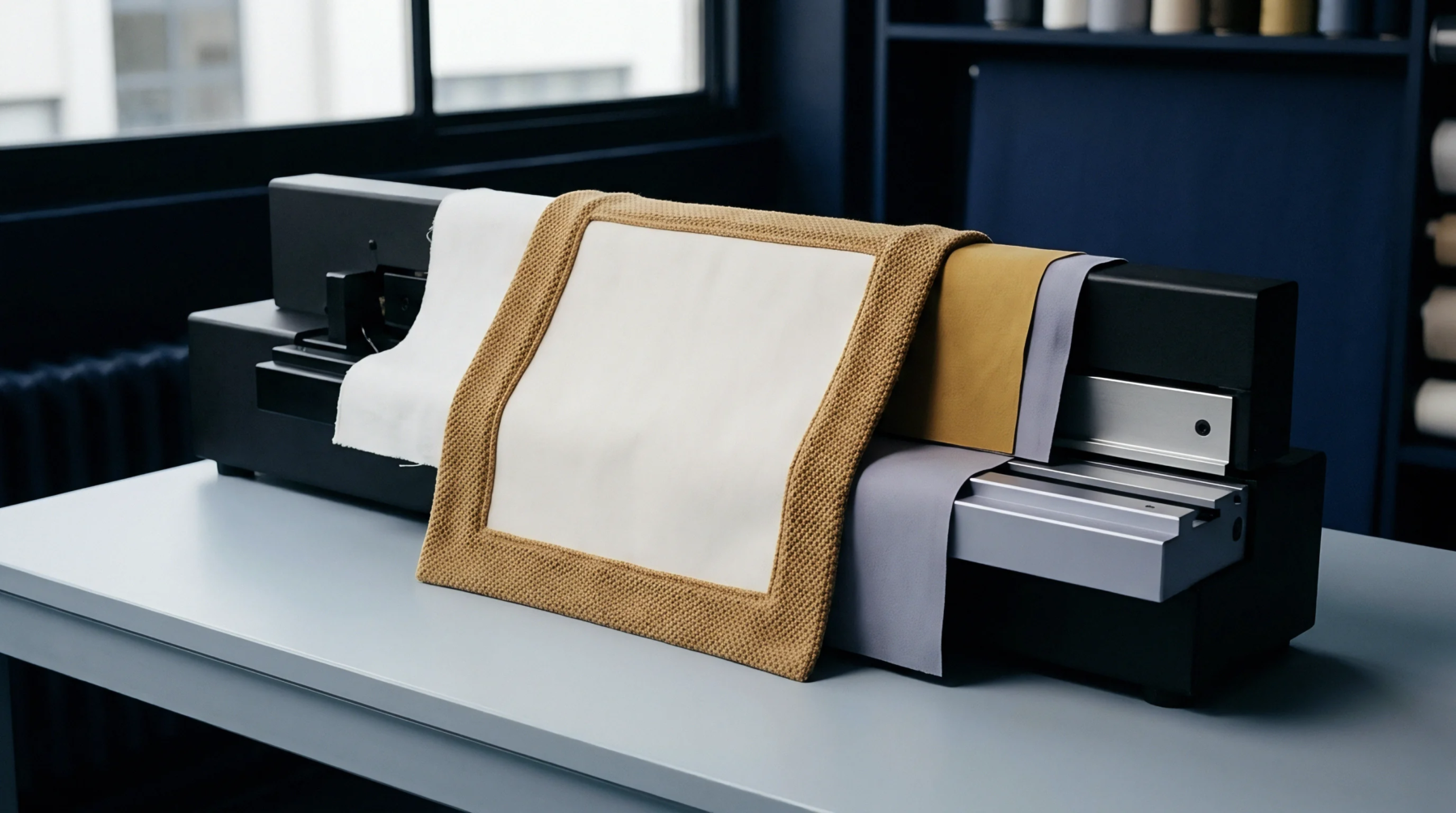
Laboratory apparatus intended for the quantification of weave contraction functions by isolating individual filaments from a finished textile structure performs the duty of a yarn crimp tester iso 7211-3. Operators extract segments from the crosswise or lengthwise direction to determine the degree of length increase upon removal of the interlacing geometry. This methodology quantifies how much length a strand loses due to the sinusoidal path forced by the interlacing density of the fabric.
Calibration requires precision because the tension applied during extraction directly influences the final numerical output. Variations in moisture content within the lab space alter the relaxation state of the fibers and thus affect the outcome of the calculation. Precise knowledge of the starting length compared to the straightened fiber length provides the ratio needed for engineering stable fabric dimensions during high speed production cycles.
Mathematical analysis follows the extraction of the strand from the woven sample. A calculated percentage represents the crimp value by dividing the difference between the straightened length and the nominal fabric width by that same nominal width. Technicians place the specimen under a standardized pretension that removes initial slack without stretching the material beyond its natural elastic limit.
Each length measurement records to the nearest millimeter to ensure repeatability across multiple samples taken from a single bolt. High tension loads yield inaccurate results because the force distorts the structural integrity of the individual fiber. Consistent application of this mechanical load maintains the baseline required for quality control programs at the mill level.
Production settings rely on this metric to predict how fabrics react during subsequent wet finishing operations where relaxation occurs. Excessive crimp levels indicate potential for shrinkage issues if the fabric experiences heat or water exposure during the dyeing phase. Managers evaluate these metrics to adjust loom settings or tensioning devices before large quantities of yarn undergo transformation into finished rolls.
Discrepancies between targeted dimensions and the measured values signal a need for recalibration of the weaving equipment. Reducing the interlacing amplitude improves the efficiency of the loom but changes the final tactile qualities of the cloth.
Standardized test requirements apply exclusively to woven fabrics where the interlacing pattern remains sufficiently distinct to allow safe extraction of individual strands. Non-woven structures or highly felted materials fall outside the scope because the extraction process breaks the integrity of the fibers before achieving the straight state. Synthetic filaments with high thermal memory require careful handling during the process to prevent artificial stretching that compromises the validity of the crimp ratio.
Cotton or wool samples behave differently under humidity changes and demand strict conditioning protocols to maintain reproducibility between testing sessions. Testing laboratories adopt these protocols to ensure consistency during claims settlement between manufacturers and buyers. Reliable data derived from these instruments confirms that the structural architecture of the textile aligns with the specified manufacturing tolerances.
Verify greige fabric sett on tensionless, conditioned swatches under ISO 7211-2 to prevent finished weight deficits and enforce contract chargeback limits.
Expertise is a utility, not a secret. sentiention™ publishes its working knowledge as open reference: intelligence layer covering the materials it sources, the markets it enters, and the reference that serves both.