Thermal Threshold
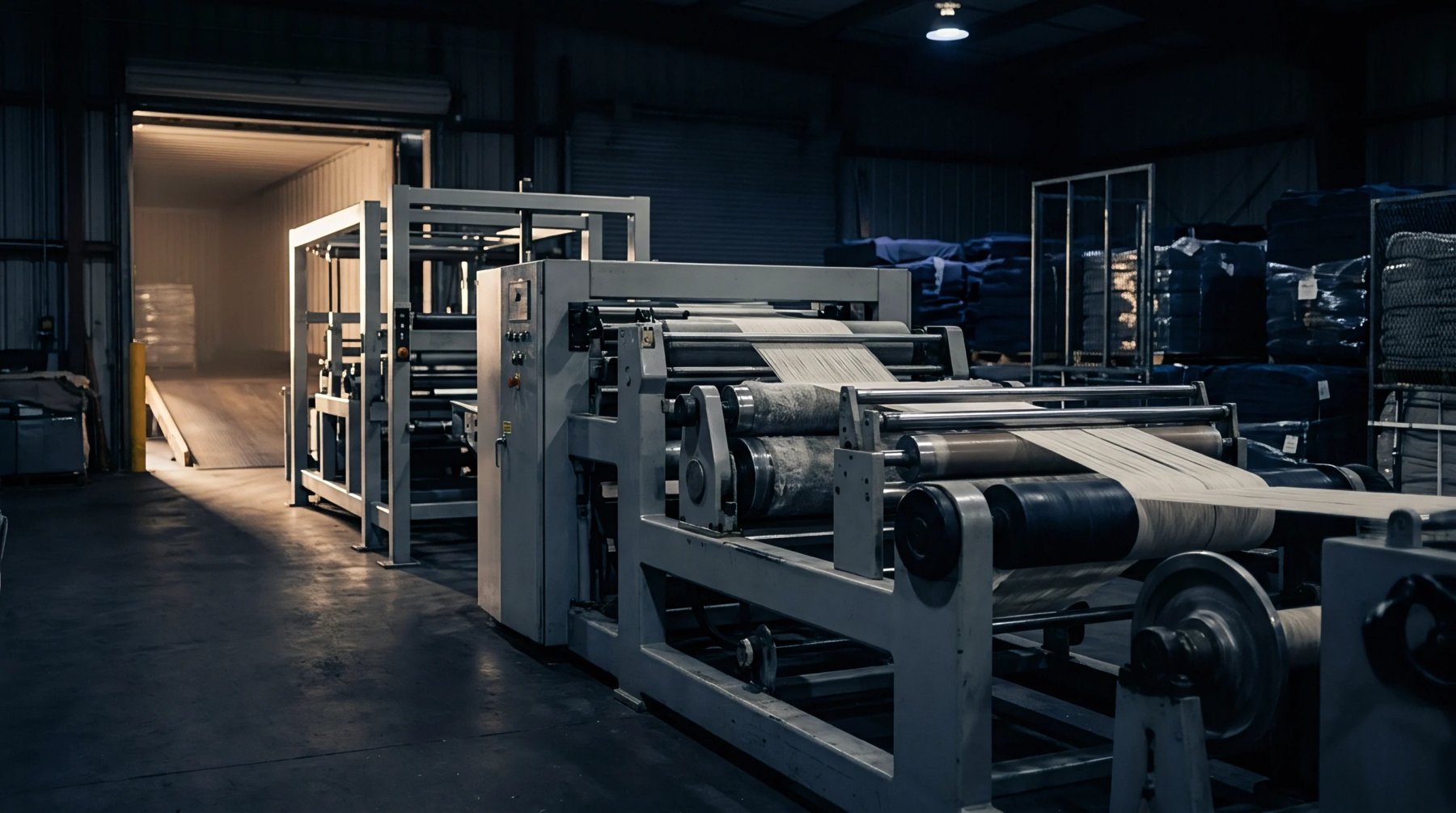
Stenter chamber thermal exposure defines the operating heat level required to relieve internal polymer stress and permanently lock synthetic yarn geometry. Synthetic fibers require an exact heat setting temperature to melt secondary crystalline regions while keeping primary polymer backbone chains intact. The processing parameter governs final dimensional stability, crease recovery, elastomeric elasticity, and subsequent dye affinity across continuous finishing lines.
Setting fabrics below polymer relaxation thresholds invites residual shrinkage during garment laundry, while excessive thermal exposure degrades stretch recovery and yellows synthetic polymers.
Polymer Transition
Polyester, polyamide, and elastomeric polymers undergo distinct morphological reorganizations when exposed to heated air circulations. Polyamide 6 stabilizes around one hundred ninety degrees Celsius, whereas standard polyester requires between two hundred and two hundred ten degrees to break and reform crystalline ties. Thermal energy disrupts frozen drawing tensions established during fiber spinning, allowing polymer molecules to settle into stress-free spatial conformations.
Elastomeric components suffer progressive elastomeric chain scission when exposure boundaries exceed two hundred degrees for prolonged durations. Exhaust air thermocouples work alongside non-contact pyrometers to monitor running fabric surface temperatures rather than ambient box heat.
Monitoring Method
Technicians monitor fabric surface conditions inside drying chambers using wireless data loggers attached directly to travelling yardage edges. Thermocouples record heat absorption curves, confirming that the dwell period at the target threshold satisfies technical curing requirements. Differential scanning calorimetry testing on finished lots verifies thermal history by tracking residual crystallization peaks.
Fabric finished outside the verified thermal window displays uneven disperse dye uptake, yielding side-to-side shading variations in pressurized jet dyeing vessels.
Physical Retention
Proper thermal processing guarantees that cut goods retain dimensional integrity through repeated home wash cycles. Inadequate heat leaves unrelaxed stresses that cause differential shrinkage, edge rolling, and pilling across finished apparel goods. Conversely, overheating melts fine filament outer surfaces, hardening fabric hand and lowering tear resistance.
Finishing plants establish narrow operating windows to safeguard elastomeric stretch while stabilizing synthetic piece goods against downstream garment pressing distortion.