Secondary Heat Exposure Effects on Disperse Dye Thermomigration Fastness
Secondary heat exposure drives disperse dyes into surface finishing oils; specify high-energy dyes and heat-tested rub fastness after stenter finishing.

Flock
Disperse dye thermomigration occurs during secondary thermal processing when non-ionic dyes diffuse out of the interior amorphous regions of poly(ethylene terephthalate) fibers and deposit onto the filament exterior. A bulk lot leaves the dyehouse meeting grade 4-5 on the gray scale for dry rubbing fastness under ISO 105-X12, then drops to grade 2 after finishing stenter drying or mold pressing. Heat plasticizes the polyester matrix.
Surface-active chemical auxiliaries remaining on the fiber sheath dissolve the migrating dye molecules.
The problem concentrates heavily on fine-filament goods. Microfiber polyester, defined as filament linear density below 1.0 dtex, possesses a surface-area-to-volume ratio three to four times greater than standard 3.3 dtex staple yarns. This geometric expansion multiplies the available evaporation boundary and accelerates the concentration of surface crystalline dye deposits.
Dye migration accelerates sharply once secondary heating temperatures exceed the glass transition threshold of the synthetic polymer substrate.
Dyehouse managers frequently run reduction clearing cycles that strip non-fixed dye from the fiber surface directly after exhaust dyeing. Subsequent passage through finishing frames containing non-ionic softening agents or hydrophobic fluorochemicals ruins that purity. The residual finish layer acts as an extraction solvent during curing, calendering, heat-setting, or laminating operations.
The dye travels outward along a chemical potential gradient toward the finish-rich boundary layer.
A second pass through thermal equipment resets the thermodynamic equilibrium established inside the high-temperature pressure jet. Colorants engineered for rapid leveling at 130 degrees Celsius often exhibit lower molecular weight, making them exceptionally susceptible to volatilization and outward diffusion under dry heat above 160 degrees Celsius. The resulting surface deposits rub off onto adjacent white garments or bleed during domestic laundering.
Stenter
Thermal Energy and Glass Transition Mobility
Thermal processing mobilizes polymer chains inside poly(ethylene terephthalate). The glass transition temperature of clean polyethylene terephthalate runs between 67 and 81 degrees Celsius in dry air. When heat-setting or drying fabric on a stenter frame at 160 to 190 degrees Celsius, the amorphous zones achieve high segmental chain mobility.
Free volume expands rapidly within the polymer network. Disperse dye molecules, held only by weak dipole-dipole forces and van der Waals interactions rather than covalent bonds, diffuse freely through these open regions toward the fiber perimeter.
Secondary heat inputs vary across typical commercial production lines. Mold pressing of intimate apparel exposes fabric to 190 degrees Celsius for 45 seconds under direct mechanical pressure. Garment fusing presses run at 150 to 170 degrees Celsius for 15 to 25 seconds.
Transfer printing hits 200 to 210 degrees Celsius for 30 seconds. Each exposure drives outward sublimation and thermal diffusion, proportional to the dwell duration and the molecular dimensions of the dyestuff.
| Dye Energy Class | Molecular Weight Range (g/mol) | Sublimation Temperature (ISO 105-P01) | Post-Dye Rubbing Fastness (Dry) | Post-Stenter (170C) Rubbing Fastness |
|---|---|---|---|---|
| Class A / B (Low) | 220 – 300 | 150C – 170C | Grade 4-5 | Grade 1-2 |
| Class C (Medium) | 300 – 400 | 170C – 195C | Grade 4-5 | Grade 2-3 |
| Class D (High) | 380 – 520 | 195C – 220C | Grade 4-5 | Grade 3-4 |
| High Energy Benzodifuranone | 450 – 600 | Exceeds 220C | Grade 4-5 | Grade 4-5 |
| Fastness evaluated according to ISO 105-A03 gray scale for staining on multifiber adjacent fabric after stenter exposure with 15 g/L non-ionic polysiloxane softener. | ||||
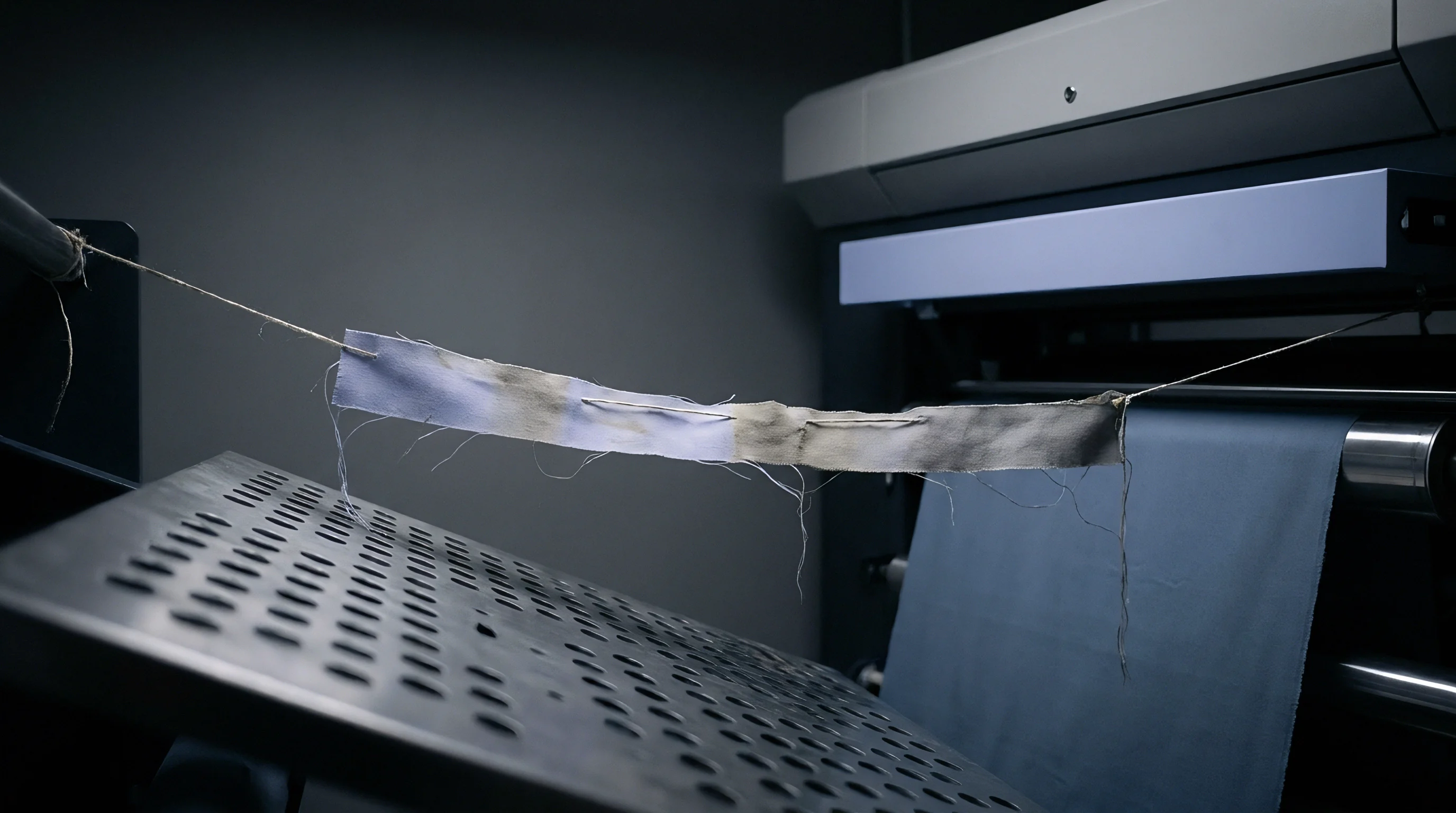
Auxiliary Solubilization Dynamics
Finishing auxiliaries applied at the padder govern migration speed. Non-ionic silicone softeners, fatty acid condensates, and ethoxylated surfactants create a liquid or semi-solid film over the polyester filaments. High temperatures convert this auxiliary shell into an active extraction solvent.
Disperse dyes dissolve directly into the finish layer, migrating down the chemical affinity gradient between the hydrophobic fiber core and the surfactant envelope.
The partition coefficient of the dye shifts toward the external chemical shell at elevated temperatures. Once cooling occurs, the dye remains trapped on the filament face rather than re-entering the collapsed polymer core. A washing cycle under ISO 105-C06 C2S strips this loose surface layer instantly, producing severe staining on adjacent polyamide and acetate test ribbons.
Laboratory technicians often observe that hydrophilic finishes behave differently than amino-silicone polymers. Polyether-modified silicones alter the surface polarity, reducing the solubility of non-polar azo dyes. Cationic softeners yield marginally better migration resistance than non-ionic variants, though they introduce yellowing risks on pale shades.
A supplier who claims that high-energy dyes fully eliminate rub fastness failures ignores the chemical pull of fatty acid softeners.
Clearing
Chemical Reduction Mechanisms on the Surface
Complete removal of surface oligomers and unabsorbed colorant demands intensive reduction clearing before secondary heat exposure. Standard hydro clearing relies on sodium dithionite and sodium hydroxide at 70 to 80 degrees Celsius. The chemical reaction splits the chromophoric azo bonds (-N=N-) of the external disperse dye molecules into water-soluble amino fragments, which rinse away cleanly during hot overflowing washes.
Anthraquinone and benzodifuranone chromophores resist alkaline dithionite cleavage. These structures require alternative reduction chemistries, such as formamidine sulfinic acid or specialized sulfinic acid derivatives, operating under buffered conditions. Failure to destroy these surface residues leaves raw colorant available for immediate re-deposition during subsequent drying runs.
Under ISO 105-A05, instrumental color change readings confirm that aggressive reduction clearing cannot prevent migration if secondary stenter temperatures exceed 175 degrees Celsius in the presence of polysiloxanes.
Clearing Regimes for Polyester Blends
Polyester blended with elastane presents a notorious thermomigration hazard. Polyurethane fibers absorb high volumes of disperse dye during the jet dyeing cycle, retaining the dye through loose physical entrapment. Conventional sodium dithionite clearing fails to penetrate the swollen polyurethane segments without degrading elastomeric tensile recovery.
Specialized clearing sequences utilize eco-reductants based on alpha-hydroxyalkylsulfinates in mild acid baths (pH 4.5 to 5.5). This approach protects the elastane core while stripping surface dye from the polyester boundary. A cold rinse following reduction clearing leaves residual alkali that interferes with down-line fluorochemical pad baths; two hot rinses at 60 degrees Celsius followed by neutralization with acetic acid remain mandatory.
- Alkaline Dithionite Treatment runs at 75 degrees Celsius for 20 minutes using 3 g/L sodium hydrosulfite and 2.5 g/L caustic soda flakes to destroy surface-bound azo dye chromophores on standard 100 percent polyester yarn configurations.
- Acidic Sulfinate Reduction operates at 80 degrees Celsius for 20 minutes under a buffered pH of 4.5 with 2 g/L hydroxyalkylsulfinate, preserving elastane tensile modulus while removing loose pigments from elastic synthetic knits.
- Warm Detergent Emulsification circulates at 60 degrees Celsius with 1 g/L ethoxylated fatty alcohol, suspending degraded dyestuff complexes and washing out spent oligomer crystals.
- Acetic Acid Neutralization finishes the wet stage at 40 degrees Celsius, dropping core fabric pH to 5.5 to prevent finish emulsion cracking during downstream finishing.
A poorly rinsed lot carrying sodium dithionite salts into the drying stenter will experience catalytic shade shifting, particularly in sensitive khaki, olive, and navy formulations.
Dwell
Can Processing Speeds Alter Secondary Diffusion?
Time within the heated chamber dictates the diffusion depth of disperse dye molecules. Fick’s second law of diffusion governs this physical transfer through the synthetic matrix:
dC/dt = D (d2C/dx2)
Here, C represents dye concentration, t is dwell time, D is the temperature-dependent diffusion coefficient, and x denotes distance from the fiber center to the surface. Short dwell times at high heat create steep concentration gradients, leaving the outer skin saturated with mobile colorant molecules. Longer dwell times at lower temperatures permit controlled solvent evaporation without shocking the polymer structure into excessive free-volume expansion.
A stenter running a 150 g/m2 circular knit fabric at 40 meters per minute through a five-chamber oven (15 meters total length) subjects the material to approximately 22.5 seconds of heat. Setting chamber temperatures to 180 degrees Celsius under these parameters drives rapid water evaporation from the pad finish. The fabric surface dries prematurely while the core remains warm, pulling migrating dye crystals outward through capillary and vapor channels.
| Exposure Temp | Dwell Duration | Finishing Pad Liquor Mix | ISO 105-X12 Dry Rub | ISO 105-C06 (Staining PA) |
|---|---|---|---|---|
| 150C | 60 seconds | 20 g/L Hydrophilic Softener | Grade 4-5 | Grade 4 |
| 165C | 45 seconds | 20 g/L Hydrophilic Softener | Grade 4 | Grade 3-4 |
| 180C | 30 seconds | 20 g/L Hydrophilic Softener | Grade 3 | Grade 2-3 |
| 180C | 30 seconds | 20 g/L Amino-Silicone Softener | Grade 2 | Grade 1-2 |
| 190C | 20 seconds | 20 g/L Amino-Silicone Softener | Grade 1-2 | Grade 1 |
Adjusting the temperature profile across individual stenter chambers counteracts this mechanism. Placing the entry chambers at 130 to 140 degrees Celsius evaporates surface moisture steadily without initiating the polymer glass transition. Reserving higher temperatures (165 degrees Celsius) strictly for the final fixation chamber limits the total duration of matrix mobility to less than 8 seconds.
This stepped thermal profile maintains dry rubbing fastness at grade 4 or higher.
Pressing operations in garment manufacturing routinely bypass these controls. Transferring a heat seal badge at 185 degrees Celsius for 20 seconds directly upon a finished sports jersey drives dye migration beneath the heated head. The dye stains the white backing paper and causes haloing around the graphic perimeter.
Garment makers face rejected shipments when unmonitored fusing presses destroy the crock fastness of approved roll stock.


Press

Molding, Fusing, and Lamination Sequences
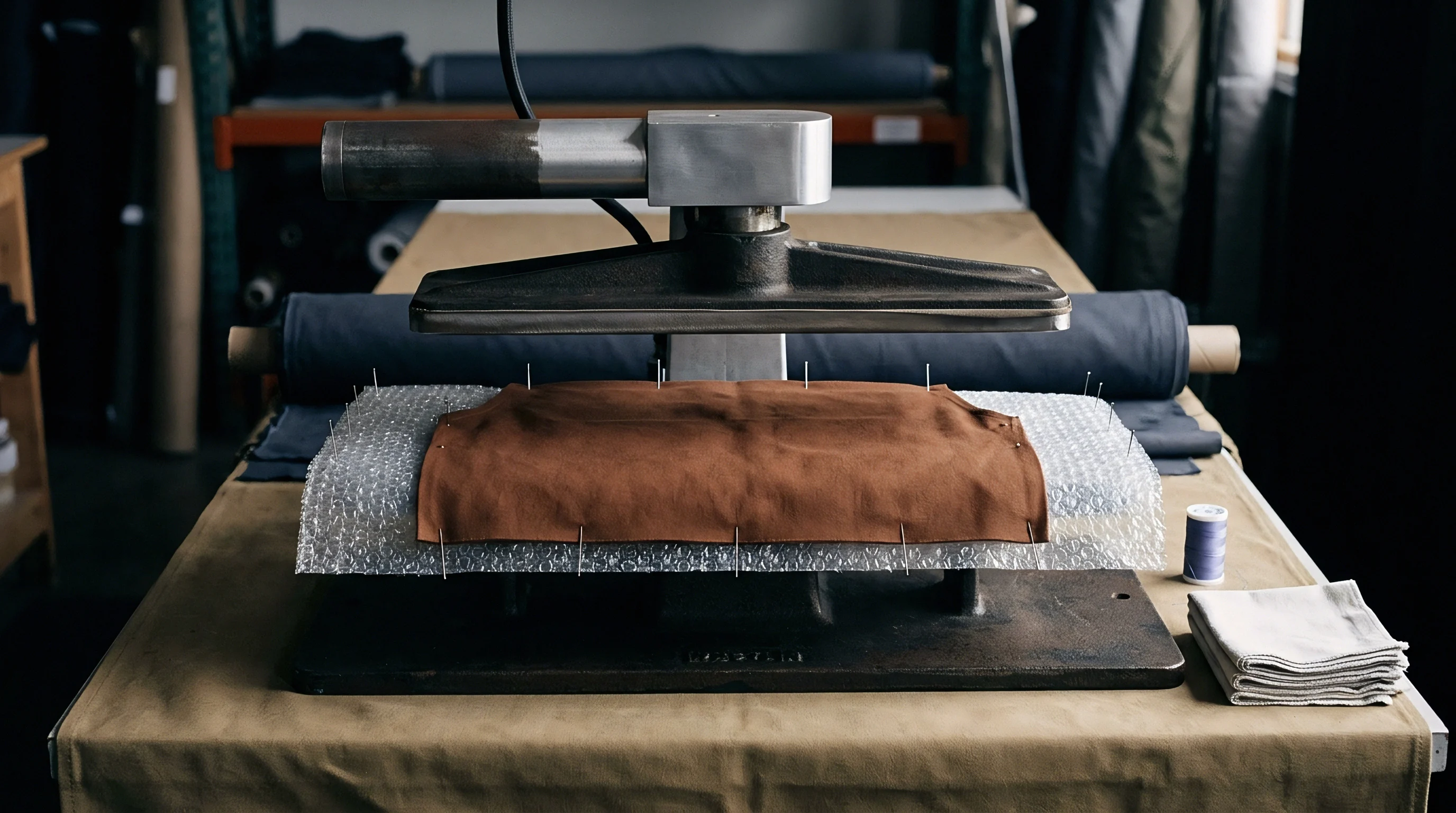
Apparel assembly processes impose mechanical compression alongside high thermal energy. Seamless bra cup molding subjects dyed polyester spacer fabrics or micro-denier warps to temperatures ranging from 185 to 205 degrees Celsius. Dwell times range from 40 to 90 seconds under hydraulic pressure exceeding 4 bar.
The brass or aluminum mold plates create an enclosed system where volatilized disperse dyes have nowhere to dissipate except into adjacent laminate foams or lining textiles.
Polyurethane foam cores used in molded brassieres act as aggressive lipophilic sinks for migrating dyes. The open-cell structure of flexible polyurethane foam exhibits extreme affinity for low-molecular-weight disperse dyes. During heat molding, the dye sublimes directly from the polyester cover knit and dissolves into the foam matrix.
The molded cup emerges with distinct color striations, and subsequent wash testing reveals catastrophic cross-staining onto white polyamide wings.
Interlining fusing poses a comparable hazard in tailored apparel. Front jacket panels cut from poly-viscose or poly-wool suitings pass through flatbed or continuous rotary fusing presses at 155 to 165 degrees Celsius to bond polyamide or polyester hot-melt adhesives. Heat melts the adhesive and triggers dye sublimation from the face cloth into the fusible resin.
When the garment encounters subsequent steam pressing or dry cleaning under ISO 105-D01, the dye contained inside the adhesive layer leaches back out, showing through on the finished face as dark blotches.
A finished shell material may pass every laboratory dyehouse release test with perfect marks, yet fail immediately when combined with thermal adhesive interlinings.

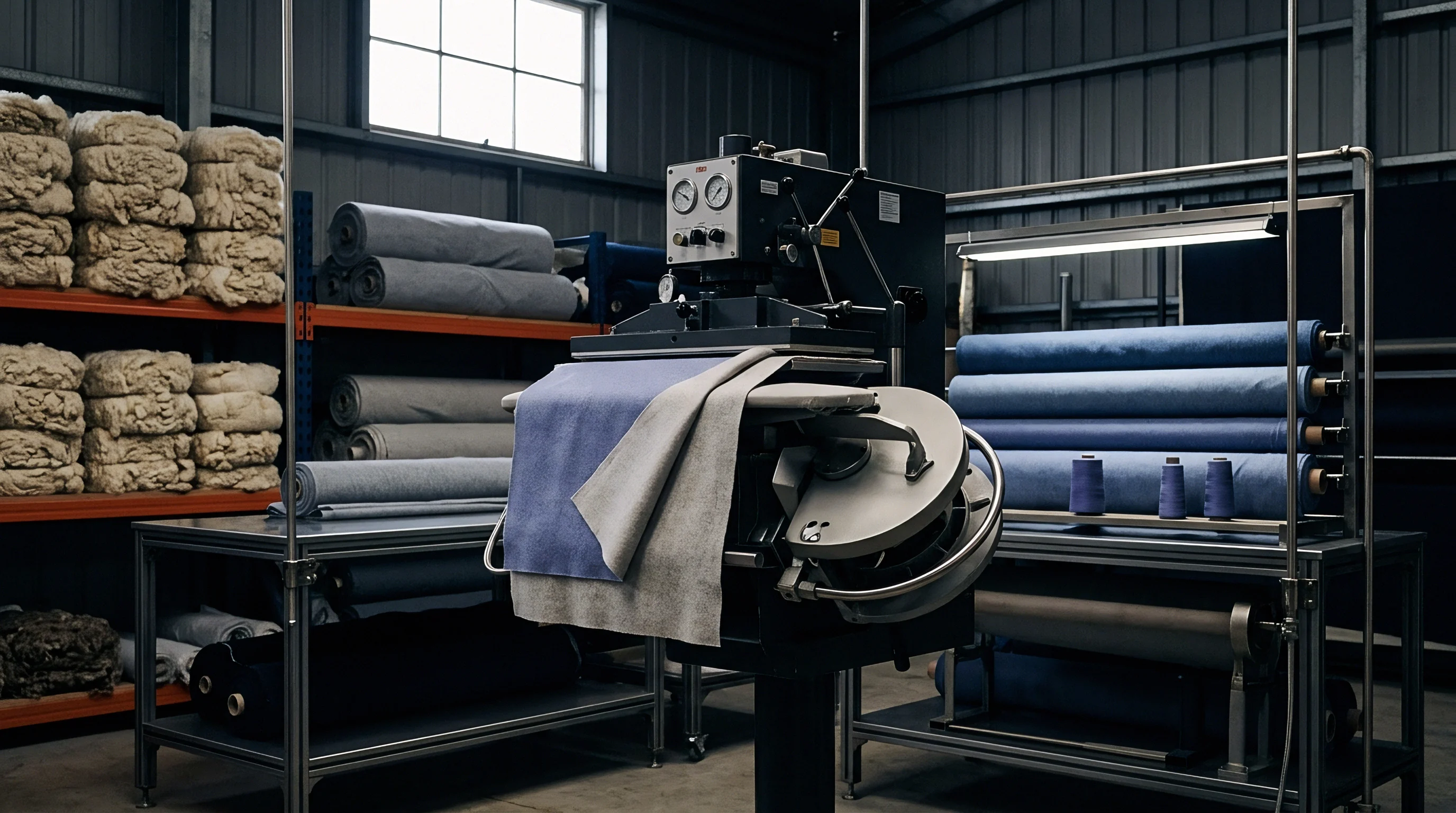
Sett

Yarn Geometry and Fiber Specific Surface Area
The mechanical construction of the greige cloth governs its thermomigration vulnerability. Micro-denier yarns require significantly higher dye concentrations to achieve the identical visual depth as standard filament yarns. A 50 denier / 144 filament polyester knit requires 2.5 to 3.0 times more dyestuff by weight of goods than a 50 denier / 36 filament yarn to match a standard black shade.
This elevated chemical loading saturates the fiber matrix, pushing the polyester to its thermodynamic partition limit.
Specific surface area dictates the exposure zone where finish auxiliaries make contact with the polymer. Fine filament goods pack tightly, creating narrow interstitial capillaries that pull finishing chemistry into close proximity with the fiber skin via surface tension. The concentration of silicone softeners per unit of fiber surface area increases on tightly woven fabrics with a high cover factor, magnifying the solvent extraction effect during heat exposure.
- Filament Fineness Limits dictate that individual filaments below 0.8 dtex suffer up to two full gray scale grades more staining than 2.5 dtex filaments processed under the identical reduction clearing regime.
- High Cover Factor Weaves generate dense planar surfaces that restrict airflow during drying, trapping volatilized dyestuff within the yarn interstices where it deposits on outer yarn crowns.
- Textured Draw-Textured Yarns present altered molecular crystallinity caused by friction false-twisting, creating variable amorphous zones that accelerate non-uniform dye diffusion under heat.
- Circular Knit Gauges above 28 needles per inch pack fine yarns tightly, concentrating migratory surface colorants on the exposed technical face where abrasion occurs.
Air permeability tests conducted under ISO 9237 demonstrate that dense fabrics with values below 50 mm/s exhibit persistent migration problems compared to open meshes exceeding 300 mm/s. The high airflow in open fabrics vents volatilized dye vapors before they condense back onto the cooling fiber sheath.
A fabric specification omitting filament count and finished mass per unit area leaves the dyer defenseless against post-heat rub fastness failures.
Changing from a 75D/36F yarn to a 75D/72F micro-denier construction without adjusting the disperse dye selection from medium-energy to high-energy benzodifuranone chemistry guarantees a failed inspection at the garment factory.


Toll
Financial Exposure in Fabric Finishing Routes
Thermomigration rejections generate severe financial losses across the supply chain because failures typically emerge after value-added finishing, lamination, or garment assembly. Correcting a failed 10,000-meter lot of dyed polyester fabric requires stripping the topical finish and running a secondary reduction clear. This corrective route demands an additional scouring pass at 80 degrees Celsius, a fresh chemical reduction bath, neutralizing washes, and a re-stentering pass to re-apply the functional finish.
The stripping and re-finishing sequence adds $0.22 to $0.38 per finished linear meter in direct chemical, energy, and labor expenses. Beyond processing costs, the extra thermal exposure degrades yarn tensile strength and damages elastane elasticity, increasing fabric width shrinkage beyond the standard 3.0 percent tolerance under ISO 5077. If the fabric has already been bonded to a membrane or foam core, chemical stripping is impossible; the entire laminated roll stock must be scrapped.
A garment manufacturing run of 20,000 activewear shirts sewn from migrating polyester illustrates the compounding risk:
Fabric consumption: 1.2 meters per unit, totaling 24,000 meters. Greige polyester knit cost: $1.80 per meter. Wet processing, high-energy dyeing, and softening: $1.10 per meter.
Landed fabric cost on cutting table: $2.90 per meter ($69,600 total). Garment cut, make, trim, and transfer printing: $4.50 per unit ($90,000 total). Total FOB investment: $159,600.
If heat transfer pressing at 180 degrees Celsius triggers dye thermomigration that drops dry rubbing fastness to grade 2, the buyer will reject the completed lot under AQL 2.5 standards. The factory cannot salvage the sewn garments via wet clearing because the printed graphics and glued seams will delaminate. The financial loss encompasses the full $159,600 FOB value plus international freight liability, rather than the initial $26,400 dyehouse invoice.
Contracts that define acceptable fastness strictly at the dyehouse exit roll leave the apparel brand entirely exposed to downstream secondary heating losses.


Protocol
Testing Sequences for Secondary Thermal Exposure
Standard laboratory testing procedures often fail to detect potential thermomigration issues. Standard dyehouse practice tests fastness immediately after reduction clearing and drying, recording passing results. A comprehensive mill audit protocol requires testing fabric samples only after they have undergone the exact secondary heat profile specified for downstream garment manufacturing.
ISO 105-P01 evaluates dry heat fixation and sublimation fastness using a scorch tester or contact heat frame. Testing technicians place the dry fabric between two heating plates under 4 kPa of pressure at specified temperatures (usually 150, 180, or 210 degrees Celsius) for 30 seconds. Placing standard multifiber fabric directly against the treated polyester sample during the scorch cycle reveals whether mobile dyes will cross-stain adjacent fibers during subsequent garment molding, bonding, or fusing operations.
| Stage of Audit | Test Method Standard | Operational Stress Condition | Passing Tolerance Target |
|---|---|---|---|
| Post-Dye Reduction Verification | ISO 105-X12 / ISO 105-C06 C2S | 60C wash, multifiber DW strip | Dry Rub Grade 4-5, Stain Grade 4 |
| Post-Finish Pad and Dry | ISO 105-X12 | Crockmeter 10 cycles dry and wet | Dry Rub Grade 4, Wet Rub Grade 3-4 |
| Secondary Thermal Simulation | ISO 105-P01 (Contact Heat) | 180C for 30s against multifiber | Multifiber Staining Grade 4 |
| Post-Heat Rubbing Fastness | ISO 105-X12 (After ISO 105-P01) | Crockmeter over heat-pressed zone | Dry Rub Grade 4 Minimum |
| Accelerated Storage Simulation | AATCC 163 / ISO 105-X11 | 70C at 80% RH for 48 hours | Cross-Staining Grade 4-5 |
A thorough verification protocol also accounts for warm warehouse storage. Fabrics loaded with non-ionic finishing oils may show minimal thermomigration right off the stenter frame, but will slowly bleed dye into the auxiliary coating over several weeks inside shipping containers where temperatures reach 55 to 65 degrees Celsius. Running an accelerated storage trial under AATCC 163 (Colorfastness to Storage: Fabric-to-Fabric) at 70 degrees Celsius under mechanical weight identifies this latent risk before goods are loaded for ocean transit.
A dyehouse quality sign-off document is incomplete without an attached ISO 105-P01 heat contact strip confirming stability across the customer’s maximum thermal processing threshold.