Calculating Mechanical Overfeed Percentages for Continuous Stenter Processing
Stenter mechanical overfeed balances peripheral infeed roll speed against pin chain velocity to compact yarns lengthwise and suppress post wash shrinkage.
Infeed
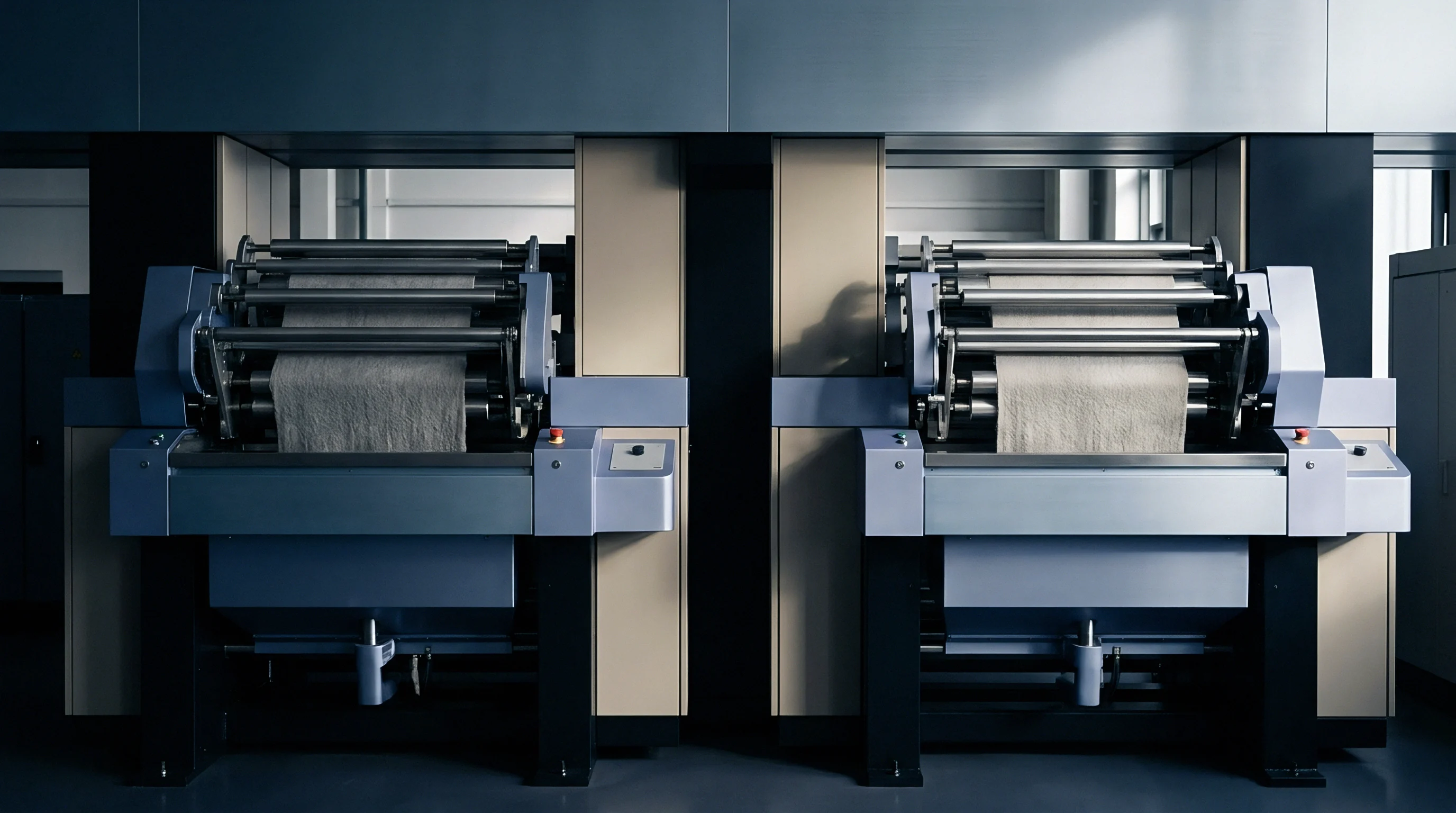
Continuous stenter operations establish the finished density and dimensional stability of open-width textiles by regulating how fast goods enter the pin chain. Delivery rollers situated just ahead of the pinning zone run faster than the transport chain itself. This speed differential feeds extra length onto the pin plates, compressing yarns along the warp or wale direction before heat fixes the geometry.
Setting delivery rolls faster than the chain introduces controlled longitudinal fullness; retarding them stretches the web lengthwise, narrowing the running width and compounding residual shrinkage later on.

Mechanical Drive Velocity Ratios
Direct electronic gearing across independent servomotors coordinates the positive feed cylinders, entry brush wheels, and main rail track. Overfeed percentage reflects the relative speed gap between positive entry rollers and the pinning chain, calculated directly as:
Overfeed Percentage = ((Delivery Roller Surface Velocity – Tenter Chain Linear Velocity) / Tenter Chain Linear Velocity) 100
Running the entry drive at one hundred and twenty metres per minute against a stenter chain speed of one hundred metres per minute creates a mechanical overfeed of positive twenty percent. Modern finishing frames handle positive overfeeds up to fifty percent for circular knits, down to negative values around minus ten percent for woven fabrics that require lengthwise tension during chemical application. Overhead brush wheels apply steady vertical pressure to pin selvedges securely onto brass pin bars.
Because smooth steel rollers can slip against damp fabric, rubberized high-grip nip rollers are standard on modern pad-to-stenter links.
Hourly throughput depends directly on overall chain speed.
Target Shrinkage Mathematical Derivation
Working out the required production overfeed means accounting for both loom relaxation and target domestic wash shrinkage. Finished specifications usually cite residual laundering shrinkage under ISO 5077 and ISO 6330 washing protocols, capping acceptable dimensional change at plus or minus three percent. Setting an accurate overfeed percentage starts with testing raw relaxation shrinkage off the loom or knitter.
Calculating the required overfeed percentage relies on the greige relaxation shrinkage and the target residual wash shrinkage:
Required Overfeed Percentage = ((Greige Length Relaxation Percentage – Target Residual Wash Shrinkage Percentage) / (100 – Greige Length Relaxation Percentage)) 100 + Takeup Compensation Factor
The takeup compensation factor adjusts for thermal shrinkage inside the drying enclosure ~ typically adding two to four percent on synthetic substrates and up to six percent on cotton interlock knits. For instance, if a cotton single jersey shows sixteen percent greige length shrinkage under a hot water wash, and buyer specs allow four percent residual shrinkage, the base formula gives twelve divided by eighty-four, or fourteen point two eight percent. Factoring in a three percent thermal compaction factor yields a final mechanical overfeed setpoint of seventeen point three percent on the stenter console.
Fabric density builds up right behind the pinline.
| Substrate Construction | Yarn Composition | Greige Relaxation Length Shrinkage (%) | Finished Target Shrinkage (%) | Calculated Mechanical Overfeed (%) | Chamber Operating Temperature (°C) |
|---|---|---|---|---|---|
| Single Jersey 30/1 Ne | 100% Combed Cotton | 18.0 | -3.0 to -5.0 | 18.5 | 160 |
| Interlock Knit 40/1 Ne | 100% Ring Spun Cotton | 14.0 | -3.0 to -4.0 | 14.0 | 155 |
| Plain Weave Poplin 40s x 40s | 100% Cotton | 5.0 | -1.5 to -2.0 | 4.5 | 140 |
| Warp Knit Tricot 40D | 85% Polyamide, 15% Elastane | 12.0 | -2.0 to -3.0 | 15.0 | 195 |
| Twilled Workwear 2/1 | 65% Polyester, 35% Cotton | 4.0 | -1.0 to -1.5 | 3.0 | 180 |
| French Terry 20s/10s | 100% Cotton | 22.0 | -4.0 to -5.0 | 24.0 | 165 |
| Values reflect entry via water padder at seventy percent wet pickup before hot air drying at standard production line speeds of thirty-five metres per minute. | |||||
Without enough yardage fed onto the pins, chain tension pulls wet yarns taut along their length. The result is high residual shrinkage after washing, leading to twisted garment seams and immediate rejections during factory audits.
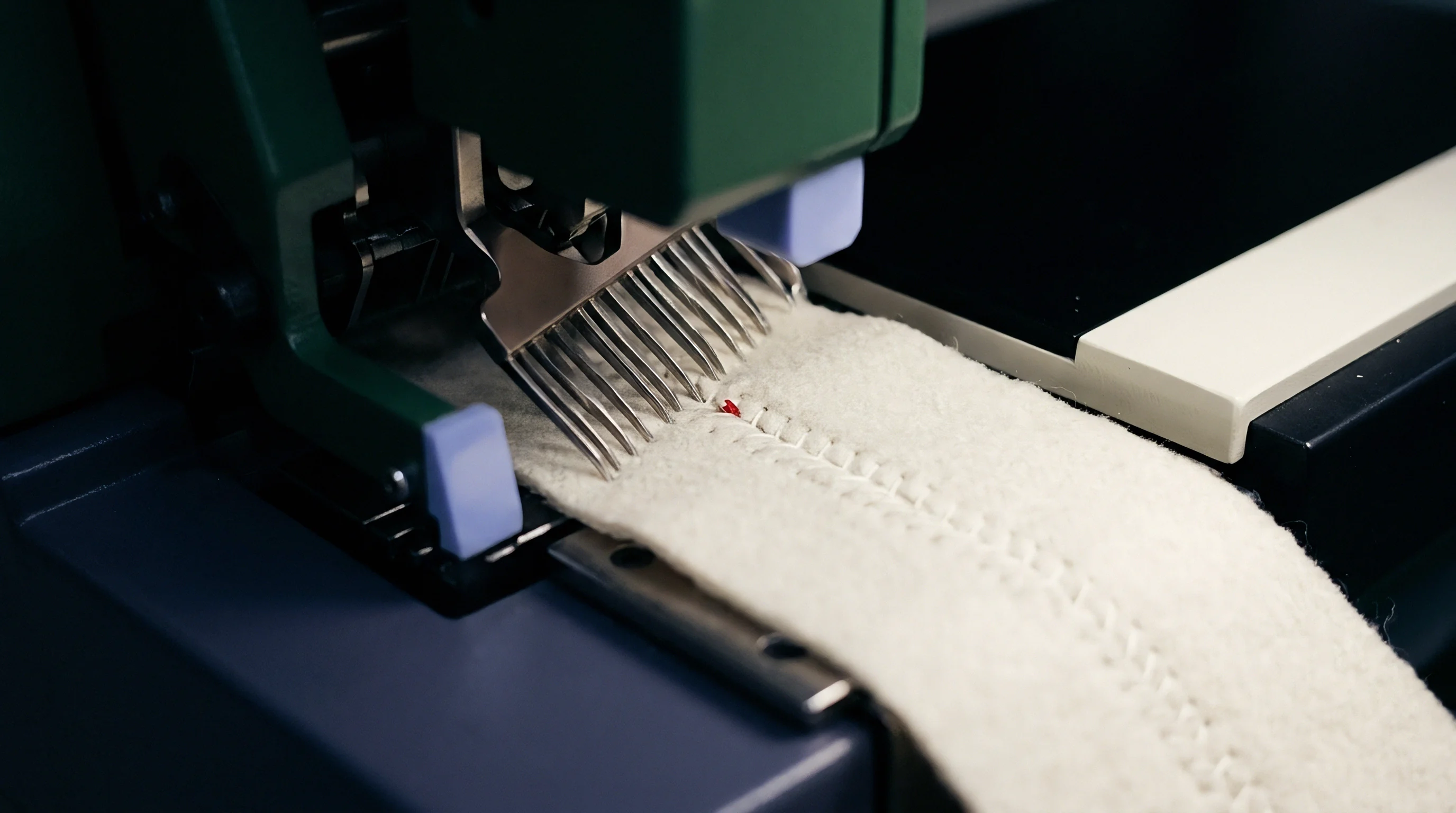
Pin
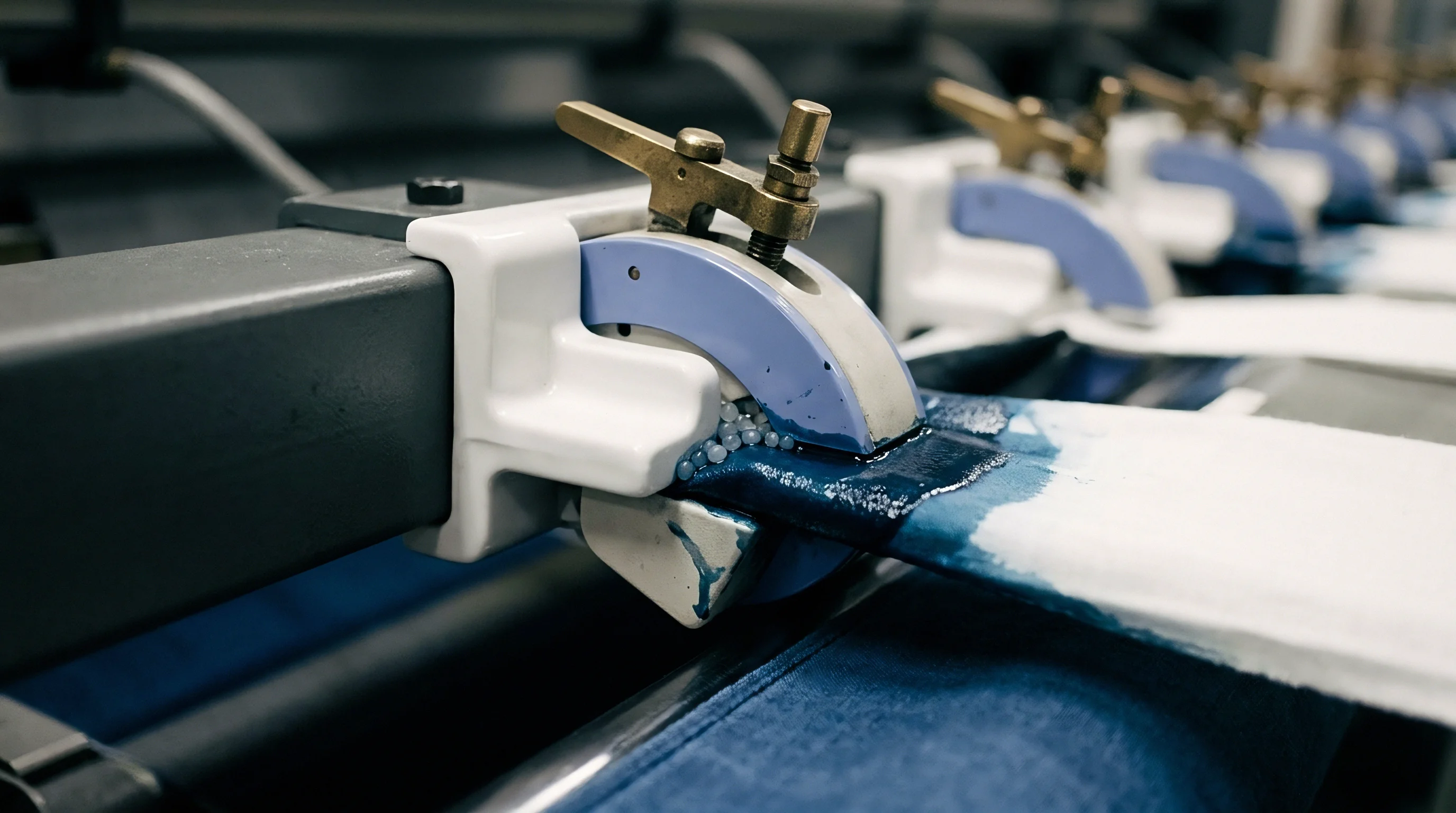
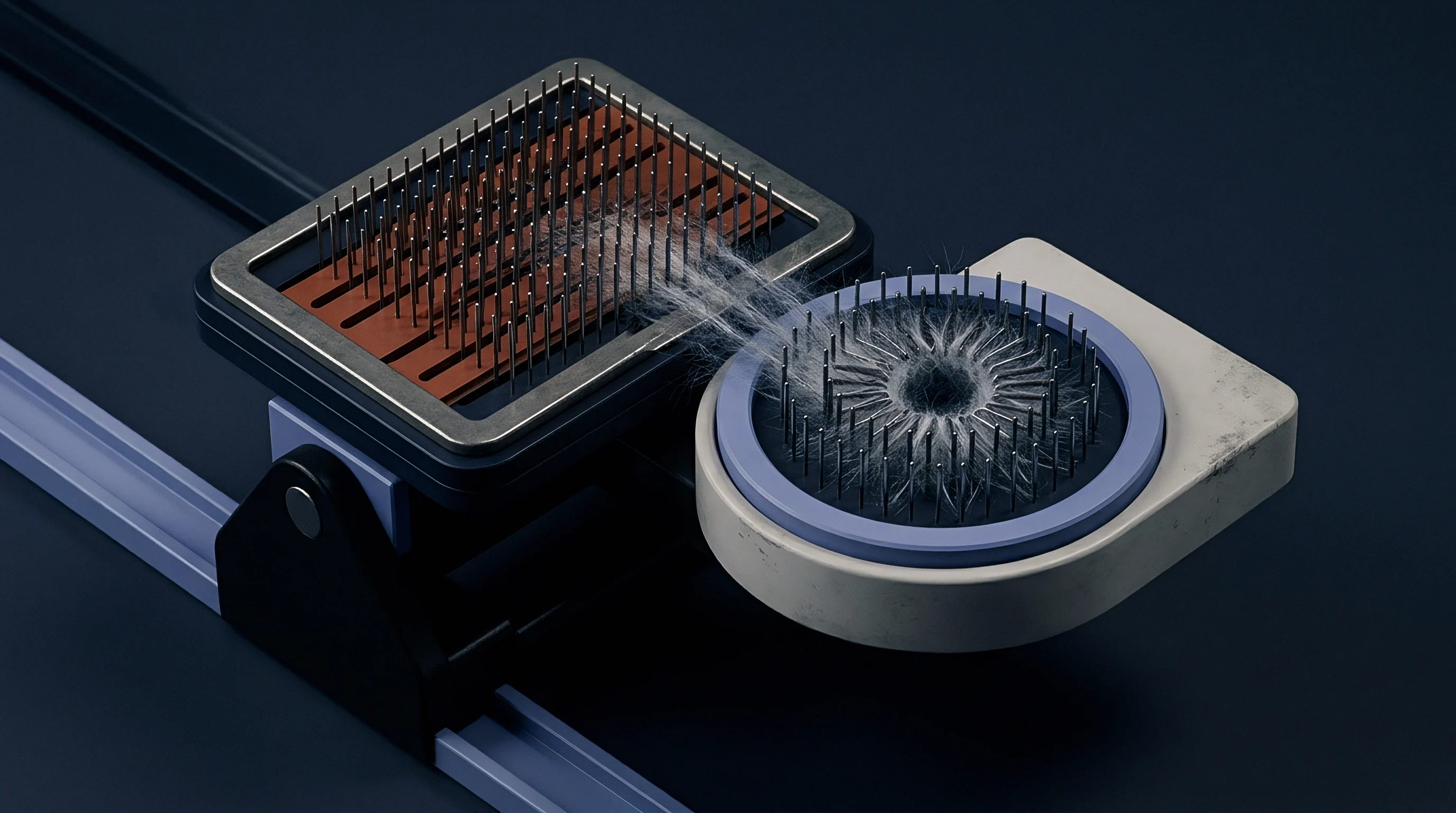
Chain rails carry moving steel links fitted with brass bodies and arrays of needle points. As links enter the heated enclosure, lateral rail divergence pulls the fabric wide while overfed length between successive pins relaxes longitudinal tension. Pin plate design sets the physical limit on overfeed volume.
Standard plates feature two or three rows of hardened steel needles spaced three to four millimetres apart. Trying to cram too much length onto short pins forces material to gather into noticeable billows that catch air currents inside the heating chambers.
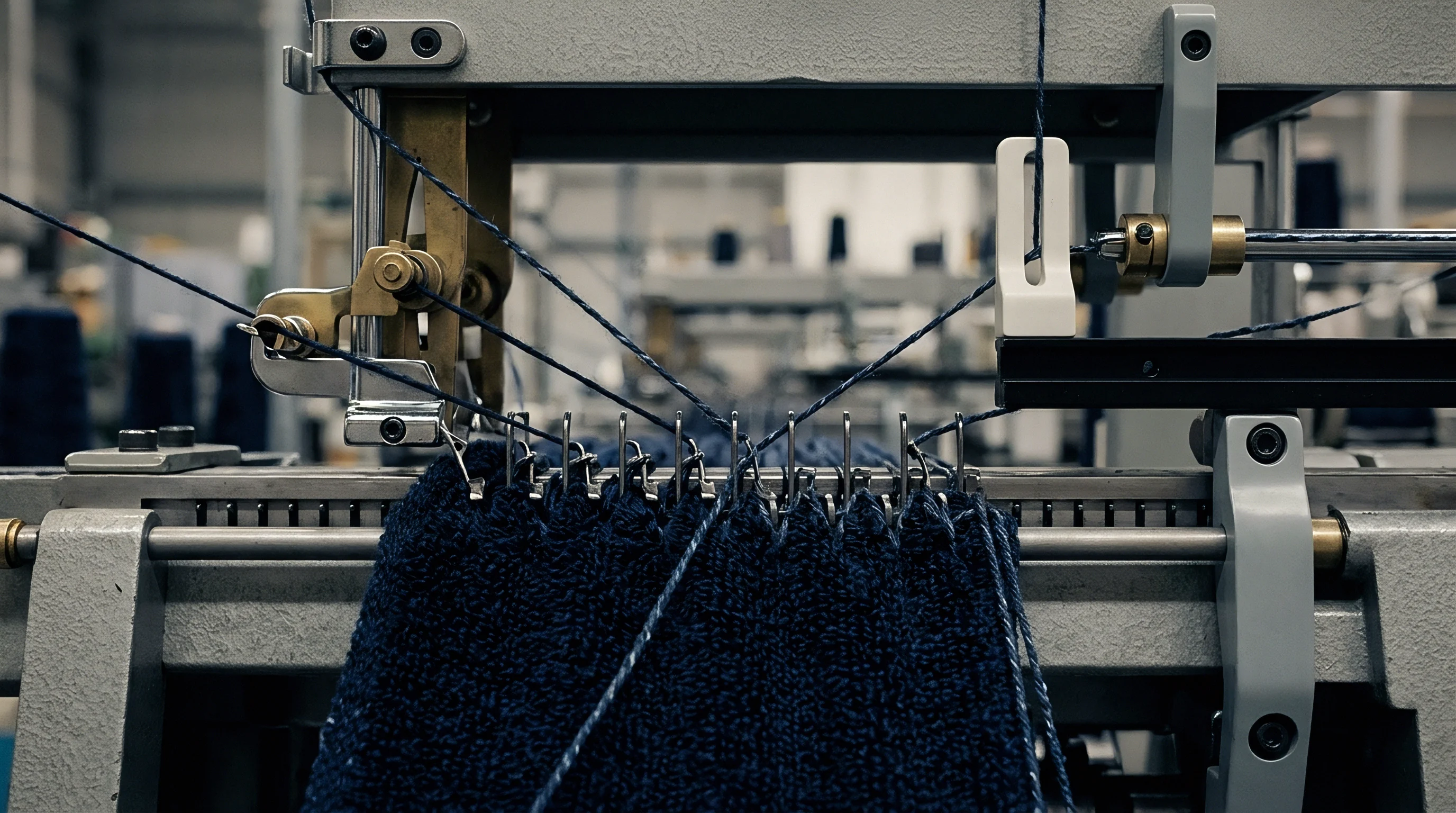
Plate Engagement and Selvedge Attachment
Rotary brush wheels push the running edge downward so needles pierce cleanly through the selvedge border. Bristles apply force directly over the pin tips, preventing edges from slipping free prematurely. When overfeed exceeds twenty-five percent, the distance between pins holds more yarn than flat fabric can absorb, forming small ripples along the chain line.
Driven selvedge uncurlers flatten rolled edges right before pinning wheels engage. If uncurlers lose tension, folded edges enter the pin field, creating unpinned spots that drop off the chain mid-process.
Pushing overfeed too far leaves visible pin marks.
Mechanical uncurlers keep stubborn edges flat ahead of the pins.
Running an underfeed places immediate tension on warp yarns.
Air circulation velocity within drying chambers lifts overfed substrate ripples directly into contact with upper heating nozzle arrays.

Entry Rail Tension Fields
Diverging stenter rails exert strong lateral pull on wet textiles, converting longitudinal slack from the overfeed drive into structural loop rearrangement. In knits, crosswise rail spreading pulls loop legs outward, while slack along the length lets loop heads and feet settle closer together without strain. In wovens, pick density rises as overfed filling yarns shift under light warp tension.
The entry rail zone spans about five metres, tapering smoothly from entry-nip width out to full drying-chamber width.
Operating errors in the entry zone produce distinct mechanical failure states:
- Blown Edge Detachment occurs when air nozzle velocity lifts loosely pinned selvedges off needle points, tearing the unpinned length through the drying zone.
- Pin Tear Perforations develop when lateral rail expansion begins before overfed loop density finishes settling onto the needles, ripping holes along the edge margin.
- Longitudinal Wave Marks arise when excessive overfeed volumes create rippled transverse bands that bake into synthetic polymers during high-temperature dwell cycles.
- Scalloped Selvedge Deformation results from worn needle tips failing to hold local tension peaks during aggressive cross-machine rail divergence.
| Machine Type | Chain Configuration | Minimum Overfeed (%) | Maximum Overfeed (%) | Typical Overfeed Knitwear (%) | Typical Overfeed Woven (%) |
|---|---|---|---|---|---|
| Horizontal Pin Chain | Ball Bearing Track | -10.0 | +60.0 | +18.0 to +30.0 | +2.0 to +6.0 |
| Vertical Pin Chain | Lubricated Guide Strip | -5.0 | +45.0 | +15.0 to +25.0 | +1.0 to +4.0 |
| Combined Pin and Clip | Enclosed Steel Rail | -15.0 | +35.0 | +10.0 to +20.0 | -2.0 to +4.0 |
| Heavy Duty Carpet Rail | Hardened Roller Chain | 0.0 | +20.0 | Not Applicable | +1.0 to +5.0 |
Edge dropouts often trace back to greige fabric arriving too narrow from the knitting plant to catch the pinline cleanly.
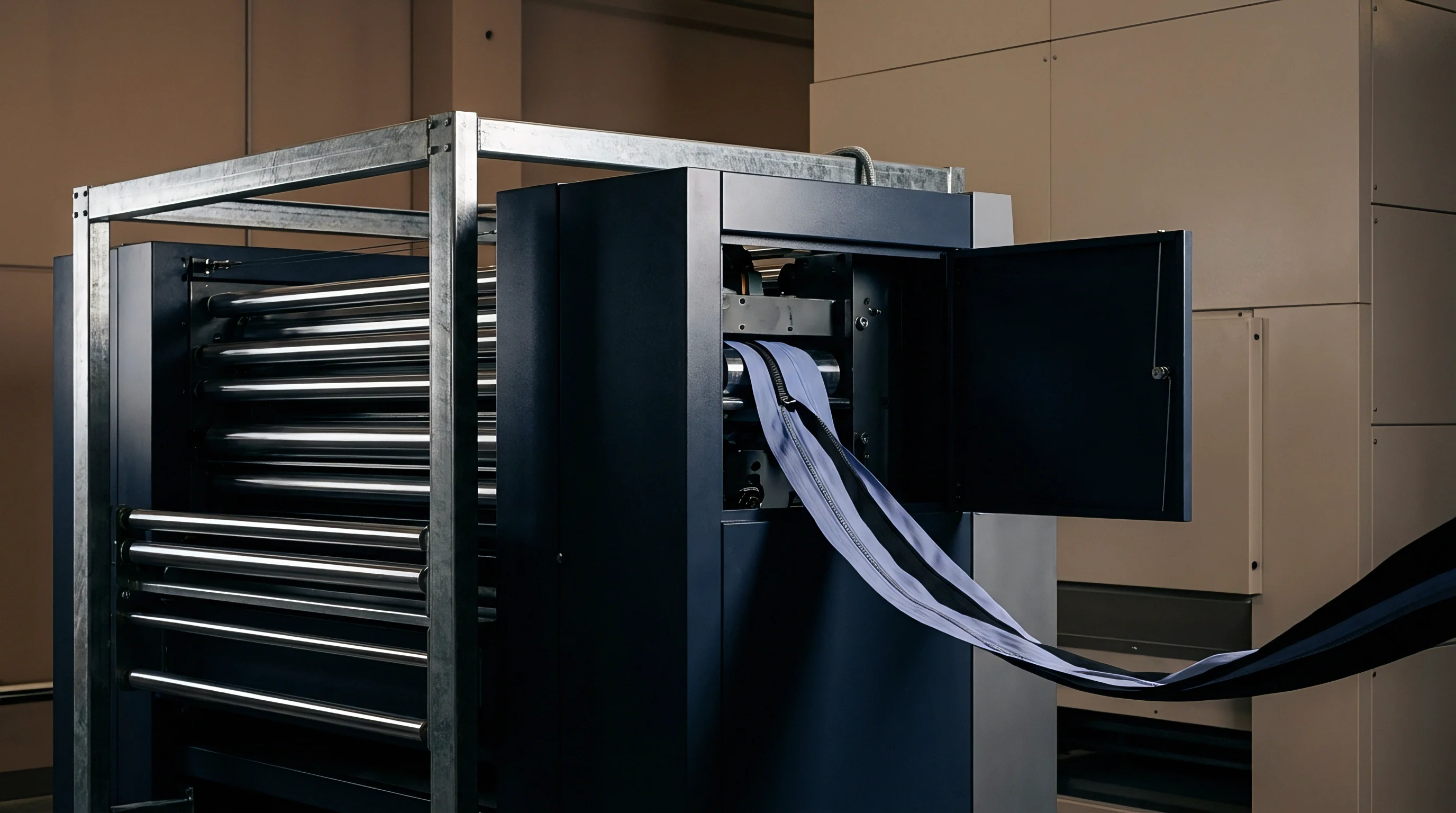
Slack
Surplus length along the pin field has to collapse evenly in the heating zone to produce dimensionally stable cloth. Inside the chambers, high-velocity hot air jets strike the upper and lower faces of the suspended fabric. This air cushion generates a gentle wave between support chains, allowing overfed yarns to draw inward without mechanical pulling.
Longitudinal slack disappears as individual yarn loops swell, crimp, and press together, converting raw feed excess into fabric body.
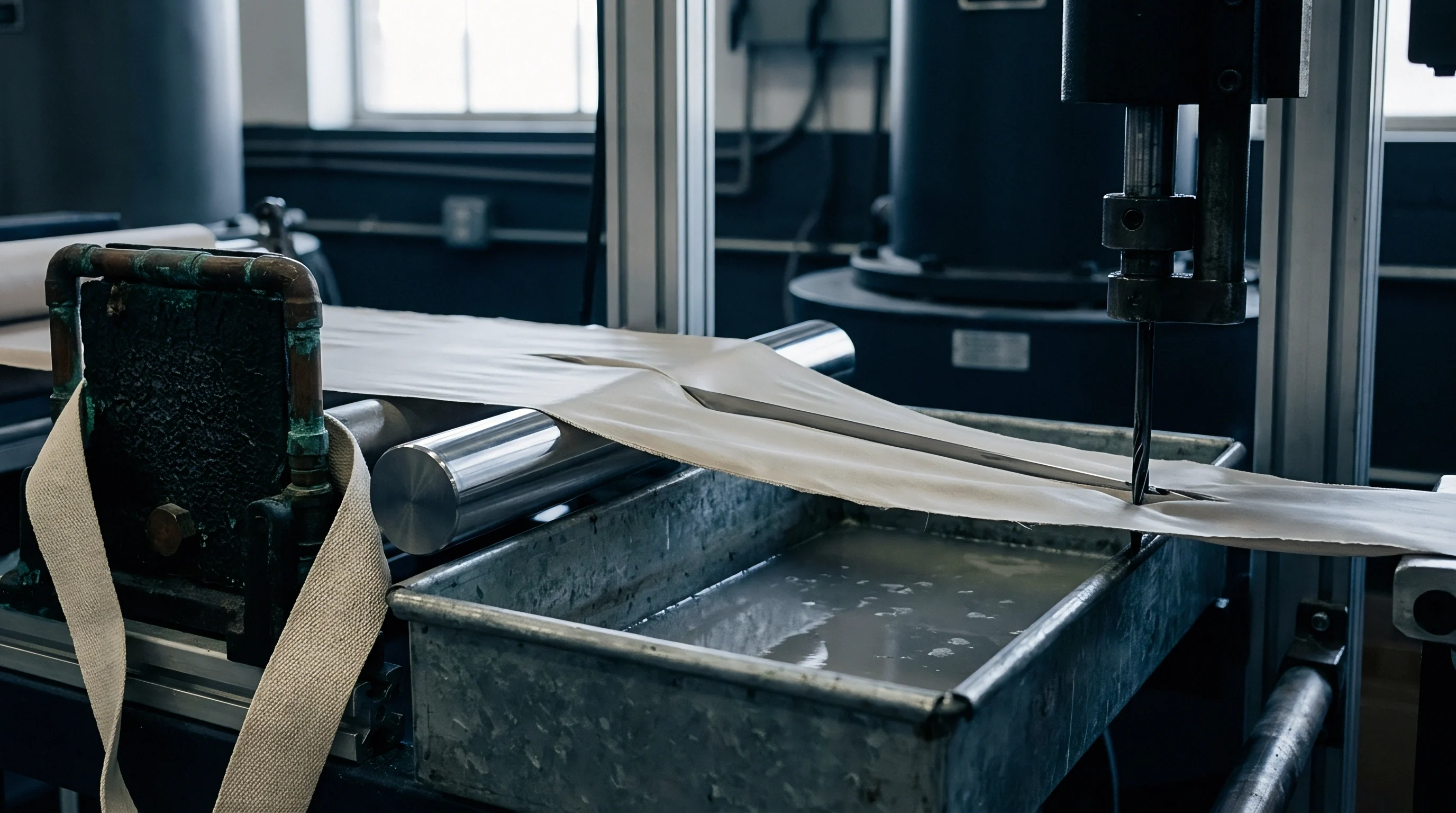
Course Compaction inside Drying Chambers
Cotton, viscose, and wool shrink and relax structurally when heated without tension. As water evaporates out of saturated yarns, stresses built up during spinning, weaving, or knitting relax. Extra length supplied by positive overfeed allows warp yarns in wovens ~ or course loops in knits ~ to gather closely.
Running without overfeed bakes stretched yarns into position under tension, locking in high latent shrinkage. Air nozzle velocity must float the web smoothly without causing flutter that knocks selvedges off the needles.
Dwell time inside the chamber sets permanent yarn memory.
Filling yarns relax as they pass through the heated zones.
Evaporating moisture shifts mechanical load along the rail chains.
Feed rates running below greige wet relaxation values pull loop heads flat and lock latent contraction into the finished piece.

Does Thermal Dwell Override Overfeed Settings?
Synthetics like polyester and polyamide heat-set between one hundred and eighty and two hundred and ten degrees Celsius. At these temperatures, polymer chains break and reform crystalline bonds, fixing the physical structure of the knit or weave. If a stenter runs with inadequate overfeed during synthetic heat setting, it permanently locks in a stretched, low-density loop geometry.
Domestic washing cannot correct that distortion, causing irreversible shrinkage when moisture and dryer heat finally relax the structure. Overfeed must introduce the necessary slack before fabric reaches glass transition and crystallization zones.
To absorb heavy frame expansion without throwing chain links out of line across six heated zones, high-speed stenter rails rely on specialized mechanical slide mountings.
Setting stenter parameters on production lots requires following a systematic verification process:
- Greige Wash Relaxation tests identify exact raw length and width shrinkage on incoming rolls before entering wet processing lines.
- Pad Mangle Pickup measurement determines chemical moisture retention to establish chamber drying load and operating speed.
- Chain Width Calibration aligns entry rails with the target finished width plus two centimetres to allow for post-pin contraction.
- Infeed Speed Programming locks the mechanical drive differential to deliver the mathematically calculated shrinkage compensation percentage.
- Thermal Chamber Dwell balance coordinates fan frequency and line speed to ensure complete moisture removal two zones before the exit rail.
Excessive moisture leaving the final chamber indicates that overfed yarns are drying unevenly across their compacted internal cross-sections.
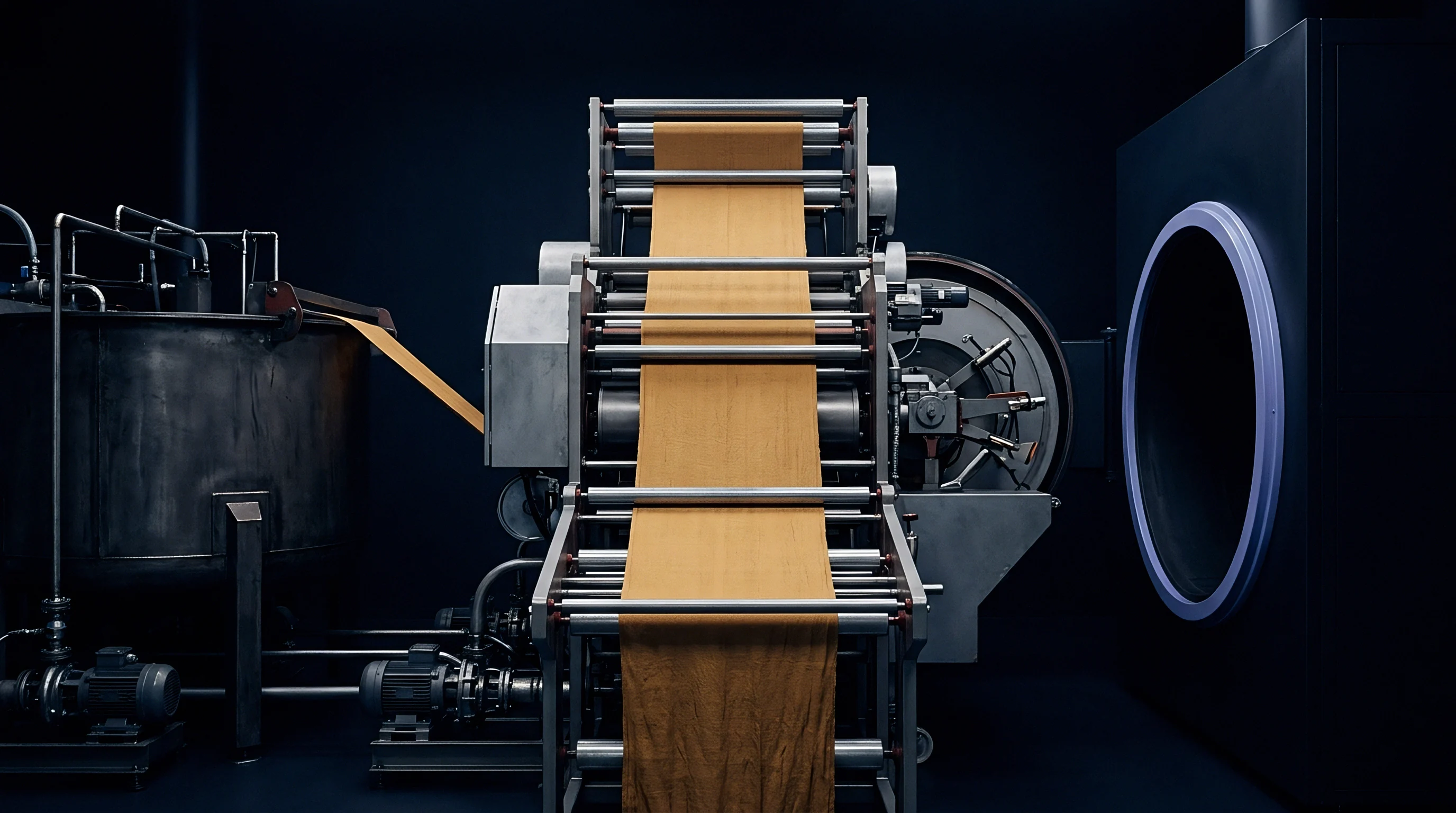
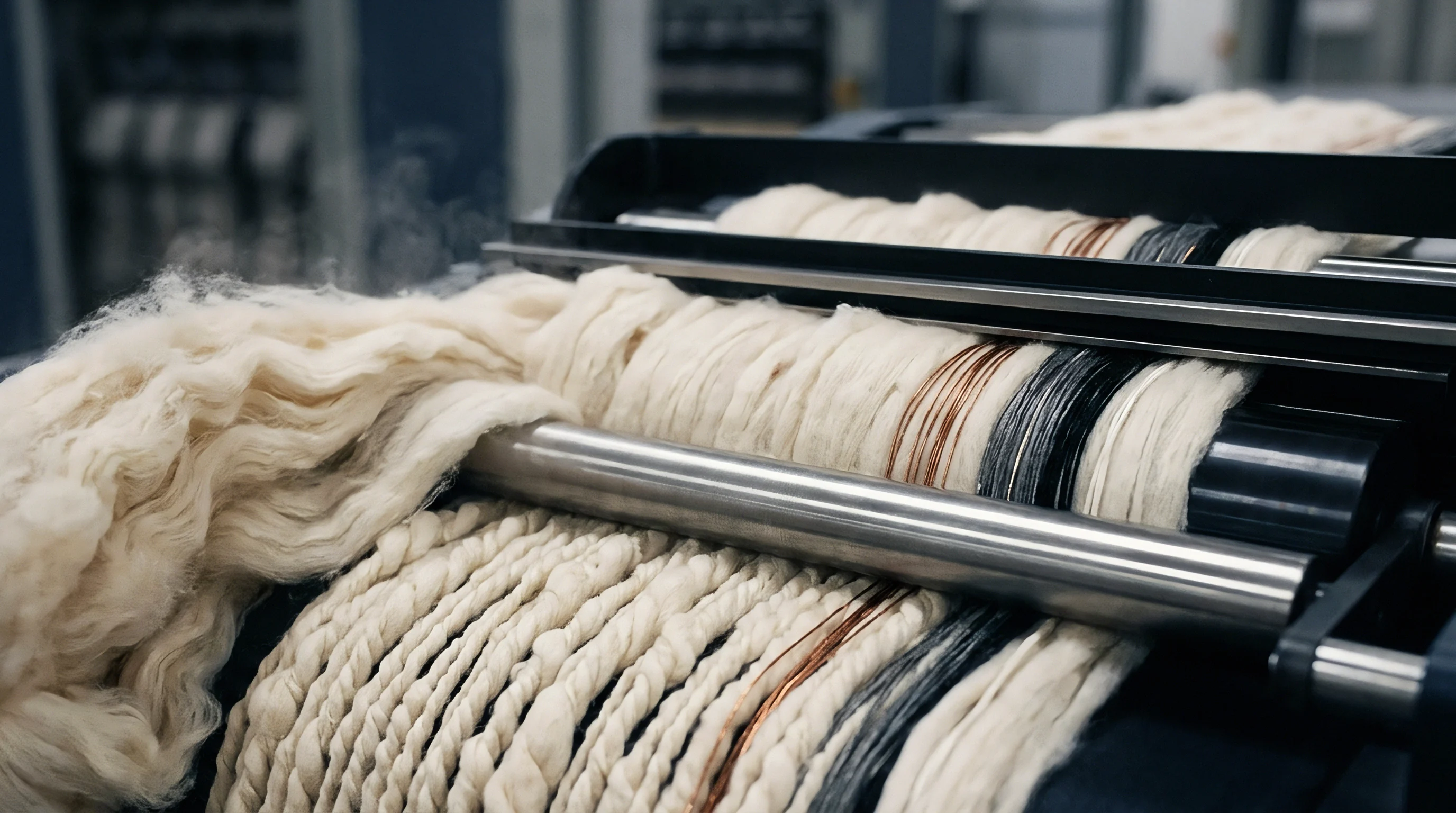
Scale
Verifying dimensional stability requires controlled laboratory testing matched against commercial standards. Quality contracts call for testing finished lots after conditioning in an ISO 139 standard atmosphere. A quick look at the pinline shows if overfeed was engaged, but only systematic washing proves whether that mechanical overfeed delivered lasting stability.
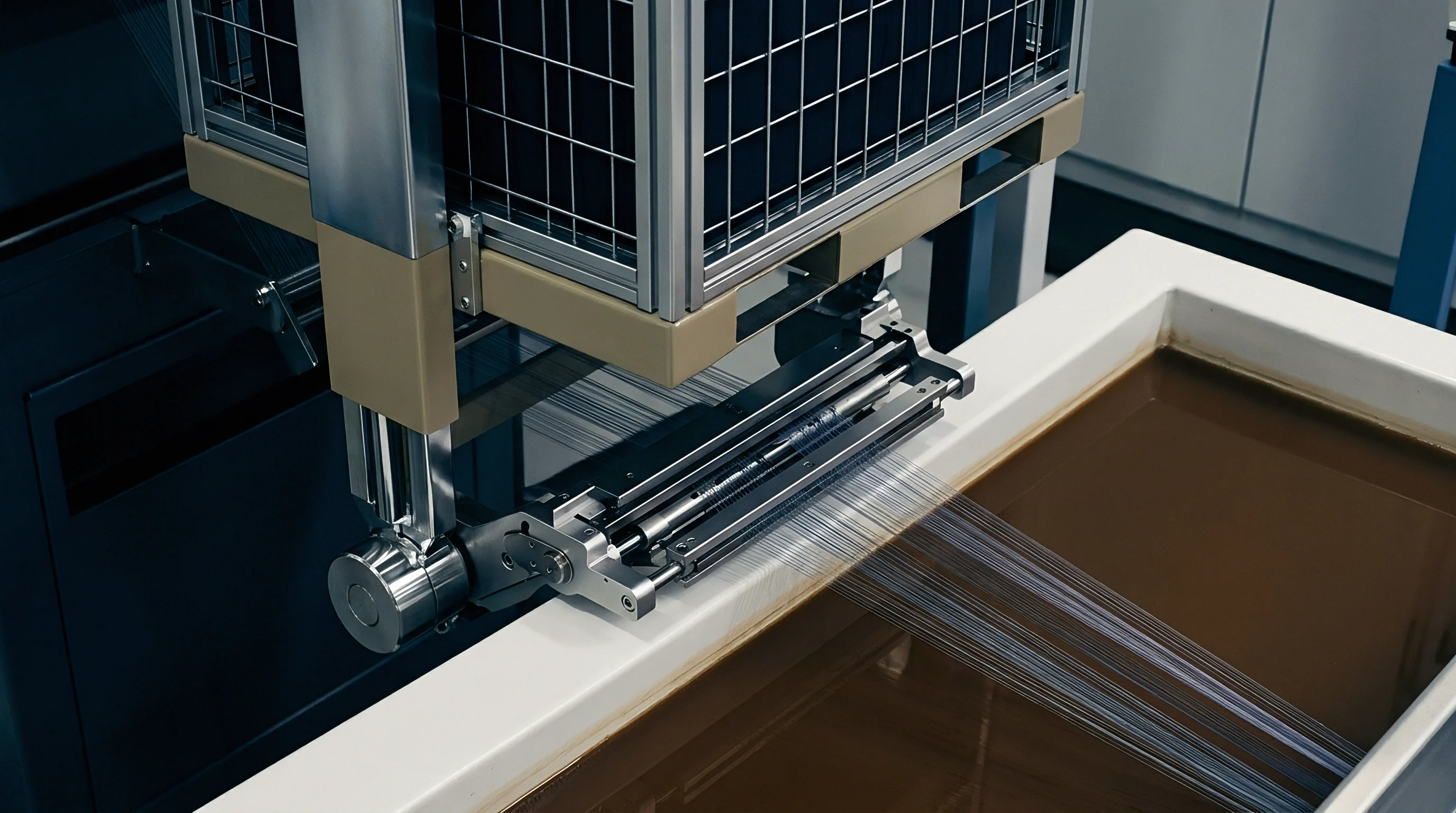
Standard Dimensional Change Correlation
Laboratories check length and width retention using wash and dry procedures under ISO 5077 and ISO 6330. Technicians mark five-hundred-millimetre reference points along warp and weft lines using textile ink or steel templates. After three to five automated wash and tumble-dry cycles, swatches are reconditioned before measuring the shift between marks.
A finished cotton single jersey showing minus eight percent length change missed its overfeed target on the line. Conversely, a swatch that gains length expanded in the wash, signaling excessive overfeed that created loose, unstable courses.
Counting finished courses gives a direct read on final density.
Overall loop geometry dictates how much the fabric will shrink later.
Dry weight measurements shift once swatches fully condition.
Knitted loops need room to collapse lengthwise to stay stable.
A mechanical overfeed of twenty-two percent on a twenty-eight gauge single jersey yields four percent residual length shrinkage after five domestic wash cycles under standard test method conditions.

Can Finished Course Counts Verify Overfeed Accuracy?
Counting courses or picks per centimetre on finished goods gives immediate, non-destructive feedback on overfeed execution. An off-loom poplin might measure twenty-eight picks per centimetre, whereas target specs demand thirty-one picks for proper weight and opacity. If an inspection reveals only twenty-nine picks, the operator ran insufficient overfeed, sacrificing fabric weight and stability to stretch out linear running metres.
Checking loop counts across ten distinct spots with a pick glass or camera highlights variability across finishing rolls.
Technical dossiers for wet processing orders define strict compliance requirements:
- Finished Course Sett dictates minimum loops per centimetre measured under conditioned ambient equilibrium across the usable cuttable width.
- Square Metre Mass defines weight in grams per square metre under ISO 3801, preventing thinning caused by excessive longitudinal chain stretch.
- Dimensional Change Limits restrict maximum allowed shrinkage under ISO 5077 after multiple laundering cycles.
- Spirality Skew Angle governs wale distortion to prevent garment torso seam twisting after wash relaxation.
Purchase orders governed by ISO 5077 tolerance annexes permit buyers to reject entire production dye lots when post-wash length shrinkage exceeds the negotiated threshold by more than one half percentage point.
Tariff
Every percentage point of overfeed applied at the infeed directly changes the finished linear length delivered to the roll. A converter buying greige fabric pays for woven or knitted meterage off the loom. Applying twenty percent overfeed for dimensional stability reduces one thousand metres of raw goods to roughly eight hundred and thirty metres of finished cloth.
That loss of running length raises the cost per finished metre, shifting material yields and driving commercial discussions between brands, mills, and dyehouses.

Linear Meterage Yield and Mass Reconciliation
Costing finished cloth requires balancing area weight against delivered length. Heavy overfeed increases mass per unit area because more yarn length compresses into each square metre. If an order calls for two hundred grams per square metre with loose length tolerances, a finisher might underfeed the line to stretch out running length ~ maximizing billable metres while shipping lighter, sub-spec fabric.
Comparing yarn input mass to finished roll yardage shows whether missing length went into proper compaction or was lost to heavy selvedge trimming.
As warp yarns contract, the fabric expands across its width.
Proper overfeed keeps finished goods from shrinking excessively in length.
Contracts specifying finished mass per unit area without fixed width tolerances permit mills to trade off linear delivered length against mechanical chain expansion.
Commercial Tolerance Margins on Conversion Orders
Textile processing contracts establish clear tolerance bands for width, weight, and linear yield. Standard commission finishing agreements allow up to fifteen percent length loss on cotton knits to cover normal compaction and scouring weight loss. When variations in raw greige force a thirty percent overfeed to hit shrinkage targets, the customer gets fewer garments per roll than marker plans estimated.
Financial responsibility for lost yield depends on whether the original purchase spec tied overfeed directly to finished course density or left stabilization entirely to the dyer.
Calculating the true landed cost requires analyzing the interaction between greige purchase weight, chemical uptake during padding, and finished linear compaction across the entire stenter sequence.
Whether commission finishing houses will ever agree to share financial liability for linear meterage lost when counteracting poor greige yarn crimp remains contested across global textile trading desks.