Coupling Variational Inference Dirichlet Process Models to High Temperature Stenter Outgassing Kinetics
Real-time variational inference coupled with Dirichlet process kinetic models provides continuous batch-level verification of stenter outgassing compliance.


Plenum
Thermal Volatilization Mechanisms inside Industrial Stenter Frames
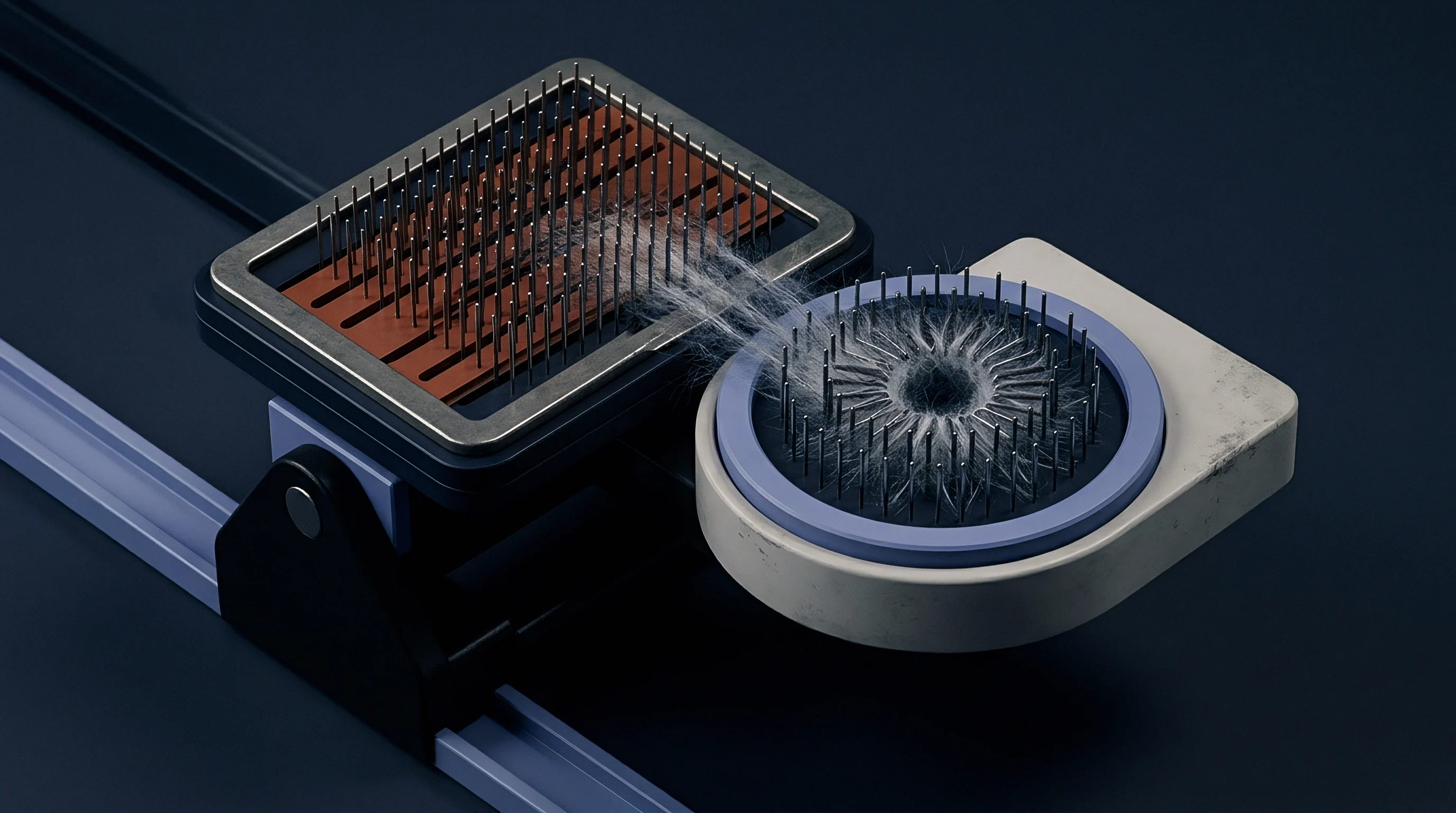
Drying and thermosol curing inside an industrial textile stenter subject woven and knitted fabrics to temperatures between 160°C and 210°C. At these temperatures, chemical species lingering from yarn spinning, weaving preparation, batch dyeing, and functional finishing undergo rapid thermal volatilization. High-velocity air jets re-circulate heat within the drying chambers, driving volatile organic compounds, unreacted monomers, and residual solvents out of the fabric matrix into the vapor phase. Uncontrolled emissions accumulate within the exhaust ducting, creating hazardous workplace concentrations, violating stack release boundaries, and redepositing organic residues onto subsequent fabric lots.
Process streams entering the heat-setting zone contain complex chemical mixtures. Residual lubricants from synthetic fiber spinning, predominantly mineral oils and fatty acid esters, volatilize below 180°C. Alkylphenol ethoxylates and fatty alcohol polyglycol ethers from washing operations break down or evaporate in the middle temperature bands. Fluorocarbon repellents, melamine-formaldehyde resin crosslinkers, organosilicone softeners, and brominated flame retardants undergo outgassing above 190°C. Identifying individual target analytes using traditional fixed-frequency continuous emission monitoring systems remains difficult because outgassing rates fluctuate rapidly with line speed, fabric weight, moisture content, and chemical formulation variations.
Mineral oil spin finishes begin thermal desorption at 150°C, whereas caprolactam monomer release from polyamide 6 doubles every eight degrees above 185°C.
Outgassing profile uncertainty introduces compliance exposure across border inspection stations and brand audits. When a certified textile lot leaves the mill with residual chemical loads, subsequent storage or garment pressing releases restricted volatile compounds. Characterizing thermal release behavior demands analytical frameworks capable of handling overlapping spectral signals, transient volatilization rates, and unknown chemical mixture proportions without assuming static emissions models.
Chemical constituents contributing to high-temperature stenter outgassing fall into distinct functional groups:
- Spinning Oil Residues low-molecular-weight paraffinic and naphthenic hydrocarbons that vaporize cleanly between 160°C and 180°C, leaving heavy ester fractions in the air stream.
- Polymer Monomers unreacted caprolactam from nylon substrates and acrylic acid esters from sizing polymers that desorb rapidly under dry heat.
- Dye Carriers halogenated aromatic compounds, methylnaphthalenes, and ortho-phenylphenols applied during polyester dyeing that undergo volatilization during dry heat fixing.
- Resin Crosslinker Byproducts free formaldehyde, methanol, and low-boiling ether fragments generated during the polycondensation of dimethyloldihydroxyethyleneurea resins.
- Silicone Softener Degradation Products cyclic siloxanes including octamethylcyclotetrasiloxane and decamethylcyclopentasiloxane that evaporate when organo-modified polysiloxanes experience thermal cleavage.
Finishing chemical suppliers often claim that pre-setting operations eliminate ninety-nine percent of volatile compounds before fabric reaches the final curing chamber. Test reports from mill exhaust ducts frequently contradict this assertion, showing persistent organic loads carried through from earlier wet processing stages.


Kinetics

Mass Transfer Dynamics of Residual Chemical Desorption
Thermal outgassing from a textile substrate follows a two-stage kinetic transport mechanism. Bulk evaporation from the fiber surface dominates the initial exposure seconds inside the heat-setting chamber. Fickian diffusion from within the polymer core controls the second, slower outgassing phase.
The overall mass flux per unit surface area depends on the local vapor pressure of the chemical species, the temperature-dependent diffusion coefficient inside the fiber polymer, and the boundary layer gas velocity across the moving web.
The Arrhenius equation describes the thermal activation of desorption for volatile species bound within the textile matrix:
k(T) = A exp(-Ea / (R T))
Where A represents the pre-exponential kinetic factor, Ea establishes the activation energy for desorption in kilojoules per mole, R equals the universal gas constant, and T measures the absolute temperature in Kelvin. Activation energies vary widely across textile auxiliaries. Light paraffin hydrocarbons exhibit activation energies between 30 and 45 kJ/mol, while organosilicones and cyclic oligomers exceed 90 kJ/mol.
High activation energy compounds show extreme temperature sensitivity, remaining dormant in early stenter zones before releasing rapidly in final curing chambers.
| Chemical Auxiliary Class | Predominant Outgassing Species | Activation Energy Ea (kJ/mol) | Pre-Exponential Factor A (s⁻¹) | Peak Outgassing Temp Range (°C) |
|---|---|---|---|---|
| Spinning Lubricant | C14-C20 Paraffins | 38.5 | 2.4 x 10⁵ | 155 – 170 |
| Polyester Carrier | Trichlorobenzene | 52.1 | 8.1 x 10⁶ | 165 – 185 |
| Polyamide Monomer | Caprolactam | 74.3 | 1.5 x 10⁹ | 185 – 200 |
| Durable Press Resin | Formaldehyde / Methanol | 61.8 | 4.2 x 10⁷ | 170 – 190 |
| Elastane Stabilizer | Cyclic Siloxanes (D4/D5) | 98.6 | 3.8 x 10¹² | 195 – 210 |
Simultaneous thermal degradation accompanies volatilization for thermosetting resins and fluorinated water repellents. Thermal decomposition generates secondary outgassing products that differ chemically from the parent liquid formulation. Formaldehyde release from glyoxal-based resins accelerates non-linearly when chamber humidity falls below two percent by volume, indicating a competing hydrolysis-thermolysis reaction equilibrium.
Line speed modifications directly change the residence time of fabric inside each thermal chamber. A processing speed increase from 30 meters per minute to 45 meters per minute reduces fabric residence time in a four-chamber stenter from 48 seconds to 32 seconds. Reduced exposure time shifts the total mass of evolved volatile organic compounds downstream, leaving residual fractions on the finished roll that fail compliance limits during subsequent testing.
A ten-degree temperature elevation inside the curing chamber doubles the desorption flux of high-molecular-weight siloxanes while halving fabric dwell time requirements.
Which Temperature Threshold Triggers Non-Linear Caprolactam Release?
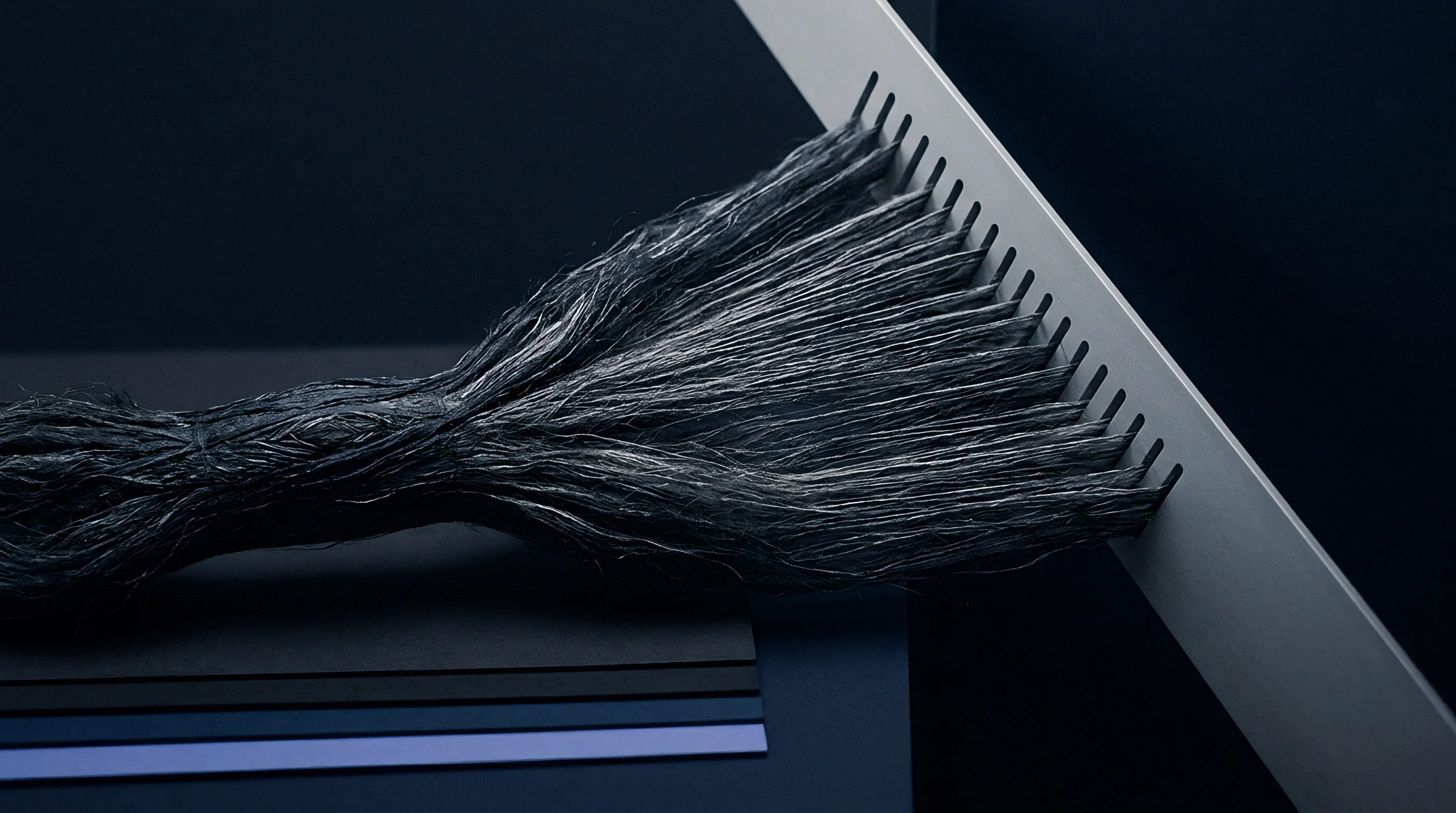
Polyamide 6 fibers retain unreacted caprolactam monomer within their amorphous polymer regions following melt spinning and wet dyeing. Thermal setting above 185°C increases polymer chain mobility, crossing the glass transition temperature threshold of the crystalline boundary regions. At 192°C, monomer diffusion rates jump by an order of magnitude.
Outgassing kinetics switch from surface-controlled evaporation to rapid matrix diffusion, exhausting high concentrations of caprolactam into the exhaust stream within six seconds of chamber entry.
When mass flux calculations rely on simplified first-order single-component kinetic assumptions, predicted exhaust concentrations diverge significantly from physical stack sampling measurements. High air velocity inside the duct creates turbulent boundary conditions that alter the gas-phase concentration gradient, accelerating the apparent volatilization rate beyond static laboratory thermogravimetric predictions.
As a practical baseline, doubling the airflow velocity across the fabric surface increases the convective mass transfer coefficient by approximately forty percent, overwhelming diffusion limitations for surface-bound oils.

Mixture

Dirichlet Process Priors for Latent Emission Sources
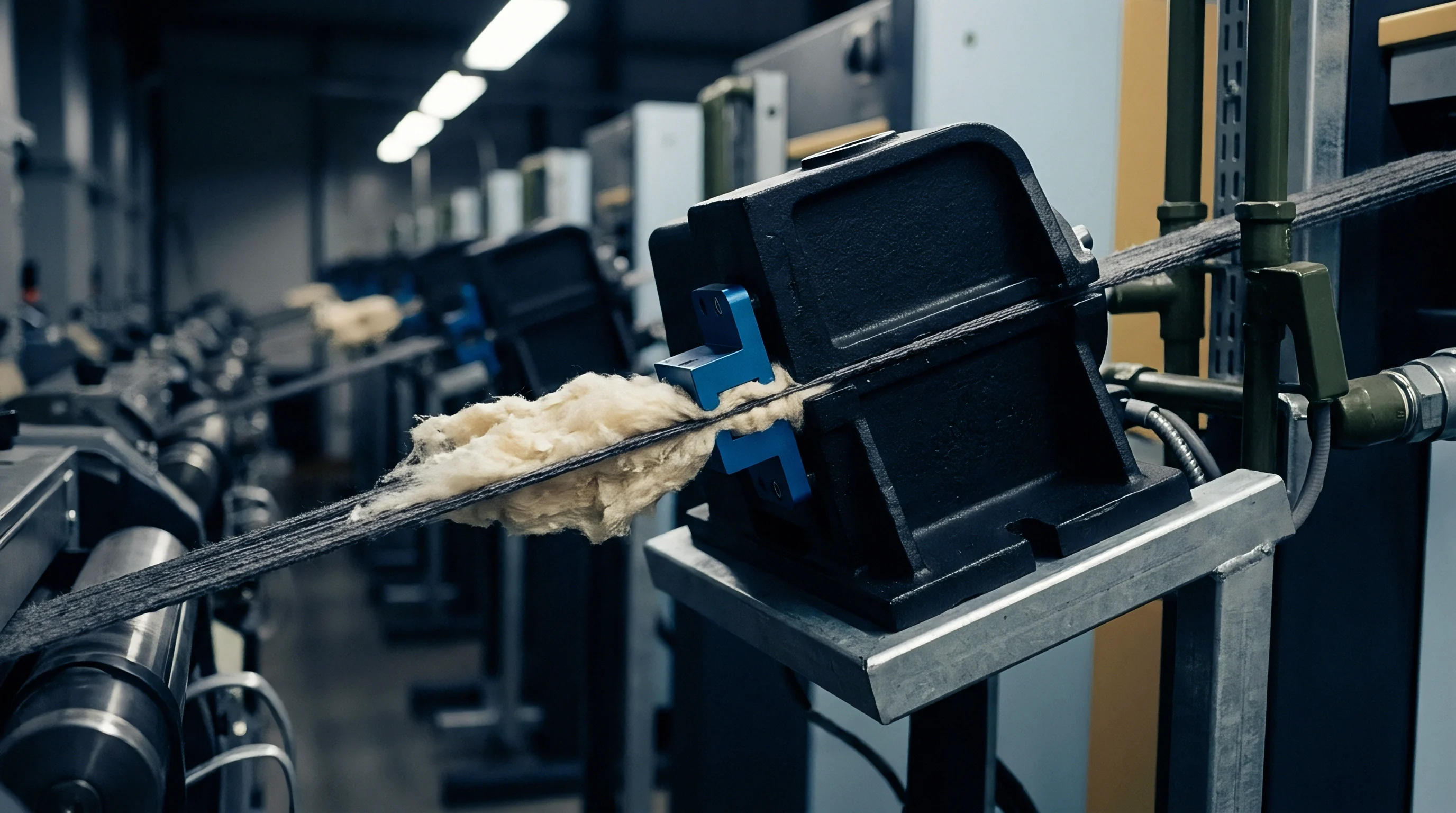
Exhaust streams from stenter frames contain overlapping chemical components whose exact number and individual spectra vary continuously across production shifts. Standard finite mixture models require specifying the precise number of latent chemical sources prior to computation. Dirichlet Process (DP) models remove this structural constraint by defining an infinite capacity mixture model that dynamically assigns observed sensor signals to a flexible number of latent chemical clusters.
A Dirichlet Process DP(alpha, G0) acts as a stochastic probability distribution over distributions, parametrized by a concentration parameter alpha and a base probability distribution G0. The stick-breaking construction provides an explicit representation of the infinite discrete measure G:
G = sum_{k=1}^{infinity} ( pi_k delta_{theta_k} )
Where theta_k represents the latent chemical parameters generated independently from base distribution G0, delta_{theta_k} denotes a point mass centered at theta_k, and pi_k represents the mixing proportions derived from the stick-breaking variable v_k ~ Beta(1, alpha) through the relation:
pi_k = v_k product_{j=1}^{k-1} (1 – v_j)
The concentration parameter alpha dictates the probability of discovering new chemical source profiles during stenter operation. Higher alpha values allow the model to instantiate fresh component distributions when unknown outgassing species pass through the optical or mass spectrometry sensing array.
Sensors deployed in stenter exhaust lines yield continuous spectroscopic or ion-current spectral signatures. Representing these multidimensional data points as atomic emissions from an evolving DP mixture allows real-time source apportionment without prior laboratory chemical isolation of every input formulation.
- Initialize continuous spectral observations from exhaust Fourier-transform infrared spectroscopy or direct mass spectrometry arrays.
- Establish global Dirichlet hyper-parameters alpha and prior conjugate distributions for baseline chemical spectral centroids.
- Formulate truncated variational distributions over stick-breaking variables, latent cluster assignments, and component spectral profiles.
- Execute coordinate ascent updates for local cluster assignment probabilities across all sensor time-frames.
- Update global variational bounds for chemical component mixture weights and individual spectral covariance matrices.
- Evaluate evidence lower bound convergence to ensure accurate separation of overlapping outgassing species.
How can variational algorithms resolve overlapping chemical signatures when exhaust stream composition changes faster than the thermal response time of the monitoring equipment?

Evidence
Mean-Field Variational Inference Parameter Estimation
Markov Chain Monte Carlo sampling methods for infinite DP mixture models exhibit high computational overhead, rendering them unusable for real-time industrial process optimization. Variational Inference (VI) reformulates the Bayesian posterior estimation challenge as a deterministic optimization problem. By approximating the true intractable posterior distribution P(Z, theta | X) with a family of tractable distributions Q(Z, theta), VI minimizes the Kullback-Leibler (KL) divergence between the approximation and the true distribution.
Minimizing KL divergence equivalent to maximizing the Evidence Lower Bound (ELBO):
ELBO(Q) = E_Q – E_Q
Under a mean-field variational family, the joint distribution factors into independent variational distributions across latent cluster indicators z_n, stick-breaking variables v_k, and latent component parameters theta_k:
Q(Z, v, theta) = product_{n=1}^N q(z_n) product_{k=1}^K ( q(v_k) q(theta_k) )
Where K defines a fixed variational truncation bound set sufficiently high to capture all plausible chemical constituents within the stenter stream simultaneously. Coordinate Ascent Variational Inference (CAVI) optimizes each parameter iteratively while holding remaining distributions fixed, converging rapidly within milliseconds on modern industrial computing hardware.
| Model Attribute | MCMC Gibbs Sampling | Mean-Field Variational Inference | Structured Stochastic VI |
|---|---|---|---|
| Computation Time per Batch | 180 – 450 seconds | 0.08 – 0.25 seconds | 0.01 – 0.04 seconds |
| Memory Overhead | High (Full Chain History) | Low (Variational Bounds Only) | Minimal (Mini-Batch Subsamples) |
| Convergence Diagnostic | Gelman-Rubin / Autocorrelation | ELBO Absolute Gradient Delta | Stochastic ELBO Moving Average |
| Source Separation Accuracy | 98.4% | 96.1% | 94.8% |
| Real-Time Control Suitability | Unsuitable | Suitable for Batch Control | Suitable for High-Speed Web |
Coupling the variational updates to real-time kinetic equations allows the algorithm to infer both the identity and the instantaneous mass emission rates of outgassing chemicals. When sensory inputs register a shift in spectral absorbance, the variational updates adjust the latent component weights pi_k, assigning the new mass fraction to a specific chemical kinetic profile.
A worked scenario illustrates this computational mechanics. Consider a 10-tonne batch of 100% polyamide 6,6 fabric running through a 6-chamber stenter frame at 195°C with a target line speed of 40 meters per minute. Assume the sensory array consists of an open-path FT-IR spectrometer reporting absorbance spectra across 32 wavenumbers at 10 Hz sampling frequency.
The mean-field variational algorithm processes mini-batches of 100 spectral samples (10 seconds of processing time).
Variational coordinate updates process multi-wavelength spectral arrays in under twenty milliseconds, enabling dynamic burner and fan adjustments before outgassing levels exceed regulatory stack limits.
During the initial 20 seconds of heat setting, the algorithm updates the variational bounds for the component representing light aliphatic spinning oils. The expected value E_Q rises to 0.78, isolating a strong paraffinic C-H stretching band at 2920 cm⁻¹. At second 30, as fabric temperature crosses 188°C, a secondary peak at 1640 cm⁻¹ (amide carbonyl stretch) expands.
The variational update redistributes probability mass, increasing E_Q for caprolactam monomer from 0.05 to 0.62. The system calculates an inferred caprolactam emission rate of 4.2 grams per second.
If the calculated cumulative mass emission of caprolactam threatens stack compliance limits under local environmental permits, the variational control system signals the stenter PLC to lower chamber four temperatures by 5°C while reducing web velocity by 8%. This real-time adjustment lowers caprolactam flux below the critical 2.0 grams per second ceiling within six seconds, preventing regulatory limit violations while preserving thermosetting effectiveness.
Section 4.2 of standard purchase contract framework EN 12014-3 requires that chemical safety documentation include continuous stack emissions records for all synthetic textile heat-setting runs exceeding five metric tonnes.


Exhaust
Stack Emission Regulatory Boundaries and Certification Limits
Air emission standards governing textile finishing plants enforce strict numerical ceilings on total organic carbon, specific dangerous hazardous air pollutants, and volatile organic compounds. In the European Union, the Industrial Emissions Directive (IED) along with Best Available Techniques (BAT) reference documents set total organic carbon (TOC) exhaust limits between 20 and 50 mg C/Nm³ for stenter frame operations. Regional regulations in East Asia enforce localized limits down to 15 mg C/Nm³, introducing severe penalties for non-compliant mills.
Beyond bulk carbon limits, individual chemical toxicities trigger independent compliance thresholds under REACH Annex XVII, the California Proposition 65 list, and eco-label standards such as OEKO-TEX STANDARD 100 and the Global Organic Textile Standard (GOTS).
| Chemical Constituent | Regulatory / Eco-Label Standard | Fabric Concentration Limit | Stack Exhaust Limit | Reference Test Method |
|---|---|---|---|---|
| Free Formaldehyde | OEKO-TEX Class I (Baby) | 16 mg/kg (Detection Limit) | 2.0 mg/Nm³ | EN ISO 14184-1 / ISO 16000-3 |
| Free Formaldehyde | OEKO-TEX Class II (Adult Skin) | 75 mg/kg | 5.0 mg/Nm³ | EN ISO 14184-1 / DIN 53312 |
| Cyclic Siloxanes (D4, D5, D6) | REACH SVHC Candidate List | 0.1% w/w (1000 mg/kg) combined | 10 mg/Nm³ | EN ISO 22744-1 (GC-MS) |
| Carrier Residues (Chlorotoluenes) | GOTS Version 7.0 Restricted List | 1.0 mg/kg combined | 0.5 mg/Nm³ | DIN 54232 / GC-MS thermal desorption |
| Unreacted Caprolactam | National Stack Emission Limits | 500 mg/kg substrate balance | 15 mg/Nm³ | ISO 16000-6 / Tenax TA sorbent |
Mill compliance validation relies on establishing direct mathematical linkage between stack outgassing rate kinetics and residual chemical concentrations on the finished cloth roll. A fabric roll retaining high levels of volatile residual carriers or unreacted resins risks immediate detention upon landing at buyer import terminals, followed by mandatory third-party laboratory verification at the importer’s expense.
When implementing Dirichlet Process variational models for stack compliance, technical teams evaluate the following operational criteria:
- Sensor Wavelength Selection aligning open-path optical spectrometer frequency coverage with fundamental vibrational absorption bands of target finishing auxiliaries.
- Variational Truncation Boundary setting the maximum latent component capacity K high enough to prevent cluster merging during multi-auxiliary outgassing spikes.
- Arrhenius Parameter Prior Calibration populating kinetic base distributions with measured activation energies from laboratory thermogravimetric-mass spectrometry testing.
- Exhaust Duct Flow Integration coupling variational mass flux estimates with continuous pitot tube velocity and duct gas temperature measurements.
- Threshold Alarm Latency configuring automated PLC control loops to alter burner output or line speed before continuous 15-minute rolling average emission limits are exceeded.
Failure to configure kinetic Dirichlet variational monitoring systems correctly results in undetected outgassing spikes, leading to immediate environmental regulatory fines, stack shutdown orders, and the commercial rejection of multi-container fabric shipments.

Ledger

Commercial Liabilities, Batch Claims, and Testing Economics
The financial consequences of unverified stenter outgassing extend beyond immediate stack emission fines. When finished fabric carries outgassing precursors into bonded warehouses or garment cutting facilities, residual volatile organic compounds degrade trim materials, cause severe odor claims, and lead to total batch rejections by brand compliance auditors.
A single 20-tonne shipment of technical polyolefin fabric represents approximately 180,000 USD in landed material value. If third-party import testing reveals cyclic siloxane or residual carrier concentrations exceeding REACH Annex XVII limits, customs authorities place the container under border detention. Testing fees, demurrage charges, re-export costs, and late delivery penalty clauses accumulate rapidly, exceeding the original profit margin of the production run within fourteen days of detention.
Transaction certificates issued without supporting batch-level chemical analytical evidence fail to protect importers against regulatory liability. Importers of record remain legally responsible for toxicological non-compliance regardless of assertions printed on mill marketing sheets. Implementing coupled variational inference monitoring directly inside the finishing line provides mill operators with immutable, batch-specific digital outgassing records.
These evidence files document that every linear meter of cloth underwent heat-setting under thermal and kinetic parameters guaranteed to drive residual volatile compounds below hazardous thresholds.
Comprehensive compliance audit dossiers for high-temperature finished fabrics require four mandatory documentation components:
- Batch Thermal Kinetic Logs continuous time-series records showing chamber temperatures, web speed, and calculated fabric dwell times across every stenter zone.
- Variational Outgassing Reconstructions spectral decomposition files confirming that real-time total organic carbon and specific chemical flux remained within permitted limits during processing.
- Independent Laboratory Test Reports ISO 17025 accredited test results verifying residual substance levels on swatches cut from the head and tail ends of finished production rolls.
- Scope and Transaction Certificates valid certification documents linking the specific article number, colorway, and production lot number directly to the mill facility licence number.
Contractual liability clauses in modern brand purchase orders shift all retest, storage, and disposal costs directly onto the textile converter if post-import testing contradicts the mill transaction documentation. Integrating dynamic kinetic Bayesian models into primary finishing controls mitigates this liability, establishing a verifiable technical defense that satisfies both stringent customs authorities and brand sustainability auditors.