Understanding Mechanical Yarn Twist Effects on Continuous Dye Bath Absorption
Higher yarn twist reduces intra-yarn void volume, lowering continuous dye bath liquor pickup and slowing core dye diffusion during pad application.
Void
Mechanical insertion of twist into a staple fiber bundle forces individual filaments into helical paths around the central strand axis. This spatial rotation generates inward radial compression, bringing adjacent fibers into tighter contact and reducing the air space between them. In ring-spun cotton and viscose strands, increasing the twist factor directly shifts the ratio of solid polymer volume to total yarn envelope volume.
Low-twist yarns maintain open capillary channels that draw liquid rapidly into the interior structure through high inter-fiber spacing. As mechanical twist escalates toward hard-twist and crepe thresholds, the physical reduction of internal void space creates a dense barrier to fluid migration.

Helical Geometry and Intra Yarn Pore Volume
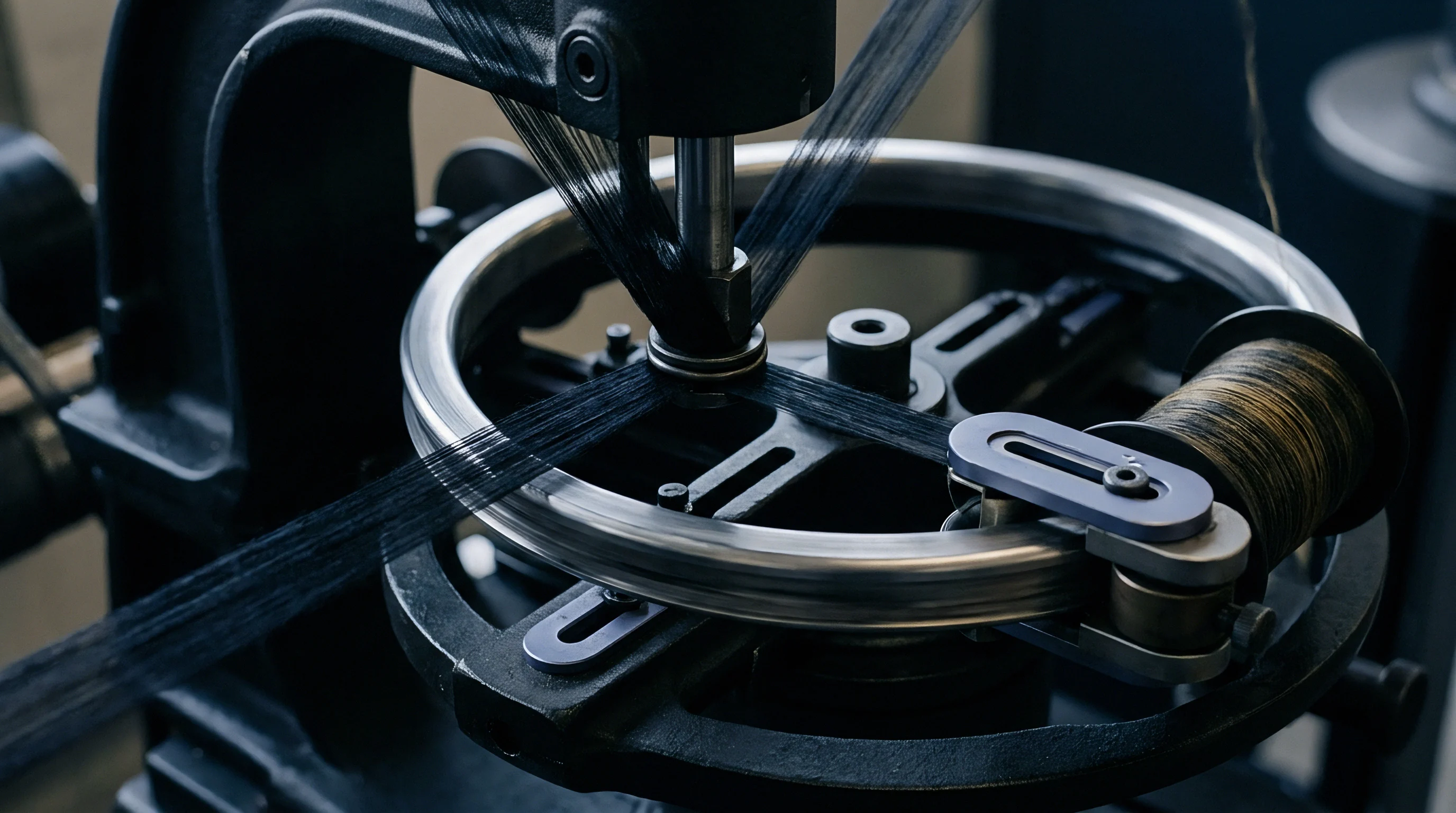
Rotational torque applied during spinning converts parallel fiber arrangements into angled helical structures.
At a twist multiplier above four point two, cotton yarn packing density reaches zero point seven eight, restricting free water migration into the core during a three second pad immersion.
The packing fraction defines the proportion of yarn volume occupied by fiber substance relative to total space. Un-twisted fiber webs exhibit packing fractions near zero point two zero, whereas highly twisted singles reach values exceeding zero point seven five. As the packing fraction increases, the mean radius of inter-fiber capillaries contracts according to the Washburn equation for fluid flow through porous media.
While smaller capillary radii generate higher theoretical capillary pressure, they simultaneously increase hydraulic resistance to mass fluid transport. In continuous wet processing, where immersion times are measured in fractions of a second, hydraulic resistance dominates over capillary suction, limiting bulk liquor entry into high-twist cores.
| Yarn Type | English Cotton Count (Ne) | Twist Multiplier (alpha e) | Packing Density (phi) | Specific Pore Volume (cm3/g) |
|---|---|---|---|---|
| Soft Hosiery Spun | 30/1 | 3.10 | 0.58 | 0.483 |
| Standard Warp Spun | 30/1 | 3.80 | 0.67 | 0.325 |
| Hard Voile Spun | 30/1 | 4.50 | 0.74 | 0.231 |
| Crepe High Twist | 30/1 | 5.80 | 0.81 | 0.154 |
The physical rearrangement of fibers alters the distribution of internal pore sizes. High mechanical twist converts large inter-fiber voids into microscopic channels that require elevated pressure or prolonged immersion to fill completely. When a fabric woven from high-twist yarns enters a pad trough, surface air trapped within these narrow capillary networks cannot escape rapidly.
The entrapped air forms pneumatic blockages that prevent dye molecules from contacting internal fiber surfaces before the substrate exits the liquor nip.
- Inter-Fiber Radial Compression creates high physical resistance against liquid displacement, restricting bath liquor to the outer perimeter of the strand during short dwell cycles.
- Capillary Channel Contraction narrows the average pore diameter, raising the required hydraulic threshold for complete aqueous penetration during continuous padding.
- Air Entrapment Micro-Pockets lock static air within the central axis of high-twist singles, forming non-wetting cores that resist aqueous dye diffusion.
- Cross-Sectional Fiber Flattening increases contact points between adjacent fibers, reducing the total available surface area accessible to dye molecules in short bath exposures.
Understanding these physical boundaries allows dyehouse technical managers to anticipate pad bath behavior before greige goods enter the range. Yarns with elevated twist factors demand specific adjustments in pad bath chemistry or mechanical force to achieve full cross-sectional saturation. Denser yarn structures naturally resist rapid liquid intake regardless of dye bath temperature.

Dwell
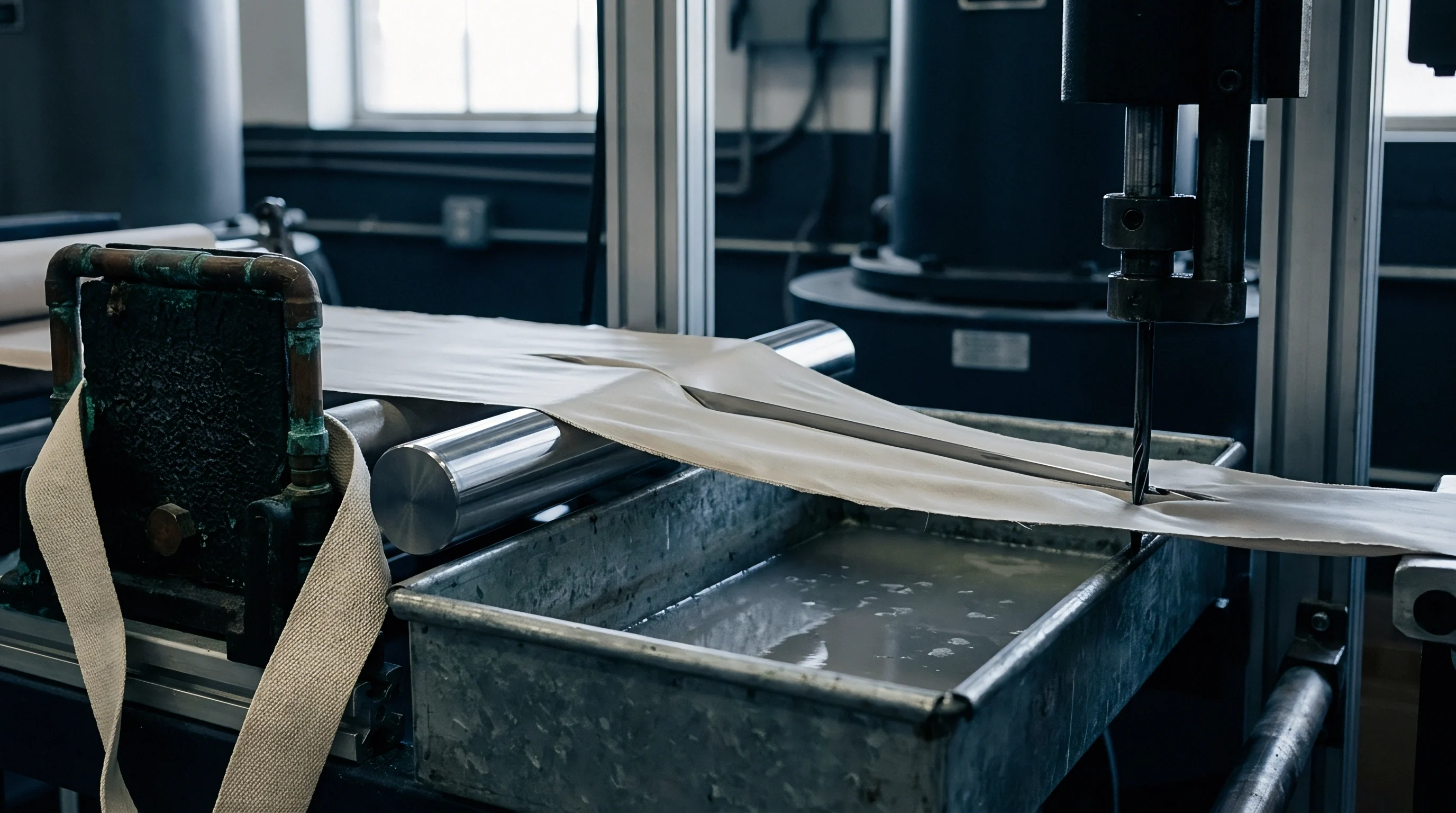
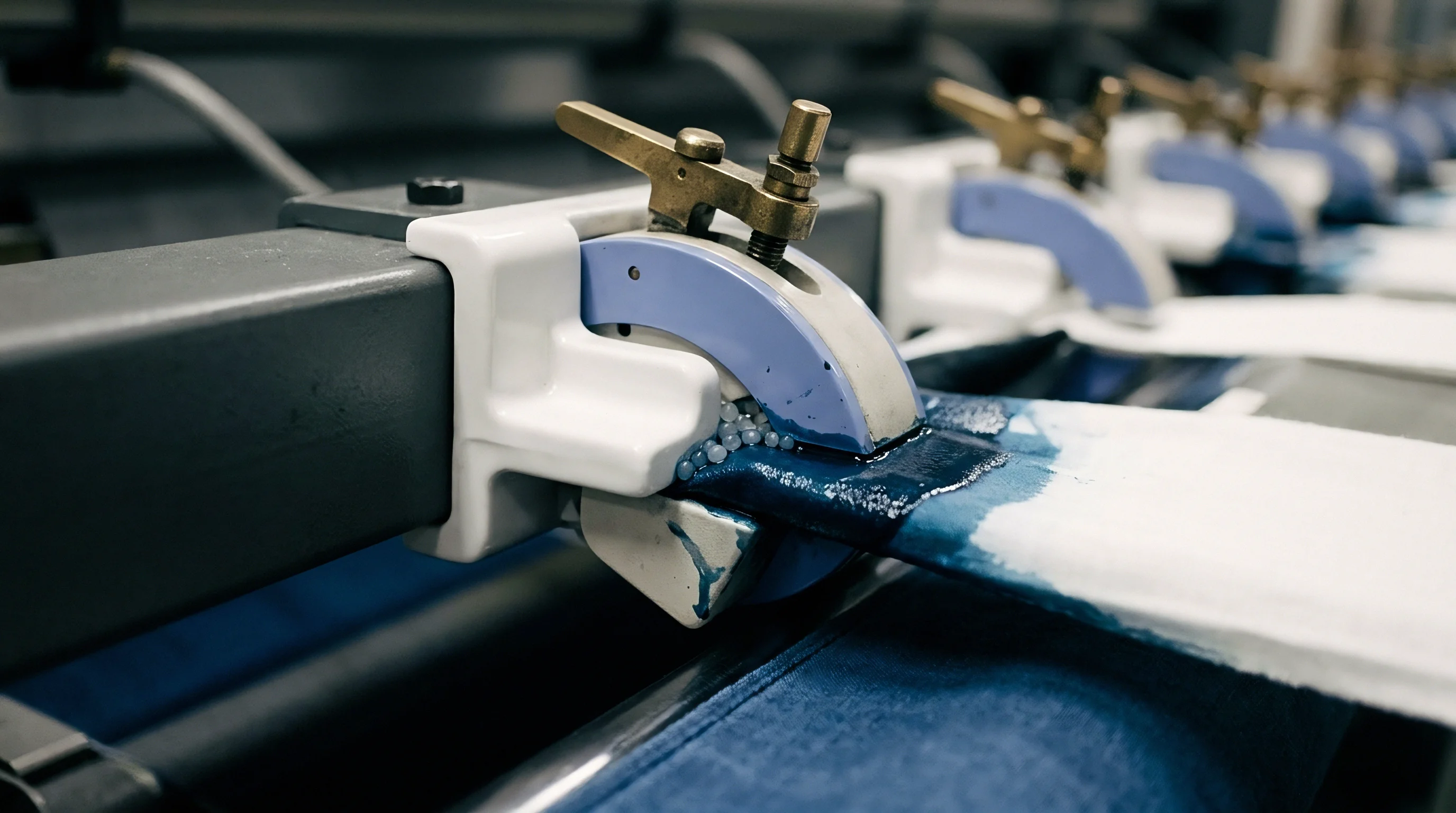
In continuous dyeing ranges, fabric passes through an aqueous dye bath inside a pad trough before entering squeeze rolls. The period during which the moving substrate remains fully submerged in the dye liquor represents the primary window for liquid intake. Continuous ranges running at high production speeds reduce this exposure time to less than one second.
When processing low-twist greige, rapid capillary absorption allows full penetration within this brief immersion. High-twist yarns present a physical barrier that prevents complete liquor absorption during standard continuous immersion times.
How Does Twist Multiplier Alter Pad Mangle Liquor Uptake?
Dyehouse padding ranges rely on a combination of capillary suction and mechanical nip pressure to deposit dye solution evenly throughout the fabric web.
To illustrate the interaction between yarn structure and application variables, consider a continuous pad dyeing line processing two 100 percent cotton plain weave fabrics of identical weight (150 grams per square metre) and construction sett (80 ends per inch by 70 picks per inch). Fabric A uses warp and weft yarns with a Twist Multiplier of 3.4, while Fabric B uses yarns with a Twist Multiplier of 4.8. Both fabrics pass through a 1.2-litre capacity pad trough at a constant range speed of 35 metres per minute, yielding an immersion dwell time of 0.8 seconds, followed by a squeeze mangle pressure of 25 Newtons per millimetre.
| Substrate Code | Yarn Twist Multiplier | Range Speed (m/min) | Pad Immersion Dwell (s) | Wet Pick-Up (%) | Core Penetration (%) |
|---|---|---|---|---|---|
| Fabric A (Standard) | 3.4 | 35 | 0.80 | 72.5 | 94.0 |
| Fabric A (Accelerated) | 3.4 | 55 | 0.51 | 68.0 | 88.0 |
| Fabric B (High Twist) | 4.8 | 35 | 0.80 | 54.2 | 61.0 |
| Fabric B (Accelerated) | 4.8 | 55 | 0.51 | 46.8 | 42.0 |
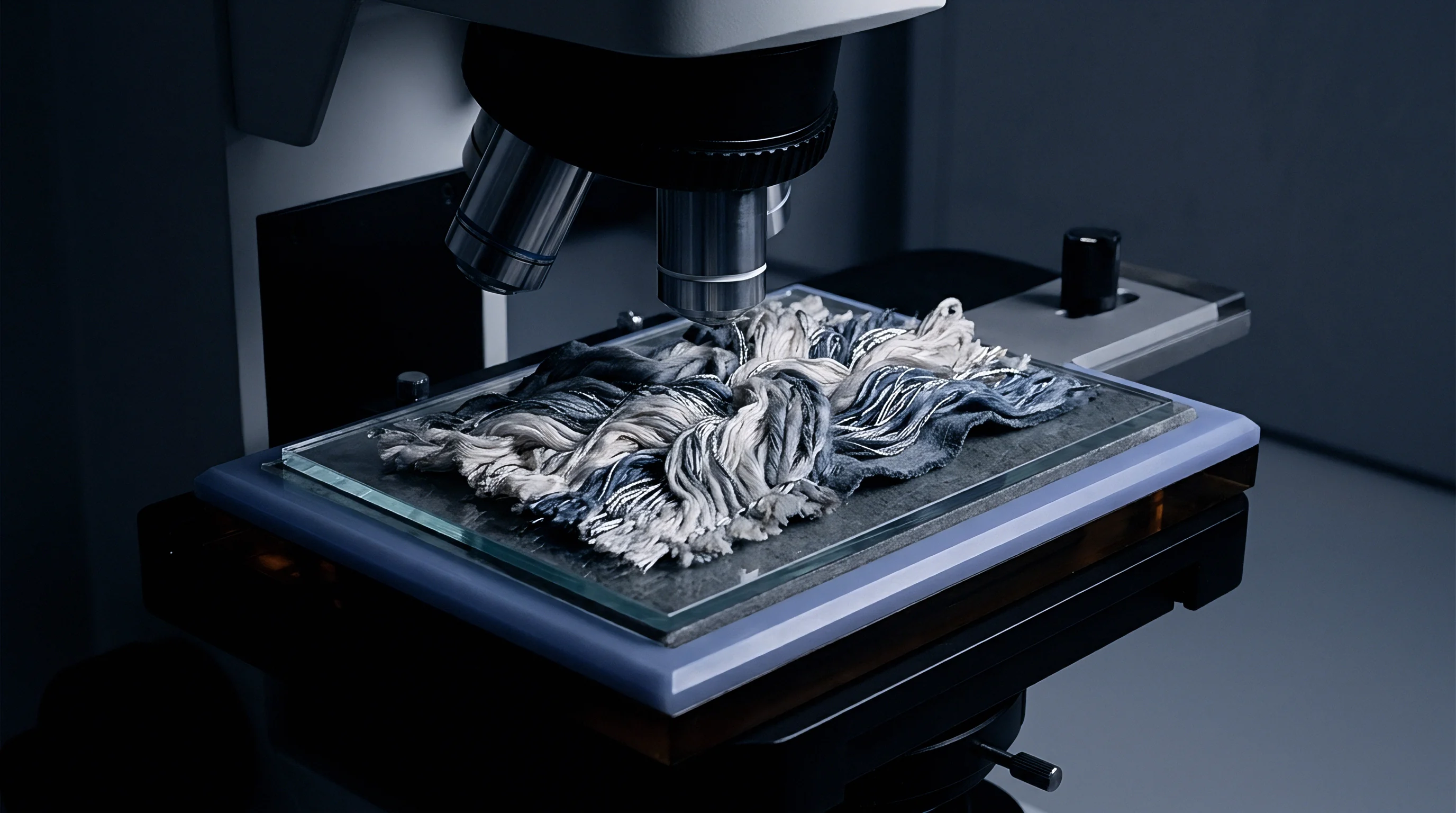
Fabric A achieves a wet pick-up of 72.5 percent, with optical microscopic cross-sections showing dye penetration across 94 percent of the internal yarn area. Fabric B, constrained by dense fiber packing from the 4.8 twist multiplier, achieves a wet pick-up of only 54.2 percent under identical padding conditions. Penetration into the core of Fabric B reaches only 61 percent of the cross-sectional area, leaving an un-dyed white center within each strand.
Failing to compensate for a half-point increase in twist multiplier by reducing line speed forces dye liquor onto the surface and leaves the core un-dyed.
Increasing pad mangle pressure on Fabric B from 25 to 40 Newtons per millimetre improves wet pick-up by only 2.3 percent, while driving excess dye solution off the fabric edges. Mechanical squeezing cannot replace the time required for liquid capillary wetting in high-twist yarns. When range speeds are increased to 55 metres per minute, reducing immersion dwell to 0.51 seconds, core penetration in Fabric B falls to 42 percent, causing severe frosting defects when the fabric undergoes subsequent abrasion testing.
Improper matching of continuous pad dwell time to yarn twist specifications results in uneven shade development, poor wash fastness, and surface shade migration during infrared intermediate drying. When a garment made from incompletely penetrated yarn experiences surface wear, outer dyed fibers abrade away to expose white inner cores, resulting in visible color loss along seams and high-friction contact zones long before the fiber structure fails.
Disparity
Non-uniform distribution of mechanical twist along a yarn strand or between different greige lots introduces structural variations that manifest during continuous wet processing. Continuous dye ranges operate with fixed liquor exposure times and uniform squeeze pressures across the fabric width. When high-twist and low-twist yarns co-exist within the same fabric structure, they respond differently to pad application.
Low-twist components absorb dye liquor rapidly to reach equilibrium, while high-twist components absorb less liquor and exhibit slower dye diffusion rate, leading to visual shade defects.
Ring Dyeing and Continuous Tailing Defects
Concentrated dye absorption on outer yarn perimeters combined with pale or un-dyed central cores defines the condition known as ring dyeing. In continuous processing, ring dyeing occurs when dye liquor cannot penetrate dense intra-yarn capillaries during pad trough immersion, and drying conditions cause dissolved dye molecules to migrate back toward the surface. Highly twisted yarns amplify this defect because tight outer fiber wrapping creates a physical shield that holds dye chemistry near the perimeter.
Continuous dye ranges accentuate structural yarn differences that remain unnoticed in exhaust dyeing equipment.
Tailing represents another severe defect in continuous dyeing, characterized by a progressive shift in shade depth from the beginning to the end of a production run. When processing fabrics containing high-twist yarns, differential absorption alters dye trough bath dynamics. If the high-twist substrate preferentially absorbs water while filtering out or rejecting larger dye molecules or aggregates, the concentration of dye in the pad trough increases over time, resulting in darker shades at the end of the roll run.
Conversely, if high-twist yarns absorb liquor at a lower rate than the overall pad delivery rate, dye liquor depletes rapidly, causing shade lightening down the lot.

Differential Absorption in Mixed Twist Constructions
Complex fabric designs often pair yarns of different twist multipliers to achieve specific visual, tactile, or structural performance. Crepe fabrics, for example, alternate high-twist S-twist and Z-twist yarns in warp or weft directions to generate textured surfaces upon wet relaxation. Because dye diffusion requires thermal kinetic energy, when these mixed-twist constructions pass through a continuous dye pad, low-twist yarns absorb dye solution at a higher rate per unit mass than adjacent high-twist yarns.
The visual result is a striping or banding effect along the fabric length, where individual yarns present distinct color depths despite being exposed to identical dye bath concentrations. Dyehouse auditors inspecting finished goods under standard daylight illuminants observe alternating bands of light and dark threads, frequently mistaken for chemical bath instability or faulty pad mangle pressure profiles.
- Greige Twist Consistency Audits must verify twist-per-inch tolerances across yarn packages before warping or weaving to avoid periodic shade banding.
- Wetting Agent Fortification increases pad bath penetration into dense, high-twist zones, equalizing liquor uptake across varied yarn types.
- Trough Turnover Optimization aligns pad liquor volume with substrate speed, preventing dye bath tailing caused by selective uptake kinetics.
- Infrared Pre-Drying Control locks dye molecules in place immediately after padding, preventing shade migration on high-twist fiber surfaces.
Shade banding and core-white defects are frequently attributed to dyehouse liquor instability or uneven stenter heating profiles, but microscopic yarn cross-sections often document un-dyed central cores aligned exclusively with high-twist yarn picks, proving structural greige variation rather than wet-processing failure.
Bench
Verifying the impact of mechanical yarn twist on continuous dye absorption demands precise laboratory testing methods that measure physical twist metrics alongside liquid absorption kinetics. Standardizing these analytical procedures enables buyers and converters to establish clear acceptance criteria for greige lots intended for continuous pad processing. Testing must evaluate both the dry yarn parameters and the wet capillary behavior under conditions that simulate continuous range dynamics.

Quantitative Measurement of Yarn Twist and Capillary Uptake
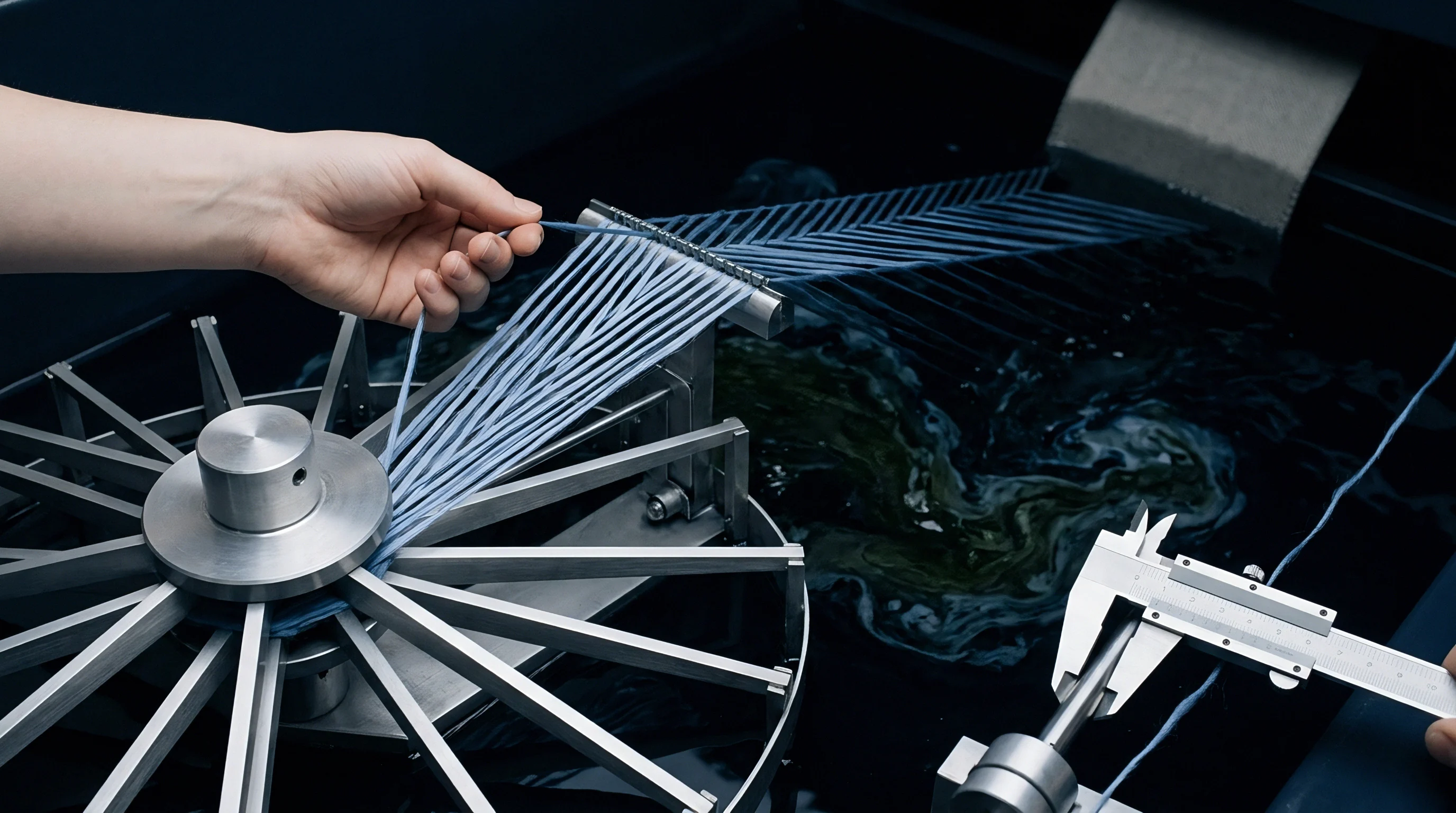
Direct measurement of yarn twist relies on untwist-untwist or untwist-retwist test methods executed under controlled ambient conditions. ISO 17202 specifies the determination of twist in single spun yarns using the direct counting method, yielding accurate twist-per-inch or twist-per-metre figures. Combining these measurements with yarn linear density yields the exact Twist Multiplier, establishing the baseline structural density of incoming greige lots.
Capillary uptake is evaluated using modified wicking and drop-absorption tests. AATCC Test Method 79 measures the absorbency of textiles by recording the time required for a liquid droplet to be fully absorbed into the substrate surface. For high-twist greige fabrics, standard droplet testing often yields prolonged times that fail to capture pad trough dynamics.
Laboratory technicians employ forced-pressure immersion tests or demand-absorbency testing equipment to simulate pad mangle pressures and short dwell cycles.
A lab dip produced on a low-twist knit structure cannot predict continuous shade depth on a high-twist woven greige.
Standard Methods for Liquid Absorption Profiling
Standardized laboratory testing ensures incoming greige conforms to continuous dyeing requirements before bulk lots enter production. The following numbered procedure outlines the required testing protocol for qualifying high-twist greige lots for continuous wet processing.
- Sample three representative swatches from the head-ends of separate greige rolls per woven lot in accordance with ISO 139 sampling guidelines.
- Measure yarn twist on ten single-yarn strands per sample using direct untwist methods according to ISO 17202, calculating mean Twist Multiplier and coefficient of variation.
- Condition samples at 20 degrees Celsius and 65 percent relative humidity for 24 hours prior to absorbency testing under ISO 139 standard atmosphere limits.
- Execute liquid absorbency profiling using AATCC Test Method 79 with standard pad dye liquor, recording drop absorption time to the nearest tenth of a second across five distinct fabric locations.
In accordance with standard commercial sales agreements for greige woven fabrics, if the measured Twist Multiplier exceeds the purchase specification target by more than four percent, or if AATCC 79 absorption times exceed three point zero seconds, the buyer retains the right to reject the lot or apply a price adjustment to cover required penetrant chemistry additions during wet processing.
Rate
Processing high-twist greige fabrics on continuous dye ranges forces a commercial trade-off between machine throughput speeds and chemical additive costs. Standard range speeds designed for low-twist, open-structure fabrics must be reduced when running dense, high-twist goods to allow sufficient dwell time for liquor penetration. Slowing a continuous dye range increases direct labor and utility costs per linear metre, altering the landed cost of finished fabric.
Commercial Speed Limits and Pad Trough Economics
Continuous pad-dry-cure and pad-steam ranges carry high fixed hourly operating costs driven by steam consumption, electrical power for stenter fans, and multi-operator staffing. When a dyehouse processes a 100 percent cotton high-twist voile fabric requiring a line speed reduction from 50 metres per minute to 28 metres per minute to ensure complete core dyeing, the output per shift drops by 44 percent, dramatically inflating unit manufacturing costs.
| Processing Strategy | Range Speed (m/min) | Surfactant Additive Cost ($/m) | Direct Range Operating Cost ($/m) | Total Added Processing Cost ($/m) |
|---|---|---|---|---|
| Baseline (Standard Line Speed) | 50.0 | 0.000 | 0.120 | 0.120 |
| Thermal Dwell Adjustment (Slowing Range) | 28.0 | 0.000 | 0.214 | 0.214 |
| Chemical Penetrant Route (Fortified Bath) | 48.0 | 0.045 | 0.125 | 0.170 |
| Combined Chemical and Speed Optimization | 42.0 | 0.025 | 0.143 | 0.168 |
Alternative strategies avoid range speed reductions by adding specialized wetting agents and de-aerating penetrants directly to the pad dye bath. Non-ionic surfactants lower liquor surface tension, enabling liquid to enter narrow high-twist capillary channels rapidly. However, high concentrations of penetrants increase chemical bath cost per metre, risk excessive foam generation in high-speed troughs, and can impair subsequent water-repellent finishing steps.

Landed Cost Effects of Penetrant Chemistries
Formulating pad liquor with fast-acting de-aerating agents adds approximately $0.045 per linear metre in chemical costs. In contrast, slowing the continuous range to achieve equivalent physical core penetration adds $0.094 per linear metre in direct processing overhead. The chemical approach provides a clear financial advantage, provided the added surfactants do not interfere with dye fixation, yield, or fastness properties.
Sourcing practices must integrate yarn twist specifications into early purchase orders. Sourcing high-twist woven constructions without specifying low-foaming penetrant requirements or adjusting range speed baselines creates unbudgeted manufacturing variances, split-shade rejections, and delayed deliveries across continuous finishing programs.