Potentiometric Glass Electrode Calibration in High Ionic Strength Industrial Dye Liquors
High ionic strength dye baths distort glass electrode pH readings through activity shifts and liquid junction potential offsets that demand matrix-matched buffer calibration.
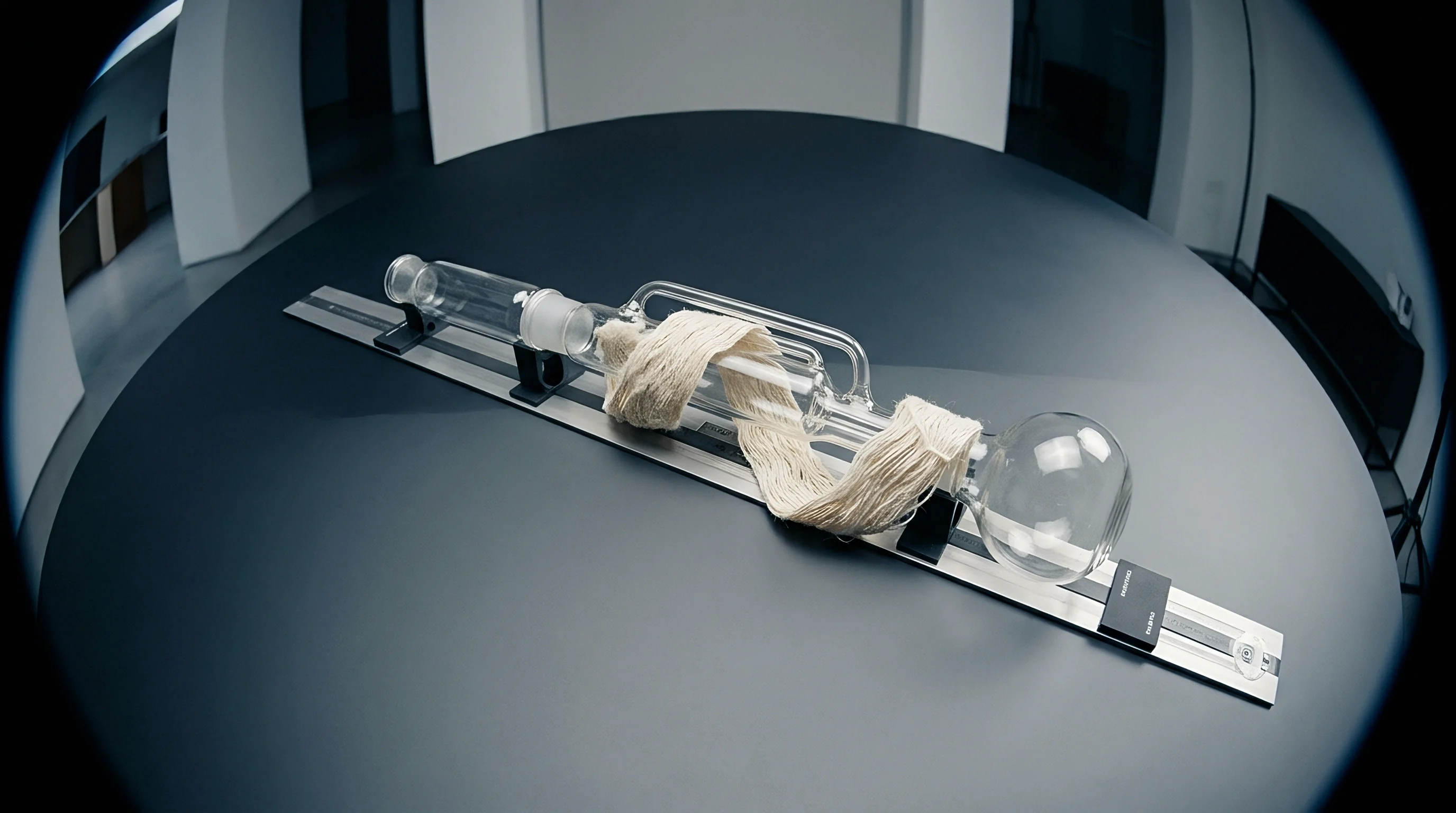

Sorption
Immersing combination glass electrodes into industrial dye baths exposes the primary sensing membrane to complex organic chemistries. Silicate glass membranes depend on a hydrated outer gel layer, typically ten to one hundred nanometers thick, where hydrogen ions freely exchange with the surrounding aqueous solution. Anionic dyes foul silicate glass surfaces.
In high ionic strength baths containing elevated concentrations of reactive, direct, or acid dyestuffs, sulfonated aromatic rings and hydrophobic organic structures adsorb directly onto this silica network. This physical adsorption fills the interstitial glass pores, forming an organic film that restricts hydronium ion transport to the underlying active sites.
Process auxiliaries compound these membrane surface interactions. Quaternary ammonium levelling agents, aliphatic alcohol ethoxylates, and anti-foaming siloxanes deposit hydrophobic barriers across the glass bulb. As these compounds accumulate, electrical impedance across the glass membrane escalates from nominal baseline values of two hundred megaohms to levels exceeding eight hundred megaohms.
High impedance slows the potentiometric response time, causing millivolt readings to lag behind actual bath chemical shifts during alkali dosing cycles.
High temperatures accelerate silicate glass corrosion. At dye bath temperatures above sixty degrees Celsius, alkaline conditions promote chemical attack on the siloxane backbone of the glass matrix. Sodium ions in high concentration displace hydronium ions within the altered gel layer, creating a modified surface structure with diminished selectivity for hydrogen ions.
Dyeing processes operating above ninety degrees Celsius accelerate organic fouling on silicate glass membranes while destabilizing reference electrolyte concentration gradients.
The table below summarizes physical electrode performance parameters observed in heavy reactive dye liquors compared to standardized aqueous conditions.
| Bath Condition | Glass Impedance (MΩ) | Nernstian Slope Efficiency (%) | E_j Offset (mV) | Measurement Error (pH units) |
|---|---|---|---|---|
| Fresh Analytical Buffer | 180 | 99.2 | 0.2 | 0.01 |
| Reactive Dyebath (0 Hours) | 210 | 98.1 | 6.4 | 0.11 |
| Reactive Dyebath (24 Hours) | 450 | 94.3 | 12.8 | 0.22 |
| Reactive Dyebath (72 Hours) | 890 | 88.6 | 21.5 | 0.37 |
Physical cleanings using organic solvents or acidic thiourea solutions temporarily restore response speed by stripping sorbed organic layers. Repeated chemical cleaning strips the hydrated gel layer, forcing the electrode into a prolonged rehydration phase before stable Nernstian behavior returns.
- Anionic dye accumulation creates a negatively charged boundary film that selectively repels hydrogen ions and slows ion exchange kinetics across the outer gel membrane.
- Precipitated disperse agglomerates plug the pore network of the glass layer during thermal cooling cycles, trapping stagnant liquor against the pH-responsive silicate network.
- Surfactant film deposition coats the outer silica lattice with a hydrophobic barrier, elevating electrical impedance across the glass barrier from two hundred megaohms to above eight hundred megaohms.
- Silicate lattice ion exchange permits high sodium concentrations to displace hydronium ions within the hydrated outer region at liquor temperatures above sixty degrees Celsius.
Sensor manufacturers frequently state that high-performance double-junction glass electrodes maintain operational accuracy across all industrial dye applications, attributing persistent measurement drift entirely to improper routine cleaning by mill operators.
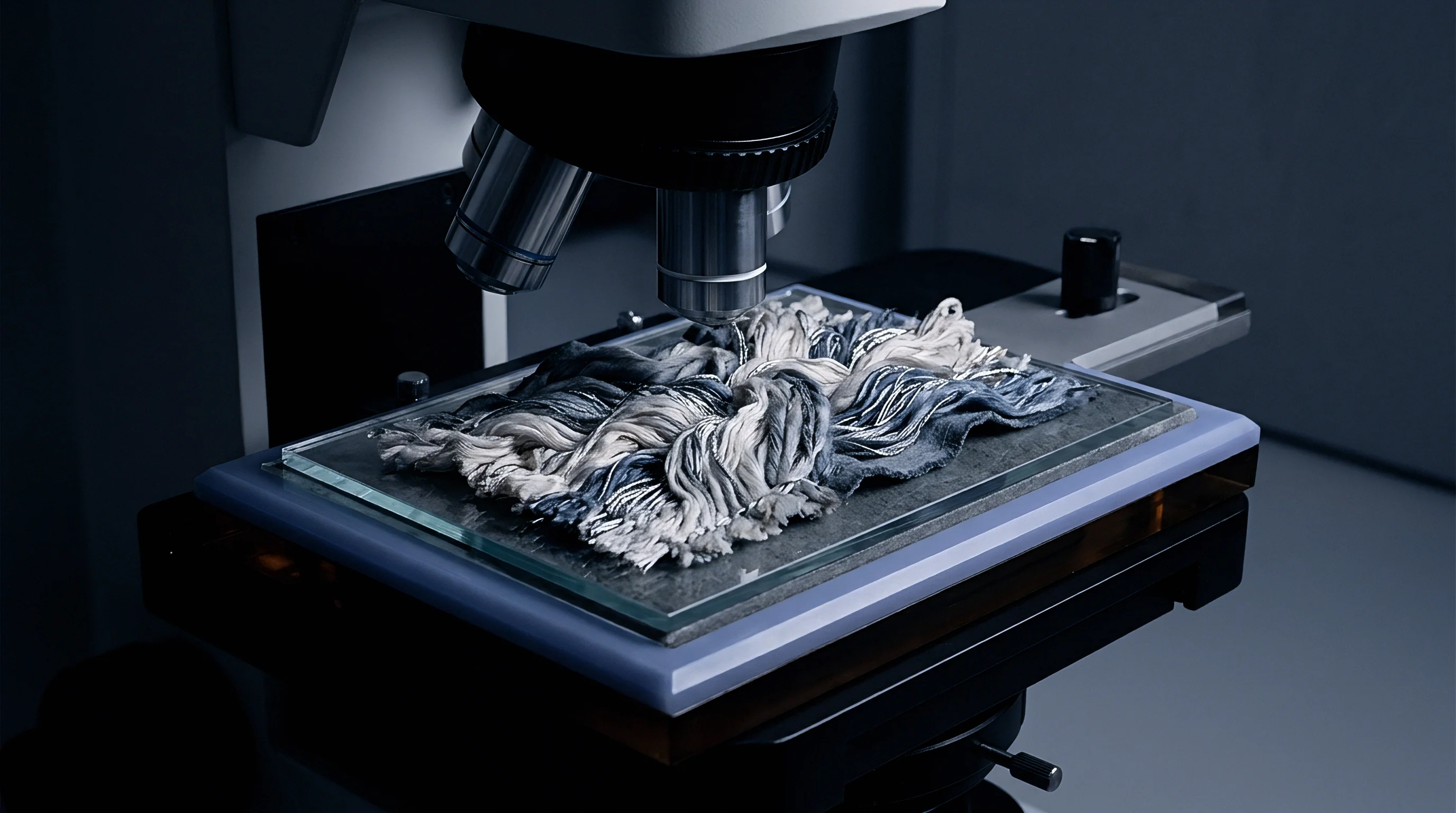

Activity
Thermodynamic hydrogen ion activity defines theoretical pH, whereas potentiometric glass electrodes respond strictly to the activity of hydronium ions rather than their stoichiometric concentration. In dilute analytical solutions with ionic strength below zero point zero five moles per kilogram, the hydrogen ion activity coefficient approaches unity, rendering the difference between concentration and activity negligible. Industrial dye liquors run under drastically different thermodynamic conditions.
Reactive dyeing of cellulosic fibers uses background salt additions of sodium sulfate or sodium chloride ranging from fifty to one hundred grams per liter, elevating bath ionic strength to between one point five and two point five moles per kilogram.
How Does High Ionic Strength Distort Nernstian Glass Membrane Potential?
High salinity depresses hydronium activity coefficients. Under heavy salt loading, the extended Debye-Hückel model fails to accurately predict activity coefficients due to short-range ion-ion interactions and hydration sphere competition. Pitzer ion-interaction equations provide a precise thermodynamic framework for these concentrated systems.
As background electrolyte concentration increases, water molecules become bound within the hydration shells of dissolved sodium and sulfate ions, reducing the available free solvent fraction and suppressing the hydrogen ion activity coefficient from a baseline value of zero point eight three down to zero point six two.
Standard IUPAC calibration buffers operate at low ionic strength, typically around zero point zero five moles per kilogram. When an electrode calibrated in low ionic strength buffers enters a high ionic strength dye bath, the instrument registers an artificial activity drop as a higher pH value, even if the actual hydronium ion concentration remains constant.
Consider a reactive dye bath prepared with eighty grams per liter of anhydrous sodium sulfate and two grams per liter of reactive dye at sixty degrees Celsius. The background salt concentration yields an ionic strength of one point six nine moles per kilogram. Standard IUPAC calibration buffers operate at an ionic strength of approximately zero point zero five moles per kilogram, where the hydrogen ion activity coefficient equals zero point eight three.
Applying Pitzer ion-interaction parameters to the high-salinity dye bath shows the hydrogen ion activity coefficient drops to zero point six two. The resulting activity shift creates a theoretical offset of zero point two two pH units between the thermodynamic activity and the stoichiometric hydronium concentration before accounting for liquid junction potential shifts.
An electrolyte matrix containing eighty grams per liter of sodium sulfate suppresses hydronium ion activity coefficients to zero point six two at sixty degrees Celsius.
Sodium exchange induces severe alkali error. Alkaline reactive dye baths operating above pH eleven introduce significant concentrations of sodium ions that compete directly with hydrogen ions for exchange sites on the outer silicate gel glass lattice.
| Salt Compound | Concentration (g/L) | Ionic Strength (mol/kg) | Activity Coefficient (γ_H+) | Theoretical E_j (mV) | Net pH Offset |
|---|---|---|---|---|---|
| Sodium Sulfate | 50 | 1.06 | 0.68 | +8.2 | +0.21 |
| Sodium Sulfate | 80 | 1.69 | 0.62 | +12.4 | +0.30 |
| Sodium Chloride | 60 | 1.03 | 0.74 | +5.1 | +0.14 |
| Sodium Chloride | 100 | 1.71 | 0.71 | +9.3 | +0.22 |
| Calculated using Pitzer parameters at sixty degrees Celsius relative to standard IUPAC zero point zero five molar phthalate and phosphate buffers. | |||||
Alkaline error causes the electrode to register a lower pH reading than the true solution value, leading automated dosing systems to over-dispense alkali fixatives. High temperatures accelerate glass membrane corrosion. Systemic pH errors of zero point three units in alkali fixative stages cause up to fifteen percent unreacted dye discharge, driving re-dye costs and effluent neutralization surcharges.
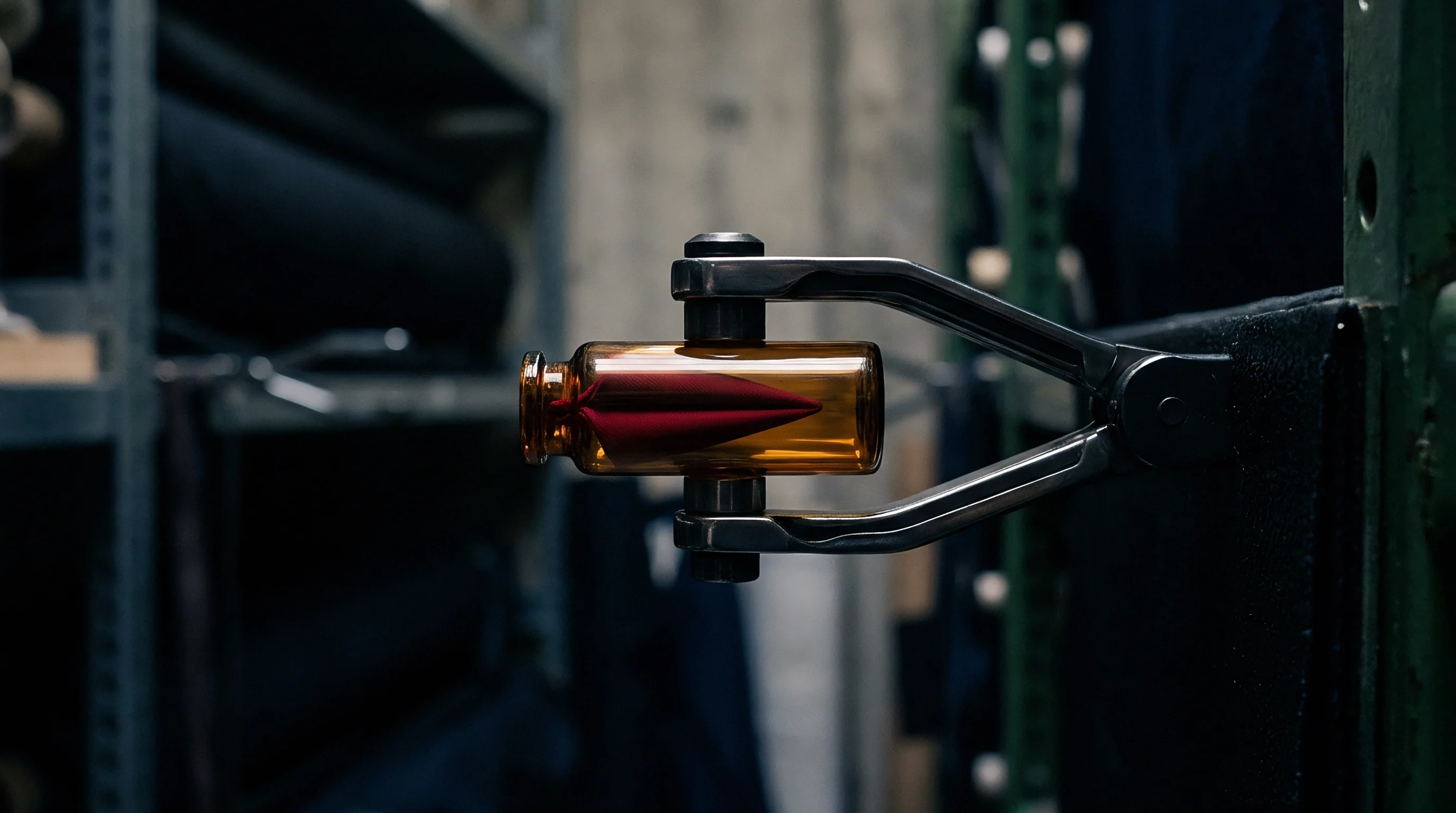
Bridge
The liquid junction potential formed at the interface between the internal reference electrode electrolyte and the external dye liquor represents a major source of measurement error in high ionic strength processing. Standard combination electrodes employ a reference system based on three molar potassium chloride solution contacting the sample through a porous ceramic pin, glass sleeve, or capillary diaphragm. Potassium chloride serves as an ideal reference electrolyte in dilute solutions because potassium and chloride ions possess nearly identical ionic mobilities, minimizing diffusion-induced electric potential differences across the junction boundary.
Immersion into a dense dye liquor disrupts this mobilities symmetry. When the reference electrolyte contacts a sample containing one point five molar sodium ions and zero point seven five molar sulfate ions, distinct concentration gradients form across the porous diaphragm structure. Chloride ions diffuse out of the reference junction into the sample faster than bulky sulfate ions diffuse inward, while potassium ions migrate at rates different from background sodium ions.
This differential ion migration builds a spatial charge distribution across the liquid junction, generating a residual liquid junction potential that adds directly to the glass membrane voltage.
Liquid junction potentials distort calibration lines. In high ionic strength reactive dye baths, residual liquid junction potentials reach magnitudes between positive eight and positive twenty millivolts. Because the Nernst relation equates roughly fifty-nine millivolts to one pH unit at room temperature, a junction potential shift of eighteen millivolts introduces an uncorrected measurement error of zero point three pH units.
Ceramic frits clog with dye aggregates. Organic dyes, insoluble dyestuff complexes, and precipitated sizing agents penetrate the narrow pore paths of ceramic diaphragms, altering junction geometry and causing erratic, high-drift potential drops. Ground-glass sleeve junctions and open liquid junctions with polymer gel matrices provide continuous, high-flow liquid interfaces that mitigate crystalline precipitation and localized concentration polarization.
ISO 105 A08 compliance requires shade reproducibility within half a step on the grey scale, which collapses when process liquid junction potentials fluctuate by more than four millivolts.
Sleeve junctions prevent internal reference poisoning. Maintaining a positive hydrostatic head inside the reference fill chamber drives outward electrolyte flow, sweeping dye molecules away from the internal silver-silver chloride element.
- Submerge the combination electrode in a ten percent thiourea solution in zero point one molar hydrochloric acid for twenty minutes to strip organic dye precipitates from the porous junction.
- Flush the outer reference chamber containing electrolyte liquid and refill with fresh three molar potassium chloride solution saturated with silver chloride.
- Inspect the liquid junction under ten times magnification to verify the ceramic pin exhibits no discoloration or crystalline blockage.
- Immerse the sensor in a salt-matched electrolyte rinse solution containing fifty grams per liter sodium sulfate for five minutes before standardization.
- Execute a two-point standardization sequence using secondary buffers prepared to match the nominal salt strength of the production bath.
Replacing fixed ceramic diaphragms with ground-glass sleeve junctions maintains steady electrolyte flow into heavy dyebaths and prevents irreversible reference junction poisoning.


Buffers
Standard analytical calibration relies on primary operational reference buffers defined by IUPAC and NIST, such as zero point zero five molar potassium hydrogen phthalate and mixed phosphate solutions. These primary standards feature ionic strengths between zero point zero one and zero point one moles per kilogram. Direct application of these low ionic strength buffers to calibrate pH systems destined for high-salinity industrial dye processes creates a fundamental thermodynamic mismatch.
Standard buffers lack process salt backgrounds.
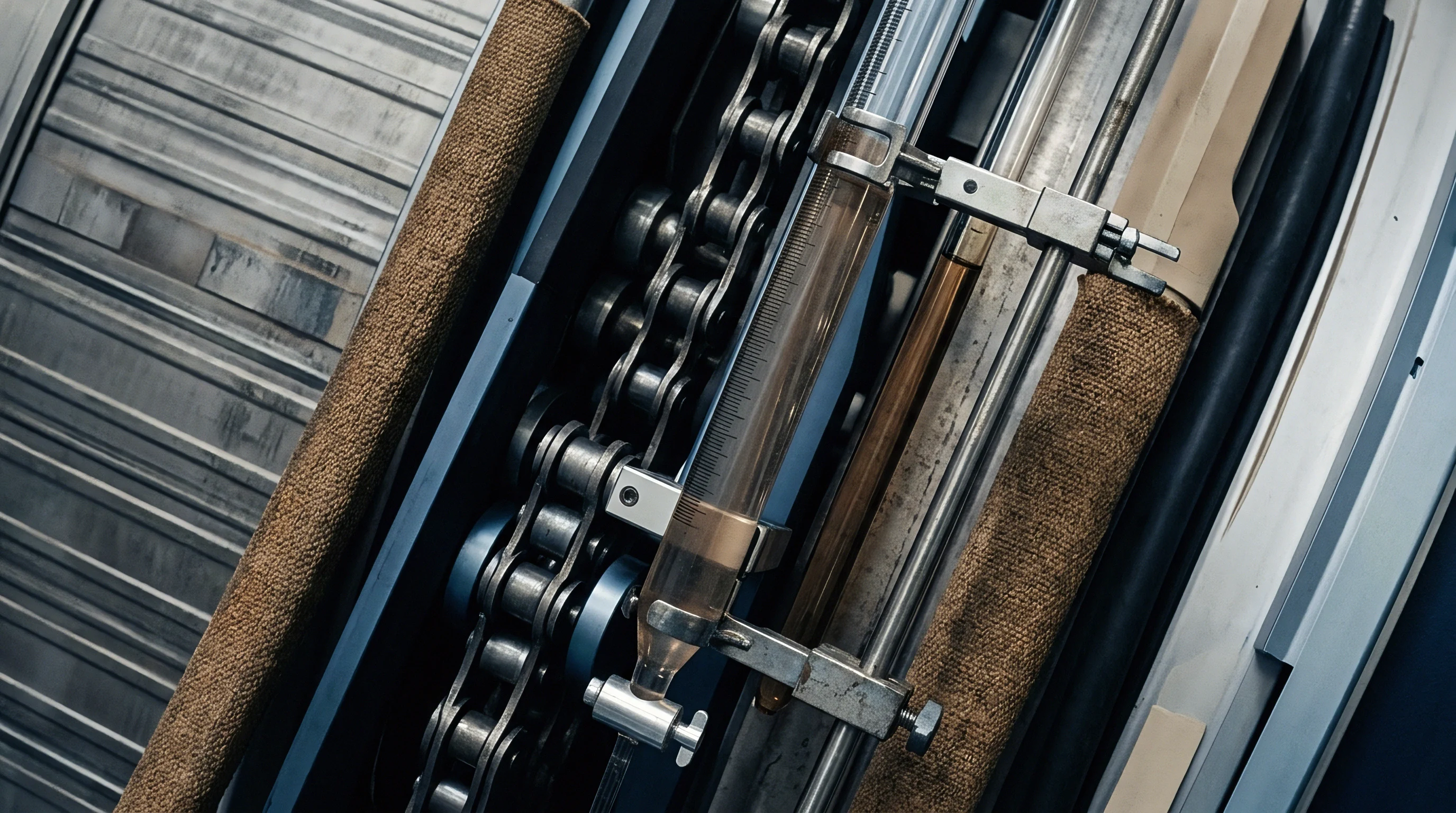
Secondary Standard Synthesis for Matrix Matching
Matrix-matched secondary buffers mitigate liquid junction and activity coefficient discrepancies. Adding background salts to secondary buffer formulations brings the ionic strength and major ion composition into close alignment with the target dye liquor. Preparing a secondary potassium hydrogen phthalate buffer supplemented with eighty grams per liter of sodium sulfate aligns both the liquid junction potential and the hydrogen ion activity coefficient with conditions inside a reactive cotton dye vat.
Matrix matching eliminates liquid junction errors.
Standardization procedures using salt-matched buffers alter the interpretation of the resulting pH reading. The value obtained from a matrix-matched system reflects operational pH rather than pure thermodynamic pH. Operational pH directly tracks chemical reactivity and dye-fiber binding kinetics in specific industrial process solutions, serving as a reliable control parameter for automated dosing equipment.
Standard commercial buffers calibrate glass electrodes for dilute aqueous media but introduce systematic offset errors when applied directly to concentrated wet processing baths.
Executing multi-point calibrations across the target processing temperature range establishes actual electrode slope efficiency. While clean standard buffers yield Nernstian slopes between ninety-eight and one hundred percent, matrix-matched calibrations in high ionic strength media typically define realistic operational slopes between ninety-two and ninety-six percent. Transmitting an unadjusted theoretical slope to the process transmitter introduces severe control errors during alkali additions.
- Ionic strength matching determines whether secondary calibration solutions must incorporate background salts identical to process liquor concentrations.
- Temperature compensation slope evaluates electrode millivolt response against theoretical Nernst values across the operating bath temperature envelope.
- Alkali error verification checks sensor response deviation in sodium hydroxide solutions exceeding pH eleven point five against high-lithium glass formulations.
- Diaphragm leak rate assessment measures electrolyte outflow volume per hour to prevent dyebath contamination during long immersion cycles.
Incorporating ASTM D1293 Method B into purchase contracts obligates wet processing mills to calibrate process pH systems with matrix-matched ionic background solutions rather than standard dilute analytical buffers.

Tolerance
Precision pH control dictates the yield and levelness of industrial dyeing operations. Reactive dyes depend on controlled alkali dosing to initiate covalent bonding with hydroxyl groups on cellulosic fibers. Dosing sodium carbonate or sodium hydroxide drives the bath pH from neutral up to an optimal window between pH eleven point two and eleven point six.
Dosing below pH ten point eight drops the dye fixation rate by up to forty percent, leaving unfixed dye in solution and causing poor color fastness. Dosing above pH twelve point zero accelerates dye hydrolysis, reacting the dyestuff with water molecules and rendering it permanently incapable of bonding with the fiber.
Reactive dyes demand precise bath alkalinity. Inaccurate pH readings caused by uncalibrated activity shifts or liquid junction potentials result in improper alkali additions. Unfixed dye inflates process effluent loads.
Over-dosing alkali to compensate for false low pH readings increases chemical consumption, elevates wastewater treatment costs, and risks failing brand compliance limits for extractable pH on finished fabrics under OEKO-TEX Standard 100 Class I requirements.
Shade reproducibility depends on true pH. Off-spec dye baths drive batch rework. Stripping and re-dyeing off-shade cloth increases energy, water, and auxiliary chemical consumption while delaying shipment schedules.
Whether online optical spectroscopic pH monitoring can eventually replace potentiometric glass sensors in high-salinity industrial dyebaths without suffering from severe dye absorbance interferences remains an open engineering question.