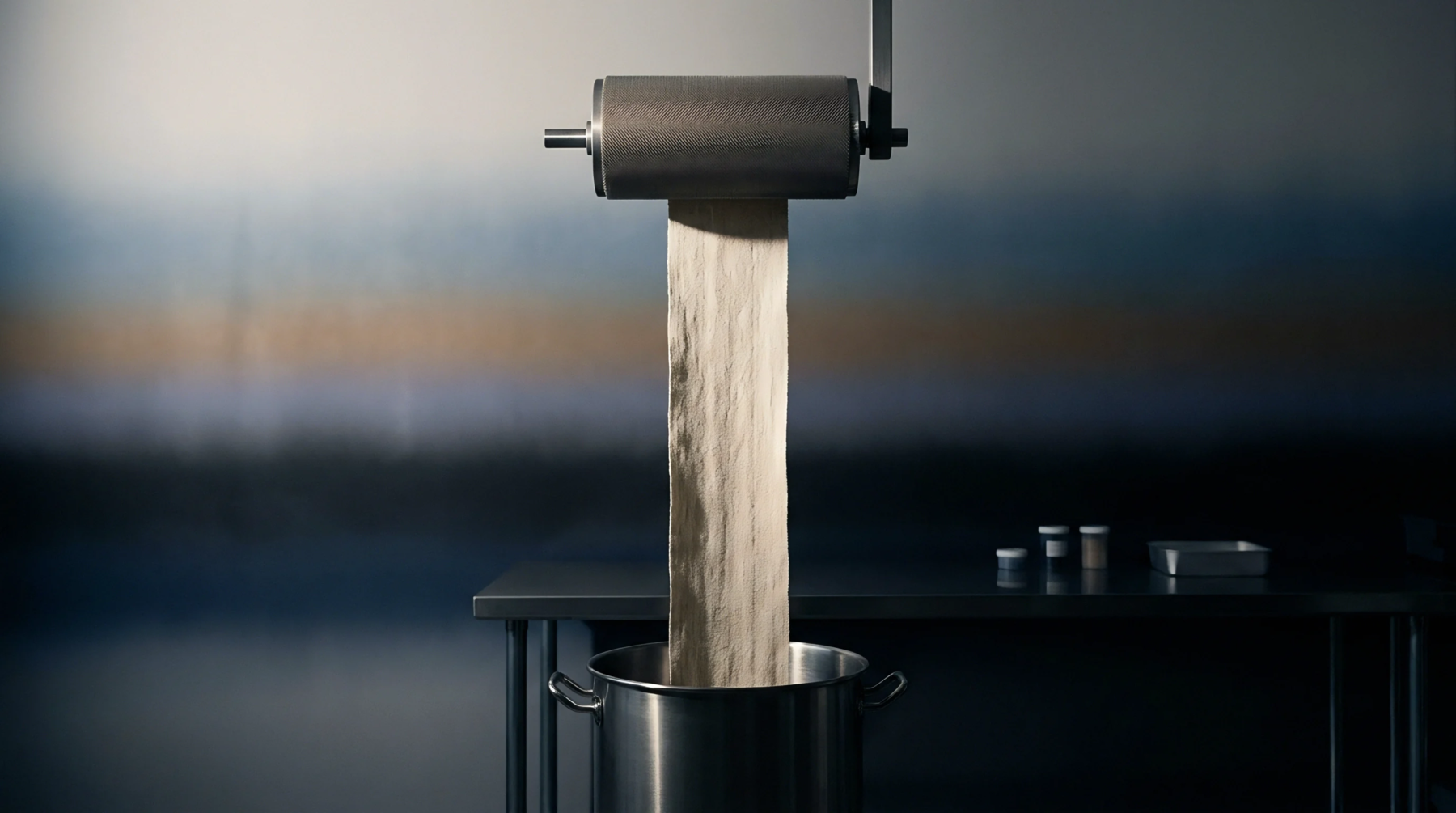
Processing Assembly
Industrial wet processing equipment arranges linked washing, chemical impregnation, steaming and drying units into an automated textile production line. A modern continuous range handles open-width woven or knitted fabrics at sustained speeds reaching over one hundred meters per minute without intermediate rebatching. Modular configurations allow mills to run chemical preparation, pad-steam dyeing or resin finishing operations in one non-stop transit.
Processing tensions, squeeze roller pressures and chemical concentrations are managed through integrated electronic sensors. High initial machinery capital cost demands high yardage runs to maintain economic efficiency.
Mechanical Synchronization
Tension controls govern fabric transit between motorized nips to prevent warp distortion, fabric curling or structural elongation. Inside a continuous range, electronic load cells and compensator dancing rollers modulate drive motor velocities across individual wash boxes and drying cylinders. Uneven mechanical pull produces dimensional skewing, selvage tears or uneven chemical uptake along the running length.
Woven fabrics require firm edge guiders and selvedge uncurlers before entering chemical padding nips. Precise drive synchronization maintains constant lengthwise tension across every processing stage.
Liquor Consumption
Metering systems inject water, dyestuff and auxiliary chemicals into small-capacity application troughs to maintain precise bath concentrations. Operating a continuous range requires low-volume pad boxes to keep the replenishment rate aligned with active fabric absorption. Automatic dosing units introduce concentrated stock solutions in response to liquor volume drop and run speed metrics.
Inadequate replenishment produces end-to-end shade taper across production runs, whereas oversized troughs cause excessive chemical waste during lot turnarounds. Rapid chemical turnover minimizes thermal oxidation and dyestuff hydrolysis during extended dyeing shifts.
Quality Variance
Bulk textile inspections reveal systematic defects unique to non-stop mechanical processing trains. Sudden equipment stoppages on a continuous range cook the fabric resting against heated drying cans or over-expose yardage stalled inside steaming chambers, generating cross-directional bands that ruin dozens of consecutive meters. Pad roll wear produces side-to-center shading profiles that fail garment panel shade-matching tolerances.
Quality audits track process stability through continuous moisture sensors, pickup meters and online spectrophotometers positioned at delivery ends. Production lots pass commercial inspection when color and finish uniformity remain consistent from the first yard to the last.