Reactive Dye Wash off Isotherms in Continuous Range Processing
Optimizing continuous reactive wash-off demands high-temperature counter-current cascades that alter desorption isotherms and strip stagnant boundary layers.
Partition
Thermodynamics of Hydrolyzed Dye Desorption
Continuous pad-steam and pad-batch dyeing rely on covalent bonding between reactive dyes and cotton hydroxyl groups. Alkaline fixation yields two chemical species in the fiber: covalently bound dye and unreacted hydrolysate. Though hydrolyzed molecules cannot form covalent bonds, they remain bound to cellulose via van der Waals forces, hydrogen bonding, and hydrophobic interactions.
Washing off requires shifting thermodynamic equilibrium so unfixed dye diffuses out of the swollen cell wall into the liquor.
Desorption kinetics depend on the partition coefficient between the fiber and bath phases at elevated temperatures. Langmuir and Freundlich isotherms describe this equilibrium, tracking how much unfixed dye remains on the cellulose across given bath temperatures and salt concentrations. Residual electrolyte from fixation boosts hydrolysate substantivity, trapping unfixed molecules within the amorphous fiber regions.
Dropping the salt concentration in early wash boxes lowers this affinity, allowing thermal energy to drive desorption.
The equilibrium distribution of hydrolyzed vinyl sulfone dye between cotton fiber and liquor at 95°C yields a partition coefficient below 0.08 when bath salt content falls below 1.0 gram per litre.
Substantivity varies by chromophore and anchor group. Monochlorotriazine and bis-monochlorotriazine dyes feature planar aromatic structures that retain high substantive affinity for cellulose after hydrolysis. Vinyl sulfone and fluorotriazine hydrolysates have lower affinity, washing out faster during immersion.
Matching the desorption isotherms of dye components prevents uneven clearance in trichromatic shades.
Equilibrium Parameters across Reactive Chemistry Families
Isotherm parameters dictate the minimum liquor volumes and temperatures needed to clear unfixed dye to target levels before drying. Across primary reactive classes, these parameters mark clear thermodynamic distinctions under standard wash conditions.
| Reactive Anchor Chemistry | Substantivity Index at 60°C | Langmuir Affinity Constant at 90°C (L/mmol) | Freundlich Capacity Constant at 90°C | Desorption Activation Energy (kJ/mol) |
|---|---|---|---|---|
| Monochlorotriazine (MCT) | 0.68 | 0.42 | 1.85 | 48.2 |
| Bis-Monochlorotriazine (M-MCT) | 0.82 | 0.75 | 2.40 | 56.1 |
| Vinyl Sulfone (VS) | 0.35 | 0.14 | 0.72 | 32.4 |
| Hetero-bifunctional (MCT/VS) | 0.51 | 0.28 | 1.25 | 41.8 |
| Fluorotriazine (FT) | 0.29 | 0.11 | 0.61 | 28.9 |
High activation energies require sustained temperatures above 90°C to detach hydrolyzed molecules from internal pore surfaces. Running lines cold or bypassing hot stages to save energy leaves unfixed hydrolysate inside the core. That residual dye migrates to the surface during drying, causing wet crocking failures and dulling the shade across finished rolls.
Boundary
Mass Transfer Kinetics in Swollen Cellulose
Dye diffusion through cotton’s pore architecture is the rate-limiting step in wet processing. Swollen fibers form water-filled capillaries 2 to 10 nanometres wide, which hydrolyzed dye molecules must navigate to reach the surface. Fickian pore diffusion governs this internal transport, with effective diffusion coefficients scaling directly with bath temperature and inversely with molecular weight.
Exceeding the critical bath velocity of 0.8 metres per second collapses the stagnant boundary liquid film, accelerating mass transfer rates across the fiber interface.
At the outer wall of the fiber, dye encounters a stagnant hydrodynamic boundary layer. Water next to the moving fabric travels at the speed of the substrate, creating a film that slows mass transfer into the wash liquor. Breaking this layer takes mechanical energy ~ turbulent flow, flex-nip action, or high-velocity fluid jets.
Agitation compresses the boundary layer from tens of micrometres to sub-micron thickness, driving up the convective mass transfer coefficient.
Thermal Effects on Internal Transport Rates
Temperature serves two functions during wash-off. Heat breaks hydrogen bonds between cellulose hydroxyls and dye chromophores while boosting the kinetic energy and diffusion rate of free dye. At the same time, thermal expansion opens the internal structure of the cotton, widening pores and reducing steric hindrance.
Running wash stages below 85°C limits mass transfer to the yarn exterior. Core fibers in heavy fabrics, such as 350 grams per square metre twill, hold onto high levels of unfixed hydrolysate. Stenter drying then draws this inner dye to the surface as water evaporates, concentrating dye on the exterior and causing shade shifts and fastness failures under testing.
On high-speed lines operating above 80 metres per minute, boundary layer resistance accounts for up to 60 percent of total mass transfer resistance. Rapid fluid exchange systems, such as slot jets and high-expression squeeze nips between tanks, strip this enriched layer before the fabric re-enters cleaner counter-current water.
Whether transient ultrasonic cavitation can collapse internal pore boundary layer resistance without degrading cotton tensile strength remains an open question in wet processing.

Cascade
Counter-Current Flow and Squeeze Mechanicals
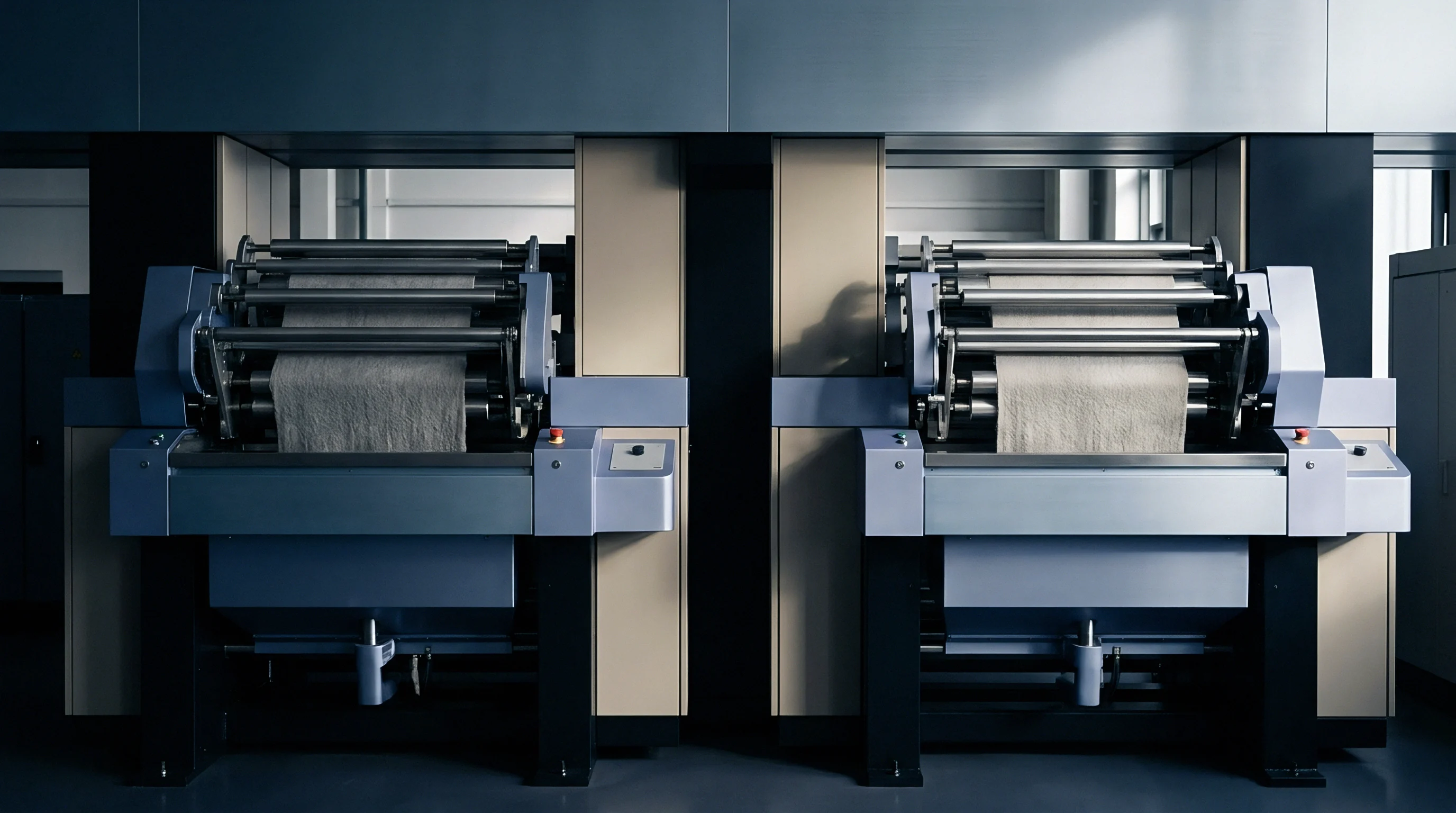
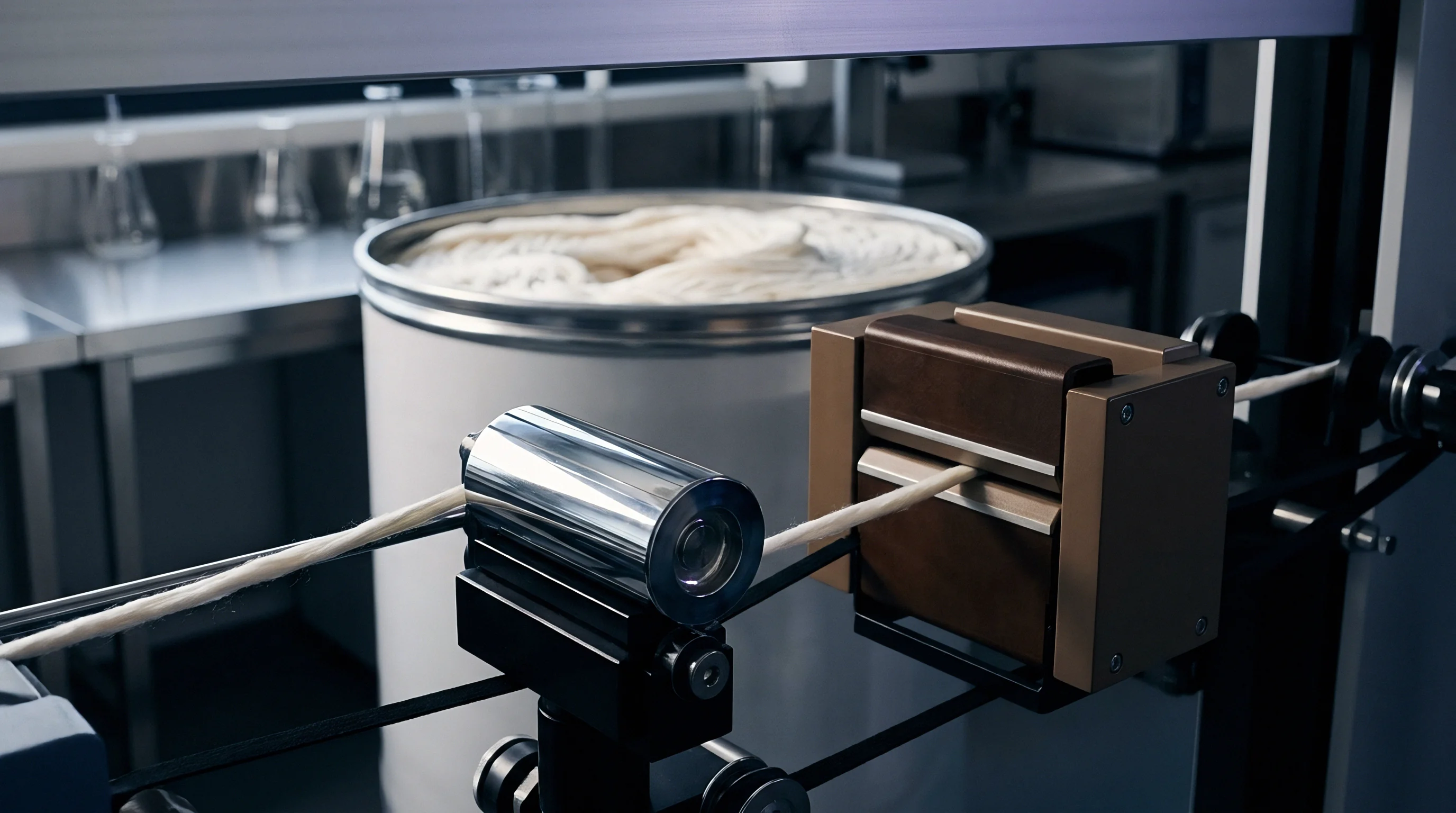
Continuous washing ranges maximize driving force by running wash liquor counter to fabric movement. Fresh hot water enters at the final exit box while effluent exits from the entry box, where incoming unfixed dye and alkali concentrations are highest. This arrangement maintains a steady concentration gradient across the range, ensuring fabric always contacts water less concentrated than its internal phase.
High-efficiency squeeze rolls between compartments govern dilution. Heavy pneumatic nips compress the yarn bundle, forcing concentrated liquor back into the previous box before the fabric advances. This squeeze efficiency sets carry-over volume; lower wet pick-up reduces the water needed to reach target purity.
Which Washing Box Sequence Minimizes Water Consumption?
Optimizing continuous wash ranges requires zoning bath temperature, chemical dosing, and mechanical action across distinct operational phases.
- Cold water rinse at 30°C to dilute surface alkali and un-reacted salt without fixing loose surface dye.
- Warm neutralization at 50°C using organic acid additions to lower fabric pH below 7.0, preventing alkali-catalyzed hydrolysis during boiling stages.
- Boiling wash stages at 95°C with polymeric dispersants to drive desorption isotherms and prevent re-aggregation of unfixed dye molecules.
- High-temperature soaping at 90°C to purge residual trace hydrolysate from deep pore intersections.
- Warm overflow rinse at 60°C to extract suspended auxiliary agents and cooling fabric uniformly.
- Cold final rinse at 25°C to stabilize fabric dimensional state and set temperature for target chemical finishing.
Box mechanics dictate liquid exchange efficiency (Ex). Vertical serpentine loops increase dwell time, while horizontal tight-strand layouts maximize mechanical flexing as fabric moves over immersed rollers under tension.
| Box Position | Primary Function | Temperature (°C) | Bath Liquor Ratio | Target Fabric pH | Liquor Exchange Efficiency (%) |
|---|---|---|---|---|---|
| Box 1 | Salt & Alkali Dilution | 35 | 8:1 | 10.5 ~ 11.0 | 65 |
| Box 2 | Acid Neutralization | 55 | 6:1 | 6.0 ~ 6.5 | 72 |
| Box 3 | Primary Desorption Isotherm | 95 | 5:1 | 6.5 ~ 7.0 | 85 |
| Box 4 | High-Thermal Mass Wash | 98 | 5:1 | 6.5 ~ 7.0 | 88 |
| Box 5 | Polymeric Dispersion | 90 | 6:1 | 6.5 ~ 7.0 | 82 |
| Box 6 | Warm Counter Rinse | 60 | 7:1 | 6.0 ~ 6.5 | 78 |
| Box 7 | Final Cold Rinse | 25 | 8:1 | 5.5 ~ 6.0 | 70 |
A continuous wash cascade operating with low squeeze roll expression uses far less fresh water per kilogram of fabric than an uncalibrated range running saturated nips.
Stain
Fastness Redeposition Dynamics and Standards
Desorbed hydrolysate suspended in wash liquor can recontaminate the fabric. If bath temperature drops or dispersant levels fall below critical micelle thresholds, hydrolyzed molecules readsorb onto pristine cellulose. This readsorption dulls color clarity, stains printed backgrounds, and compromises wet fastness compliance.
Fabric passing through wash boxes with bath dye levels above 0.5 grams per litre suffers immediate fastness degradation under ISO 105-C06 testing protocol.
Fastness compliance requires laboratory testing under standardized washing, rubbing, and perspiration regimes, with buyers rejecting lots that fall outside specified limits.
- Domestic Laundering Fastness ~ ISO 105-C06 A2S testing evaluates shade loss and staining on multi-fiber adjacent fabrics at 40°C with perborate detergent systems.
- Commercial Wet Crocking ~ ISO 105-X12 measures mechanical transfer of surface color to wet rub cloths under controlled friction loads.
- Water Fastness Integrity ~ ISO 105-E01 quantifies dye bleed into deionized water under static pressure at 37°C over four hours.
- Acid Perspiration Resistance ~ ISO 105-E04 assesses stability against synthetic sweat formulations at elevated body temperatures.
Commercial Contract Clauses for Fastness Acceptance
Fastness failures stem directly from unextracted hydrolysate inside yarn cross-sections. Poor wet crocking points to incomplete boundary layer stripping, whereas staining on adjacent multifiber nylon or cotton bands indicates inadequate hot soaping.
Supply contracts routinely link testing standards directly to commercial terms. If finished fabric falls below Grade 4 for color change or Grade 3-4 for adjacent staining under ISO 105-C06 A2S, standard conversion contracts permit buyers to reject the lot at the mill gate.

Auxiliary
Chemical Systems and Dispersant Mechanisms
Washing-off auxiliaries modify solution chemistry to speed desorption and prevent redeposition. These formulations alter the electrostatic potential at the cellulose-water interface, creating repulsive forces between desorbed dye molecules and the negatively charged cotton substrate.
Polymeric dispersants such as sodium polyacrylate or acrylic acid-maleic acid copolymers encapsulate hydrolyzed dye in the wash liquor. These anionic polymers form soluble complexes with hydrolysates, raising their hydrophilicity and suppressing affinity for cellulose. Sequestrants like ethylenediaminetetraacetic acid or polyphosphonates bind hard water cations like calcium and magnesium, preventing them from forming insoluble bridges between dye molecules and cotton carboxyl groups.

Selecting Washing-Off Formulations
Selecting auxiliaries requires balancing wash performance against effluent treatment constraints, matching chemical selection to range design and wastewater capacity.
- Core Hydrotrope Content ~ Formulations rich in aromatic sulfonate hydrotropes increase dye solubility in high-electrolyte wash boxes.
- Zero-Phosphorus Compliance ~ Modern environmental regulations demand phosphorus-free sequestrants to prevent eutrophication in mill discharge streams.
- Low-Foaming Surfactant Systems ~ High-speed continuous washers generate extreme liquid agitation, demanding anti-foaming non-ionic washing agents.
- pH-Neutralizing Capacity ~ Dual-action core auxiliaries combine mild organic acids with dispersants to consolidate neutralization and soaping steps.
Proprietary washing auxiliaries are often promoted as eliminating the need for 95°C wash temperatures, but low-temperature washing aids fail to extract high-substantivity hydrolysates from dense woven core yarns without thermal energy inputs.
Budget
Route Economics and Thermal Energy Verification
Operating a continuous wash-off range involves balancing utility expenses against fastness compliance. Water, steam, electric power, and chemicals contribute directly to landed fabric costs. Heat recovery systems, such as plate heat exchangers transferring energy from outgoing effluent to incoming fresh water, cut boiler steam demand.
Determining process costs requires tracking wash efficiency (We) alongside specific water consumption (Vs, in L/kg fabric). For example, a line running 200 grams per square metre cotton twill at 60 metres per minute processes 720 kilograms of fabric per hour. Un-optimized routes consume 18 litres of water per kilogram, requiring 12,960 litres of water per hour heated from 15°C to 95°C, which consumes roughly 4.3 gigajoules of thermal energy hourly.
Using optimized counter-current cascades with high-expression squeeze nips (reducing wet pick-up from 80 percent to 50 percent) drops water use to 8 litres per kilogram of fabric. Water volume falls to 5,760 litres per hour and boiler thermal demand drops to 1.9 gigajoules per hour, maintaining the same hydrolyzed dye clearance.
Reducing water and energy use cuts conversion costs per finished metre, protecting margins while meeting brand fastness standards.