Standard Salt Dosing Schedules for Reactive Dyeing Heavy Cotton Canvas
Progressive exponential salt dosing prevents surface strike spikes and forces reactive dye penetration into heavy cotton duck yarn cores.

Substrate
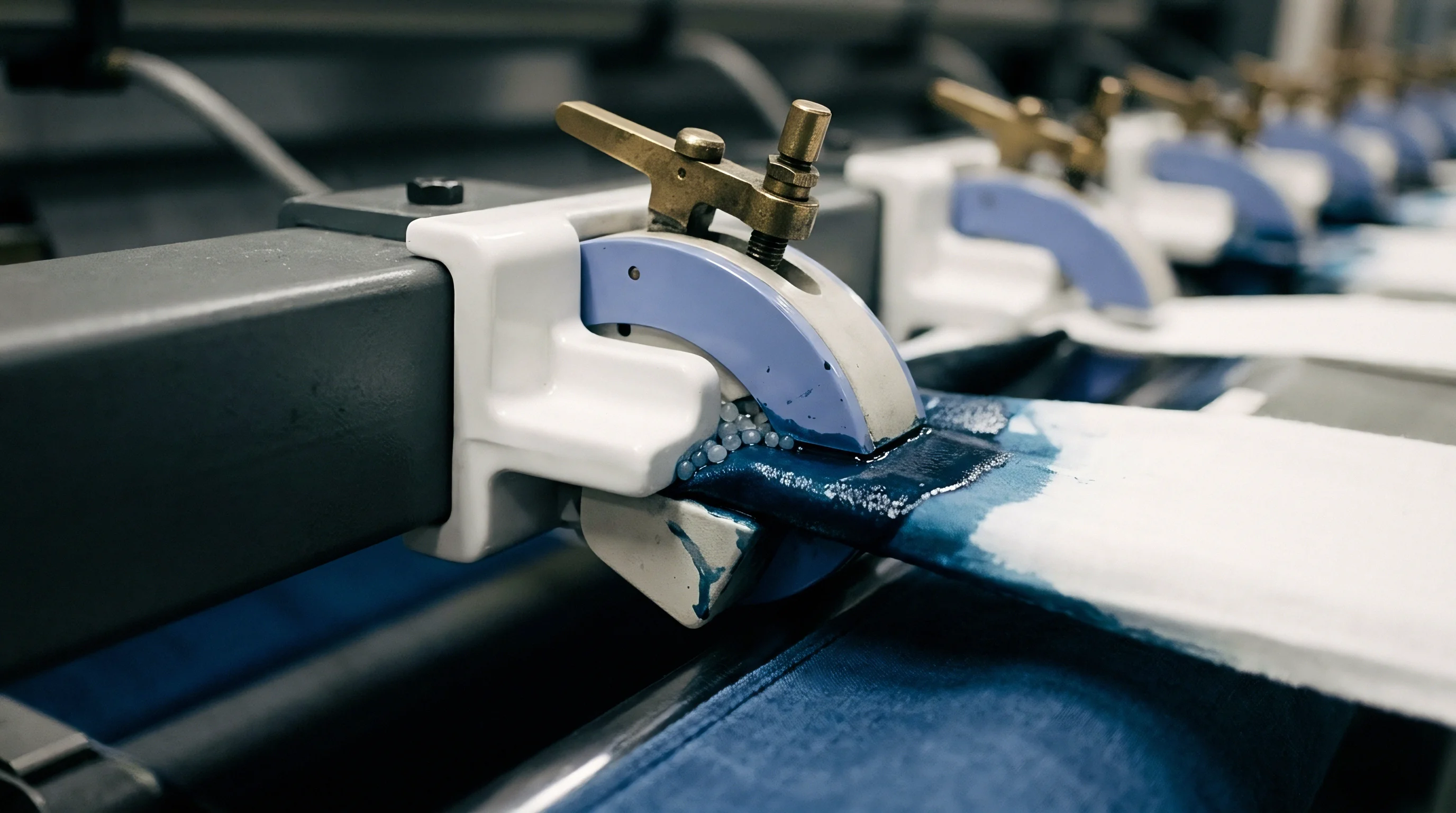
Heavy cotton canvas woven from plied, high-twist ring-spun yarns resists liquor flow during exhaust dyeing. Dense duck constructions ranging from 420 GSM to 680 GSM (such as Number 10, Number 8, and Number 4 duck) feature high warp cover factors that impede fluid movement through the fabric thickness. When a dye bath containing dissolved reactive dyestuff and electrolyte contacts this tight matrix, convective liquor transport through inter-yarn voids falls behind diffusion across individual fiber surfaces.
The resulting imbalance creates localized concentration gradients across the fabric profile, where outer yarn surfaces absorb dyestuff rapidly while inner yarn cores remain unexposed to active dye molecules.
Yarn structure itself forms the primary mechanical barrier to shade uniformity. Industrial heavy duck canvas relies on multi-ply warp yarns, typically 10/3 Ne or 8/2 Ne, twisted at high turns per metre to deliver the tensile strength required by commercial specifications under ISO 13934-1. Mechanical twisting compresses the cotton fiber bundle, reducing internal void volume and trapping air in microscopic pockets inside the yarn core.
During wet processing, these air pockets resist displacement by surface tension forces. Without extended wet-out cycles or effective chemical wetting agents, dye liquor flows around the yarn bundle rather than through it, treating a three-ply yarn as a solid cylinder.

Capillary Hydraulics in Plied Duck Weaves
Warp yarns constructed by twisting three single strands of ten-count cotton create tightly bound internal channels that repel liquid. Capillary pressure inside a yarn structure operates as a function of fiber packing density and surface contact angle, governed by the Washburn relationship. As thread twist increases, pore radius shrinks.
Smaller pore radii theoretically increase capillary suction force, but hydraulic resistance to fluid flow rises inversely with the fourth power of the pore radius according to Poiseuille law. Plied yarns restrict liquor movement, causing pores to fill slowly. The time required for an aqueous solution to penetrate to the geometric center of a 10/3 Ne yarn bundle extends significantly compared to single-ply yarns used in light apparel fabrics.
| Canvas Specification | Nominal Weight (GSM) | Yarn Construction (Warp x Weft) | Warp Cover Factor (%) | Liquor Flow Permeability (L/m²/s at 100 Pa) |
|---|---|---|---|---|
| Number 12 Duck | 390 ISO 3801 | 12/2 Ne x 12/2 Ne | 76.4 | 142 |
| Number 10 Duck | 490 ISO 3801 | 10/2 Ne x 10/2 Ne | 82.1 | 98 |
| Number 8 Duck | 610 ISO 3801 | 10/3 Ne x 8/2 Ne | 88.5 | 45 |
| Number 4 Duck | 820 ISO 3801 | 7/4 Ne x 6/3 Ne | 93.2 | 12 |
Liquor turnover inside the dyeing vessel cannot overcome structural hydraulic resistance on its own. In soft-flow jet machines or continuous jigs, external hydraulic pressure forces liquor through macro-interstices between warp and weft floats. Macro-pores between adjacent yarns bleed off pressure, allowing the fluid path of least resistance to bypass micro-pores inside the yarn bundles.
Hydrodynamic boundary layers build up along the tight canvas surface ~ stagnant films of water that dye molecules cross purely through molecular diffusion rather than forced convection. Electrolyte additions must account for this diffusion layer by controlling exhaustion speed, matching the rate of dye uptake to the physical penetration speed of the liquor.
Heavy cotton canvas weaves act as mechanical filters during rapid liquor circulation, stripping dye molecules from the fluid stream before the liquor reaches the core of plied yarns.
Cover Factor and Interstitial Boundary Layers
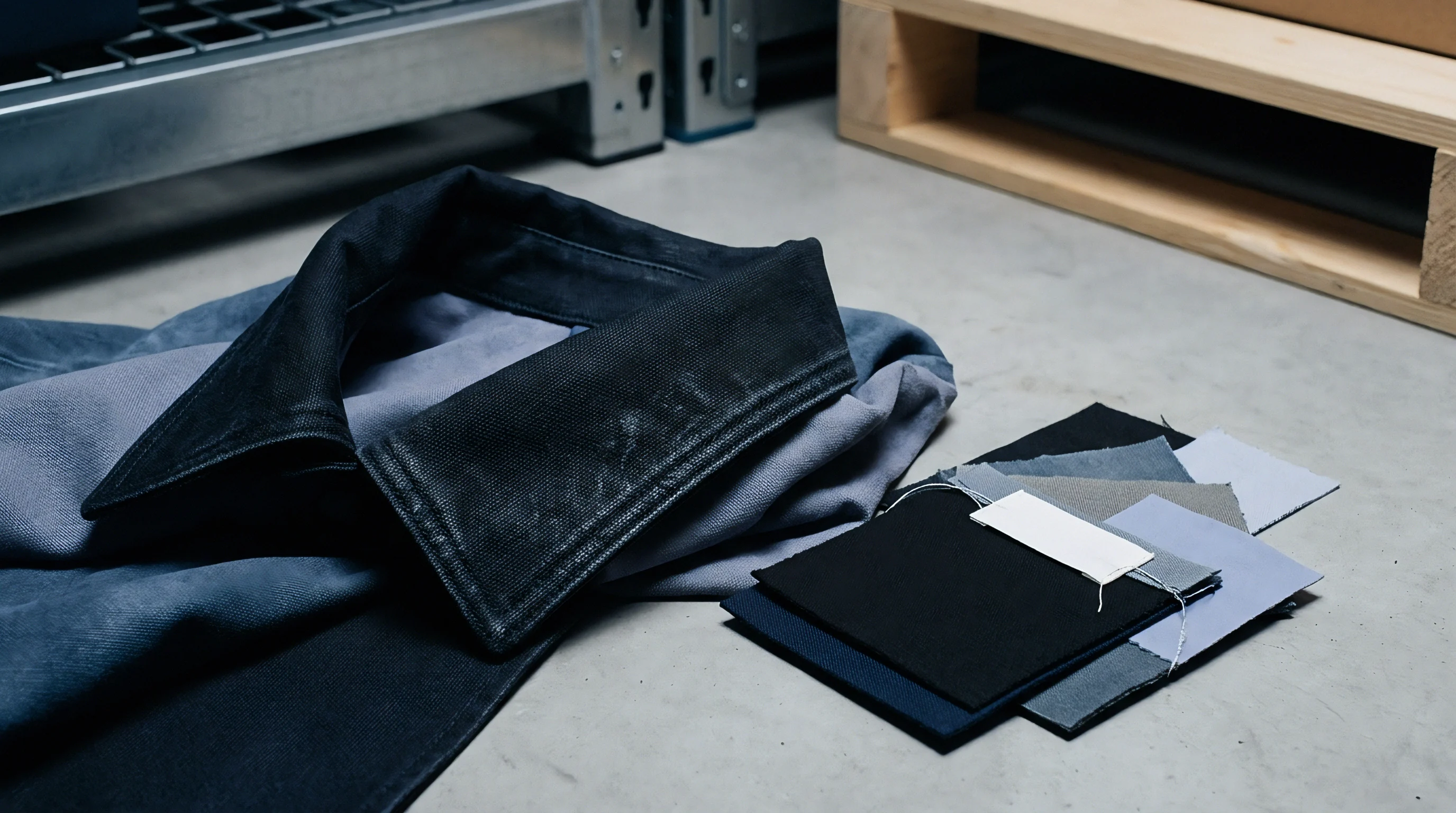
Woven fabrics exceeding four hundred and fifty grams per square metre feature compact thread spacings that restrict fluid movement across the cross-section. Total cover factor, calculated as the combined area occupied by warp and weft yarns, regularly exceeds ninety percent in Number 8 duck fabrics. This structural density isolates the interior fiber matrix from turbulent bath mixing.
Dyestuff exhaustion onto cellulosic fibers depends on electrostatic interaction and hydrogen bonding. When salt enters the bath, it neutralizes the negative zeta potential of the cotton, driving reactive dyes out of solution and onto the fiber surface. If salt concentration surges while boundary layers remain thick, exhaustion occurs instantly on outer fiber wraps, producing face-to-back shade variations and severe surface ring dyeing.
Dense double-ply warp structures trap air pockets inside inter-yarn interstices. These micro-voids prevent full liquor contact unless the fabric undergoes intensive scouring and caustic Mercerization prior to exhaust dyeing. Residual natural waxes, pectins, and sizing agents left behind in poorly prepared greige goods compound the physical barrier, shifting the contact angle of the cotton fiber from hydrophilic to hydrophobic.
Pre-treatment quality dictates the baseline diffusion coefficient of the dyestuff. Even a perfectly executed salt dosing schedule fails to yield level dyeings if uneven residual sizing blocks initial liquor uptake across the canvas web.
Fabric tension during processing introduces another layer of structural resistance. On a dyeing jig, high warp tension pulls warp yarns flat against one another, collapsing inter-yarn spaces and locking the weave matrix shut under high mechanical stress. In soft-flow jet machines, rope compression creates transient crease lines where liquor flow drops to near zero.
Dosing schedules designed for heavy canvas must maintain dye migration windows long enough for molecules to redistribute when tension relaxes during fabric turn cycles. Surface strike must be deliberate, controlled, and deferred until the entire fabric mass achieves uniform chemical equilibrium with the surrounding bath.
- Plied Yarn Twist Factor High turns per metre reduce inter-fiber spaces, creating physical barriers that limit dye liquor penetration into yarn cores.
- High Warp Cover Factor Weave densities exceeding eighty-five percent total cover restrict convective liquor flow across the fabric thickness.
- Residual Fiber Hydrophobicity Incomplete scouring leaves natural cotton waxes that increase contact angles and repel aqueous dyestuff solutions.
- Boundary Layer Stagnation Stagnant fluid films on heavy duck surfaces slow down molecular diffusion rates relative to bath exhaustion rates.
Face unlevelness or white yarn centers after cutting are frequently attributed to raw fiber maturity variations or physical limits imposed by high-twist plied yarns. However, technical analysis of cross-sectioned yarn bundles demonstrates that core unlevelness correlates directly with electrolyte addition speed rather than yarn twist geometry alone.
Brine
Anhydrous sodium sulfate and sodium chloride act as neutral electrolytes that screen the negative electrical potential of cotton fibers in water. Unmodified cotton immersed in an aqueous bath acquires a negative surface charge, known as zeta potential, due to the ionization of hydroxyl groups and absorbed hydroxyl ions. Anionic reactive dyes carry negatively charged sulfonate groups designed to maintain water solubility.
Coulombic repulsion forces repel dye molecules from the fiber surface, preventing exhaustion until an electrolyte enters the system. Sodium cations from dissolved salt form a diffuse electrical double layer around the cellulosic fibers, lowering the repulsive charge barrier and allowing short-range van der Waals forces and hydrophobic interactions to draw dyestuff onto the cotton matrix.
Choosing between sodium sulfate (Glauber salt) and sodium chloride (refined vacuum salt) involves chemical, physical, and commercial trade-offs. Sodium sulfate delivers higher ionic strength per unit mass without containing corrosive chloride ions that damage stainless steel pressure vessels over extended operational lifespans. Its solubility curve exhibits strong temperature dependence, dissolving rapidly above thirty degrees Celsius but precipitating out of cold water in unheated dosing tanks.
Sodium chloride offers linear solubility across typical dyehouse operating temperatures, lower unit cost, and widespread regional availability, but requires higher mass inputs to achieve equivalent charge-screening performance on dense cellulosic fabrics.
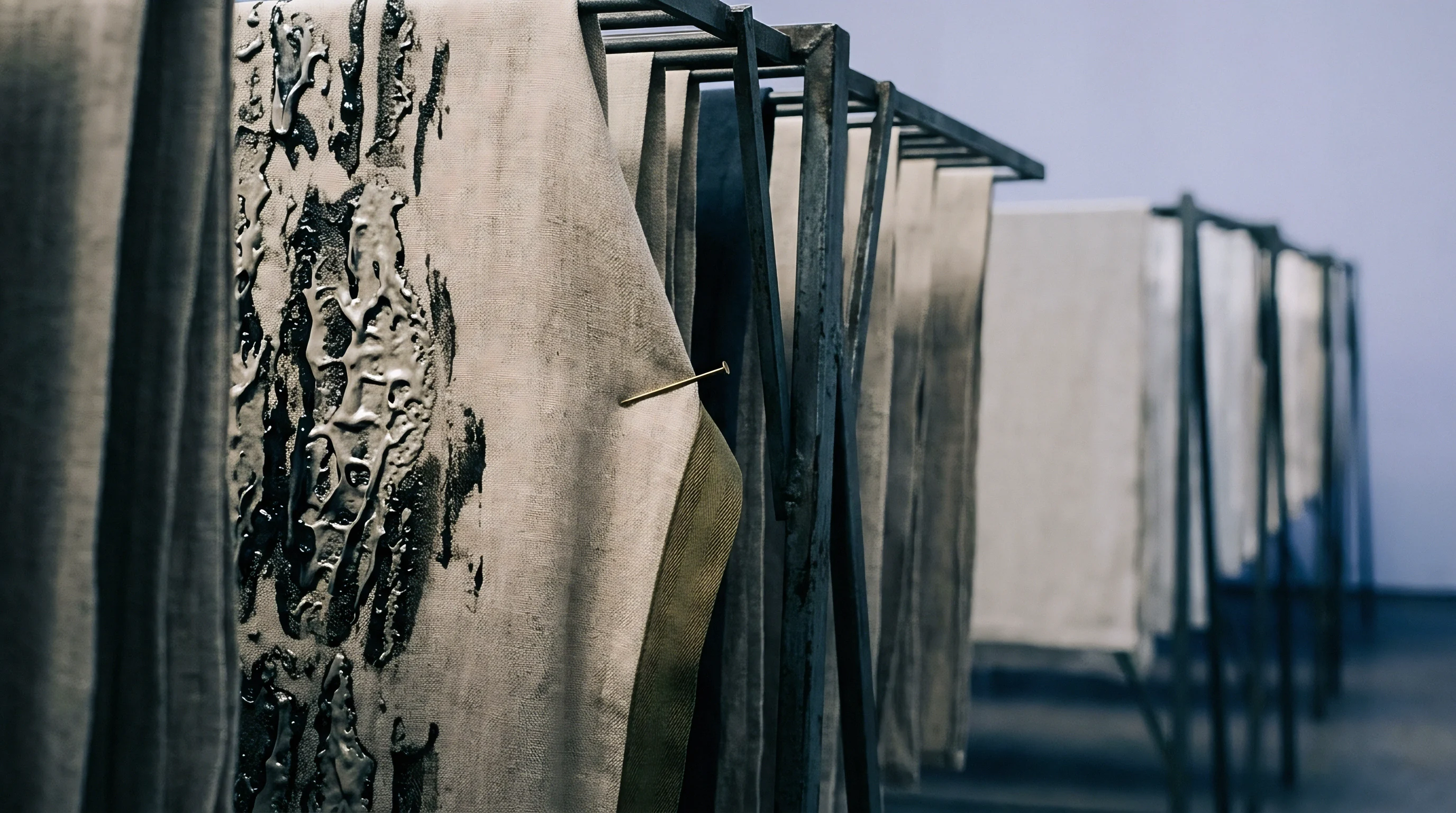
Thermodynamics of Sodium Sulfate and Sodium Chloride
Dissolving Glauber salt in the dye bath absorbs thermal energy, lowering bath temperature unless counteracted by automated heating elements. Endothermic dissolution of crystalline Glauber salt drops localized liquor temperature by two to five degrees Celsius when large salt charges enter dosing tanks without pre-heating. Temperature drops alter reactive dye affinity and liquor viscosity, temporarily reducing diffusion speed into heavy canvas yarn cores.
Technical-grade anhydrous sodium sulfate dissolves exothermically, avoiding localized thermal drops, but requires high shear agitation to prevent dense salt cakes from settling at the bottom of dosing vessels.
| Electrolyte Parameter | Anhydrous Sodium Sulfate (Na₂SO₄) | Refined Vacuum Sodium Chloride (NaCl) |
|---|---|---|
| Chemical Purity Grade | > 99.2% Active Na₂SO₄ | > 99.8% Active NaCl |
| Solubility at 20°C | 195 g/L | 358 g/L |
| Solubility at 60°C | 453 g/L | 371 g/L |
| Ionic Strength Factor (per g/L) | 1.00 (Baseline) | 0.82 (Requires 1.22x mass multiplier) |
| Corrosion Potential (AISI 316L Stainless) | Negligible at pH 6-11 | Pitting risk above 60 g/L at pH < 5 |
| Heavy Metal Contamination Ceiling | Fe < 5 ppm, Ca/Mg < 20 ppm | Fe < 2 ppm, Ca/Mg < 10 ppm |
The solubility of vacuum evaporated sodium chloride stands at 358 grams per litre at twenty degrees Celsius, whereas anhydrous sodium sulfate reaches only 195 grams per litre under identical cold conditions. Dyers relying on saturated stock solutions in automated dosing systems must maintain salt tank temperatures above thirty-five degrees Celsius to prevent sodium sulfate crystallization inside feed lines. If feed lines clog or dosing valves stick due to salt precipitation, electrolyte flow stops abruptly, causing severe shade variations between batch runs.
The nominal solubility figure of 420 grams per litre for Glauber salt at forty degrees Celsius drops significantly if hard water or alkaline carryover alters dissolved ion equilibrium within the preparation vessel.
At a liquor ratio of six to one, dyeing six hundred GSM canvas requires sixty grams per litre of salt, placing total dissolved electrolyte concentration close to the saturation boundary during cold dosing phases.
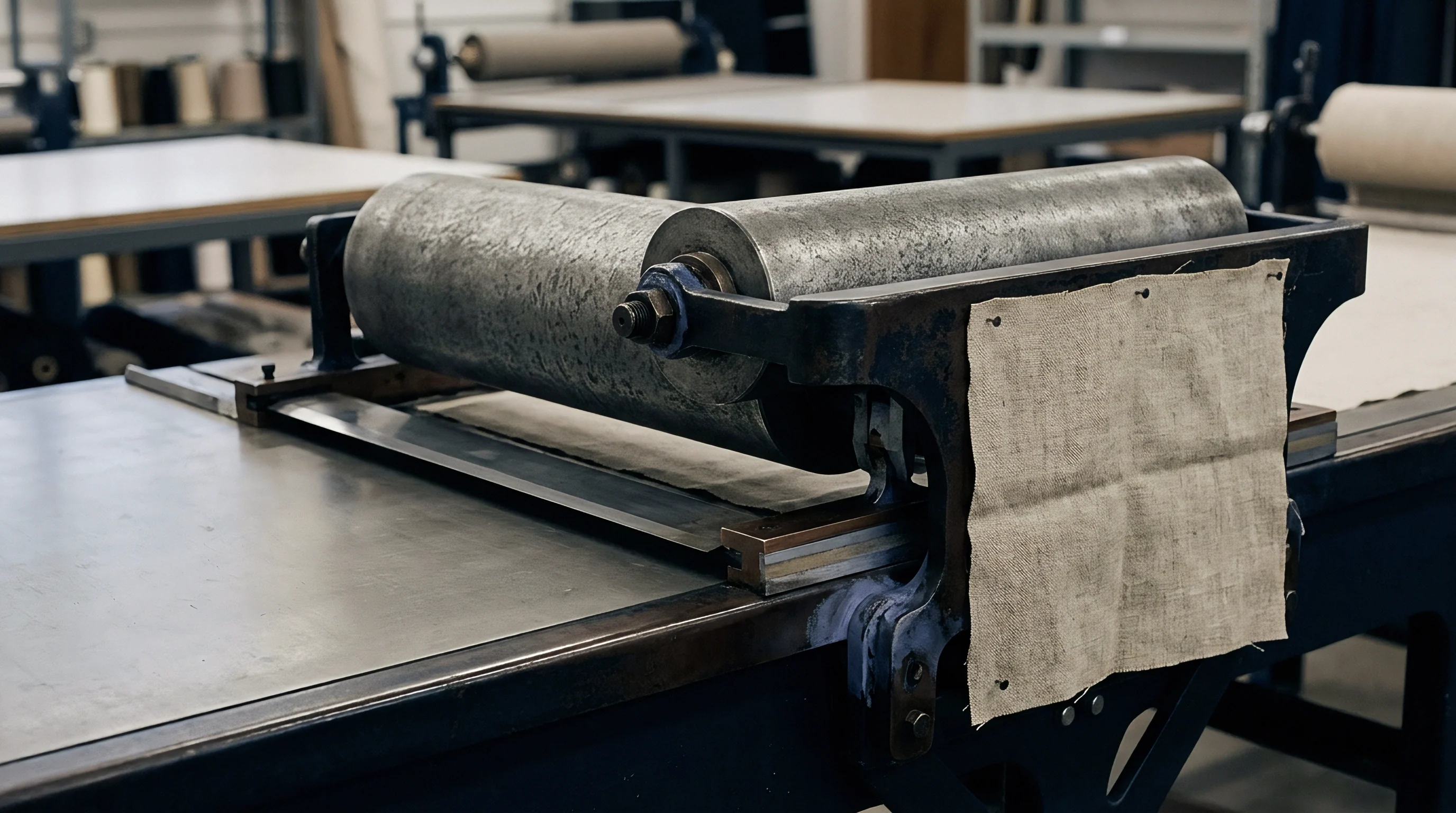
Electrolyte Purity and Hardness Suppression
Calcium and magnesium ions in technical-grade salts react with anionic reactive dyes to form insoluble complexes that precipitate onto thread surfaces. Heavy cotton canvas acts as an efficient particulate filter, capturing these micro-precipitates within its outer weave structures. The resulting deposits cause pale spots, harsh fabric hand, and reduced rubbing fastness under ISO 105-X12 testing.
Technical specifications for salt used in reactive canvas dyeing mandate iron levels below five parts per million and combined calcium and magnesium levels below twenty parts per million. High iron content catalyzes local cellulose degradation during subsequent bleaching or washing steps, leading to pinhole fabric strength loss.
Dissolved electrolyte concentration is tracked with temperature-compensated conductivity sensors on the bypass loop. Direct specific conductivity measurements translate chemical mass into actionable ionic strength metrics, eliminating human error during batch salt additions. Because salt dissociation varies non-linearly at high concentrations, calibration curves must account for the specific dye bath temperature and dyestuff auxiliary package.
Adding salt in dry solid form directly to jet dyeing vessels creates localized zones of extreme ionic strength near addition ports, sparking instantaneous dyestuff precipitation onto the nearest fabric loops.
- Anhydrous Salt Purity Minimum ninety-nine percent chemical active strength prevents unrefined mineral impurities from staining heavy canvas webs.
- Dicalcium Ion Limits Combined calcium and magnesium content under twenty parts per million stops insoluble dye-complex formation inside dense weaves.
- Iron Contamination Ceiling Iron concentrations held strictly under five parts per million eliminate catalytic fabric degradation during wet processing.
- Stock Solution Dissolution Pre-dissolving salt in warm liquor at sixty degrees Celsius guarantees immediate ionic dispersion upon injection into the dye vessel.
Electrolyte additions must always precede alkali dosing to allow uniform dyestuff exhaustion across the fiber substrate before chemical reaction occurs. Adding salt to cotton yarns that have already absorbed alkali triggers instant, unlevel covalent bonding, locking shade variations permanently into the canvas core.
Proprietary salt substitutes or liquid exhaustion boosters are often claimed to cut required electrolyte mass by half without compromising shade levelness on heavy canvas. Laboratory trials confirm that these liquid auxiliaries merely combine lower salt loads with strong organic levelling agents that retard initial dye uptake. Reductions in electrolyte mass reduce charge screening efficiency, forcing dyers to extend migration times significantly to achieve uniform penetration across dense fabric structures.
Schedule
Controlling the rate of electrolyte addition dictates the migration velocity of reactive dye molecules before covalent alkali fixation takes place. Heavy cotton canvas demands prolonged migration windows because dyestuff molecules forced out of solution by salt must traverse tight inter-yarn channels to reach internal fibers. If salt enters the bath in a single large addition, bath conductivity surges instantly, triggering rapid dye exhaustion onto outer fabric surfaces.
The resulting exhaustion spike exhausts ninety percent of available dye onto ten percent of the fiber volume, creating severe shade levelling defects that no subsequent processing step can repair.
Dosing profiles fall into four primary mathematical shapes: linear dosing, step-wise dosing, progressive (exponential) dosing, and parabolic dosing. Linear dosing delivers equal mass increments over fixed time intervals, creating a steady rise in total salt concentration. Step-wise dosing splits the total salt mass into discrete portions, typically ten percent, thirty percent, and sixty percent, injected at set intervals.
Progressive dosing starts with extremely small additions, accelerating exponentially over time to maintain a constant, controlled rate of dye uptake onto the fiber matrix.

Does Dosing Slope Prevent Core Ring Dyeing?
Progressive exponential curves start with minimal electrolyte flow, giving dense plied yarns time to absorb dye liquor before high exhaustion begins. By keeping initial bath conductivity low, reactive dye molecules diffuse freely into the center of 10/3 Ne warp yarns along natural concentration gradients. As the salt concentration rises exponentially in later stages, the driving force for exhaustion increases only after the dye has already distributed evenly throughout the yarn core.
This controlled approach maintains a steady dye uptake rate of zero point five to one percent per minute, preventing localized depletion of dye liquor around the fabric surface.
| Dye Class / Chemistry | Liquor Ratio | Dosing Profile Shape | Dosing Duration (min) | Migration Hold Time (min) | Fixation Alkali Ramp |
|---|---|---|---|---|---|
| Vinyl Sulfone (60°C) | 1:5 (Soft Jet) | Progressive (Power 2.5) | 45 | 20 | Linear 30 min (Soda Ash + NaOH) |
| Vinyl Sulfone (60°C) | 1:10 (Jig) | Linear (3 Steps) | 60 | 30 | Linear 45 min (Soda Ash) |
| Bis-MCT / Hetero-reactive (80°C) | 1:6 (Soft Jet) | Progressive (Power 3.0) | 50 | 25 | Progressive 35 min (Soda Ash) |
| Monochlorotriazine (80°C) | 1:12 (Winch) | Step-wise (10-30-60%) | 60 | 40 | Step-wise 40 min (Soda Ash) |
The parabolic dosing curve mirrors progressive dosing by dampening initial electrolyte flow, but flattens out near the end of the addition cycle. This flattening prevents sudden conductivity spikes as total salt concentration approaches maximum levels. For heavy canvas processed at tight liquor ratios around five to one, parabolic schedules reduce physical shock to the dye system, giving high-molecular-weight reactive dyes sufficient time to migrate out of outer fiber bundles and establish chemical equilibrium across the entire fabric mass.
Alkali dosing must follow electrolyte dosing with an identical level of precision. Once alkali enters the bath, hydroxyl ions raise the pH, converting reactive dyestuff into its chemically active form and initiating covalent bond formation with cellulose hydroxyl groups. On heavy canvas, alkali added too quickly locks dye molecules onto the outer fibers where they reside at that moment.
Progressive alkali dosing schedules, extending over thirty to forty-five minutes, ensure that dye molecules migrating inside yarn cores bind evenly throughout the fabric thickness rather than forming a colored outer skin over an uncolored core.
Progressive salt dosing schedules designed for heavy canvas maintain exhaustion rates below one percent per minute, matching the physical diffusion rate of dye liquor into plied yarn structures.
Reactive Dye Chemistry and Dosing Profiles
Vinyl sulfone chromophores require moderate salt loads at sixty degrees, whereas monochlorotriazine structures demand higher salt concentrations at eighty degrees. Polyfunctional reactive dyes, incorporating both vinyl sulfone and monochlorotriazine reactive groups, exhibit exceptionally high fixation yields but demonstrate extreme sensitivity to salt concentration spikes. For these high-affinity dyestuffs, electrolyte dosing schedules must extend over forty-five to sixty minutes, using exponential curves to prevent instant surface strike on heavy duck weaves.
- Fill vessel with soft water and load heavy cotton canvas, circulating fabric at operating speed for fifteen minutes at forty degrees Celsius to achieve complete web wet-out.
- Add pre-dissolved reactive dyestuff through the metering pump over fifteen minutes, allowing ten minutes of circulation for thorough mechanical distribution through the fabric thickness.
- Initiate progressive salt dosing using a power-function curve, metering sixty grams per litre of anhydrous sodium sulfate over forty-five minutes while maintaining bath temperature at sixty degrees Celsius.
- Hold the dye bath at peak salt concentration for twenty minutes without thermal variation to drive dyestuff migration deep into the centers of multi-ply yarns.
- Inject pre-dissolved sodium carbonate alkali solution using a linear dosing profile over thirty minutes, raising bath pH smoothly from six point five to eleven point two.
- Circulate fabric for forty-five minutes at sixty degrees Celsius to complete covalent fixation bonding between reactive dyestuff molecules and cotton cellulose.
Temperature control interacts directly with salt dosing schedules. Raising bath temperature increases molecular kinetic energy and speeds up dye diffusion into tight canvas weaves, but simultaneously lowers ultimate dye affinity at equilibrium. A dosing schedule that ramps temperature from forty degrees to eighty degrees while salt is being metered balances initial low affinity with rapid migration velocity.
Dyehouses running static temperature profiles during salt addition miss this thermal assistance, forcing them to rely entirely on extended mechanical dosing times to achieve acceptable shade levelness.
If progressive dosing hardware fails during a heavy canvas batch, can manual step additions at fifteen-minute intervals prevent severe shade streakiness? Dyehouse trial data indicates that manual step additions generate step-change exhaustion spikes that exceed local migration rates, leaving visible barré lines across dense warp ends unless migration hold times are doubled.

Tonnage
Calculating the exact mass of electrolyte for a five-hundred-kilogram dye lot of heavy duck fabric demands precise account of total liquor volume. Sourcing managers and dyehouse directors frequently calculate salt requirements based solely on fabric weight, specified as percentage on weight of fabric (% owf). In exhaust dyeing, charge screening depends on dissolved electrolyte concentration measured in grams per litre (g/L) of water, making the liquor ratio the primary multiplier for total chemical mass.
Dyeing heavy canvas at high liquor ratios drastically inflates salt consumption, driving up material expenditure and effluent treatment loads.
Processing a five-hundred-kilogram batch of Number 8 duck canvas (610 GSM) in a traditional atmospheric jig requires a ten-to-one liquor ratio, creating a total bath volume of five thousand litres. Achieving a target shade requiring sixty grams per litre of sodium sulfate demands three hundred kilograms of dry electrolyte for that single lot. Processing that same five-hundred-kilogram batch in a modern low-liquor jet machine at a five-to-one liquor ratio drops the total bath volume to two thousand five hundred litres.
The required salt mass falls to one hundred and fifty kilograms, cutting raw electrolyte consumption by half while delivering superior forced liquor convection through the fabric rope.
Mass Balance and Concentration Arithmetic
A five-hundred-kilogram fabric load processed at a six-to-one liquor ratio occupies three thousand litres of bath volume. Calculating the required electrolyte mass begins by establishing the targeted dyestuff concentration depth. A heavy shade utilizing four percent total reactive dye on weight of fabric requires sixty grams per litre of anhydrous sodium sulfate to achieve adequate exhaust yield.
The baseline calculation multiplies three thousand litres by sixty grams per litre, yielding one hundred and eighty kilograms of dry sodium sulfate. Accounting for system piping volume, pump housing hold-up, and dosing tank pre-charge adds an additional two hundred litres of dead volume to the system, requiring twelve extra kilograms of salt to maintain target concentration.
| Operational Parameter | Low Liquor Jet System (1:5 Ratio) | Standard Atmospheric Jig (1:10 Ratio) |
|---|---|---|
| Total Dye Bath Volume | 2,500 L | 5,000 L |
| Anhydrous Na₂SO₄ Required (60 g/L) | 150 kg | 300 kg |
| Sodium Carbonate Required (20 g/L) | 50 kg | 100 kg |
| Electrolyte Raw Material Cost (@ €0.22/kg) | €33.00 | €66.00 |
| Total Dosing & Migration Time | 85 min | 125 min |
| Water Consumption (Dyeing + Wash-off) | 12,500 L (25 L/kg) | 35,000 L (70 L/kg) |
| Effluent Total Dissolved Solids (TDS Load) | 210 kg TDS | 420 kg TDS |
| Landed Chemical Cost per Metre (600 GSM) | €0.112 per metre | €0.228 per metre |
Shifting from dry batch additions to continuous progressive brine metering on a 600 GSM duck canvas run yields a net chemical saving of 0.14 EUR per linear metre. Global shipping routes for industrial sodium sulfate rely heavily on inland salt lake mining in northern China and solution mining in Spain, where localized logistics bottlenecks frequently cause regional price swings in dyehouse chemicals. These supply chain fluctuations directly alter the landed cost per metre of heavy canvas, making salt efficiency a direct factor in commercial profitability.
Specific exhaustion rate calculations establish the maximum permissible dye uptake per minute before core ring dyeing occurs. Operating at a target exhaustion rate of zero point seven five percent per minute over a forty-five minute salt dosing window ensures that dye molecules migrate inward at a speed matching outer fiber exhaustion. If warp twist levels rise from three hundred turns per metre to four hundred and twenty turns per metre, the internal diffusion coefficient drops, forcing a reduction in the target exhaustion rate to zero point five percent per minute.
This change extends the required salt dosing schedule from forty-five minutes to sixty-seven minutes, increasing machine occupancy costs while protecting shade levelness.
Commercial Cost and Effluent Multipliers
Purchasing bulk anhydrous Glauber salt at zero point two two Euros per kilogram adds significant direct chemical costs to heavyweight fabric processing. On an annual production volume of one million linear metres of heavy duck canvas, reducing liquor ratio from ten-to-one to five-to-one eliminates one hundred and fifty metric tons of sodium sulfate consumption. This operational change saves thirty-three thousand Euros in direct raw salt purchases while reducing wastewater treatment neutralisation expenses and salinity discharge fees imposed by local municipal authorities.
- Volumetric Liquor Calibration Verifying actual vessel fill volumes prevents salt concentration errors caused by inaccurate tank sight-gauges.
- Submerged Dosing Injection Injecting concentrated brine below the liquid surface prevents salt crystallization on tank walls and fabric ropes.
- TDS Discharge Monitoring Measuring total dissolved solids in spent dye liquor ensures compliance with environmental discharge limits.
- Automated Hydrometer Verification Cross-checking automated dosing systems with manual hydrometer readings prevents conductivity probe drift errors.
Overdosing salt beyond saturation limits provides no additional charge-screening benefit, wasting chemical expenditure while increasing the risk of dyestuff precipitation. Excess salt suppresses dyestuff solubility, causing dye molecules to aggregate into large clusters that cannot penetrate tight canvas weaves, leading directly to poor rubbing fastness and wasted dye yield.
Dyeing a 550 GSM army duck canvas lot at eighty grams per litre on a 1:12 liquor ratio jig produces severe bath instability and heavy tailing defects. Recalibrating the system to fifty-five grams per litre under a progressive dosing schedule resolves the shade variance while cutting chemical consumption by thirty-one percent.

Flaw
Uneven salt distribution across heavy canvas results in localized exhaustion spikes that create permanent shade blotches and core white centers. When electrolyte enters the dye bath without sufficient fluid mixing, high-concentration salt pockets contact the nearest fabric surfaces. Dyestuff in these localized zones exhausts instantly, producing dark patches across the face of the canvas web.
Concurrently, surrounding areas deprived of salt experience delayed exhaustion, leading to severe side-to-center shade variations across the full usable width of the fabric roll.
Ring dyeing represents the most frequent physical defect encountered in heavyweight reactive canvas processing. Ring dyeing occurs when dyestuff fixes entirely on the outer perimeter of multi-ply yarns, leaving the inner core uncolored. When the finished canvas undergoes mechanical abrasion, stitching, or garment washing, the outer dyed fibers rub away, exposing the white un-dyed cotton yarn cores beneath.
This structural defect manifests as premature seam frost, white needle cutting marks, and poor dry crocking fastness under standard laboratory evaluation.
Cross Section Analysis and Ring Dyeing Diagnostics
Microscopic evaluation of sliced yarn bundles reveals whether reactive molecules reached the inner cotton fibers or remained concentrated on the surface. Technicians embed dyed yarn samples in resin blocks, slice thin cross-sections with a microtome, and examine the fiber profile under polarized light microscopy. Fully penetrated plied yarns show uniform color intensity from the outermost fiber wrap down to the innermost strand center.
Ring-dyed yarns feature a dark outer annulus surrounding a stark white core, proving that electrolyte dosing proceeded too rapidly for physical diffusion to keep pace.
Determining the exact diffusion coefficient of reactive dyes inside 10/3 Ne high-twist yarn cores presents persistent measurement challenges, with published lab values ranging from 1.2 x 10⁻¹¹ to 4.5 x 10⁻¹¹ cm²/s depending on the thoroughness of natural wax removal. Under this level of uncertainty, buyers specifying high-volume heavy canvas orders cannot rely solely on supplier lab dip claims. Careful buyers write a mandatory pre-production clause into the purchase order, requiring the mill to execute a one-hundred-metre trial run and supply cross-sectional yarn micrographs before approving full bulk production.
Standard crocking fastness failures on heavy canvas usually stem from rapid electrolyte additions that force dyestuff precipitation onto outer yarn surfaces rather than internal fiber bonding.
Fastness Verification and Dispute Thresholds
Standardized rubbing tests executed under ISO ten five X twelve quantify surface dye buildup resulting from rapid electrolyte additions. Canvas samples subjected to dry and wet crocking tests must achieve a minimum Grade 4 rating on the ISO grey scale for dry rubbing and Grade 3-4 for wet rubbing. When salt dosing schedules push exhaustion too fast, unfixed dye aggregates cluster on the thick warp floats of duck weaves, causing wet rubbing fastness ratings to drop to Grade 2.
This failure level leads to immediate rejection during final quality inspection, as unfixed surface dye transfers easily onto adjacent light-colored materials.
Wash fastness testing performed under ISO 105-C06 evaluates covalent bond stability and the presence of un-rinsed surface dyestuff. Poorly scheduled salt additions trap un-migrated dye inside dense weave voids, where standard wash-off sequences fail to extract it. During ISO 105-C06 testing at sixty degrees Celsius, trapped dye bleeds out of the fabric, staining adjacent multifiber test strips and causing commercial batch rejections.
Re-processing ring-dyed canvas through secondary stripping and re-dyeing cycles damages cotton tensile strength, risking compliance with ISO 13934-1 minimum break force standards.
Dispute thresholds between buyers and mills hinge on establishing whether shade unlevelness stems from yarn raw material variations or dyehouse salt schedule mismanagement. Strip testing provides clear physical evidence for contract arbitration. Stripping reactive dye off a defective canvas sample using boiling sodium hydrosulfite reveals whether underlying greige yarn count and twist vary across the warp.
If the stripped greige fabric exhibits uniform bare cotton white across all warp ends while the dyed sample showed bands, the fault lies squarely with the dyehouse for failing to control salt dosing profiles.
Standard commercial supply contracts incorporate specific fastness and shade levelness acceptance thresholds that dictate financial liability when bulk canvas runs fail inspection.
Section 14.3 of the International Fabric Buyer Standard Agreement specifies that bulk fabric lots exhibiting cross-sectional core unlevelness resulting in a wet crocking fastness rating below ISO 105-X12 Grade 3 shall be classified as non-conforming goods, empowering the buyer to reject the entire shipment at the seller expense.