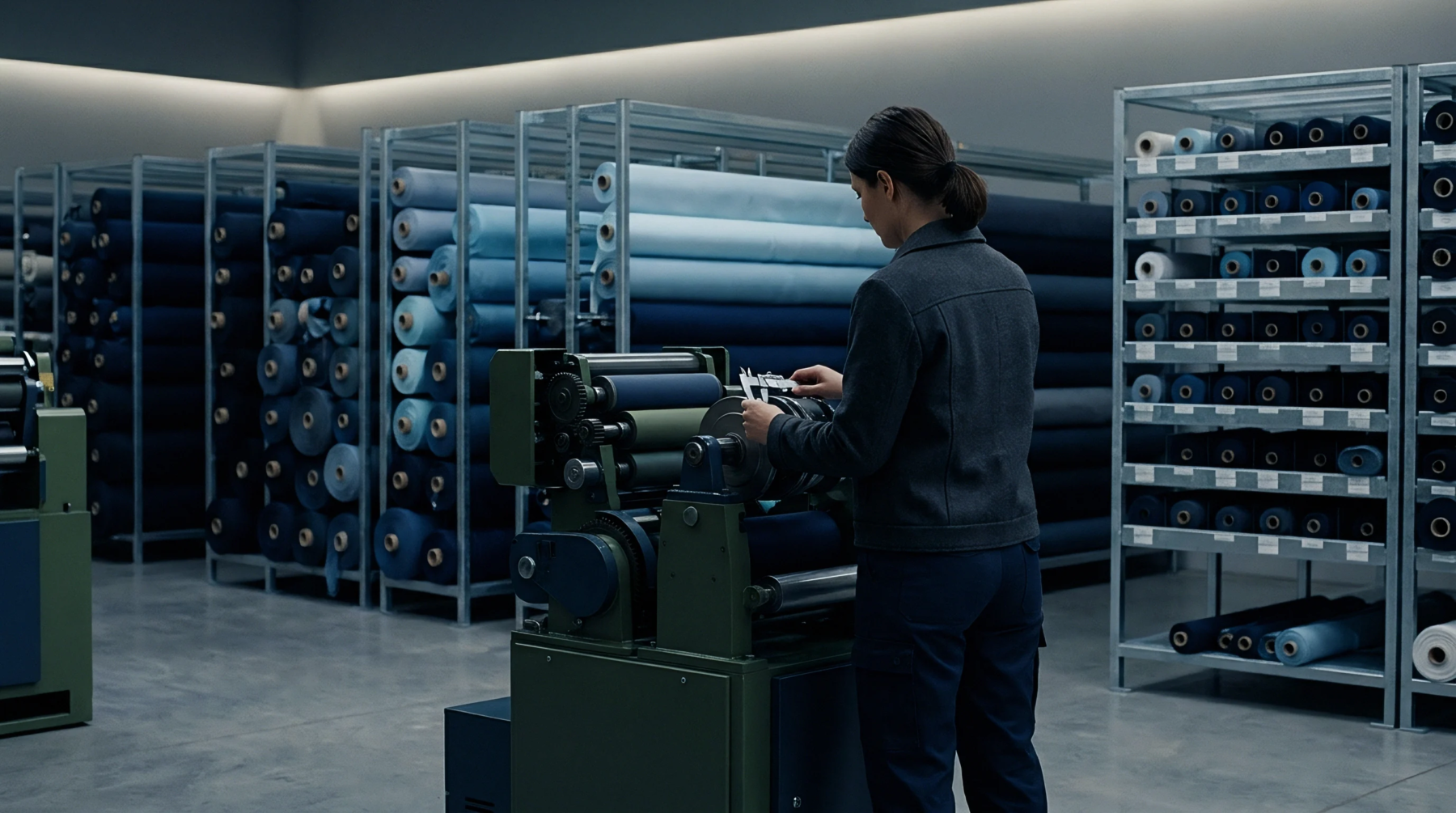
Chromatic Uniformity
Spectrophotometric variance across a single batch of dyed textile material measures the deviation from an established target wavelength and depth. Shade levelness relies on calibrated light sources and detection sensors to map color density across the width and length of a fabric roll. Dyeing vats generate gradients through temperature fluctuations or pressure drops during the fixation process.
Such hardware malfunctions create non-uniform absorption sites within the synthetic fibres. Quality control departments verify this metric by scanning samples at multiple intervals along the bolt to quantify the delta E value. Deviations beyond the accepted tolerance indicate faulty liquor circulation or chemical exhaustion issues during the wet processing stage.
Dyeing Tolerance
Consistency assessments allow production managers to identify the specific moment of failure during the coloring cycle. High levels of shade levelness demonstrate that the chemical equilibrium remained stable inside the pressurized vessel throughout the entire duration of the dye exhaustion phase. Low results often originate from uneven tension on the feed rollers or improper pretreatment of the raw grey goods which prevents uniform saturation.
Operators rely on continuous monitoring software to detect these discrepancies before the fabric undergoes final heat setting or mechanical finishing steps. Each deviation from the baseline represents a cost increase due to potential re-dyeing or total disposal of the batch. Digital sensors now replace visual inspection to remove the subjectivity inherent in human perception of hue and saturation.
Strict adherence to these limits ensures that every yard of fabric maintains the visual profile expected by the garment manufacturer.
Production Boundary
Mechanical limitations of the dye machinery restrict the degree of uniformity achievable with certain fabric blends. Natural fibres possess inconsistent absorption capacities that complicate the task of maintaining shade levelness across large production runs. Synthetic polymers exhibit higher affinity for disperse dyes, yet high-speed processing risks creating streaks if the cooling rate remains irregular.
Experts define the failure point as the threshold where the color difference becomes visible to the unaided eye under standard D65 illumination. Beyond this limit, the fabric becomes unsuitable for cutting because panels from different sections of the same roll will mismatch when joined in a finished garment. Maintaining stable pH levels and controlled additive injection helps prevent these localized concentration shifts.
Laboratory Verification
Benchmarking protocols require testing multiple specimens from the start, middle and end of each processed roll to capture the full range of variation. Technicians place these fabric swatches into a spectrophotometer to derive the precise spectral reflection curve. Comparing these curves confirms whether the shade levelness stays within the predefined commercial specification set by the buyer.
Fabric that fails this test requires immediate intervention to adjust the flow rate or the concentration of leveling agents in the subsequent cycle. Consistency in this measurement confirms the reliability of the industrial dyeing system under operational load. Data points gathered during this verification process provide the only objective evidence of dyeing quality for the supply chain.