Managing Bath Alkali Profiles for Low Liquor Ratio Cotton Dyeing
Low liquor ratio cotton dyeing demands progressive alkali profiling to suppress early hydrolysis, match bath exhaustion, and eliminate bulk shade streakiness.

Equilibrium
Cellulosic fibers swell in aqueous dye liquors, opening internal pore networks that let reactive dye molecules diffuse from the liquid phase into the fiber’s amorphous zones. At traditional high liquor ratios between 1:10 and 1:12, the large water volume buffers concentration shifts and keeps chemical equilibrium stable. Dropping the bath ratio to between 1:4 and 1:6 changes this thermodynamic environment.
With less water, higher mass concentrations of dye and dissolved sodium salts sit directly against the cotton surface, altering the electrical double layer and changing the kinetic rates of dye uptake.
The core chemistry depends on converting fiber hydroxyl groups (Cell-OH) into nucleophilic cellulosate anions (Cell-O⁻), which can then form covalent ether or ester bonds with the dye’s reactive groups. At standard dyeing temperatures, the acid dissociation constant of cotton hydroxyls sits near pH 13.5. Adding alkali brings the bath pH into the target window of 10.5 to 12.0, activating enough hydroxyl sites to start fixation.
When liquor volume is tight, local activity coefficients for hydroxyl ions and sodium cations rise non-linearly; water activity drops while the chemical potential of the dyestuff increases.
Cellulosate Ionization Dynamics
In a neutral aqueous bath, cotton fibers develop a negative zeta potential that repels negatively charged dye anions. Electrolytes like anhydrous sodium sulfate or sodium chloride shield this electrostatic charge so the dye can adsorb onto the fiber surface. In ultra-low liquor processing, achieving equivalent exhaustion takes the same total mass of salt per kilogram of cotton, but the concentration per liter of bath jumps significantly.
A recipe calling for 60 grams per liter of sodium sulfate at 1:10 becomes 120 grams per liter at a 1:5 ratio for the same salt mass load.
High ionic strength compresses the electrical double layer around the microfibrils, shortening the mean free path for dye migration and speeding up initial exhaustion. If alkali enters while dye molecules are concentrated on the surface without having diffused inward, rapid surface fixation follows immediately. This local conversion of Cell-OH to Cell-O⁻ under high salt concentrations creates an accelerated fixation front that strips dye from the boundary liquor layer faster than mechanical circulation can replenish it, leaving unlevel shade across the fabric face.
A bath ionic strength exceeding 1.8 moles per liter at a 1:4 liquor ratio reduces dye diffusion depth by 35 percent prior to alkali dosing.
The equilibrium constant for cellulosate formation depends directly on localized free hydroxyl ion concentration. Alkalinity must be metered to match how fast dyestuff diffuses into the core of the yarn bundle. High linear yarn densities and dense constructions resist quick liquid exchange.
When running a 300 gram per square metre combed cotton interknit at 1:4.5, the yarn core lags behind the surface liquor in reaching chemical equilibrium. Sudden alkali additions force outer fibers to fix up to 80 percent of adsorbed dye while inner fibers keep unactivated hydroxyl sites, causing severe ring dyeing and poor cross-sectional penetration.
Liquor Compression and Hydration Shells
Water molecules form structured hydration shells around both dissolved dye chromophores and electrolyte ions. Reducing bath volume limits the amount of uncoordinated bulk water, forcing dye molecules, electrolyte ions, and cellulose microfibrils to compete for available water to remain solvated. As free water becomes scarce at low liquor ratios, the chemical activity of dissolved alkali rises.
A sodium hydroxide addition reading pH 11.2 in a dilute bath can exert a chemical reactivity equivalent to pH 11.6 in a compressed liquor system.
Temperature changes complicate this thermodynamic state further. Cotton reactive dyeing typically runs isothermally at 60 degrees Celsius for vinyl sulfone dyes or 80 degrees Celsius for monochlorotriazine chemistries. As temperature climbs, water’s dissociation constant shifts, changing the effective hydroxyl ion concentration produced by a set mass of alkali.
In low-volume machines, this temperature-induced pH swing is amplified, triggering premature nucleophilic attack on the dye before it distributes evenly across the fabric rope.
Boundary layer thickness depends on the mechanical interaction between the liquor and the moving fabric rope. In low-fill jet dyeing vessels, fabric is driven by mechanical reels working alongside high-velocity liquor nozzles. Dwell time inside the nozzle assembly is brief, yet it is the primary zone for chemical transfer.
At low liquor volumes, high-shear contact time inside the nozzle drops, meaning every milliliter of recirculating liquid must maintain a uniform chemical concentration. Any localized variation in alkali density through the pump circuit rapidly shows up as longitudinal shade bands along the fabric rope.
Fixation efficiency comes down to competing reaction pathways. The main path is nucleophilic substitution or addition of cellulosate anions at the dye’s reactive center, creating a permanent covalent bond. The side path is the reaction of hydroxyl ions from water with that same reactive center, yielding an inactive hydrolyzed dye that cannot bind to cellulose.
At low liquor ratios, the higher mass ratio of cotton to water theoretically favors cellulosate fixation. Poorly managed alkali additions reverse this advantage by raising local hydroxyl concentrations and accelerating dye hydrolysis before fixation finishes.
Failing to balance cellulosate reaction kinetics with bath exhaustion produces permanent bulk defects. Ring-dyed yarns suffer heavy surface abrasion during later garment washes, exposing undyed fiber cores that show up as white frosted patches on finished goods. This unlevelness usually leads to total rejection of the dye lot, requiring strip-and-redye procedures that can reduce cotton tensile strength by up to 22 percent while wasting significant chemical rework costs.
Gradient
Controlling how fast alkali enters a low-volume bath prevents sharp localized fixation spikes. Standard linear dosing pumps alkali at a constant volumetric rate over a fixed period. At high liquor ratios, linear dosing yields acceptable levelness because the concentration change per minute is small.
At low liquor ratios, the same linear delivery causes an exponential surge in fixation during the first third of the dosing window, creating a steep chemical gradient that outpaces mechanical mixing.
Progressive dosing protocols overcome this by varying the volumetric delivery curve. The pump starts at a low flow rate, delivering a tiny fraction of the total alkali mass early on, then accelerates along a logarithmic or quadratic curve. This delivery rate matches the physical kinetics of cellulosate formation and fixation.
By keeping alkali low while bath dye concentration is highest, progressive dosing flattens the fixation curve and maintains a steady rate of dye fixation per unit of time across the full cycle.
Progressive Dosing Curves
Setting up a progressive dosing curve requires analyzing the specific dye chemistry in the shade. Trichromatic combinations containing vinyl sulfone, bifunctional fluorine-chloropyrimidine, or heterobifunctional reactive dyes have distinct reactivity profiles and ionization constants. A typical progressive curve follows a 1:3 exponential ramp: 10 percent of the alkali enters during the first 30 percent of dosing time, the next 30 percent enters over the middle 30 percent of time, and the remaining 60 percent is added across the final 40 percent of the cycle.
This progressive delivery profile keeps the bath exhaustion gradient under control. Early in the addition, bath pH climbs slowly from neutral up to around pH 9.8 to 10.2. In this lower pH range, high-reactivity dyes exhaust and migrate slowly without triggering fast cross-linking.
As dye concentration in the bulk liquor drops, the pump accelerates, driving pH to its final target of 11.2 to 11.8. The small amount of dye left in solution fixes quickly without causing unlevelness, simply because there is very little unbound dye left to produce local shade variation.
| Dosing Profile Type | Total Dosing Time (min) | Initial pH Ramp Rate (pH/min) | Maximum Fixation Rate (%/min) | Hydrolysis Ratio (%) | Shade Levelness (Delta E Max) |
|---|---|---|---|---|---|
| Single Shot Addition | 2.0 | 1.85 | 14.2 | 28.4 | 1.65 |
| Standard Linear Dosing | 20.0 | 0.22 | 6.8 | 19.1 | 0.85 |
| Stepwise 3-Stage Ramp | 30.0 | 0.14 | 4.2 | 15.3 | 0.42 |
| Progressive Exponential (1:3) | 45.0 | 0.06 | 2.1 | 11.8 | 0.18 |
Stepwise dosing offers an alternative for plants without variable-speed metering pumps. These protocols break the alkali charge into discrete additions separated by hold times. An initial 10 percent charge enters the vessel, followed by a 10-minute hold for pH to stabilize and dye to migrate slightly.
A second addition of 30 percent is followed by another 10-minute hold, before the final 60 percent charge is added. While workable, stepwise additions create temporary pH spikes at the point of injection, relying heavily on mechanical circulation to disperse the localized chemical charge before fabric reaches the nozzle.

Hydrolysis Kinetics
Dye hydrolysis scales directly with free hydroxyl ion concentration and bath temperature. This irreversible side reaction permanently inactivates the dyestuff by converting its reactive group into an unreactive hydroxy form. These hydrolyzed dye molecules still have structural affinity for cotton microfibrils and adsorb onto the fiber alongside fixed dye.
Because they lack covalent bonds, they must be washed off completely after dyeing to hit target fastness properties.
Excess alkali dosing at low liquor ratios increases dye hydrolysis rates by up to 40 percent without increasing total fixed yield on cellulose.
Progressive alkali profiling controls hydrolysis by holding bath alkalinity to the minimum level required for fixation at each point in the cycle. At high liquor ratios, the sheer volume of water drives higher absolute hydrolysis simply because water molecules far outnumber cellulose hydroxyls. Low liquor ratios narrow this water-to-cellulose ratio, offering a genuine chemical advantage.
But if alkali dosing is mismanaged and pH spikes early, that advantage disappears as localized hydroxyl saturation hydrolyzes the unabsorbed dye sitting in the compressed bath.
Balancing these kinetics requires tracking bath exhaustion alongside pH. Exhaustion should reach at least 70 to 80 percent under neutral salt conditions before alkali dosing starts. Separating the salt-driven exhaustion phase from alkali-driven fixation ensures dye molecules distribute evenly through the yarn before chemical cross-linking locks them down.
Combining salt and alkali additions at low liquor ratios reliably causes blotchiness across the fabric surface.
Evaluating progressive dosing profiles across low-volume jet installations helps establish practical control limits. Dosing pump speed must scale inversely with total bath volume. A shade run at a 1:4 liquor ratio requires a dosing profile roughly 1.5 times longer than the same shade run at 1:8.
Extending this window gives the fabric rope enough passes through the nozzle per unit of pH change to maintain levelness.
A good rule of thumb for low-volume jet dyeing connects rope speed directly to alkali pump rate: the dosing pump should never deliver more than two percent of the total alkali mass during a single full rope revolution through the nozzle assembly.

Reagent
The choice of alkali sets the baseline buffering behavior and overall alkalinity of the bath. Traditional cotton dyeing relies on solid anhydrous sodium carbonate (soda ash, Na2CO3), sodium hydroxide (caustic soda, NaOH), sodium bicarbonate (NaHCO3), or proprietary liquid alkali and silicate blends. Each agent has its own dissolution kinetics, dissociation behavior, and buffering capacity.
Choosing the wrong reagent for low liquor ratio processing introduces instability into the automated dosing stream.
Sodium carbonate is the standard alkali for warm-dyeing reactive dyes at 60 degrees Celsius. Dissolved, it buffers naturally between pH 10.5 and 11.0, resisting pH shifts from residual acid left on fabric after preparation and neutralizing. At low liquor ratios, however, soda ash’s solubility limit creates practical problems.
Dissolving large amounts of soda ash in small side-tank water volumes risks slurry formation and precipitation, clogging pump lines and causing inconsistent delivery.
Buffer Capacity and Alkali Selection
Buffer capacity measures how well a solution resists pH changes when hydrogen or hydroxyl ions are added. High buffer capacity prevents wild pH swings during processing. Sodium carbonate buffers effectively between pH 9.5 and 10.8.
But when dyes require higher fixation levels ~ like pH 11.5 to 12.0 for low-reactivity monochlorotriazine or trichloropyrimidine dyes ~ soda ash alone is not basic enough. Reaching those targets with soda ash requires additions that quickly exceed solubility limits in low bath volumes.
Mixed alkali systems solve these solubility limits while preserving buffer control. Combining sodium carbonate with sodium hydroxide gives a balanced chemical profile: sodium hydroxide provides the high hydroxyl ion density needed to reach target pH with minimal liquid volume, while sodium carbonate acts as the buffer backbone, preventing the harsh pH spikes caused by caustic soda alone. Liquid mixed alkali formulations pre-dissolve these components into stable concentrates meant for direct injection into machine bypass loops.
Unordered list of chemical failure modes observed during alkali dosing in low liquor ratio systems:
- Solubility Exceedance causes undissolved alkali crystals to settle on moving fabric ropes, producing localized chemical spots and white speckling.
- Premature Causticization occurs when concentrated sodium hydroxide enters too quickly, pushing local pH above 12.5 and instantly hydrolyzing reactive dyes.
- Carbonation Drift takes place when open storage tanks absorb atmospheric carbon dioxide, converting sodium hydroxide to sodium carbonate and weakening feed strength.
- Silicate Gelation occurs when silicate blends meet hard water or acidic carryover, forming insoluble silicic acid gels that coat machine piping and fabric.
Liquid Dosing Density Hazards
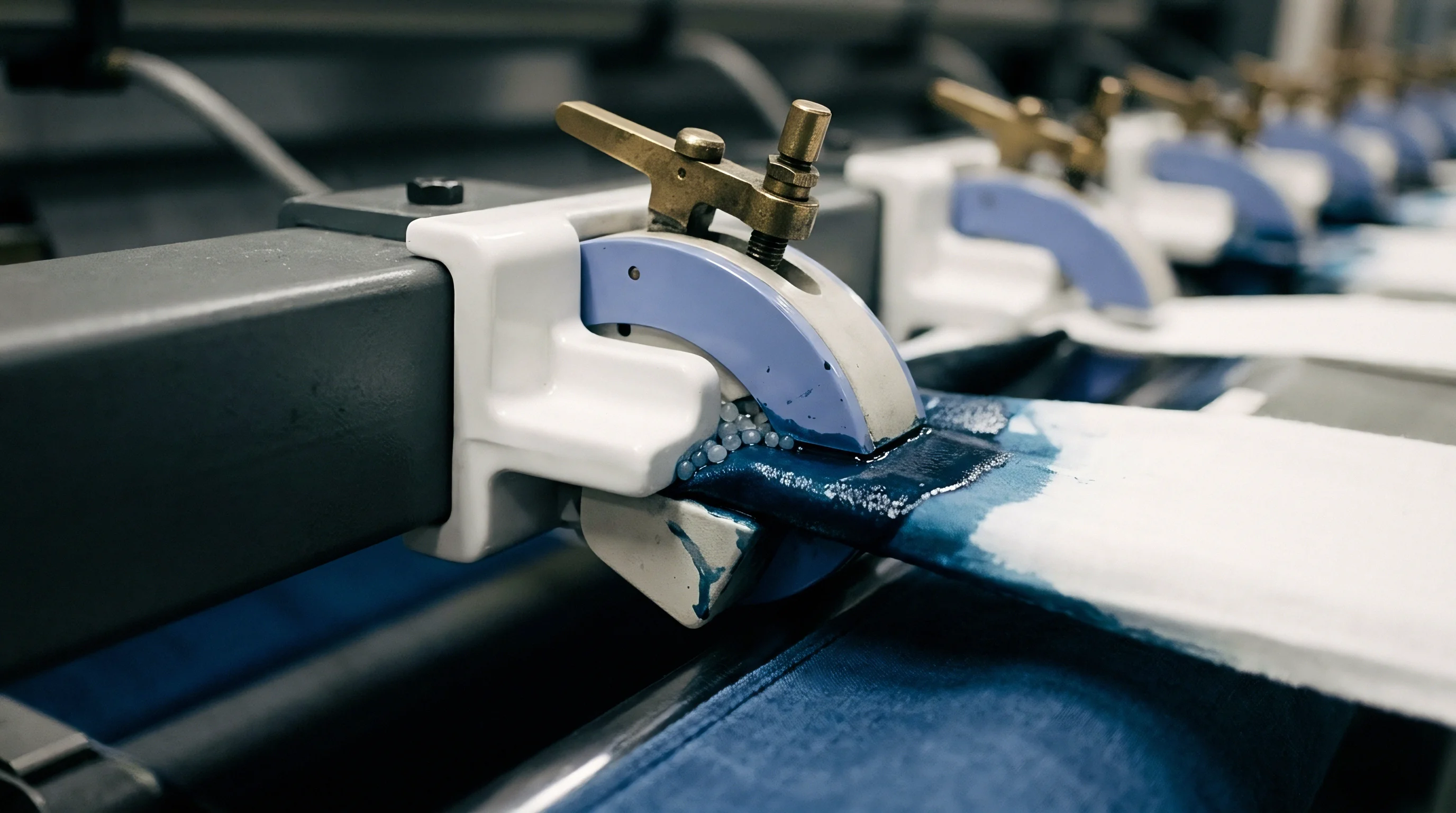
High-efficiency dyehouses rely on centralized automated liquid systems to pump concentrated alkali directly to dyeing vessels, eliminating manual powder dissolving and improving repeatability. However, liquid alkali concentrates have high specific gravities ~ often 1.30 to 1.50 grams per cubic centimeter for concentrated sodium hydroxide or mixed liquid systems. When injected into a low-volume bath, this dense liquid sinks straight to the vessel sump unless immediate mechanical agitation disperses it.
This density stratification creates distinct chemical zones in the vessel: fabric passing through the bottom encounters heavy hydroxyl ion concentrations, while fabric in the upper chamber sees diluted liquor. Dosing systems should inject high-density liquid alkali directly into the discharge pipe of the main circulation pump. Injecting at pump suction or into the vessel body guarantees stratification, leading to severe side-to-side and end-to-end shade variation across the batch.
Viscosity shifts in concentrated alkali solutions also throw off metering pump accuracy. At lower dyehouse temperatures, liquid alkali feeds thicken, reducing the volumetric output of positive displacement pumps. An uncalibrated pump operating in cold conditions delivers less alkali than the control software calculates, leaving bath pH below target and resulting in pale, off-shade production that misses color yield specs.
Surfactants added to liquid alkali products are intended to compensate for rapid pH shifts, but no surfactant overrides fundamental thermodynamic activity gradients or fixes physical concentration stratification in a compressed bath when circulation rates and dosing curves are out of alignment.
Circulation
Mechanical bath circulation drives chemical distribution through the moving fabric mass. In jet and soft-flow machines, a centrifugal pump draws liquor from the bottom of the vessel, pushing it through a heat exchanger, past dosing injection points, and through a narrow venturi nozzle. The high-velocity jet from the nozzle propels the fabric rope continuously around the tube.
In low liquor ratio machines, total bath volume is smaller while fabric loading stays high, leaving less free liquid per kilogram of fabric.
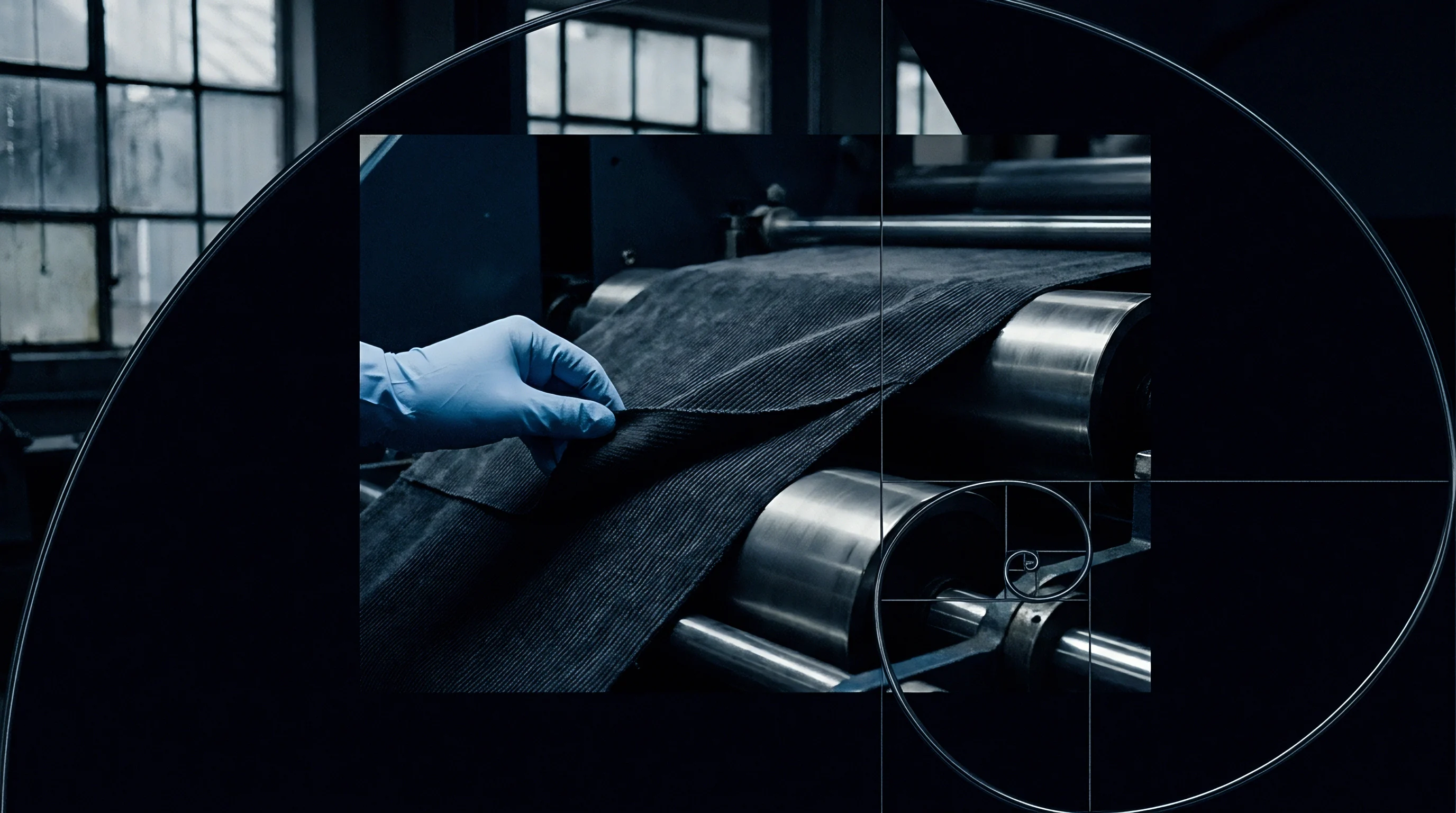
Rope turnover time defines the operational baseline for circulation. Calculated by dividing total rope length by linear transport speed, it measures the seconds required for one point on the fabric rope to complete a full circuit. Legacy machines at 1:10 ratios ran standard rope cycle times of 2.0 to 3.0 minutes.
Modern low-volume jets at 1:4 to 1:5 require speeds between 350 and 500 meters per minute to keep turnover times down to 45 to 60 seconds.
Rope Cycle Times and Bath Turnover
Level dyeing during progressive dosing relies on a balanced ratio between rope cycle time and bath turnover rate. The turnover rate is the liquor volume pumped through the nozzle per minute divided by total bath volume. Higher turnover rates keep vessel contents mixed and recirculated several times a minute.
Because total liquor volume is small at low liquor ratios, bath turnover rates of 2.0 to 3.0 turns per minute are achievable even with standard pump motors.
What matters most is chemical delivery per rope pass. Every section of the fabric rope must receive an equal charge of alkali as it goes through the nozzle. If the dosing pump delivers a sudden chemical pulse mid-cycle, only the fabric passing through the nozzle during that pulse sees the high alkali concentration.
The rest of the rope stays at lower pH until the next pass, creating longitudinal streaks along the bundle.
What Dynamic Controls Prevent Striations in Low Volume Baths?
Dynamic machine control systems link dosing pump speed directly to encoder feedback from the fabric drive reel. By tracking real-time rope speed and pump flow rates, the main controller syncs dosing pulses with mechanical rope cycles. This spreads each incremental pulse of alkali evenly across one full revolution of the rope, eliminating localized concentration spikes.
Numbered operational protocol for calibrating machine mechanical parameters against progressive alkali dosing pump rates:
- Measure total fabric rope length after vessel loading and wet-out, checking length with the reel revolution counter.
- Adjust main drive reel speed to hit a maximum target rope cycle time of 50 seconds.
- Set main circulation pump pressure to deliver at least 2.5 bath volume turnovers per minute through the nozzle assembly.
- Set minimum and maximum dosing pump delivery limits to match the calculated 1:3 exponential curve shape.
- Interlock the alkali dosing program with fabric motion sensors to stop chemical delivery instantly if the fabric rope stops.
- Verify dynamic nozzle clearance to ensure uniform liquor penetration through the full diameter of the compacted rope.
Nozzle selection heavily influences chemical exchange efficiency. Compacted fabric ropes running through an oversized nozzle experience low liquor pressure, letting liquid bypass the inner core of the bundle. An undersized nozzle over-compresses the fabric, causing surface chafing, pilling, and creasing while restricting chemical penetration to the outer layer.
Adjustable dynamic nozzles contract or expand their internal diameter based on liquor pressure and fabric flow, maintaining steady hydraulic displacement through the rope mass.
Variations in fabric weight per meter create ongoing operational challenges. Heavyweight cottons, like a 450 gram per square metre unbrushed three-thread fleece, hold substantial bath volume inside their structural core. This internal water lock further compresses the surrounding free bath volume, dropping a nominal 1:5 liquor ratio down to a true free-liquor ratio around 1:2.5.
Under such tight conditions, circulation pumps must run at maximum capacity to avoid immediate exhaustion gradients.
In multiple dyehouse trials, automated dosing routines failed despite perfect chemical dosing curves due to mechanical bypass inside the vessel: liquor accumulated in dead zones along the vessel walls instead of reaching the pump suction outlet. These dead zones acted as temporary chemical reservoirs, releasing concentrated alkali spikes back into the circulation loop unpredictably. It leaves an open engineering question: how can dyehouse automation reliably detect and neutralize hydraulic dead zones in ultra-low volume vessels during production without adding costly flow sensors inside the pressure boundary?
Calibration
Continuous control of bath alkali profiles requires accurate real-time measurement inside the vessel loop. Traditional dyehouse practice relies on manual sampling, where an operator draws liquor from a cooling tap and tests pH with benchtop meters or indicator paper. But cooling a sample from 60 degrees Celsius to 20 degrees Celsius shifts chemical ionization equilibrium, changing the measured pH by 0.3 to 0.5 units.
Adjusting alkali based on cooled samples routinely leads to wrong operator decisions.
In-line pH systems avoid manual sampling errors by measuring directly inside the pressurized, high-temperature loop. This requires industrial glass combination electrodes engineered for elevated temperatures, high pressures, and chemical exposure. These sensors use pressurized gel or solid-state reference junctions that resist process liquid ingress, keeping electrical potential baselines stable during continuous operation in low liquor ratio baths.

Electrode Error in High Sodium Environments
High electrolyte concentrations cause significant measurement interference known as sodium or alkaline error. Standard glass electrodes rely on a thin hydrated gel layer on the sensing membrane. Hydrogen ions in solution exchange with alkali metal ions in this gel layer to generate an electrical potential proportional to hydrogen ion activity.
In low liquor ratio dye baths with high sodium concentrations from sodium sulfate and sodium alkalis, sodium ions (Na+) compete directly with hydrogen ions (H+) for exchange sites on the membrane.
When bath pH rises above 10.5 with sodium ion concentrations exceeding 1.0 mole per liter, sodium competition becomes significant. The electrode interprets high sodium activity as additional hydrogen ions, reading a pH lower than the bath’s true chemical pH. If an automated dosing system relies on an uncompensated probe under these conditions, it keeps pumping alkali past the true target endpoint, overdosing the bath, accelerating hydrolysis, and causing pale shades.
| Dye Class / Reactivity | Electrolyte Dosage (g/L Anhydrous Na2SO4) | Target Measured pH (20°C Sample) | True Chemical Activity pH (60°C In-Line) | Sodium Error Correction Delta (pH Units) | Target Fixation Window (min) |
|---|---|---|---|---|---|
| Low Reactivity (Monochlorotriazine) | 80.0 | 11.80 | 11.35 | +0.45 | 60.0 |
| Medium Reactivity (Bi-functional VS/MCT) | 60.0 | 11.40 | 11.02 | +0.38 | 45.0 |
| High Reactivity (Dichlorotriazine) | 40.0 | 10.60 | 10.32 | +0.28 | 30.0 |
| Ultra-High Reactivity (Monofluorotriazine) | 30.0 | 10.20 | 9.96 | +0.24 | 20.0 |
Correcting sodium error requires temperature and ionic strength compensation algorithms in the controller software. Modern transmitters modify the Nernst equation using real-time RTD temperature inputs alongside pre-programmed electrolyte concentration curves, calculating true chemical activity pH from raw electrode millivolt signals.

Worked Correction for Ionic Error
Consider a practical example: a 1:4.5 liquor ratio jet carrying 300 kilograms of cotton fabric dyed with a bifunctional vinyl sulfone reactive shade. The recipe uses 60 grams per liter of anhydrous sodium sulfate (Na2SO4) and 15 grams per liter of sodium carbonate (Na2CO3) at 60 degrees Celsius. The raw signal from an uncalibrated in-line electrode reads an apparent bath pH of 10.85.
Calculating true chemical activity pH requires determining total bath sodium ion molality and applying the electrode’s alkaline error factor. First, convert mass concentrations to molar concentrations using molecular weights (Na2SO4 = 142.04 g/mol, Na2CO3 = 105.99 g/mol):
Moles of Na2SO4 = frac60 g/L142.04 g/mol = 0.422 mol/L
Moles of Na2CO3 = frac15 g/L105.99 g/mol = 0.142 mol/L
Calculate total sodium ion concentration ( ):
= (2 × 0.422) + (2 × 0.142) = 0.844 + 0.284 = 1.128 mol/L
At 1.128 mol/L and 60 degrees Celsius, standard industrial pH glass membranes exhibit a negative alkaline error of precisely 0.34 pH units. The true chemical activity pH inside the vessel is therefore:
True pH = Apparent pH + Alkaline Error Δ = 10.85 + 0.34 = 11.19
If the automated program drives apparent pH to a target of 11.20 without compensation, the pump keeps adding alkali until true pH reaches 11.54. At pH 11.54 and 60 degrees Celsius, the rate constant for vinyl sulfone dye hydrolysis accelerates by a factor of 2.4, cutting total fixed color yield by 16 percent and missing the reference shade swatch.
Uncompensated alkaline electrode error at high sodium concentrations shifts actual bath pH by up to 0.4 units, causing severe over-dosing and color yield destruction.
Automated sampling bypass loops protect electrodes from chemical fouling and thermal shock. A bypass loop continuously diverts a small side-stream of liquor from the main discharge line, passes it through a heat exchanger to stabilize sample temperature at 25 degrees Celsius, routes it past dual redundant pH sensors, and returns liquid to the vessel sump. These dual sensors cross-check millivolt outputs continuously; a difference exceeding 0.15 pH units triggers an operator alarm for sensor fouling or membrane depletion.
Standard Master Service Agreements for dyeing equipment often feature strict calibration enforcement clauses. A typical contract clause specifies that the equipment supplier warrants shade reproducibility within a Delta E CMC 2:1 limit of 0.50 across consecutive batches only when automated dosing loops operate under verified continuous multi-point electrode calibration with documented sodium error compensation active throughout every cycle.

Yield
Managing bath alkali profiles directly impacts the bottom line of wet processing. Precise control cuts chemical consumption, maximizes color yield per kilogram of dyestuff, reduces water use, shortens overall cycle times, and tightens batch-to-batch shade variance. In high-volume production, small gains in fixation yield add up to significant savings per finished meter of fabric.
Fixation yield measures the percentage of dye added to the bath that covalently binds to the cotton substrate. Uncontrolled alkali dosing at traditional high liquor ratios typically yields 60 to 70 percent fixation, leaving 30 to 40 percent of the dyestuff unreacted in the effluent or loosely adsorbed on the fiber. Implementing progressive alkali profiling in ultra-low liquor ratio vessels increases fixation yields to between 82 and 91 percent, depending on shade depth and dye chemistry.
Shade Reproducibility and Delta E Caps
Commercial fabric buyers enforce tight color tolerances, often setting a maximum Delta E CMC (2:1) limit of less than 0.60 against the approved lab dip. Hitting this target consistently across bulk production runs requires tight control over bath alkalinity profiles. Uncontrolled pH swings shift relative exhaustion rates among components in a trichromatic dye combination, causing metamerism, shade drift, and off-spec production.
Mismanaged alkali dosing leads to shade drift, forcing technicians into corrective additions or full batch strips. Corrective adds extend vessel occupancy by 1.5 to 3.0 hours per batch, using extra water, energy, and chemicals. Stripping and redyeing destroys production margins entirely, doubling water usage while degrading cotton fiber strength and abrasion resistance.
Financial Impact on Landed Metre Cost
Evaluating wet processing economics requires looking at total landed cost per finished meter. Landed cost covers greige fabric, dyestuff and chemicals, water and effluent treatment, energy, machine amortization, labor, and rework overhead. Moving from legacy 1:10 processing with linear alkali delivery to a 1:4.5 progressive profiling regime cuts costs across almost every operational category.
Decision checklist of mandatory technical specifications for inclusion in low liquor ratio dyehouse equipment RFQs:
- Variable Speed Dosing Systems capable of executing logarithmic, quadratic, and custom multi-segment progressive flow curves with volumetric accuracy within plus or minus 0.5 percent.
- Integrated Dynamic Nozzles featuring automated hydraulic aperture modulation linked in real-time to fabric speed encoders and vessel circulation pressure sensors.
- Dual Redundant In-Line pH Loop assemblies incorporating auto-flushing bypass manifolds, sample temperature stabilization heat exchangers, and software-based sodium error calculation models.
- High-Flow Main Circulation Pumps rated to deliver a minimum of 2.8 full bath volume turnovers per minute under maximum fabric loading mass conditions.
- Automated Dosing Interlocks configured to immediately suspend alkali metering operations upon detection of fabric motion stoppage, pump pressure drop, or pH signal deviation.
Water savings directly reduce both supply costs and effluent treatment surcharges. Running at a 1:4.5 liquor ratio cuts fresh water consumption during dyeing by 55 percent compared to a 1:10 baseline. Because higher fixation leaves less hydrolyzed dye on the fiber, post-dyeing wash-off requires fewer rinse cycles, saving additional water and thermal energy during soaping.
Direct dyestuff savings represent the largest financial gain. Elevating total fixation from 68 percent to 86 percent allows recipe software to cut raw dyestuff charges by 15 to 20 percent while maintaining the same visual shade depth and color strength. For high-volume dyehouses processing 20,000 kilograms of cotton fabric daily, an 18 percent drop in dye expenditure saves hundreds of thousands of dollars annually.
Landed cost optimization comes down to execution across every operational variable. Combining progressive alkali dosing profiles, calibrated in-line sensor loops, solid mechanical circulation, and proper chemical selection creates a stable dyeing process. This approach secures high first-time-right yields, cuts resource consumption per kilogram of fabric, preserves fiber strength, and consistently meets commercial quality specs.