Establishing Core Sampling Rules for Raw Cotton Quality Verification
Core sampling raw cotton requires deep core extraction, standard atmosphere conditioning, and calibrated instrument verification to secure commercial payment accuracy.


Probe
Cotton quality verification starts well before bales reach an opening line. Pulling an uncorrupted cross-section from a dense mass requires specific tool geometry; surface grabs only pick up weathered, oxidized lint or ambient dirt that skews the average. Getting an accurate sample means penetrating past the tie bands straight into the high-density core, deep enough that transit and storage exposure have had no effect.
Core extraction relies on pneumatic or manual slotted augers built to pierce bales packed beyond 450 kilograms per cubic metre. Spiral tip cutters slice through compressed lint without searing staple ends or building up friction heat that drives off ambient moisture. Straight push-probes fail in universal density bales because friction bunches the fibre ahead of the point, breaking long filaments and generating neps.
The slotted tube cuts an axial core, preserving the full sequence of layers from outer skin to geometric center.
Mechanical Geometry of Sampling Equipment
Rotary tube diameters run between 38 millimetres and 50 millimetres ~ wide enough to pull adequate mass in a single plunge without weakening bale packaging. Tubes under 25 millimetres pinch the staple, breaking longer fibres during extraction and artificially driving up short fibre index readings on downstream instruments. Tooling is machined from stainless steel alloy to avoid iron contamination that registers as false color specks in optical grading.
A polished internal bore lets the lint cylinder slide into the receiver chamber without twisting or compacting.
Prying samples out by hand with bale hooks introduces immediate bias. Samplers naturally grab loose lint from torn corners or accessible folds, skipping the compacted inner layers where moisture, trash, and micronaire shifts actually show up. Standard protocols require mechanical penetration from opposite sides of the bale to account for density variations created during gin box pressing.
Cutters have to reach at least 200 millimetres past the outer bands to pull lint untouched by humidity swings during transit.
A core cutter slicing cleanly across dense lint layers preserves native staple length distributions far better than manual prying.
Sampling depth governs the accuracy of all downstream lab data. Moisture absorbed during ocean transit penetrates the outer 50 millimetres within forty-eight hours of exposure to humid air. Pulling lint only from this skin layer understates true commercial dry weight, leaving buyers paying for transit water.
Core extraction reaches the untouched interior to show actual ginning moisture and true fibre mass. Validating raw lots across ports with high relative humidity differentials confirms this extraction depth requirement.
Physical Contamination Patterns across Compressed Layers
Gin trash, sand, and plant debris settle unevenly inside the press box during baling. Heavy particles like seed coat fragments fall toward the bottom packaging face, while lighter leaf trash spreads through the upper column. Single-point surface cuts miss this layering entirely, throwing off High Volume Instrument trash readings.
A continuous radial or axial core sample spans every deposition plane, giving an accurate composite view of trash area and particle count.
Polypropylene twine and torn plastic wrap present an even tougher problem. These synthetics press into the outer surface under high pressure and shred into fine fibrils when the bands are cut. Samplers must strip away outer protective wraps before drilling so the tool does not drag plastic fibers into the clean sample.
Core sample tubes fitted with clean outer collars shield the internal cutter, keeping external packaging debris out of the test specimen.
- Sheared Filament Neps created by dull auger cutting edges that tear staple ends during penetration, inflating short fibre counts.
- Thermal Desiccation Zone generated by excessive rotational speed on core drills, boiling natural moisture out of the sample specimen.
- Skin Layer Contamination caused by drawing lint from the outer 30 millimetres where ambient dust and marine humidity accumulate during transit.
- Asymmetrical Sample Volume resulting from unequal penetration depths on opposing bale faces, skewing composite micronaire averages.
Inadequate core extraction equipment compromises every subsequent test metric, invalidating lab reports and destroying the legal standing of commercial claims during trade arbitrations.

Lot
Commercial raw cotton transactions organize bales into discrete operational units called lots, typically 100 bales per lot under international merchant practice or 200 bales in specific regional markets. Testing reliability depends entirely on matching sampling frequency to variance within each consolidated lot. Uniform gin lots from single seed varieties and steady harvesting runs require lower sampling densities than mixed merchant lots assembled from multiple farms.
Choosing an arbitrary sample percentage without considering how the lot was assembled introduces significant error into classing metrics.
Under standard international trade rules, every bale in a high-value lot undergoes individual sampling for High Volume Instrument evaluation. In mill processing environments running certified uniform lots, reduced sampling schedules apply using square-root statistical models. Sampling schedules select bales using randomized sequence tables to prevent warehouse crews from hand-picking accessible units.
Extracting specimens from consecutive outer bales while ignoring central stack positions leaves quality variations undetected, corrupting the batch average.

Statistical Derivation of Sample Size Schedules
Sample size calculations depend on the acceptable margin of error and the standard deviation of properties like micronaire and staple length across the lot. When micronaire standard deviation exceeds 0.2 units within a 100-bale lot, a ten-percent sampling schedule fails to detect out-of-spec bales with ninety-five percent confidence. Increasing sampling frequency to twenty or one hundred percent becomes mathematically necessary to catch wide variations before mill laydown.
Lower variance allows reduced testing intensity without increasing commercial acceptance risk.
| Lot Classification | Total Bales in Lot | Mandated Sampling Rate (%) | Targeted Micronaire Precision | Confidence Interval (%) |
|---|---|---|---|---|
| 100 | 10 | ± 0.10 | 95.0 | |
| 100 | 100 | ± 0.03 | 99.0 | |
| 50 | 100 | ± 0.15 | 95.0 | |
| 100 | 100 | ± 0.02 | 99.5 | |
| Data normalized under standard atmospheric testing conditions (20°C, 65% Relative Humidity) following 24-hour equilibration. | ||||
Ginning practices strongly dictate internal lot consistency. Module averagers track quality in real time during ginning, enabling gins to assemble 100-bale lots with tight internal property distributions. Merchant lots created by pooling unsold bales from disparate sources exhibit wider distribution tails, where rogue bales with extreme micronaire or high bark content disrupt spinning performance.
Verification protocols must adjust sample extraction ratios based on the traceable origin of lot documentation.

Core Extraction and Handling Sequence
Executing a compliant core sampling procedure requires methodical execution at the dock or warehouse floor to maintain physical trace integrity.
- Verify lot identifier markings, bale numbers, and gin tags against shipping manifests to ensure physical stock matches the paperwork.
- Inspect outer packaging for tears, water staining, oil contamination, or band failures, marking compromised bales for segregated evaluation.
- Position rotary core sampling drill perpendicular to the bale side wall, aligning the bit midway between bale ties to prevent blade damage.
- Drive the cutter bit through the bale wall to a minimum depth of 250 millimetres, maintaining steady axial force without burning the lint core.
- Extract core cylinder cleanly, immediately placing the extracted lint into a vapor-impermeable polyethylene bag to seal internal moisture.
- Insert unified identification barcoded tags inside the seal bag alongside the lint sample, recording bay location and bale sequence numbers.
- Seal sample container completely, eliminating internal air space to prevent moisture migration across sample surfaces during transportation.
Failing to maintain strict environmental isolation during sample transfer renders moisture laboratory tests completely invalid upon arrival.
The standard contract specifies that in any dispute regarding lot quality, drawn samples taken by certified independent classers in accordance with international rules override all preliminary supplier declarations.


Equilibrium
Raw cotton is hygroscopic, continually absorbing or losing moisture to reach balance with surrounding air conditions. Standard testing procedures establish reference atmospheric conditions at 20°C temperature and 65% relative humidity. Moisture content significantly alters physical fibre properties, particularly strength and elongation parameters measured on High Volume Instrument lines.
Dry fibres turn brittle and lose tensile strength, yielding false low breaking force readings during mechanical testing. Over-conditioned fibres with high moisture content register inflated breaking tenacity, obscuring underlying structural weaknesses.
Commercial weight calculations rely on standard moisture regain allowances, fixed at 8.5% of dry weight in international trading rules. Raw cotton traded by net weight must be corrected back to commercial mass using oven-dry testing or calibrated high-frequency moisture meters. Delivering a lot at 10% moisture content without weight adjustments forces the buyer to pay for excess water at lint prices.
Establishing core moisture equilibrium inside the laboratory prior to classing eliminates ambient humidity distortions from parameter grading.

Laboratory Conditioning Mechanics and Sorption Isotherms
Conditioning uncompressed lint extracted from cores requires active forced-air ventilation inside climate-controlled rooms. Passive conditioning of dense core samples takes up to forty-eight hours because humidity penetrates packed fibre structures slowly. Rapid conditioning systems pass temperature and humidity-controlled air directly through loose lint specimens, achieving equilibrium in under four hours.
Hysteresis effects cause fibres approaching equilibrium from a wet state to retain higher moisture than fibres approaching from a dry state at identical ambient conditions.
Standard atmospheric conditioning at 20°C and 65% relative humidity stabilizes moisture regain at 8.5% prior to instrument tensile testing.
Standardized testing mandates pre-conditioning samples in dry air at 10% to 25% relative humidity and temperatures below 50°C before final conditioning. This pre-conditioning step forces all samples to approach final equilibrium along the absorption curve, eliminating hysteresis-induced measurement variation. Laboratories skipping pre-conditioning introduce a two percent error margin in measured tenacity and micronaire figures.
High-volume commercial testing facilities rely on continuous climate logging to prove compliance with strict conditioning standards.

Correcting Commercial Invoice Weight for Moisture Regain
Calculating commercial invoice weight requires establishing the oven-dry mass of representative core samples extracted across the lot. Oven drying places specimens at 105°C until successive weighings demonstrate zero weight change, indicating complete water removal. The commercial mass formula adds standard commercial regain allowance to dry mass, adjusting invoice weights across entire shipping lots.
This calculation prevents billing disputes caused by atmospheric moisture loss or gain during transit over ocean routes.
Verifying these moisture regain adjustments across multiple seasonal shipments confirms that unadjusted invoice weights systematically disadvantage buyers receiving raw cotton under arid transport conditions. Calculating final mass without moisture adjustments leads directly to landed-cost distortions. The mathematical relationship between dry mass, actual moisture, and commercial mass determines true delivered fibre cost per kilogram.
The standard moisture argument holds that moisture loss during desert warehousing represents temporary weight reduction without physical lint loss, self-correcting once the cotton sits in humid mill opener rooms.

Measurement
Quality evaluation of raw cotton relies on automated High Volume Instrument systems measuring key physical traits across large sample volumes. High Volume Instrument testing replaces subjective manual classing with objective physical metrics, standardizing parameter determination. Core samples supplied to testing lines undergo rapid optical and mechanical analysis, yielding data on staple length, micronaire, strength, uniformity, color grade, and trash content.
Calibration using international standard cottons guarantees measurement traceability across global testing facilities.
Micronaire determination combines airflow resistance and mass measurement, serving as an indirect indicator of combined fibre fineness and cell wall maturity. Air forced through a compressed lint chamber experiences a pressure drop directly proportional to the total surface area of the fibres. Fine fibres present greater surface area per unit mass, producing higher flow resistance and lower micronaire values.
Coarser or highly mature fibres allow freer airflow, yielding elevated micronaire readings that signify potential coarse yarn spinning limits.
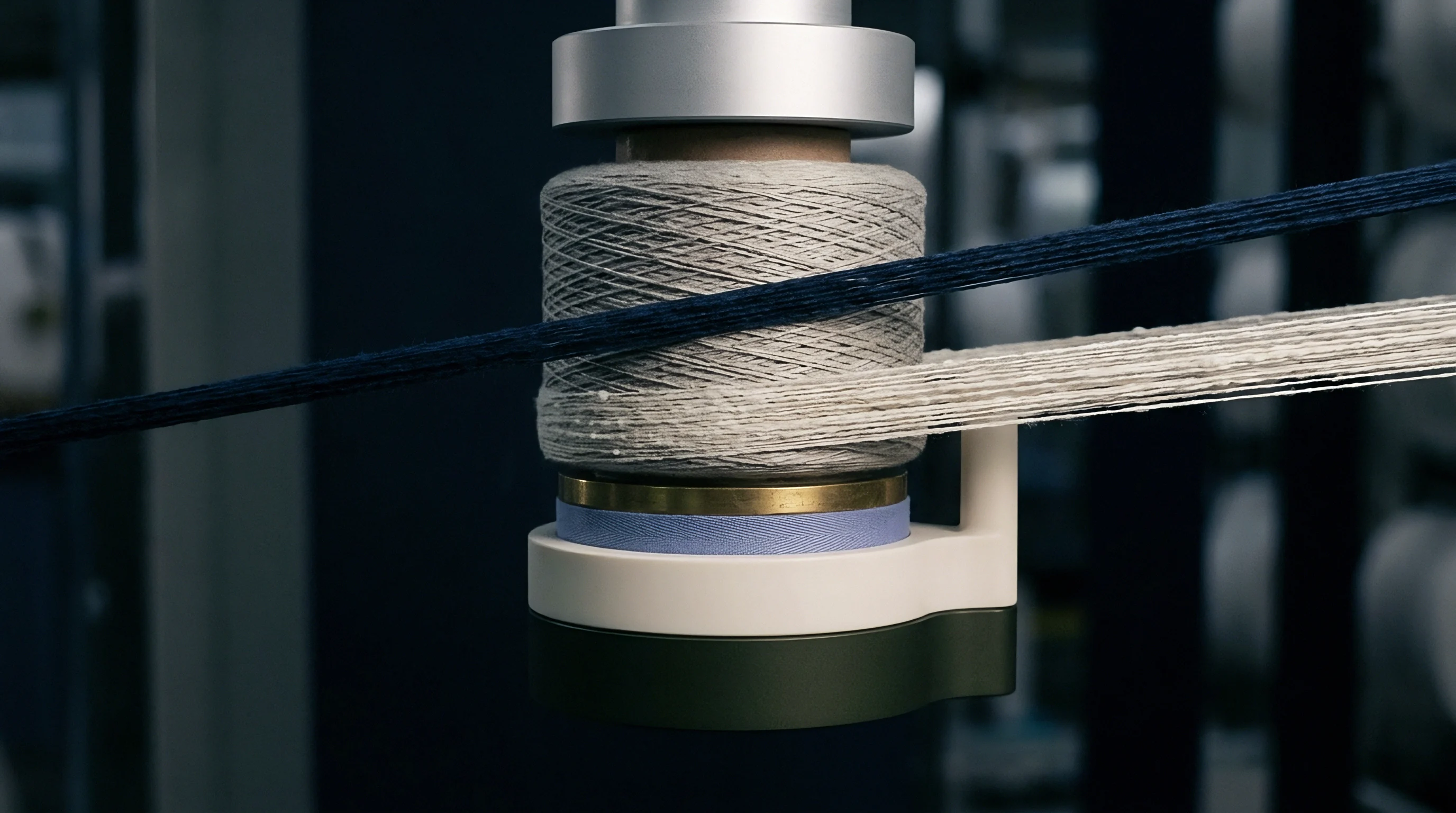
High Volume Instrument Operational Parameters
Staple length determination measures Upper Half Mean Length using optical scanning of aligned fibre combs drawn from core specimens. Specimen beards pass through an optical light attenuation field, mapping the length distribution profile across thousands of individual filaments. Uniformity Index compares Mean Length to Upper Half Mean Length, expressed as a percentage value.
High Uniformity Index numbers above eighty-three percent indicate consistent staple distributions, predicting low yarn nep counts and efficient comb performance during mill operations.
Tensile strength evaluation clamps a fibre bundle of known mass between pneumatic jaws set at a 3.18-millimetre gauge distance, pulling the specimen to rupture. Strength readings express breaking force in grams per tex, reflecting specific tenacity of the raw lint. Modern high-speed open-end and air-jet spinning technology requires high minimum tenacity levels to maintain yarn stability under high tension.
Low tenacity lint leads to excessive end-breaks during spinning, forcing mills to lower machine running speeds.

How Many Retests Resolve High Volume Instrument Deviations?
When an initial High Volume Instrument test returns values falling outside contractual specifications, a rigorous retesting protocol governs final lot disposition. Independent duplicate samples drawn from original sealed core specimens are distributed to two separate accredited laboratories. If original test and retest figures fall within standard tolerance bands, the average of all test runs determines the final certified value.
Outlier readings exceeding specified tolerance boundaries trigger mandatory full-lot re-sampling by an official independent arbitration classer.
| Quality Parameter | Measurement Unit | Instrument Repeatability Tolerance | Laboratory Retest Boundary | Critical Outlier Threshold |
|---|---|---|---|---|
| Micronaire Units | ± 0.05 | ± 0.10 | 0.20 | |
| Inches (Decimal) | ± 0.010 | ± 0.015 | 0.030 | |
| Grams per Tex | ± 1.0 | ± 1.5 | 2.5 | |
| Percentage (%) | ± 0.8 | ± 1.2 | 2.0 | |
| Percentage (%) | ± 0.05 | ± 0.10 | 0.25 |
Color grading uses a spectrophotometer measuring reflectance and yellowness parameters across prepared lint surfaces. Reflectance measures overall lint brightness, while yellowness indicates pigment accumulation caused by field weathering, insect damage, or fungal exposure. Discolored lint requires intensive chemical bleaching during fabric processing, increasing finishing costs and compromising final dyed shade uniformity.
Core sampling captures internal un-weathered lint surfaces, preventing superficial storage dust from artificially lowering color grade classifications.
Advanced image analysis calculates trash percentage area and particle counts by scanning flattened sample surfaces under controlled light sources. Trash measurements distinguish between leaf fragments, bark splinters, and grass contamination, aiding mill opening room layout setup. Grass and bark contamination severely impair carding efficiency, wrapping around high-speed rollers and causing yarn defects.
Accurately quantifying trash particle distribution prevents mill processing disruptions.
Whether ongoing instrument calibration drift across multi-shift classing operations can be entirely compensated by automated software calibration adjustments remains open to operational debate within testing facilities.

Tolerance
Commercial cotton trading operates within agreed tolerance bands applied to laboratory test results. Raw natural fibres inherently exhibit property variation, making absolute pinpoint quality specification commercially unfeasible. Trade contracts define acceptable range limits for parameters like micronaire, staple length, and strength, establishing price adjustment scales when lot test averages deviate from target specifications.
Off-spec parameters trigger financial allowances, price discounts, or flat rejection depending on the severity of the deviation.
Micronaire specifications typically designate a premium range between 3.8 and 4.2 units, where fibres demonstrate optimal maturity and fineness balances for high-grade yarn production. Values falling below 3.5 indicate immature fibres prone to nep formation, dye pick-up defects, and poor web stability during carding. Values exceeding 4.9 signify coarse fibres suited only for low-count coarse yarns or non-woven industrial applications.
Core sampling verification checks lot averages against these boundaries to apply correct discount schedules prior to payment authorization.

Commercial Discount and Premium Scaling Mechanics
Price adjustment scales calculate penalties based on point deviations from contract midpoints. A contract specifying 1.125-inch staple length applies incremental discounts per thirty-second of an inch drop below the threshold limit. Retest protocols allow suppliers to challenge penalty assessments, provided retest values land within statistical allowance windows defined by trade bodies like the International Cotton Association or the United States Department of Agriculture.
Understanding these scales allows buyers to protect profit margins against off-grade deliveries.
Discount schedules convert physical quality drops in micronaire or length into immediate unit price deductions per pound.
Commercial acceptance boundaries define strict rejection thresholds for severe physical defects. Micronaire figures under 3.0 or over 5.3 frequently entitle the buyer to reject the entire lot, forcing the seller to replace the stock or pay market price differences. Similar absolute rejection limits govern bark contamination, sticky honeydew presence, and low tenacity readings below 25 grams per tex.
Core sample documentation serves as primary legal evidence when exercising lot rejection rights under international arbitration rules.
- Dispute Qualification Review verifying that sampling, conditioning, and High Volume Instrument testing strictly followed international standards before filing formal commercial claims.
- Tolerance Window Validation comparing measured parameters against contractually allowed variation limits to determine applicable discount tiers.
- Arbitration Sample Isolation reserving sealed backup core specimens under strict chain-of-custody protocols for independent secondary lab evaluation.
- Financial Allowance Deduction applying schedule penalty rates directly against final invoice settlements prior to letter of credit releases.
Stickiness caused by insect honeydew represents an uncalibrated threat to mill spinning operations. Honeydew sugars coat high-speed spinning rolls, causing fibre wraps, yarn breakage, and costly machinery downtime. Core sampling protocols test for honeydew using thermodetector methods or chemical sugar tests, establishing clear contamination presence before processing begins.
A sound operational rule of thumb states that any lot exhibiting a micronaire standard deviation greater than 0.35 requires immediate quarantine regardless of whether the lot average falls inside contract limits.

Valuation
Final commercial valuation of a raw cotton lot synthesizes core sampling data, High Volume Instrument reports, and moisture adjustments into a definitive price per kilogram. Base contract prices apply strictly to standard base grade parameter combinations, such as Color Grade 31, Leaf Grade 3, Staple 36, and Micronaire within the premium range. Physical deviations identified through core sample verification adjust this base price up or down, directly impacting landed cost calculations.
Establishing exact financial settlement figures requires applying complex discount schedules to verified sample parameters.
Short fibre index values above twelve percent reduce spinning efficiency and yarn strength, yielding weak thread prone to pilling. High short fibre content forces mills to increase comb waste settings, removing excess short material at significant financial loss. Valuation formulas apply heavy price penalties to lots exhibiting elevated short fibre counts, compensating buyers for lower manufacturing yields.
Core sample verification catches high short fibre counts caused by aggressive mechanical ginning before raw lots arrive at the mill opening line.

Constructing Landed Cost Models from Verification Reports
Accurate landed cost calculations incorporate physical parameter discounts alongside moisture weight adjustments and freight tariffs. A lot delivered with lower-than-contract staple length and elevated trash area incurs double financial deductions: a unit price penalty applied per pound, plus a net usable mass reduction due to non-spinnable waste. Constructing a complete financial model from verification data guarantees that the final payment reflects true manufacturing value rather than initial seller declarations.
| Quality Parameter | Verified Sample Average | Contract Base Target | Commercial Price Adjustment (Points/lb) | Landed Cost Impact (%) |
|---|---|---|---|---|
| 3.2 | 3.8 – 4.2 | – 350 | – 4.2 | |
| 5.1 | 3.8 – 4.2 | – 250 | – 3.0 | |
| 1.08 Inches | 1.125 Inches | – 500 | – 6.0 | |
| 1.20 Inches | 1.125 Inches | + 300 | + 3.6 | |
| 42 (Spotted) | 31 (Strict Low Middling) | – 400 | – 4.8 |
Trash area deductions directly alter net clean yield figures. A core sample revealing three percent trash area on a 20,000-kilogram lot means paying freight and import duties on 600 kilograms of useless plant dirt and leaf remnants. Factoring clean yield adjustments into final accounting ensures full recovery of cleaning costs and transportation overhead.
Tariff classifications under Harmonized System headings rely on certified staple length documentation, where precise length determinations determine tariff lines and duty rates at customs border points.
Modeling these compound discount schedules across seasonal supply contracts demonstrates that core sample verification recovers significant value on off-spec shipments. Combining quality penalties with moisture adjustments generates accurate accounting deductions that protect buyer operating margins. Rigorous core sampling rules transform physical quality assessment into precise financial risk control, ensuring raw cotton investments deliver expected spinning mill productivity and finished product specifications.