Establishing Gravimetric Moisture Correction Limits for Mechanically Shredded Cellulosic Staple Yarn Specifications
Establishing gravimetric moisture correction limits requires adjusting commercial regain to 7.4-7.85% to account for hornification in shredded cotton yarns.
Regain
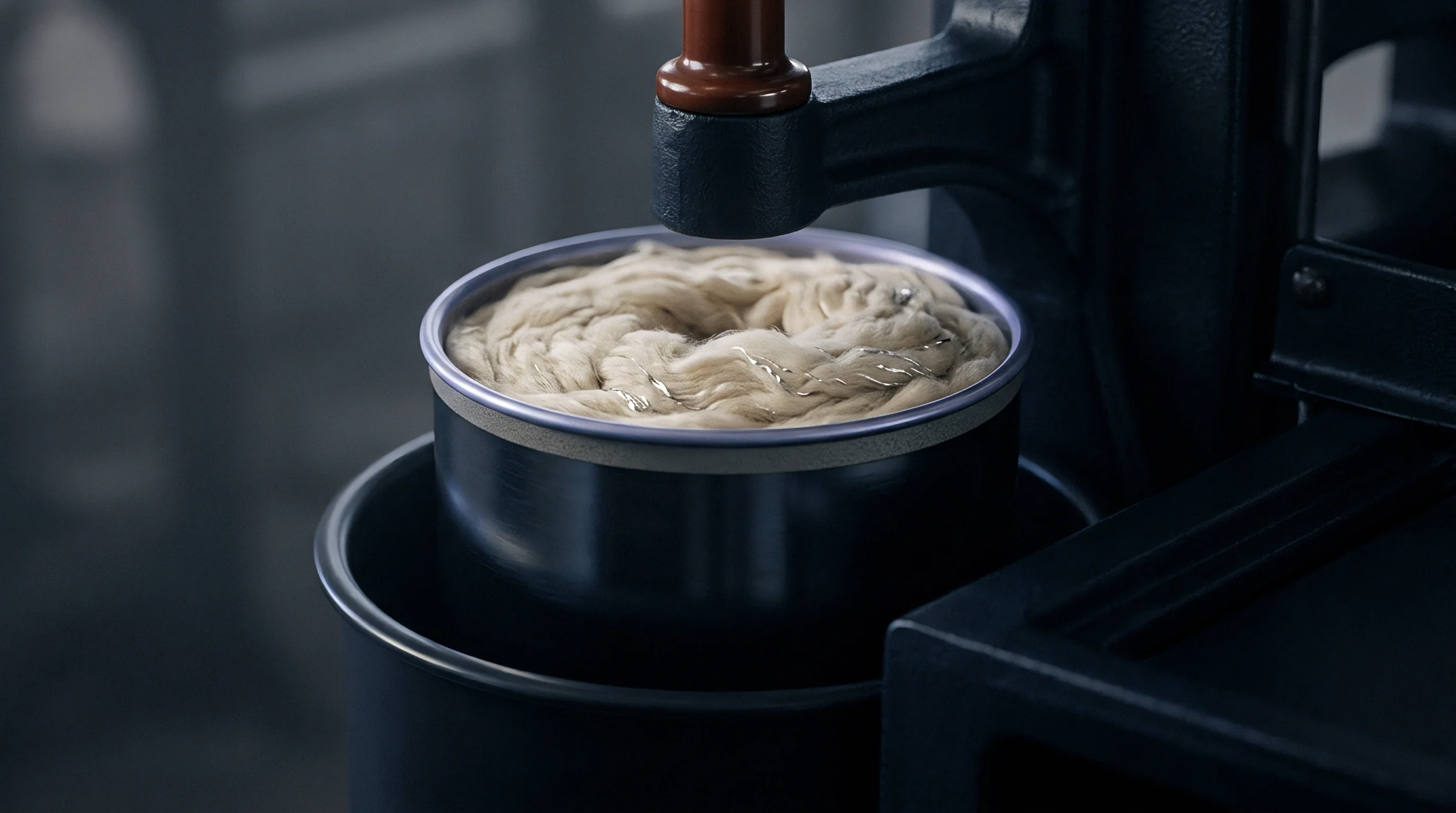
Commercial moisture regain governs the invoice mass of spun cellulosic yarn shipments. Standard virgin cotton specifications routinely assign a nominal commercial regain of 8.50 percent, allowing spinning mills to calculate billed weight by adding this fixed percentage to measured oven-dry mass. Mechanically shredded cellulosic staple fibres sourced from post-industrial cuttings or post-consumer textile waste alter this physical relationship.
The mechanical shredding sequence breaks individual fibre lengths, ruptures cellular lumen walls, and exposes fibrillar bundles to repeated friction and compaction. Water changes the commercial balance.
Mechanical shredding processes subject cellulosic materials to tearing cylinders, pinned beaters, and aggressive garnetting wires. These mechanical forces generate localized heat while tearing woven or knitted yarn structures apart. Repeated laundering, chemical resin finishing, and subsequent shredding collapse the accessible amorphous regions within cellulose polymer chains through hornification.
Hornification reduces the equilibrium moisture regain of recovered cotton fibres relative to virgin counterparts tested under identical ambient environments. A rotor spun yarn produced from 100 percent mechanically opened denim clip reaches an equilibrium moisture regain between 7.20 percent and 7.60 percent at standard conditions of 65 percent relative humidity and 20 degrees Celsius. Invoicing this yarn at the historical 8.50 percent virgin allowance systematically overcharges the buyer for water mass that the fibre structure physically cannot adsorb.
Conditioned mechanically shredded post-consumer cotton exhibits a moisture regain of 7.4 percent at 65 percent relative humidity and 20 degrees Celsius.

Operational Basis of Commercial Weight Calibration
Yarn contracts designate linear density and commercial mass as binding delivery metrics. Linear density values measured in English cotton count or tex fluctuate directly with ambient moisture content. A yarn package tested in a humid spinning shed exhibits a heavier mass and a coarser apparent count than the identical package conditioned in a standard testing atmosphere.
Sellers invoice water as polymer.
To eliminate ambient humidity distortions, international trade relies on gravimetric moisture correction limits governed by ISO 6741 and ASTM D2495. Technicians place yarn specimens in ventilated conditioning ovens, drying the material to constant mass at 105 degrees Celsius. Applying an agreed commercial moisture regain allowance to this measured dry weight yields the invoice mass.
When the physical blend contains recovered cotton, mechanical shredding causes pore volume reduction that restricts vapor absorption. Virgin cotton possesses an open internal lumen and undisturbed microfibrillar interstices, whereas shredded cotton contains collapsed lumens and frayed external fibrils. The lower sorption capacity means that mechanically torn fibres held at standard atmospheric equilibrium contain less physical water than virgin fibres.
Establishing a dedicated gravimetric limit prevents spinning mills from artificially humidifying finished yarn cones to achieve unearned commercial mass.

Commercial Allowance against Physical Sorption Limits
Contracts specifying mechanically opened cellulosic staple yarns balance physical moisture uptake against financial settlement terms. Sourcing specifications that carry an unexamined 8.50 percent regain figure create systematic inventory variances across downstream weaving and knitting operations. A knitter conditioning cones in an automated knitting hall discovers that dry yarn masses fall below packing list values once conditioned to equilibrium.
Excess liquid inflates invoice totals.
Standardized purchase specifications for mechanically opened yarns require a calibrated commercial allowance baseline. Experimental evaluations across industrial opening lines demonstrate that mechanically shredded post-industrial white cotton clips warrant a commercial moisture regain limit of 7.85 percent plus or minus 0.35 percent. Post-consumer shredded apparel waste containing residual crosslinking resins warrants a lower baseline of 7.40 percent plus or minus 0.40 percent.
Setting these boundaries directly on the purchase contract ensures that the gravimetric calculation mirrors the true physical sorption ceiling of the processed fibre mass.


Bale
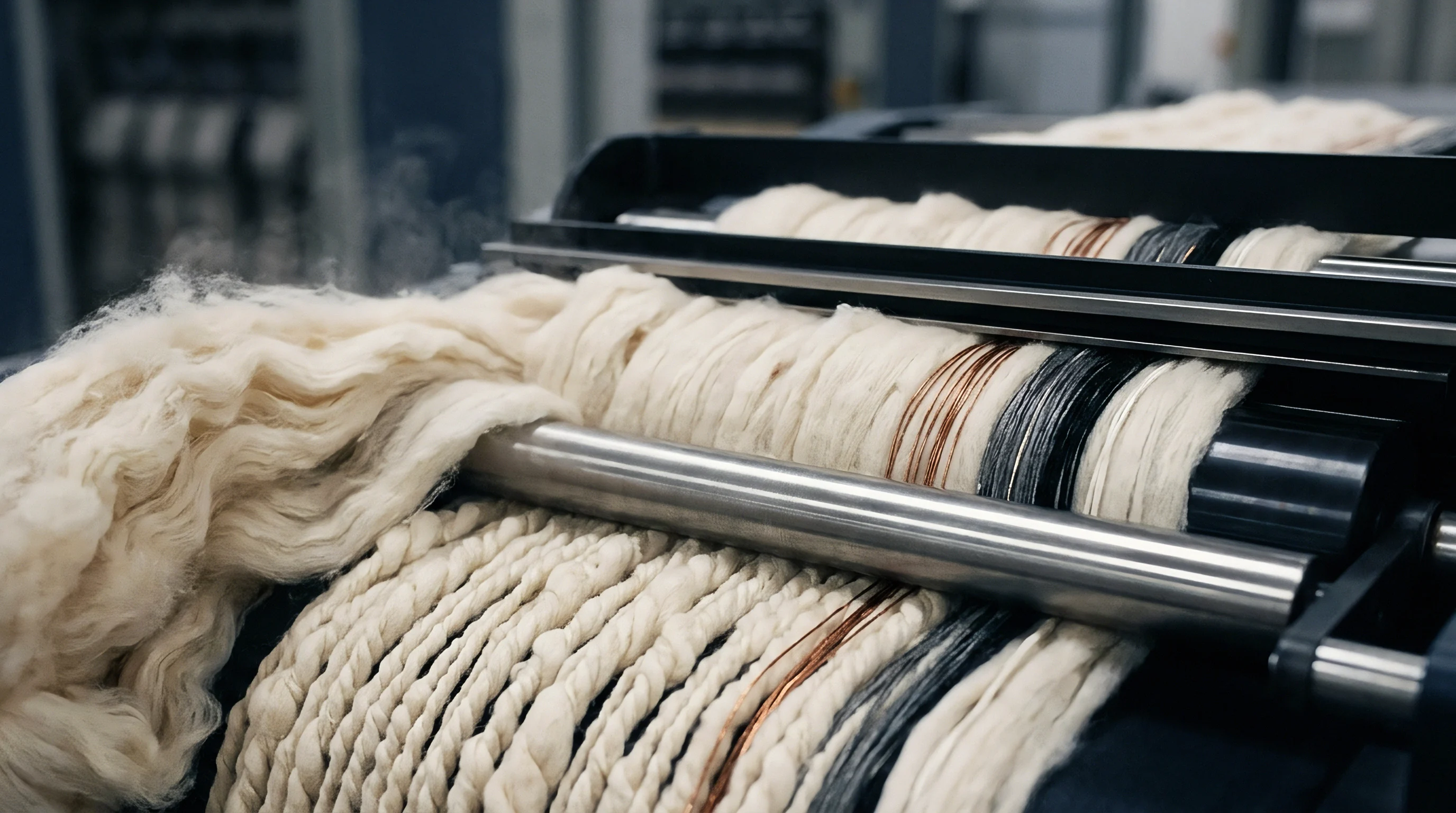
Secondary raw materials arrive at spinning facilities packed in dense bales with wide compositional variance. Unlike virgin raw cotton graded by staple length, micronaire, and trash content through automated high-volume instruments, mechanically shredded waste bales combine varying stages of polymer degradation. Bales contain whole yarn fragments, partially opened cloth scraps, dust, and fully liberated single fibres.
Cellulose binds ambient vapor dynamically.
Shredded waste bales carry localized moisture pockets resulting from water spraying during the mechanical tearing process. Opening facilities introduce water mists containing anti-static lubricants onto bulk rags before pin-cylinder tearing to minimize frictional heat and suppress dust fires. If the spraying system operates without closed-loop mass metering, bales absorb irregular moisture concentrations ranging from 6.0 percent to 13.5 percent by mass.
These uneven wet patches persist through carding and spinning, creating significant moisture variations along the length of finished yarn packages.

Stock Heterogeneity in Mechanically Tattered Waste
Fiber tearing lines alter the structural integrity of recycled feedstocks. Tearing cylinders rip woven structures, peeling apart twisted ring-spun and open-end yarns through shear stress. The resulting staple fibre distribution displays a short-fibre content exceeding 40 percent below 12.7 millimetres in length.
Internal pore volume collapses permanently.
Structural damage extends into the cell wall of the cotton fibre. Primary walls suffer severe mechanical stripping, while secondary wall layers develop micro-cracks and shear bands. These morphological disruptions compress the capillary voids that typically facilitate capillary condensation at relative humidities above 50 percent.
When waste bales contain blended fibres, such as intimate mixtures of cotton and polyester or cotton and viscose, moisture sorption becomes an average of the constituent polymer fractions. A shredded bale containing 70 percent mechanical cotton and 30 percent polyester possesses an equilibrium regain near 5.30 percent, reflecting the minimal 0.40 percent regain value of the synthetic component.

Non-Cellulosic Contaminants and Sizing Residues
Chemical foreign matter embedded within mechanically shredded stocks distorts gravimetric drying determinations. Post-industrial clippings often carry synthetic sizing agents, warp lubricants, and starch-based compounds applied during upstream weaving operations. Post-consumer apparel waste brings reactive dyes, durable press finish resins like dimethyloldihydroxyethyleneurea, silicone softeners, and fluorochemical water repellents.
Residual starches attract polar molecules.
Crosslinking resins bind hydroxyl groups along cellulose macromolecular chains, preventing water molecules from bonding to sorption sites. Conversely, residual starch sizing acts hygroscopically, artificially elevating moisture regain in localized fibre clusters. Paraffin waxes and silicone oils volatilize during thermal testing, registering as evaporated water unless extracted beforehand.
Sourcing contracts must outline clear preparatory protocols to differentiate between non-cellulosic finish loss and true moisture evaporation during oven validation.
- Bale Core Moisture Coring Extraction of core plugs across ten percent of incoming bales establishes the moisture distribution across the delivery. Technicians seal extracted samples in vapor-tight containers immediately at the warehouse dock to prevent ambient moisture exchange.
- Non-Lint Content Separation Shirley analyzer trials quantify foreign trash, micro-dust, and unopened textile fragments within the shredded lot. Lots exhibiting non-lint content above five percent generate irregular gravimetric readings during drying.
- Solvent Extractable Washing Soxhlet extraction with petroleum ether separates finish oils, softeners, and processing lubricants from the cellulosic mass. Removing extractable chemistry ensures that subsequent oven mass loss reflects solely evaporated water.
- Lot Release Authorization Quality supervisors compare measured core regain and clean fibre yield against purchase specification boundaries. Lots exceeding moisture tolerances face debit calculation or outright rejection before warehouse intake.
Mills often explain moisture variations by claiming that incoming rag bales naturally absorb unpredictable humidity from ocean shipping containers and monsoon transit routes.

Oven
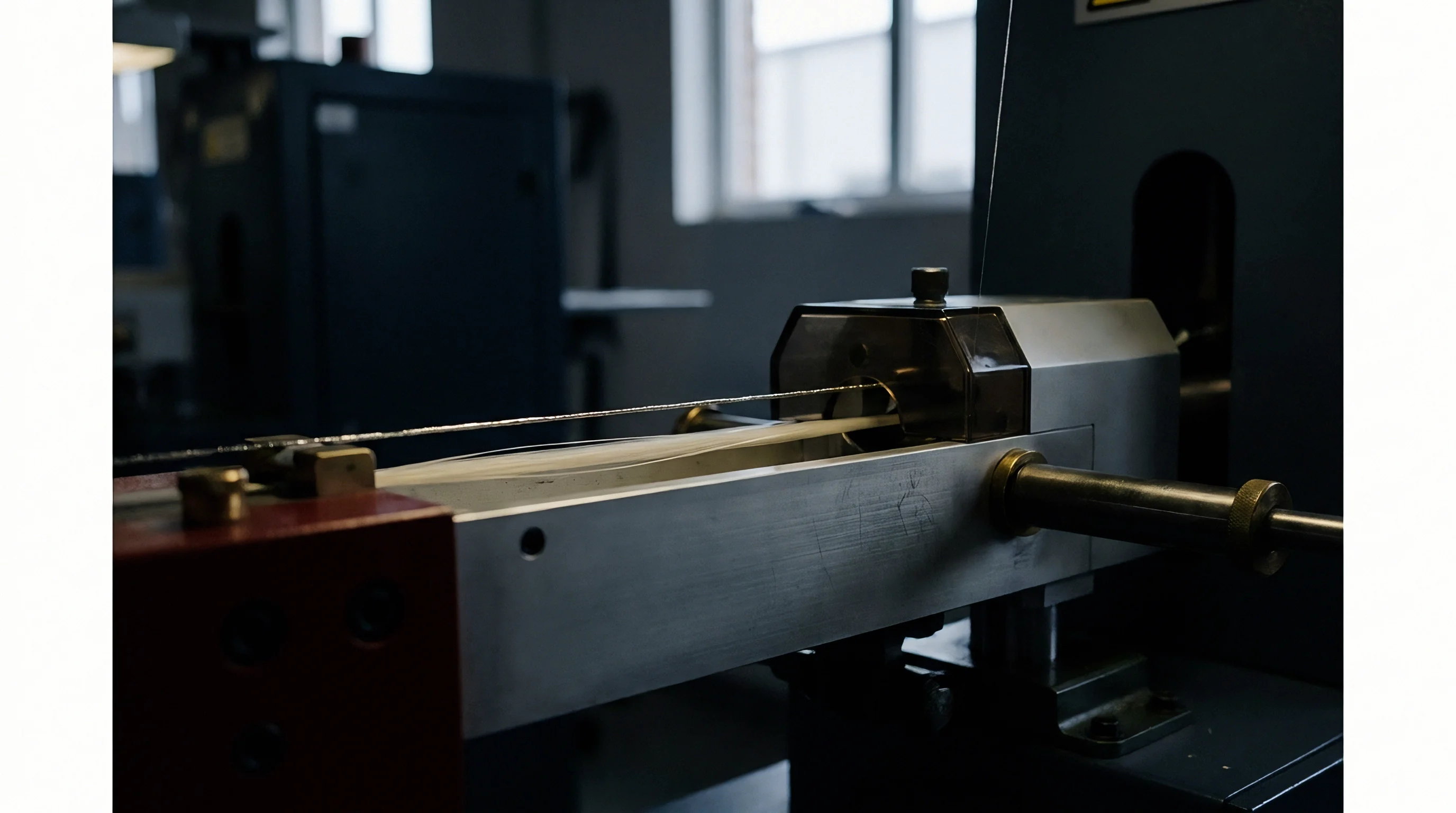
Direct gravimetric drying settles disputes. Testing laboratories utilize forced-air convection drying ovens operating under ISO 6741-1 guidelines to establish bone-dry fibre mass. The procedure demands precise weighing of yarn specimens before and after heating until consecutive weighings show no further mass change.
Fiber shredding fractures internal fibrils.
Oven drying parameters require rigid control when evaluating mechanically shredded cellulosic yarns. Modern ventilated ovens maintain test chambers at 105 degrees Celsius plus or minus 2 degrees Celsius. Air circulated through the chamber must pass through a desiccant drying column or derive from an intake with controlled absolute humidity.
If laboratory intake air carries high absolute humidity, hot air inside the chamber maintains a partial vapor pressure that prevents the yarn specimen from reaching absolute dryness. A residual moisture fraction of 0.20 percent to 0.40 percent remains bound within the crystalline cellulose lattice, skewing the recorded dry weight downward and inflating the calculated commercial regain.
Adopting the standard eight point five percent virgin cotton regain allowance under ISO 6741 without adjusting for mechanical fibre hornification inflates invoiced yarn mass by over one percent.

Thermal Desorption Parameters under Standard Methods
Gravimetric analysis requires sequential weighings to confirm dry endpoint attainment. Technicians prepare yarn skeins weighing between 50 and 100 grams, unwound from randomly selected cones across the shipment. Initial mass is recorded on an analytical balance calibrated to 0.001 grams.
The yarn specimen enters the drying chamber at 105 degrees Celsius for an initial drying duration of 60 minutes. Accurate dry mass governs payment.
Successive weighings occur at 15-minute intervals. Constant dry mass is achieved when the mass change between two successive weighings does not exceed 0.05 percent of the total sample weight. Weighing specimens inside the heated oven chamber prevents moisture uptake from room air.
If samples must be removed for external balance weighing, laboratory staff must seal them inside airtight tared weighing bottles within five seconds of oven exit and cool them in a silica-gel desiccator. Inadequate desiccator cooling creates buoyant air currents inside the balance chamber, distorting the analytical reading.

Distinguishing Water Desorption from Finish Volatilization
Thermal exposure at 105 degrees Celsius drives off more than pure moisture when testing mechanically shredded yarns. Spinning lubricants, coning oils, and residual finishing chemicals possess decomposition and volatilization temperatures near or below the standard test temperature. Dry heat extracts volatile lubricants.
Low-boiling mineral oils applied during open-end spinning to reduce rotor dust evaporate alongside moisture during the first 30 minutes of heating. When volatile matter leaves the yarn, gravimetric balances record this mass loss as evaporated water. The laboratory calculates an artificially elevated moisture content, which skews commercial invoice mass adjustments.
Resolving this discrepancy requires chemical pre-extraction under ISO 6741-3, washing specimens with dichloromethane or ethanol to quantify the true non-moisture finish percentage before oven exposure.
- Volatile Lubricant Stripping Yarn paraffin waxes and spinning oils evaporate during oven exposure, falsely registering as desorbed water.
- Cellulose Pyrolysis Inception Prolonged heating past four hours induces slight thermal degradation, turning white cotton brown and creating false mass reduction.
- Desiccator Sorption Rebound Ambient air enters poorly sealed desiccator chambers during cooling, allowing dried specimens to regain water before weighing.
- Balance Knife Edge Drift Unequal chamber temperature alters internal balance mechanics, shifting the zero point during high-throughput verification rounds.
Miscalculating volatile finish losses as water creates systematic errors in commercial weight settlement, causing purchasers to pay full yarn prices for evaporated processing chemicals while penalizing spinning mills through unwarranted moisture penalties.

Isotherm
Sorption isotherms describe equilibrium moisture regain across relative humidity gradients. Virgin cotton exhibits a classic sigmoidal Type II sorption isotherm characteristic of multi-molecular vapor adsorption on porous substrates. The curve reflects monomolecular surface layer coverage below 20 percent relative humidity, polymolecular layer condensation between 20 percent and 70 percent, and capillary condensation in large pores above 70 percent.
Moisture shifts apparent yarn count.
Mechanically shredded cellulosic fibres yield a depressed isotherm across all humidity levels. The flattening of the curve stems directly from mechanical fibre damage and prior thermal processing cycles. When textile goods undergo bleaching, mercerization, domestic laundering, and high-temperature tumble drying, cellulose microfibrils align closely and form irreversible hydrogen bonds.
This hornification mechanism eliminates accessible internal surfaces. Brunauer-Emmett-Teller gas adsorption measurements confirm that mechanically recovered cotton fibres show a specific surface area reduction of 15 percent to 28 percent compared to virgin cotton sliver, limiting the physical capacity for water vapor sorption.

Why Does Mechanical Tearing Shift Equilibrium Regain?
Intense shear forces alter the ratio of crystalline to amorphous cellulose. Virgin mature cotton features an amorphous fraction approximating 30 percent to 35 percent of total polymer mass, providing abundant unbonded hydroxyl groups that attract water molecules. Mechanical tearing rips fibres apart along slip planes, generating frictional heat that anneals amorphous chains into paracrystalline regions.
Spinners blend dissimilar waste streams.
The reduction in accessible hydroxyl groups restricts initial monomolecular moisture adsorption. Concurrently, the mechanical pulling action collapses the natural fibre lumen, flattening the kidney-shaped cross-section of the cotton into an irregular ribbon. This deformation closes internal macro-capillaries responsible for bulk capillary condensation at higher relative humidities.
Consequently, at standard testing conditions of 65 percent relative humidity, mechanically shredded cotton yarn reaches equilibrium at roughly 7.40 percent moisture regain, whereas undisturbed virgin cotton reaches 8.50 percent regain.
| Fibre Classification | Equilibrium Regain (%) | Specific Surface Area (m²/g) | Crystallinity Index (%) | Standard Regain Allowance (%) |
|---|---|---|---|---|
| Virgin Upland Cotton | 8.45 | 1.24 | 68.2 | 8.50 |
| Mechanically Shredded White Denim Clip | 7.55 | 0.98 | 74.1 | 7.85 |
| Mechanically Shredded Post-Consumer Blue Denim | 7.25 | 0.89 | 76.5 | 7.40 |
| Shredded Post-Consumer Lyocell Waste | 10.20 | 1.85 | 61.4 | 11.00 |
| Shredded 60/40 Cotton-Polyester Clip | 4.75 | 0.72 | 82.0 | 5.20 |

Hysteresis Gaps in Shredded Post-Consumer Fibres
Moisture sorption exhibits distinct hysteresis depending on whether equilibrium approaches from an adsorption or desorption path. A dry specimen absorbing moisture reaches a lower equilibrium regain than a wet specimen desorbing water at the identical ambient relative humidity. This hysteresis loop spans roughly 0.8 percent to 1.4 percent moisture regain in virgin cellulosic materials.
Recycled stock retains chemical additives.
Mechanical shredding narrows this hysteresis envelope. Severe fibre damage limits capillary water entrapment during desorption, causing desorbing fibres to shed moisture rapidly as relative humidity drops. When spinning mills condition recovered yarns by spraying water onto yarn pallets before packaging, the fibres sit on the adsorption branch of the isotherm.
A yarn conditioned upward through adsorption reaches equilibrium at a lower moisture percentage than one drying downward from a saturated state. Sourcing specifications failing to define the pre-conditioning history allow suppliers to take advantage of this hysteresis gap, claiming full equilibrium compliance on yarns that contain unbonded surface water.
The exact thermodynamic distribution of water molecules between the crystalline boundaries and the fractured amorphous zones of mechanically shredded cellulosic polymers remains an open question in textile physics.

Settlement
Financial adjustments follow gravimetric verification. Yarn invoices state gross delivery weight, tare bobbin weight, net delivered weight, and invoiced commercial weight. Sourcing contracts govern whether settlement occurs on actual net weight or calculated invoice mass based on standardized moisture allowances.
Sellers claim standard virgin allowances.
When procurement contracts lack specific gravimetric limits for mechanically shredded content, mills calculate billed weight using virgin commercial moisture regain values. A shipment containing 20,000 kilograms of clean dry shredded yarn mass invoiced under the standard 8.50 percent cotton allowance results in a billed mass of 21,700 kilograms. If the physical blend reaches equilibrium at 7.50 percent regain, the true physical delivery contains only 21,500 kilograms of material.
The buyer pays for 200 kilograms of phantom yarn mass on every container load, accumulating substantial cost over annual production volumes.
Yarn buyers paying for unadjusted nominal regain allowances purchase condensed moisture rather than usable polymer.

Commercial Mass Calculations on Invoiced Shipments
Contractual settlement relies on standard formulas established by the Bureau International pour la Standardisation des Fibres Artificielles and ISO 6741-2. Invoiced weight calculations derive directly from laboratory bone-dry determinations. Spinning mills bill gross weight.
The standardized calculation establishes billed mass through a straightforward formula: invoiced mass equals oven-dry mass multiplied by one plus the commercial moisture regain allowance divided by 100, multiplied by one plus the commercial allowance for natural or processing additives divided by 100. When testing reveals that delivered moisture exceeds contract boundaries, the buyer issues a formal debit adjustment. If delivered moisture content falls below the lower tolerance boundary, the supplier earns an upward commercial adjustment, provided contract clauses permit credit for dry deliveries.
| Delivery Scenario | Delivered Moisture (%) | Oven-Dry Mass (kg) | Corrected Weight (kg) | Billed Variance (kg) | Financial Debit at $3.20/kg |
|---|---|---|---|---|---|
| Nominal Contract Baseline (7.85% Regain) | 7.85 | 18,544 | 20,000 | 0 | $0.00 |
| Excess Mill Water Spray (10.50% Moisture) | 10.50 | 18,100 | 19,521 | -479 | -$1,532.80 |
| Virgin Regain Misapplication (8.50% Regain) | 8.50 | 18,433 | 19,880 | -120 | -$384.00 |
| Dry Shipment Delivery (6.20% Moisture) | 6.20 | 18,832 | 20,310 | +310 | +$992.00 |

Where Do Commercial Allowances Break Down?
Contractual disputes arise when spinning mills fail to separate added water from base polymer weight. Mills often condition open-end yarns in humidification tunnels or vacuum autoclave chambers to stabilize twist and prevent snarls during knitting. This autoclaving process can force moisture contents up to 11.0 percent into the packages immediately before plastic shrink-wrapping.
Packing wet yarn traps moisture inside the film, preventing evaporation during transport.
When pallets reach the destination knitting factory, technicians unpack goods and discover mould, damp cone bases, and erratic tension profiles across yarn packages. If testing shows the shipment contains moisture above contractual limits, the buyer holds legal right to financial reimbursement. Standard terms dictate that excess moisture weight is deducted from invoiced yarn value, with the mill absorbing freight and duty costs on the excess water mass.
- Oven Dry Baseline Verification Certified testing reports establish the true bone-dry mass of incoming yarn lots using calibrated ventilated ovens.
- Commercial Regain Designation Purchase contracts specify an agreed 7.85 percent regain for post-industrial stock rather than the 8.50 percent virgin allowance.
- Extractable Non-Solvent Adjustment Technical sheets account for paraffin waxes and lubricants to prevent counting finish chemistry as water.
- Landed Invoice Mass Reconciliation Accounting teams reconcile freight invoices and customs declarations using corrected gravimetric delivery weights.
Commercial contracts enforcing ISO 6741 Clause 4.2 allow buyers to deduct measured moisture weights exceeding the specified commercial tolerance directly from pending letter-of-credit settlements.


Variance
Specification tolerance bands define the operational boundaries of commercial trading. A specification that fixes moisture regain at a single numeric value without defining allowable variance invites continuous commercial friction. Industrial spinning operations process variable raw waste bales under shifting weather conditions, generating natural fluctuations in delivered yarn moisture.
Moisture alters yarn linear density.
A functional purchase specification establishes an explicit moisture tolerance window around the baseline commercial regain value. For mechanically shredded post-industrial cellulosic yarns, industry practice sets a baseline regain of 7.85 percent with an allowable tolerance window of plus or minus 0.50 percent. When delivered yarn tests between 7.35 percent and 8.35 percent moisture regain, the invoice clears without commercial penalties or administrative adjustments.
Deliveries falling outside this tolerance band trigger automated debit formulas or delivery rejections.
Solvent extraction isolates volatile processing oils that standard drying ovens miscalculate as evaporated water.
Establishing Contractual Tolerance Windows
Tolerance definitions must account for spinning system differences. Ring spun yarns produced from mechanically shredded blends require higher twist multiples to bind short fibres, resulting in compact yarn cross-sections that resist rapid moisture uptake. Open-end rotor yarns feature a bulkier, more accessible structure with wrapper fibres that absorb ambient moisture rapidly.
Sourcing specifications reflect these mechanical distinctions by adjusting the moisture tolerance window according to the spinning technology deployed.
Yarn linear density also influences moisture distribution across packaged cones. Fine count yarns equilibrate rapidly throughout the cone volume, whereas coarse counts exhibit moisture gradients where outer yarn layers hold significantly higher moisture than inner core windings. Sampling procedures must account for this gradient by mandating the removal of outer yarn wraps before extracting laboratory test skeins.
Standardized protocols dictate discarding the outer 500 metres of yarn from sample packages to eliminate superficial transport humidity.

Execution Rules for Acceptance Testing
Receiving facilities establish formal sampling criteria based on statistical acceptance sampling under ISO 2859-1. When a container shipment arrives at the port of entry, quality teams pull random yarn packages across multiple pallets according to lot size tables. Specimens are sealed inside vapor-proof aluminum barrier bags within minutes of pallet opening to prevent moisture exchange with ambient warehouse air.
Laboratory testing proceeds through rapid oven drying or calibrated near-infrared spectroscopy cross-checked against gravimetric reference ovens. If testing indicates a moisture regain above the upper contract threshold, the buyer places the lot on commercial hold. The spinning mill receives formal notification alongside certified laboratory test certificates showing bone-dry determinations and calculated invoice adjustments.
Providing full visibility into gravimetric calculations preserves supplier relationships while defending buyer margins against inflated billing weight.
A specification without a defined gravimetric tolerance window transfers the entire cost of atmospheric water from the spinning floor directly to the buyer ledger.