Standard Laboratory Moisture Regain Corrections for Raw Cotton and Cellulosic Fibres
Commercial moisture regain corrections adjust oven-dry cellulosic fibre mass using statutory allowances to prevent buyers paying pure water rates on dry matter.


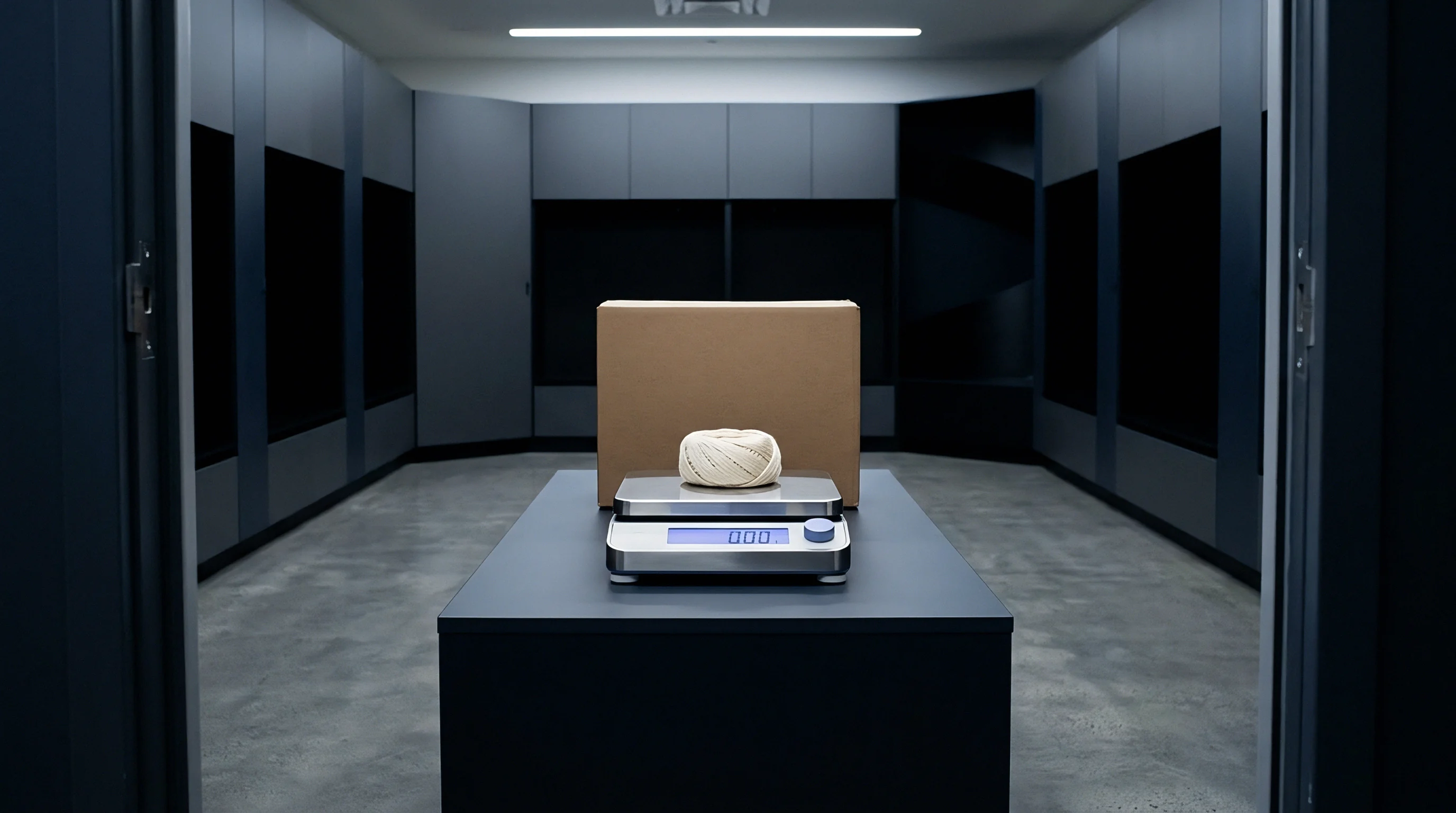
Tare

Oven Dry Mass Determination Procedures
Analytical laboratories operating under international settlement rules establish invoice weights by stripping all unbound water from test specimens. ASTM D2495 dictates drying uncarded raw cotton at 105 to 110 degrees Celsius in a ventilated oven until successive weighings spaced fifteen minutes apart show less than 0.1 percent mass variance. ISO 6741 enforces equivalent thermal boundaries for processed cellulosic sliver, yarn, and tow.
High-velocity airflow inside the desiccating chamber extracts free hygroscopic moisture without inducing thermal cleavage of the beta-1,4-D-glucan polymer chains. A specimen entering the chamber weighing 100.000 grams stabilizes at an oven-dry tare mass reflecting strictly non-aqueous matter, volatile finishes, and natural waxes. The gross delivered parcel mass multiplied by this dried fraction yields the dry clean content of the shipment.
Moisture content measures the water weight divided by the initial moist mass. Moisture regain divides the evaporated water weight by the final oven-dry mass. Commercial invoices never transact across unadjusted raw moisture content.
Every commodity transfer of bulk cellulosic stock translates dry mass back to invoice mass through a conventional, standardized percentage known as the standard commercial regain allowance. Misunderstanding the structural divergence between moisture content and moisture regain alters net financial yields across bulk container volumes. A measured moisture content of 7.826 percent on a baled upland cotton parcel equates precisely to a standard moisture regain of 8.500 percent on dried mass.
Standardized commercial regain allowances prevent trade counterparties from billing physical water weight at expensive raw commodity price tiers.

Commercial Weight Equations and Mechanics
Direct mathematical formulas convert bone-dry laboratory mass into officially billable parcel volume. ISO 6741-1 defines commercial mass through an arithmetic series accounting for oven-dry mass, conventional regain, and extracted non-fibrous matter. The standard operational formula calculates invoice mass via the following structure:
Commercial Mass = Oven Dry Mass multiplied by (100 plus Commercial Regain Allowance plus Finish Allowance) divided by 100.
Where contracts exclude finish extraction from commercial allowances, the finish allowance remains zero. In raw cotton merchandising under universal cotton standards, non-lint content extracted by Shirley Analyzer testing stays within the dry baseline mass unless gross foreign matter deductions are negotiated beforehand. Commercial settlement documents execute this calculation to determine whether the supplier overbilled or underbilled the physical delivery container relative to standard moisture conditions.
| Fibre Classification | ASTM D1909 Value (%) | ISO 6741 / BISFA Value (%) | Universal Cotton Regain (%) |
|---|---|---|---|
| Raw Upland Cotton (Lint) | 8.50 | 8.50 | 8.50 |
| Viscose Rayon (Staple) | 11.00 | 13.00 | Not Applicable |
| Modal Cellulosic Staple | 11.00 | 13.00 | Not Applicable |
| Lyocell Solvent-Spun Staple | 11.00 | 13.00 | Not Applicable |
| Cuprammonium Rayon (Cupro) | 11.00 | 12.50 | Not Applicable |
| Cellulose Acetate (Secondary) | 6.50 | 9.00 | Not Applicable |
| Cellulose Triacetate | 3.50 | 7.00 | Not Applicable |
| Flax (Scoured Line Fibre) | 12.00 | 12.00 | Not Applicable |
Regional divergence between ASTM and European standards demands explicit contract nomination prior to chartering shipments. Sourcing teams issuing purchase orders against raw regenerating cellulosic staples specify BISFA rules when shipping to European destinations, or ASTM D1909 when servicing United States trading houses. An unaddressed two-percent spread on high-tenacity viscose generates immediate invoice friction on forty-metric-ton consignments.
Under international trading norms, an absence of stipulated conditioning rules binds both parties to the standard moisture provisions established within the delivery port jurisdiction.


Hysteresis

Sorption Isotherms across Regenerated Geometries
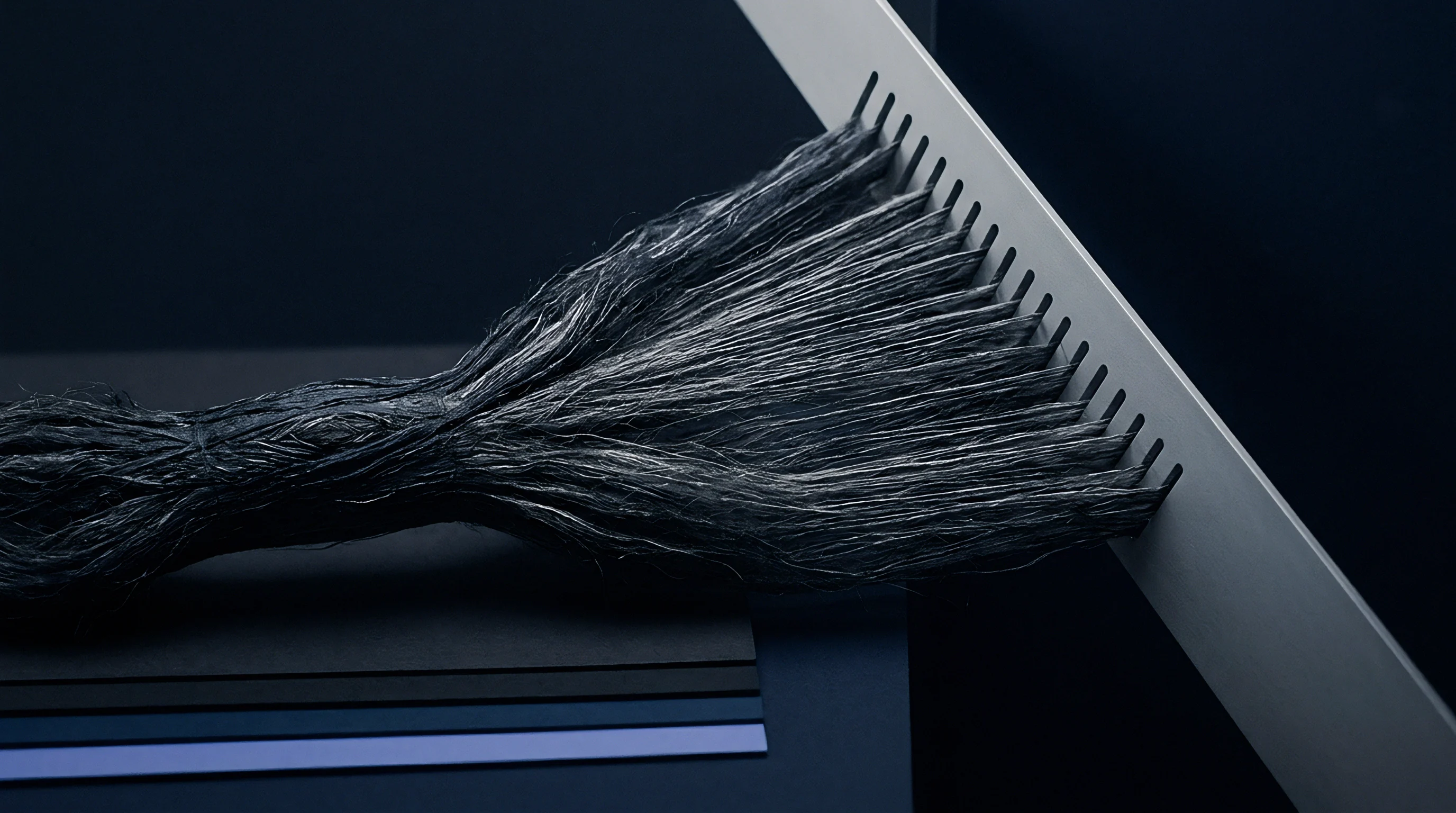
Sorption behavior in plant and regenerated celluloses operates along a thermodynamic hysteresis loop. Cellulosic fibres conditioning from a bone-dry state reach a lower equilibrium moisture regain than fibres desorbing from a saturated state under identical relative humidity and thermal levels. At standard testing atmosphere, specified by ISO 139 at 65 percent relative humidity and 20 degrees Celsius, raw cotton approaching equilibrium via absorption levels out near 7.50 percent regain.
That identical raw cotton lot desorbing from a wet harvesting state reaches equilibrium at 8.80 percent regain within that exact same conditioning room.
Regenerated cellulosic variants magnify this hysteresis effect due to their altered supramolecular morphology. Native raw cotton exhibits a Cellulose I crystal lattice structure maintaining an internal crystallinity index between 65 and 70 percent. Regenerated fibres undergo caustic dissolution and wet spinning, reorganizing into a Cellulose II lattice displaying a reduced crystallinity index between 35 and 45 percent.
The increased amorphous fraction multiplies the accessible hydroxyl groups available for hydrogen bonding with atmospheric water vapor. Modal, lyocell, and viscose exhibit distinct water retention values and sorption curves directly linked to their crystalline skin-core architecture.
Lyocell possesses a highly ordered, fibrillar Cellulose II interior derived from direct dissolution in N-methylmorpholine N-oxide. Viscose displays a pronounced skin-core differential formed by zinc-assisted coagulation baths retarding internal chain consolidation. Cuprammonium rayon lacks a skin-core division, exhibiting uniform amorphous dispersion throughout its round cross-section.
Moisture uptake kinetics reflect these processing routes directly. Accessible internal surface areas dictate moisture uptake capacity across relative humidity gradients.
Unconditioned test specimens pulled directly from humid warehouse environments introduce systematic analytical distortion into quantitative blend determinations.
Hysteresis loops distort uncorrected laboratory findings when specimens bypass controlled pre-conditioning ovens. ISO 139 mandates pre-conditioning test samples at a relative humidity between 10 and 25 percent at temperatures not exceeding 50 degrees Celsius for two hours prior to final conditioning. This procedural stage drives fibres into the absorption branch of the sorption isotherm.
Conditioning cycles entering the final chamber strictly from the dry side ensure repeatable, uniform equilibrium regain values across independent test laboratories.
Omitting the thermal pre-conditioning cycle leaves raw cotton test results wandering within a 1.3 percent indeterminate hysteresis deadband that nullifies accurate laboratory reproducibility.
Extractives

Non-Cellulosic Surface Fractions and Scouring Losses
Raw cotton bales contain foreign plant matter, natural fats, and cuticular waxes that alter observed gravimetric dry masses. Cotton wax consists of long-chain aliphatic alcohols, fatty acids, and esters deposited on the outermost primary cell wall. These hydrophobic components constitute between 0.40 and 1.20 percent of raw fiber mass depending on regional growing conditions and ginning configurations.
Pectic substances, water-soluble organic acids, proteinaceous matter, and mineral ash account for an additional 1.50 to 3.00 percent of raw lint weight. Sizing agents, lubricating knitting oils, and processing starches added during yarn formation introduce further non-cellulosic mass fractions.
Quantitative chemical dissolution routines require the total extraction of these non-fibrous bodies before attempting structural solvent analysis. ISO 1833-1 directs the preliminary elimination of finishing waxes and spinning lubricants using light petroleum ether solvent inside a Soxhlet apparatus for a period of four hours. Hot water extraction follows to strip residual sizing starches and water-soluble minerals.
Failure to dissolve the non-fibrous fraction inflates the apparent dry mass of the insoluble component during mechanical or chemical phase separations.
- Petroleum Ether Pre-Extraction strips natural cuticular waxes and hydrophobic paraffin processing lubricants that block aqueous chemical reagent penetration.
- Continuous Hot Water Leaching solubilizes residual sizing starches, pectic materials, and agronomic mineral ash deposits from the cellulosic matrix.
- Oven Desiccation Verification establishes the corrected extractive-free base weight through continuous mass monitoring until gravimetric equilibrium occurs.
- Correction Coefficient Application offsets negligible non-target cellulosic degradation induced by intensive multi-stage solvent extraction baths.
Chemical processing of wood pulp into viscose, modal, and lyocell dissolves raw agronomic impurities, leaving residual spinning oils as their primary non-fibrous variable. Wood-derived dissolving pulps enter cellulose regeneration lines with trace hemicellulose and lignin contents held below 0.15 percent. Finishes applied to filament tow or staple batts provide antistatic protection and fiber cohesion across the spinning floor.
These finishes amount to 0.30 to 0.85 percent of parcel mass, requiring solvent removal prior to definitive composition testing.
The chemical identification process breaks down when technicians mistake petroleum-soluble synthetic spin finishes for true insoluble synthetic polymers within a blended cellulosic yarn.


Dissolution

Solvent Mechanics in Quantitative Fiber Separation
Binary blends containing raw cotton and man-made cellulosic fibres present significant analytical challenges due to their shared basic chemical backbone. Both fiber classes consist of polymeric cellulose chains repeating the anhydroglucose unit. Classical quantitative chemical dissolution methods exploit kinetic differences in acid sensitivity and solvent access governed by the differing crystalline arrangements of Cellulose I and Cellulose II.
ISO 1833-3, ISO 1833-6, and ASTM D629 outline specific chemical systems designed to selectively solubilize regenerated cellulosic components while isolating natural cotton fibers.
ISO 1833-6 executes selective dissolution using a cold mixture of formic acid and zinc chloride. The reagent dissolves conventional viscose, cuprammonium rayon, and modal fibres while leaving the crystalline Cellulose I lattice of raw cotton intact. Maintaining tight thermal control during reagent preparation prevents degradation of the cotton residue.
The reagent solution is formulated by combining 20 grams of anhydrous zinc chloride with 68 grams of anhydrous formic acid and 12 grams of water. Technicians expose the dried, pre-extracted blend specimen to this mixture at 40 degrees Celsius for an exact immersion duration of two and a half hours, agitating the solution at regular fifteen-minute marks.
Lyocell displays higher chemical resistance than viscose due to its dense, highly aligned crystal structure. Standard zinc chloride and formic acid solutions dissolve lyocell incompletely, creating erroneous cotton yields on the analytical balance. ISO 1833-22 utilizes cold sodium zincate solutions or concentrated, ice-cooled 75 percent sulfuric acid baths to separate lyocell from native cotton.
The precise temperature of the sulfuric acid bath remains held between minus five and zero degrees Celsius. Elevated temperatures accelerate the hydrolytic cleavage of raw cotton, reducing insoluble residue mass and inflating calculated regenerated fiber percentages.
Every quantitative chemical dissolution introduces a minor mass loss in the insoluble residue. Chemical testing standards define an empirical factor, designated as the d-factor, to correct for this reagent erosion. The d-factor reflects the mass change undergone by the clean, insoluble component during chemical separation.
Untreated raw cotton processed through the formic acid and zinc chloride method requires a standard d-factor of 1.02. This factor adjusts the collected insoluble cotton weight upward by two percent to reconstruct its original uncorroded dry weight.
Applying the standard d-factor across cotton lots carrying atypical cuticular wax profiles creates minor analytical bias. Scoured or bleached cotton components dissolve at slightly elevated rates compared to raw greige cotton. Bleached cotton yields a d-factor between 1.03 and 1.04 within cold zinc chloride and formic acid baths.
Laboratories running standardized analytical suites without determining the processing history of the cotton fraction risk systematic shifts in their final declared blend ratios.
When analysts apply a default raw-cotton d-factor to heavily scoured open-end yarn stocks, the calculated cotton ratio falls short of the physical input mixture.


Reconciliation

Applying Commercial Regain to Chemical Residue Weights
Raw quantitative yields obtained from analytical balances register purely dry, solvent-stripped mass. These oven-dry percentages fail to represent commercial blend composition. Commercial percentages, as mandated by customs codes and product labeling legislation, reflect dry component masses adjusted by their respective standard commercial moisture regains.
Sourcing contracts and customs border clearances require translating dry laboratory yields through statutory regain tables to construct the legal fiber composition percentage.
The mathematical operation applying commercial moisture allowances follows a standardized distribution sequence. Let mass sub one and mass sub two represent the dry masses of component one and component two, corrected by their respective d-factors. Let regain sub one and regain sub two represent the official percentage commercial moisture regain allowances for each respective fiber.
The legal, commercially adjusted percentage of component one is determined by the equation:
Percentage Component One = (mass sub one multiplied by (100 plus regain sub one)) divided by the sum of (mass sub one multiplied by (100 plus regain sub one)) and (mass sub two multiplied by (100 plus regain sub two)), with the total fraction multiplied by 100.
Because natural cotton carries an 8.50 percent commercial regain allowance under ISO conventions, while modal and viscose carry a 13.00 percent allowance, applying standard regain mathematically inflates the regenerated cellulosic percentage relative to its bone-dry mass. A blend containing equal parts dry cotton and dry viscose yields an official commercial composition skewed toward the man-made component.
Applying differential commercial moisture regains systematically shifts calculated fiber composition percentages away from bone-dry mass ratios.
Worked Analysis: Viscose and Raw Cotton Combing Blend
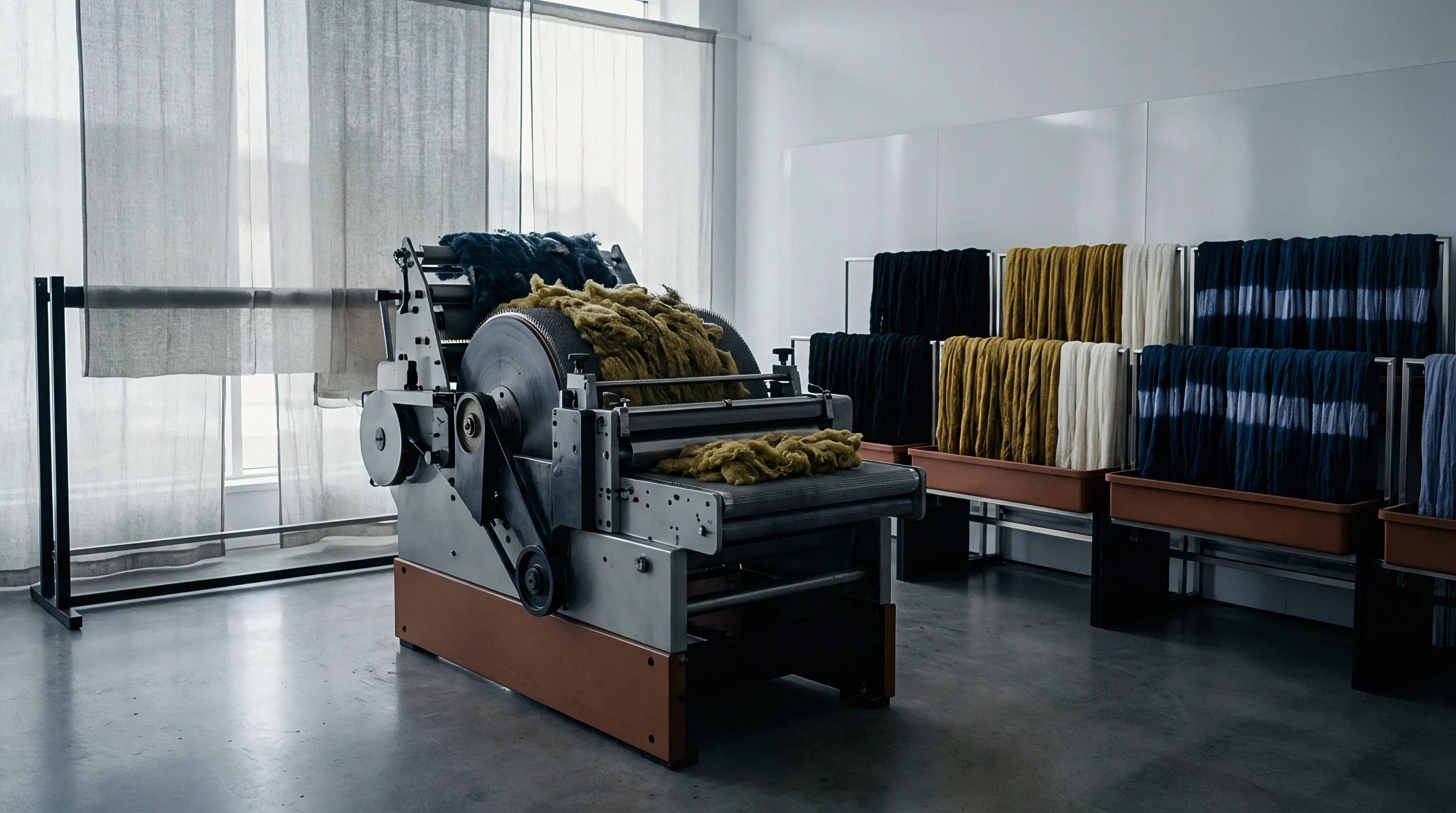
A typical case construction clarifies the operational mechanics. Assume an analytical laboratory receives a yarn sample suspected of deviating from its declared commercial specification of 60.00 percent raw cotton and 40.00 percent standard viscose staple. The total initial specimen mass after moisture conditioning is 5.000 grams.
The sample undergoes petroleum ether extraction and drying at 105 degrees Celsius, stabilizing at an extractive-free, oven-dry mass of 4.580 grams. The specimen is subjected to selective chemical dissolution under ISO 1833-6 using formic acid and zinc chloride to eliminate the viscose fraction.
The clean, dried insoluble cotton residue remaining on the sintered glass crucible weighs 2.710 grams. The analytical laboratory uses the standard raw cotton d-factor of 1.02 to compensate for fiber erosion during the acidic immersion period. The calculation proceeds through the following sequential checkpoints:
Step 1: Calculate the corrected dry mass of the cotton component.
Corrected Dry Cotton Mass = 2.710 grams multiplied by 1.02 = 2.764 grams.
Step 2: Calculate the dry mass of the dissolved viscose component.
Corrected Dry Viscose Mass = Total Dry Mass (4.580 grams) minus Corrected Dry Cotton Mass (2.764 grams) = 1.816 grams.
Step 3: Calculate the bone-dry mass percentages before applying moisture regain.
Bone-Dry Cotton Percentage = (2.764 divided by 4.580) multiplied by 100 = 60.35 percent.
Bone-Dry Viscose Percentage = (1.816 divided by 4.580) multiplied by 100 = 39.65 percent.
Step 4: Incorporate official ISO 6741 commercial moisture regain values. Cotton carries an 8.50 percent allowance; viscose carries a 13.00 percent allowance.
Adjusted Cotton Mass = 2.764 multiplied by (100 plus 8.50) divided by 100 = 2.764 multiplied by 1.0850 = 2.999 grams.
Adjusted Viscose Mass = 1.816 multiplied by (100 plus 13.00) divided by 100 = 1.816 multiplied by 1.1300 = 2.052 grams.
Step 5: Derive the final official commercial composition percentages.
Sum of Adjusted Masses = 2.999 grams plus 2.052 grams = 5.051 grams.
Official Commercial Cotton Percentage = (2.999 divided by 5.051) multiplied by 100 = 59.37 percent.
Official Commercial Viscose Percentage = (2.052 divided by 5.051) multiplied by 100 = 40.63 percent.
| Analytical Metric | Raw Cotton Component | Viscose Staple Component | Combined Parcel Total |
|---|---|---|---|
| Direct Crucible Mass (Dry) | 2.710 g | Not Retained (Dissolved) | Not Applicable |
| d-Factor Corrected Dry Mass | 2.764 g | 1.816 g | 4.580 g |
| Bone-Dry Percentage Yield | 60.35 % | 39.65 % | 100.00 % |
| Standard Regain Rate Applied | 8.50 % | 13.00 % | Not Applicable |
| Regain-Corrected Mass Unit | 2.999 g | 2.052 g | 5.051 g |
| Final Commercial Declaration | 59.37 % | 40.63 % | 100.00 % |
The mathematical operation causes the calculated cotton ratio to drop from 60.35 percent on a bone-dry basis down to 59.37 percent on a commercial basis. The 4.50 percent differential between the official regain values shifts nearly one full percentage point of composition weight into the regenerated fiber category. In cross-border customs disputes where tariff classifications split sharply on a strict 60/40 weight threshold, failing to incorporate regain adjustments generates false declarations.
Customs authorities executing validation audits re-run wet chemical analyses directly back to statutory commercial basis weights, prosecuting discrepancies rooted in uncorrected bone-dry laboratory outputs.


Customs

Tariff Shifting across Fiber Predominance Thresholds
Harmonized Tariff Schedule regulations classify blended yarns and fabrics strictly by the material predominating by weight under General Rules of Interpretation 3(b) and Section XI Note 2(A). Where a textile consists of two or more textile materials, classification assigns the good to the single heading covering the material that forms the greatest mass fraction. In balanced blends nearing the fifty-fifty mark, minor moisture calculation errors determine whether an entire entry imports under Chapter 52 as cotton or under Chapter 55 as man-made staple fibres.
A customs classification switch between chapters alters duty rates, import quotas, and rules of origin. Cotton fabrics classified under HS Chapter 52 entering specific trading jurisdictions carry significantly different tariff schedules compared to woven fabrics of man-made staple fibers falling under HS Heading 5516. When laboratory analysts deliver composition certifications founded solely on dry masses, buyers declare import classifications on false technical data.
A blend testing at 50.50 percent cotton on a bone-dry basis shifts to 49.48 percent cotton once the 8.50 percent cotton and 13.00 percent viscose allowances are executed. That single correction moves the legal customs classification entirely into Chapter 55.
Regulatory frameworks, such as the United States Textile Fiber Products Identification Act and European Union Regulation 1007/2011, establish legal limits for blend label claims. Most frameworks allow a manufacturing tolerance band of plus or minus 3.00 percent between declared ratios and chemical assay results. A lot declared at 60.00 percent cotton and 40.00 percent modal testing commercially at 56.50 percent cotton breaches trade compliance standards when compound analytical errors combine with differential regain allowances.
- Standardize testing protocols in purchase specifications, establishing ISO 1833 wet dissolution as the sole binding referee method over rapid infrared scans.
- Mandate explicit statutory regain schedules in sales contracts to forestall jurisdictional disputes between ASTM and BISFA conventions.
- Direct testing partners to return comprehensive certificates reporting both bone-dry mass yields and regain-adjusted commercial percentages.
- Recalculate customs classification weights against statutory regains before submitting entry summaries to customs brokers.
Trade compliance teams auditing landed consignments monitor these calculations closely. When testing laboratories submit raw composition data lacking explicit regain statements, declarations invite formal scrutiny during border clearance. Importers adjusting invoices using clear commercial regain adjustments maintain an auditable defense during comprehensive post-entry classification reviews.
Disregarding commercial moisture regain allowances in textile import documentation creates chronic misdeclaration liabilities, exposes shipments to immediate regulatory impoundment, and triggers substantial retroactive duty penalties.