Quantifying Core Chemical Penetration Limits in Continuous Open Width Heavy Twill Preparation Systems
Core penetration in heavy twills demands submerged nip saturation and 180-second saturated steam dwell to prevent pale ring-dyeing faults and shade rejection.

Void
Heavy 3/1 and 2/1 cotton twills packed above 380 grams per square meter present dense interstitial geometries that throttle fluid transport during continuous wet processing. High yarn twist multipliers combined with dense pick counts force individual fibers into tight hexagonal packaging within both warp and weft bundles. Fluid applied to the surface cannot instantly reach the yarn core.
Capillary pressure governs spontaneous liquid uptake according to the Lucas-Washburn relation, where fluid advance depends on surface tension, contact angle, fluid viscosity, and interstitial pore radius. In heavy twills, the effective pore radius between fibers drops below 1.5 micrometers within core yarn zones, compared to 12 to 25 micrometers between adjacent yarn crowns. High twist locks fiber bundles.
The resulting disparity splits liquid flow into two distinct domains: rapid macro-capillary flow across yarn surfaces and painfully slow micro-capillary imbibition toward yarn interiors.
Pore volume shrinks further under mechanical tension on the continuous range. Warp tensions exceeding 1.8 kilonewtons per meter of width compress twill ribs against each other, flattening yarn cross-sections and reducing inter-fiber void space by up to 28 percent. Interstitial fluid paths become tortuous.
Air remains trapped inside. When desizing formulations or caustic liquors hit dry greige twill at line speeds of 80 meters per minute, the air trapped inside internal fiber clusters cannot escape against the advancing liquid boundary. Dynamic contact angles rise above 90 degrees during the first 0.2 seconds of wetting, halting spontaneous ingress.
Complete chemical transport then shifts from pressure-driven capillary flow to concentration-driven molecular diffusion. Molecular diffusion moves orders of magnitude slower than mass convective flow.
| Construction Metric | 3/1 Twill (340 g/m²) | 3/1 Twill (420 g/m²) | 2/1 Twill (380 g/m²) | 2/2 Broken Twill (450 g/m²) |
|---|---|---|---|---|
| Yarn Count (Warp × Weft, Ne) | 10 × 10 | 7 × 6 | 12 × 10 | 8 × 7 |
| Sett (Ends × Picks per cm) | 31 × 20 | 26 × 16 | 34 × 22 | 28 × 18 |
| Yarn Twist Factor (Alpha e) | 4.2 | 4.6 | 4.4 | 4.8 |
| Yarn Packing Density (g/cm³) | 0.68 | 0.74 | 0.71 | 0.76 |
| Core Interstitial Radius (µm) | 2.1 | 1.3 | 1.8 | 1.1 |
| Spontaneous Imbibition Time (s) | 1.85 | 4.60 | 2.90 | 6.20 |
Ring-spun yarns compound this resistance through radial packing gradients. The outer sheath exhibits lower packing density and higher fiber mobility, absorbing chemical liquors within milliseconds. The core houses tightly wrapped, straight fiber centers with virtually zero radial permeability.
Open-end rotor yarns introduce a different obstacle through tight wrapper fibers that constrict the exterior circumference, forming localized impervious collars along the yarn axis. Cold liquor halts enzymatic cleavage. When greige cotton twill enters open-width preparation without mechanical intervention, size polymers and natural cottonseed waxes remain completely dry within the inner 35 percent of the yarn radius.
Incomplete chemical saturation across yarn cross-sections produces pale ring-dyeing faults in continuous thermosol ranges and leaves raw core starches that trigger massive garment tear-strength rejections after industrial enzyme washing.


Bath
Continuous open-width saturators operate at line velocities between 60 and 110 meters per minute, leaving moving webs mere fractions of a second inside chemical troughs. Immersion lengths in standard single-dip saturator boxes average 4 to 8 meters, which delivers total contact durations of 2.4 to 8.0 seconds. Chemical exchange requires active replacement of boundary air layers with aqueous desizing, scouring, or bleaching solutions.
Surface tension gradients alone fail to achieve displacement in these brief windows.
Where Do Boundary Layers Stall Chemical Exchange?
Viscous drag along running twills pulls a static liquid film that blocks fresh saturator liquor from displacing air pockets inside tightly twisted yarn bundles. This boundary layer thickens with increasing web velocity, growing up to 1.8 millimeters at 90 meters per minute. The stagnant fluid film travels alongside the moving goods, starving the substrate of fresh chemical replenishment.
Chemical concentration inside the boundary layer drops as active hydroxyl ions or enzymes deplete against outer fiber sheaths, while bulk liquor concentrations remain unspent. Wetting agents lower surface energy. Surfactants must diffuse across this laminar layer before lowering interfacial tension at the dry fiber surface.
Non-ionic wetting agents exhibiting low cloud points phase-separate in alkaline baths exceeding 65 degrees Celsius, destroying dynamic wetting efficiency and generating floating hydrophobic scum.
A saturator liquor temperature maintained at 85 degrees Celsius drops the dynamic viscosity of water from 1.002 to 0.334 millipascal-seconds, tripling spontaneous capillary displacement rates in heavy cotton yarns.
Squeeze Roll Mechanics and Air Displacement
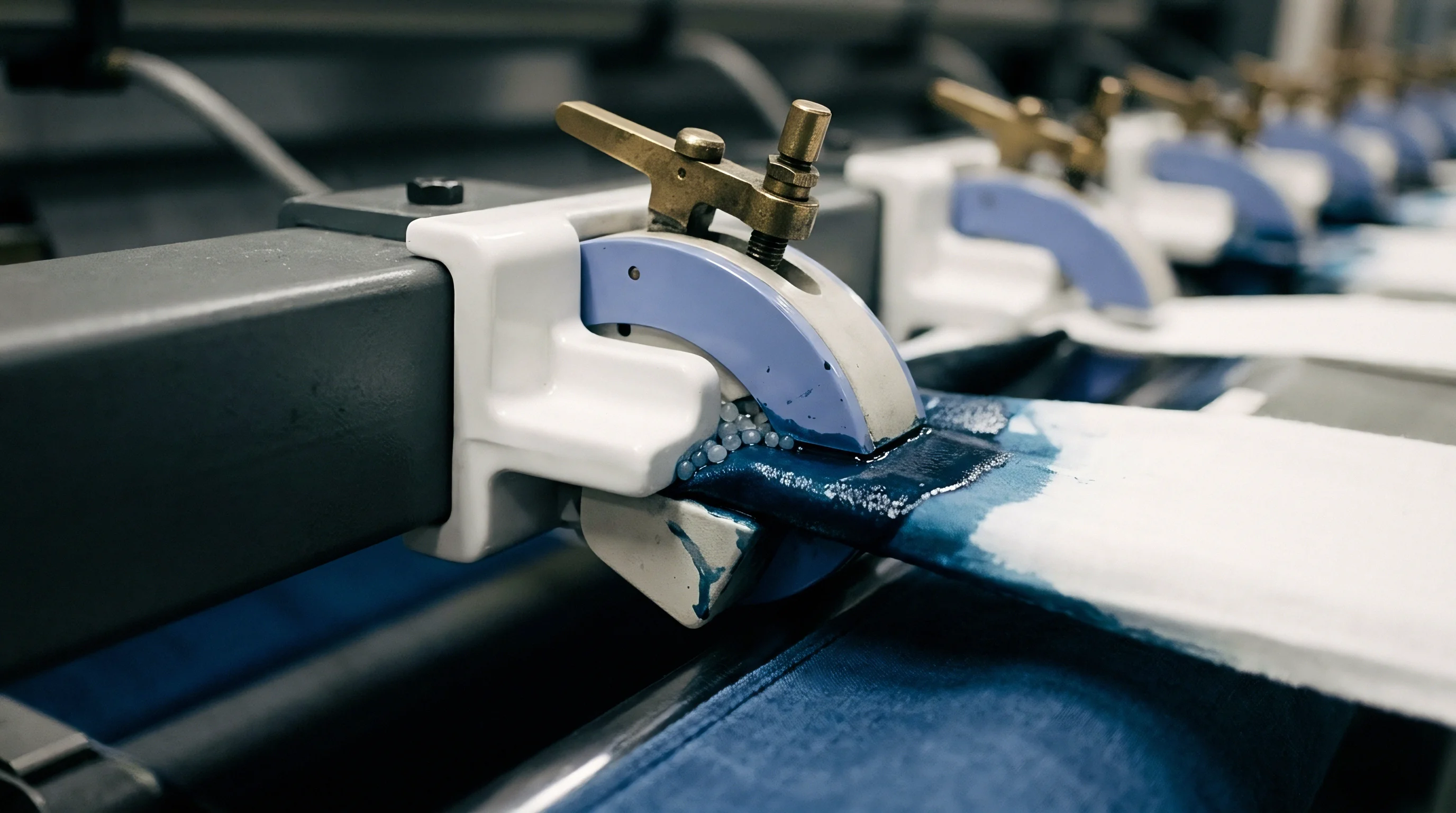
Submerged nip rollers apply mechanical deflection to expel trapped air bubbles before interstitial capillaries enter high-pressure expression zones. Standard saturation boxes rely on two or three submerged deflection rolls. Heavy twills require positive mechanical pressure inside the liquid bath to achieve core chemical penetration.
Without an in-bath nip, air trapped in yarn intersections remains compressed during entry, expanding upon exit to push applied chemical solutions away from inner yarn layers. Tension spikes shear wet yarns. Submerged nip units operating at 15 to 30 kilonewtons per meter force liquor through yarn structures, achieving active liquor interchange.
Intermediate high-expression mangles stationed between dual saturation tanks control chemical pickup. A double-dip, double-nip configuration with an intermediate 40 kilonewton squeeze expels air in the first pass and fills the resulting partial void with fresh liquor during the second pass. Dry cotton fibers contain approximately 70 percent air by volume in their greige assembly.
Eliminating that gas volume dictates downstream chemical accessibility.
- Dynamic contact hysteresis prevents uniform wetting when processing speeds outrun surfactant adsorption rates at moving liquid-solid interfaces.
- Premature bath cooling raises liquor viscosity, doubling the hydraulic resistance of the internal twill capillary network.
- Inadequate wet pick-up control allows excessive surface liquor film thickness, which pools unevenly across twill ribs during vertical travel.
- Differential web tension closes edge interstices while stretching center yarns, producing pronounced selvage-to-middle wetting variations.
Finishing mills routinely claim that secondary diffusion in the steamer compensates for brief immersion times, shifting blame for uneven scours to natural seed-coat variability.
Dwell
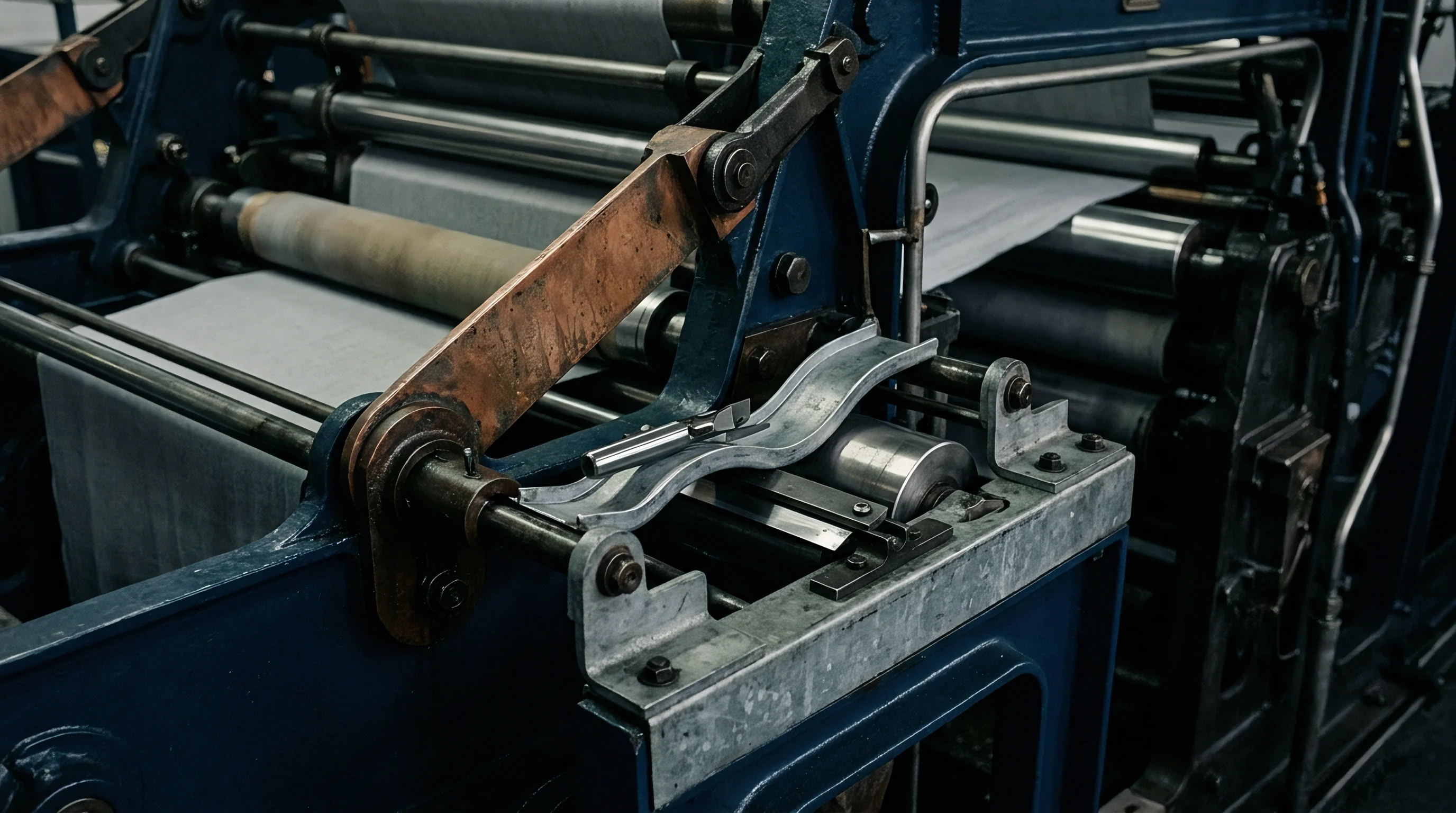
Saturated steam inside tight open-width reaction chambers rapidly condenses onto cool incoming cotton webs, transferring latent heat and drawing surface alkali toward dry fiber lumens. Latent heat transfer raises substrate temperature from 25 to 100 degrees Celsius in less than 4 seconds. Steam collapse creates local vacuum.
This condensation volume contraction, approximately 1600-to-1 in volume ratio, creates a localized pressure drop inside inter-fiber voids that physically pulls chemical films directly toward dry fiber centers. Reaction kinetics accelerate immediately upon reaching thermal equilibrium.
Which Steam Parameters Govern Core Fiber Swelling?
Atmospheric vaporization chambers maintained at 102 degrees Celsius with zero air contamination trigger rapid alkaline cleavage of natural hydrophobic cotton waxes. Dry cotton fibers swell rapidly upon encountering caustic soda and thermal energy. Swelling closes pore spaces between fibers, cutting capillary pathways.
Alkali degrades primary cell walls. Once sodium hydroxide penetrates the secondary wall, individual cellulose fibrils swell up to 40 percent in cross-sectional area, choking remaining interstitial spaces. Chemical agents intended for core size breakdown must reach inner yarn layers before fiber swelling cuts off fluid transport.
If caustic concentration peaks on the yarn exterior before internal starch size hydrates, swollen surface fibers form an impenetrable barrier that isolates core sizing polymers from further enzymatic or oxidative breakdown.
Substrate thermal equilibration tracks moisture balance within the steamer atmosphere. Superheated steam dries applied chemical liquors onto web surfaces, halting diffusion dead. Saturated steam conditions maintaining 98 to 100 percent relative humidity sustain the continuous liquid phase necessary for ionic migration.
Pectins dissolve into hot liquor. Without a continuous liquid meniscus bridging the surface to the core, diffusion coefficients plunge by three orders of magnitude.
| Steam Condition | Temperature (°C) | Air Content (%) | Core Wetting Time (s) | Core Starch Removal (%) | Residual Wax (%) |
|---|---|---|---|---|---|
| Dry Superheated | 112 | 8.5 | 38.0 | 54 | 0.82 |
| Atmospheric Saturated | 100 | 1.2 | 14.0 | 91 | 0.31 |
| Saturated Alkaline Mist | 102 | 0.2 | 8.5 | 98 | 0.19 |
| Sub-Atmospheric Vapor | 92 | 4.0 | 22.0 | 76 | 0.48 |
Diffusion rates through the swollen cellulose matrix follow Fickian kinetics under steady thermal conditions. The chemical flux depends strictly on the concentration gradient between outer liquor films and inner core pockets. When preparation ranges run heavy twills at speeds that cut steamer dwell times below 120 seconds, the chemical front reaches only 60 percent of the yarn radius.
Industrial preparation of workwear twills requires continuous dwell durations between 150 and 210 seconds on tight-strand roller bed systems to guarantee core impurity solubilization.
Steam condensation creates a localized pressure drop inside dense twill intersections that pulls chemical films directly toward dry fiber centers.
- Thermal shock condensation collapses steam onto web surfaces, initiating capillary pull into internal voids within 3 seconds of chamber entry.
- Solute migration transfers sodium hydroxide and chelating agents across liquid films toward fiber cores over the subsequent 20 to 45 seconds.
- Alkaline ester saponification cleaves fatty acid esters and pectins, transforming non-polar waxes into soluble sodium soaps during the central 60 seconds of dwell.
- Macromolecular size dispersion cleaves synthetic polyacrylates and natural starches into low molecular weight fragments capable of washing out through constricted inter-fiber pores.
Pectin removal tracks thermal energy transfer rather than mere run time on continuous reaction rollers.


Rinse
Continuous open-width washing ranges deploy high-velocity sprays and submerged counter-current cascades to extract solubilized sizing agents from heavy twills. Extraction efficiency dictates final chemical purity. Dissolved starches, saponified waxes, and residual alkali reside within stagnant core liquid pockets that resist superficial surface rinsing.
Dilution washing mechanisms govern the removal process, relying on concentration gradients to pull solubilized impurities out of yarn cores into surrounding wash liquor. Capillary flow slows down rapidly. Wash boxes strip surface chemicals.
Surface residues wash off within 5 seconds of turbulent immersion, whereas core impurities require sustained diffusion washing through tortuous fiber paths.

Counter Current Dilution Gradients
Systematic concentration steps across five to eight compartment boxes maintain maximum chemical driving forces between external wash liquors and internal yarn fluids. Counter-current plumbing directs fresh water entry at the delivery end, flowing back toward the entry box where heavily contaminated cloth first meets the dirtiest wash liquor. Wash water temperatures must hold above 85 degrees Celsius in early washing compartments to prevent saponified cotton waxes from solidifying back onto internal fiber surfaces.
Solidified waxes redeposit permanently inside core voids. Mechanical squeeze rolls between each washing box expel boundary water, forcing fresh dilution water into twill yarn bundles upon the next immersion.
ISO 105-X12 crocking limits fail immediately when unextracted sizing starches trap unfixed dye aggregates within the interior yarn structure.
Mechanical agitators and vacuum extractors accelerate core fluid replacement. Submerged beaters, fluid deflectors, and ultrasonic resonators generate pressure differentials across the web, forcing water through dense twill constructions instead of merely washing around yarn outer surfaces. Vacuum extraction slots installed after the final washing stage draw up to 40 kilopascals of negative air pressure through the moving substrate.
This differential air pressure physically pulls entrained contaminated water from inner yarn capillaries, reducing residual moisture down to 45 percent prior to final drying. Unextracted starch rejects dye molecules. Ring dyeing creates pale centers.
Quality verification for preparation systems demands precise analytical documentation across every production batch.
- AATCC Test Method 79 droplet testing requires water absorption times under 1.5 seconds measured on both face and back surfaces across the full roll width.
- Tegewa iodine scale ratings demand values of 8 to 9 on both exterior twill ribs and cross-sectioned core yarn fibers.
- Residual size gravimetric extractions via chloroform-methanol solvents must confirm total wax and fat contents below 0.25 percent of dry substrate weight.
- Core pH titration profiling after cold demineralized water extraction must read consistently between 6.5 and 7.2 across yarn interiors.
A commercial purchase agreement incorporating ISO 3071 pH limits between 6.0 and 7.5 forces the processor to install acid neutralization stages that prevent core alkaline tenderization during dry storage.


Toll
Speed compromises chemical uniformity whenever preparation ranges run past their verified fluid exchange capacities. Continuous preparation lines represent massive capital outlays, driving plant managers to push line speeds beyond physical penetration boundaries to lower per-meter utility overhead. Heavy twills processed at excessive speeds yield unreacted cores that generate disastrous downstream shade disparities during pad-thermosol or pad-dry-cure dyeing.
Skips cause shaded garment panels. Line velocity dictates total dwell.
Line Speed Tradeoffs in Continuous Sourcing
Converters quoting delivery schedules based on 100 meters per minute frequently produce shaded selvages and skittery face appearances across dense cotton goods. Processing a 420 g/m² 3/1 cotton twill on a 60-meter continuous line requires throttling speed down to 45 meters per minute to achieve the minimum 180-second dwell time for complete chemical core penetration. Running at 90 meters per minute cuts total dwell to 90 seconds, halving chemical diffusion depth.
The outer yarn reaches complete scouring and bleaching, while inner fibers retain up to 40 percent of native hydrophobic impurities. The mill saves 0.08 dollars per linear meter in direct electrical and steam outlays by doubling throughput. This decision pushes full commercial failure into subsequent wet processing operations.

Landed Cost Calculations for Reworked Batches
Stripping unreacted waxes and reapplying preparation chemistries on atmospheric jigs adds 0.42 dollars per finished linear meter and burns two weeks of container freight margin. Take a standard 40,000-meter commercial lot of 450 g/m² bottom-weight twill. Preparing this volume on a high-speed continuous range running at incomplete penetration thresholds incurs initial preparation costs of approximately 0.22 dollars per meter.
When downstream continuous reactive dyeing reveals two-sidedness or white core grin-through on garment abrasion points, the buyer rejects the lot against shade continuity standards.
| Operational Parameter | Optimized Penetration Run | High-Velocity Accelerated Run | Post-Dyeing Reworked Batch |
|---|---|---|---|
| Line Velocity (m/min) | 45 | 90 | N/A (Atmospheric Jig) |
| Preparation Dwell Time (s) | 185 | 92 | 3600 (Batch Re-scour) |
| Chemical Core Access (%) | 98.5 | 62.0 | 94.0 |
| Direct Preparation Cost ($/m) | 0.31 | 0.22 | 0.64 (Cumulative) |
| Dye Lot First-Pass Yield (%) | 98.2 | 74.0 | 88.0 |
| Schedule Slippage (Days) | 0 | 0 | 18 |
Remediating the defective lot through atmospheric jig scouring and re-dyeing requires significant chemical re-dosing, massive water consumption, and secondary tension handling that skews the twill structure, inducing skew angles up to 7 percent. Garment cut-and-sew operations reject twisted panels that skew past 3 percent under standard wash cycles. The initial 3,600-dollar operational saving generated by accelerating the continuous preparation range triggers direct rework claims and air freight surcharges exceeding 45,000 dollars on bulk garment contracts.
Continuous open-width preparation lines balance mechanical speed against the unyielding physical rates of capillary imbibition and chemical diffusion.
Engineers and plant managers continue to debate whether hyperbaric steam saturators or high-frequency ultrasonic transducers will offer the first viable route to breach the capillary limits of heavy twills without sacrificing line speed.