Dewatering Technology
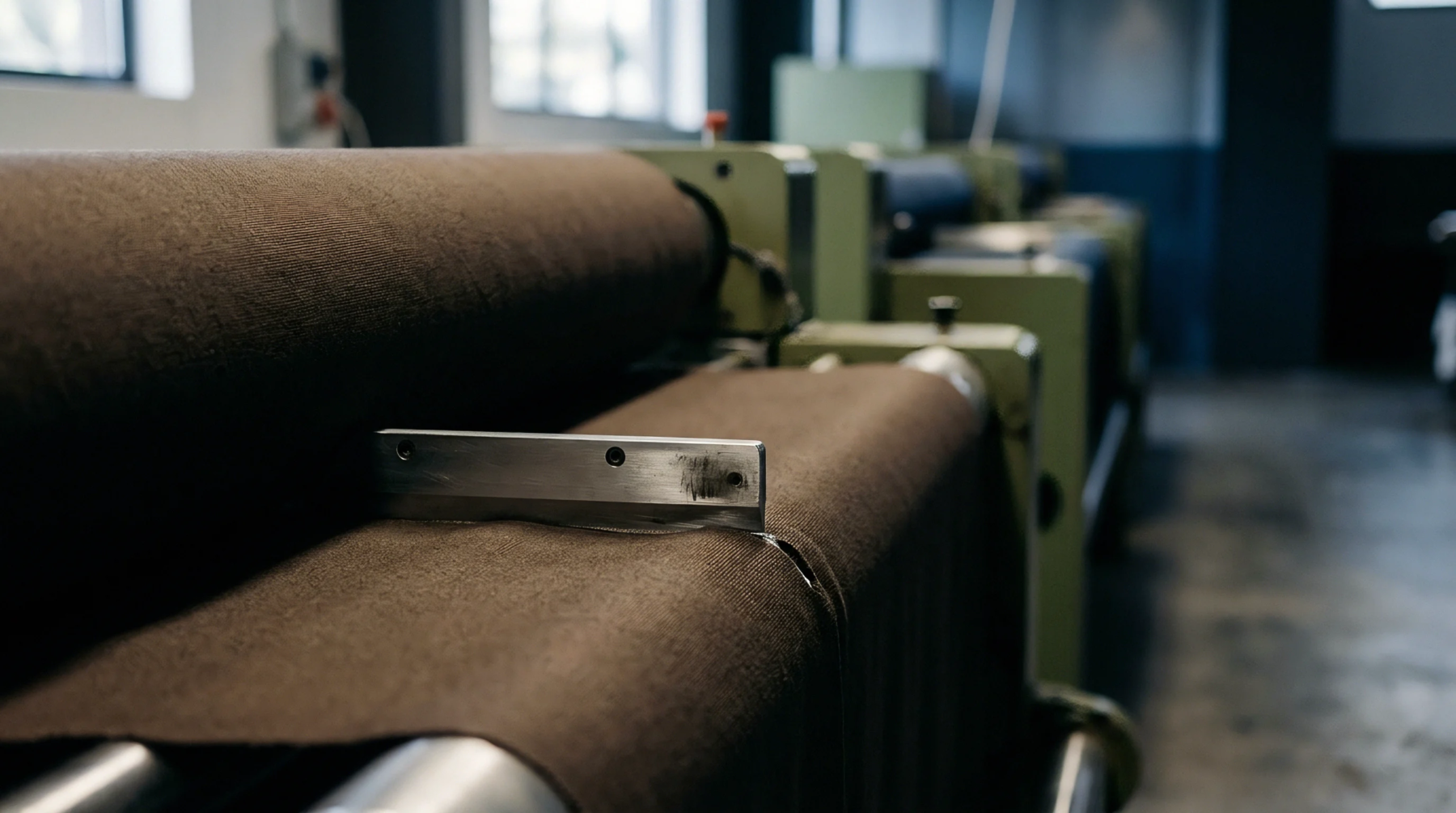
Mechanical moisture removal systems employ differential pneumatic suction to strip excess liquid from continuous open-width textile webs before thermal drying. Processing ranges rely on vacuum slot extraction to lower fabric water retention beneath levels achievable by mechanical squeeze mangle nips alone. Running fabrics pass over a precision-machined narrow slot cut into a hollow suction pipe connected to a high-capacity liquid-ring vacuum pump.
The technique applies directly after wet washing, scouring, bleaching or dyeing baths, ending its operational scope at the entry of heated stenter frames and cylinder dryers.
Hydrodynamic Extraction
Atmospheric air rushes violently through open interstitial fabric pores toward the internal low-pressure vacuum chamber. High-velocity air currents exert aerodynamic drag on liquid films clinging to yarn perimeters, dislodging free capillary water without compressing the fabric web. Unlike mechanical squeeze rolls that flatten three-dimensional surface textures and crush delicate pile fabrics, vacuum extraction removes water through pure air momentum.
Velvet, corduroy and high-pile fleece substrates maintain physical loft and surface pile orientation through this non-contact extraction mechanism.
Thermal Economy
Mechanical liquid removal consumes a fraction of the thermal energy required to evaporate water in stenter drying chambers. Standard squeeze mangles leave heavy cotton fabrics with water retention rates around seventy percent of dry weight, whereas vacuum slot extraction lowers residual moisture to forty-five percent. This substantial moisture drop cuts evaporative heating loads, permitting finishing lines to operate at significantly higher linear speeds.
Reduced thermal dwell times preserve fibre strength and decrease greenhouse gas emissions from gas-fired finishing ovens. Chemical pickup can also be controlled precisely by positioning vacuum extraction units immediately after chemical impregnation baths to strip excess liquor.
Mechanical Verification
Factory technicians evaluate vacuum extraction efficacy by mounting handheld microwave or radio-frequency moisture meters across the moving fabric web. Differential pressure gauges confirm operational suction levels across the slot, identifying blockages caused by lint or size buildup. Routine maintenance schedules inspect slot opening profiles for edge wear, scouring residues and vacuum seal integrity to ensure cross-width extraction consistency.
Vacuum slot extraction governs moisture uniformity and energy consumption across modern open-width finishing ranges.