Swollen Cellulose Pore Network Geometry and Reactive Dye Penetration Mechanics
Swollen cellulose pore geometry dictates reactive dye diffusion rates, where unbalanced fixation alkali triggers ring dyeing and catastrophic rub fastness loss.

Caustic
Liquid ammonia and concentrated sodium hydroxide rearrange native cellulose I into cellulose II, forcing crystalline fibril bundles apart while multiplying internal sorption sites. The unmercerized cotton fibre presents a collapsed lumen surrounded by a dense, concentric secondary wall where hydrogen bonding locks adjacent poly-beta-1,4-D-glucan chains into crystalline domains. Aqueous wetting agents and thermal energy open temporary slits, yet true pore expansion demands disruption of inter-chain hydrogen bonds through alkali coordination.
Treatment with 20 to 24 percent sodium hydroxide by mass at 15 to 20 degrees Celsius breaks these inter-chain bonds, forming alkali-cellulose alcoholates that hydrate through massive water uptake. The fibril structure expands outwards, transforming the kidney-shaped cotton cross-section into an oval geometry with increased internal void volume.
Quantitative measurement of this transformed interior relies on solute exclusion alongside nitrogen sorption and inverse size-exclusion chromatography. Untreated greige cotton displays a water retention value of roughly 45 to 50 percent, whereas slack mercerization raises this figure beyond 80 percent. Tension mercerization limits external dimensional growth while aligning macrofibrils along the fibre axis, producing a water retention value between 65 and 72 percent under standard conditioning per ISO 13934 test specimens.
Pore diameters below two nanometres reject multi-sulfonated reactive dye aggregates during pad application.
The resulting internal volume divides into three distinct geometric classes based on effective pore diameter:
- Micropores measure below two nanometres across, accommodating water molecules and small inorganic ions while excluding dyestuff chromophores.
- Mesopores span two to fifty nanometres, providing the genuine transport channels through which reactive dye anions migrate into the substrate interior.
- Macropores exceed fifty nanometres, representing processing splits, fibre cracks, and remnant lumen voids that permit unhindered convective liquor movement.
Alkaline swelling dramatically alters the distribution between these classes. Solute exclusion using dextran probes demonstrates that unmercerized cellulose possesses an accessible internal pore volume of 0.18 to 0.22 cubic centimetres per gram for molecules larger than 1.5 nanometres. Caustic mercerization expands this accessible mesopore volume to 0.38 to 0.44 cubic centimetres per gram, effectively doubling the surface area available for dye uptake.
When caustic concentration drops below 18 percent on the mercerizing frame, this mesopore expansion fails, leaving core fibrils inaccessible to dyestuff.
| Treatment State | Caustic Concentration (wt%) | Specific Surface Area (m2/g) | Total Pore Volume (cm3/g) | Mesopore Fraction (%) | Water Retention (%) |
|---|---|---|---|---|---|
| Scoured Greige | 0.0 | 42.5 | 0.21 | 28.4 | 48.2 |
| Slack Mercerized | 22.0 | 118.0 | 0.46 | 64.2 | 84.5 |
| Tension Mercerized | 22.0 | 96.5 | 0.39 | 58.1 | 69.8 |
| Liquid Ammonia | Anhydrous | 134.2 | 0.52 | 71.5 | 91.2 |
Tension control on the stenter frame governs crystallite orientation during the alkaline wash-off sequence. Inadequate washing tension allows immediate fibrillar contraction, collapsing the expanded mesopore volume back to baseline levels. Mercerizing liquor temperature dictates swelling uniformity across the batch.


Affinity
Immersion of cotton into an aqueous dyebath establishes a negative electrical surface charge known as the zeta potential. Ionization of terminal carboxyl groups alongside the preferential adsorption of hydroxyl ions produces an electrostatic barrier at the outer fibre boundary, reaching values between minus 20 and minus 35 millivolts in neutral distilled water. Reactive dye molecules carry between two and four negatively charged sulfonate groups to maintain water solubility.
Unassisted transport across this charged boundary is physically impossible due to strong Coulombic repulsion.
Electrostatic Shielding Dynamics
Electrolyte addition overcomes this electrostatic repulsion through ionic double-layer compression. Sodium chloride or sodium sulfate dissociates completely in the dyebath liquor, flooding the electrical double layer with sodium cations. This screening reduces the negative zeta potential toward zero millivolts, allowing dye anions to approach the cellulose surface within van der Waals interaction distances.
The substantive equilibrium constant governs dye distribution across the outer bath and internal fibre phase before chemical fixation begins. Increasing salt concentrations shifts dye aggregation equilibria within the liquor. High dye concentrations coupled with heavy salt additions induce planar stacking among aromatic rings, forming dimers and higher-order oligomers.
These dye aggregates exhibit hydrodynamic radii exceeding the opening dimensions of secondary wall pores.
A bath salt concentration exceeding eighty grams per litre forces reactive dyestuff into tetrameric planar aggregates.
Dyestuff selection fixes the balance between substantivity and desorption during processing. Triazine, vinyl sulfone, and fluoropyrimidine chemistries carry distinct molecular geometries and charge densities that dictate their interaction with cellulose pore walls.
| Dye System Structure | Molecular Weight (g/mol) | Sulfonate Groups | Hydrodynamic Radius (nm) | Substantivity Factor | Diffusion Coeff (x10^-11 m2/s) |
|---|---|---|---|---|---|
| Bis-Monochlorotriazine | 1085 | 4 | 1.42 | 0.78 | 1.25 |
| Vinyl Sulfone Mono-azo | 610 | 2 | 0.88 | 0.42 | 4.10 |
| Heterobifunctional Azo | 895 | 3 | 1.18 | 0.65 | 2.45 |
| Trichloropyrimidine | 745 | 2 | 0.96 | 0.51 | 3.30 |
Electrolyte dosing demands precise geometric progression during the exhaustion phase. Linear dosing triggers rapid localized surface strike, yielding heavy peripheral rings of adsorbed dye that block access to internal channels. Progressive salt ramping preserves liquor stability, ensuring uniform penetration throughout the fabric package.
Premature exhaustion leaves dye molecules trapped at the outer fibre rim, producing weak rub fastness and severe wash-down in bulk processing.
Diffusion
Solute movement through swollen cellulose obeys Fickian transport principles modified by mechanical boundary walls and internal tortuosity. Once a reactive dye chromophore clears the electrical double layer at the fibril periphery, forward motion proceeds exclusively through fluid-filled pores. The apparent diffusion coefficient within the fibre interior drops by two to three orders of magnitude compared to unhindered diffusion in free aqueous liquor.
Tortuosity values in mercerized cotton range from 2.8 to 4.2, reflecting convoluted paths around crystalline microfibril clusters.
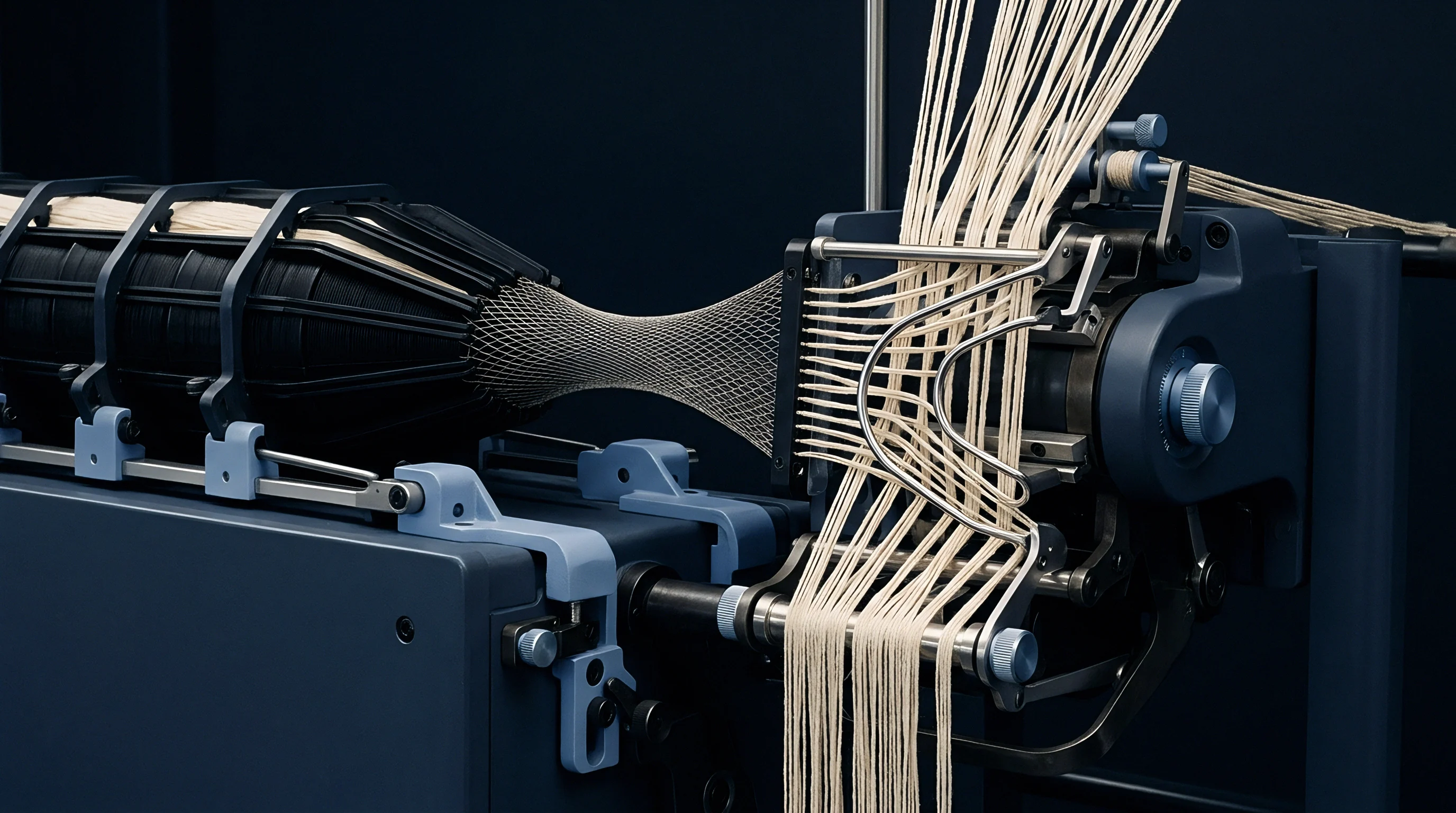
Where Does Hindered Diffusion Halt Migration?
Transport rates drop precipitously when the ratio between the dye molecule hydrodynamic radius and the local pore radius exceeds 0.25. This steric hindrance follows the Renkin equation, wherein viscous drag against pore walls combines with steric exclusion at pore entrances. As dye molecules traverse narrowing channels, interaction with pore boundaries slows linear velocity.
Thermal agitation provides the mechanical energy required to break transient hydrogen bonds between dye sulfonate groups and cellulose hydroxyl groups along the channel perimeter. Increasing dyebath temperature from 50 degrees to 80 degrees Celsius expands cellulose chain mobility, widening effective pore windows while boosting the diffusion coefficient. High temperatures simultaneously diminish the thermodynamic equilibrium exhaustion, reducing surface strike speed while granting molecules the operational duration needed to penetrate the fibre core.
Under ISO 105-X12 testing, core-depleted cross sections fail wet crocking rub thresholds at grade two.
The yarn structural geometry introduces a secondary transport barrier above the single-fibre pore network. High twist factors compact individual fibres against one another, narrowing inter-fibre capillaries and impeding convective liquor exchange. Dye liquor moves through yarn packages via two sequential regimes:
- Convective dispersion sweeps dye through inter-yarn and inter-fibre macro-channels driven by differential pump pressure inside the jet or package machine.
- Molecular diffusion carries dye anions through inter-fibrillar mesopores under chemical potential gradients inside individual fibre walls.
- Adsorptive equilibrium binds dye chromophores to cellulose internal surfaces via dispersion forces, dipolar interactions, and hydrogen bonding.
Package density variations create local flow maldistributions across the carrier spindle. Dense yarn zones receive insufficient convective liquor volume, lowering local concentration gradients and starving inner fibres of reactive molecules. Canister flow adjustments address this issue across varying yarn counts.

Fixation
Alkali dosing triggers the irreversible covalent binding of reactive dye molecules to the cellulose substrate. Adding sodium carbonate or dilute sodium hydroxide raises the dyebath pH to values between 10.8 and 11.5, ionizing cellulose hydroxyl groups into cellulosate anions. These nucleophilic cellulosate species attack electron-deficient carbon atoms within the dye reactive system, displacing leaving groups or saturating activated double bonds.
Two distinct chemical pathways govern this reaction depending on the reactive anchor chemistry:
- Nucleophilic substitution dominates halogenated heteroaromatic systems such as monochlorotriazine, releasing a chloride ion upon forming an ether linkage with cellulose.
- Nucleophilic addition operates across vinyl sulfone precursors, wherein alkali generates an active vinyl sulfone intermediate that reacts with cellulosate to yield a 2-arylsulfonylethyl ether linkage.
Fixation efficiency represents the ratio of covalently bound dye to total exhausted dye on the substrate. A competing side reaction simultaneously consumes active dye: hydroxyl ions from water attack the reactive anchor, generating hydrolyzed dyestuff that lacks affinity for the fibre and cannot form covalent bonds. Once hydrolyzed, this dye occupies mesopores as an inert contaminant, migrating slowly during subsequent wash cycles.
| Chemistry Type | Reaction Temp (C) | Optimal pH Range | Primary Fixation (%) | Hydrolysis Loss (%) | Wash-off Cycles |
|---|---|---|---|---|---|
| Monochlorotriazine (MCT) | 80 | 10.5 – 11.0 | 68.5 | 26.2 | 6 |
| Dichlorotriazine (DCT) | 40 | 9.8 – 10.3 | 72.0 | 22.5 | 8 |
| Sulfatoethylsulfone (SES) | 60 | 11.2 – 11.6 | 78.2 | 17.4 | 5 |
| Monofluorotriazine (MFT) | 40 | 9.2 – 9.8 | 84.0 | 12.5 | 4 |
Fixation timing dictates the spatial boundary of dye placement inside the fibre wall. If alkali enters the bath before dye diffusion achieves uniform equilibrium throughout the secondary wall, chemical reaction locks the dyestuff at the fibre perimeter. This phenomenon, termed ring dyeing, starves the cellulose core while over-saturating the outer mantle.
Dyehouses justify ring-dyed bulk lots by claiming that surface-saturated fibres yield superior visual colour depth per kilo of dyestuff applied.


Dispute
Ring-dyed cotton fabrics present catastrophic performance liabilities in bulk garment production. Optical depth appears satisfactory under light box evaluation at receipt, yet the unpenetrated core acts as a reservoir of structural failure. During laundering, mechanical abrasion strips the saturated outer microfibril layers, exposing the uncoloured cellulose interior underneath.
The garment develops frost marks, seam edge wear, and severe wash-down after minimal domestic laundry cycles.

Fastness Breakdown and Microscopic Cross Sections
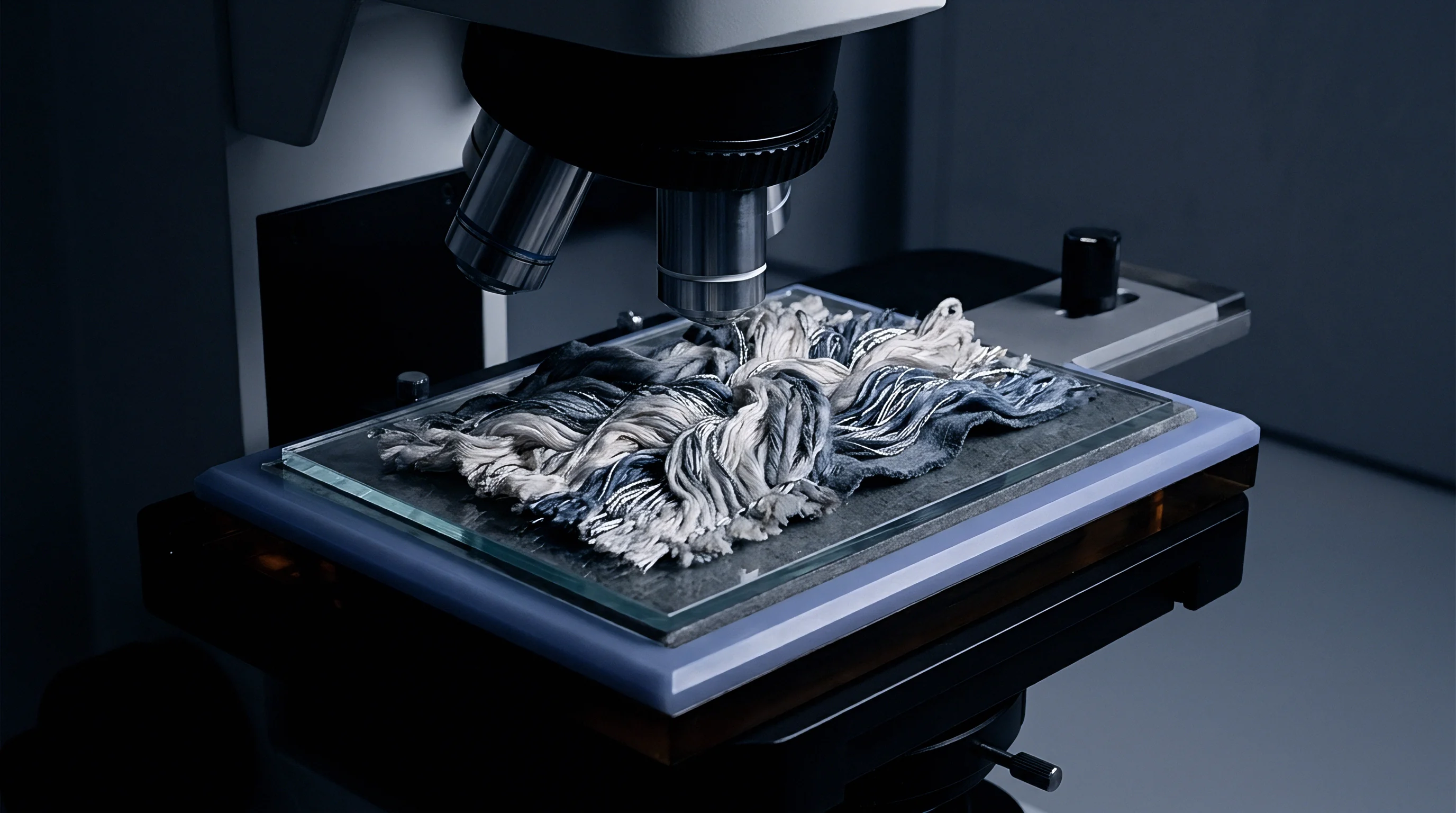
Cross-sectional microtomy confirms the penetration depth across commercial yarn lots. Technicians embed dyed yarn bundles in acrylic resins, slicing five-micrometre sections on an ultramicrotome for optical assessment under transmission microscopy at 500x magnification. Fully penetrated fibres show uniform dye absorption across the entire secondary wall down to the lumen margin.
Ring-dyed lots exhibit a sharp, intense band spanning the outer 10 to 15 percent of wall thickness, leaving the inner secondary wall clear.
A penetration depth below sixty percent of the secondary wall thickness guarantees wet crocking rejection under international standards.
This structural defect directly degrades physical ratings during standard commercial testing:
- Colour fastness to domestic washing per ISO 105-C06 yields severe staining on adjacent multifibre strips due to loose, unfixed hydrolysate shedding from over-saturated surface zones.
- Crocking fastness per ISO 105-X12 drops below grade three under wet rub testing as swollen surface microfibrils fibrillate and shear off under mechanical friction.
- Abrasion testing per ISO 12947-2 reveals visible shade loss and chalk marks within 5,000 cycles, far short of standard 20,000-cycle commercial specifications.
Purchase contracts manage this boundary by establishing explicit analytical verification clauses before release of bulk roll lots. Incorporating mandatory microtomy inspection clauses into the purchase contract empowers buyers to reject lots showing secondary wall dye penetration depths below seventy percent, shifting financial liability for recutting and garment replacement back to the dyeing mill.