Dye Selection and Liquor Penetration Control in Dense Canvas
Core penetration in dense canvas requires high-tonnage pad nip extraction, de-aerating auxiliaries, and low-strike vat or bis-MCT reactives to prevent frosting.
Barrier
Dense cotton duck presents a hydraulic resistance profile that defeats standard open-width immersion protocols. A tightly packed 12 oz plain weave (ASTM D3887 mass tolerance plus or minus 5 percent) exhibits a fluid transit boundary created by twisted, high-count plied yarns sitting under substantial mechanical tension. When dry greige or partially prepared duck enters an aqueous dye bath, surface wetting occurs instantaneously across exterior yarn crowns, while interstitial air voids remain trapped within the yarn cores.
Capillary pressure opposes rapid displacement of this air, turning the core into a hydrophobic pocket that rejects water-borne colorants.
Ring dyeing is the physical manifestation of this resistance. The cross-section of a warp yarn extracted from heavy duck reveals a colored periphery enclosing an untouched, raw cellulosic interior. Under abrasive stress, such as 20,000 cycles on a Martindale apparatus (ISO 12947-2), the colored outer ring shears away, exposing the uncolored core.
This appears on finished apparel, luggage, or tactical gear as premature, severe frosting. Achieving core saturation demands engineered adjustments to liquor surface tension, wetting dynamics, liquor flow mechanics, and dye chemistry selection.
A liquor surface tension above 32 millinewtons per metre guarantees trapped interstitial air cores inside plied canvas yarns.
Liquor penetration is controlled by fluid hydrodynamics governed by the Darcy equation for flow through porous media, combined with Washburn capillary wicking dynamics. Hydraulic pressure driven by padder nip loading or differential pressure across a jig roll forces dye liquor across yarn interstices. Wetting agents lower static and dynamic surface tension from the baseline water value of 72.8 millinewtons per metre down to 26 to 30 millinewtons per metre, accelerating initial displacement of interfacial air.
Which Chemical Auxiliaries Drive Liquor Displacement?
De-aerating surfactants operating at very low foam volumes dictate the speed of fluid entry. Alkyl phosphate esters and branched-chain ethoxylated alcohols displace micro-bubbles trapped between individual cotton fibres during the sub-second dwell time of an industrial padding nip. Conventional wetting agents create excessive micro-foam under high shear, generating air locks within the woven matrix.
Fast-acting, non-foaming wetting auxiliaries allow dye liquor to coat every single cotton lumen before molecular exhaustion begins.
Swell dynamics inside cellulose further complicate penetration mechanics. Cellulosic fibres expand rapidly upon contact with alkaline or aqueous liquor, increasing fibre diameter by up to 20 percent. In a loose weave, this expansion improves hand.
In an unyielding No. 4, No. 8, or No. 10 duck, fibre swelling constricts the inter-yarn micro-channels, shutting down liquor flow paths within seconds of immersion. Liquor penetration must precede full fibre swelling, or the core remains undyed.
Selection
Dye class selection governs whether molecules migrate inward or fixate prematurely on outer yarn crowns. Textile engineers working with heavy canvas rely on three distinct coloration classes: vat dyes, reactive dyes, and sulfur dyes. Each presents clear chemical kinetics, affinities, and exhaustion profiles on heavy cellulosic goods.
Vat dyes represent the technical benchmark for outdoor, industrial, and heritage canvas. In their water-soluble leuco form, vat dyes display low to moderate initial strike rates, allowing molecules to navigate physical voids before chemical fixation occurs. Pigment pad-cure-reduct-steam routes provide superior uniformity because insoluble, micronized vat pigments disperse mechanically throughout the substrate before conversion to their high-affinity leuco form.
This mechanical placement completely bypasses the early surface affinity that causes ring dyeing.
Sulfur dyes offer lower chemical costs for black, olive, and brown shades across commercial canvas lines. Solubilized liquid sulfur dyes require sodium sulfide or polysulfide reducing agents to achieve soluble forms. Sulfur leuco ions possess relatively high substantivity, demanding elevated salt control to prevent rapid perimeter aggregation.
Incomplete penetration of sulfur liquor leaves canvas cores vulnerable to crocking failures, typically yielding wet crocking results below Grade 2 on the AATCC 8 scale.
Are Low Affinity Reactives Required for Deep Fixation?
Reactive dye systems in heavy duck coloration run directly into fixation conflicts. Highly reactive chemistries, including vinyl sulfone structures, establish covalent bonds with cellulosic hydroxyl groups before liquor diffuses across the dense yarn core. Low-reactivity, high-migration selections containing bis-monochlorotriazine (bis-MCT) or polyfunctional anchors prove mandatory when using continuous pad-steam or cold pad-batch methods.
These selections permit thorough leveling before alkali introduction drives irreversibly covalent fixation.
| Dye Class | Penetration Index (Cross-Section) | Light Fastness (ISO 105-B02) | Wet Crocking (ISO 105-X12) | Abrasion Frosting Resistance |
|---|---|---|---|---|
| Micronized Vat Pigment (Continuous Pad) | 0.88 to 0.95 | Grade 7 to 8 | Grade 4 | Grade 4 to 5 |
| Low-Affinity Bi-Functional Reactive (Cold Pad-Batch) | 0.72 to 0.81 | Grade 5 to 6 | Grade 3 to 4 | Grade 3 |
| High-Affinity Vinyl Sulfone Reactive (Exhaust Jig) | 0.45 to 0.58 | Grade 5 to 6 | Grade 2 to 3 | Grade 2 |
| Pre-Reduced Liquid Sulfur (Continuous Pad) | 0.65 to 0.76 | Grade 6 to 7 | Grade 2 to 3 | Grade 2 to 3 |
Dye strike acceleration causes extreme edge-to-centre and face-to-back shading. In heavy canvas, salt dosing profiles dictate strike rates. Staged additions of neutral electrolytes (anhydrous sodium sulfate or sodium chloride) in exhaust dyeing keep exhaustion gradual.
When liquor penetration is prioritized, salt additions are delayed until dye distribution balances evenly across the entire structural cross-section.
Suppliers often insist that increasing immersion temperature compensates for incorrect dye class selection by softening waxes and accelerating diffusion, but this ignores the thermal limits of wetting chemistries.
Liquor
Controlling the fluid phase demands strict physical parameter management. Liquor ratio, viscosity, flow rate, and temperature define penetration boundaries. In rope dyeing or jet processing, heavy canvas faces intense rope-marking and hydraulic channeling.
Processing must take place in open-width configurations, primarily modern padder stations, atmospheric jiggers, or vacuum-assisted impregnation troughs.
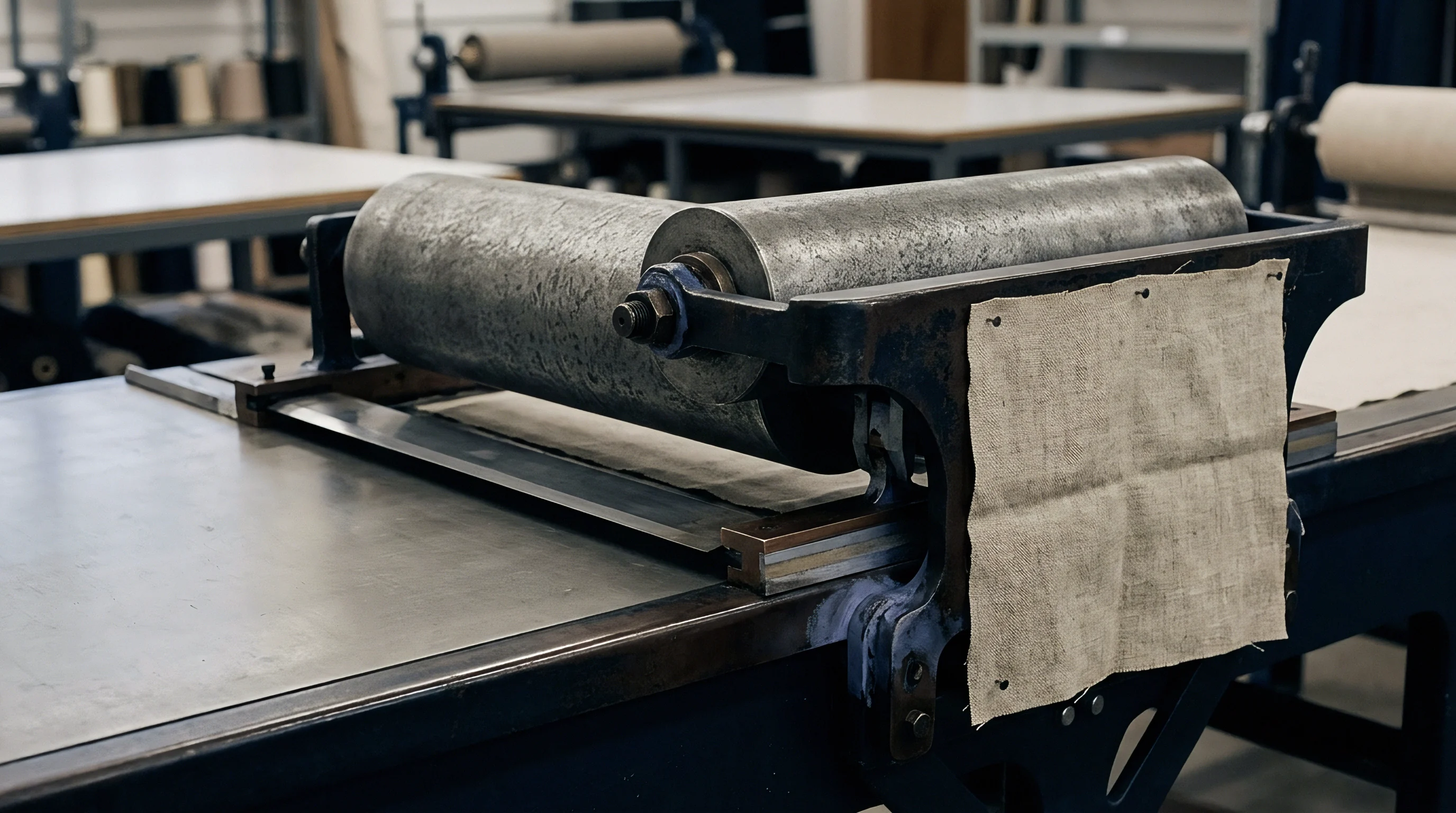
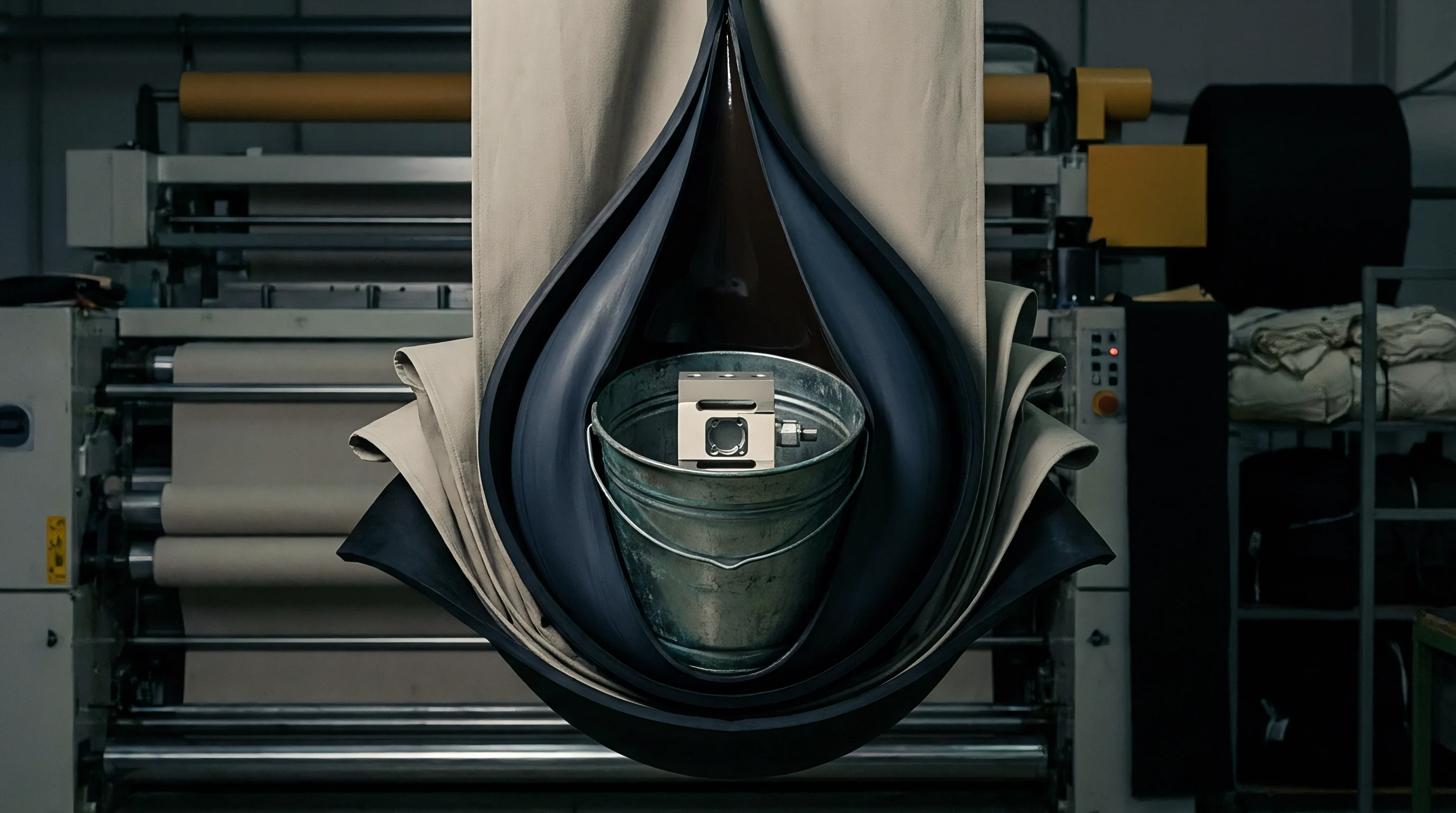
Padder nip pressure provides the primary mechanical displacement driving liquor into heavy canvas. A two-bowl or three-bowl padder must supply a nip line pressure between 45 and 65 kilonewtons per linear metre. High roll shore hardness (typically 80 to 85 Shore A on the rubber bowl) prevents pressure dispersion, focusing mechanical energy entirely into the narrow nip line.
This force drives the dye liquor across warp and weft crowns directly into the core.
A pad nip pressure dropping below 45 kilonewtons per linear metre results in unpenetrated yarn cores on canvas above 400 grams per square metre.
Viscosity modifiers regulate liquor pickup and prevent migration during subsequent drying. Sodium alginate or synthetic polyacrylate antimigrants control the free water phase within the fabric structure. An incorrect antimigrant dosage causes capillary forces to pull dye molecules back outward during evaporation, a failure mode termed intermediate drying migration.
Dye placed deep within yarn cores is pulled out to exterior evaporation planes, ruining penetration depth.
Mechanical Parameters of Heavy Impregnation
Operational control across continuous impregnation ranges relies on specific process mechanical settings to secure deep liquor access:
- Impregnation Dwell Time within the dye trough must span 2.5 to 4.0 seconds, achieved by configuring multiple immersion rolls to maximize contact distance.
- Liquor Extraction Vacuum operating at differential pressures between 25 and 45 kilopascals actively pulls air out of greige cores immediately prior to immersion.
- Liquor Temperature Maintenance controlled within plus or minus 1.5 degrees Celsius prevents viscosity shifts that distort calibrated wet pickup targets.
- Padder Squeeze Efficiency targeting 65 to 70 percent wet pickup establishes full core flooding without inducing face puddling or uneven edge discharge.
Submerging dense canvas into cold dye liquor yields severe core starvation. Liquor viscosity increases at lower temperatures, slowing diffusion velocities through tight micro-pores. Maintaining bath temperatures between 50 and 65 degrees Celsius during initial impregnation maintains fluid mobility.
Thermal controls prevent premature hydrolysis when handling reactive chemistries or early precipitation when handling leuco vat systems.
Differential pressure jiggers address yarn density via reversible open-width batch cycling. Driven by precision tension transducers, the jigger winds canvas back and forth through a low-liquor-ratio bath (1:2 to 1:3). Low liquor ratios concentrate mechanical passage frequency, applying roll tension to squeeze liquor through warp and weft intersections.
Modern jigger operations apply direct liquor circulation pumps injecting high-volume streams against the cloth face at the take-up roll.
The standard ASTM D3776 weight tolerance clause permits up to 5 percent variance across shipments, which alters liquor absorption calculations and voids padder pressure setups if unmonitored.
Mill
Preparation protocols executed by upstream finishing facilities govern subsequent dyeability. Scouring and preparation form an absolute dependency chain. Residual cotton waxes, pectins, and loom sizes convert the natural fiber surface into an impermeable lipid barrier.
Canvas processed without exhaustive desizing and scouring cannot accept liquor penetration, regardless of dye selection or padder tonnage.
Enzymatic desizing breaks down starch-based warp sizes applied during weaving. Canvas requires heavy size recipes (polyvinyl alcohol and modified starches up to 14 percent on yarn weight) to survive the high warp tensions of dense plain weaving. Complete enzyme desizing demands a minimum dwell of four to eight hours under controlled humidity and temperature during cold pad-batch steps, or three minutes inside an open-width continuous steamer.
Incomplete size removal blocks dye entry into yarn interiors, creating cloudy blotches.
Residual sizing content exceeding 0.3 percent on fabric weight triggers severe dye resist spots across continuous pad-steam runs.
Continuous alkaline scouring saponifies natural fatty esters and extracts pectins. A two-stage scour utilizing 40 to 60 grams per litre of 100 percent sodium hydroxide at 100 degrees Celsius dissolves cellulosic impurities. Scouring must lower fabric wicking time to under two seconds based on standard AATCC 79 droplet testing.
If an open-width droplet of distilled water sits upon canvas for more than three seconds, the preparation sequence has failed, and the fabric must not proceed to the dyehouse.
Mercerization Dynamics and Void Opening
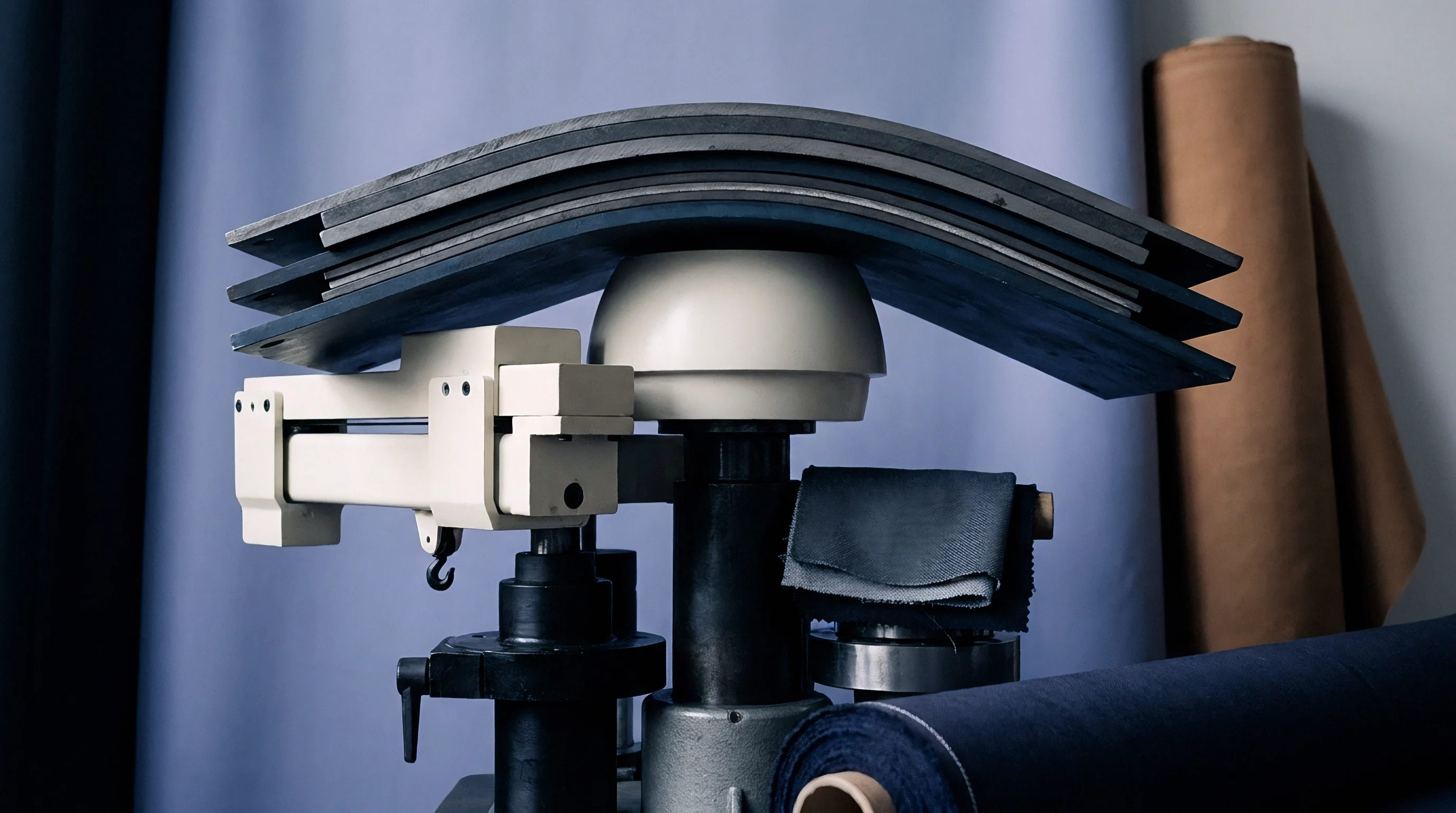
Mercerization restructures cellulose morphology to dramatically improve dye liquor penetration. Subjecting dense canvas to 28 to 30 degrees Baumé caustic soda solutions under tight warp and filling tension expands collapsed cellulosic lumens from an elliptical shape into a round cross-section. This morphology transformation increases molecular amorphous zones, creating internal access routes for dye molecules.
| Preparation State | AATCC 79 Droplet Drop Time | Barium Activity Number | Capillary Rise (DIN 53924) | Reactive Dye Yield (K/S Value) |
|---|---|---|---|---|
| Greige Canvas | Over 300 seconds | Not Applicable | 0 mm / 5 min | Not Applicable |
| Desized, Water Washed Only | 45 to 60 seconds | 100 | 12 mm / 5 min | 8.4 |
| Alkaline Scoured, Continuous Pad-Steam | 2 to 4 seconds | 105 to 110 | 42 mm / 5 min | 14.2 |
| Scoured and Tension Mercerized | Under 1 second | 135 to 145 | 85 mm / 5 min | 18.9 |
Failure to thoroughly remove residual caustic during post-mercerization washing introduces severe pH spikes inside dense yarns. These localized alkalinity spikes lead to instantaneous, uncontrollable reactive dye strike on the exterior face. Neutralization must be verified using core-penetrating acid treatments, typically acetic or formic acid, with core pH stabilized across the 6.0 to 7.0 range prior to coloration.
Skipping tension-frame width control during caustic washing allows unrestrained contraction, compacting canvas picks and mechanically locking out dye liquor in downstream operations.
Verification
Determining liquor penetration requires rigorous analytical verification on finished goods. Visual evaluation of the fabric face provides zero confirmation regarding internal core coloration. Finished duck may display high color depth and solid face uniformity while the core remains untouched.
Laboratory protocols must isolate yarn interiors to verify real dye distribution across the cross-section.
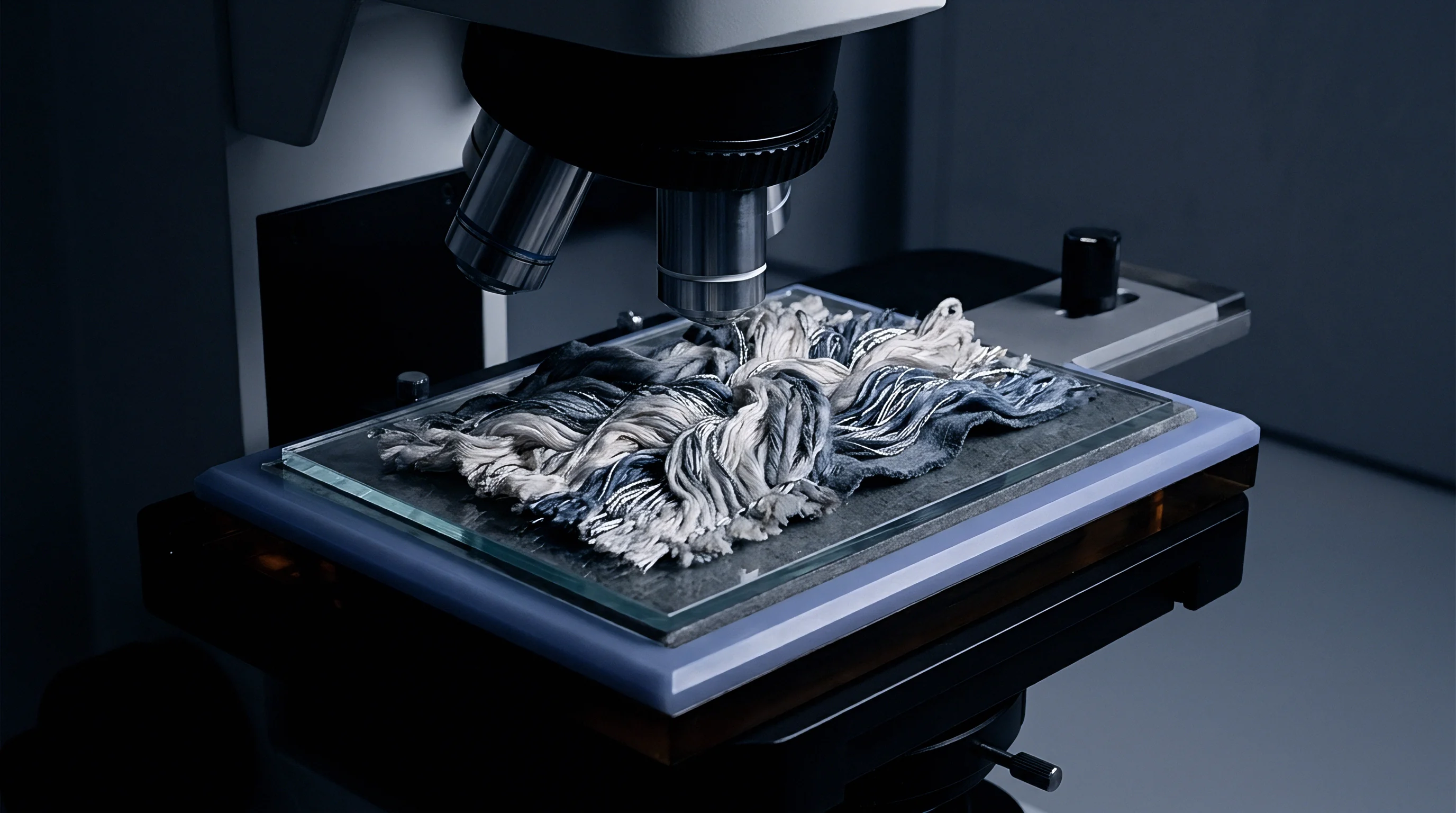
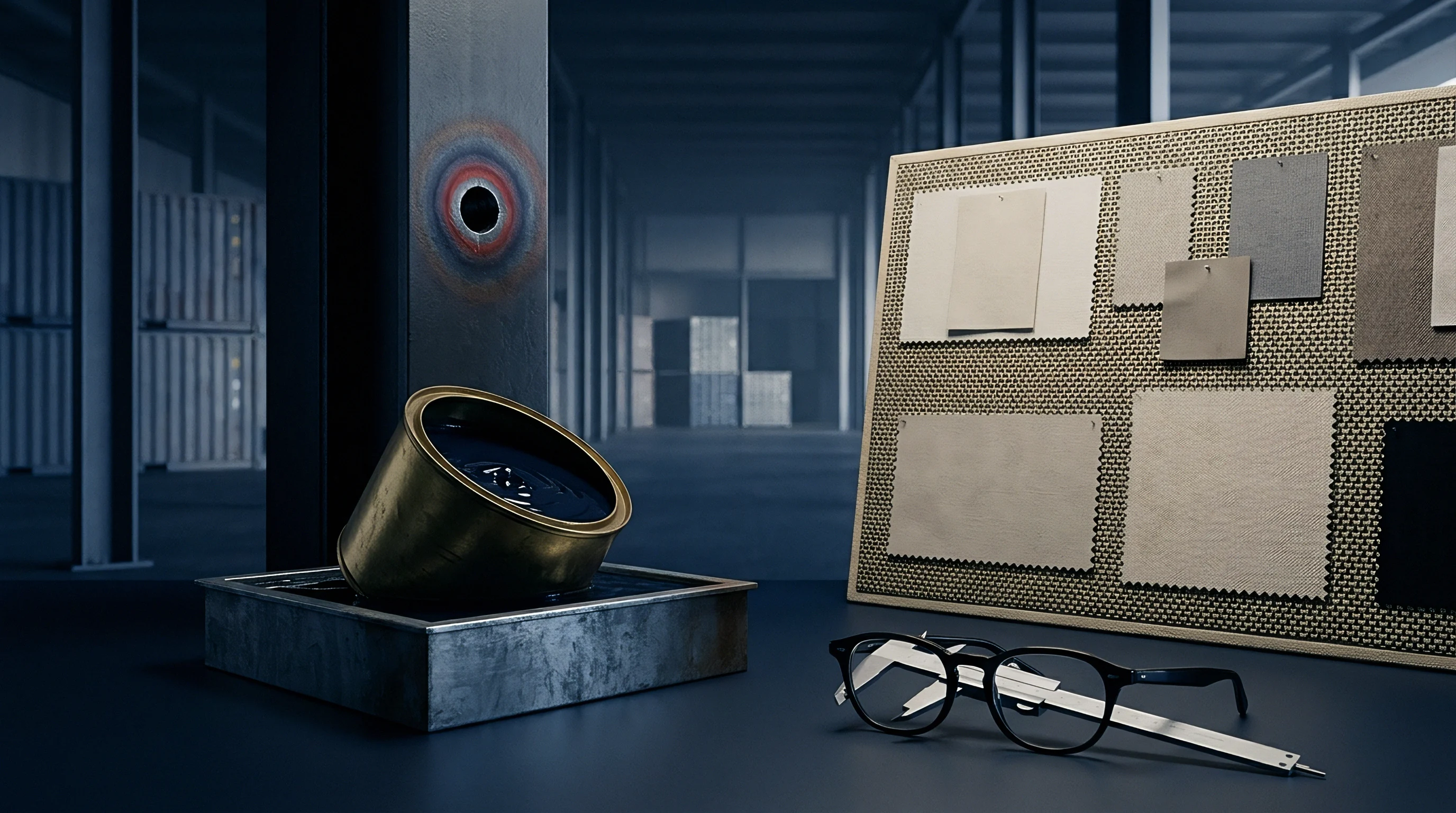
Microscopic cross-sectioning remains the baseline verification procedure. Technicians cast dyed canvas yarns in epoxy or polymethyl methacrylate resin blocks. Precision microtomes slice samples to thicknesses of 5 to 10 microns, mounting them on slides for high-magnification optical inspection.
Image analysis software calculates the penetration ratio: the dyed annular area divided by the total cross-sectional area of the yarn bundle. Quality specifications for military and technical canvas demand a core penetration index of at least 0.85.
Inspection Sequences for Technical Qualification
Receiving audits on heavy duck dye lots rely on structured destructive and physical test protocols:
- Cross-Sectional Microscopic Analysis assesses yarn core dye penetration across warp and weft bundles at 200x magnification.
- Rotary Platform Abrasion Testing (ASTM D3884) runs 1,000 cycles with CS-10 wheels to reveal core frosting through exterior fiber loss.
- Accelerated Color Fastness to Crocking (AATCC 8 / ISO 105-X12) detects loose or unfixed surface dyestuffs on dry and wet cotton test squares.
- Multiple Laundering Assessment (ISO 6330 Cycle 4N at 40 degrees Celsius) evaluates mechanical wash abrasion and color change across five laundering cycles.
Frosting index evaluation translates abrasive wear into quantitative color shift. Colorimetric analysis using a spectrophotometer (d/8 geometry, D65 illuminant, 10-degree observer) records delta E values on Martindale-abraded specimens versus unabraded control cloth. If delta E exceeds 2.5 after 15,000 abrasion rubs, ring dyeing is present.
Highly penetrated canvas withstands up to 40,000 rubs while holding delta E shifts under 1.8, demonstrating that wear-induced surface erosion exposes identically colored cotton.
Failure in wet crocking frequently indicates excessive dye fixation agents applied over unpenetrated surface dyes. Mill technicians often mask ring-dyed canvas by overloading fixatives to pass shade tests. This surface fixative layer washes away during early laundry cycles, triggering dramatic crocking degradation and uneven shade drift across panels.
An unresolved technical question remains whether digital optical scanning of frayed yarn fringes during high-speed loom shed operations can reliably replace resin microtome cross-sectioning for production-scale batch verification.

Cost
Production routes designed for deep penetration dictate fabric pricing, delivery timelines, and factory compliance loads. A sourcing manager selecting between dye systems balances capital costs against failure rates. A standard reactive continuous pad-steam route appears economical on initial quotation, yet delivers higher field reject risk on heavy canvas compared to an engineered vat pad-steam or jigger setup.
Route selection directly controls factory qualification requirements. Sourcing heavy canvas dyed with vat pigments requires audits of specialized, open-width continuous processing lines. Dyehouses operating only continuous rope ranges or standard jet vessels cannot physically execute deep penetration on canvas without heavy creasing and abrasion defects.
A single change in dyeing methodology can add two finishing mills to an audit program: one for tension-controlled mercerization, and another for specialized continuous pad-steam processing.
Worked Cost Model for Heavy Canvas Coloration
Cost mechanics for a 10,000-metre production run of 12 oz (405 g/m²) cotton duck outline the real financial variance between standard and core-penetrating routes. Assumptions: raw greige cost is 3.20 dollars per linear metre; run length is 10,000 metres at 1.50 metres finished width; vat chemistry raw costs are 2.5 times higher than reactive chemistry; steam, power, and machinery costs run at current industrial rates.
Case A: High-Speed Reactive Pad-Dry-Steam. Chemical auxiliary cost: 0.28 dollars per metre. Dyestuff cost: 0.42 dollars per metre.
Machine processing cost: 0.55 dollars per metre. Preparation cost (rapid desize and continuous scour): 0.35 dollars per metre. Surcharge for unpenetrated core rejection (assumed 4.5 percent scrap rate at garment inspection): 0.22 dollars per metre.
Finished fabric landed manufacturing cost: 5.02 dollars per metre.
Case B: Engineered Micronized Vat Pigment Pad-Steam with Tension Mercerization. Chemical auxiliary cost (penetration and anti-migration agents): 0.48 dollars per metre. Dyestuff cost (vat pigment): 1.05 dollars per metre.
Machine processing cost (slower range speeds, 35 m/min): 0.85 dollars per metre. Preparation cost (enzymatic desize, caustic scour, tension mercerization): 0.72 dollars per metre. Surcharge for unpenetrated core rejection (assumed 0.5 percent scrap rate): 0.03 dollars per metre.
Finished fabric landed manufacturing cost: 6.33 dollars per metre.
The landed cost differential of 1.31 dollars per finished linear metre represents a 26 percent premium for the vat route. This difference is balanced by end-use field lifespan: products constructed from Case B fabric achieve three times the service life under high-abrasion conditions without frosting. Minimum order quantities expand based on this processing choice.
Jigger dyeing permits smaller colour batch sizes (1,000 to 2,000 metres), but sacrifices continuous cross-roll shade consistency. Continuous pad-steam ranges reduce labor and variability, but demand minimum production runs of 5,000 to 8,000 metres per shade to absorb chemical startup volumes and range stabilization scrap.
Lead time variance tracks equipment demands. The standard reactive route operates with an average turnaround of four to five weeks. The engineered vat route with independent mercerization requires seven to nine weeks, accounting for inter-facility greige transfer, open-width tension testing, and colorimetric micro-section approval.
Cutting-room operations that omit micro-section audits on Case A fabric face severe downstream liabilities when unpenetrated cores surface as structural abrasion rejections at retail.