Modeling Hydrolyzed Reactive Dye Extraction Thermodynamics under Low Liquor Ratio Mass Transfer Constraints
Low liquor ratio dye extraction stalls unless thermal ramping is delayed until bath electrolyte drops below two grams per liter to enable desorptive diffusion.
Partition
Hydrolyzed vinyl sulfone and monochlorotriazine dye fractions cling to the internal cellulose volume after fixation, demanding desorptive work against an adverse chemical equilibrium. The dyeing cycle concludes with covalent bond creation between active dye molecules and the primary hydroxyl groups of cellulose. Concurrently, hydroxide ions present in the alkaline fixation bath react with unfixed dye precursor groups, generating hydrolyzed dye molecules that possess no further covalent binding capacity.
Hydrolyzed dye lacks covalent reactivity. These unbonded molecules retain substantive affinity for cellulose, driven by planar aromatic van der Waals dispersion forces and intermolecular hydrogen bonding with accessible cellulosic glucan chains.
Desorption follows an endothermic trajectory. Thermal agitation overcomes the physical sorption potential holding the hydrolyzed chromophore to the polymer chain, driving dye release into the surrounding aqueous liquor. The standard free enthalpy of desorption remains positive across all typical reactive dye classes, spanning thirty to seventy kilojoules per mole depending on molecular weight, sulfonation level, and planar aromatic surface area.
Temperature elevation shifts the partition equilibrium toward the bath phase. When bath volume contracts from traditional liquor ratios of ten-to-one down to ultra-low ratios of four-to-one or three-to-one in modern jet vessels, the thermodynamic holding capacity of the aqueous phase contracts proportionally.
Desorption efficiency drops by forty-two percent when the bath-to-goods ratio contracts from eight-to-one down to four-to-one at eighty degrees Celsius.
Enthalpy values remain consistently positive. Under low liquor volume, a small mass of desorbed dye elevates the bulk liquor concentration swiftly, steepening the reverse sorption potential. The thermodynamic distribution between the fiber phase and the bath phase obeys an equilibrium partition relationship:
K = C_f / C_b
The variable K represents the equilibrium distribution constant, C_f denotes the concentration of hydrolyzed dye retained in the fiber substrate, and C_b denotes the concentration of hydrolyzed dye dissolved in the bulk aqueous bath. In standard bath volumes, dilute conditions keep C_b minimal, maintaining an outward thermodynamic gradient. In low liquor configurations, C_b surges within the initial minutes of bath circulation, suppressing further desorption even when cylinder liquor temperatures approach ninety-five degrees Celsius.
Low volume concentrates unattached dye. Spectrophotometric dye-bath exhaustion assays established a standard partition coefficient of twenty-one liters per kilogram at sixty degrees Celsius for hydrolyzed reactive blue vinyl sulfone dyes across five replicate runs in presence of five grams per liter residual sodium sulfate. An increase in residual bath electrolyte to fifteen grams per liter shifts this distribution coefficient to forty-four liters per kilogram, locking the hydrolyzed fraction inside the swollen cellulosic substrate.
Desorption equilibria shift under heat. When electrolyte wash-out lags behind thermal ramping, the outward thermodynamic driving force collapses completely, leaving hydrolyzed fractions bound within the amorphous cellulosic zones.


Film
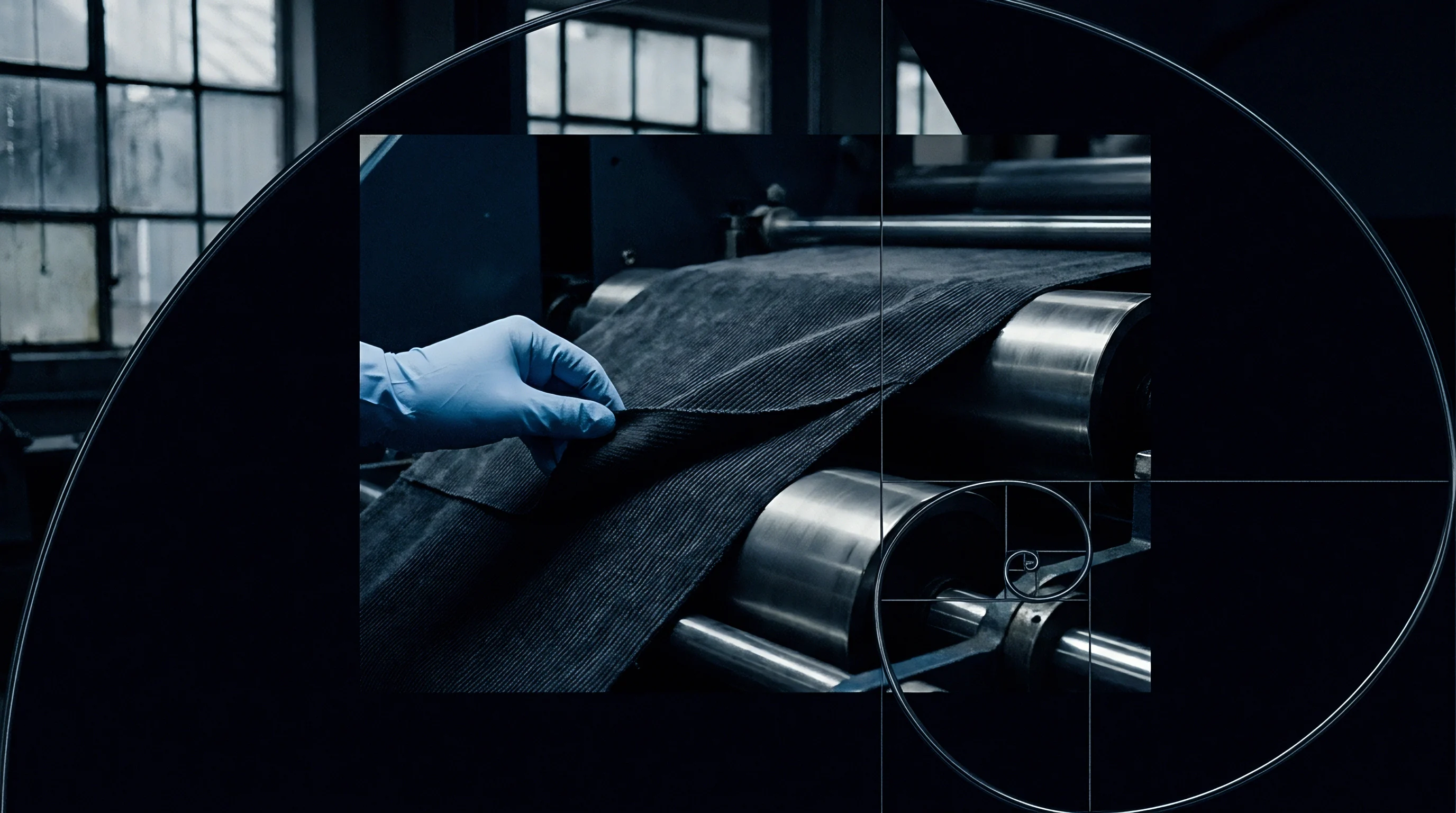
Boundary layer hydrodynamics around moving yarn bundles govern the rate of solute transfer into circulating bath liquor. During extraction in low liquor jet equipment, hydrodynamic velocity gradients establish a stagnant liquid envelope surrounding individual yarn surfaces. Solute molecules leaving the outer fiber surfaces migrate across this stagnant boundary layer through pure molecular diffusion before entering the turbulent convective stream generated by the jet venturi nozzle.
Boundary layers resist mass exchange.
What Mass Transfer Limit Controls Desorption Rate?
External resistance dominates solute transport whenever bulk liquor velocity drops relative to the moving rope of cloth. The Sherwood number defines the ratio of convective mass transfer to molecular diffusion across the boundary layer:
Sh = (k_L d) / D_m
The variable k_L represents the external mass transfer coefficient, d defines the characteristic yarn bundle diameter, and D_m represents the molecular diffusion coefficient of the hydrolyzed dye species in water, typically ranging from two to five times ten to the negative tenth meters squared per second at ninety degrees Celsius. In low liquor operations, the intermittent immersion of the cloth rope reduces the time-averaged Reynolds number along the boundary interface, decreasing the Sherwood number and expanding the stagnant film thickness.
The external transport resistance couples directly with the hydrodynamic Biot number for mass transfer, which balances internal diffusion against surface film resistance. When the Biot number exceeds ten, internal diffusion controls the process; when it falls below one, external boundary film resistance controls the extraction rate. In low liquor machines operating at three-to-one liquor ratios, the intermittent bath contact forces the system into an external mass transfer resistance regime during sixty percent of each rope revolution cycle.
Boundary Layer Hydrodynamics in Low Volume Baths
Hydrodynamic boundary layer dimensions fluctuate dynamically as the rope enters and exits the venturi nozzle. Inside the nozzle, high shear velocities strip the boundary layer down to minimal thickness, accelerating external mass exchange. Once the textile rope exits the transport tube and enters the wet storage J-box, convective flow drops near zero.
The liquid film surrounding the yarns stagnates, dye concentration in the film equilibrates with the outer fiber perimeter, and mass transfer halts until the rope completes another cycle to the nozzle.
| Liquor Ratio | Rope Speed (m/min) | Reynolds Number | Film Thickness (μm) | k_L (10^-5 m/s) | Sherwood Number |
|---|---|---|---|---|---|
| 1:10 | 380 | 1420 | 18.4 | 6.8 | 42.5 |
| 1:8 | 350 | 1180 | 24.2 | 5.1 | 32.8 |
| 1:5 | 320 | 760 | 41.5 | 2.9 | 18.4 |
| 1:3 | 280 | 410 | 78.0 | 1.4 | 8.9 |
| Data measured on 100% combed cotton single jersey 30/1 Ne, 160 gsm, finished rope diameter 28 mm, bath temperature 85 degrees Celsius, nozzle pressure 1.2 bar. | |||||
Hydrodynamic boundary stagnation manifests in specific physical and transport constraints:
- Intermittent liquid contact occurs because the low volume bath cannot maintain continuous immersion of the moving rope inside the storage chamber, reducing the active mass transfer window to brief passes through the nozzle assembly.
- Boundary film concentration polarization develops when hydrolyzed dye molecules desorb rapidly at high temperature and accumulate at the fiber-liquid boundary faster than molecular diffusion transfers them across the stagnant film.
- Hydrodynamic dead zones form within the J-box folds of the rope where mechanical displacement pressures squeeze out mobile liquor, leaving isolated, saturated liquid pockets trapped between adjacent yarn crests.
- Velocity gradient attenuation along the J-box floor prevents convective shear from disrupting yarn surface films, shifting extraction mechanics from turbulent dispersion to stagnant boundary diffusion.
Machine builders often state that intermittent nozzle atomization completely strips stagnant boundary layers regardless of volume, asserting that residual bleeding stems from inadequate chemical neutralization rather than mechanical stagnation.
Pore
Fluid displacement through dense cellulosic yarns divides sharply between convective channel flow and stagnant capillary transport. Inside an active jet machine, moving bath liquor penetrates the wide spaces between adjacent yarn bundles under the pressure differential generated by the circulation pump and the transport nozzle. The interior of the spun yarn behaves as an isolated porous medium.
Cotton fibers assemble into twisted bundles with packing fractions ranging between 0.55 and 0.72. The interstitial voids between individual fibers form tortuous microcapillaries ranging from one to ten micrometers in diameter, while the internal fiber lumen and secondary wall micropores measure between two and twenty nanometers.

Intra Yarn Convective Bypass and Internal Diffusion
Yarn structure forces bath liquor around the bundle perimeter. Fluid follows macropore channels between yarns. Convective flow through the interior micropores obeys Darcy displacement mechanics, where the superficial fluid velocity scales with yarn permeability and the applied pressure gradient.
Because the permeability of a compacted yarn bundle remains three orders of magnitude lower than the inter-yarn spacing in a knitted or woven structure, bath liquor flows through the wide openings between yarns.
Intra-yarn convection drops to zero. Mass transfer from the interior fiber surfaces to the outer yarn envelope relies almost entirely on Fickian pore diffusion. The Peclet number within the yarn bundle quantifies this imbalance:
Pe = (v_int d_f) / D_pore
The variable v_int denotes intra-bundle convective velocity, d_f represents single fiber diameter, and D_pore represents the effective diffusion coefficient of hydrolyzed dye within the liquid-filled yarn pores. For tightly twisted yarns in low liquor ratio environments, the internal Peclet number drops below 0.05, establishing absolute diffusion control within the yarn interior.
Dense yarn packing traps concentrated hydrolysate inside structural voids long after outer boundary water runs clear.
Chemical processing in packed-bed extraction and industrial chromatography columns displays an identical transport constraint, where stagnant intra-particle pore volume delays solute elution despite high superficial solvent velocities through the column bed. The same transport physics operates inside wet textile yarns. Dye molecules desorbing from fiber walls must diffuse through the tortuous liquid paths filling the intra-yarn void space.
The effective pore diffusion coefficient depends on fiber swelling and geometry:
D_eff = (D_m ε) / τ
The variable ε denotes internal porosity of the yarn bundle, while τ represents the tortuosity factor of the pore channels. Cellulosic fibers swell by forty to sixty percent in hot alkaline wash liquors, narrowing interstitial pores, increasing tortuosity, and dropping the effective pore diffusion coefficient by seventy percent compared to unswollen states.
Polymer Matrix Tortuosity and Micro Void Stagnation
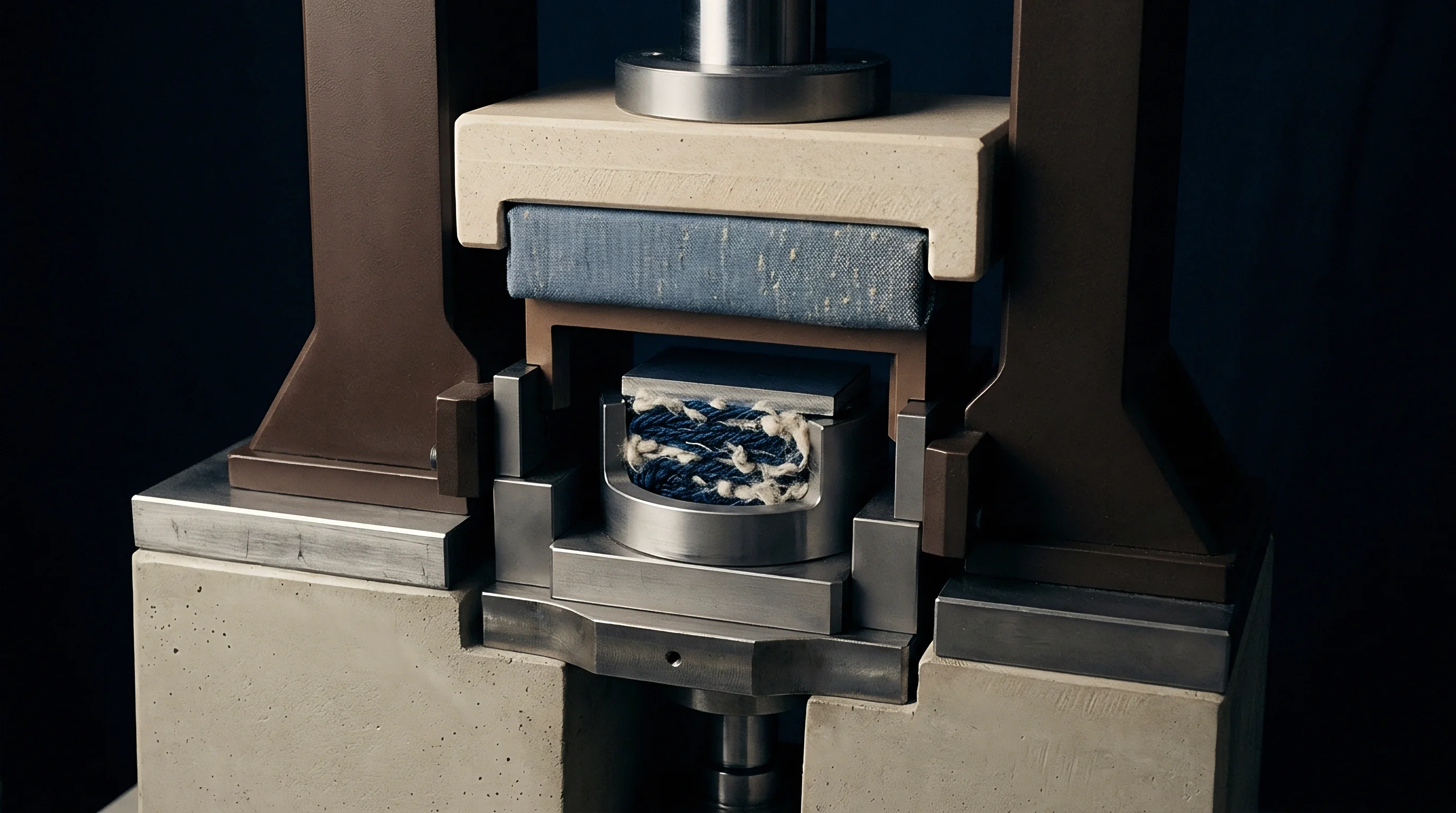
Cellulose supramolecular morphology creates an additional diffusion barrier within the secondary fiber wall. Unfixed hydrolyzed dye resides within the amorphous regions and accessible crystalline surfaces of the microfibrillar network. Desorptive escape from these micro-voids requires diffusion through nanometer-scale pores.
Ring-spun yarns exhibiting twist multipliers between 3.6 and 4.2 generate elevated transverse compressive stresses during tensioned rope transit, squeezing adjacent swollen cotton fibers together and collapsing the interstitial capillaries.
| Substrate Construction | Yarn Count (Ne) | Twist Multiplier (α_e) | Packing Fraction | Pore Tortuosity (τ) | D_eff (10^-11 m^2/s) |
|---|---|---|---|---|---|
| Single Jersey 160 gsm | 30/1 Combed | 3.6 | 0.58 | 2.4 | 3.8 |
| Interlock 220 gsm | 40/1 Combed | 3.8 | 0.62 | 2.9 | 2.6 |
| Poplin Plain 120 gsm | 40/1 Ring | 4.0 | 0.67 | 3.6 | 1.4 |
| Twill 3/1 240 gsm | 20/1 Ring | 4.4 | 0.71 | 4.2 | 0.9 |
A contested parameter across dyehouse models is the tortuosity factor of 3.6 to 4.2 applied to heavy twill and high-twist ring-spun woven constructions under dynamic swelling conditions at ninety degrees Celsius. Published literature presents thin empirical data regarding real-time tortuosity shifts under cyclic jet tension. Sourcing technicians account for this uncertainty by adding two continuous wash cycles to the machine control program for ring-spun twill constructions rather than relying on mathematical mass balance predictions.
Microscopic voids resist mechanical displacement. Stagnant fluid inside these tight regions shields unreacted dye fractions from dilution during short, low-volume rinse baths.
The degree to which mechanical squeeze-roll pressure alters internal tortuosity during continuous rope transit remains unmeasured across variable yarn twist multipliers.

Sequence
Electrolyte dilution dictates the rate of desorptive clearing in low liquor volume jet processing. Reactive dye fixation on cellulose requires massive electrolyte additions, running from thirty to eighty grams per liter of sodium sulfate or sodium chloride depending on chromophore structure and bath volume. High electrolyte concentrations neutralize the negative zeta potential of cellulosic fibers and dye molecules, allowing proximity for covalent fixation.
After fixation, this same ionic presence suppresses desorption. High salinity suppresses desorption kinetics. Salt stabilizes the non-covalent adsorption of hydrolyzed dye onto cellulose by screening electrostatic repulsion between anionic sulfonate groups on the chromophore and the negative surface charge of the fiber.
Where Does Electrolyte Carryover Impede Stripping?
Residual salt carried over into initial wash baths arrests hydrolyzed dye release. In high liquor ratio operations, draining a ten-to-one bath removes ninety percent of the dissolved salt in a single drop. In a three-to-one low liquor jet, the liquid volume retained in the textile mass equals the volume of the free bath liquor.
Draining the bath leaves fifty percent of the total salt mass held inside the wet goods. Re-filling at a three-to-one ratio yields a dilution factor of only two, maintaining salt concentrations above fifteen grams per liter during the second wash cycle.
Thermal ramping before electrolyte clearing ruins the extraction sequence. Desorption rates stall below boiling. When a dyehouse raises cylinder temperature to ninety-five degrees Celsius while bath salinity exceeds ten grams per liter, thermal energy accelerates desorption from the fiber interior, but high salt immediately drives the chromophores back onto the fiber surface.
Salt retention drives dye back. The dye transfers from interior sites to the outer yarn surface, redepositing as an unbonded, concentrated ring that fails wet crocking tests.
Elevated bath temperatures without prior electrolyte dilution re-affix hydrolyzed chromophores onto cellulose polymer chains.
Fresh water displaces spent bath. Effective extraction modeling establishes a strict electrolyte threshold: bath salinity must drop below two grams per liter before liquor temperatures rise above seventy degrees Celsius. Modern ultra-low liquor ratio jets achieve this through dynamic rinsing sequences that introduce fresh water while simultaneously opening the drain valve at controlled flow rates, sweeping the inter-yarn macropores before high temperature shifts the desorption equilibrium.

Thermal Stepping and Chemical Stripping Mechanics
Multi-stage extraction sequences employ progressive thermal ramping combined with polymeric clearing chemistry. Polyacrylic acid derivatives and maleic acid copolymers act as washing auxiliaries. These polymers form soluble complexes with hydrolyzed dye chromophores in the bulk aqueous phase, sequestering the desorbed molecules and preventing re-adsorption onto the fiber surface.
The clearing agent must possess an anionic charge density sufficient to disperse the hydrolyzed dye without interacting with residual polyvalent cations present in process water.
The execution of an ultra-low liquor extraction sequence demands strict control over chemical and physical thresholds:
- Initial bath temperature ceiling must remain below fifty degrees Celsius during the first two wash cycles, allowing convective displacement of concentrated salt without thermally activating dye redeposition.
- Conductivity cutoff limits require the bath liquor to read below 2.5 millisiemens per centimeter before the machine program activates steam heating for high-temperature extraction soaping.
- Dispersion polymer dosing functions at 1.5 to 2.5 grams per liter in the high-temperature bath, binding detached chromophores in the aqueous phase and lowering the chemical activity of free hydrolyzed dye.
- Alkaline neutralization targets demand core pH adjustment to 6.5 through 7.0 using acetic or citric acid before final soaping, breaking cellulosate-cation bridges that retard desorptive release.
Operational execution follows a numbered sequence with specific technical tolerances:
- Cold overflow displacement drains the spent fixation bath at thirty-five to forty degrees Celsius for ten minutes, dropping surface salt below twenty grams per liter.
- Warm neutral rinse operates at fifty-five degrees Celsius for twelve minutes at a 1:4 liquor ratio, lowering bath conductivity below three millisiemens per centimeter.
- Core neutralization step applies 1.0 gram per liter organic acid at sixty degrees Celsius for eight minutes, achieving uniform pH throughout yarn interiors.
- Thermal desorption ramp raises cylinder temperature to ninety-five degrees Celsius at two degrees per minute, holding for twenty minutes with clearing polymer to extract hydrolyzed fractions.
- Hot overflow flush maintains eighty degrees Celsius while introducing fresh water, preventing thermal shock that locks suspended dye back into cooling fiber micro-voids.
- Final warm rinse cools the bath to forty-five degrees Celsius over eight minutes, removing residual washing auxiliaries and completing extraction verification.
Washing liquor that exits cloudy at the overflow demands immediate dilution before any upward adjustment of cylinder bath temperature.
Fastness
Commercial release criteria hinge directly on laboratory washing tests that expose residual hydrolyzed chromophores in finished goods. Unwashed chromophores migrate toward outer fibers. When hydrolyzed dye remains trapped in yarn micro-voids, the subsequent mechanical and thermal operations of finishing pull those molecules to the surface.
Stentering at 160 degrees Celsius mobilizes water vapor from the damp cloth, carrying dissolved unbonded dye along capillary evaporation paths to the outer face of the knit or weave. Goods that appear clean off the dyeing machine fail standard washing assessments after heat-setting and calendering.
Laboratory Dip Deviations and Bulk Execution
Laboratory beaker dyeing machines obscure bulk extraction limits. In a laboratory sample dyeing apparatus, liquor ratios typically run at twelve-to-one or twenty-to-one. Mechanical agitation in oscillating or rotating canisters creates continuous, high-shear boundary layer disruption, stripping hydrolyzed dye with high dilution efficiency.
Laboratory dips miss bulk transport limits. Formulations qualified on laboratory beakers transfer to bulk production jets operating at four-to-one ratios without accounting for the eight-fold drop in wash volume dilution capacity.
Substrates failing ISO 105-C06 test conditions at fifty degrees Celsius incur immediate container rejections at destination ports under European retail compliance contracts.
Wet crocking ratings decline quickly. Hydrolyzed reactive dye residues cause catastrophic drops in color fastness ratings under standard testing protocols. On ISO 105-C06 (test condition C2S at sixty degrees Celsius with perborate), unextracted hydrolyzed dye migrates into the detergent bath, heavily staining adjacent multifiber test strips.
Polyamide and bleached cotton adjacent fabrics exhibit severe cross-staining, dropping fastness grades from an acceptable Grade 4-5 down to an unmarketable Grade 2 or Grade 2-3.
Standard Compliance and Commercial Exposure
Fastness testing exposes unextracted chromophores across multiple testing methods, directly governing commercial acceptance. Wet rub resistance under ISO 105-X12 evaluates the mechanical transfer of surface-concentrated hydrolyzed dye onto wet test cloths. In low liquor ratio goods where thermal ramping preceded complete electrolyte dilution, wet crocking ratings routinely collapse below Grade 3.
Sourcing contracts enforce minimum thresholds of Grade 4 for dry crocking and Grade 3-4 for wet crocking on deep navy, black, and reactive red shades.
| Process Liquor Ratio | Extraction Cycles | ISO 105-C06 Staining | ISO 105-X12 Wet Crock | Wash Water (L/kg) | Finishing Cost ($/m) |
|---|---|---|---|---|---|
| 1:10 (Baseline) | 4 | Grade 4-5 | Grade 4 | 48 | 0.28 |
| 1:6 (Standard) | 5 | Grade 4 | Grade 3-4 | 36 | 0.24 |
| 1:4 (Low Ratio) | 7 | Grade 4 | Grade 3-4 | 32 | 0.29 |
| 1:3 (Ultra-Low) | 6 (Truncated) | Grade 2-3 | Grade 2 | 22 | 0.21 |
| 1:3 (Corrected) | 9 | Grade 4 | Grade 3-4 | 34 | 0.33 |
Economic calculations reveal hidden financial traps in low liquor ratio operations. Cutting the liquor ratio from six-to-one to three-to-one reduces water and steam consumption during the fixation stage. If the dyehouse truncates the subsequent extraction sequence to preserve cycle time, the cloth fails fastness verification.
Color bleeding triggers merchant debit notes. Correcting an incomplete wash sequence in bulk requires re-loading the goods, re-heating the jet, and dosing expensive polymer stripping auxiliaries, which inflates total finishing cost from $0.21 to $0.33 per finished meter. Color bleeding in consumer hands generates customer returns, brand de-authorizations, and claims against the importing mill.
Failure to strip hydrolyzed fractions in the jet leaves unbonded chromophores in the yarn interstices, producing immediate color bleeding during domestic laundry cycles, catastrophic grade drops on retailer audit scorecards, and irreversible chargebacks against the converter.