Parabolic Salt Dosing Profile Optimization for Heavy Canvas Dyeing Operations
Parabolic salt dosing prevents ring dyeing in heavy duck by matching electrolyte delivery to liquor diffusion rates across compact yarns.


Substrate

Yarn Compactness in Heavy Cotton Duck
Number 4 and Number 6 cotton ducks present severe diffusion barriers during exhaust wet processing. Woven from plied ring-spun yarns such as 10/3 or 7/2 cotton count, these heavy structures reach finished weights between 480 and 650 grams per square metre under standard conditioning per ISO 3801. Warp cover factors routinely exceed 24, creating minimal interstitial spacing between adjacent bundles.
When liquor circulates around these tightly twisted structures, fluid velocity drops at the outer yarn perimeter. The boundary layer thickens. Internal capillaries within the plied structure fill slowly through capillary wicking rather than direct convective flow.
Standard scouring and bleaching open the cellulosic matrix, yet the physical packing density remains unchanged. A 10/3 ring-spun yarn carries a twist multiplier above 4.2, compressing internal fibres against each other. This geometry leaves minute voids through which dissolved dyestuffs must navigate.
The interior voids measure less than five microns across in conditioned greige goods. Capillary pressure opposes liquid displacement.
Dense plied yarns resist liquor penetration while surface fibres deplete the bath.
Direct exposure to electrolyte concentrations above forty grams per litre collapses the electrical double layer of the cotton fibres almost immediately. Cellulose carries a negative zeta potential in neutral to alkaline aqueous baths, typically measured between negative twenty and negative thirty millivolts. Reactive dyes carry negative charges from sulfonato groups, creating natural electrostatic repulsion between dye anions and cellulosic surfaces.
Electrolytes such as sodium chloride or anhydrous sodium sulphate neutralize this negative surface charge, facilitating sorption. When salt concentrations rise too fast, dye anions exhaust immediately onto peripheral fibres.
The dye exhausts too early.
Surface exhaustion creates severe shade disparity between the exterior sheath of the yarn and its uncoloured interior. Cross-sectional microtome cuts reveal dark rings on outer fibres while interior filaments remain white. In heavy industrial duck, ring dyeing yields catastrophic consequences once finished goods face physical abrasion or wet rub testing.
Uncontrolled exhaustion generates distinct defects across dense woven goods:
- Sheath Ring Dyeing leaves central fibres uncoloured within the plied yarn structure, exposing raw white cellulose under abrasive wear.
- Listing Defects produce visible colour disparity between selvedges and the center panel due to lateral liquor flow resistance on the jig.
- Tailing Discrepancies manifest as systematic shade drift from the outer wrap to the inner arbor across long production rolls.
- Surface Aggregation yields poor wash fastness through weak secondary valency bonding of clustered dye molecules on outer filaments.
When dye molecules concentrate exclusively on outer yarn perimeters, rubbing fastness drops sharply, leaving the converter with unsellable inventory that fails client technical specifications.


Curve

Why Does Linear Addition Starve Yarn Centers?
Conventional jig automation routines introduce electrolyte across uniform time intervals. A dosing run divided into four equal passes adds twenty-five percent of total salt per cycle. This linear progression ignores exhaustion thermodynamics.
Dyestuff affinity accelerates disproportionately as electrolyte concentrations climb past fifteen grams per litre. During the first two passes, dyestuff sorption remains modest. By the third pass, ionic strength reaches the threshold where secondary strike rates spike, causing seventy percent of active dyestuff to deposit within ten minutes.
Peripheral fibres capture the colour. The interior starves.
The liquor turns clear.
Parabolic salt dosing corrects this imbalance by pacing electrolyte introduction against fibre sorption capacity. Progressive dosing holds bath salinity at low levels during early contact stages, permitting dye anions to migrate deep into plied yarn inter-fibre channels before exhaustion occurs. Progressive addition follows an exponential trajectory:
C(t) = C_total (t / T)^n
In this formulation, C(t) represents electrolyte concentration at elapsed time t, C_total represents final recipe salinity, T represents total dosing duration, and n represents the dosing exponent. Linear dosing sets n equal to 1.0. Parabolic dosing employs an exponent between 2.0 and 3.0.
Electrolyte dosing follows dyebath depletion rather than machine cycle speed.
With an exponent of 2.5, only eighteen percent of the recipe salt enters the dye vessel during the initial half of the dosing cycle. Low ionic strength preserves negative zeta potential on the yarn exterior, suppressing rapid strike. Dye molecules diffuse past the yarn boundary layer, distributing evenly through the plied bundle axis.
As time advances past seventy percent of total cycle duration, salt concentration rises steeply to force final exhaustion of remaining dyestuff onto now-saturated interior sites.
The bath exhaustion rate stabilizes.
| Dosing Profile Type | Exponent (n) | Salinity at 50% Time (g/L) | Surface Strike Rate (%/min) | Core Penetration Index (%) |
|---|---|---|---|---|
| Linear Flat Addition | 1.0 | 40.0 | 4.8 | 38.2 |
| Moderate Progressive | 1.8 | 22.6 | 2.4 | 61.5 |
| Quadratic Parabolic | 2.0 | 20.0 | 1.9 | 74.8 |
| Cubic Progressive | 3.0 | 10.0 | 1.1 | 88.6 |
Calculating the correct exponent demands careful matching against total cloth weight, yarn twist, and dyestuff reactivity groupings. Establishing the profile parameters follows an ordered technical sequence:
- Substrate Porosity Evaluation determines yarn twist multipliers and warp cover factor to establish baseline flow resistance.
- Dyestuff Reactivity Classification groups bi-functional vinyl sulfone and monochlorotriazine dyes according to their intrinsic migration indices.
- Exponent Calculation sets n between 2.0 and 2.8 based on liquor volume and yarn thickness.
- Run Time Synchronization aligns total dosing duration to ensure at least six complete fabric passages occur across the jig roll during salt feeding.
Slower progressive additions yield deeper yarn penetration on heavy constructions.


Brine
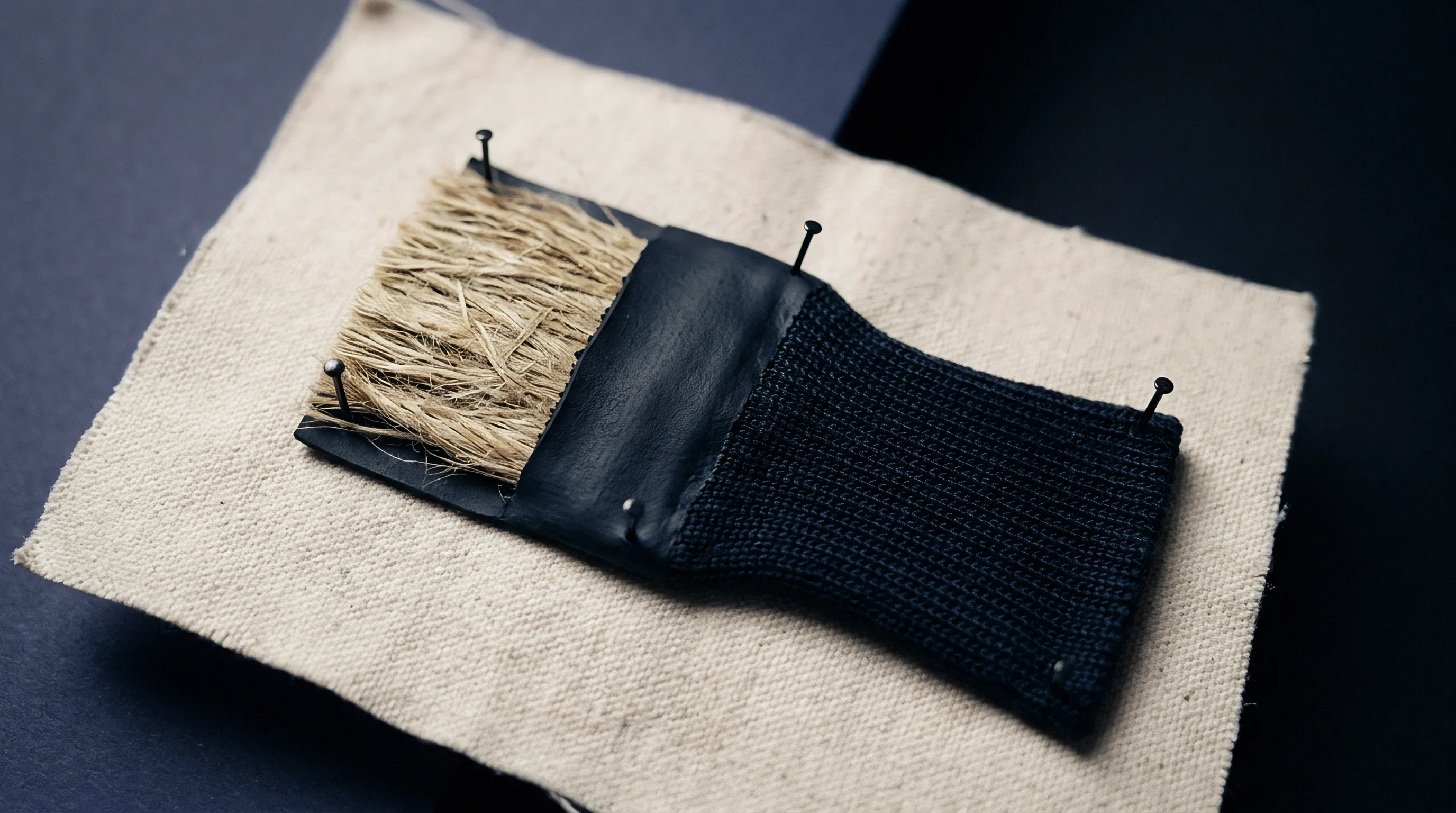
Circulation Turnover and Liquor Dynamics
Saturated sodium sulphate dissolves readily at ambient conditions, whereas sodium chloride demands higher mechanical shear to eliminate microcrystalline sediment. In automated dyehouse kitchens, stock solutions dissolve at three hundred grams per litre in auxiliary preparation tanks. Introducing concentrated stock solution into an atmospheric jig requires high-precision variable-frequency dosing pumps.
If the stock stream strikes incoming cloth directly at the nip rollers, localized salt shock occurs immediately, precipitating dye spots onto passing yardage.
The metering valve opens.
Stock tanks must meter liquid into the jig sump trough directly adjacent to the circulation pump intake. Automated dosing valves modulate pulse-width frequency to match calculated parabolic time slices. For a jig holding four hundred kilograms of duck in eight hundred litres of water, a 1:2 liquor ratio leaves almost no fluid buffer.
The complete liquor volume must turn over through the heat exchanger and distributor manifold every ninety seconds.
Fabric passage speed dictates minimum dosing cycle times. A five-hundred-metre roll of Number 4 duck moving at sixty metres per minute completes one full end-to-end passage in 8.3 minutes. Parabolic dosing distributed across four passes spans thirty-three minutes.
Dosing across six passes extends addition time to fifty minutes, buffering the concentration curve against mechanical dwell variations.
Sodium sulphate dosing at eighty grams per litre produces uniform strike when progressive delivery spans forty minutes at sixty degrees Celsius.
Glauber salt reduces chemical shock compared to vacuum salt. Sodium sulphate exhibits milder ionic dissociation curves in warm baths, preserving dye dispersion stability. When dyeing heavy navies or reactive blacks that require eighty to one hundred grams per litre of salt, anhydrous sodium sulphate prevents premature dye agglomeration in low-liquor environments.
The pump speed drops.
Dyehouse managers frequently claim that manual bucket additions across alternate ends produce identical levelness without capital investment in dosing skids. That operational excuse collapses under microscopic examination of finished duck seams, where unmetered additions invariably leave streak marks and unlevel selvedges.

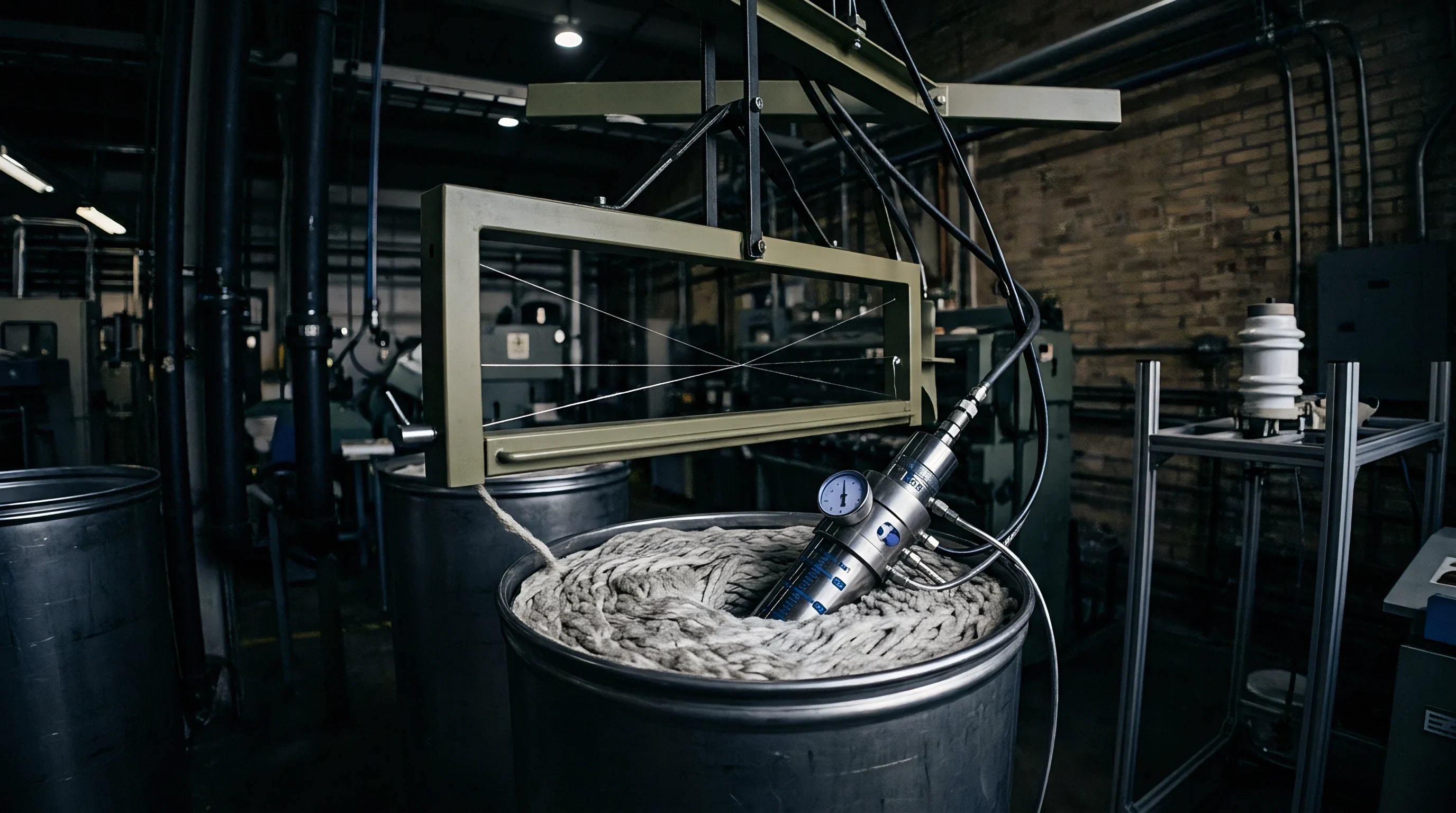
Fastness

Where Do Progressive Profiles Alter Sorption?
Spectrophotometric evaluation reveals profound differences between linearly salted duck and parabolic profiles. Colour yield, expressed as K/S values via the Kubelka-Munk equation, measures apparent depth on the fabric face. Linearly dosed fabrics exhibit deceptively high initial face K/S values because ninety percent of fixed dye rests within the upper forty microns of the surface yarn envelope.
After twenty industrial wash cycles, these surfaces abrade, exposing light inner fibers and causing severe delta E shifts.
Microscopic inspection of yarn cross-sections provides unambiguous verification of true dye migration:
- Microtome Cross-Sectioning embeds dyed duck bundles in methacrylate resin to cut thin transverse sections for optical transmission microscopy.
- Radial Penetration Grading measures the ratio of dyed annular depth to total bundle radius under calibrated optical software.
- Spectrophotometric Crock Testing evaluates colour transfer onto wet and dry cotton crocking cloths according to ISO 105-X12 protocols.
- Accelerated Wash Fastness subjects finished specimens to ISO 105-C06 commercial laundering conditions to detect surface wash-down tendencies.
Under ISO 105-X12 testing on 550 g/m² Number 6 duck dyed to navy shade, linearly dosed fabrics rarely surpass Grade 2 on wet crocking. Heavy plied yarns experience severe surface shear during the ten-cycle rubbing stroke. Because surface fibres carry dense accumulations of superficially fixed dyestuff, friction dislodges coloured microfibrils onto the test cloth.
Parabolic dosing pushes dye molecules deep into the structural axis of each yarn bundle, protecting dyestuff from mechanical contact.
The crocking cloth stays clean.
Wet rubbing scores consistently improve to Grade 3-4 or Grade 4 when dyers employ a cubic dosing exponent. Levelness along the roll axis also tightens, yielding delta E values below 0.6 across a four-hundred-metre run when measured under D65, TL84, and A illuminants per ISO 105-J03.
Purchase contracts specifying heavyweight duck for technical or apparel use increasingly enforce ISO 105-X12 Grade 3.5 minimum wet rubbing fastness alongside cross-sectional microscopic penetration minimums of seventy percent, which automatically invalidates lots dyed under antiquated linear salt addition routines.

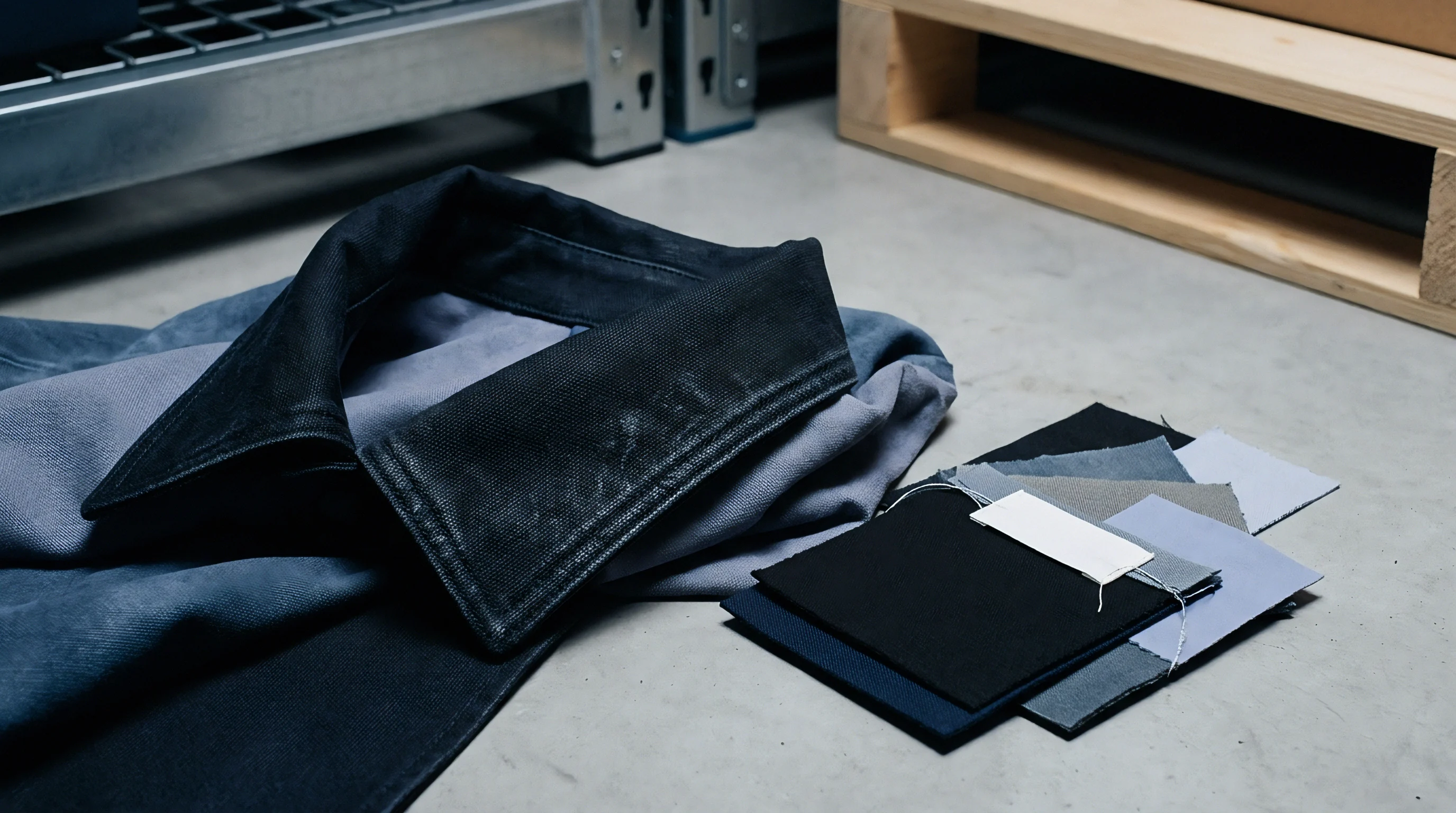
Ledger

Cycle Duration and Chemical Consumption Balance
Implementing parabolic salt dosing shifts the operational economics of the dyehouse floor. Running a progressive addition profile over six jig ends adds approximately twenty-five minutes of machine occupancy per batch compared to rapid four-end manual additions. On an atmospheric jig running three shifts daily, this extension reduces daily machine throughput from six batches to five batches per machine vessel.
Capacity tightens on the floor.
This time penalty is offset by dramatic reductions in re-dyeing and stripping rates. In heavy duck dyeing, stripping a rejected batch demands aggressive oxidation using sodium hydrosulphite and caustic soda, followed by extensive re-scouring, re-neutralizing, and re-dyeing. Stripping causes fiber degradation, stripping away four to eight percent of cotton tensile strength per ASTM D5034 grabs.
Landed batch costs jump forty-two percent whenever stripping occurs, entirely wiping out converter margins.
| Cost Component | Linear Dosing Route (USD) | Parabolic Profile Route (USD) | Variance Impact |
|---|---|---|---|
| Electrolyte Chemistry | 76.00 | 84.00 | Slightly higher sulphate volume |
| Machine Time Occupancy | 112.00 | 140.00 | Extended dosing dwell |
| First-Time Yield Factor | 81.5% | 96.8% | Elimination of ring dyeing |
| Stripping and Rework Allocation | 184.20 | 31.60 | Drastic reduction in rejects |
| Total Processing Cost per Metre | 1.18 | 0.89 | Net landed savings of $0.29/m |
| Figures reflect prevailing wet processing rates for 500 g/m² duck at 1:2.5 jig liquor ratio. | |||
Chemical consumption balances favor parabolic dosing despite higher machine time. Glauber salt usage rises slightly because dyers must maintain precise bath density, yet dyestuff utilization efficiency increases by eight percent. Higher dye fixation yields lower chemical oxygen demand in effluent wash waters, curtailing wastewater treatment surcharges.
The lot faces acceptance.
A secondary trade-off concerns energy consumption at the boiler. Extended running times at sixty degrees Celsius demand continuous steam injection to maintain jig hood temperatures. When energy tariffs spike, mill managers face difficult choices between running short, aggressive profiles with higher re-dye risks or committing to extended parabolic runs that protect crockfastness at higher thermal expense.
How much thermal energy can an industrial dyehouse afford to trade against the commercial security of first-pass crockfastness qualification when natural gas tariffs fluctuate across peak production quarters?