Optimizing Energy Fluid Dynamics and Tensile Survival in High Speed Continuous Tow Processing
Balance hydrodynamic drag and liquid boundary layer displacement to protect synthetic tow tensile survival during high-speed continuous chemical processing.

Drag
Running continuous filament tow at 120 to 450 metres per minute subjects the moving bundle to severe hydrodynamic shear. Across 50,000 to 1,200,000 total denier polyester, polyamide, and acrylic tows, boundary layer drag governs both chemical liquor turnover and mechanical degradation. When an unwoven ribbon of parallel filaments enters a chemical bath, fluid adheres to the polymer surfaces through viscous attraction.
This zero-velocity fluid boundary layer thickens progressively down the length of the processing tank and resists liquor exchange. As line speed climbs, the drag force acting on each filament escalates quadratically, loading individual capillaries with mechanical strain well before the tow reaches downstream draw rolls. Bundle geometry largely dictates the physical depth of this boundary layer.
Total hydrodynamic drag on an immersed tow ribbon depends on bath viscosity, running velocity, and tow packing fraction. A flattened, spread ribbon establishes a very different boundary layer profile than a collapsed, rope-like bundle. Spreading cuts internal entrainment distances but maximizes the absolute surface area exposed to drag.
Tightly bundled tows, by contrast, shield core filaments from surface shear while starving them of fresh bath chemistry.
The hydrodynamic shear force on a continuous filament bundle scales quadratically with line speed once relative Reynolds numbers exceed 2,100 inside the impregnation box.
Balancing boundary resistance requires calculating the hydraulic drag coefficient along the submerged path. At 250 metres per minute, an unconstrained 100,000 denier tow bundle can drag up to three times its dry weight in boundary layer fluid through the tank. That mechanical drag transfers directly into the filament tensile axis.
If fluid resistance matches or exceeds the yield point of the softened polymer during hot-wet drawing, runaway necking begins right inside the bath. Capillaries snap, wrap around submerged guide rolls, and force line stops.
Line continuity suffers immediately. Shed filaments accumulate in the processing liquor, settling on submerged deflector bars and clogging fluid delivery nozzles.
Flux
Getting chemistry into the spaces between continuous filaments requires rapid, forced fluid exchange. Displacing stagnant boundary liquor depends on creating a deliberate pressure differential across the tow plane. Standard immersion dip pans stop working effectively at higher speeds because boundary layer momentum shunts incoming process liquor away from the interior filaments.
Running above 180 metres per minute demands forced convective penetration to drive fresh finish or wash liquor directly through the moving bundle thickness.
Pressure Differential across Moving Tow Bands
Submerged wedge applicators and hydrodynamic hydro-foils generate localized pressure zones across the tow face. Running the ribbon over a profiled hydrodynamic foil splits the boundary layer: the leading edge shears off spent liquor, while the curved trailing flank pulls a low-pressure zone behind it. That pressure difference draws bath fluid directly through the filament matrix.
Interstitial liquor velocity must exceed the outward diffusion rate of residual monomers or spin finishes to ensure thorough scouring or impregnation.
| Line Speed (m/min) | Boundary Layer Thickness (mm) | Hydrodynamic Drag (N/ktex) | Fluid Turnover Time (ms) | Capillary Failure Rate (per 100km) |
|---|---|---|---|---|
| 120 | 1.85 | 4.2 | 185 | 0.8 |
| 180 | 1.42 | 8.6 | 112 | 1.9 |
| 240 | 1.15 | 14.8 | 76 | 4.5 |
| 300 | 0.94 | 22.4 | 52 | 11.2 |
| 360 | 0.78 | 31.7 | 38 | 24.8 |
| 420 | 0.65 | 42.5 | 29 | 51.6 |
Fluid turnover time drops from 185 milliseconds down to 29 milliseconds as velocity advances from 120 to 420 metres per minute. Slower turnover allows thorough chemical diffusion at modest liquid pressures. At 420 metres per minute, hydrodynamic drag climbs to 42.5 Newtons per kilotex, and external filaments suffer micro-buckling and ruptures well before core wet-out reaches theoretical saturation.
Fluid shear rates inside the bundle reach 100,000 inverse seconds.
Failure to strip boundary layer fluid prior to secondary immersion reduces core chemical wet-out efficiency below forty percent on heavy-denier bundles.
Bath flow geometry determines process stability. Cross-flow liquid injection introduces lateral forces that skew filaments unevenly across guide roll faces. Counter-current axial flow provides uniform contact and boosts mass transfer by increasing relative velocity between liquor and polymer, but it also compounds the cumulative tension along the running tow band.
Uneven fluid flux across the width leaves inconsistent residual finish, producing variable draw characteristics in downstream draw zones.


Strain
Filament survival during high-speed wet processing means managing combined thermal, chemical, and hydrodynamic stresses. Inside hot aqueous baths, the polymer absorbs heat alongside plasticizing solvent molecules. In polyacrylonitrile or polyamide tows, water acts as a potent plasticizer, depressing the effective glass transition temperature by as much as 40 degrees Celsius.
In this softened condition, the bundle is at its most vulnerable, forced to endure boundary friction, roll-bending stresses, and inter-filament shear without exceeding its breaking elongation.
Viscoelastic Response under Hydrodynamic Load
The tensile modulus of synthetic filaments drops sharply in aqueous baths above 75 degrees Celsius. When hydrodynamic skin drag tugs at the perimeter of the bundle, outer filaments undergo uncontrolled drafting. That localized strain permanently shifts crystalline chain orientation, leaving latent structural defects that show up downstream during crimping, drawing, or thermal relaxation.
Critical mechanical degradation mechanisms govern bundle transit through high-velocity fluid paths:
- Capillary Necking occurs when localized hydrodynamic drag exceeds the thermalized yield stress of the softened filament, creating irreversible diameter variations along individual strands.
- Hydrodynamic Shear Delamination strips surface oligomers and protective finishes from the filament exterior, generating microscopic fibrillar debris that clogs liquid recirculating filters.
- Inter-Filament Entanglement results from turbulent fluid eddies tumbling filaments across adjacent paths, forming micro-knots that snap under the mechanical nip rolls downstream.
- Roller Wrap Generation develops when broken, unanchored microfilaments escape the tow matrix and adhere via liquid surface tension to high-speed deflector rollers.
ISO 2062 single-end tensile verification after high-speed wet immersion identifies uncoordinated drafting when elongation coefficient of variation exceeds 8.5 percent.
Preventing these failure pathways requires managing the velocity gradient across the tow cross-section. In an unconstrained bath, outer filaments run through high-shear zones while core filaments remain protected within a moving wake. That velocity mismatch forces filaments to rub against each other, with dynamic friction coefficients reaching 0.35 to 0.50 in unlubricated hot water.
The resulting friction generates localized heat and physical scuffing, degrading tensile performance before the tow ever reaches final mechanical drafting.

Cavitation
High fluid velocities around mechanical bath internals generate severe hydrodynamic hazards. As running tows navigate submerged stationary guides, guide pins, and high-velocity impingement slots, fluid accelerates over contoured surfaces until local static pressure drops below the saturated vapour pressure of the hot bath. Cavitation bubbles nucleate, expand violently, and collapse against the moving polymer filaments within microseconds.
This collapse generates localized micro-jets with impact pressures exceeding several hundred megapascals, pitting guide surfaces and severing delicate microfilaments.
Should Immersed Bath Geometry Be Completely Redesigned?
Rethinking immersion hardware requires replacing fixed round guide pins with hydrodynamic hydro-foils and free-turning, low-inertia ceramic sleeves. Fixed pins act as bluff bodies at high processing speeds. They throw off wide turbulent wakes, intense vortex shedding, and localized vacuum pockets on their trailing edges.
Replacing these stationary bars with aerofoil-profiled flow directors maintains attached, laminar boundary flows along the ribbon, converting chaotic eddy currents into structured, low-energy shear layers.
| Bath Temperature (C) | Inception Speed (m/min) | Cavitation Number | Local Static Pressure (kPa) | Surface Void Depth (nm) |
|---|---|---|---|---|
| 60 | 380 | 1.45 | 78.2 | 12 |
| 70 | 320 | 1.18 | 62.4 | 45 |
| 80 | 260 | 0.92 | 47.3 | 120 |
| 90 | 210 | 0.68 | 31.1 | 340 |
| 95 | 165 | 0.45 | 18.6 | 680 |
Cavitation inception speed plummets from 380 metres per minute down to 165 metres per minute as bath temperature climbs from 60 to 95 degrees Celsius. Saturated steam pressures rise with temperature, depressing the localized cavitation number toward the critical boundary. At 95 degrees Celsius, violent bubble collapse carves surface voids up to 680 nanometers deep into standard polyester filaments.
These surface voids act as stress concentrators during subsequent drawing passes, cutting ultimate tensile tenacity by 12 to 18 percent.
Preventing cavitation requires careful engineering of bath pressure, fluid re-injection angles, and line geometry. Immersed guide pins must possess entry and exit angles under 15 degrees to prevent flow separation. Maintaining positive hydrostatic pressure over submerged guides further insulates the hot fluid from its vaporization threshold.
Neglecting these fluid dynamics erodes equipment surfaces, strips ceramic coatings from deflector bars, and ruins filament tensile uniformity across the continuous production run.

Draft
Tension control across multiple wet processing stages requires active compensation for cumulative hydrodynamic drag forces. Each wet processing tank, guide roller, and chemical application zone contributes incremental resistance to the moving tow band. If downstream drive rolls attempt to pull the tow through multiple wet stages from a single motor drive, cumulative tension spikes rapidly.
Filaments under excessive tension while wet stretch prematurely, losing their capacity for controlled, uniform orientation drawing in downstream hot-air ovens or steam chests.
Multi-Drive Tension Profiling across Wet Stages
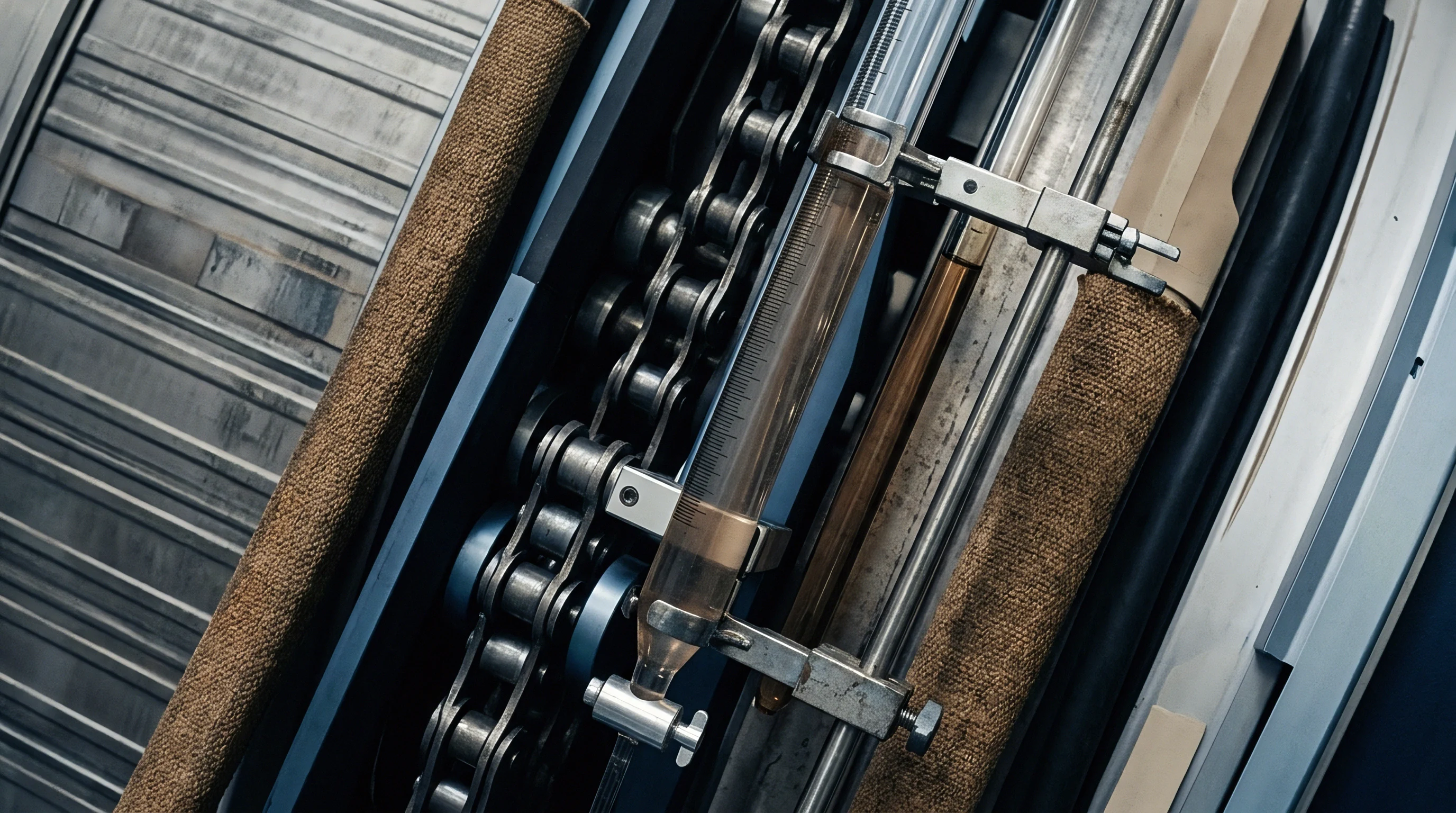
Isolating hydrodynamic zones through intermediate driven nip assemblies breaks this cumulative tension build-up. Instead of allowing tension to accumulate across three or four successive immersion tanks, individual low-deflection driven rolls regulate tow tension within narrow target bands. Load cells mounted on low-inertia dancer arms provide continuous feedback to frequency-controlled drive motors.
These drives trim roll velocities in increments as fine as 0.05 percent, compensating dynamically for changes in line speed, bath level, and fluid viscosity.
A systematic tension distribution follows a controlled step-profile:
- Tow entry tension must remain low, typically 0.05 to 0.10 centinewtons per dtex, allowing natural ribbon spreading across initial wetting bars without pinching.
- Impregnation zone drives compensate strictly for dynamic fluid skin drag, holding web tension at 0.12 to 0.15 centinewtons per dtex to eliminate uncoordinated capillary drafting.
- Scouring and rinse tanks step speed slightly positive to manage wet tow extension, absorbing plasticization elongation without allowing web slack or lateral wandering.
- Final extraction nip assemblies apply precise counter-torque, maximizing mechanical liquor expressing without crushing the crimp-free filament cross-sections.
Operating tension that deviates more than five percent across wet-zone intermediate drives voids mechanical runnability guarantees on tows finer than 1.5 denier per filament.
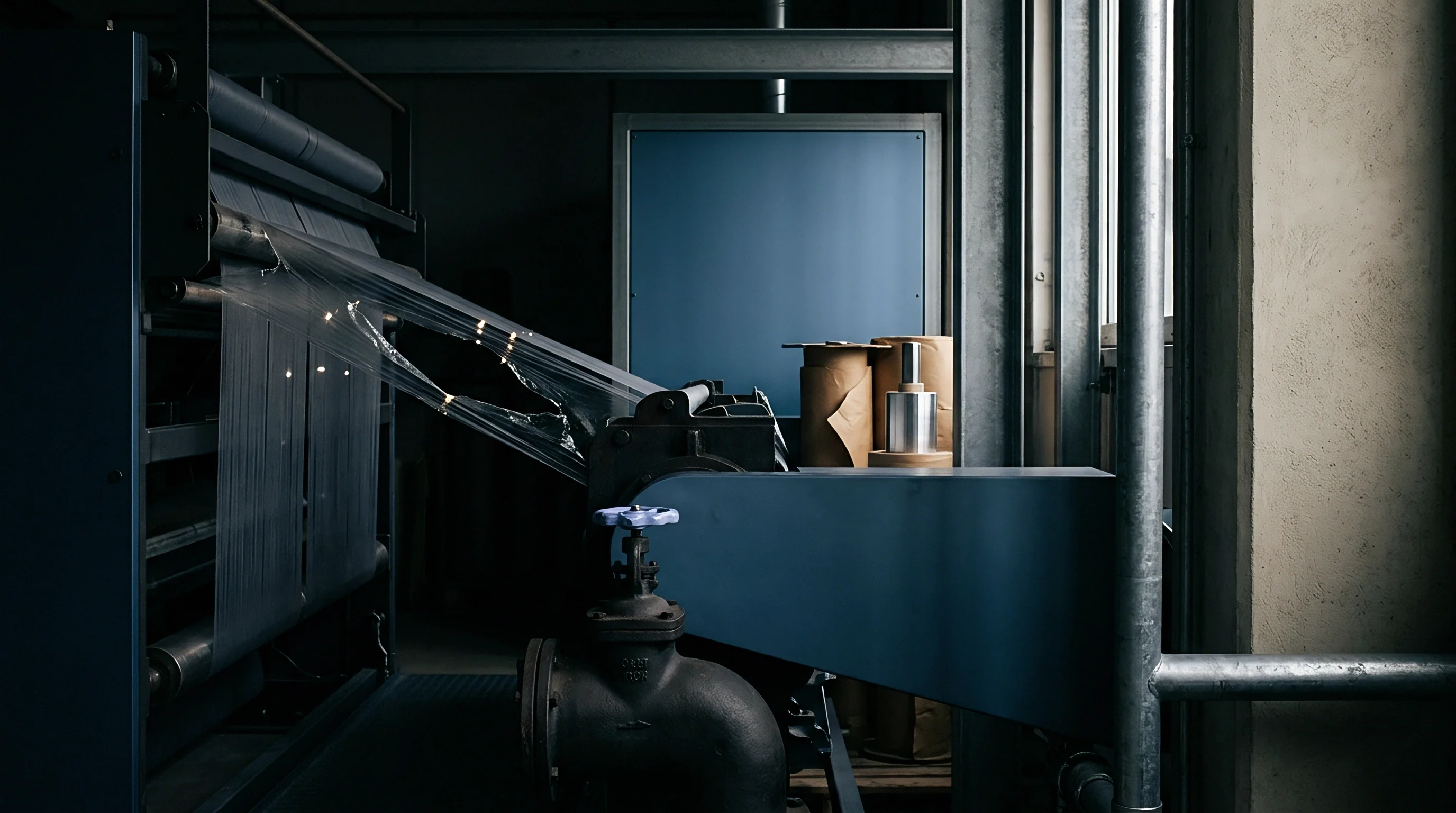
Assessing mechanical efficiency requires evaluating the total power draw of intermediate roll drives against the calculated hydrodynamic work performed on the fluid. Consider a processing unit operating a 120,000 denier acrylic tow line at 300 metres per minute across three submerged treatment boxes. Each box presents a fluid contact length of 4.5 metres with liquor maintained at 85 degrees Celsius.
Hydraulic skin friction calculates to approximately 28 Newtons of drag force per immersion stage.
With three consecutive stages, total parasitic hydrodynamic drag equals 84 Newtons. Uncompensated drag transfers back to the creel, increasing entrance tension and pinching the tow band into an impenetrable cord. Adding intermediate driven nip rollers between the tanks isolates the fluid boxes, redistributing the mechanical load.
Each motor provides isolated torque, preserving the open, flat bundle morphology required for cross-sectional chemical migration.
Filament fuzzing and roller wraps frequently stem from tension build-up under uncompensated liquid drag rather than chemical formulation errors.

Thermal
Thermal energy transfer within high-speed wet processing lines dominates operating expenditures. Continuous tow plants consume vast volumes of primary energy to heat wash water, maintain bath temperatures, and vaporize residual moisture in subsequent drying operations. Because water possesses an exceptionally high specific heat capacity of 4.184 kilojoules per kilogram per Kelvin, inefficient liquid management directly degrades operating margins.
Managing fluid dynamics inside tow tanks simultaneously resolves thermal boundary layers, accelerating heat transfer into the moving filament core while minimizing radiant and convective thermal losses from open liquid surfaces.
Boundary Layer Disruption and Heat Transfer Mechanics
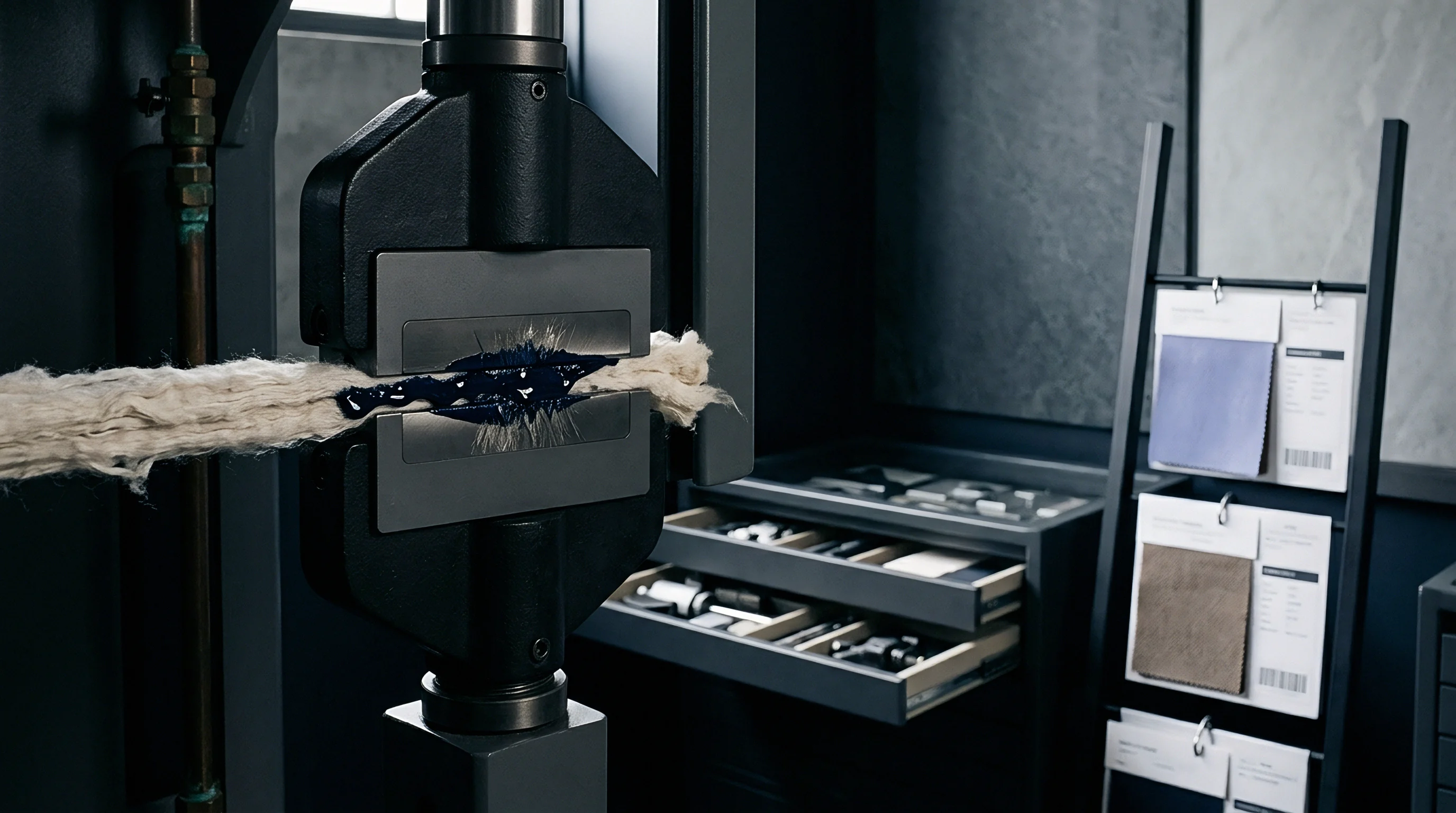
Thermal penetration into a running tow bundle relies on the thermal diffusivity of the bath liquor and the convective fluid turnover rate. Filaments running at high velocity insulate themselves with a boundary envelope of cooled water that travels alongside the tow, resisting bulk bath heat. Unless fluid dynamic disturbance strips this thermal boundary layer, core filaments take several seconds to reach the required chemical reaction or plasticization temperature.
Jet-assist nozzles directed counter to tow motion disrupt this insulating envelope, dropping required immersion dwell times by half.
Heat recovery yields substantial operating savings across four key areas:
- Counter-Current Washing Sequences reduce incoming fresh water demand by cascading effluent backward from the cleanest final rinse to the dirtiest initial scouring tank.
- Direct Mechanical Squeeze Expression removes interstitial moisture at a fraction of the thermal energy cost demanded by downstream steam cans or gas-fired ovens.
- Effluent Heat Exchanger Systems capture enthalpy from spent 90-degree-Celsius waste baths to preheat clean incoming process water from 15 to 65 degrees Celsius.
- Enclosed Tank Vapour Seals prevent fugitive evaporative emissions, containing steam while recovering latent vaporization heat through dynamic condenser coils.
Mechanical liquor extraction before thermal drying represents the single most impactful energy lever. Evaporating one kilogram of water requires approximately 2,260 kilojoules of latent heat energy. In sharp contrast, driving a high-load pneumatic squeeze roll to mechanically extract that same kilogram of water consumes less than 35 kilojoules of electrical energy.
Optimizing roll profile, durometer hardness, and hydraulic nip pressure increases expressed water removal, directly reducing boiler loads.
When line engineers compromise on dynamic fluid extraction prior to final thermal drying, thermal energy budgets swell exponentially, eroding mill profitability across long continuous runs.
Audit
Commercial verification of continuous tow processing performance demands structured protocols executed directly at the processing frame. Relying on laboratory swatch tests or retrospective quality claims exposes buyers to severe commercial liability. Once a continuous tow bundle is converted into staple fiber, sliver, or needle-punched nonwoven roll goods, isolating the root cause of tensile degradation or chemical unlevelness becomes contentious.
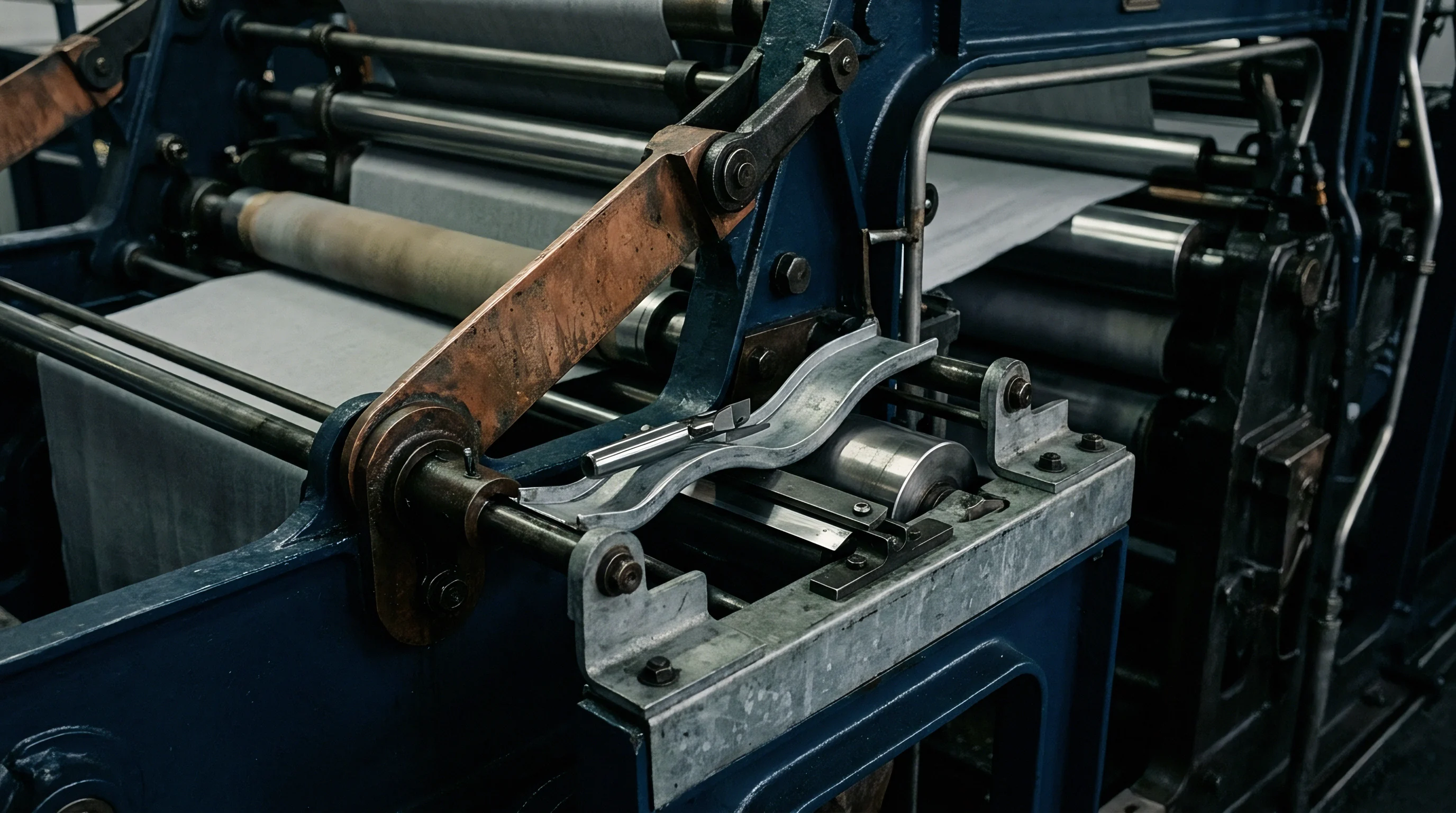
Rigorous qualification protocols must occur during full-speed production, verifying hydrodynamic stability, physical tension uniformity, and fluid turnover metrics directly on the machine line.
A comprehensive line audit inspects processing conditions across discrete, verifiable mechanical parameters:
- Online Non-Contact Tension Measurement verifies running tow band tension profiles using calibrated acoustic or laser-Doppler sensors across every wet processing span.
- Bath Liquid Turnover Verification confirms volumetric flow rates through recirculating heat exchangers, ensuring dynamic fluid turnover occurs at least six times per hour.
- High-Speed Digital Defect Logging tracks filament wrap frequency and micro-fuzz accumulation rates across guide roll surfaces using optical strobe cameras.
- Residual Finish Extraction Testing samples core and sheath filaments independently across the web width to verify chemical wet-out levelness per ISO 139 standards.
Contractual agreements must state precise performance boundaries for processing parameters and physical tolerances. Standard purchase specifications should stipulate that filament elongation variation must not exceed an 8.0 percent coefficient of variation across the full package. They must also define acceptable limits for broken filaments, capping allowed micro-wraps at two per 1,000 kilometers of processed tow length.
Establishing these metrics as binding acceptance criteria protects buyers from paying for damaged fiber lots.
While ISO 13934-1 governs tensile property determination, running tows also require dynamic wet-modulus verification before signing off on commercial scale runs. Without explicit contract requirements for dynamic online tension logging and fluid velocity balancing, physical fiber degradation is easily attributed to customer opening and carding operations rather than conditions inside high-speed wet processing tanks.
When audits establish clear hydrodynamic limits, mechanical isolation, and tight process tolerances, processing mills achieve sustainable, high-speed continuous tow operations that balance energy consumption with tensile survival.