Anisotropic Viscous Flow and Boundary Layer Fluid Exchange inside Jammed Yarn Intersections under Overfeed Regimes
Positive overfeed jams yarn crossover nodes, collapsing transverse permeability and halting fluid exchange, which causes unpenetrated cores and rub failures.


Pore
Weaving looms deliver structural geometry that wet finishing lines immediately rearrange under longitudinal relaxation. When a continuous filament or spun yarn enters a wet finishing range under positive overfeed, mechanical take-up slackens warp ends, permitting pick lines to crowd against each other beyond traditional geometric thresholds. This contraction compresses the void network between adjacent threads, converting open flow passages into constricted micro-slits.
The operational challenge shifts from macro-scale liquor circulation to microscopic interstitial displacement.
Thread spacing contracts rapidly. At nominal loom tensions, yarns maintain elliptical cross-sections with measurable clearance between interlacing crowns. Positive overfeed releases axial tension, driving crimp interchange where the relaxed yarn system bulges outward and settles into jammed contact against transverse yarns.
The resulting structural jamming alters the local hydraulic diameter across the fabric substrate. While macro-pore volume between distant yarn segments diminishes, intra-yarn micro-pores between individual filaments compress under transverse lateral pressures.
Liquor forced against an overfed weave channels through macro-pores and leaves the yarn intersections hydraulically dead.

Crown Contact Geometry at Jamming Limits
Thread spacing contracts rapidly when a tenter frame overfeeds grey goods into a chemical padder. As pick densities advance beyond the jammed threshold defined by Peirce and Kemp, yarn cross-sections flatten into racetrack formations. The contact area between perpendicular yarns expands from an idealized point contact into a broad contact plane.
This mechanical expansion pinches off the fluid channels that normally supply liquor to the internal fibers of both warp and weft bundles.
Fluid finds the easiest exit. Bulk fluid approaching the fabric plane follows the path of least hydrodynamic resistance. When yarn crowns jam, the interstitial void fraction at the crossover points falls below 0.15, while the surrounding inter-yarn gaps accommodate the primary convective volume.
The central contact zone turns into a hydraulic shadow. This physical isolation prevents bulk liquor exchange from wetting the interior fibers of the yarn intersection.

Packing Fractions across Compacted Interlacements
Filament clusters compress under the biaxial tensions imposed by machine-direction shrinkage. In a relaxed plain or twill construction, local fiber volume fractions within the crossover node frequently exceed 0.78, approaching hexagonal close-packing limits. Across the free yarn spans between intersections, fiber volume fraction remains substantially lower, hovering near 0.55 to 0.62.
This steep structural disparity creates an extreme gradient in local hydraulic permeability.
| Overfeed Ratio (%) | Finished Sett Ends x Picks (/cm) | Crossover Fiber Fraction | Inter-Yarn Hydraulic Diameter (µm) | Intra-Yarn Void Fraction |
|---|---|---|---|---|
| 0.0 | 42.0 x 28.0 | 0.61 | 34.2 | 0.39 |
| +4.0 | 42.0 x 30.5 | 0.68 | 22.8 | 0.32 |
| +8.0 | 41.8 x 33.0 | 0.76 | 11.4 | 0.24 |
| +12.0 | 41.5 x 35.5 | 0.83 | 4.1 | 0.17 |
| +16.0 | 41.2 x 37.8 | 0.87 | 1.8 | 0.13 |
The yarn core stays dry. At high overfeed ratios, the reduction in interstitial void volume alters the balance between capillary pressure and dynamic fluid head. Capillary pressure increases as pore radius shrinks, yet the viscous drag resisting flow increases inversely with the fourth power of the pore radius.
Squeeze rollers on a continuous pad mangle force chemistry past the surface of the yarn, but dynamic immersion times of 0.8 to 1.5 seconds fail to overcome internal viscous drag.
- Core ring-dyeing develops when dyestuff deposits exclusively on outer filaments while jammed crossover centers receive only carrier liquid stripped of active molecules.
- Unreacted crosslinking nodes appear where durable press finishes cannot penetrate the compacted contact flat, leaving interior cellulose unbonded and prone to localized creasing.
- Surfactant entrapment occurs in deep micro-pores where dense fiber packing halts convective rinse cycles during post-treatment wash stages.
- Differential shrinkage bands arise when chemical softeners deposit unevenly across relaxed yarn crowns, causing irregular dimensional recovery during downstream laundering.
When mills push overfeed beyond the physical clearance of the yarn system without compensating dwell times, finished goods exhibit pale crossover crosses across dark dyeings and fail standard seam slippage tests after three commercial washings.

Viscosity
Liquid moving through an anisotropic textile matrix encounters unequal resistance along orthogonal coordinate axes. In saturated porous media, viscous flow follows the Darcy-Brinkman equation, which incorporates both macroscopic drag through porous structures and viscous shear stresses near solid boundaries. Within a relaxed woven matrix, the permeability tensor components split widely between the yarn axial direction and the through-thickness transverse direction.
This separation governs the actual path taken by applied finishing chemistry.
Transverse liquor exchange ceases completely. Parallel to the filament orientation, fluid encounters smooth, continuous micro-channels that offer moderate resistance. Perpendicular to the filaments, fluid must negotiate tortuous, constricted paths around tightly packed cylinder walls.
Inside jammed intersections, this transverse permeability plummets by up to four orders of magnitude relative to longitudinal flow. The fluid stream diverts along the outside of the bundle, starving the crossover core of fresh reactants.

Anisotropic Permeability Tensors in Deformed Channels
Directional resistance through a textile substrate follows Darcy-Brinkman formulations where spatial orientation dictates throughput. Flow along the principal fiber axis exhibits a longitudinal permeability coefficient governed by Gebart equations for parallel cylinder arrays. Transverse permeability across the compressed crossover zone drops precipitously as fiber volume fraction climbs above 0.70.
The resulting permeability tensor displays an anisotropy ratio exceeding fifty to one under tight overfeed setups.
Drag forces spike exponentially here. Viscous forces overwhelm inertial forces throughout these micro-structural domains. The local Reynolds number inside the crossover micro-pores drops to values between 10⁻⁴ and 10⁻², placing the entire flow regime squarely inside the creeping Stokes domain.
Under these flow parameters, pressure-driven convection cannot penetrate the compacted core, transferring all mass transfer responsibility to molecular diffusion.
| Bulk Porosity | Shear Rate (s⁻¹) | Longitudinal K (m²) | Transverse K (m²) | Anisotropy Ratio (K_long / K_trans) |
|---|---|---|---|---|
| 0.48 | 50 | 8.4 x 10⁻¹² | 1.2 x 10⁻¹² | 7.0 |
| 0.42 | 200 | 4.1 x 10⁻¹² | 3.1 x 10⁻¹³ | 13.2 |
| 0.35 | 800 | 1.6 x 10⁻¹² | 5.8 x 10⁻¹⁴ | 27.6 |
| 0.28 | 2500 | 5.2 x 10⁻¹³ | 8.9 x 10⁻¹⁵ | 58.4 |
| 0.22 | 8000 | 1.1 x 10⁻¹³ | 1.3 x 10⁻¹⁶ | 84.6 |
Stokes flow governs the interstices. Pad-liquor formulations contain auxiliary chemicals, including wetting agents, antimigrants, and polymer crosslinkers, that modify fluid rheology. At low shear rates inside stagnant fabric crevices, associative thickeners and sizing residues generate high apparent viscosities.
The fluid thickens precisely where channel dimensions demand lowest resistance, creating localized flow blockages that persist through high-pressure extraction nips.
In wet pickup at 65 percent expression on a 220 g/m² twill, stagnant volume inside crossover nodes reaches 18 percent of total retained liquor.

Could Microchannel Shear Thinning Relieve Core Choking?
Polymer processing fluids and concentrated finishing baths display non-Newtonian behavior under elevated velocity gradients. As pad mangle nip rollers generate shear rates exceeding 5,000 s⁻¹, pseudoplastic pad liquors undergo shear thinning, dropping apparent dynamic viscosity by 40 to 70 percent. This viscosity reduction theoretically eases fluid entry into constricted passages during the instantaneous compression phase inside the nip.
The relaxation time kills penetration. Shear thinning requires sustained deformation rates. The millisecond duration of nip transit ends abruptly as the fabric emerges from the squeeze rolls into atmospheric pressure.
Apparent viscosity rebounds instantly to its zero-shear plateau while the overfeed regime holds the yarn bundle in mechanical compression. Fluid that failed to enter the core during the momentary nip passage remains locked outside the crossover zone, raising the question of whether chemical penetration depth can ever be decoupling from base machine velocity under high-overfeed configurations.


Boundary
Hydrodynamic friction generates stagnant fluid films at every solid-liquid interface throughout the wetted substrate. As finishing liquor circulates around yarn bundles, velocity drops toward zero at the filament surfaces, establishing a viscous boundary layer. The thickness of this boundary layer varies inversely with local fluid velocity.
In open channels between loose threads, convective currents erode the layer, maintaining active mass transfer. Inside jammed yarn interlacements, bulk convective currents vanish entirely.
Diffusion governs this inner boundary. Fluid velocity inside the jammed intersection throats falls below millimeters per minute. The stagnant boundary layer expands until it spans the entire cross-section of the intra-yarn void space.
Dissolved dyestuffs, fluorochemical finishes, and flame retardants must travel across this stagnant layer purely through Brownian motion. Molecular diffusion through water operates on timescales orders of magnitude slower than convective fluid displacement, severely limiting chemical replenishment rates.

Stagnation Zones within Interstitial Throats
Fluid velocity decays toward zero inside the narrow crevices where crossing yarns compress each other. These throat regions function as hydraulic dead zones. In continuous wet processing, liquor surrounding the outside of the yarn updates continuously as the fabric traverses dip pans or washer compartments.
Inside the throat, the original entrained air or dilute pre-wetting liquid remains trapped, sealed off by viscous boundary layers.
Dead volume dominates the node. Mass transfer within these stagnant pockets depends on the Péclet number, which defines the ratio of advective to diffusive transport rates. Within inter-yarn macro-pores, Péclet numbers exceed 10³, confirming that advection controls bulk flow.
Inside jammed crossover throats, the Péclet number drops below 0.1. Diffusion dictates solute movement, producing severe concentration gradients between the yarn exterior and the unpenetrated core.
Is Transverse Core Drainage Stifled at Maximum Overfeed?
Perpendicular displacement through the interior of a swollen yarn bundle demands substantial hydraulic head pressures. When a fabric runs through a stenter with +10% overfeed, the warp yarns crimp deeply around weft yarns, maximizing radial contact stress. This mechanical stress expels water from the yarn-to-yarn interface into outer pores, drying the contact flat before chemical immersion occurs.
Subsequent attempts to force liquor through this compressed junction encounter an insurmountable boundary resistance.
Pressure alone cannot force exchange. Standard squeeze rollers apply linear pressures of 20 to 50 N/mm across the fabric face. This external force primarily deforms the macro-structure, flattening the weave without inducing through-thickness fluid exchange within the jammed contact points.
The liquid film trapped at the fiber boundaries acts as an incompressible hydraulic barrier under rapid nip cycling, preventing fresh chemical entry.
- Inter-fiber throat clearance must exceed twice the hydrodynamic boundary layer thickness to permit convective liquor replacement during continuous immersion.
- Péclet transition thresholds require minimum local interstitial flow velocities of 0.05 m/s to shift mass transfer away from slow diffusive mechanisms.
- Viscous sublayer decay rates demand extended dwell periods in pad troughs whenever finished pick counts exceed 90 percent of Peirce jamming limits.
- Hydrophilic pre-wetting protocols eliminate trapped air envelopes that otherwise reinforce boundary layer stagnation in compacted greige interlacements.
The dyehouse manager commonly explains that shaded crossover flecks are an inevitable physical limitation of running heavy overfeed on high-density looms, claiming no chemical formulation can breach a mechanically jammed filament crown.

Stenter
Pin chains running through an oven enclosure dictate the exact dimensional equilibrium of wet processed piece goods. By adjusting the speed differential between the fabric infeed rollers and the main transport chains, finishing houses introduce controlled longitudinal overfeed, commonly ranging from +2% to +18%. This mechanical feeding bunches the filling picks, delivering target aerial weights and pre-empting domestic laundry shrinkage.
The identical mechanism, however, compresses yarn junctions precisely when finishing chemistry requires uniform application.
Pin tension slackens the web. Overfeed functions by pushing excess fabric length onto traveling pins. As the fabric slackens longitudinally before entering the drying fields, tension releases, allowing weft picks to crowd together and crimp upward.
When wet-on-wet finishes apply across this relaxed matrix, the fabric structure absorbs chemistry in an uneven, mechanically distorted configuration. Intersections jam prior to moisture evaporation, locking structural and chemical non-uniformities into the finished textile.
Overfeeding slackens warp tension while multiplying hydrodynamic resistance across every crossover point.
Chain Pinning and Longitudinal Feed Mechanics
Driven overfeed rolls deposit deliberate slack onto moving needle plates before the wet web encounters drying nozzles. The mechanical overfeed system utilizes brush wheels or air knives to press the relaxed selvedges securely over brass pins. The longitudinal slack allows the fabric to pull into a jammed state under transverse chain widening.
As the tenter clips or pins expand the fabric width to finished specification, transverse tension spikes while warp tension remains suppressed.
Yarn crimp redistributes unevenly. Transverse width expansion pulls weft yarns straight, which forces relaxed warp yarns to absorb the entire geometric crimp balance. The warp yarns bend sharply over the taut filling picks, pinching the crossover intersections with extreme radial forces.
The contact flat broadens, compressing filament groups and trapping stagnant boundary layers before the fabric reaches the chemical spray or foam applicator heads.
| Tenter Overfeed Setting (%) | Line Velocity (m/min) | Wet Pickup Variance Across Width (%) | Core Chemical Penetration Depth (%) | Dimensional Stability ISO 5077 Warp (%) |
|---|---|---|---|---|
| +2.0 | 45 | ± 1.8 | 92 | -4.8 |
| +5.0 | 40 | ± 2.4 | 84 | -2.9 |
| +8.0 | 35 | ± 3.9 | 68 | -1.2 |
| +12.0 | 28 | ± 5.6 | 46 | +0.4 |
| +16.0 | 20 | ± 8.2 | 29 | +1.1 |
Liquor bypasses the dense crowns. When finishing chemistry applies through immersion or topical kiss-rolls, liquor channels exclusively into low-resistance inter-yarn apertures. The jammed warp crowns, bearing high internal packing densities, reject aqueous formulations.
Chemical agents migrate toward outer yarn boundaries during drying, creating severe surface-to-core concentration gradients that impair performance consistency across the goods.
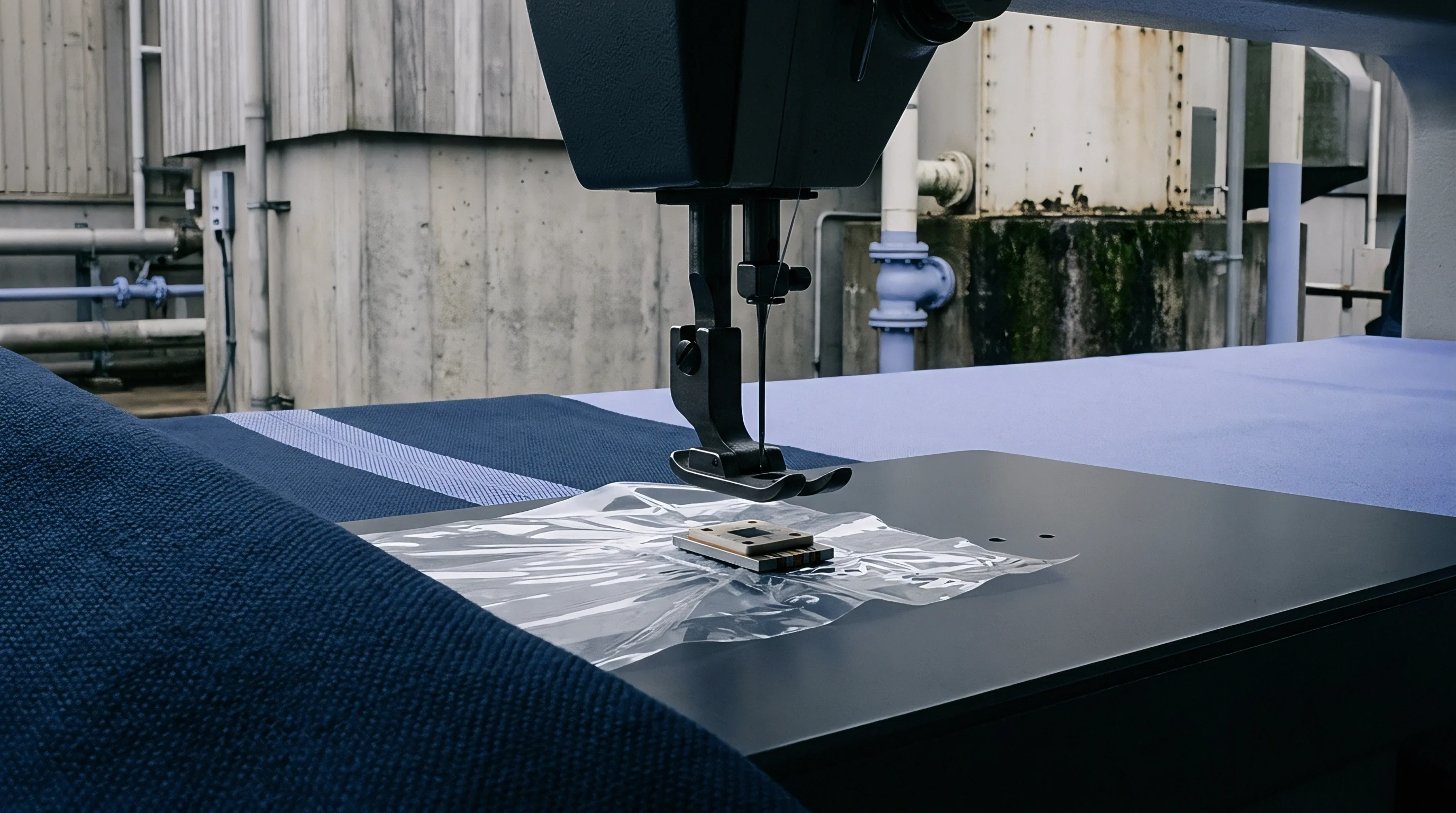
Liquor Displacement during Nip Immersion
Squeeze rolls exert severe radial compressive forces that drive air out of coarse fabric voids. When piece goods enter the padder bowl under overfed conditions, loose cloth structure permits rapid displacement of inter-yarn air pockets. Inside the yarn intersections, however, compressed boundary layers maintain air micro-bubbles that resist hydrostatic immersion pressures.
The nip squeeze cycle lasts approximately 15 to 30 milliseconds at production speeds, providing insufficient time for trapped air dissolution.
Mill managers resist slow passes. Extending immersion dwell time or lowering machine velocity increases chemical penetration by permitting diffusive equilibrium across boundary layers. Running a stenter frame at 18 meters per minute instead of 45 meters per minute doubles production costs per linear meter, consuming converter margins.
Production floors routinely run lines at maximum mechanical throughput, prioritizing yardage volume over internal crossover penetration depth.
- Process specification documents must define exact overfeed percentages alongside pin plate brush pressures and pad nip loading values.
- Differential pickup audits require measuring core-to-surface chemical distribution using cross-sectional microscopy across five sample points per lot.
- Dimensional tolerance clauses establish acceptable finished shrinkage bands under ISO 6330 wash methods without permitting unpenetrated fiber contact flats.
- Pre-wetting auxiliary qualification confirms that incoming wet-on-wet baths incorporate de-aerating wetting agents with dynamic surface tensions below 28 mN/m.
Under international sales specifications governed by ISO 13934 tensile and ISO 5077 dimensional stability standards, failure to achieve uniform crossover resin penetration voids mill compliance whenever tear strength drops more than 25 percent below baseline values.


Exhaustion
Solute uptake inside a packed fibrous assembly depends on mass transfer across depleted stagnant layers. During continuous dye application or pad-batch wet processing, exhaustion kinetics within the yarn interior decouple from the bulk liquor concentration. As surface fibers absorb dye molecules, boundary layers starve the internal crossover areas of active dye cations or anions.
The result is uneven chemical fixation, where visible surface levelness conceals extensive core depletion.
Washing lines compound the penalty. When under-penetrated piece goods enter open-width washing ranges, water flow strips unfixed, surface-deposited chemicals off the fabric face while leaving residual auxiliaries trapped within the jammed intersection micro-pores. These entrapped auxiliaries, including unreacted crosslinking agents and hydrolysed reactive dyes, migrate outward during final cylinder drying, causing shaded marks, water spotting, and altered surface friction coefficients.
Under ISO 105-C06 test conditions, unpenetrated crossover junctions drop dry-rub fastness ratings by a full grade on saturated dark shades.
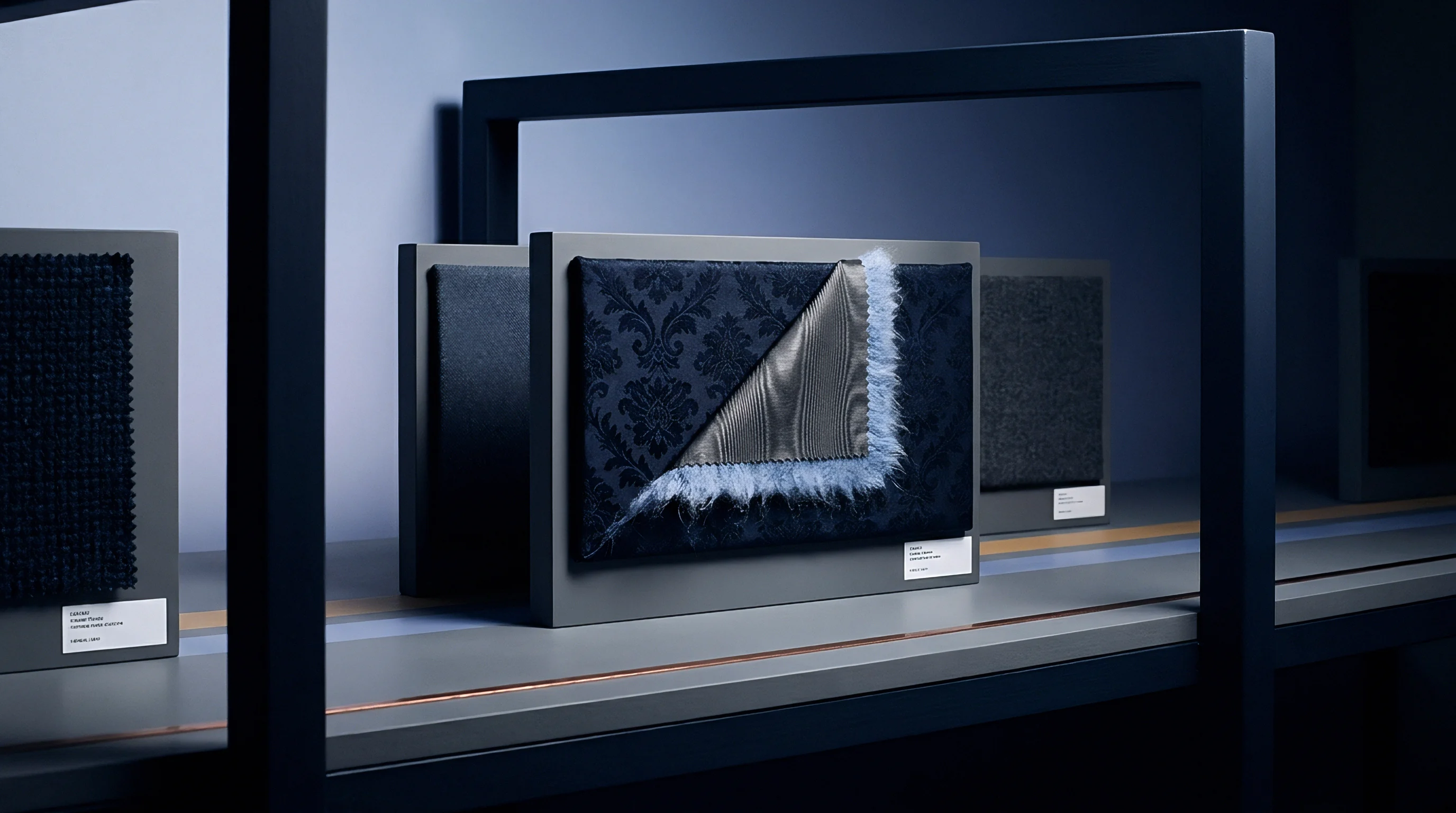
Diffusion Gradients inside Jammed Filaments
Concentration profiles develop steep thermal and chemical drops as dye molecules migrate inward from active flow paths. In high-density fabrics running under aggressive overfeed, the apparent diffusion coefficient inside the jammed crossover node drops to less than one-tenth of its free-solution value. The tortuous pathway between close-packed fibers forces dye molecules to diffuse through constricted, electrically charged micro-channels.
The audit confirms actual penetration. Cross-sectional microtome slicing reveals that while peripheral filaments achieve full ring saturation, filaments within the crossover contact plane remain uncolored. In technical water-repellent or flame-retardant goods, this structural void creates failure sites where water droplets or flame fronts penetrate the untreated yarn core under pressure testing.
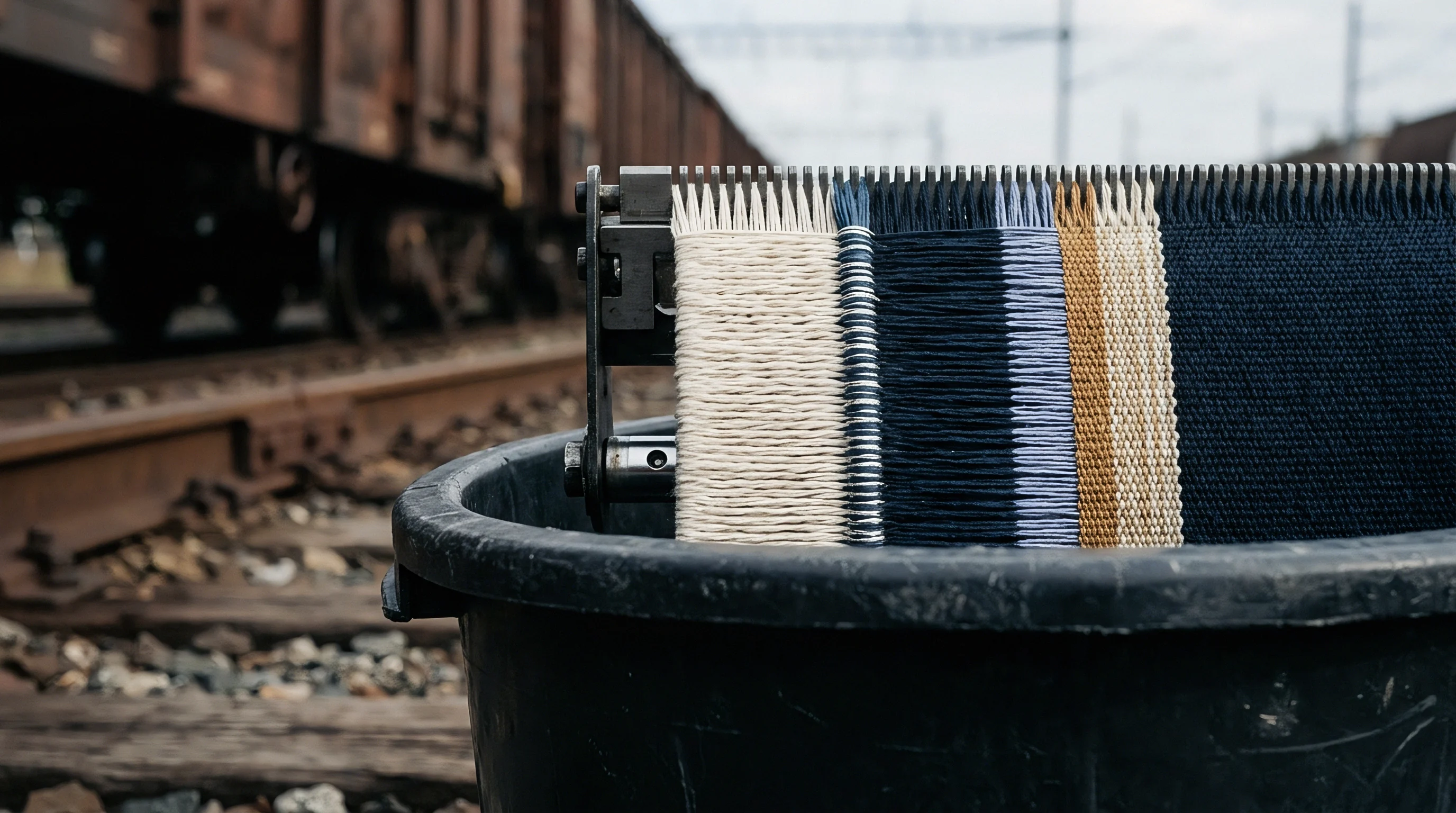
Fixation Yields and Wash-Off Hydrodynamics
Reactive and disperse chemistries bind onto accessible polymer sites during the hot dwell cycle. When fabric crosses into steam chambers or dry heat zones, unpenetrated crossover junctions experience localized moisture deficits. Water evaporates prematurely from the exterior yarn faces, drawing liquor out of the core through capillary migration while leaving solid chemicals behind on the fiber perimeters.
This uneven migration produces ring-dyeing and stiffens the fabric hand.
Washing efficiency plummets in dense weaves. Open-width spray boxes direct high-velocity water jets against the moving fabric web, dislodging unfixed surface dye. Inside jammed intersections, water jets cannot penetrate the viscous boundary film.
Stagnant chemistry remains lodged in the node, desorbing slowly over successive home laundering cycles and resulting in progressive color bleeding that fails ISO 105-A05 grey scale evaluations.
Fabric structures packed tightly to arrest laundering shrinkage inevitably demand longer chemical diffusion intervals, while open weaves accept rapid continuous liquor displacement without technical penalty.