Quantifying Sorption Hysteresis and Crosslinker Hydrolysis in Multi Layer Textile Laminates
Quantitative evaluation of sorption hysteresis and hydrolytic decay in laminate tie-layers establishes real durability and regulatory compliance limits.
Vapor
Thermodynamics of Sorption Hysteresis in Laminate Assemblies
Water vapor transport through multi-layer technical textiles depends on the molecular structure of the functional membrane and the adhesive formulation bonding the layers. In monolithic hydrophilic polyurethane and copolyester membranes, transport occurs through a continuous absorption, diffusion, and desorption sequence. In contrast, microporous expanded polytetrafluoroethylene membranes rely on vapor phase diffusion through physical pores.
Sorption hysteresis describes the path-dependent discrepancy between the absorption isotherm and the desorption isotherm at a given temperature and relative humidity. When relative humidity rises, hydrophilic polymer chains absorb water molecules, expanding the free volume within the amorphous polymer matrix. Water vapor condenses into clusters within these newly formed interstitial voids at relative humidity levels exceeding 75 percent.
The energy required to break these internal water-polymer hydrogen bonds during drying exceeds the energy released during initial water vapor absorption.
The resulting hysteresis loop creates a structural lag in moisture equilibrium. Liquid water remains trapped inside the interior adhesive tie-layer and functional membrane long after external ambient humidity drops. This localized moisture retention directly affects both breathability performance and material longevity.
Moisture retention alters the local glass transition temperature of polyurethane tie-layers, shifting mechanical compliance during wear cycles.
| Membrane Chemistry | Membrane Type | Uptake at 50% RH (% weight) | Uptake at 90% RH (% weight) | Hysteresis Index (90% to 50% RH) |
|---|---|---|---|---|
| Aromatic Polyether-Polyurethane | Solid Hydrophilic Monolithic | 3.2 | 14.8 | 0.28 |
| Aliphatic Copolyester-Ether | Solid Hydrophilic Monolithic | 1.8 | 8.5 | 0.19 |
| Expanded Polytetrafluoroethylene | Hydrophobic Microporous | 0.1 | 0.4 | 0.02 |
| Microporous Polyurethane | Bicountry Hydrophobic-Hydrophilic | 1.1 | 5.9 | 0.14 |
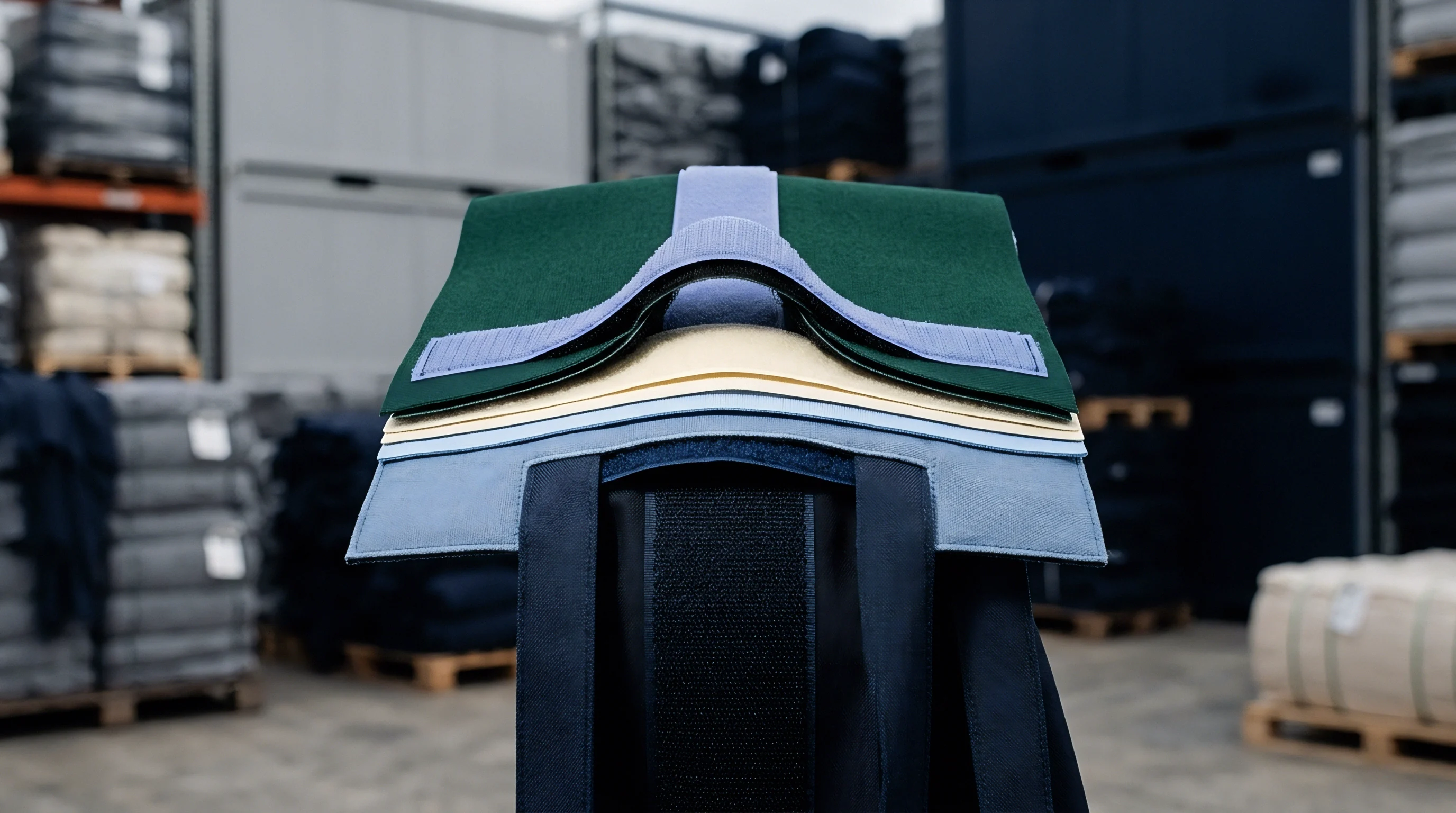
Laminate construction introduces complex interfacial boundary conditions that compound hysteresis phenomena. A typical three-layer laminate combines a woven outer face fabric treated with durable water repellent, a polyurethane or acrylic adhesive tie-layer, a functional membrane, and an inner knit tricot backing. Each layer exhibits distinct moisture absorption kinetics.
Face fabrics finished with fluorinated or non-fluorinated hydrophobic chemistry impede liquid water entry while allowing water vapor passage. Moisture vapor originating from perspiration passes through the inner tricot backing and enters the adhesive tie-layer. If the adhesive layer possesses higher water vapor sorption capacity than the functional membrane, water molecules accumulate at the adhesive-membrane interface.
Adhesive swelling creates localized micro-strains along the interface. The differential expansion between the expanding adhesive network and the dimensionally stable membrane yields structural shear stresses. These mechanical forces weaken physical anchor points where the adhesive penetrates face fabric yarns or membrane surface pores.
Bound Moisture Accumulation at the Tie-Layer Interface
Dynamic Vapor Sorption measurement isolates moisture uptake profiles within individual multi-layer laminate components. Gravimetric measurements demonstrate that water molecules in hydrophilic polyurethanes exist in three distinct thermodynamic states: non-freezing bound water, freezing bound water, and free water. Non-freezing bound water attaches directly to polar polymer segments, including soft-segment polyether oxygen atoms and hard-segment urethane or urea linkages.
As water vapor concentration increases, freezing bound water forms secondary liquid layers around these primary sorption sites. Free water condenses into micro-cavities within the polymer structure when ambient relative humidity approaches saturation.
Water condensation within internal polyisocyanurate and polyurethane void spaces creates localized liquid micro-reservoirs that persist hours after surface drying.
Sorption hysteresis predominantly involves the condensation and retention of freezing bound water and free water within the crosslinked adhesive network. During desorption, capillary forces within the polymer micro-cavities resist moisture evaporation. The capillary radius governs the vapor pressure depression required to evaporate trapped water, generating a significant history-dependent shift in water content.
In multi-layer structures, outer fabric coatings act as vapor resistance barriers during drying phases, extending the retention time of free water inside the internal adhesive matrix.
Prolonged water retention inside the laminate matrix accelerates chemical degradation pathways. Water molecules act as plasticizers, lowering the glass transition temperature of the crosslinked adhesive and facilitating molecular chain mobility. This enhanced mobility lowers the activation energy required for hydrolytic reactions within the crosslinker network.
Dynamic mechanical analysis shows a distinct drop in storage modulus when laminates remain in the elevated sorption phase of the hysteresis loop. Whether internal moisture entrapment can be permanently mitigated through structural modification of hard-segment crosslinking density without compromising initial breathability remains an open engineering question in technical membrane development.
Hydrolysis
Hydrolytic Breakdown Mechanics of Crosslinker Networks
Crosslinking agents form covalent networks within textile adhesives to provide thermal stability, wash durability, and chemical resistance. Common crosslinker families include polyfunctional aziridines, aliphatic and aromatic polyisocyanates, carbodiimides, and amino-formaldehyde resins. Polyisocyanate crosslinkers react with hydroxyl or carboxyl groups on polyurethane backbones to yield urethane, allophanate, biuret, or urea linkages.
Hydrolysis breaks down these covalent bonds through nucleophilic addition of water molecules to electron-deficient carbonyl carbon atoms within the crosslinker structure.
Ester and urethane linkages exhibit high vulnerability to hydrolytic cleavage under humid conditions. Ester groups present in polyester-polyurethane adhesives undergo reversible esterification breakdown, producing carboxylic acid terminals and alcohol groups. The generated carboxylic acid groups lower the internal pH of the adhesive matrix, establishing an autocatalytic hydrolytic cascade.
Autocatalysis accelerates crosslinker network degradation exponential over time. Polyurea linkages formed by isocyanate-water reactions show superior resistance to hydrolytic attack compared to polyurethane ester groups, yet suffer breakdown under elevated temperature and continuous moisture saturation.
How Does Hydrolytic Cleavage Alter Laminate Permeability?
Cleavage of crosslinker networks fundamentally alters the physical structure of adhesive tie-layers. Hydrolysis converts high molecular weight three-dimensional crosslinked networks into shorter, linear, or branched oligomers. This reduction in crosslink density increases the free volume of the polymer, initially causing an artificial rise in water vapor transmission rate due to enhanced polymer chain mobility.
However, as bond cleavage continues, small molecular weight breakdown products migrate through the polymer matrix. These migration products aggregate inside the porous channels of microporous membranes or block sorption sites within hydrophilic membranes.
The accumulation of crosslinker degradation products inside functional transport channels causes a progressive decrease in breathability. Sweating guarded-hotplate testing reveals a steady rise in water vapor resistance, measured as Ret values, following repeated hydrothermal exposure. Polymer chain scission simultaneously reduces adhesive cohesive strength, causing structural softening and sticky residue formation at the laminate interface.
- Carbodiimide Scission transforms active crosslinker bonds into substituted urea derivatives upon reacting with water molecules, neutralizing their crosslinking capacity.
- Polyisocyanate Scission cleaves urethane and biuret bridges, generating primary aromatic amines or free aliphatic amine monomer residues inside the polymer matrix.
- Melamine Crosslinker Scission hydrolyzes etherified methylol groups, releasing free formaldehyde monomer into the surrounding fabric structure.
- Aziridine Scission opens ethylene imine ring structures through acid-catalyzed hydrolysis, producing amino alcohol fragments and reducing crosslink density.
Chemical hydrolysis releases volatile and extractable compounds that trigger severe regulatory compliance failures. Aromatic isocyanates such as 4,4′-diphenylmethane diisocyanate break down under hot water washing or high humidity storage to form monomeric 4,4′-methylenedianiline. Aromatic amines are strictly regulated under global consumer protection standards due to carcinogenic properties.
Melamine-formalhyde and urea-formaldehyde crosslinkers release free formaldehyde into the textile matrix during aging. Formaldehyde levels can quickly surpass global regulatory thresholds when laminates undergo humid storage in sealed shipping containers.
| Crosslinker Chemistry | Primary Hydrolysis Byproduct | Standard Test Method | OEKO-TEX Class I Limit | OEKO-TEX Class II Limit |
|---|---|---|---|---|
| MDI Polyisocyanate | 4,4′-Methylenedianiline (MDA) | EN 14362-1 / LC-MS | Under 20 mg/kg | Under 20 mg/kg |
| TDI Polyisocyanate | 2,4-Toluenediamine (TDA) | EN 14362-1 / LC-MS | Under 20 mg/kg | Under 20 mg/kg |
| Melamine-Formaldehyde | Free Formaldehyde | ISO 14184-1 (Water Extraction) | 16 mg/kg (ND) | 75 mg/kg |
| Polyfunctional Aziridine | 2-Methylaziridine / Amine Alcohols | GC-MS Extraction | Under 20 mg/kg | Under 50 mg/kg |
REACH Regulation Annex XVII Entry 74 strictly controls the presence of diisocyanates in industrial formulations, mandating cumulative concentrations below 0.1 percent by weight for commercial placement. When hydrolytic breakdown releases free monomeric diisocyanates or aromatic amines above analytical reporting limits, the material becomes non-compliant. Failure to control crosslinker hydrolytic stability results in immediate product recalls, inventory write-offs, and customs detentions at import ports.
Kinetics
Hydrolytic Degradation Rate Equations and Accelerated Aging Protocols
Hydrolysis kinetics in crosslinked polymer networks are modeled using pseudo-first-order rate equations when water is present in structural excess. The rate of covalent bond cleavage depends on moisture concentration within the adhesive layer, local hydronium ion concentration, temperature, and activation energy of the specific chemical bond. The rate equation for ester or urethane bond cleavage takes the following form:
dC/dt = -k C
In this expression, C represents the concentration of intact crosslinker or backbone bonds, t represents time, k is the temperature-dependent reaction rate constant, and represents the local concentration of absorbed water inside the adhesive phase. Temperature dependence follows the classical Arrhenius relation:
k = A exp(-Ea / (R T))
Here, A represents the pre-exponential factor, Ea is the activation energy in Joules per mole, R is the universal gas constant, and T is absolute temperature in Kelvin. Typical activation energies for polyester-polyurethane hydrolytic cleavage range between 75 and 105 kilojoules per mole. This thermal sensitivity allows laboratory evaluation via accelerated hydrothermal aging chambers.
Accelerated aging protocols use standardized environmental regimes to simulate years of field exposure within compressed timeframes. ISO 1419 Method C specifies tropical environmental testing at 70 degrees Celsius and 95 percent relative humidity. Standard exposure intervals run for 3, 7, 14, and 28 days.
Testing aged specimens for mechanical peel strength and chemical degradation enables extrapolation of service life under standard ambient conditions.
Accelerated aging at 70 degrees Celsius and 95 percent relative humidity for 14 days causes a 50 percent drop in adhesive peel strength in non-stabilized polyether-polyurethane laminates.
Extrapolation errors occur when accelerated test temperatures exceed the glass transition temperature or soft-segment melting point of the adhesive resin. Crossing polymer phase transitions alters chain mobility and moisture diffusion coefficients, artificially accelerating hydrolysis kinetics beyond real-world predictive models. Accurate life estimation requires measuring reaction kinetics across at least three temperature levels below the polymer phase transition boundary.
Worked Degradation Rate Model for Polyurethane Tie-Layers
Assumptions for a representative technical outerwear laminate batch:
- Initial Crosslink Density measures 1.2 x 10^-4 moles per cubic centimeter within the polyisocyanate-cured polyether-polyurethane tie-layer.
- Hydrolytic Rate Constant at 70 degrees Celsius (343.15 K) equals 4.8 x 10^-3 per day under 95 percent relative humidity.
- Activation Energy for urethane bond hydrolysis equals 88 kilojoules per mole.
- Target Service Conditions assume continuous atmospheric exposure at 25 degrees Celsius (298.15 K) and 80 percent relative humidity, yielding an internal tie-layer moisture concentration of 4.5 percent by weight.
Calculating the reaction rate constant k at 25 degrees Celsius using the Arrhenius relationship:
ln(k25 / k70) = (Ea / R) ((1 / T70) – (1 / T25))
ln(k25 / 4.8e-3) = (88000 / 8.314) ((1 / 343.15) – (1 / 298.15))
ln(k25 / 4.8e-3) = 10584.56 (0.002914 – 0.003354)
ln(k25 / 4.8e-3) = 10584.56 (-0.000440) = -4.657
k25 = 4.8e-3 exp(-4.657) = 4.8e-3 0.00949 = 4.55 x 10^-5 per day
Applying pseudo-first-order integrated rate loss equations to determine crosslink density after 365 days of ambient service:
C(365) = C0 exp(-k25 t) = (1.2e-4) exp(-4.55e-5 365) = (1.2e-4) exp(-0.0166) = 1.18 x 10^-4 moles per cubic centimeter
Under continuous standard ambient conditions, crosslink density decreases by 1.65 percent annually. However, incorporating localized sorption hysteresis effects alters the internal water concentration term. Trapped freezing bound water inside adhesive micro-voids maintains local relative humidity at 100 percent for extended intervals following rain exposure.
Recalculating with an elevated local moisture multiplier of 2.8 times ambient levels increases the effective rate constant to 1.27 x 10^-4 per day. Annual crosslink density loss rises to 4.54 percent under cyclical wetting conditions. Over a three-year garment lifecycle, cumulative crosslink loss reaches 12.9 percent, approaching the threshold where cohesive adhesive failure initiates.
Suppliers frequently present dry heat oven testing reports as evidence of hydrothermal durability. Dry thermal stability tests fail to evaluate hydrolytic cleavage mechanisms because water molecules are absent from the test atmosphere. A laminate that exhibits outstanding thermal resistance at 100 degrees Celsius in dry air can degrade completely within 72 hours when exposed to 70 degrees Celsius at 95 percent relative humidity.
Adhesion
Interfacial Delamination and Cohesive Adhesive Failure
Interfacial delamination in technical textile laminates occurs through two primary failure modes: adhesive failure at the polymer interface or cohesive failure within the adhesive tie-layer matrix. Hydrolytic degradation of crosslinkers shifts the predominant failure mechanism from interfacial adhesive rupture to cohesive internal failure. As crosslink density decreases, the molecular weight between crosslinks increases, lowering the elastic shear modulus and tensile strength of the adhesive resin.
Delamination begins at localized stress concentrations created by sorption hysteresis swelling. Swelling-induced dimensional mismatch generates shear forces along the bonded boundary. When combined with reduced cohesive strength from crosslinker hydrolysis, these shear stresses cause micro-cracks inside the tie-layer.
Repeated laundry cycles or physical flexing during wear propagate these micro-cracks into visible blisters and laminate separation.
- Determine baseline dry peel strength using ISO 2411 requirements at 23 degrees Celsius and 50 percent relative humidity.
- Expose test specimens to hydrothermal aging according to ISO 1419 Method C for 14 consecutive days.
- Condition aged specimens at standard atmospheric conditions for 24 hours prior to mechanical testing.
- Mount specimen legs into a universal testing machine with pneumatic grips set to 4 bar pressure.
- Execute T-peel test at a constant crosshead speed of 100 millimeters per minute over a 100-millimeter strip length.
- Record average peel force in Newtons per 25 millimeter width and classify the failure mode as adhesive, cohesive, or fabric tearing.
Laminate delamination directly compromises waterproof performance. Internal blister formation allows liquid water to pool behind the outer fabric layer, bypassing functional membrane barriers through seam construction points. Furthermore, loss of mechanical coupling between outer face fabrics and interior membranes leads to permanent wrinkling, abrasion damage, and reduced garment service life.
| Performance Property | Test Method | Initial Value | Aged Value | Retained Performance (%) |
|---|---|---|---|---|
| Adhesive Peel Strength | ISO 2411 (N/25mm) | 22.5 | 11.2 | 49.8 |
| Hydrostatic Head Pressure | ISO 811 (cm H2O) | 28,000 | 21,500 | 76.8 |
| Water Vapor Resistance (Ret) | ISO 11092 (m² Pa/W) | 4.8 | 8.2 | 170.8 (Resistance Increase) |
| Abrasion Resistance (Martindale) | ISO 12947-2 (Cycles) | 50,000 | 25,000 | 50.0 |
Standard purchase order specifications mandate that multi-layer laminates maintain a minimum peel strength of 15 Newtons per 25 millimeters following 10 standardized commercial laundering cycles according to ISO 6330 Method 4N. Standard supply agreements incorporate specific compliance clauses that define batch failure when post-aging peel strength falls below 10 Newtons per 25 millimeters or when delamination exceeds 5 percent of total panel area during hydrostatic pressure testing.
Assay
Analytical Methods for Hysteresis and Degradation Quantification
Accurate quantification of sorption hysteresis and crosslinker hydrolysis demands advanced physical and chemical analytical instrumentation. Gravimetric Vapor Sorption analyzers measure precise moisture uptake and loss kinetics as a function of relative humidity under isothermal conditions. Test protocols step relative humidity from 0 percent to 95 percent in 10 percent increments, holding each step until sample mass equilibrium satisfies a criteria of dM/dt under 0.001 percent per minute.
The resulting sorption and desorption isotherms quantify exact hysteresis loop areas and non-freezing bound water ratios.
Attenuated Total Reflectance Fourier Transform Infrared (ATR-FTIR) spectroscopy tracks chemical bond cleavage inside adhesive layers. Analysis monitors shifts in carbonyl stretching vibrations near 1730 cm-1, indicating ester hydrolysis, alongside changes in urethane amide I and amide II bands at 1650 cm-1 and 1540 cm-1. Decreases in the intensity ratio of crosslinker-specific absorption peaks relative to stable polymer backbone peaks provide direct quantitative measure of crosslink density loss.
High-performance liquid chromatography coupled with tandem mass spectrometry detects aromatic amine hydrolysis products at detection limits below 0.1 milligrams per kilogram.
Standard laboratory testing protocols enforce strict sample preparation steps to isolate adhesive chemistry from adjacent textile fibers. Solvating adhesive layers using selective organic solvents allows characterization of unreacted monomer residues, active crosslinking agent fractions, and low molecular weight degradation byproducts. Liquid chromatography-mass spectrometry (LC-MS) quantifies hazardous breakdown products including free aromatic amines and monomeric diisocyanates.
Quality assurance programs require verification of chemical compliance across every production lot before shipment. Accredited laboratory reports must confirm compliance with international restricted substance lists, including OEKO-TEX Standard 100 Class I limits for formaldehyde and restricted diisocyanates. Testing must occur on post-production laminate samples that have undergone full curing and conditioning cycles.
A simple operational rule of thumb indicates that any polyurethane tie-layer exhibiting an ATR-FTIR carbonyl-to-amide peak height ratio shift greater than 15 percent following accelerated aging will suffer cohesive delamination in consumer laundering tests.
Warranty
Commercial Risk Management and Purchase Order Compliance Mechanics
Uncontained crosslinker hydrolysis and sorption hysteresis generate major financial exposure for brands, converters, and garment manufacturers. Field failures typically present as widespread delamination, seam tape popping, or foul odor development in finished apparel inventory held in retail warehouses or consumer hands. Rejection of landed containers at destination ports due to prohibited chemical breakdown products results in immediate commercial loss, including customs fines, return logistics expenses, and mandatory product destruction costs.
Supply chain contracts must allocate technical compliance risks clearly between raw material suppliers, laminators, and brand buyers. Procurement documentation requires specific batch-level testing requirements rather than relying on static annual factory certificates. Certificates of analysis accompanying each shipment must include verified test data for initial peel strength, post-aging peel strength, extractable monomer content, and water vapor resistance.
- Batch Sample Retention mandates storing five sealed swatches from the head-end and tail-end of every production roll for 24 months under controlled ambient conditions.
- Lot Conformity Protocol defines that one representative sample per 3,000 linear meters undergoes mandatory 7-day accelerated hydrothermal testing prior to export clearance.
- Chemical Verification Clause obligates the mill to provide accredited third-party LC-MS test reports verifying aromatic amine levels remain below reporting limits following hydrothermal aging.
- Defect Indemnification Standard establishes full supplier financial liability for landed garment recall costs, re-trimming expenses, and freight charges if delamination rates exceed 1.5 percent across shipped orders.
The table below presents a comparative commercial exposure model across three distinct crosslinker adhesive systems evaluated for technical outerwear production.
| Crosslinker Chemistry | Hydrolytic Risk Level | Testing Cost per Batch (USD) | Regulatory Clearance Vulnerability | Recommended Commercial Warranty Clause |
|---|---|---|---|---|
| Aromatic Polyisocyanate (MDI-based) | High | 1,200 | REACH Annex XVII Entry 74, Aromatic Amine Generation | Mandatory LC-MS amine clearance report per dye lot |
| Aliphatic Polyisocyanate (HDI-based) | Moderate | 850 | REACH Diisocyanate Monomer Limits | 14-day ISO 1419 peel strength retention guarantee |
| Polyfunctional Polycarbodiimide | Low | 450 | Minimal Breakdown Hazards | Standard 10-wash laundering certification |
Financial protection depends on aligning purchase order technical terms with physical testing evidence. When a brand receives a consumer failure report involving delaminated outerwear, the technical dossier must trace the specific fabric roll back to its original mill production date, resin batch number, and crosslinker certificate of analysis. If the mill applied an unapproved crosslinker substitution to accelerate line speed or reduce curing oven energy costs, chemical fingerprinting via ATR-FTIR and LC-MS provides non-negotiable proof of contractual non-compliance.
Establishing clear batch-level testing requirements converts technical durability parameters into enforceable commercial protections across global supply networks.