Quantifying Hydrodynamic Boundary Layer Shear Induced Filament Damage during High Pressure Jet Processing
Hydraulic boundary layer shear in high-pressure jet throats strips microfilaments when liquor-to-rope relative velocity exceeds 3.8 metres per second.
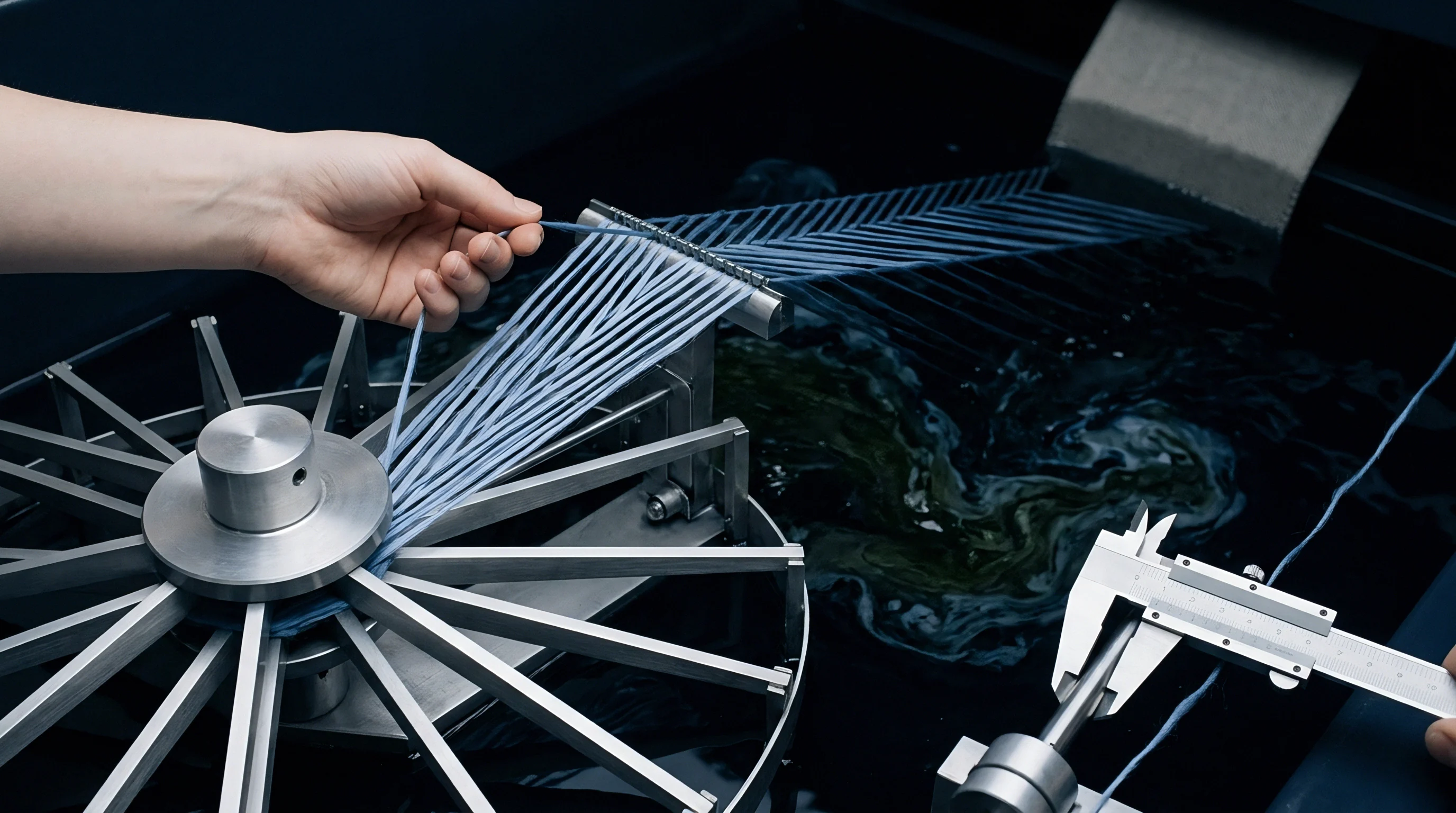

Throat
Differential pressure transmitters across a high-temperature jet vessel register a sharp drop when the fabric rope enters the constriction zone. Inside a venturi diameter of 85 millimetres, fluid velocity accelerates from 1.8 metres per second in the transport pipe to 11.4 metres per second at the narrowest cross-section. The circulating fabric rope, pulled by a combination of the motorized lifter reel and liquor displacement, moves at 380 metres per minute, equivalent to 6.33 metres per second.
A relative velocity gradient of 5.07 metres per second establishes itself over a radial distance of less than 3 millimetres. Fluid shear concentrates directly at the boundary interface between the aqueous dye liquor and the moving yarn periphery. When processing microdenier filaments below 1.0 denier per filament, this hydraulic shear gradient generates localized skin friction sufficient to strip exterior fibrils from the yarn axis.
Circulation within high-pressure jet dyeing machines relies on this momentum transfer to advance the continuous rope through the transport tube into the rear storage chamber. The liquor flow exits an annular nozzle surrounding the fabric bundle, creating a converging hydrodynamic boundary layer. Water at a standard polyester dyeing temperature of 130 degrees Celsius exhibits a dynamic viscosity of 0.206 millipascal-seconds and a density of 934.8 kilograms per cubic metre, substantially lower than ambient values.
Lower dynamic viscosity promotes rapid transition to turbulent flow inside the nozzle throat. Reynolds numbers inside the annular liquor jet regularly exceed 180,000 during rapid cycle runs.
Turbulent bursts fracture outer fibrils. These turbulent boundary layers generate fluctuating wall shear stresses that act directly on exposed synthetic filaments. In conventional polyester and polyamide filament yarns, filament deniers between 1.5 and 3.0 resist these hydraulic dragging loads without structural disruption.
Microfilament yarns, synthetic filament blends, and regenerated cellulosic structures such as lyocell possess far lower transverse shear resistance. In microfilament constructions, the specific surface area exposed to hydrodynamic boundary shear increases inversely with the filament radius. The total frictional drag experienced by each filament bundle rises proportionally.
Nozzle diameters govern throat velocity. Selecting an undersized nozzle insert to force fabric rope propulsion increases liquor discharge velocity without accelerating fabric transport. The resulting slippage widens the relative velocity gap.
Lifter reels running faster than fabric movement cause mechanical friction, whereas liquor moving faster than fabric generates hydraulic boundary layer shear. Mill operators often narrow the nozzle gap to clear circulation blockages in heavy fabric loads. This intervention contracts the boundary layer thickness and multiplies the shear stress applied to the fabric surface.
Boundary layer displacement thickness decreases as liquor velocity climbs. Thin boundary layers steepen the velocity gradient across the filament outer diameter, concentrating tangential fluid forces onto the outermost filament layers. The shear stress on the perimeter yarns creates micro-snags, peels individual polymer fibrils, and loosens filament twist within unbonded multifilament bundles.
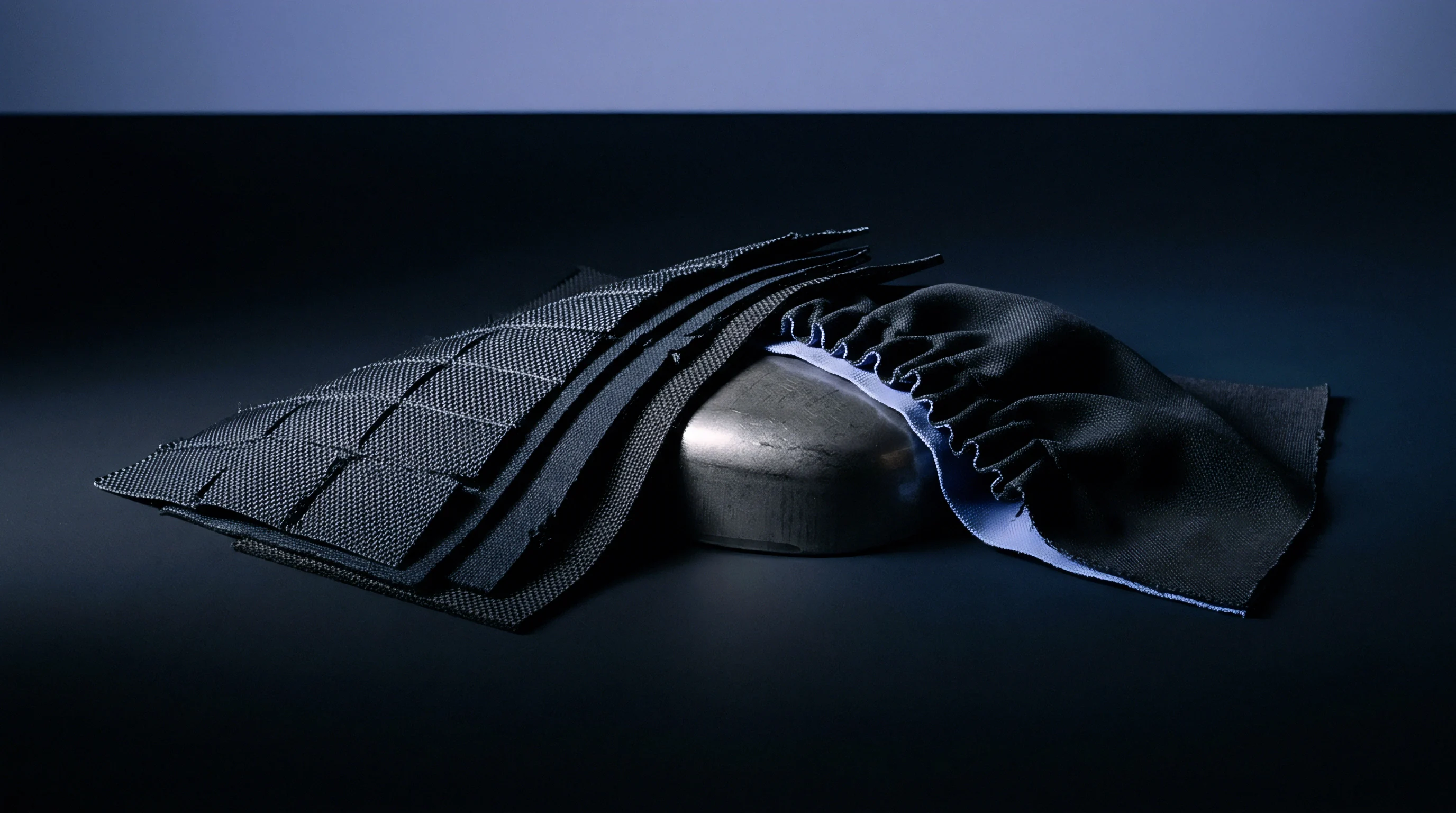
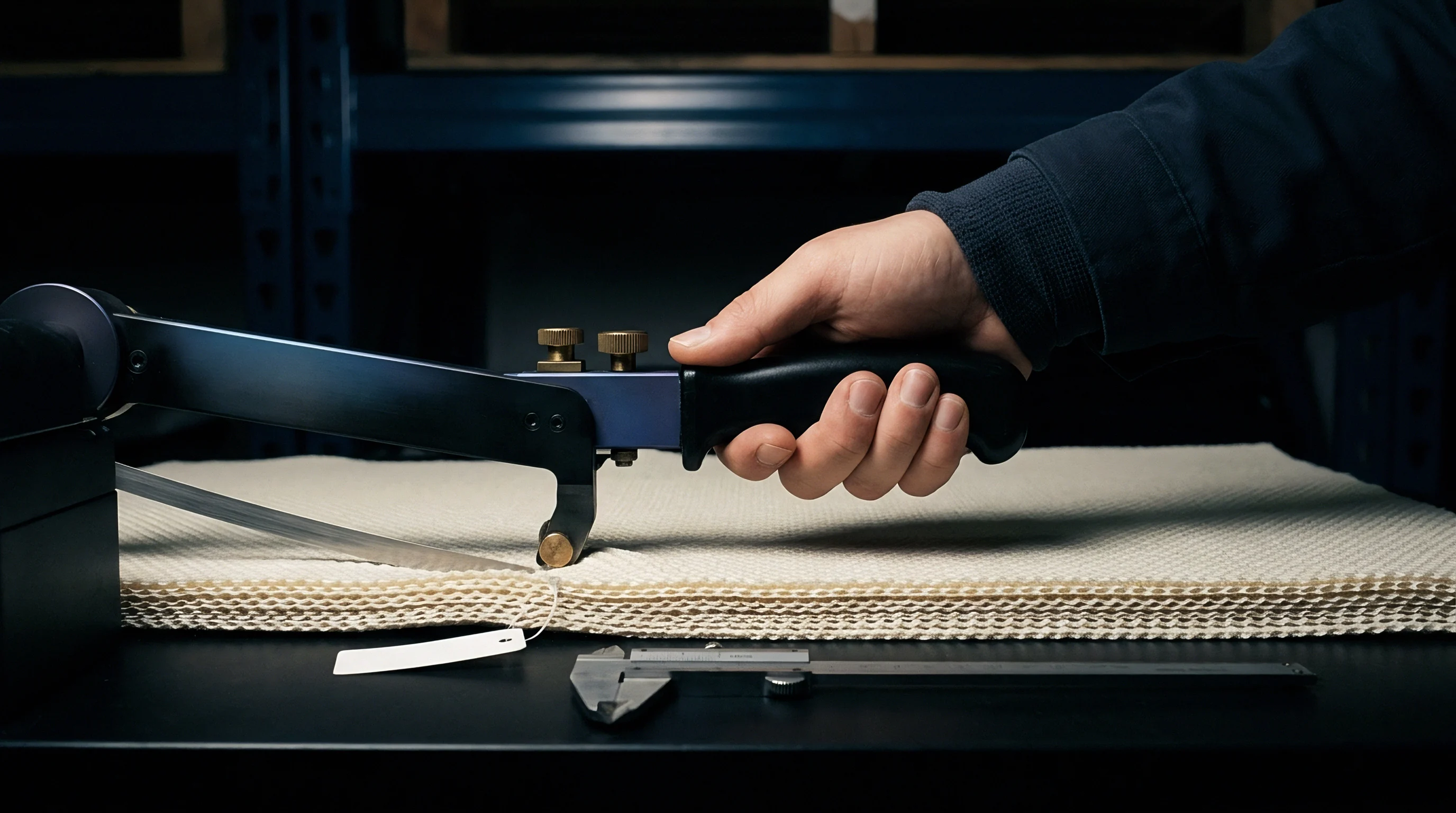
Shear
Quantifying the boundary shear stress acting on a yarn rope requires evaluating fluid momentum transfer within the turbulent boundary layer. Wall shear stress inside an annular venturi conforms to the Darcy-Weisbach formulation adapted for boundary layer skin friction. The local skin friction coefficient depends on the pipe Reynolds number and relative wall roughness.
At dyeing temperatures of 130 degrees Celsius, the kinematic viscosity of the aqueous bath falls to 0.22 square millimetres per second. The rapid fluid acceleration yields a thin viscous sublayer measuring less than 12 micrometres in depth against the wet fabric envelope.
Local shear exceeds filament yield. Hydrodynamic shear stress acting on the surface of the filament bundle is calculated using the relative velocity between liquor and cloth:
τ = 0.5 C_f ρ (v_fluid – v_rope)^2
In this relationship, τ represents boundary shear stress in pascals, C_f represents the turbulent skin friction coefficient, ρ is fluid density at operating temperature, and the bracketed term represents relative velocity. For a smooth nozzle interior with C_f estimated at 0.0048, a bath density of 935 kilograms per cubic metre, and a relative velocity differential of 5.5 metres per second, the calculated hydrodynamic shear stress reaches 68.8 pascals. When processing open, textured multifilament yarns, surface filament protrusion increases the effective friction coefficient to values between 0.015 and 0.028.
Under these conditions, localized hydrodynamic shear stress climbs to between 215 and 401 pascals.
A liquor velocity differential exceeding 4.2 metres per second at 130 degrees Celsius strips outer fibrils from 0.8 denier polyester filaments within six machine cycles.
Filament transverse shear modulus varies by polymer morphology. Fully drawn polyalkylene terephthalate yarns exhibit a transverse shear strength ranging between 45 and 65 megapascals under dry ambient conditions. In a pressurized wet liquor bath containing carrier auxiliaries and leveling surfactants at 130 degrees Celsius, the polymer matrix passes its glass transition temperature of approximately 68 to 80 degrees Celsius.
The solvated, plasticized polymer chains experience a drop in transverse yield strength. The actual stress experienced by individual microfilaments is amplified by hydraulic drag across individual filament circumferences within loose yarn architectures.

Does Boundary Velocity Differential Exceed Filament Cohesion?
Radial fluid velocity components strip peripheral filaments outward from the central yarn core. In low-twist filament constructions below 120 turns per metre, cohesion between neighboring filaments depends entirely on filament entanglement and inter-filament friction. Turbulent pressure fluctuations within the boundary layer induce local yarn dilation.
Once the yarn structure blossoms under hydraulic turbulence, peripheral filaments separate from the core, exposing isolated single filaments to the full velocity stream.
| Nozzle Diameter (mm) | Liquor Flow (L/min) | Fabric Speed (m/min) | Relative Velocity (m/s) | Boundary Layer Stress (Pa) | Observed Filament Yield State |
|---|---|---|---|---|---|
| 110 | 850 | 280 | 2.15 | 21.6 | Elastic deformation without rupture |
| 95 | 1050 | 320 | 3.62 | 61.3 | Transient fibril peeling on 0.5 dpf |
| 85 | 1200 | 350 | 5.34 | 133.2 | Extensive surface loop pullout |
| 75 | 1350 | 380 | 7.28 | 247.6 | Axial splitting and filament fracture |
| 65 | 1400 | 400 | 9.84 | 452.9 | Gross bundle rupture and structural fuzzing |
Velocity differentials create intense suction. The radial distribution of shear stress across the yarn bundle creates an uneven mechanical load. Core filaments carry primary axial tension from the machine reel, while perimeter filaments bear transverse hydrodynamic shear.
This shear partition produces differential elongation across the yarn cross-section. Perimeter filaments undergo irreversible plastic deformation before the central core reaches its tensile yield point.
Whether continuous micro-turbulent eddies at the nozzle throat initiate micro-cavitation along the filament boundary remains undetermined under commercial operating pressures.
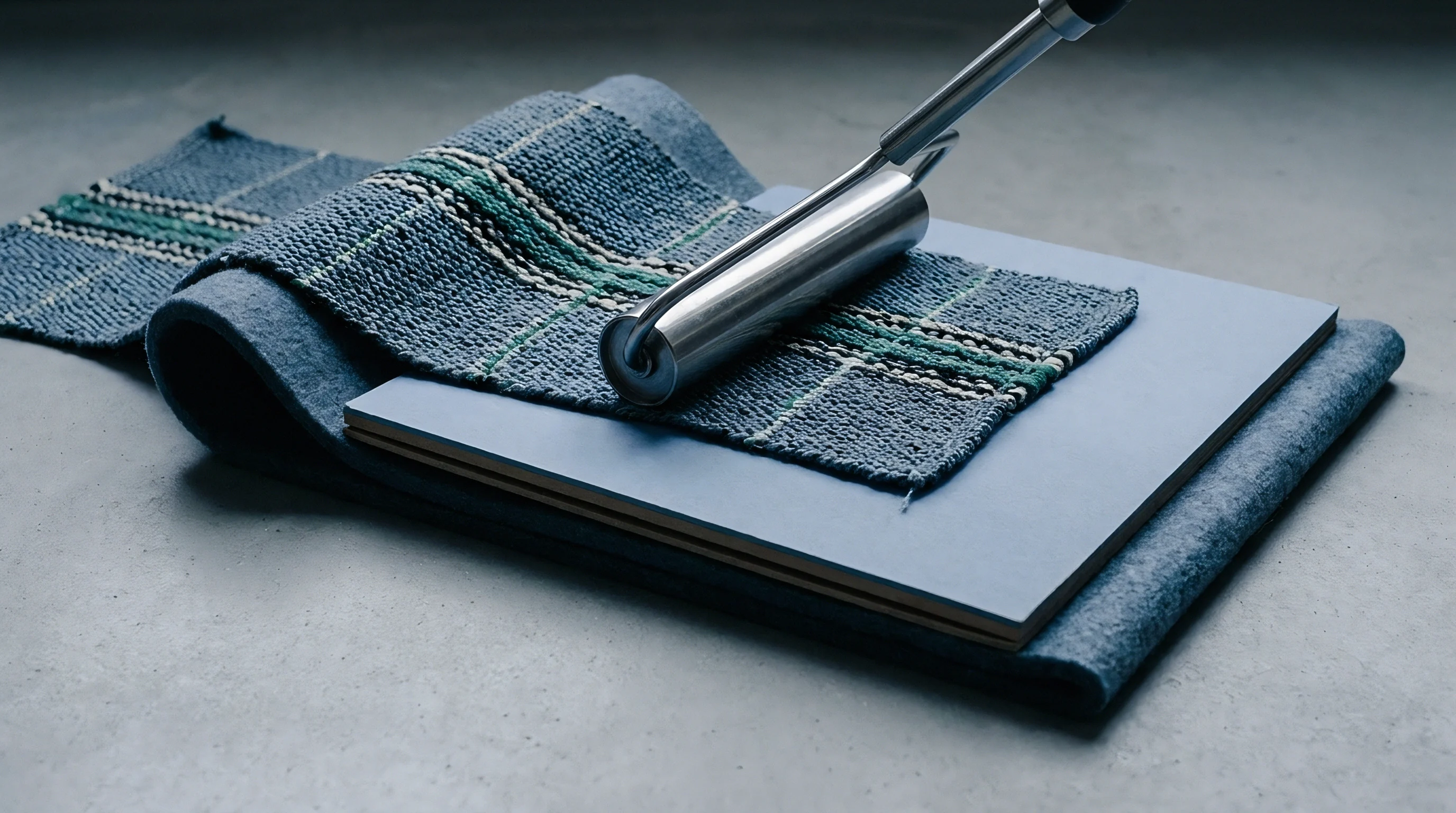

Fracture
Microscopic evaluation of damaged filament surfaces reveals characteristic patterns of failure governed by fluid dynamic stress. Unlike mechanical abrasion against rough metallic surfaces, which leaves unidirectional scoring, hydrodynamic shear causes multi-axial skin peeling and fibrillar cleavage. High-resolution scanning electron microscopy shows microfilaments subjected to excessive boundary layer shear exhibit axial splitting along polymer draw lines.
The shear force unzips secondary crystalline domains, creating micro-fibrils that curl back from the filament axis.
Turbulent boundary layer shear initiates distinct structural failures in synthetic and regenerated yarn bundles:
- Axial fibrillar peeling strips the skin layer from high-tenacity polyester and polyamide filaments, producing detached micro-fibril tails measuring 0.05 to 0.2 micrometres in diameter.
- Transverse cavitation pitting erodes localized areas of filament skin when rapid pressure drops behind the venturi throat collapse micro-bubbles directly against softened polymer surfaces.
- Inter-filament looping occurs when turbulent boundary eddies extract individual slack filaments from low-twist bundles, forming protruding surface loops that snag on subsequent machine passes.
- Helical bundle unraveling disrupts the structural twist geometry of textured yarns, leaving low-density patches that absorb dyestuff with uneven visual reflectance.
Surface chafing ruins face luster. As broken fibrils accumulate, the visual appearance of dyed goods deteriorates. Damaged filament ends scatter light diffusely, creating a cloudy, frosted surface appearance known in finishing mills as white abrasion or jet chafe.
This optical defect mimics dye unlevelness, prompting dyehouses to add leveling agents or prolong dye cycles. Adding hold time at maximum temperature compounds filament structural degradation.
Damaged filament bundles scatter incident light unevenly and register as irreversible optical frosting across dark dye shades.
Hydrodynamic degradation progresses across machine revolutions:
- Mechanical rope elongation under reel tension straightens crimped filaments, aligning peripheral strands directly along the flow axis.
- Initial boundary layer shear strips surface spinning finishes and processing lubricants, increasing direct fluid-to-polymer drag.
- Hydraulic pressure differentials dilate the yarn bundle, permitting liquor entry into the interstitial spaces between filaments.
- High-velocity fluid eddies apply transverse peeling forces to loosened individual filaments, initiating skin fatigue.
- Repetitive passes through the venturi throat propagate surface micro-cracks into full longitudinal cleavage and ultimate filament rupture.
Where Does Hydrodynamic Cavitation Accelerate Surface Fibrillation?
Cavitation bubbles collapse against yarns. In jet processing units with steep venturi recovery angles, static pressure drops precipitously downstream of the nozzle choke. If the local static pressure approaches the saturation vapor pressure of the aqueous liquor at process temperature, vapor cavities nucleate in the liquid phase.
As fluid moves into the expansion zone, static pressure recovers, causing violent bubble collapse. Micro-jets formed during bubble implosion reach velocities exceeding 100 metres per second. These localized micro-jets strike filament walls with impact pressures running into gigapascals, blasting fibrils from the main filament shaft.
| Processing Dwell Cycles | Tensile Retention (%) | Elongation Loss (%) | Broken Filaments (count/cm²) | Martindale Abrasion (Cycles to Fail) |
|---|---|---|---|---|
| 15 | 98.4 | 1.2 | 2 | 45,000 |
| 30 | 94.1 | 3.8 | 9 | 38,000 |
| 45 | 88.6 | 7.4 | 24 | 26,000 |
| 60 | 81.2 | 12.6 | 68 | 16,000 |
| 75 | 73.5 | 19.1 | 142 | 9,000 |
| Test specimen: 50D/72F microdenier polyester warp knit; ISO 13934-1 strip method; Martindale under ISO 12947-2 at 9 kPa. | ||||
Yarn tension escalates. Tensile strength degradation directly tracks the density of fractured filaments on the fabric face. When tensile retention drops below 85 percent of greige values under ISO 13934-1, tearing strength measured under ISO 13937-2 collapses by up to 40 percent.
This disproportionate loss occurs because broken peripheral filaments no longer participate in collective load sharing during tear propagation.
Misdiagnosing hydrodynamic boundary shear as yarn quality failure results in costly, unrecoverable disputes with fiber extruders while the true damage mechanism continues unchecked on the production floor.
Surcharge
Machine productivity balances against boundary layer shear limits. Operating a jet dyeing vessel at maximum pump output accelerates liquor turnover, completing cycle exhaustion in 45 minutes instead of 75 minutes. The elevated liquor volume flow rate requires smaller nozzle inserts to maintain adequate chamber circulation pressure.
That constriction drives relative velocity differentials into the failure zone. A dyehouse processing 50-denier, 72-filament polyester micro-interlock fabric faces a direct trade-off between machine throughput and fabric degradation.
Defective yardage accumulates in bins. Consider a production run of 10,000 metres of circular knit microdenier fabric, weighing 180 grams per square metre, processed in four-port high-temperature jet machines. At an aggressive cycle velocity yielding 240 pascals of boundary shear stress, processing time per 400-kilogram batch drops from 70 minutes to 48 minutes, yielding an output increase of 31 percent.
However, surface filament damage downgrades 8 percent of the finished yardage to B-grade classification due to visual frosting and reduced Martindale abrasion performance. At a base fabric sale price of 4.50 dollars per metre and a B-grade salvage realization of 2.10 dollars per metre, the revenue loss on 800 downgraded metres equals 1,920 dollars per run. Chemical addition of dedicated shear-protective dyebath lubricants running at 1.5 grams per litre increases auxiliary cost by 0.08 dollars per kilogram of treated fabric, totaling 144 dollars per batch, yet preserves the primary yield.
Higher dyebath bath lubricity delays the onset of boundary peel without reducing circulation speed.
Dyehouse purchase agreements require definitive boundary parameters to control these machine variables:
- Venturi insert clearance ratio stipulates nozzle diameter matched to wet fabric rope compressed volume within a 1.25 to 1.40 ratio.
- Relative velocity threshold limits differential flow velocity between liquor discharge and fabric travel to a maximum of 3.8 metres per second.
- Polymeric lubricant minimums mandate polyacrylamide or fatty ester bath friction reducers to lower turbulent wall skin friction coefficients below 0.008.
- Cumulative port turnover cap restricts total cycle revolutions to fewer than 50 passes across high-risk microdenier lots.
Landed costs increase sharply. Reprocessing lots displaying severe surface fuzzing requires enzymatic bio-polishing for cellulosic fibers or caustic micro-clearing for polyester. Caustic weight reduction cycles strip broken fibrils by hydrolyzing the surface polymer chains, removing between 3 and 6 percent of total fabric mass.
The fabric loses weight, shifting below the specified grams per square metre tolerance under ISO 3801. Chemical clearing adds 0.35 dollars per metre in processing utilities, auxiliary chemistry, and effluent treatment costs.
Dyehouses routinely assert that surface frosting stems entirely from low-tenacity polymer batches supplied by the spinner rather than aggressive nozzle differential velocity.
Recourse
Incoming inspection procedures isolate hydrodynamic processing damage from upstream spinning or weaving defects. Filament damage induced by hydrodynamic boundary shear concentrates on the peaks of surface yarn loops, leaving interstitial valley areas intact. Conversely, spinning yarn defects show broken filaments distributed evenly through the yarn cross-section, observable by dissecting yarn picks from un-dyed selvedge scrap.
Fabric auditors inspect finished rolls on lighted inspection frames running at speeds no greater than 15 metres per minute, viewing the face at low incident angles to detect diffuse light scattering from broken micro-fibrils.
Bulk lots demand re-inspection. Acceptance protocols apply ASTM D5430 standard four-point grading thresholds, supplemented by Martindale pill testing under ISO 12945-2. Microdenier fabrics showing severe boundary shear damage degrade rapidly during early Martindale cycles, dropping from a specified Grade 4-5 down to Grade 2 within 2,000 revolutions.
Fabrics falling below eighty percent tensile retention under ISO 13934-1 after jet scour trigger commercial credit deductions before finishing proceeds.
Defect deduction thresholds require systematic classification against quantitative physical standards.
| Physical Defect Manifestation | Four-Point Penalty Points | Primary Standard Verification | Tolerance Limit |
|---|---|---|---|
| Localized surface fuzzing under 75 mm | 1 point per occurrence | ISO 12945-2 (Martindale) | Maximum 3 defects per 100 m |
| Linear jet chafe band 75 to 225 mm | 2 points per occurrence | Visual gray-scale assessment | Maximum 1 defect per 100 m |
| Continuous rope optical frosting | 4 points per linear metre | Spectrophotometric ΔE shift | Zero tolerance across bulk |
| Tensile loss exceeding threshold | Roll rejection | ISO 13934-1 Strip Method | Maximum 12% loss from greige |
| Tear propagation strength collapse | Lot hold for arbitration | ISO 13937-2 Tongue Tear | Maximum 15% drop from spec |
Procurement contracts incorporate specific mechanical tolerances to allocate liability for shear-induced degradation. A binding fabric purchase specification includes explicit language governing wet-processing shear: When finished goods show a reduction in warp or weft tensile strength exceeding 12.0 percent relative to qualified greige control specimens tested under ISO 13934-1, accompanied by surface filament breakage exceeding 15 broken ends per square centimetre under stereomicroscopy, the finishing mill absorbs full replacement cost and re-processing freight.