Measurement Standard
Elasticity loss constitutes a performance criterion within textile engineering that defines how synthetic fibres retain their original load capacity after enduring repetitive stretching or extended environmental exposure. This tensile retention metric quantifies the divergence between the initial break force of a raw filament and the measured break force after the material undergoes specified mechanical fatigue. Quality control laboratories rely upon this datum to differentiate between high performance polymers and inferior stock.
Mills monitor the value to predict garment lifespan under daily wear conditions, particularly in apparel sections subject to high motion like knees or elbows. Fibres that degrade quickly exhibit poor molecular stability, causing garments to sag or deform during regular usage. A failure to maintain integrity across cycles results in permanent loss of structural recovery, rendering the final textile product unsellable for high demand applications.
Process Verification
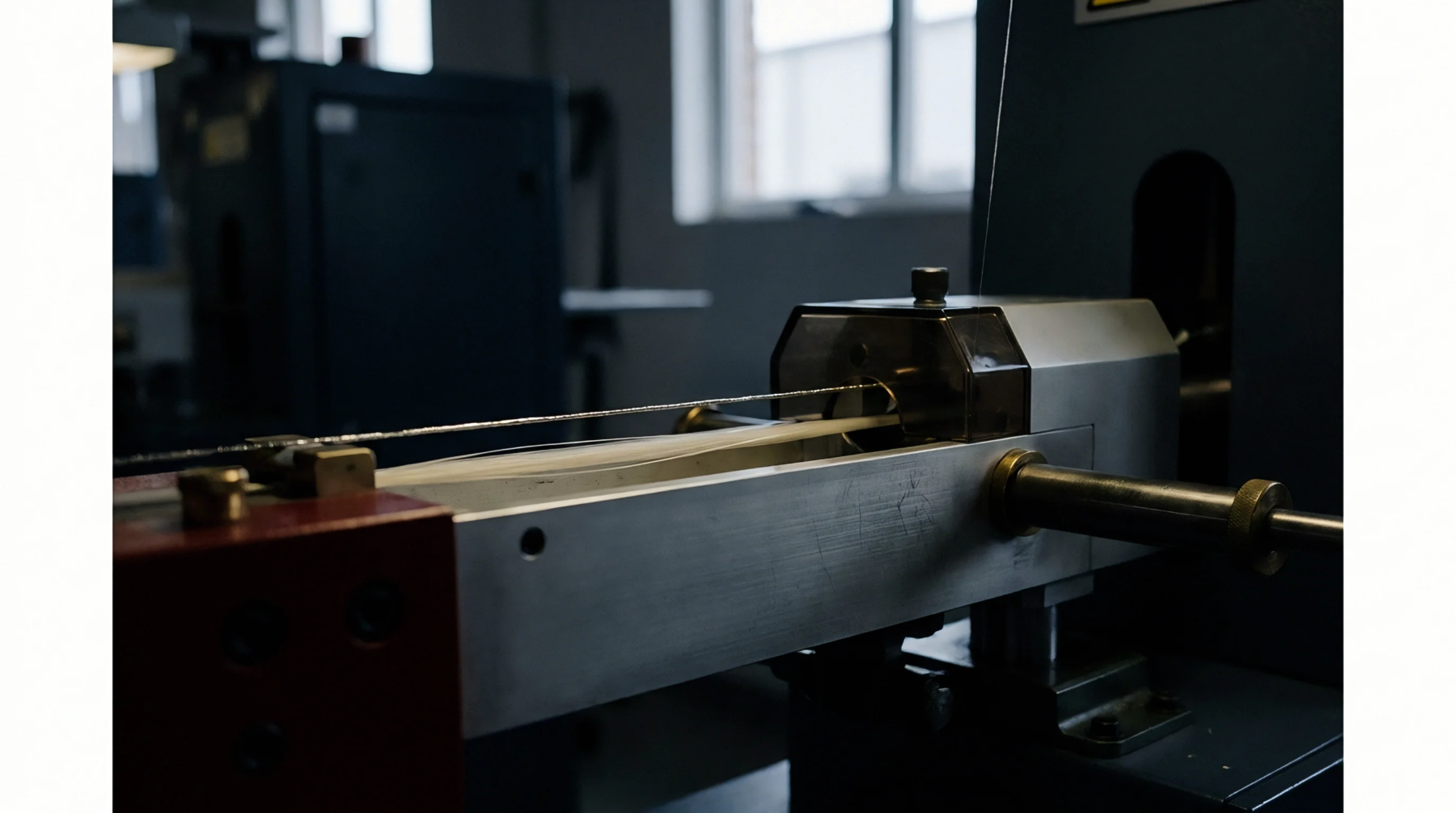
Fabric production cycles verify this stability by subjecting test strips to cyclic loading on an autographic machine. Technicians isolate a precise gauge length before applying a predefined force level across a set number of repetitions. Automated sensors record the exact force displacement curve throughout each cycle to plot the energy absorption characteristics.
When the test cycle ends, the apparatus computes the percentage of initial strength remaining in the sample. Any discrepancy between batch samples flags inconsistent polymerization during the spinning stage. Buyers request these test reports to audit factory adherence to technical specifications for athletic performance wear.
Material Resilience
Synthetic filaments exhibit distinct behaviours based upon their polymer composition and internal orientation. Polyester retains significant strength even when subjected to extreme heat or chemical cleaning agents. Polyamide structures behave differently because molecular chains react with ambient moisture, which softens the fibre matrix and reduces the recovery force over time.
Elastomeric components integrated into the weave alter the overall outcome, as these sections provide recovery power but lack the absolute load limit of primary yarns. Finishing treatments like resin application or heat setting influence the results, as these additions lock the molecular arrangement into a fixed state.
Validation Constraint
Laboratories observe specific ambient conditions to ensure valid comparison across different manufacturing periods. Temperature fluctuations affect the polymer softness, while humidity levels change the frictional resistance between individual yarns. Testers maintain laboratory rooms at fixed conditions to prevent environmental variables from skewing the results.
Strict adherence to these protocols removes noise from the data set and allows for direct comparison between different fabric batches. Engineers reject any sample that displays a sudden drop in recovery force during the initial three cycles, as this drop indicates poor crosslinking within the polymer chains. Quality assurance managers demand full data disclosure from the mill to confirm that the material meets the expected life cycle requirements for its target market.
Consistent performance over repeated use provides the only reliable guarantee of garment quality.