Capillary Fluid Transport and Acid Retention in Dense Cotton Yarns
Dense yarn acid retention drives core cellulose hydrolysis during drying; verification demands titratable acidity testing over surface pH averages.

Geometry
Inter-fibre space within a cotton yarn forms a complex network of capillary channels that governs fluid transport during wet processing. In high-density ring-spun and compact-spun yarns, yarn packing density routinely ranges from 0.65 to 0.78, severely compressing the void space between individual staple fibres. The yarn twist multiplier directly dictates the angle of outer fibres relative to the yarn axis, modifying both the hydraulic radius of inter-fibre pores and the tortuosity of the liquid flow pathway.
High twist levels reduce the mean pore radius while increasing the path length fluid must traverse to reach the yarn core.
Capillary pressure within these micro-channels drives initial fluid spontaneous imbibition according to Laplace pressure dynamics. The relationship between capillary radius, surface tension, contact angle, and fluid viscosity establishes the rate of liquid advance. When dense yarns enter aqueous preparation baths, small capillary radii generate high capillary pressure, pulling liquid into outer yarn layers rapidly.
Friction along narrowed internal pore walls slows the rate of fluid advance into the deep interior of the yarn core.
Liquid movement inside combed cotton yarns depends on the ratio of inter-fibre capillary channels to intra-fibre lumen volume.
Compact spinning technology aligns staple fibres in tight parallel arrangements, reducing surface hairiness and eliminating larger inter-fibre void spaces that facilitate bulk fluid transport in conventional ring-spun yarns. Dense packing forces liquid transport to rely on tiny micro-capillaries. Fluid advance rates in these tight structures drop as liquid moves deeper toward the core.
The Lucas-Washburn relation models this behavior, where the distance penetrated scales with the square root of time and the effective capillary radius.

Micro-Architectural Parameters of Yarn Voids
Fiber fineness and maturity dictate the cross-sectional geometry of individual cotton fibres within the yarn bundle. Immature fibres collapse into ribbon-like cross-sections, creating irregular, slit-like capillary channels that increase flow resistance. Mature fibres preserve a rounded cross-section, forming predictable triangular and quadrangular inter-fibre void spaces.
Fiber alignment, combed versus carded state, and draft distribution across the spinning frame set the spatial uniformity of these capillary channels along the yarn axis.
Yarn structural parameters determine fluid transport limits under zero-pressure immersion conditions:
- Packing density ranges from 0.52 in loose coarse yarns to 0.78 in fine compact-spun yarns, directly setting total available inter-fibre void volume.
- Twist multiplier increases internal consolidation, shifting the capillary size distribution toward radii below 3 micrometres.
- Fiber parallelism eliminates cross-over points, narrowing channel bottlenecks while decreasing effective tortuosity along the longitudinal axis.
- Lumen cross-section contributes intra-fibre capillary volume, which absorbs fluid without assisting directional transport through the yarn core.

Inter-Fibre Capillary Dimensions across Spinning Technologies
Measurement of internal pore geometry requires combining liquid intrusion porometry with cross-sectional image analysis under conditioned states. Compact yarns display a tight pore radius distribution concentrated between 1.2 and 3.5 micrometres. Conventional ring-spun yarns present a bimodal distribution, carrying large inter-fibre voids up to 12 micrometres alongside fine inter-fibre capillaries.
Open-end rotor yarns feature a dense core wrapped by surface wrapper fibres, creating non-uniform fluid entry vectors that disrupt steady capillary wicking.
| Spinning System | Twist Multiplier (alpha e) | Packing Density (mu) | Mean Pore Radius (um) | Wicking Coefficient (mm/s^0.5) |
|---|---|---|---|---|
| 3.8 | 0.71 | 2.4 | 1.12 | |
| 4.5 | 0.77 | 1.5 | 0.68 | |
| 3.8 | 0.62 | 4.8 | 1.85 | |
| 4.5 | 0.69 | 3.1 | 1.24 | |
| 4.2 | 0.58 | 6.2 | 1.41 | |
| Data measured using conditioned 100 percent combed cotton 30s Ne yarns with distilled water at 20 degrees Celsius under standard atmospheric conditioning ISO 139. | ||||
Physical constraints inside tight yarn structures raise fundamental questions about fluid entry. The exact point where capillary pressure balances internal viscous resistance in fine compact yarns under tension remains difficult to measure in real time on industrial wet-processing ranges.

Pore
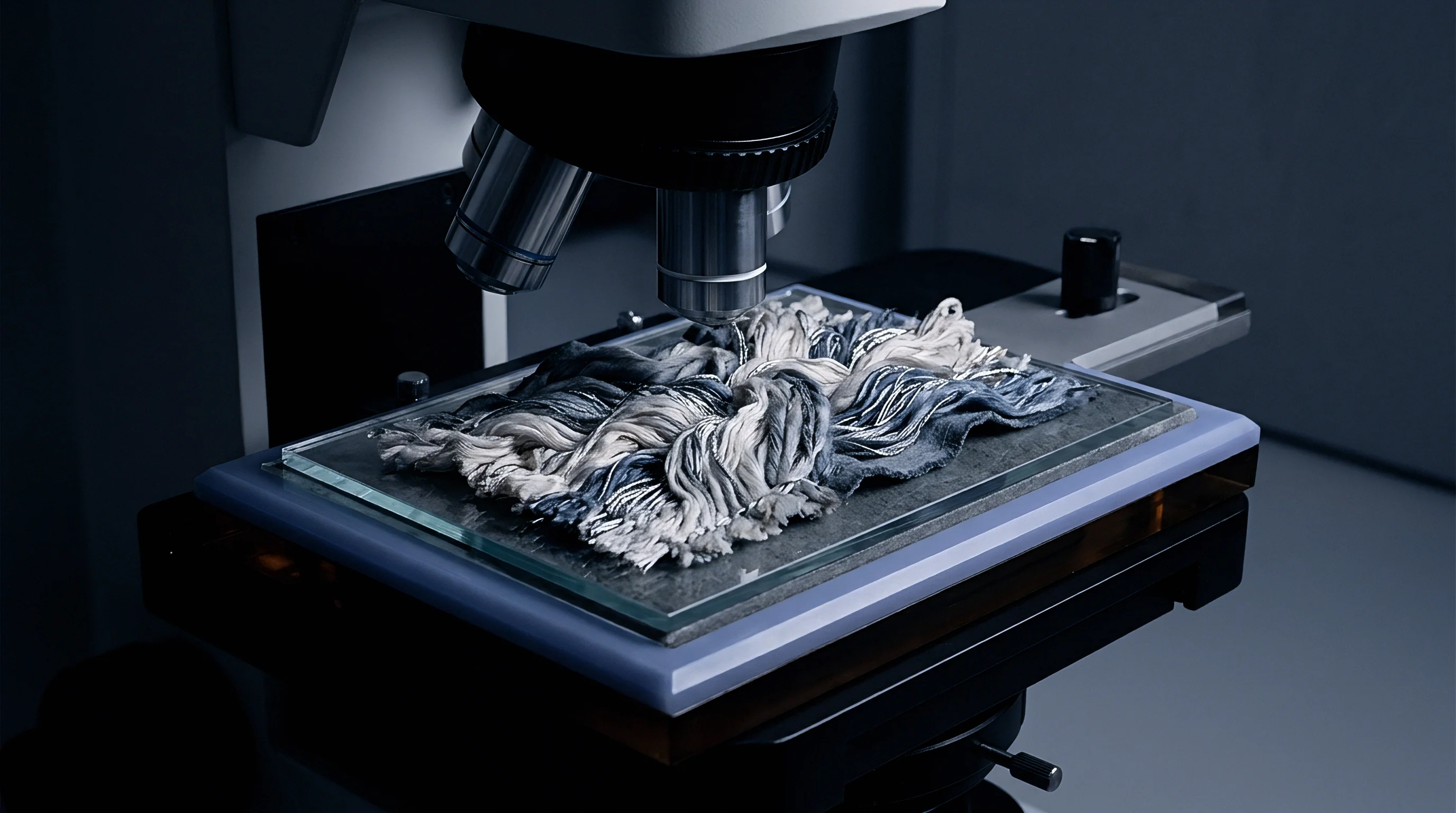
Aqueous processing alters internal yarn void spaces dynamically as cotton fibres absorb water and swell. Cotton cellulose undergoes significant transverse swelling upon wetting, increasing fibre diameter by 14 to 18 percent while longitudinal extension remains under 2 percent. Inside a dense yarn structure where outer spatial boundaries are constrained by yarn twist, inward radial swelling expands individual fibre walls into adjacent inter-fibre void spaces.
This volumetric expansion collapses small capillary channels, altering transport kinetics mid-process.
Alkali treatment amplifies structural void shifts dramatically. Caustic soda solutions at mercerizing concentrations between 28 and 30 degrees Baumé untwist the helical ribbon structure of cotton, converting kidney-bean fibre cross-sections into rounded cylinders. Inter-fibre capillary channels narrow or close entirely during caustic immersion.
The yarn bundle converts into a consolidated gel-like swollen cellulose mass. Acid application following alkali treatment must penetrate this compressed structure to reach internal chemical residues.
At packing densities exceeding 0.72, aqueous swelling reduces inter-fibre effective capillary radii by up to 48 percent within 15 seconds of immersion.
Fiber Swelling Kinetics and Morphological Void Shifts
Water molecule ingress into amorphous regions of cotton cellulose disrupts intermolecular hydrogen bonds, driving rapid radial expansion of the cell wall. Radial expansion completes within 200 to 500 milliseconds of initial liquid contact. In dense yarns, this rapid expansion locks outer fibre layers together before inner fibres reach saturation.
Capillary channels leading to the yarn core suffer progressive occlusion, converting open transport paths into isolated fluid pockets.
Consider two combed cotton yarn builds passing through continuous wet processing: a 40s Ne conventional ring-spun yarn with a 3.6 twist multiplier and a 40s Ne compact-spun yarn with a 4.6 twist multiplier. Initial dry capillary radii measure 4.2 micrometres and 1.8 micrometres respectively. Upon immersion in an acidic desizing liquor, the conventional yarn experiences a 22 percent reduction in capillary radius due to fibre swelling, leaving a 3.27 micrometre effective channel.
Fluid advance velocity drops moderately.
The dense compact yarn experiences identical fibre wall radial expansion. Because initial capillary dimensions are small, inward swelling reduces effective capillary radius from 1.8 micrometres to 0.75 micrometres. Fluid advance velocity drops by over 80 percent under Lucas-Washburn dynamics.
Air trapped inside core voids cannot escape past the swollen outer fibre barrier. Fluid transport transitions from bulk capillary flow to slow, diffusion-dominated liquid movement.
Wet-Processing Transformations of Capillary Channels
Mechanical tension during continuous processing modifies capillary geometry. High warpway tension pulls yarn twist tighter, increasing lateral compaction pressure across the yarn diameter. Pilling prevention treatments, enzymatic biopolishing, and hot acid scouring modify surface fibre friction, altering how staple fibres move relative to one another during swelling cycles.
Tension during mercerization suppresses longitudinal contraction, forcing all volumetric swelling inward into internal void space.
- Dry yarn enters liquor with maximum open capillary void volume.
- Surface wetting initiates rapid radial fibre swelling in outer yarn layers.
- Inward wall expansion occludes secondary capillary transport channels.
- Entrapped air pockets create counter-pressure against advancing liquid fronts.
- Chemical diffusion replaces capillary action as the primary transport mechanism to the core.
Dense yarns subjected to tension during swelling retain liquid in core micro-cavities longer than relaxed loose yarns.

Retention
Acid retention in dense cotton yarns stems from restricted fluid exchange between core capillaries and external wash liquors. Acids used in desizing, neutralisation after scouring or mercerisation, and acid-assisted dye levelling enter yarn core spaces readily under initial capillary forces. Extracting these acid solutes during subsequent washing steps requires counter-diffusing hydrogen ions out through swollen, compacted fibre networks.
Dense packing slows diffusion.
Residual acid trapped in inter-fibre voids presents a severe risk during thermal processing. Hydrogen ions act as continuous catalysts for hydrolytic cleavage of 1,4-beta-glucan linkages within cotton cellulose chains. Hydrolysis breaks polymer chains, lowering the Degree of Polymerization (DP) from typical un-degraded values above 2000 down to levels below 1000.
Tensile strength loss occurs rapidly once cellulose DP drops below critical thresholds.
Intra-Yarn Diffusion Barriers and Solute Trapping
Mass transfer from the interior of a dense yarn into a bulk wash liquor follows Fickian diffusion laws modified by yarn tortuosity and boundary layer resistance. In fast-running continuous washing ranges, wash liquor flows over the outer yarn surface without penetrating the internal core. Fluid exchange relies entirely on molecular diffusion across the yarn radius.
High packing density increases tortuosity, extending the necessary diffusion distance and delaying chemical extraction.
Acid molecules bound to hydroxyl groups within cellulose amorphous regions require energetic displacement. Cold water washing removes surface acid efficiently but leaves core hydrogen ion concentrations unchanged. As wet fabric enters a stenter dryer, water evaporates rapidly from outer fibre surfaces.
Capillary transport pulls remaining liquor from the core toward the surface, bringing concentrated acid solute with it. High temperatures concentrate residual acid, driving accelerated cellulose degradation on the stenter.

How Does Capillary Trapping Accelerate Acid Hydrolysis during Stenter Drying?
Thermal evaporation in the initial drying zone reduces total water volume within the yarn while residual acid remains non-volatile. Sulphuric acid or non-volatile organic acid concentrations spike exponentially as moisture content drops below 30 percent. Localized pH drops below 2.0 within core regions.
High drying temperatures between 150 and 180 degrees Celsius supply activation energy for rapid hydrolytic chain scission.
Strength loss manifests as localized tendering along heavy yarn sections or tight weave intersections where yarn packing density is highest. Warp threads under tension during drying fail first under subsequent mechanical stresses.
| Yarn Structure | Packing Density | Wash Dwell Time (s) | Core pH After Wash | Tensile Loss After Drying (%) |
|---|---|---|---|---|
| 0.76 | 12 | 3.2 | 24.5 | |
| 0.76 | 36 | 4.8 | 6.2 | |
| 0.64 | 12 | 4.5 | 8.1 | |
| 0.64 | 36 | 6.2 | 0.8 | |
| 0.58 | 12 | 5.2 | 3.5 |
Unremoved acid inside tight yarn structures causes permanent structural degradation that destroys fabric commercial value.
Higher yarn twist multipliers increase intra-yarn tortuosity, requiring longer wash dwell times to extract residual acid solutes.

Verification
Standard surface analytical methods fail to identify acid trapped within dense cotton yarn cores. Standard aqueous extract pH testing, such as ISO 3071 or AATCC Method 81, involves homogenizing or boiling cut fabric swatches in distilled water. Boiling extracts all acid solutes into a large volume of water, yielding a diluted average pH reading between 5.5 and 6.5 that appears fully compliant with end-buyer specifications.
This surface average obscures dangerous internal hydrogen ion concentrations where core pH remains below 3.0.
Measuring core acid retention requires titratable acidity determination combined with step-wise extraction testing. Titratable acidity measures the total milliequivalents of alkali needed to neutralize trapped free acid and weakly bound hydrogen ions within the cellulose matrix. Core-versus-surface extraction uses cold aqueous maceration over extended time steps, tracking pH change over time as trapped core acid slowly diffuses into solution.
Compliance with ISO 3071 surface pH limits fails to guarantee protection against hydrolytic tendering when core titratable acidity exceeds 0.05 percent acetic acid equivalents.

Limits of Standard Surface Analytical Protocols
Surface glass electrode measurements press against outer yarn covers, registering only the chemistry of surface liquor. In heavy gabardines, dense canvas, or high-density poplins, outer yarn layers wash clean rapidly while inner yarn core capillaries retain concentrated acid. Standard mill quality control routines inspect surface pH immediately after the final wash box, passing fabric lots that carry latent acid risks into high-temperature stenter drying.
Wicking rate measurement provides crucial insight into internal capillary openness. ISO 9073-6 and AATCC 197 vertical wicking tests record liquid rise height over fixed time intervals. Dense yarns carrying residual hydrophobic sizing agents or collapsed capillary networks display severely depressed wicking profiles, reaching vertical rise heights under 10 millimetres after 300 seconds.

Quantitative Methodologies for Core Acidity and Wicking Rate
Accurate verification demands protocols designed to isolate core chemistry from bulk fabric averages:
- Titratable core acidity determines exact milliequivalents of acid per gram of fabric via micro-titration using 0.01 N sodium hydroxide solution after room-temperature maceration.
- Step-wise cold extraction measures liquor pH at 5, 15, 60, and 240 minutes, mapping diffusion rates of trapped solutes out of dense yarn cores.
- Core strength retain testing subjects dry fabric samples to accelerated heat exposure at 160 degrees Celsius for 10 minutes prior to ISO 13934 strip tensile testing.
- Capillary rise rate profiling evaluates wicking velocity using fluorescent dye tracers to detect non-uniform fluid fronts indicative of internal void occlusion.
Mills often claim that passing standard cold-water surface spot tests with bromocresol green indicator proves complete acid removal across the batch.
Audit specifications for high-density cotton builds must mandate titratable acidity thresholds below 0.03 percent hydrochloric acid equivalents alongside post-thermal aging tensile retain requirements above 90 percent.
Remediation
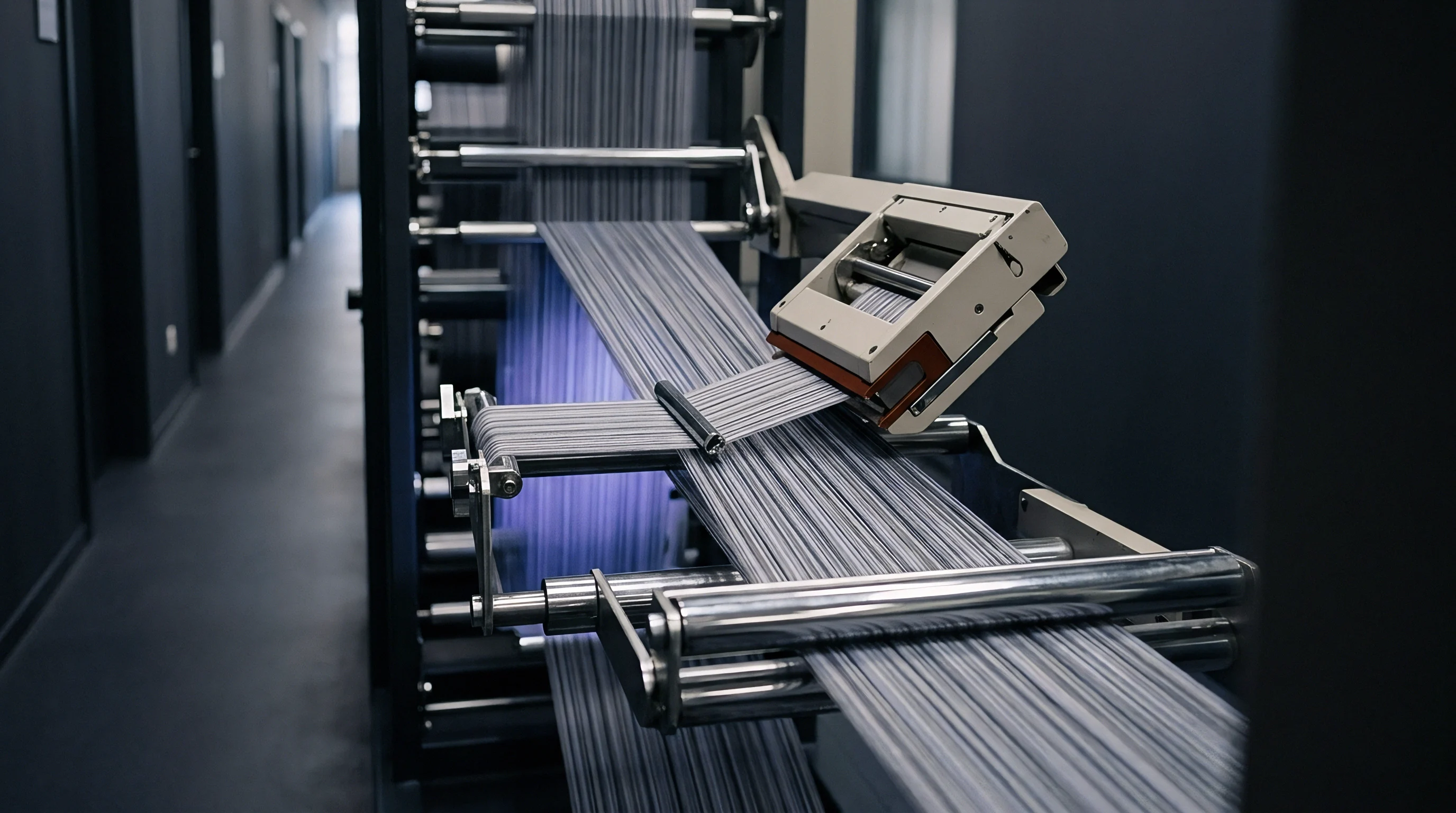
Eliminating acid retention in dense yarns requires modifying continuous washing range parameters and chemical neutralization sequences. Mechanical action during washing must force liquor exchange deep into yarn bundles. Counter-current high-efficiency wash boxes equipped with submerged squeeze rollers squeeze trapped fluid out of yarn cores mechanically, allowing fresh wash liquor to enter upon re-expansion.
Ultrasonic transducers mounted in wash troughs generate cavitation bubbles that collapse against yarn surfaces, driving micro-jet fluid penetration into fine capillaries.
Chemical neutralization must balance rate and penetration depth. Sodium carbonate or sodium bicarbonate additions convert residual acids into soluble salts. Bicarbonate systems are preferred for dense yarns because sodium bicarbonate reacts without generating intense localized alkaline hot spots that cause alkali cellulose swelling.
Mild alkaline buffers diffuse into narrowed capillaries, neutralizing free hydrogen ions without closing pore networks.
Washing Dynamics and Chemical Neutralization Engineering
Washing efficiency depends on liquor temperature, bath turnover rate, and surfactant selection. Raising wash water temperature to 85 degrees Celsius lowers water viscosity and increases solute diffusion rates within internal yarn voids. Adding non-ionic wetting agents with low dynamic surface tension speeds liquor entry into un-swollen micro-channels.
Surfactants accelerate liquid replacement inside core voids during short wash box dwell times.
Neutralization routines utilizing volatile bases like ammonium hydroxide provide rapid core penetration. Ammonia gas vaporizes during subsequent drying, leaving no inorganic salt residues within the yarn matrix. Non-volatile organic acid buffers, such as sodium acetate or citric acid systems, maintain stable pH ranges between 5.5 and 6.5, protecting cellulose against thermal degradation during final heat setting.
Process Balance and Procurement Specifications
Remediation parameters must be specified on converter routes to prevent latent fabric damage:
| Processing Stage | Target Parameter | Mechanical / Chemical Action | Commercial Impact per Metre |
|---|---|---|---|
| Combined Total | Optimized Core Extraction | Integrated Remediation Route | +0.07 USD |
Fabrics specified under standard commercial purchase orders must contain specific language governing processing limits: Bulk fabric deliveries shall demonstrate a core titratable acidity below 0.03 percent expressed as acetic acid mass fraction according to ISO 3071 Method B, and shall maintain a minimum of 92 percent warp tensile strength retain following thermal exposure at 165 degrees Celsius for three minutes in accordance with ISO 13934-1.