Raw Cotton Foreign Matter Optical Sensor Basics
Raw cotton optical sorting relies on multi-spectral cameras to identify botanical and synthetic foreign matter for precise pneumatic rejection.


Bale

Contamination Categories and Botanical Trash Mechanics
Raw cotton contains varying proportions of non-lint material introduced during field harvesting, seed ginning, and mechanical baling. Standard classing classifies these unwanted materials into organic botanical trash, non-botanical organic matter, and synthetic inorganic contaminants. Bark, leaf, stem, seed coat fragments, and grass constitute the primary botanical fraction.
These fragments originate directly from the cotton plant ( Gossypium hirsutum ) during stripper or spindle harvesting. Botanical trash carries specific optical absorption traits determined by residual chlorophyll, lignin, and cellular moisture levels.
Synthetic contaminants pose a far greater threat to textile processing than plant matter. Polypropylene twine, woven bag fragments, polyethylene packaging film, jute strings, and rubber particles enter the raw material stream during manual harvesting, farm handling, and bale transportation. Transparent or translucent plastic film matches the color profile of natural cotton fibers under standard visible spectrum lighting.
Trash reduces clean fiber yield. Conventional color cameras fail to isolate clear polypropylene because light passes through the film without changing chromatic values.
Dark botanical fragments respond predictably to color-contrast sorting, while synthetic polymers require multi-spectral light excitation to reveal density shifts.
Honeydew contamination creates severe operational sticky-fiber issues on carding and spinning frames. This non-botanical organic residue originates from insect secretions, primarily aphids ( Aphis gossypii ) and sweetpotato whiteflies ( Bemisia tabaci ). The chemical composition consists of complex sugars, predominantly melezitose, trehalulose, glucose, and fructose.
Honeydew droplets adhere to fiber surfaces, forming micro-spheres that bind individual cotton strands into sticky clusters. Standard color line sensors cannot identify transparent sugar deposits on raw fiber tufts, necessitating specialized optical illumination methods.

Classification of Non-Lint Content in Raw Lint
- Botanical Leaf and Stem botanical plant fragments characterized by dark brown or greenish hue, low light reflection, and high visual contrast against white cotton fibers.
- Seed Coat Fragments seed casing remnants with attached fibers that generate physical neps during carding and resist chemical dye penetration in finishing operations.
- Synthetic Polypropylene Film shredded packaging materials possessing high translucency, low density, and light reflection profiles nearly identical to natural cellulose under visible spectrum illumination.
- Insect Honeydew Sugar droplets of insect-derived sticky carbohydrates that coat cotton fibers, increasing mechanical friction on draft rolls without creating visible color contrast.
Ginning operations extract gross trash through incline cleaners, saw grids, and air-jet lint cleaners. However, aggressive mechanical cleaning damages fiber length uniformity, increases short fiber content below 12.7 millimeters, and generates elevated nep counts. Modern spinning mills prefer raw material containing moderate foreign matter that can be removed gently in the blowroom using optical sorting equipment.
High-speed optical sorting systems deployed after the bale opener inspect loose fiber tufts in pneumatic transport ducts, isolating contaminants before fibers reach the carding plates.
Bale classers frequently explain foreign matter spikes by attributing foreign particles to regional farm practices or weather-driven mechanical harvesting surges during damp picking seasons.


Optics

Sensor Modalities and Wavelength Selection
Modern automated detection units utilize multi-spectral sensor arrays operating across distinct electro-magnetic wavebands. Line-scan cameras positioned on opposite sides of a flattened pneumatic fiber stream view raw cotton tufts in free fall or against high-contrast background rollers. Silicon complementary metal-oxide-semiconductor sensors collect reflected light across red, green, and blue spectral channels spanning 400 to 700 nanometers.
Color sensors detect dark leaf fragments, soil particles, rust, and stained fibers based on color threshold deviations relative to calibrated white cellulose standards.
Near-infrared inspection at 1450 nanometers isolates polypropylene contaminants by measuring localized light absorption drops caused by polymer hydrocarbon bonds.
Detecting translucent and transparent synthetic contaminants demands specialized illumination geometries and targeted non-visible wavelengths. Ultraviolet light excitation between 360 and 395 nanometers induces fluorescence in synthetic brighteners, oils, and specific polymeric packaging materials. Organic cotton fibers absorb ultraviolet radiation without significant fluorescent re-emission, whereas optical brighteners present in synthetic strings emit visible blue light near 450 nanometers.
Optical cameras scan moving fibers. High-resolution sensors capture the emitted photons, registering clear spatial boundaries around otherwise invisible contaminants.
Near-infrared sensor systems exploit the molecular absorption characteristics of synthetic polymers. Cellulose exhibits distinct absorption peaks at 1450 nanometers and 1940 nanometers due to hydroxyl functional groups and absorbed moisture content. Polypropylene and polyethylene show strong carbon-hydrogen bond absorption bands at 1100, 1200, and 1720 nanometers.
By comparing light reflection ratios at twin reference wavelengths, short-wave infrared sensors instantly identify synthetic films, jute, and rubber. Light scattering identifies thin film.

Comparative Performance of Optical Detection Technologies
| Sensor Category | Wavelength Range | Target Foreign Matter | Detection Principle | Optical Resolution |
|---|---|---|---|---|
| Color RGB Line Scan | 400 to 700 nm | Bark, leaf, soil, red staining, jute strings | Chrominated color space differential vs standard | 0.1 mm per pixel |
| Ultraviolet Induced Fluorescence | 365 nm excitation / 450 nm emission | Fluorescent twine, synthetic greases, oil drops | Stokes-shift photoluminescence intensity | 0.2 mm per pixel |
| Short-Wave Infrared NIR | 900 to 1700 nm | Clear polypropylene, polyethylene film, rubber | Differential C-H and O-H absorption ratios | 0.5 mm per pixel |
| Polarized Laser Scatter | 635 nm or 650 nm laser diode | Transparent film, synthetic monofilaments | Depolarization angle shift from crystalline structures | 0.05 mm per pixel |
| Test parameters assume pneumatic duct transport speed of 15 to 22 meters per second at 65 percent relative humidity. | ||||
Polarized light laser scatter techniques provide a specialized mechanism for isolating thin transparent films. Polarized laser light impinging on natural cotton fibers scatters diffusely due to the complex spiraled lumen structure of cellulose. When the polarized laser beam hits smooth-surfaced synthetic films, the specular reflection retains high polarization orientation.
Polarized filters isolate transparent films. Cross-polarized photodetectors capture the polarization state differential, triggering high-speed air ejection valves.
Sensor optics require precise daily cleaning protocols to maintain calibration baselines under continuous duct air speeds exceeding twenty meters per second.
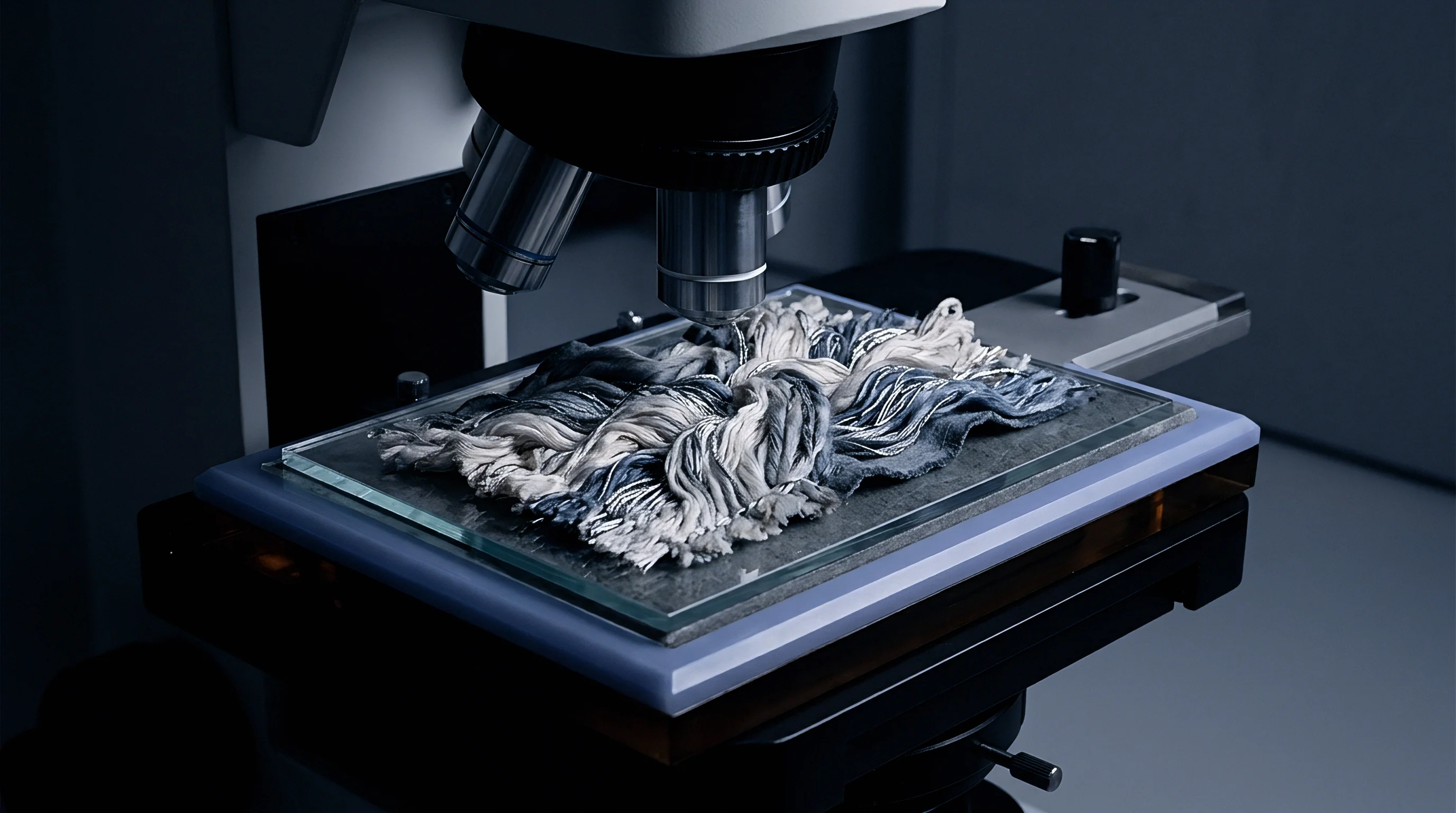

Signal

Real-Time Feature Extraction and Ejection Control
Duct line inspection channels transport raw fiber tufts at velocities between twelve and twenty-five meters per second. Raw video frames generated by high-speed line cameras produce data flow rates exceeding two gigabits per second per channel. Field-programmable gate arrays execute real-time image processing directly on sensor circuit boards.
Algorithms filter background illumination noise, perform spatial image normalization, and apply adaptive threshold segmentation to isolate suspicious foreign objects from normal cellulose fiber variations.
Adaptive spatial thresholding prevents false rejections caused by dense, un-opened cotton tufts. Un-opened tufts cast shadows that mimic dark bark particles under direct visible light. Fiber speed dictates sensor frequency.
Neural spatial algorithms compute local contrast gradients along the edges of imaged objects. Thin sharp boundaries indicate rigid foreign matter such as bark or polypropylene string, whereas soft diffuse boundaries correspond to natural fiber shadows inside the cotton stream.

Which Wavelength Bands Detect Clear Polypropylene Packaging Film?
Polypropylene lacks visible color absorption, rendering RGB color cameras ineffective for clear film detection. Short-wave infrared light between 1200 and 1700 nanometers provides the definitive spectral differential. Polypropylene exhibits an intense absorption dip near 1380 nanometers and 1690 nanometers, corresponding to overtone vibrations of methyl and methylene group carbon-hydrogen bonds.
Natural cotton cellulose, containing absorbed moisture, shows high reflection in this region and high absorption at 1450 nanometers. Dual-band infrared photodetectors compare the optical ratio between 1380 nanometers and 1450 nanometers. A sudden inversion in the reflectance ratio indicates the presence of clear polypropylene film, enabling precise physical ejection.

Sequence of Blowroom Optical Detection and Physical Removal
- Pneumatic Fiber Tuft Transport raw cotton tufts travel through transparent optical ducts at stabilized velocities of eighteen meters per second under positive air pressure.
- High-Intensity Multi-Angle Illumination light-emitting diode arrays flash synchronized visible, ultraviolet, and infrared light across the inspection window to eliminate fiber shadows.
- Multi-Spectral Image Acquisition high-speed line-scan cameras capture dual-sided image lines at frame rates exceeding twenty thousand scans per second.
- FPGA Spatial Image Segmentation embedded processors evaluate pixel brightness, hue gradients, and NIR absorption ratios against dynamic cellulose reference baselines.
- Target Localization and Valve Calculation real-time algorithms identify contaminant spatial coordinates and calculate delay timing based on duct air velocity metrics.
- Pneumatic Air Jet Ejection high-speed solenoid valves fire focused high-pressure air bursts lasting three milliseconds, blasting the foreign particle into a waste duct.
Air jet ejection accuracy relies on stable pneumatic duct velocity profiles. High lint density obscures trash. Solenoid valves must respond within two to four milliseconds of signal trigger commands.
Multiple adjacent air nozzles activate simultaneously when an identified foreign object exceeds three millimeters in width. The volume of good fiber expelled alongside foreign matter directly impacts overall blowroom raw material loss.
Processors adjust dynamic sensitivity factors based on incoming fiber blend characteristics, but signal latency under fluctuating duct transport pressures leaves open the question of how to prevent microscopic synthetic film fragments from passing undetected.

Sample

Correlation between Bench Testing and In-Line Sorting
Quality management protocols rely on benchtop testing instruments to verify raw material foreign matter levels before opening bales. High Volume Instrument systems evaluate trash content using optical surface scanning on compressed bale samples. High Volume Instrument trash meters measure two parameters: total trash count and percent area covered by trash particles.
Modern classing labs supplement High Volume Instrument measurements with Advanced Fiber Information System testing, which optoelectronically analyzes single fibers and trash particles in an air-stream section.
Standard commercial contracts governed by International Cotton Association rules dictate that raw cotton foreign matter claims must utilize High Volume Instrument classing data from accredited independent testing laboratories.
Benchtop testing evaluates localized surface samples, whereas inline blowroom optical sorters scan 100 percent of the un-opened tuft stream. Discrepancies between laboratory raw sample values and actual inline optical ejection weights occur frequently. High Volume Instrument surface area scans ignore transparent plastics, honeydew, and small inner-tuft contaminants hidden inside dense cotton masses.
Inline optical systems report particle counts that routinely exceed benchtop predictions by factors of three to six.

Standard Test Method Tolerances for Fiber Foreign Matter
| Test Method | Standard Reference | Measured Parameter | Sample Size | Permissible Tolerance |
|---|---|---|---|---|
| High Volume Instrument Surface Trash | ASTM D5870 / ISO 139 | Trash particle count and percent area | 200 gram bale sample | +/- 0.2 percent area |
| AFIS Particle Content | ASTM D7415 | Trash count per gram and nep count | 10 gram micro-tuft | +/- 15 particles per gram |
| Shirley Analyzer Non-Lint Content | ASTM D2812 | Total mechanical waste weight percentage | 100 gram raw lint | +/- 0.3 weight percent |
| Thermodetector Honeydew Rating | ITMF Honeydew Test | Sticky sugar spot count on foil sheet | 10 gram carded web | +/- 3 sticky spots |
Shirley Analyzer mechanical gravimetric testing isolates total non-lint content by physical air-stream separation. The Shirley method returns exact gravimetric percentage figures for visible trash and invisible dust. Foreign matter elevates yarn breaks.
However, mechanical gravimetric separation fails to distinguish between natural leaf waste and high-risk polypropylene film, requiring lab technicians to manually sort collected waste under ultraviolet light fixtures.
Commercial purchase contracts referencing the International Cotton Association bylaws establish that buyers accept delivered bale lots provided High Volume Instrument trash area percentages remain within 0.25 percentage points of contractual sample representations.


Defect

Downstream Quality Impact of Unremoved Foreign Particles
Unremoved foreign contaminants passing through blowroom optical sorters create severe structural and aesthetic defects in finished spun yarn. Botanical bark fragments break into fine dust during carding and drawing operations. These small micro-particles lodge in the rotor groove of open-end spinning machines, causing periodic yarn mass variations, mechanical drafting waves, and frequent end-breaks.
In ring spinning, hard seed coat fragments break drafting aprons and create thick yarn slubs that require automated winding clearer cuts.
Polypropylene contamination passing into ring-spun yarns causes catastrophic catastrophic fabric structural defects, as single film filaments split into hundreds of fine synthetic fibrils during drafting.
Synthetic polypropylene contaminants cause severe commercial damage during fabric dyeing and finishing operations. Polypropylene possesses a crystalline non-polar hydrocarbon structure that completely rejects water-based direct, reactive, and acid dyes used for cellulose fibers. Polypropylene survives ring spinning processes.
During fabric dyeing, a single polypropylene filament that was drawn out inside a fine cotton yarn manifests as an un-dyed white streak running horizontally or vertically across dyed cloth.

Failure Modes of Fiber Optical Sorting Systems
- Tuft Density Over-Shadowing heavy, poorly opened cotton tufts obscure interior trash particles from camera view, allowing foreign matter to pass through the sorting zone inside the fiber mass.
- High Velocity Dynamic Drag Shifts sudden airflow fluctuations inside transport ducts cause target foreign particles to fall behind calculated ejection paths, missing the air valve blast.
- Spectral Reflection Overlap wet organic leaf fragments exhibit light absorption profiles nearly identical to stained cellulose fibers, triggering excessive good-fiber ejection.
- Optical Window Lens Dust Coating micro-dust accumulation on optical glass surfaces degrades sensor contrast resolution, progressively increasing false negative detection rates over operational shifts.
Honeydew sugar deposits create mechanical processing failures long before fabric finishing. Sticky sugar spots adhere to the steel card clothing, drawing rolls, and roving aprons. Honeydew causes roller lap failures.
Fiber wrapping around high-speed drafting rollers forces unscheduled spinning frame stops, damages rubber cot surfaces, and increases operator labor requirements per mill floor section.
Failure to configure optical sensor ejection parameters to eliminate synthetic packaging materials leads directly to entire batch rejections by garment cut-and-sew operations when dyed fabrics reveal un-dyed synthetic streaks.


Yield

Landed Fiber Cost Mechanics and Trash Allowances
Sourcing practices evaluate raw cotton based on net landed cost per clean kilogram delivered to the blowroom opener. Gross bale price quoted on international commodity exchanges reflects base Grade 41/31 color and leaf standards. Trash reduces clean fiber yield.
Net usable fiber yield depends directly on gravimetric non-lint content and optical sorting rejection rates. When purchasing raw cotton lots containing high leaf and trash counts, buyers adjust raw material pricing models to account for blowroom waste losses.
Consider a 20-metric-ton raw cotton purchasing contract priced at 2.10 USD per kilogram gross weight. Laboratory Shirley Analyzer reports indicate a 4.5 percent total non-lint content for the lot, compared to a base contract allowance of 2.5 percent non-lint waste. Blowroom optical sorting systems, operating at high ejection sensitivity to remove fine seed fragments, extract 5.2 percent total waste weight, consisting of 3.8 percent actual foreign trash and 1.4 percent carry-over usable cotton fiber.
Financial Impact Calculation of Foreign Matter Fiber Loss
| Cost Component | Standard Base Lot | High-Trash Tested Lot | Variance Impact |
|---|---|---|---|
| Gross Delivered Weight | 20,000 kg | 20,000 kg | 0 kg |
| Base Invoice Price per kg | 2.10 USD | 2.10 USD | 0.00 USD |
| Gross Contract Invoice Value | 42,000 USD | 42,000 USD | 0.00 USD |
| Blowroom Total Waste Extracted | 2.5 percent (500 kg) | 5.2 percent (1,040 kg) | +540 kg waste |
| Net Usable Clean Cotton Yield | 19,500 kg | 18,960 kg | -540 kg lint |
| Effective Net Cost per Clean kg | 2.153 USD | 2.215 USD | +0.062 USD per kg |
| Total Landed Cost Premium | Baseline | +1,236 USD net lot cost | +2.88 percent cost shift |
The financial model demonstrates that a 2.7 percentage point increase in blowroom waste extraction elevates effective clean fiber costs by 2.88 percent. Sourcing agreements protect buyers by incorporating price adjustment discount tables based on verified High Volume Instrument and Shirley Analyzer testing reports. Commercial grade rules establish deduction penalties of 1.5 to 3.0 percent of invoice value for each full percentage point of foreign trash exceeding contract specifications.
Commercial raw cotton purchase invoices require immediate price adjustments when laboratory non-lint tests establish that foreign matter content exceeds contract specifications.
Technical management teams establish optimal optical sensor trigger thresholds by balancing the financial risk of fabric defects against the direct material cost of air-jet good fiber loss. Setting ejection sensitivity too high increases usable cotton carry-over into waste bins, elevating net clean fiber cost per kilogram. Setting ejection sensitivity too low allows polypropylene fragments to reach spinning frames, risking catastrophic lot rejections at downstream garment plants.
Classing standards set trade value.
Calculated commercial allowances compensate buyers for predictable botanical trash weight losses, but un-dyed synthetic film defects identified in finished fabric trigger full invoice credit claims that pass directly to the raw material supplier.