Managing Inter Laboratory Laser Measurement Variance in Raw Cashmere Contracts
Manage raw cashmere laser variance by specifying test standards, establishing a 0.30-micron split-sample arbitration band, and locking a price deduction matrix.
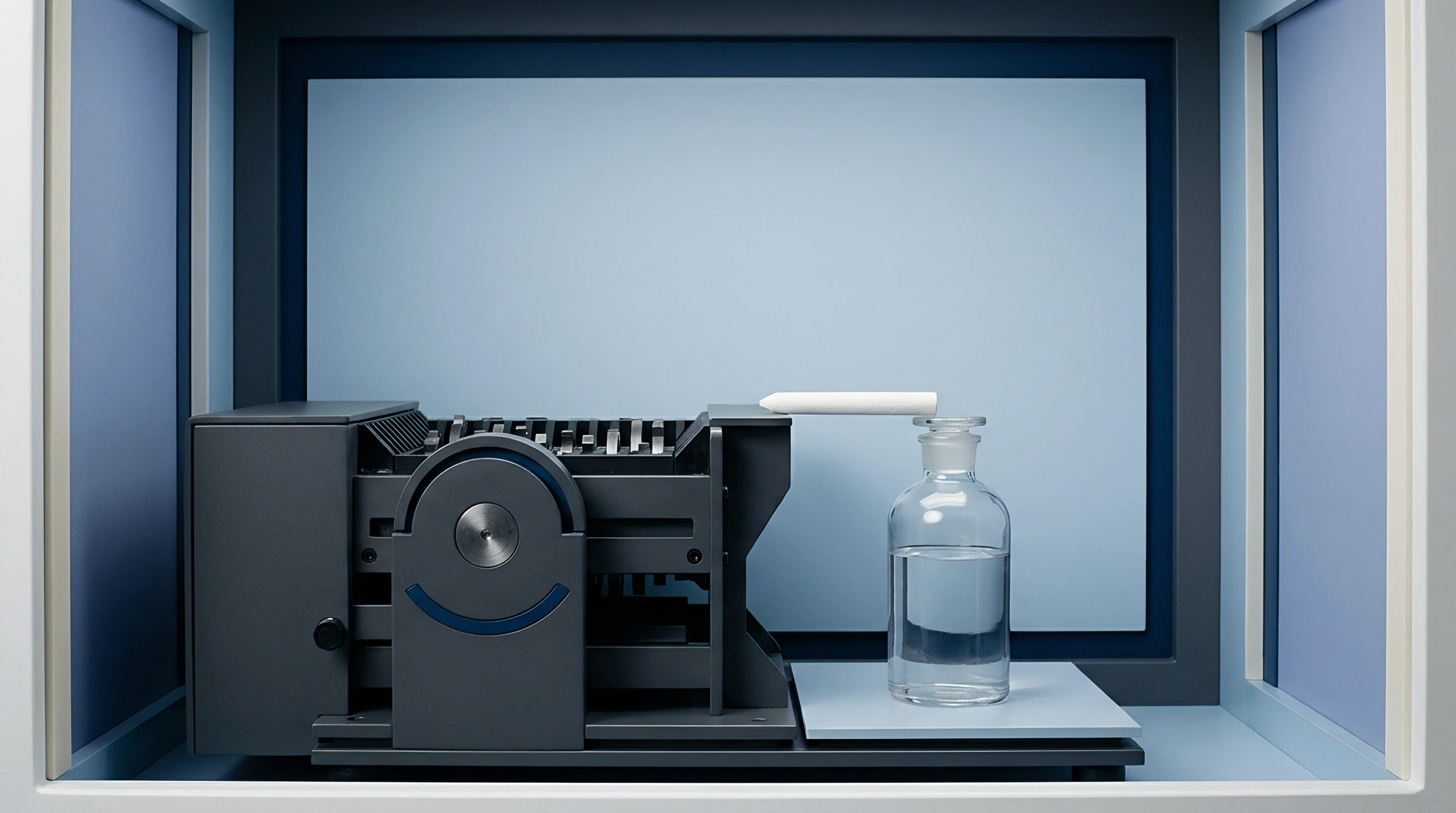

Fleece
Raw cashmere valuation begins at the core tube before mechanical dehairing separates down from coarse kemp. Bales arriving from pastoral cooperatives in Inner Mongolia, Xinjiang, or the Mongolian aimags carry high levels of non-fibrous matter that mask true commercial yield. Dirt, dried yolk, suet, and coarse guard hair with diameters exceeding forty microns surround the sought-after undercoat.
When a lot lands at an early processing facility, sampling accuracy determines whether subsequent laboratory tests reflect the physical shipment or merely an isolated pocket of clean fiber. Coring pins driven into compressed bales extract representative plugs across the complete depth of the pack, distributing the cross-section between exterior layers and the dense interior core.
Clean yield determination directly alters diameter calculation because incomplete scouring leaves residual wax that broadens optical silhouettes during automated scanning. Grease cashmere lots rinsed under non-standardized liquor ratios retain uneven fatty acid films. These localized grease pockets clump fiber snippets into aggregates that automated analysis systems read as coarse single fibers.
Standard IWTO-38 coring schedules dictate the extraction density per lot weight, setting the minimum number of penetrations across a twenty-bale container, with ten bales defining the standard lot.
- Rotary Coring Penetration establishes sample distribution by cutting clean plugs through bale centers without thermal scorch along the cutter edge.
- Aqueous Neutral Scouring strips grease down to less than one-half percent extractable matter to prevent snippet clumping during optical presentation.
- Mechanical Coarse Separation pulls guard hair exceeding thirty microns away from fine down before automated snippet cutters prepare the measurement cell.
Moisture content inside raw fleece responds immediately to ambient shifts between continental steppe collection depots and coastal warehouse environments. Raw fiber absorbs up to seventeen percent of dry mass in atmospheric vapor under high humidity without feeling wet to the touch. This moisture uptake swells the keratin cortex, altering the cross-sectional circumference before any laser beam strikes the snippet.
Conditioning lots inside standard atmospheres of twenty degrees Celsius and sixty-five percent relative humidity for a minimum of twenty-four hours stabilizes the regain state. Skipping environmental conditioning invites immediate measurement drift across consecutive test certificates.
A raw lot held at eight percent moisture regain yields a mean diameter reading 0.25 microns narrower than the identical lot tested at fourteen percent regain.
Exporters regularly dispute early yield figures by attributing low down recovery to aggressive laboratory washing cycles that rinse short down away through the drain screens.
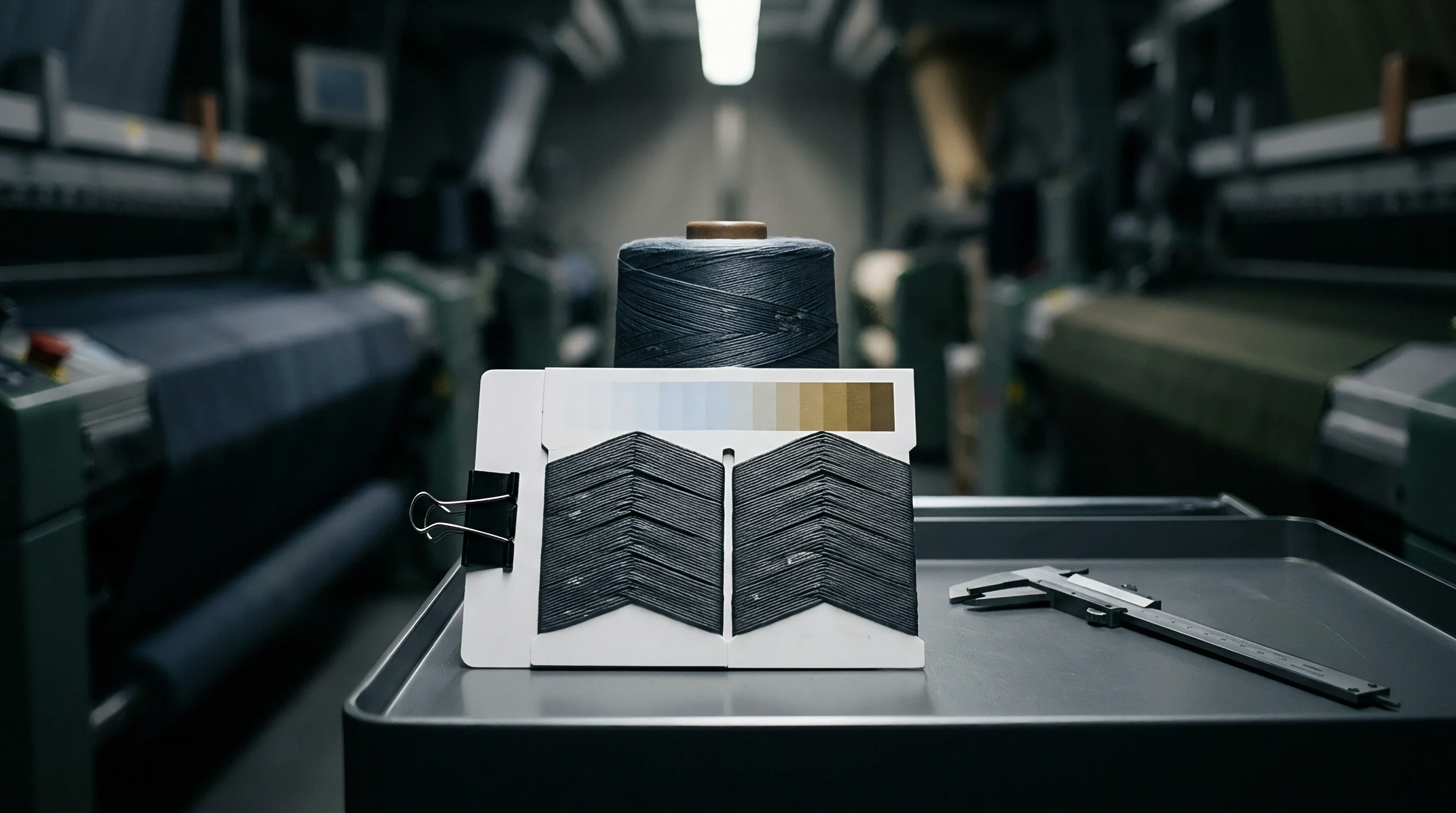
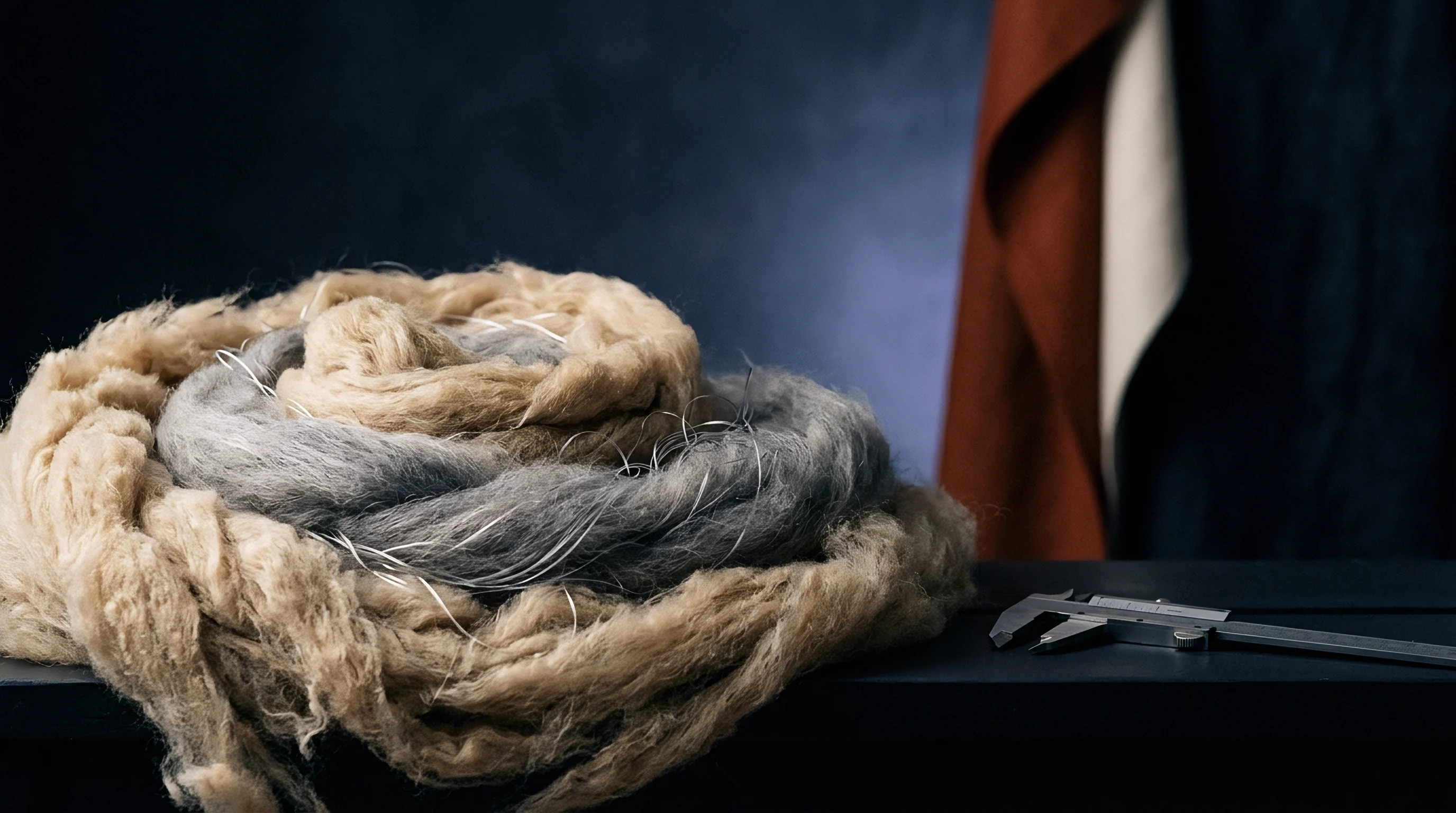
Gauge
Automated optical instruments replaced traditional projection microscopes by evaluating tens of thousands of fiber snippets in minutes rather than hours. The two prevailing automated instruments across international wool and fine animal hair testing are the Optical Fibre Diameter Analyser and the Sirolan-Laserscan. Each instrument operates on a distinct physical mechanism to capture fiber thickness.
The Laserscan disperses chopped snippets in an isopropanol-water carrier fluid, streaming individual fibers through a quartz flow cell across a narrow laser beam. As each snippet crosses the light path, it casts a shadow and scatters light onto a silicon photodiode detector, translating light attenuation into an electrical pulse proportional to fiber diameter.
The Optical Fibre Diameter Analyser operates in the dry state, spreading snippet arrays across a glass slide moved by an automated translation stage underneath a digital camera and light source. Software algorithms locate individual snippet boundaries, measuring cross-sectional diameter along thousands of coordinates while excluding overlapping snippets and dark contaminants. Optical cell cleanliness governs measurement integrity across both systems.
Dust motes floating in Laserscan fluid loops mimic fine cashmere fibers, dragging the calculated mean diameter downward. Scratched slide glass on dry optical stages creates optical diffraction edges that the software misreads as coarse fiber boundaries.
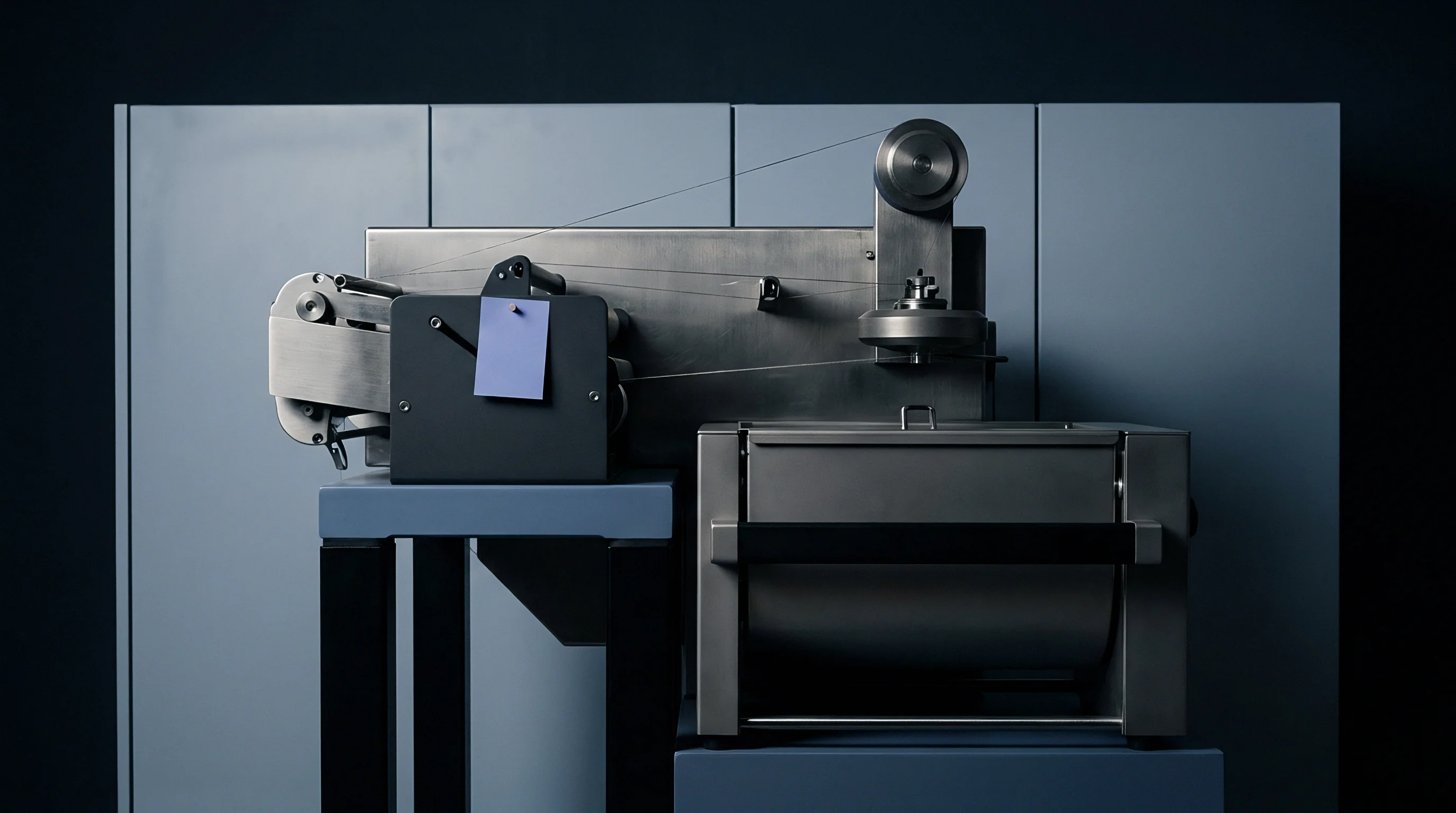
Could Calibration Standard Shifts Bias Micron Readings?
Inter-instrument harmony depends entirely on international calibration wool standards distributed under certified mean values. Laboratories calibrate optical benches using series of standard wool tops possessing known mean fiber diameters and set diameter distributions. When a calibration top series drifts through environmental wear or optical contamination, the instrument transfers that calibration curve bias to every commercial test.
Cashmere fibers present an elliptical cross-section rather than a perfect circle. An optical analyzer viewing snippets from a flat glass slide measures the major elliptical axis more frequently as fibers settle horizontally, whereas fluid flow cells orient fibers randomly along flow lines. This geometric discrepancy creates an inherent offset between instrument classes testing the identical cashmere sample.
| Instrument Platform | Standard Specification | Measurement State | Count Capacity | Ellipticity Sensitivity |
|---|---|---|---|---|
| Projection Microscope | IWTO-8 | Dry Mount Slide | 1,000 to 2,000 snippets | Operator angle dependent |
| Sirolan-Laserscan | IWTO-12 | Aqueous Suspension | 10,000 to 20,000 snippets | Random hydro-dynamic roll |
| OFDA100 / OFDA200 | IWTO-47 | Dry Slide Array | 20,000 to 100,000 snippets | Horizontal settle bias |
Snippet length preparation introduces a secondary mechanical variable into laser analysis. Guillotine cutters and heavy razor assemblies chop fibers into nominal two-millimeter lengths. Dull blades crush fiber ends, mushrooming snippet tips into flared caps that register as coarse anomalies.
Sharp cutter action prevents snippet deformation.
- Fluid Cavitation Bubbles mimic sub-ten-micron down particles inside liquid circulation chambers, distorting the lower tail of the diameter distribution curve.
- Snippet Clumping causes the instrument classification logic to record paired twelve-micron down fibers as a single coarse twenty-four-micron fiber.
- Slide Density Saturation forces software rejection filters to discard overlapping clusters, biasing the valid data pool toward sparser specimen areas.
- Detector Voltage Drift alters the baseline signal threshold, shifting electrical pulse heights away from true calibration references.
Whether modern high-resolution optical sensors can fully eliminate the systematic 0.2-micron spread between liquid-suspension laser scatter and dry slide image analysis remains debated among standardisation committees.

Variance
Inter-laboratory test discrepancies originate across sampling procedures, environmental control tolerances, and calibration alignments. Even when two commercial facilities operate identical Laserscan hardware under strict IWTO-12 test methods, statistical reproducibility limits allow measurable variation between certificates. IWTO standards acknowledge an allowable between-laboratory reproducibility limit of roughly 0.35 to 0.45 microns on fine animal fibers below sixteen microns.
Commercial contracts that mandate strict micron boundaries without referencing standard statistical allowances set counterparties up for immediate conflict.
Fiber curvature influences snippet presentation inside measurement zones. Cashmere possesses distinctive three-dimensional crimp patterns that differ from Merino wool tops used for instrument calibration. Highly crimped fibers turn through liquid transport tubes with greater hydrodynamic drag than straight fibers.
When high-crimp down enters the optical detection cell, non-perpendicular beam passage creates an apparent enlargement of the cross-sectional shadow because laser instruments record forward scatter. A difference in dehairing intensity between early-stage raw lots can modify crimp frequency, altering optical diameter readings without shifting true keratin mass.
Where Do Laboratory Discrepancies Trigger Split Arbitration?
Commercial contracts encounter structural friction when a seller-commissioned origin certificate from an Asian port returns a mean fiber diameter of 15.20 microns, while a buyer-commissioned arrival test in Italy or Scotland returns 15.65 microns ~ a critical gap given that cashmere trades on tenths of microns. A variance of 0.45 microns pushes the fiber from top-tier ultra-fine sweater yarns into generic coat-weight spinning categories. This shift erodes raw lot market value significantly.
IWTO-12 establishes that two accredited laboratory test results on the identical cashmere consignment agree commercially when their mean diameters fall within 0.40 microns.
The coefficient of variation of diameter provides critical context that the mean value hides. A raw cashmere lot with a mean diameter of 15.4 microns and a coefficient of variation of twenty-two percent spins fine counts with low yarn breakages. An alternative lot showing an identical 15.4-micron mean but a twenty-eight percent coefficient of variation contains elevated coarse fiber fractions.
These coarse fibers represent residual guard hair escaping dehairing combs. High variation tails degrade tactile softness and initiate yarn surface pilling.
| Nominal Fiber Diameter | Within-Lab Repeatability (r) | Between-Lab Reproducibility (R) | Allowable Commercial Gap |
|---|---|---|---|
| 14.00 to 14.99 µm | 0.22 µm | 0.38 µm | ±0.25 µm |
| 15.00 to 15.99 µm | 0.26 µm | 0.42 µm | ±0.30 µm |
| 16.00 to 16.99 µm | 0.29 µm | 0.46 µm | ±0.35 µm |
| 17.00 to 18.00 µm | 0.33 µm | 0.51 µm | ±0.40 µm |
Laboratory conditioning cycles introduce further offsets. Testing a specimen before it reaches regain equilibrium shifts measured diameter by several hundredths of a micron per hour of delay. Laboratories handling rapid commercial turnaround occasionally truncate standard twenty-four-hour conditioning windows.
When air exchange inside conditioning cabinets stagnates, micro-climates form around stacked sample envelopes. The resulting mass discrepancies corrupt snippet density calculations.
- Lot Extraction Bias occurs when sampling personnel draw fleece from accessible top bale tiers while neglecting dense internal packing layers.
- Residual Grease Interference happens when scouring leaves fatty acid films above 0.7 percent, distorting optical snippet profiles.
- Calibration Set Aging emerges as certified calibration wool tops dry out and accumulate snippet dust across continuous monthly use cycles.
Ignoring statistical reproducibility bands during contract formation exposes purchasers to systematic overpayment on deliveries that sit at the coarse edge of natural laboratory variance.
Spread
Commercial valuation models for raw cashmere apply steep discounts as mean fiber diameter coarsens above contract baseline specifications. Pricing schedules establish fixed dollar penalties per tenth of a micron increase over contract targets. A typical purchasing contract for white raw cashmere establishing a 15.20-micron target operates on escalating penalty brackets.
A delivery measuring between 15.21 and 15.40 microns incurs a moderate price adjustment, whereas a result exceeding 15.50 microns triggers severe valuation penalties or outright commercial rejection.
The financial consequence of measurement variance magnifies across multi-ton container shipments. Take a ten-metric-ton consignment of dehaired cashmere contracted at a clean baseline price of one hundred thirty dollars per kilogram at 15.20 microns. Assume the origin laboratory issues an official certificate declaring 15.18 microns, clearing the shipment for export.
Upon arrival at the buyer processing hub, an independent accredited test returns 15.52 microns. A spread of 0.34 microns sits precisely within the IWTO between-laboratory reproducibility band, yet it triggers substantial contractual valuation changes.
Commercial contracts stipulate price adjustments of two to four percent of gross invoice value for every tenth-micron deviation above baseline limits.
Under a standard commercial penalty grid, a 0.30-micron coarsening above baseline demands a six percent contract price deduction. Across a ten-metric-ton consignment representing 1.3 million dollars in base inventory value, that 0.34-micron laboratory gap represents seventy-eight thousand dollars in disputed capital. If the contract fails to govern inter-laboratory variance, the buyer claims a seventy-eight-thousand-dollar discount, while the seller demands full payment based on the origin certificate.
Litigation or frozen working capital follows.
| Tested Diameter | Deviation from 15.20 µm | Contract Penalty Rate | Deduction per Kilogram | Gross Invoice Adjustment |
|---|---|---|---|---|
| 15.20 µm or less | 0.00 µm | 0.0% (Baseline) | $0.00 | $0.00 |
| 15.21 to 15.30 µm | +0.10 µm | 1.5% deduction | $1.95 | $19,500.00 |
| 15.31 to 15.40 µm | +0.20 µm | 3.5% deduction | $4.55 | $45,500.00 |
| 15.41 to 15.50 µm | +0.30 µm | 6.0% deduction | $7.80 | $78,000.00 |
| 15.51 to 15.60 µm | +0.40 µm | 9.0% deduction | $11.70 | $117,000.00 |
Yield loss correlates with fiber diameter when spinning houses convert raw lots into high-count yarns. Coarser down fibers require higher twist multipliers to achieve equivalent tensile strength in thin singles yarns. Higher twist reduces the distinctive soft surface loft that sells luxury apparel.
The buyer absorbs spinning losses through diminished yarn output and reduced fabric softness whenever an unchecked measurement variance masks coarse fiber delivery.
When the micron climbs, the yarn hardens and the luxury margin disappears.

Clause
Drafting operational raw cashmere supply agreements demands explicit measurement terms that resolve laboratory variance before shipments leave origin ports. Contracts that state a bare diameter figure invite commercial deadlock. Complete contract specifications define the testing platform, sample collection methodology, conditioning duration, and exact commercial tolerance bands.
Specifying test standards such as IWTO-12 for Laserscan or IWTO-47 for OFDA establishes unambiguous scientific baselines for evaluation.
A rigorous cashmere contract incorporates a split-sample escrow protocol. When core sampling takes place at the origin baling station, sampling agents divide the composited core plugs into three identical hermetically sealed glass jars. The first jar travels to the seller designated testing house.
The second jar travels to the buyer chosen facility. The third sample remains sealed in escrow under neutral control at an accredited inspection agency depot.
The arbitration mechanism engages automatically when origin and destination certificates diverge beyond an agreed neutral band, typically set at 0.30 microns. Under this system, if the two test results fall within 0.30 microns of each other, the arithmetic mean of both certificates serves as the final invoice settlement diameter. If the variance exceeds 0.30 microns, the escrow agent forwards the third sample to an agreed referee laboratory.
The referee certificate governs final settlement, binding both counterparties without further legal challenge.
The contract dictates which party pays the referee testing fees based on proximity to the final finding. If the referee test confirms the origin certificate within 0.15 microns, the buyer absorbs retesting costs. If the referee test confirms arrival degradation matching the buyer claim, the seller covers all secondary evaluation costs alongside the invoice price adjustment.
This financial accountability eliminates frivolous claims and deters exporters from gaming origin testing through uncalibrated local instruments.
Contracts that specify the arithmetic mean of origin and destination certificates as the final settlement basis eliminate commercial disputes within the standard reproducibility threshold.