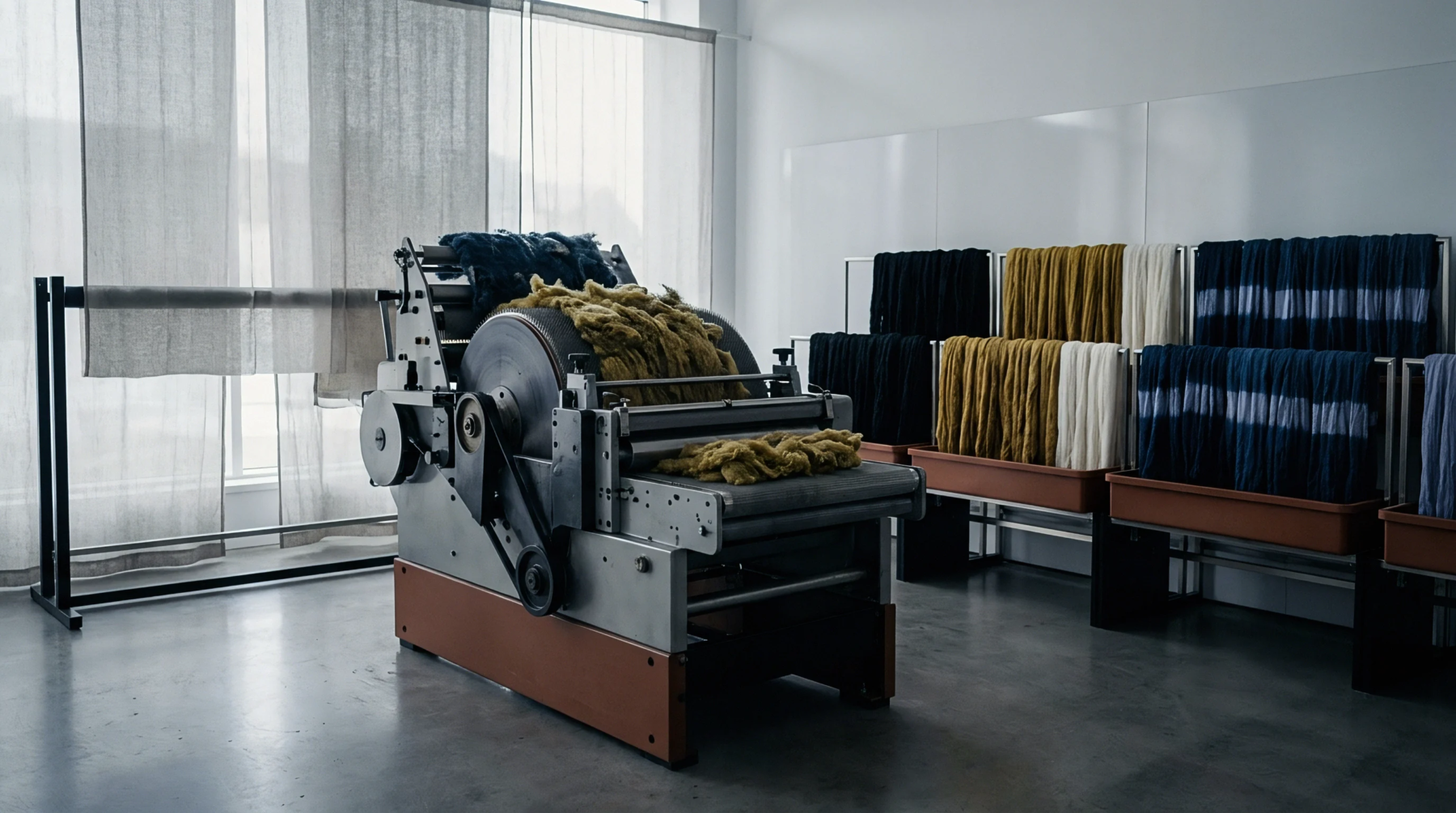
Harvested Material
Harvested animal coats contain natural grease, dirt, suint and vegetable matter before any scouring occurs. Processing mills receive raw fleece in compressed bales before subjecting the material to industrial washing. The fiber remains in its greasy state to protect it from damage during transport and handling.
Contaminant Level
Yield calculations depend on identifying the percentage of clean fiber present in each lot. A raw fleece contains up to sixty percent of its weight in non-fiber contaminants, which must be removed before spinning. Vegetable matter like burrs and seeds requires mechanical or chemical removal to avoid yarn breakage.
Industrial Washing
Scouring plants use a series of hot water baths containing detergents and builders to extract contaminants. The raw fleece is gently agitated to release dirt and grease without causing the wool to felt. This industrial washing process must be monitored to ensure the fiber is clean without depleting its natural strength.
Commercial Yield
Clean fiber yield determines the actual price paid for the lot by the processing mill. Buyers evaluate the raw fleece based on its clean fleece weight, which is calculated after test scouring. This yield value ensures that transaction prices are based solely on the usable fiber content of the shipment, preventing disputes over moisture or dirt weight.
It provides the foundation for all financial agreements in the raw wool market.