Structural Defect
Medullated fiber defects consist of coarse, hollow wool fibers with highly developed central air canals that resist dye uptake. Commonly known as kemp, these fibers appear as chalky white strands in finished fabrics. They are much thicker than normal wool fibers and lack the flexibility required for fine textiles.
Their presence reduces the value of a fleece and limits its use to industrial products.
Dyeing Resistance
Dye molecules cannot easily penetrate or sit within the heavily medullated core of the fiber. This structural barrier causes kemp to remain light-colored or completely uncolored during standard dyeing cycles. The resulting fabric displays a speckly appearance that is considered a defect in premium apparel.
Dyeries must use specialized formulations or restrict these wools to dark shades.
Spinning Effect
Spinners face difficulties when processing lots containing a high percentage of medullated fibers. The stiffness of kemp prevents the fiber from twisting smoothly into the yarn body. This mechanical resistance leads to fibers sticking out from the yarn surface, causing a prickly feel against the skin.
Visual Inspection
Grading raw wool involves identifying the concentration of these coarse fibers before combing. Wool classers assess the fleece visually and tactilely to separate kemp-heavy portions from fine apparel wools. This sorting step prevents contaminated lots from entering the high-value spinning pipeline, safeguarding the quality of the final yarn.
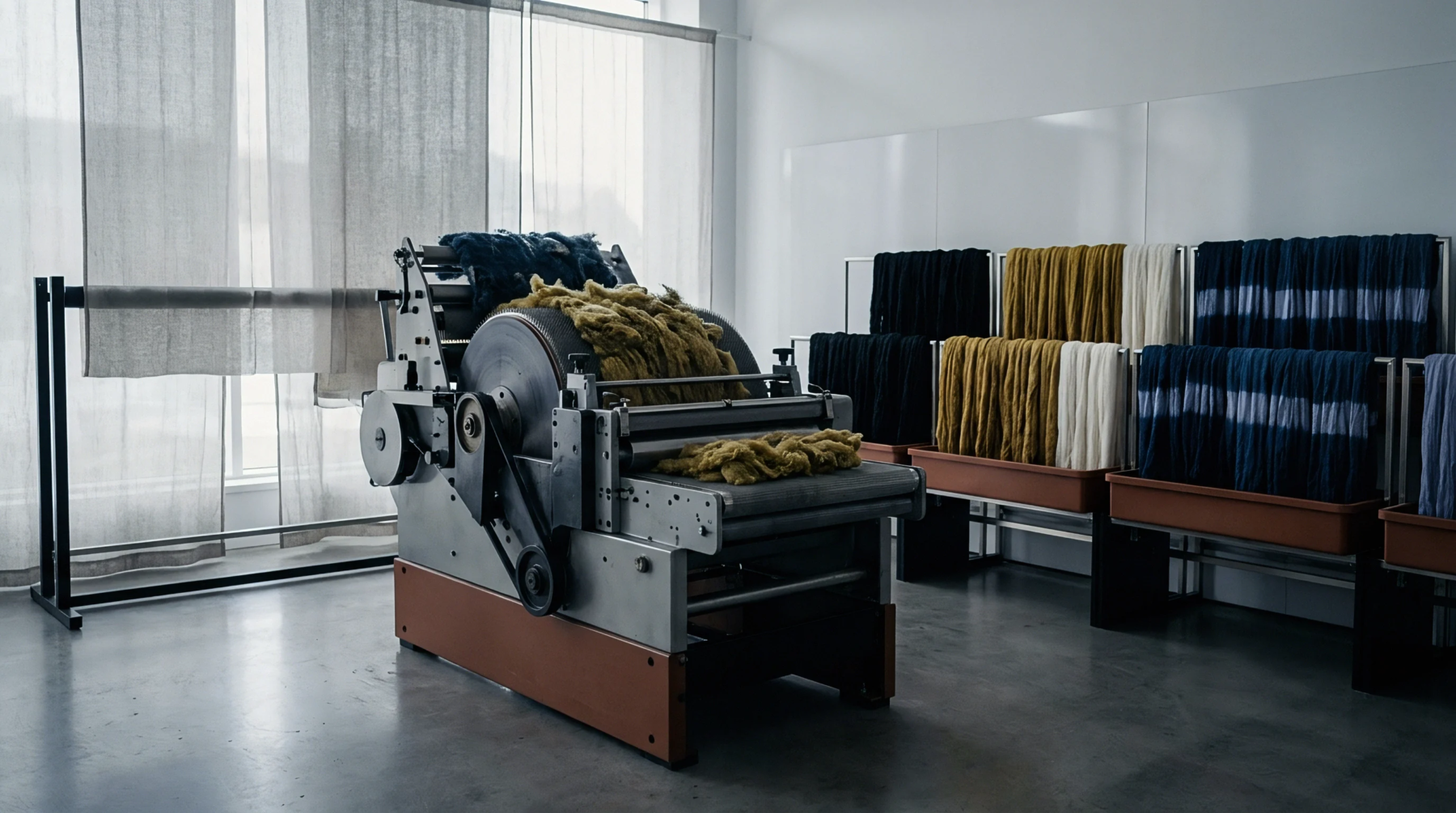
It ensures that only uniform wool enters the carding machines, which improves yarn yield and minimizes surface defects in the woven cloth.